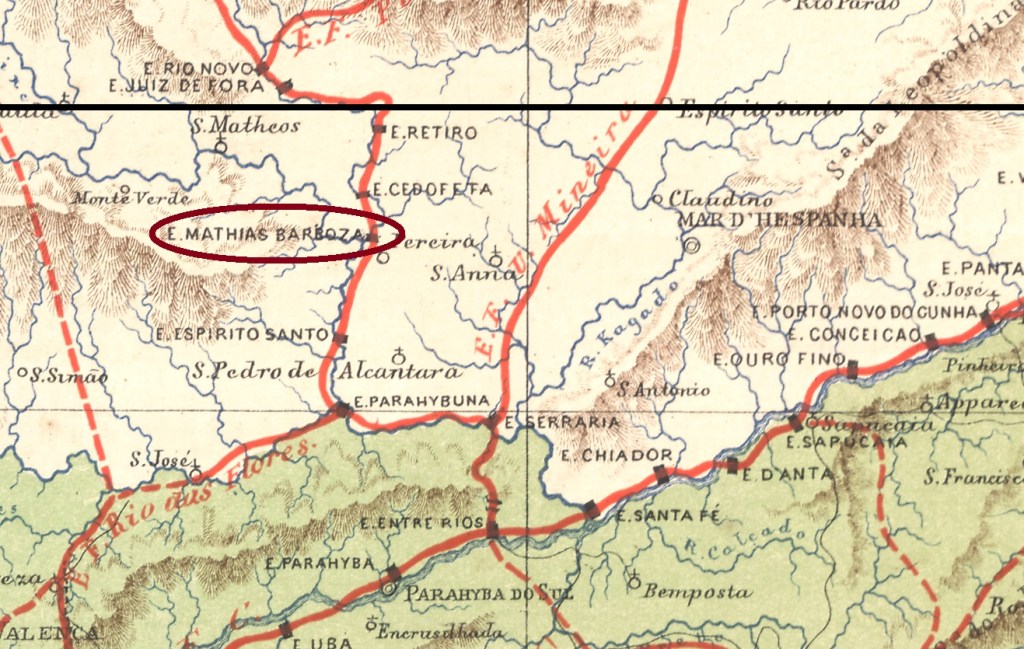
Other spelling: Mathias Barboza
The founder of this settlement on the banks of the Paraibuna River, 260 km south of the provincial capital Ouro Preto, was Colonel Mathias Barbosa Gomes da Silva. In August 1886, it became the Freguesia da vila de Juiz de Fora and in September 1923, it became a Vila in its own Município.
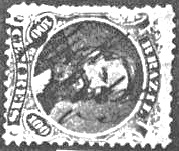
The postal report (Relatorio dos Correios) for the year 1886 shows that there had been a post office there since September 1856. So far, no imperial postmark has been definitively attributed to this Freguesia; however, this handwritten cancellation (illustration: R. Koester in Carimbologia XXVII) probably originates from there.

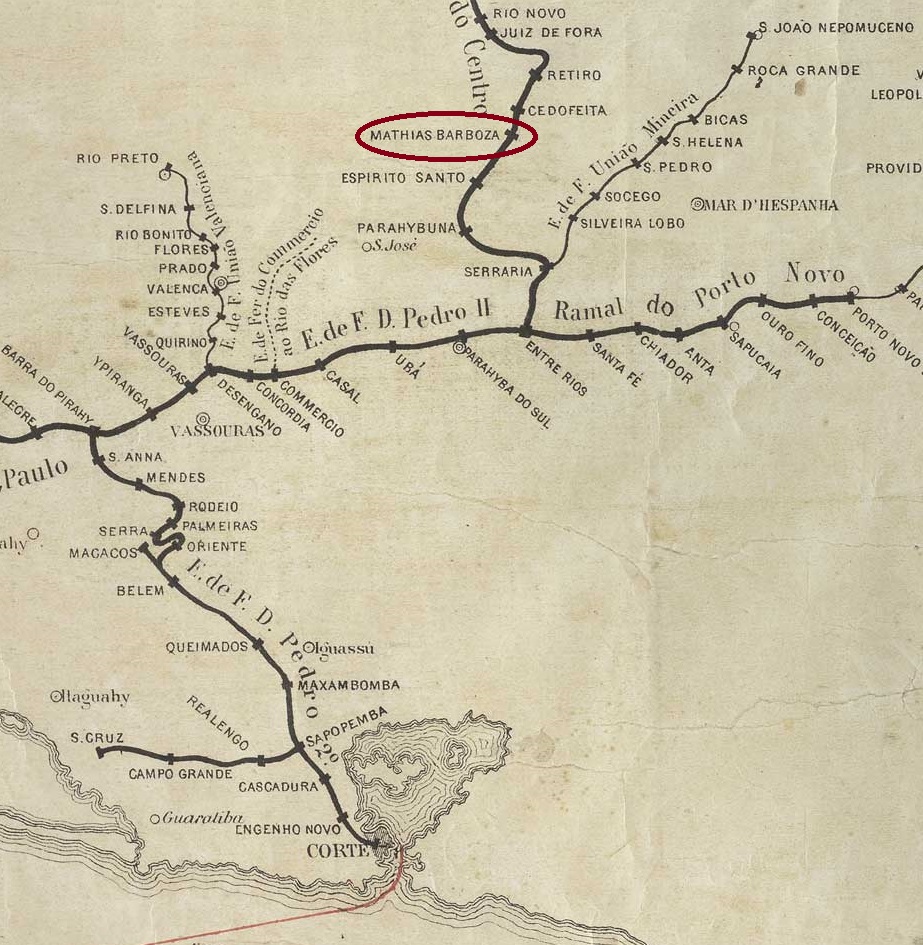
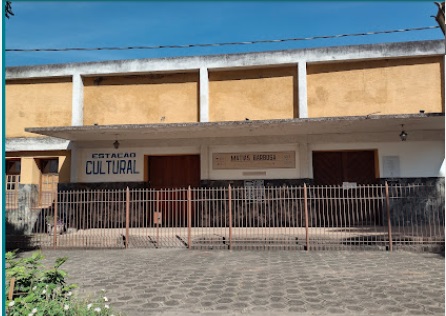
In October 1875, the Mathias Barbosa railway station was opened by the E.F. D. Pedro II railway company (Center Line). The railway line became the property of E.F. Central do Brasil in 1889 and belonged to Rede Ferroviária Federal S.A. (estacoesferroviarias.com.br) from 1975 until the line was closed in 1996.
Today, the tracks are still in place and the station building is used as a cultural centre.
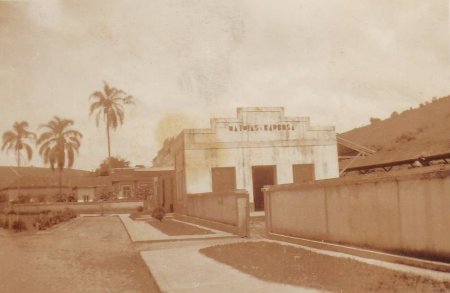
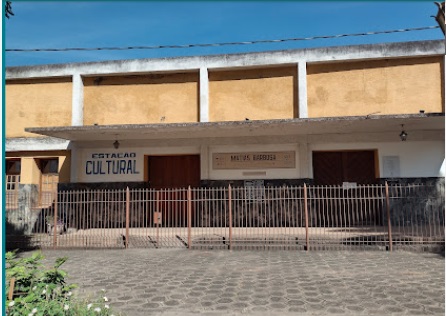
According to Paulo Novaes on agenciaspostais.com.br, there was a post office at the station from November 1875, which was initially administered by the postal directorate in Rio de Janeiro and, from June 1881, by the postal directorate in Ouro Preto. However, the post office in Freguesia remained open until at least mid-1877, as reported in the Rio de Janeiro press.
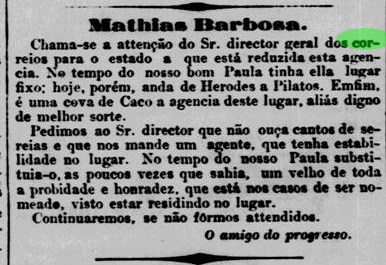
However, this agency was closed by 1879 at the latest, as only the station post office is listed in the Imperial Postal Guide (Guia Postal do Império, Rio de Janeiro, 1880). The oldest postmark from this office is MMG-1575a (see illustration in Koester, op. cit.).
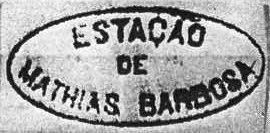
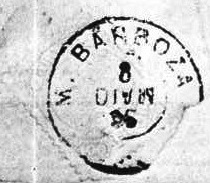
This was followed by MMG-1575b (illustration Koester):
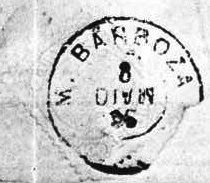
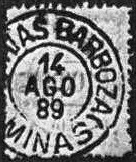
Then came MMG-1575c (Fig. Koester):

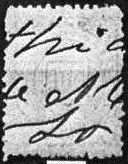
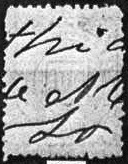
Koester also showed a handwritten cancellation from this station post office:
Andere Schreibweise: Mathias Barboza
Der Siedlungsgründer dieser Ortschaft am Ufer des Paraibuna, 260 km südlich der Provinzhauptstadt Ouro Preto, war der Oberst Mathias Barbosa Gomes da Silva. Im August 1886 wurde sie zur Freguesia da vila de Juiz de Fora und im September 1923 zur Vila im eigenen Município.
Aus dem Postbericht (Relatorio dos Correios) für das Jahr 1886 geht hervor, dass es dort seit September 1856 ein Postamt gab. Bisher konnte kein kaiserlicher Poststempel mit Sicherheit dieser Freguesia zugeordnet werden; diese handschriftliche Entwertung (Abbildung: R. Koester in Carimbologia XXVII) stammt jedoch vermutlich von dort.
Im Oktober 1875 wurde der Bahnhof Mathias Barbosa von der Eisenbahngesellschaft E.F. D. Pedro II (Hauptlinie) eröffnet. Die Bahnlinie ging 1889 in den Besitz der E.F. Central do Brasil über und gehörte von 1975 bis zur Streckenstillegung 1996 der Rede Ferroviária Federal S.A. (estacoesferroviarias.com.br).
Heute sind die Gleise noch vorhanden und das Bahnhofsgebäude wird als Kulturzentrum genutzt.

Laut Paulo Novaes auf agenciaspostais.com.br gab es seit November 1875 ein Postamt am Bahnhof, das zunächst von der Postdirektion in Rio de Janeiro und ab Juni 1881 von der Postdirektion in Ouro Preto verwaltet wurde. Allerdings blieb das Postamt in der Freguesia zumindest bis Mitte 1877 geöffnet, wie aus der Presse in Rio de Janeiro hervorgeht.
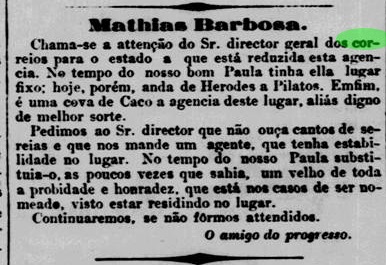
Diese Agentur wurde jedoch spätestens 1879 geschlossen, da im Kaiserlichen Postführer (Guia Postal do Império, Rio de Janeiro, 1880) nur noch das Bahnhofspostamt aufgeführt wird. Der älteste Poststempel, der von diesem stammt, ist der MMG-1575a (siehe Abbildung bei Koester, op. cit.).
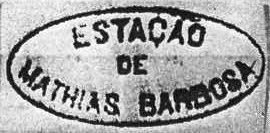
Es folgte MMG-1575b (Abb. Koester):
Danach kam MMG-1575c (Abb. Koester):
Koester zeigte auch eine handschriftliche Entwertung aus diesem Bahnhofspostamt:

 Carimbologia