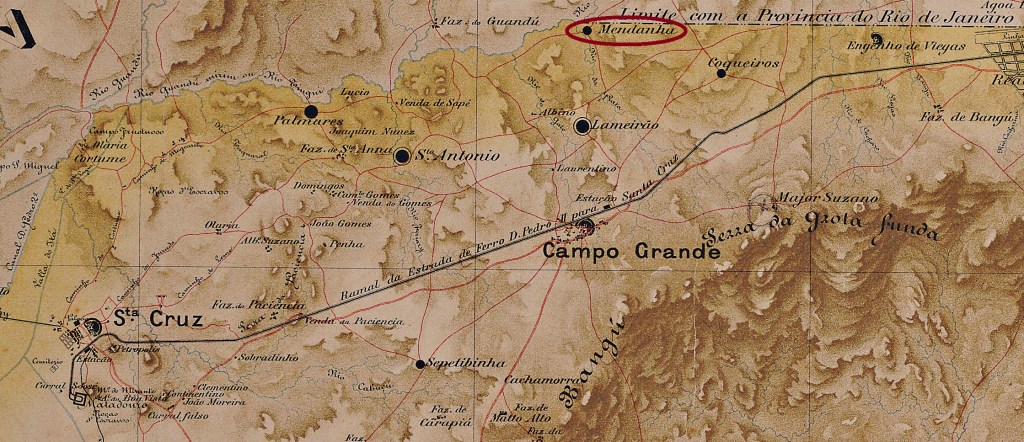
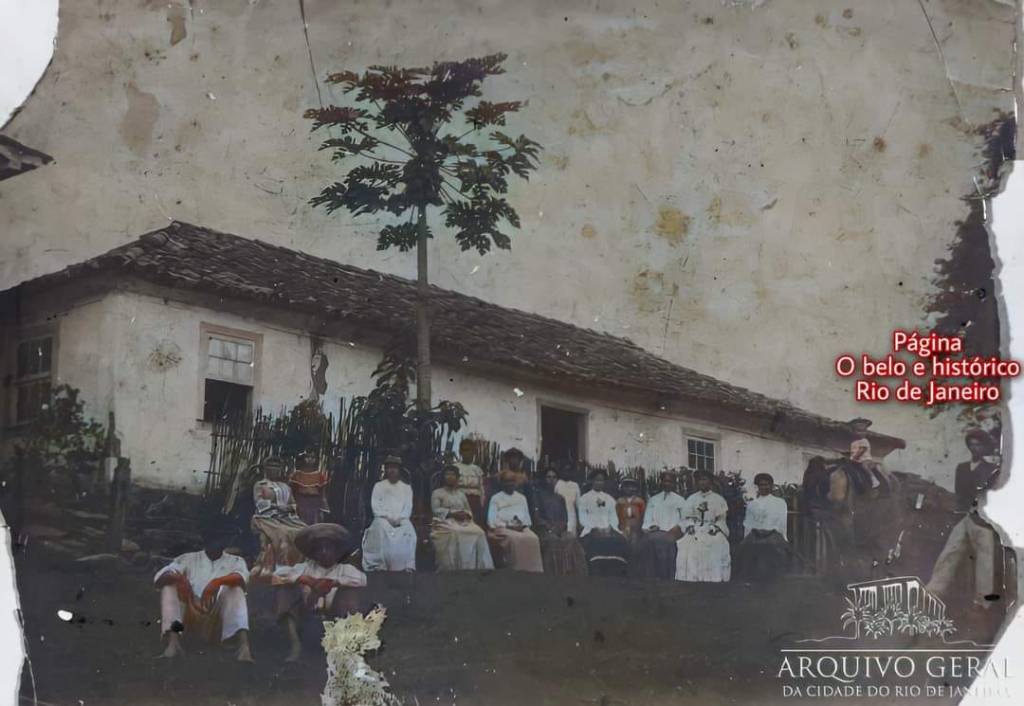
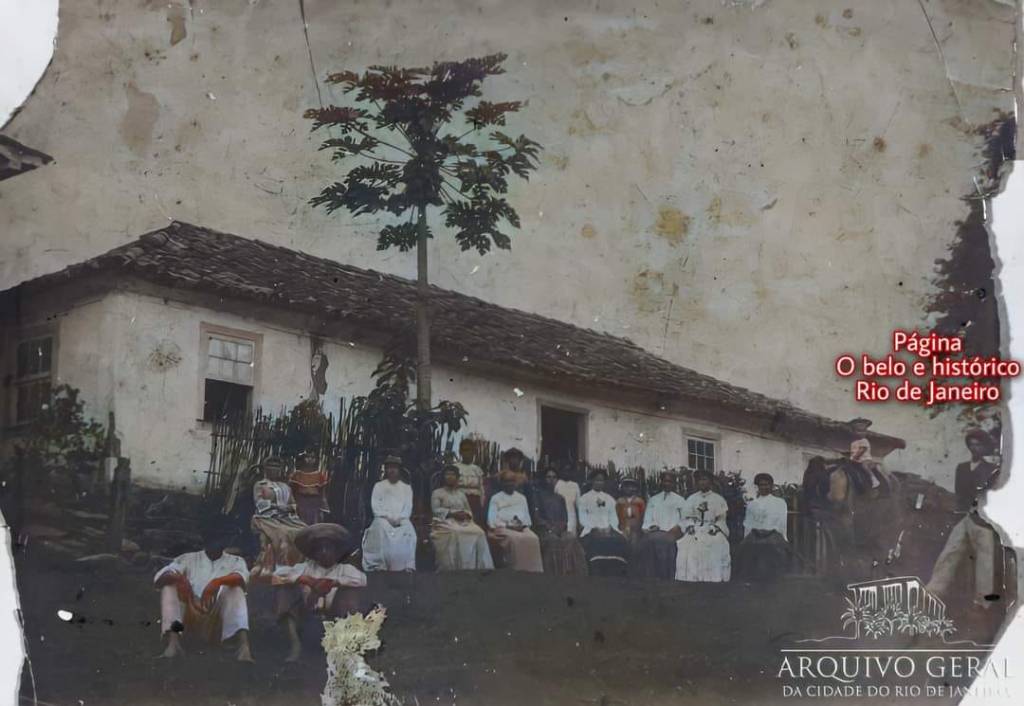
Around 1700, this village was the fazenda of Luis Vieira de Mendanha e Sottomayor, the captain-major (Capitão-Mor) of Guaratiba and Marambaia. It was located on Porangaba Mountain, 45 km west of the capital Rio de Janeiro. Sugar cane was initially cultivated on the large estate; but at the end of the 18th century, the first coffee plantation in the province of Rio was established there. Towards the end of the 19th century, the main building was first used as a school and later as the Sítio of the Freguesia de Campo Grande. The building has since been demolished and the agricultural land released for construction. Mendanha is now a sub-Bairro in the district of Campo Grande.
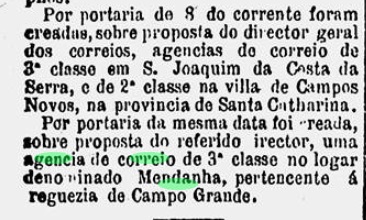
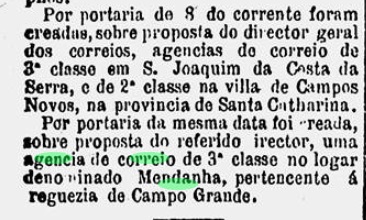
According to the Rio press, there had been a post office there since February 1882.
However, no imperial postmark from this location has been found to date.
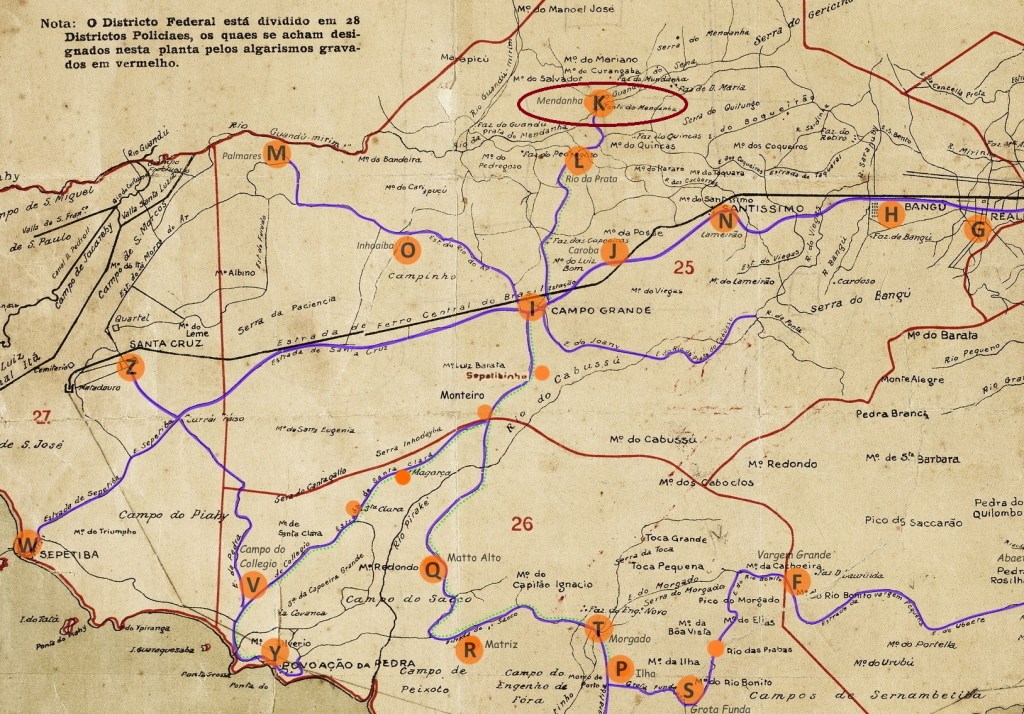
Diese Ortschaft war um 1700 die Fazenda von Luis Vieira de Mendanha e Sottomayor, dem Oberkapitän (Capitão-Mor) von Guaratiba und Marambaia. Sie lag am Porangaba-Berg, 45 km westlich der Hauptstadt Rio de Janeiro. Auf dem Großgrundbesitz wurde zunächst Zuckerrohr angebaut; am Ende des 18. Jahrhunderts wurde dort die erste Kaffeeplantage der Provinz Rio angelegt. Gegen Ende des 19. Jahrhunderts wurde das Hauptgebäude zunächst als Schule und später als Sítio der Freguesia de Campo Grande genutzt. Das Gebäude wurde inzwischen abgerissen und die Agrarfläche als Bauland freigegeben. Mendanha ist heute ein Sub-Bairro im Distrikt Campo Grande.
Wie die Presse aus Rio bekannt gab, gab es dort seit Februar 1882 ein Postamt.
Bisher wurde jedoch kein kaiserlicher Poststempel aus diesem Ort gefunden.

 Carimbologia