See also Brotos (BRJ-1565) and Santo Antonio dos Brotos (SRJ-1565)
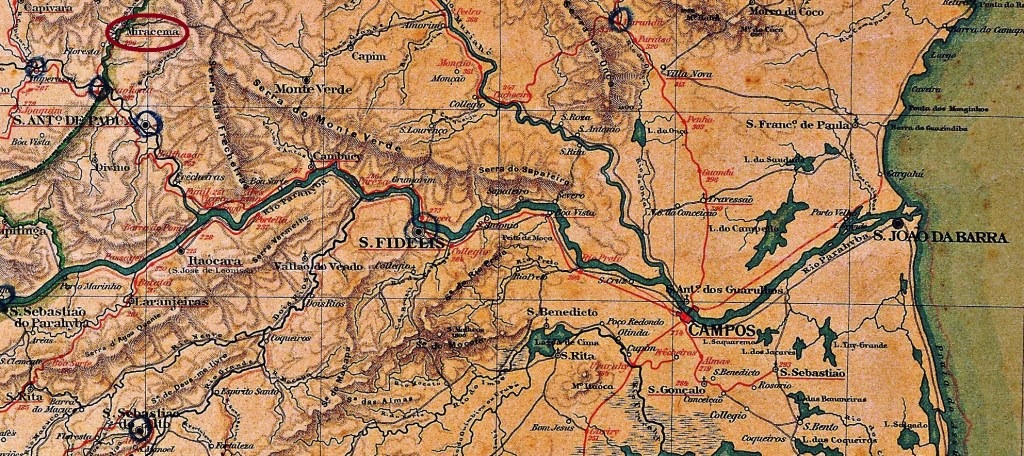
Santo Antonio dos Brotos (also written das Brotas or da Brota) was a district of São Fidellis, situated almost 300 km north of the imperial capital Rio de Janeiro. In March 1883 the place name changed to Miracema, which emancipated as an own municipality in November 1935.
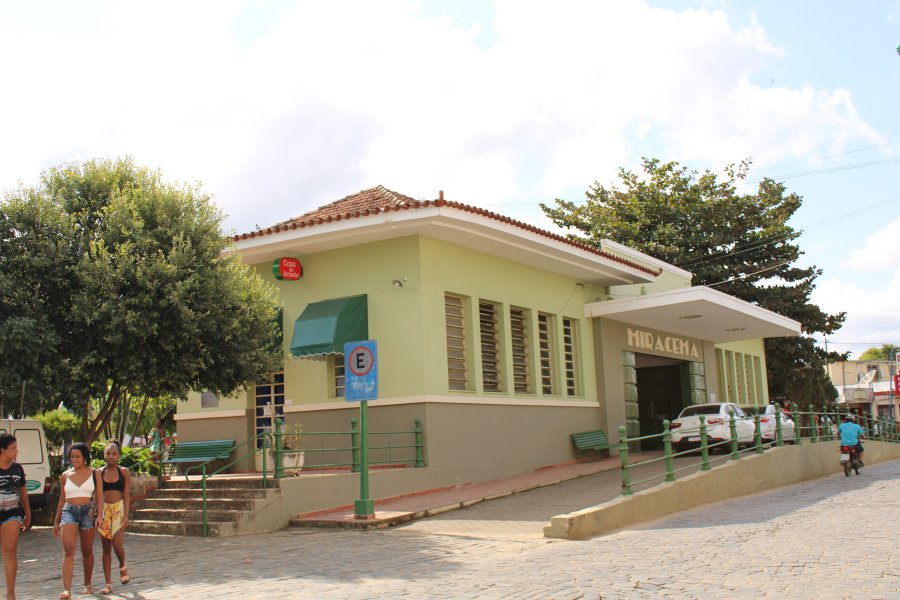
Miracema Station was opened in August 1883 by the Estrada de Ferro Sto. Antonio de Pádua railway company (Campos–Miracema line) and belonged to the municipality of Sto. Antonio de Pádua. The railway line changed hands in 1884 and was transferred to E.F. Macaé e Campos. From 1887 until its closure in 1970, it belonged to E.F. Leopoldina (estacoesferroviarias.com.br). Today, the tracks have been removed and the station building is used as a bus station.
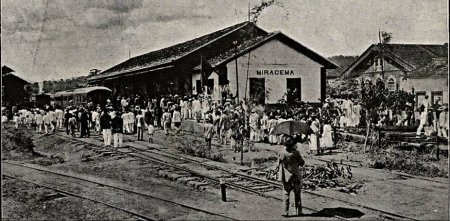
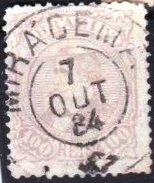
According to P. Novaes (agenciaspostais.com.br), the station post office was opened in January 1884. The old post office in the village remained in operation until August 1885. The imperial postmark is MRJ-1700a (image from the Internet) and bears the curious accent error ‘Mirácema’:
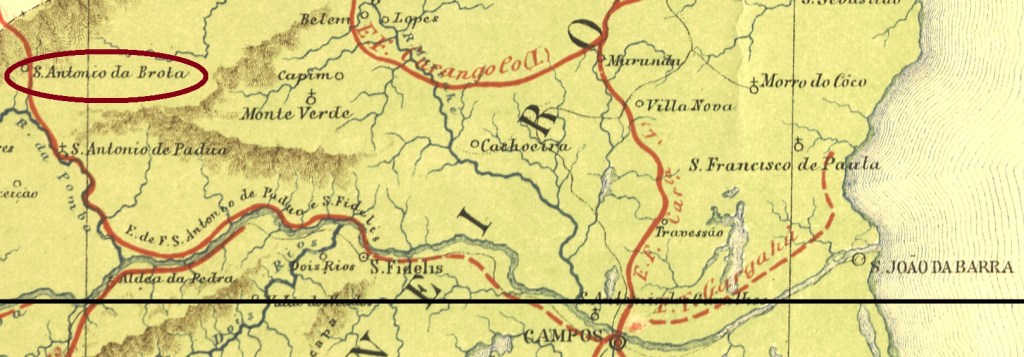
Siehe auch Brotos (BRJ-1565), Santo Antonio dos Brotos (SRJ-1565)
Santo Antonio dos Brotos (auch das Brotas oder da Brota geschrieben) war ein Distrikt von São Fidellis, der fast 300 km nördlich der kaiserlichen Hauptstadt Rio de Janeiro entfernt lag. Im März 1883 wechselte der Ortsname zu Miracema, der zu einer Stadt im eigenen Município im November 1935 aufstieg.
Der Bahnhof Miracema wurde im August 1883 von der Eisenbahngesellschaft Estrada de Ferro Sto. Antonio de Pádua (Linie Campos–Miracema) eröffnet und gehörte nun zum Munizipium de Sto. Antonio de Pádua. Die Bahnlinie wechselte 1884 den Besitzer und ging an die E.F. Macaé e Campos über. Von 1887 bis zur Stilllegung im Jahr 1970 gehörte sie der E.F. Leopoldina (estacoesferroviarias.com.br). Heute sind die Gleise entfernt, das Bahnhofsgebäude wird als Busbahnhof genutzt.
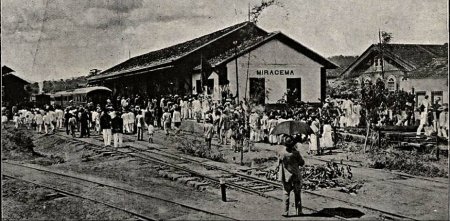
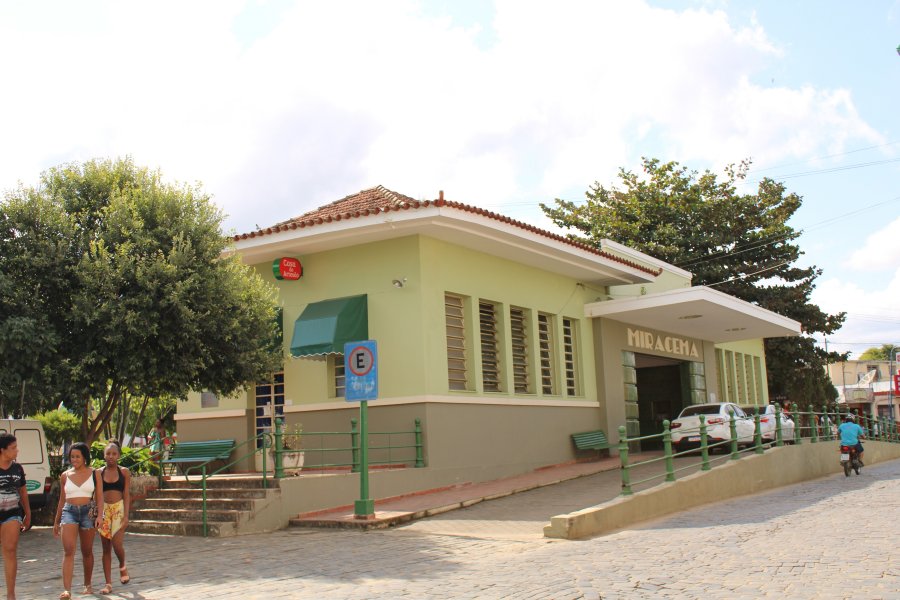
Das Bahnhofspostamt wurde laut P. Novaes (agenciaspostais.com.br) im Januar 1884 eröffnet. Das alte Postamt im Dorf blieb bis August 1885 in Betrieb. Der kaiserliche Poststempel ist MRJ-1700a (Abb. aus dem Internet) und trägt den kuriosen Akzentfehler „Mirácema”:


 Carimbologia