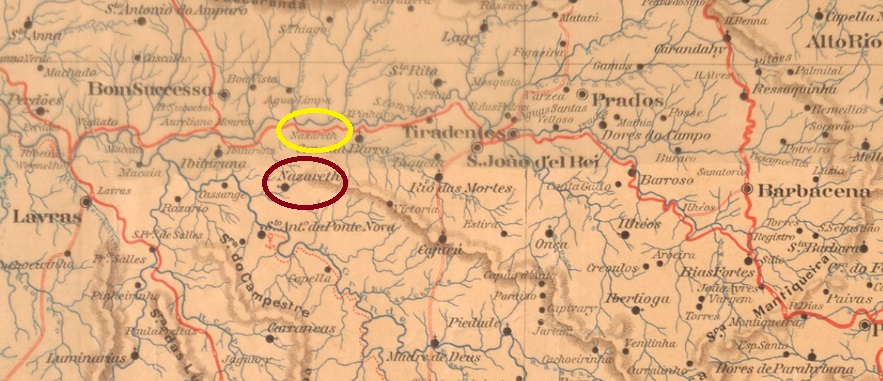
Other names: Ribeiro Fundo, Nazareno (1943)
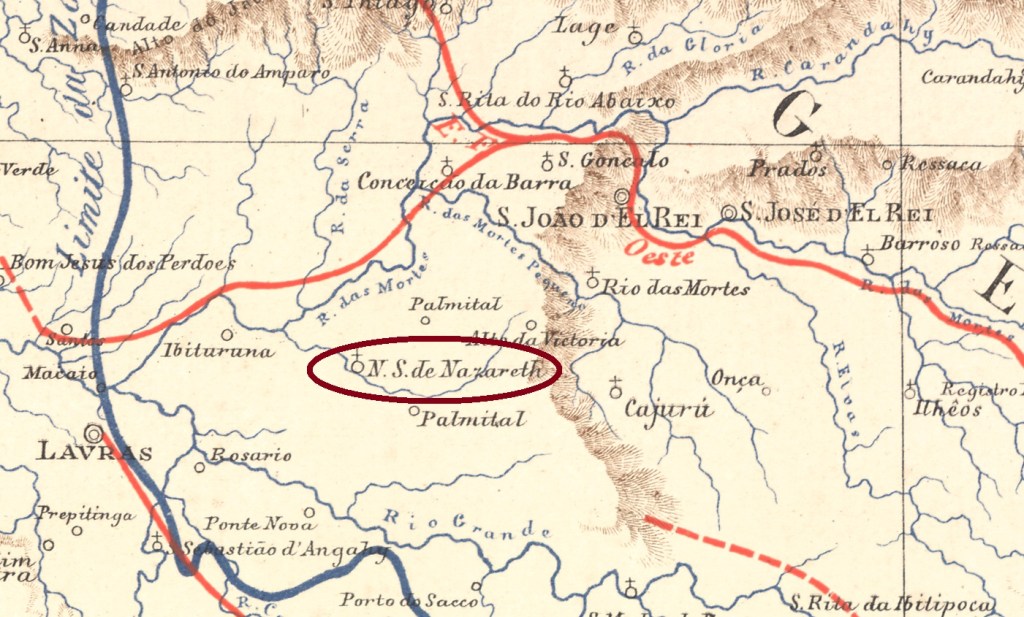
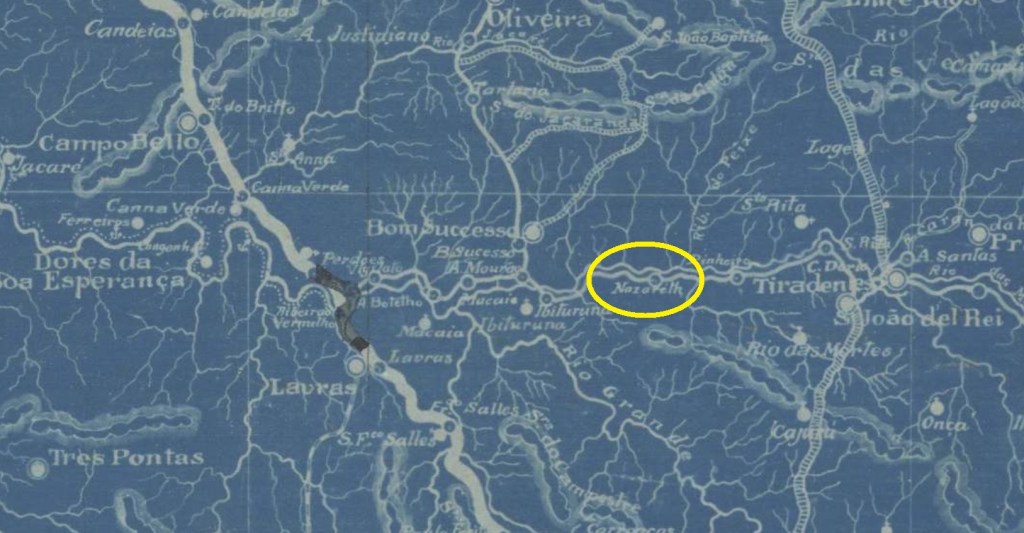
The Nossa Senhora de Nazareth Chapel was built in 1725 in Arraial de Ribeiro Fundo (English: ‘Deep Stream’). It was located near the north bank of the Rio Grande, about 200 kilometres southwest of what would later become the provincial capital of Ouro Preto. In June 1850, it became the Freguesia de N. Sra. de Nazareth, which belonged to the Vila de S. João d’El Rei. In December 1938, the name was simplified to Distrito de Nazareth and five years later changed to Nazareno. Since December 1953, Nazareno has been an independent município.
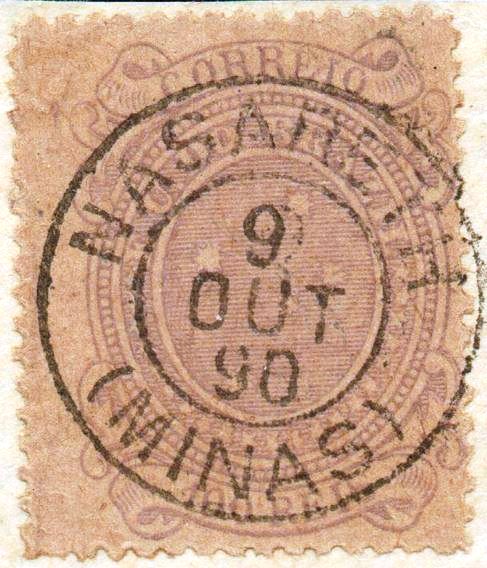
Both Paula Sobrinho (História Postal de Minas Gerais, Belo Horizonte, 1997) and R. Koester (Carimbologia XXVIII) agree that there has been a post office there since December 1877. The oldest postmark to date is NMG-1745a (fig. Koester, op. cit.), which also exists in purple:
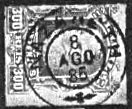
This was followed by NMG-1745b (fig. from the Internet):
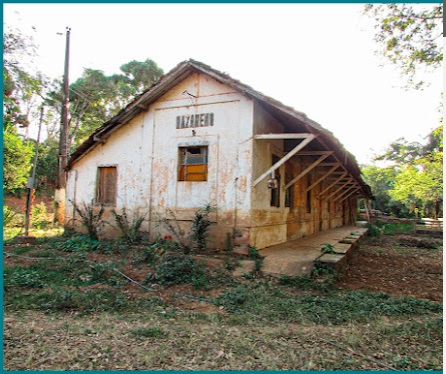
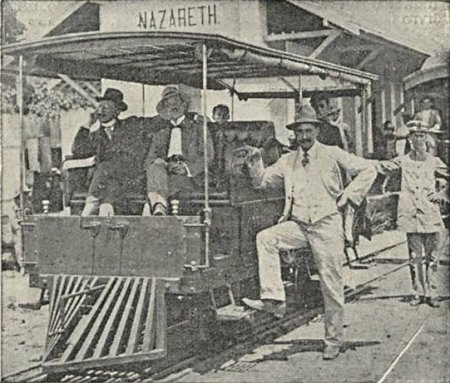
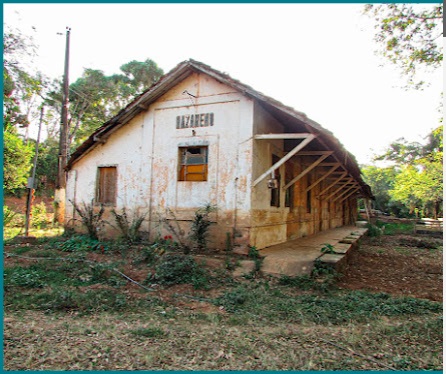
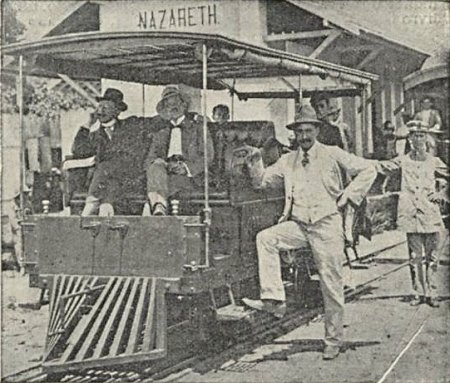
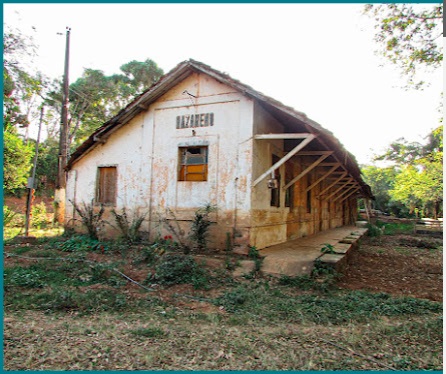
In May 1887, a railway station belonging to the E. F. Oeste de Minas railway company (Paraopeba Line) was opened nine kilometres north of the village, more precisely on the south bank of the Rio das Mortes. The station was initially called Nazareth and later Nazareno. The railway line was transferred to Rede Mineira de Viação in 1931, to V.F. Centro-Oeste in 1965, and belonged to Rede Ferroviária Federal S.A. from 1975 until it was decommissioned in 1984 (estacoesferroviarias.com.br). Today, the tracks have been removed, and the station building, which presumably belongs to the municipality, appears to be in a state of disrepair.
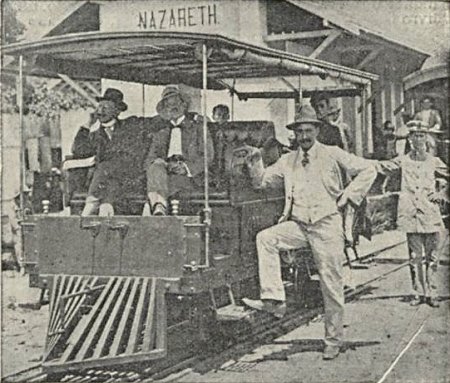
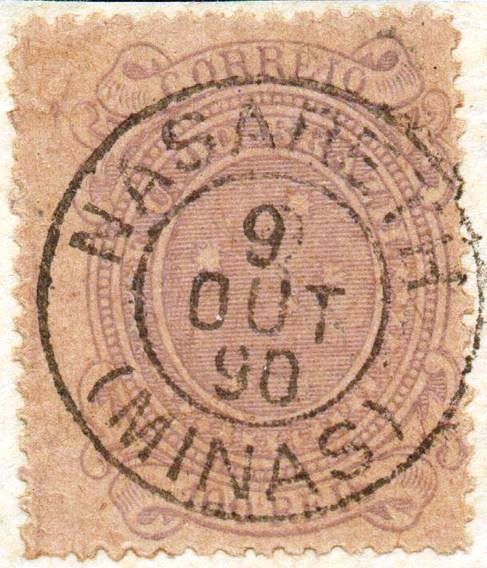
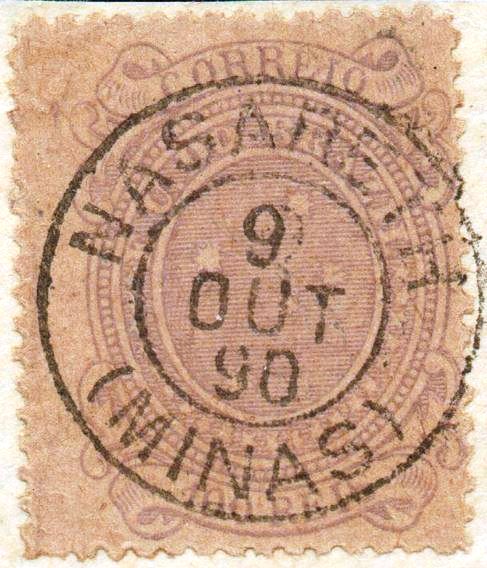
Due to the distance to the town, a post office was also built at the station in October 1887. This is confirmed by consistent information from Paula Sobrinho and R. Koester. The only station postmark from the 19th century is NMG-1746a (collection Fuad Ferreira Fo.):

Outros nomes: Ribeiro Fundo, Nazareno (1943)
A capela Nossa Senhora de Nazareth foi construída em 1725 no Arraial de Ribeiro Fundo. Localizava-se próxima à margem norte do Rio Grande, a cerca de 200 quilômetros a sudoeste da futura capital da província, Ouro Preto. Em junho de 1850, tornou-se a Freguesia de N. Sra. de Nazareth, pertencente à Vila de S. João d’El Rei. Em dezembro de 1938, o nome foi simplificado para Distrito de Nazareth e, cinco anos depois, alterado para Nazareno. Desde dezembro de 1953, Nazareno é um município independente.
Tanto Paula Sobrinho (História Postal de Minas Gerais, Belo Horizonte, 1997) quanto R. Koester (Carimbologia XXVIII) concordam que havia uma agência dos correios no local desde dezembro de 1877. O carimbo postal mais antigo até agora é o NMG-1745a (fig. Koester, op. cit.), que também existe em lilás:
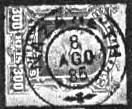
Seguiu-se o NMG-1745b (fig. da Internet):
Em maio de 1887, nove quilômetros ao norte da localidade, mais precisamente na margem sul do Rio das Mortes, foi inaugurada uma estação ferroviária da E. F. Oeste de Minas (Linha do Paraopeba). A estação chamava-se inicialmente Nazareth e mais tarde Nazareno. A linha ferroviária passou para a Rede Mineira de Viação em 1931, para a V.F. Centro-Oeste em 1965 e pertenceu à Rede Ferroviária Federal S.A. de 1975 até ao seu fechamento em 1984 (estacoesferroviarias.com.br). Hoje, os trilhos foram removidos, o edifício da estação pertence provavelmente ao município e dá uma impressão de abandono.
Devido à distância até a cidade, em outubro de 1887 também foi construída uma agência postal na estação, conforme contam Paula Sobrinho e R. Koester. O único carimbo postal da estação do século XIX é o NMG-1746a (Coleção Fuad Ferreira Fo.):

Andere Namen: Ribeiro Fundo, Nazareno (1943)
Die Kapelle Nossa Senhora de Nazareth wurde im Jahr 1725 im Arraial de Ribeiro Fundo (zu Deutsch: „Tiefer Bach”) erbaut. Sie lag in der Nähe des Nordufers des Rio Grande, rund 200 Kilometer südwestlich der späteren Provinzhauptstadt Ouro Preto. Im Juni 1850 wurde sie zur Freguesia de N. Sra. de Nazareth, die zur Vila de S. João d’El Rei gehörte. Im Dezember 1938 wurde der Name zu Distrito de Nazareth vereinfacht und fünf Jahre später zu Nazareno geändert. Seit Dezember 1953 ist Nazareno ein eigenständiger Município.
Sowohl Paula Sobrinho (História Postal de Minas Gerais, Belo Horizonte, 1997) als auch R. Koester (Carimbologia XXVIII) sind sich einig, dass es dort seit Dezember 1877 ein Postamt gab. Der bisher älteste Poststempel ist NMG-1745a (Abb. Koester, op. cit.), den es auch in lila gibt:
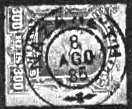
Es folgte NMG-1745b (Abb. aus dem Internet):
Im Mai 1887 wurde neun Kilometer nördlich der Ortschaft, genauer am Südufer des Rio das Mortes, ein Bahnhof der Eisenbahngesellschaft E. F. Oeste de Minas (Paraopeba-Linie) eröffnet. Der Bahnhof hieß zunächst Nazareth und später Nazareno. Die Bahnlinie ging 1931 an die Rede Mineira de Viação, 1965 an die V.F. Centro-Oeste und gehörte von 1975 bis zur Stilllegung im Jahr 1984 zur Rede Ferroviária Federal S.A. (estacoesferroviarias.com.br). Heute sind die Gleise entfernt, das Bahnhofsgebäude gehört vermutlich der Gemeinde und macht einen verwahrlosten Eindruck.
Aufgrund der Entfernung zum Ort wurde im Oktober 1887 auch am Bahnhof ein Postamt errichtet. Dies geht aus übereinstimmenden Angaben von Paula Sobrinho und R. Koester hervor. Der bisher einzige Bahnhofspoststempel im 19. Jahrhundert ist NMG-1746a (Samml. Fuad Ferreira Fo.):


 Carimbologia