Other names: Acuantan, Nundiaquara
See also Morretes (MPR-0130)
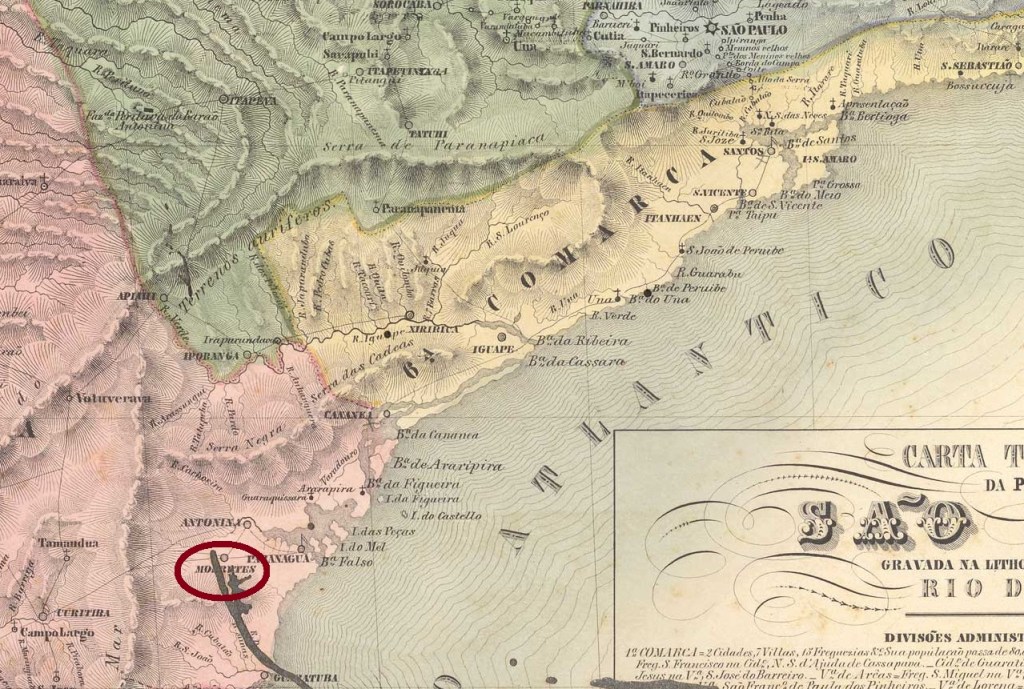
The history of this ancient settlement raises some questions about the place name that have not yet been clarified. Two names of indigenous origin have been found: ‘Acuantan’ (mountainous land) and ‘Nhundiaquara’ (home of the Jundiás, a species of catfish commonly found in Brazil). However, it is not yet known when exactly these names were used. The place has been known since at least 1721. It belonged to the Vila de Paranaguá, was located on the south bank of the Nhundiaquara and was 60 km east of the later provincial capital Curitiba. In May 1811, it was subordinated to the Freguesia de N. Sra. do Porto de Morretes and the Vila de Antonina. It is said to have become a vila in March 1841 and the city of Nhundiaquara in May 1869, but this name is hardly ever found in the regional press. A sure indication that it was unpopular. Since April 1870, it has officially been called Município de Morretes.
As Nova Monteiro writes in ‘Administrações e Agencias Postaes do Brasil Imperio’ (Brasil Filatelico/RJ, 1934–1935; reprinted by SPP 1994–1999), there has been a post office there since September 1832. At that time, Morretes was still part of the province of São Paulo; Paraná only became a province in July 1854.
No imperial postmark with the place name Nhundiaquara has been found to date. For cancellations with Morretes, see MPR-0130.
Outros nomes: Acuantan, Nundiaquara
Veja também Morretes (MPR-0130)
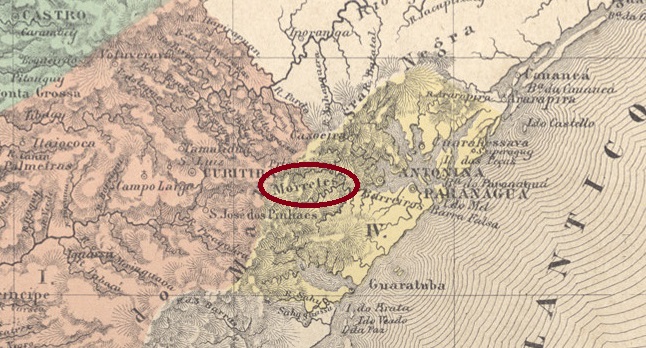
A história deste antigo povoado levanta algumas questões sobre o nome do local, que ainda não foram esclarecidas. Foram encontrados dois nomes de origem indígena: “Acuantan” (terra montanhosa) e “Nhundiaquara” (terra dos jundiás, um peixe comum no Brasil). No entanto, até o momento não se sabe exatamente quando eles foram usados. O local é conhecido desde 1721, no mínimo. Pertencia à Vila de Paranaguá, ficava na margem sul do Nhundiaquara e estava localizado 60 km a leste da futura capital provincial, Curitiba. Em maio de 1811, foi subordinada à Freguesia de N. Sra. do Porto de Morretes e à Vila de Antonina. Supostamente, tornou-se vila em março de 1841 e cidade de Nhundiaquara em maio de 1869, mas esse nome quase não aparece na imprensa regional. Um indício claro de que era impopular. Desde abril de 1870, ela deve se chamar oficialmente Município de Morretes.
Como escreve Nova Monteiro em “Administrações e Agencias Postaes do Brasil Imperio” (Brasil Filatelico/RJ, 1934–1935; reimpressão SPP 1994–1999), havia uma agência dos correios lá desde setembro de 1832. Naquela época, Morretes ainda pertencia à província de São Paulo; o Paraná só se tornou uma província em julho de 1854.
Até o momento, não foi encontrado nenhum carimbo postal imperial com o topônimo Nhundiaquara. Para carimbos com Morretes, consulte MPR-0130.
Andere Namen: Acuantan, Nundiaquara
Siehe also Morretes (MPR-0130)
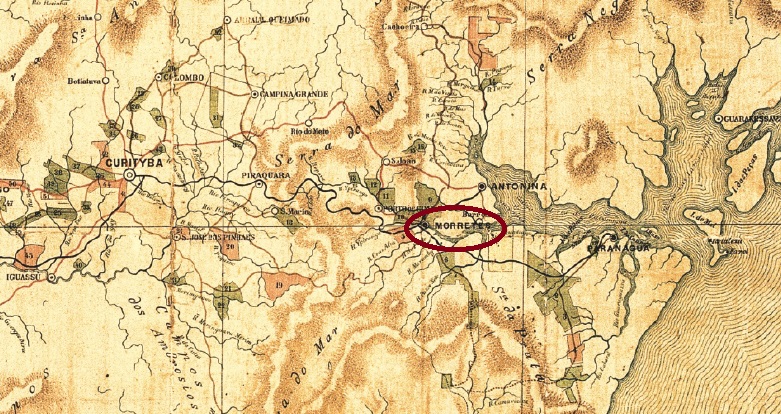
Die Geschichte dieser alten Siedlung wirft einige Fragen zum Ortsnamen auf, die noch nicht geklärt sind. Es wurden zwei Namen indigenen Ursprungs gefunden: „Acuantan” (bergiges Land) und „Nhundiaquara” (Heimat der Jundiás, eine in Brasilien häufig vorkommende Welsart). Bisher ist jedoch nicht bekannt, wann genau diese verwendet wurden. Der Ort ist spätestens seit 1721 bekannt. Er gehörte zur Vila de Paranaguá, lag am Südufer des Nhundiaquara und befand sich 60 km östlich der späteren Provinzhauptstadt Curitiba. Im Mai 1811 wurde er zur Freguesia de N. Sra. do Porto de Morretes und der Vila de Antonina untergeordnet. Angeblich wurde er im März 1841 zur Vila und im Mai 1869 zur Stadt Nhundiaquara, doch dieser Name findet sich kaum in der regionalen Presse. Ein sicheres Indiz dafür, dass er unbeliebt war. Seit April 1870 soll er offiziell Município de Morretes heißen.
Wie Nova Monteiro in „Administrações e Agencias Postaes do Brasil Imperio” (Brasil Filatelico/RJ, 1934–1935; Nachdruck SPP 1994–1999) schreibt, gab es dort seit September 1832 ein Postamt. Zu diesem Zeitpunkt lag Morretes noch in der Provinz São Paulo; Paraná wurde erst im Juli 1854 eine Provinz.
Bisher wurde kein kaiserlicher Poststempel mit der Ortsbezeichnung Nhundiaquara gefunden. Für Stempel mit Morretes siehe MPR-0130.

 Carimbologia