Categories
Carimbologia T-Z

Vargem Grande, Maranhão (VMA-0280)

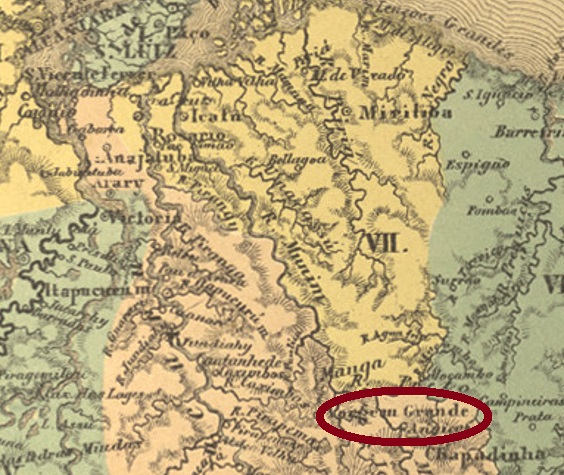
Atlas do Imperio do Brasil, 1868

Another name: Manga de Iguará

This village, old by Brazilian standards, was already a freguesia of the Vila of Itapecuru-Mirim in November 1817 and was located close to the west bank of the river Iguará, 180 km south of the future provincial capital of São Luís. In April 1833, the place rose to become a vila called São Sebastião da Manga de Iguará, but nine years later was given the name São Sebastião da Vargem Grande. Between December 1933 and June 1935, Vargem Grande was once again a district of Itapecuru-Mirim, then the Município was re-established.

Three dates of origin for the local post office have been found, all from 1856, the first being in January, according to the postal report (Relatorio Postal) of 1886. The other two dates are from June 1856, as Aureo G. Santos writes in Agências de Correio Criadas e Suprimidas 1851, 1855, 1856 e 1857 (Brasil Filatélico 181, Rio de Janeiro, 1977), and Nova Monteiro confirms in Administrações e Agencias Postaes do Brasil Imperio (Brasil Filatelico/RJ, 1934-5; Reprint SPP 1994-1999):

Aureo G. Santos (op.cit.)

So far, no imperial postmark from this locality has appeared.
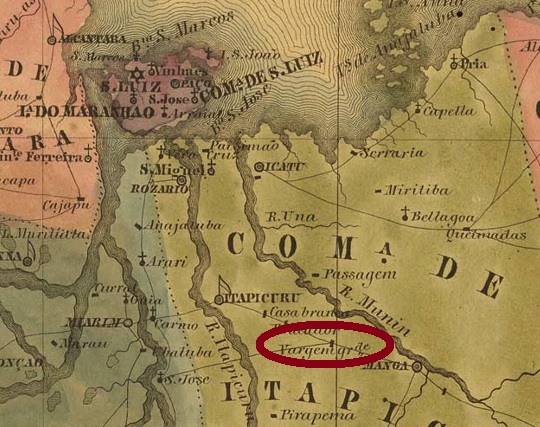
Villiers de l’Ile Adam: Carta (…) da Provincia do Maranhão, 1850

Anderer Name: Manga de Iguará

Diese für brasilianische Verhältnisse alte Ortschaft war bereits im November 1817 eine Freguesia der Vila von Itapecuru-Mirim und lag nah am Westufer des Flusses Iguará, 180 km südlich der künftigen Provinzhauptstadt São Luís entfernt. Im April 1833 stieg der Ort zu einer Vila auf, die São Sebastião da Manga de Iguará hieß, aber neun Jahre später wurde der Vila den Namen São Sebastião da Vargem Grande verpasst. Zwischen Dezember 1933 und Juni 1935 war Vargem Grande nochmals ein Distrikt von Itapecuru-Mirim, dann wurde der Município wieder hergestellt.

Drei Entstehungsdaten fürs örtliche Postamt wurden gefunden, allesamt aus dem Jahr 1856. Erstmals im Januar, wie im Postbericht (Relatorio Postal) von 1886 zu lesen ist. Die beiden anderen Termine sind aus Juni des Jahres, wie sowohl Aureo G. Santos in Agências de Correio Criadas e Suprimidas 1851, 1855, 1856 e 1857 (Brasil Filatélico 181, Rio de Janeiro, 1977) als auch Nova Monteiro in Administrações e Agencias Postaes do Brasil Imperio (Brasil Filatelico/RJ, 1934-5; Reprint SPP 1994-1999) schreiben:

Aureo G. Santos (op.cit.)

Bisher ist kein kaiserlicher Poststempel aus dieser Ortschaft aufgetaucht.
Categories
Carimbologia T-Z

Vargem Grande (Guaratiba), Município Neutro (VMN-0205)

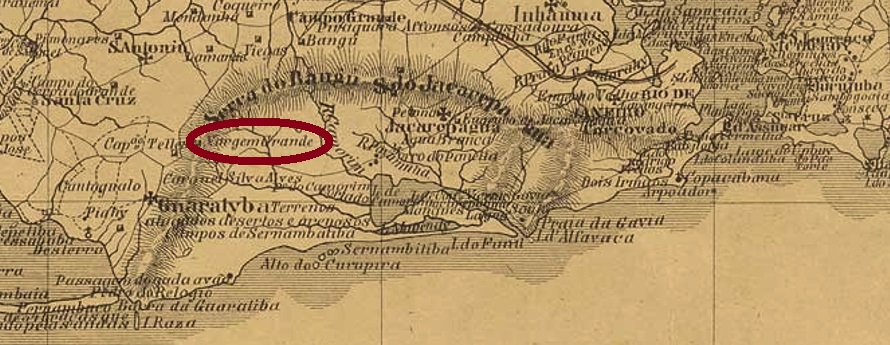
Bellegard-Niemeyer: Carta Corographica da Provincia do Rio de Janeiro, 1867

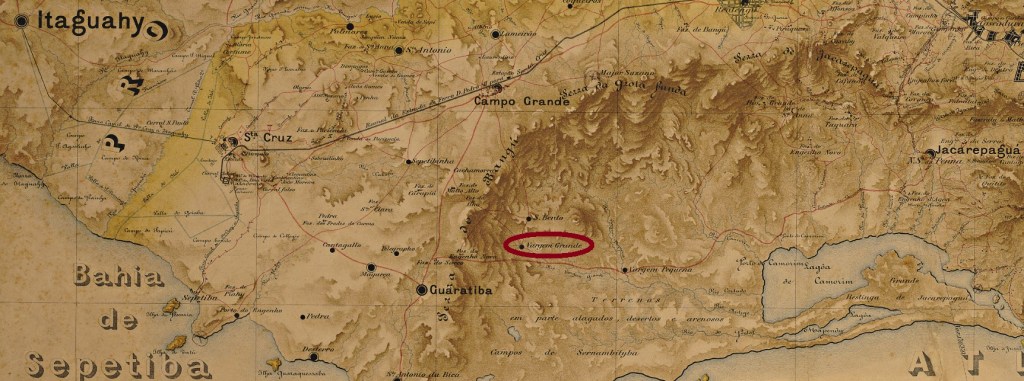
This settlement originated as a large fazenda more than 40 km west of the capital Rio de Janeiro. It belonged to the freguesia of Guaratiba and was separated from this locality by the Serra do Bangu. Today, Vargem Grande is part of the district of Barra da Tijuca in the município of Rio de Janeiro. 

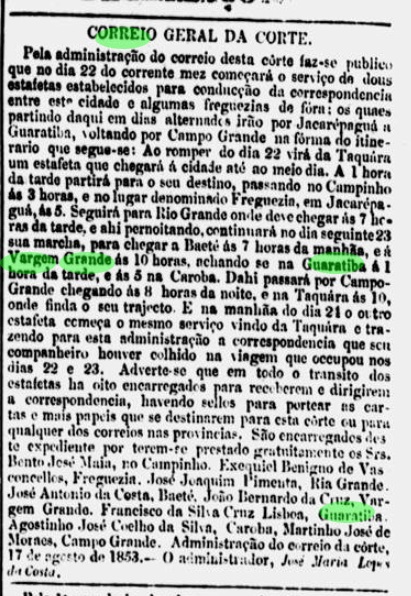
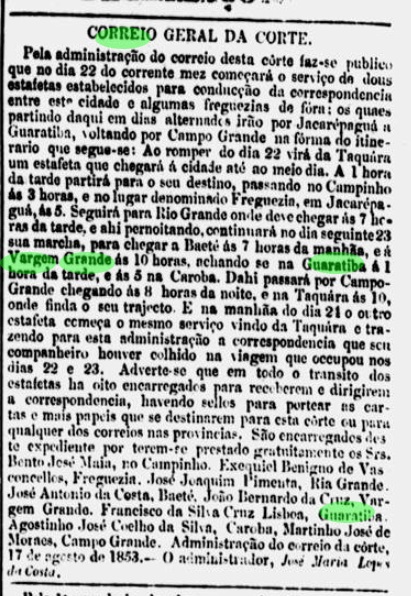
Two dates of origin for the local post office have been found. First “ca. 1867”, as Paulo Novaes writes in agenciaspostais.com.br. Then 1879, as noted in the Directory of Imperial Post Offices (Tabella das Agencias do Correio do Imperio, Rio de Janeiro, 1885). However, from August 1853 onwards, there was both a postal relay service there and stamp sales on place, according to the Rio press:

Jornal do Commercio, 18.08.1853

So far, no Imperial postmark has been seen for this locality.

Mappa do Municipio Neutro, ca. 1880

Dese Siedlung entstand als eine große Fazenda, die über 40 km westlich von der Hauptstadt Rio de Janeiro entfernt lag. Sie gehörte der Freguesia von Guaratiba und war von dieser Ortschaft durch die Serra do Bangu getrennt. Heute ist Vargem Grande ein Ortsteil des Distrikts von Barra da Tijuca im Município von Rio de Janeiro. 

Zwei Entstehungsdaten fürs örtliche Postamt wurden gefunden. Erstmals „ca. 1867“, wie Paulo Novaes in agenciaspostais.com.br schreibt. Dann 1879, wie imVerzeichnis der kaiserlichen Postämter (Tabella das Agencias do Correio do Imperio, Rio de Janeiro, 1885) vermerkt. Allerdings gab es ab August 1853 sowohl einen Poststafettendienst dorthin als auch Briefmarkenverkauf vor Ort, wie die Presse aus Rio mitteilte:

Jornal do Commercio, 18.08.1853

Bisher wurde kein Poststempel des Kaiserreichs für diese Ortschaft gesehen.

Categories
Carimbologia T-Z

Vargem do Manejo, Rio de Janeiro (VRJ-0988)

Bellegard-Niemeyer: Carta Corographica da Provincia do Rio de Janeiro, 1867

Other name: Vargem Grande do Manejo

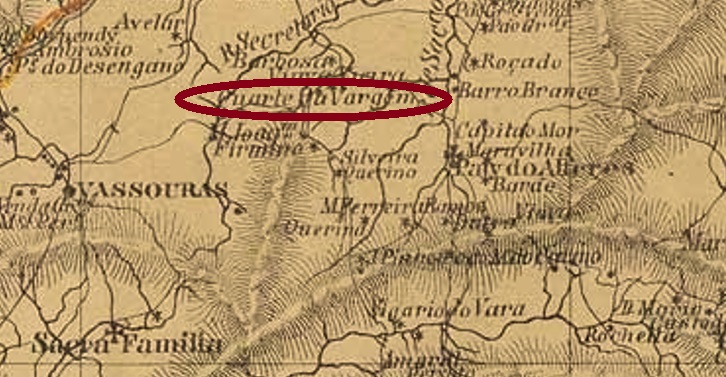
See also São José da Rolinha (SRJ-0952), Quartel da Vargem (QRJ-1318)

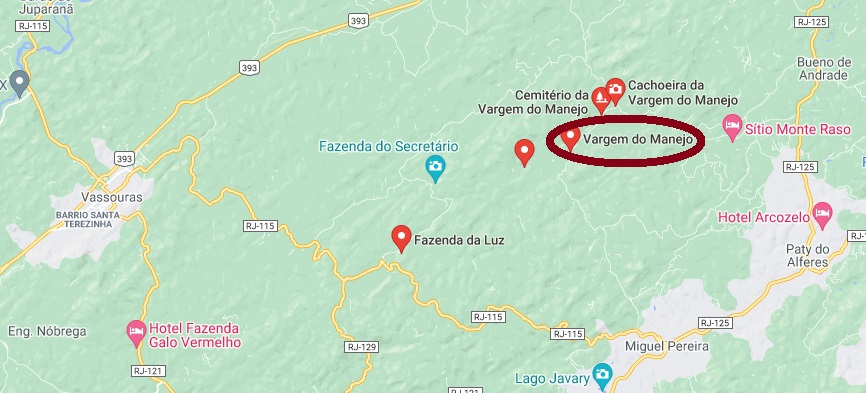
This is another locality of which it is not known why a post office was opened there at all. We can only assume that it was the home of an influential citizen, as this place is only known for its large fazenda. Whatsoever, Vargem do Manejo was a settlement near Vassouras, 120 km northwest of the capital Rio de Janeiro, which was never elevated to district or freguesia status.

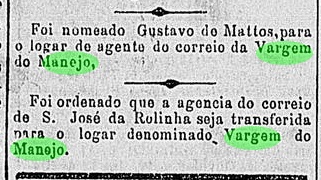
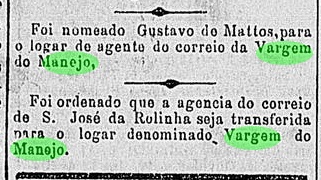
The local post office was created in early October 1887 by moving an existing post office from São José da Rolinha, according to the Rio press:

Novidades, 08.10.1887

According to Paulo Novaes (agenciaspostais.com.br), the postal agency was closed down “around 1948”. Afterwards, it is said to have been in operation again from “ca. 1957” to “ca. 1963”. The imperial postmark is VRJ-0988a (agenciaspostais.com.br): a double circle with the inscriptions VARGEM DO MANEJO above and (P. DO RIO) below. The dates in the centre of the cancel were found for 1894 to 1897.

Google Maps

Anderer Name: Vargem Grande do Manejo

Siehe auch São José da Rolinha (SRJ-0952), Quartel da Vargem (QRJ-1318)

Diese ist eine weitere Ortschaft, von der man nicht weiß, warum überhaupt vor Ort ein Postamt eröffnet wurde. Da kann nur vermutet werden, dort war ein einflussreicher Bürger zu Hause, denn dieser Ort ist lediglich durch seine große Fazenda bekannt. Wie es dem auch sei, Vargem do Manejo war eine Siedlung bei Vassouras, die 120 km nordwestlich der Hauptstadt Rio de Janeiro entfernt lag und niemals zu Distrikt oder Freguesia erhoben wurde.

Das örtliche Postamt ist Anfang Oktober 1887 durch den Umzug eines vorhandenen Postamts aus São José da Rolinha entstanden, wie die Presse aus Rio mitteilt:

Novidades, 08.10.1887

Laut Paulo Novaes (agenciaspostais.com.br) wurde die Postagentur “ca. 1948” dichtgemacht. Danach soll sie wieder in Betrieb von „ca. 1957“ bis „ca. 1963“ gewesen sein. Der kaiserliche Poststempel ist VRJ-0988a (agenciaspostais.com.br): ein Doppelkreis mit den Inschriften VARGEM DO MANEJO oben und (P. DO RIO) unten. Bisherige Daten in der Stempelmitte von 1894 bis 1897.
Categories
Carimbologia T-Z

Vargem Alegre, Minas Gerais (VMG-3260)

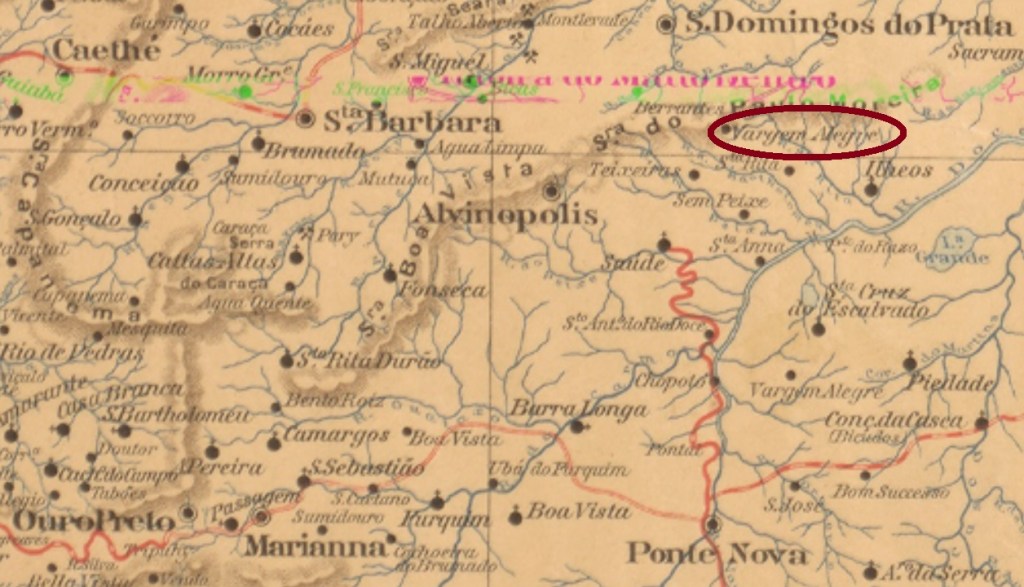
Estado de Minas Geraes, 1910

Another name: Vargem Linda (1943)

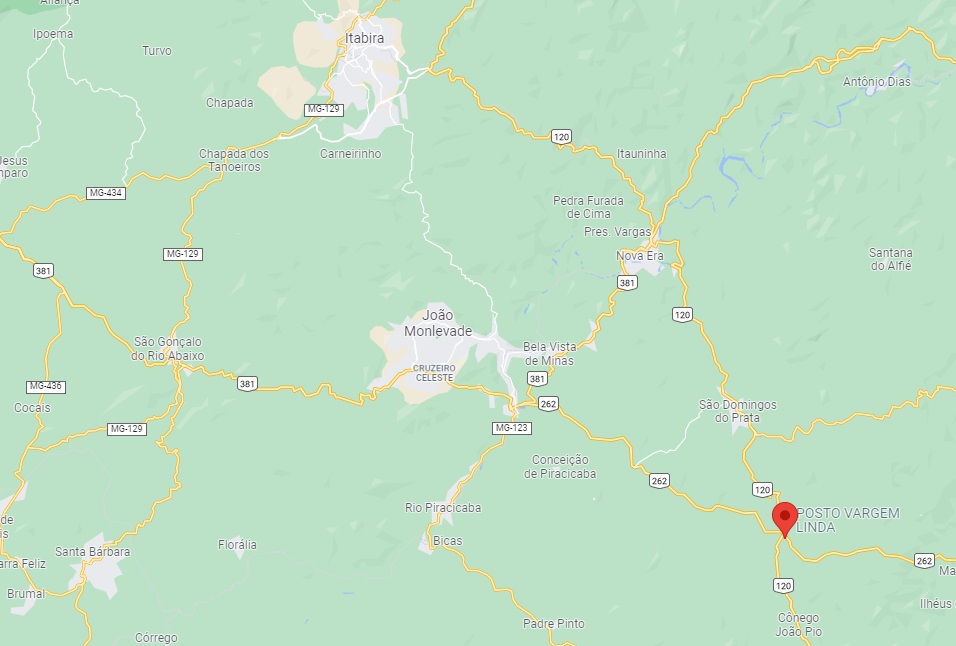
The district of Santo Antonio da Vargem Alegre was created in December 1881 in the Município of Mariana and was located on the west bank of the Rio da Prata, 150 km northeast of the provincial capital Ouro Preto. In March 1890, the village changed to the newly created Município of São Domingos do Prata. This is how it has remained until today, with the district being called Vargem Linda since December 1943.

As Paula Sobrinho writes in História Postal de Minas Gerais (Belo Horizonte, 1997), there had been a post office there since February 1882, which was then closed in March 1935. The imperial postmark – which assignment awaits definitive confirmation – is VMG-3260a (Coll. José A. Junges): a double circle with the inscription VARGEM-ALEGRE above and an ornament as a black ellipse below, containing a broad white star. The dates in the centre have so far been found for the period 1889-1891. 

Google Maps

Anderer Name: Vargem Linda (1943)

Der Distrikt von Santo Antonio da Vargem Alegre wurde im Dezember 1881 im Município von Mariana gegründet und lag am Westufer des Rio da Prata, 150 km nordöstlich der Provinzhauptstadt Ouro Preto entfernt. Im März 1890 wechselte der Ort zum neu entstandenen Município von São Domingos do Prata. So ist es bis heute geblieben, wobei der Distrikt seit Dezember 1943 Vargem Linda heißt.

Wie Paula Sobrinho in História Postal de Minas Gerais (Belo Horizonte, 1997) schreibt, gab es dort ein Postamt seit Februar 1882, das dann im März 1935 geschlossen wurde. Der kaiserliche Poststempel – der noch nicht zweifelsfrei zugeordnet ist – ist VMG-3260a (Samml. José A. Junges): ein Doppelkreis mit der Inschrift VARGEM-ALEGRE oben und einem Ornament als schwarze Ellipse unten, die einen breiten weißen Stern beinhaltet. Die Daten in der Mitte wurden bisher für den Zeitraum 1889-1891 gefunden. 

Categories
Carimbologia T-Z

Vargem Alegre (train station/Bahnhof), Rio de Janeiro (VRJ-1720)

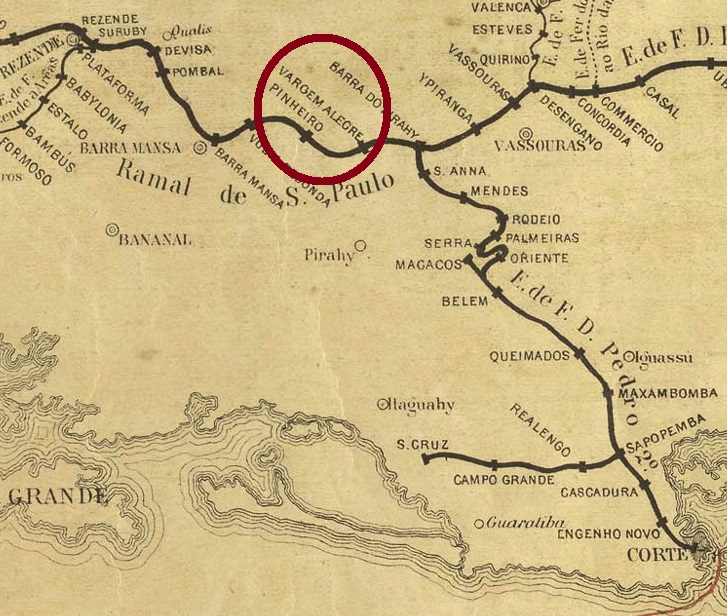
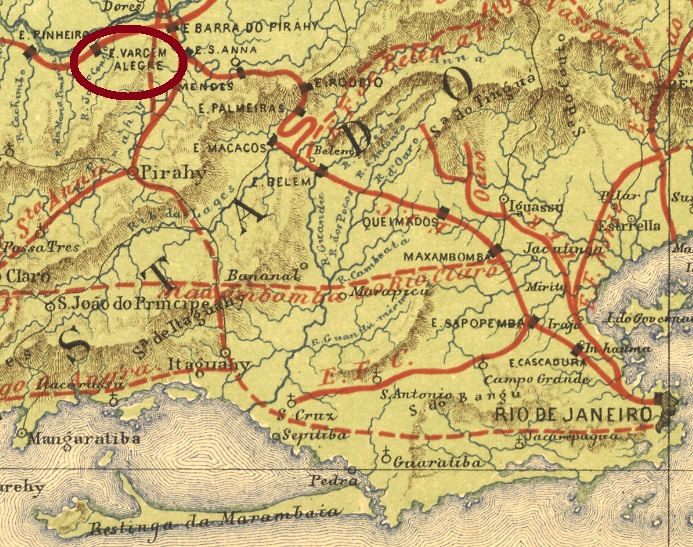
Estações Ferroviarias do Rio de Janeiro, São Paulo e Minas Geraes, 1880

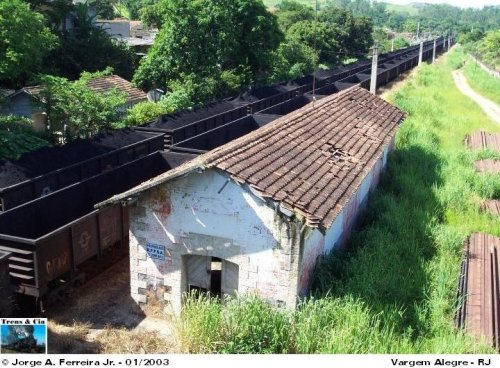
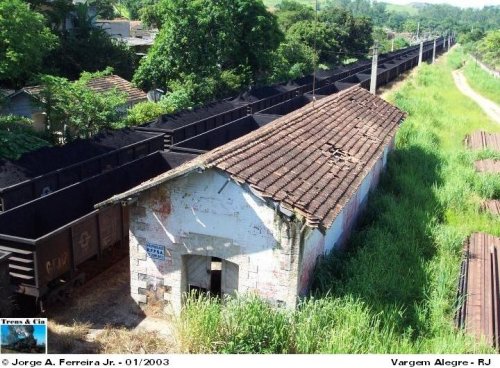
Vargem Alegre (Happy Meadow) station was inaugurated in January 1871 by the E.F. Dom Pedro II Railway Company (São Paulo Branch) and was located near on the Paraiba do Sul River in the Município of Barra do Pirahy, 120 km northwest of the capital Rio de Janeiro. The railway line changed hands with the Republic in 1889 to E.F. Central do Brasil and from 1975 until the line was closed in 1996 it belonged to Rede Ferroviária Federal S.A. (estacoesferroviarias.com.br). Today, the station building is in ruins:

2003 (Photo: Jorge A. Ferreira, in estacoesferroviarias.com.br)

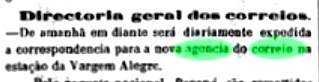
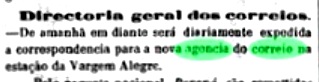
The station post office began operations in February 1871, according to the Rio press:

Diario do Rio de Janeiro, 28.02.1871

The first station postmark is VRJ-1720a (Col. José A. Junges): a double circle with the inscription VARGEM ALEGRE and a diamond ornament below. The only specimen found has an illegible date on the stamp, but it was used on a D. Pedro issue of 1883. Paulo Novaes shows the following ones in agenciaspostais.com.br. VRJ-1720b (Coll. José A. Junges) is a double circle with the inscription VARGEM=ALEGRE above and an ornament in lozenge below, the four sides of which are open. In the double circle VRJ-1720c (agenciaspostais.com.br) the strokes between VARGEM and ALEGRE above are missing and the ornament in lozenge below seems to be formed by four small lozenges. In inner dates go from 1885 to 1897, which raises doubts about the attribution of this cancel.

Estrada de Ferro Central do Brasil, 1890

Der Bahnhof Vargem Alegre (Fröhliche Aue) wurde im Januar 1871 durch die E.F. Dom Pedro II Bahngesellschaft (São Paulo Abzweigung) eingeweiht und lag direkt am Fluss Paraiba do Sul im Município von Barra do Pirahy, 120 km nordwestlich der Hauptstadt Rio de Janeiro entfernt. Die Bahnlinie wechselte 1889 mit der Republik zu E.F. Central do Brasil und von 1975 bis zur Streckenstilllegung 1996 gehörte sie der Rede Ferroviária Federal S.A. (estacoesferroviarias.com.br). Heute ist das Bahnhofsgebäude eine Ruine:

2003 (Foto: Jorge A. Ferreira, in estacoesferroviarias.com.br)

Das Bahnhofspostamt nahm im Februar 1871 den Betrieb auf, wie die Presse aus Rio mitteilte:

Diario do Rio de Janeiro, 28.02.1871

Der erste Bahnhofsstempel ist VRJ-1720a (Samml. José A. Junges): ein Doppelkreis mit der Inschrift VARGEM ALEGRE und einem Rauten- Ornament darunter. Das einzige gefundene Exemplar hat ein unleserliches Datum auf dem Stempel, aber es wurde auf einer D. Pedro-Ausgabe von 1883 verwendet. Paulo Novaes zeigt in agenciaspostais.com.br die darauf folgenden. VRJ-1720b (Samml. José A. Junges) ist ein Doppelkreis mit der Inschrift VARGEM=ALEGRE oben und einem Ornament in Raute unten, deren vier Seiten offen sind. Daten in der Mitte von 1885 bis 1888. Beim Doppelkreis VRJ-1720c (agenciaspostais.com.br) fehlen die Striche zwischen VARGEM und ALEGRE oben und das Ornament in Raute unten scheint durch vier kleine Rauten gebildet zu sein. In inneren Daten gehen von 1885 bis 1897, was Zweifel an der Zuordnung dieses Stempels weckt.

Categories
Carimbologia T-Z

Vamiranga, São Paulo (VSP-1460)

Google Maps

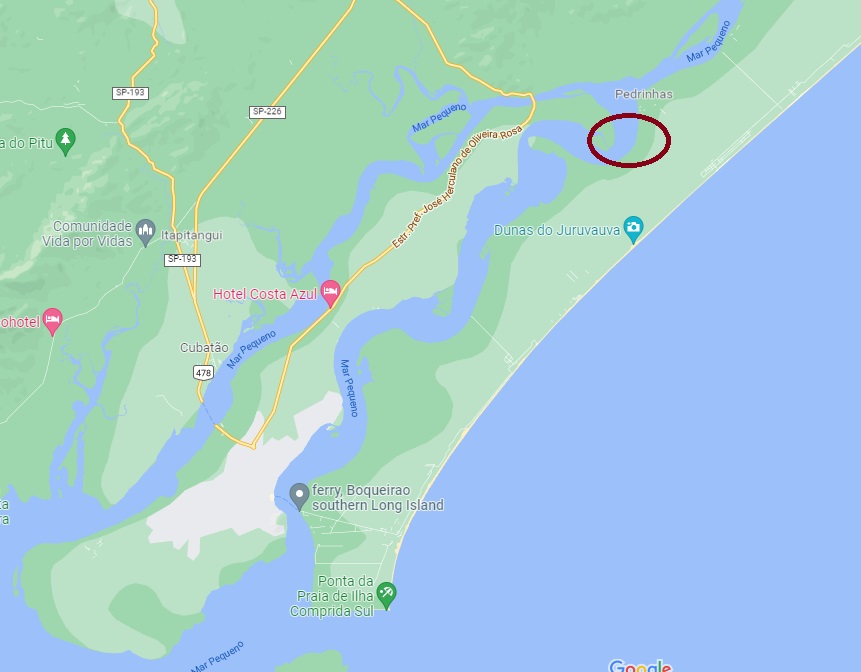
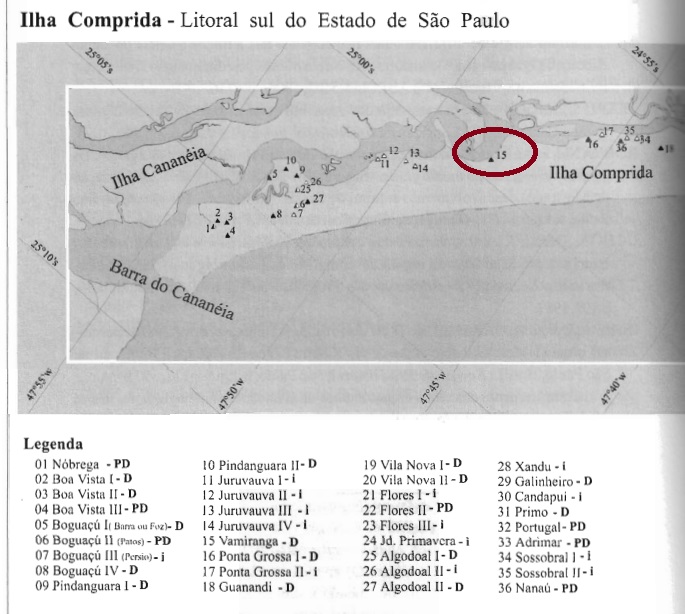
Vamiranga is another village that has since disappeared from the map. We don’t even know where it was exactly. It is certain that in the 19th century Vamiranga was a rural suburb on Comprida (=Long) Island, which at that time belonged to the município of Cananea, located about 240 km southwest of the provincial capital São Paulo. Ilha Comprida has been an independent município since December 1991, presumably the present seaside resort of Pedrinhas is the successor settlement for Vamiranga. The word from the Indian language is said to mean red fruit.

The local post office was created in July 1888, as reported in the Rio press:

Jornal do Commercio/RJ, 27.07.1888

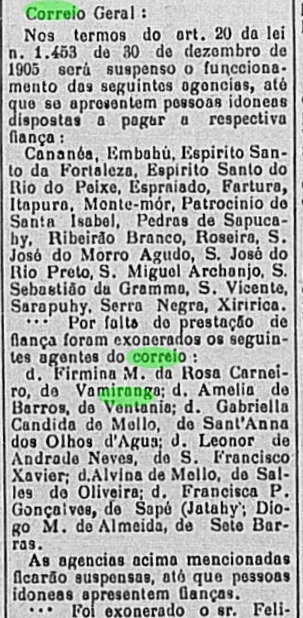
At the beginning of 1907, the postal agent in charge was dismissed because serious accounting problems had not been solved, and the post office had to close, apparently for good:

Correio Paulistano, 09.02.1907

So far no imperial postmark has been seen from this locality. It must be very rare.

Uchoa: Sambaquis da Ilha Comprida

Vamiranga ist eine weitere Ortschaft, die inzwischen aus der Karte verschwunden ist. Wir wissen nicht mal, wo sie genau lag. Sicher ist, dass Vamiranga im 19. Jahrhundert ein ländlicher Vorort auf der Comprida (=Lange)-Insel war, die damals dem Município von Cananea angehörte, ungefähr 240 km südwestlich der Provinzhauptstadt São Paulo gelegen. Ilha Comprida ist seit Dezember 1991 ein eigenständiger Município, vermutlich ist der heutige Badeort Pedrinhas die Nachfolgesiedlung für Vamiranga. Das Wort aus der Indianersprache soll Rote Frucht bedeuten.

Das örtliche Postamt entstand im Juli1888, wie die Presse aus Rio bekannt machte:

Jornal do Commercio/RJ, 27.07.1888

Am Anfang 1907 wurde der zuständige Postagent entlassen, da gravierende Abrechnungsprobleme nicht gelöst waren, und das Postamt musste schließen, offenbar für immer:

Correio Paulistano, 09.02.1907

Bisher wurde kein kaiserlicher Poststempel aus dieser Ortschaft gesehen. Er muss sehr selten sein.

Categories
Carimbologia T-Z

Vallinhos (train station/Bahnhof), São Paulo (VSP-2030)

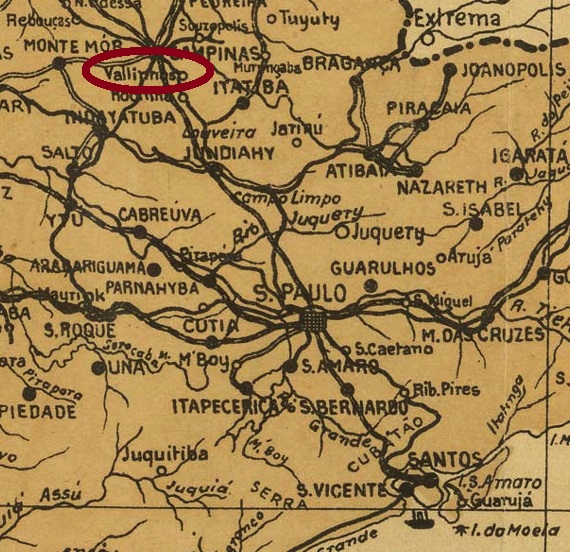
Companhia Paulista de Estradas de Ferro

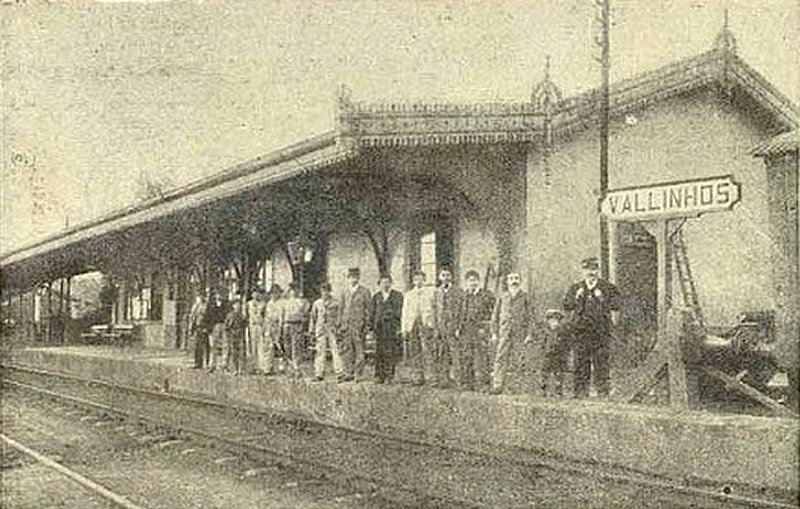
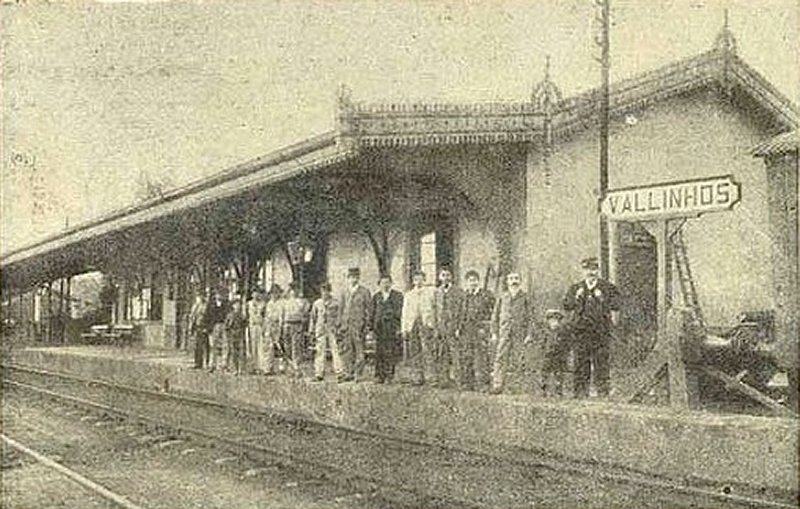
Vallinhos station was inaugurated by the Cia. Paulista railway company (main line) in March 1872 and was in the Município of Campinas, 90 km northwest of the provincial capital São Paulo. In 1913, a new station was built, which was in operation until the line was closed in 1998. The old station was nevertheless not demolished and is still said to serve as a residential building today. From 1971, the railway line belonged to FEPASA (estacoesferroviarias.com.br).

In 1908 (Photo: O Malho in estacoesferroviarias.com.br)

Around the station, the settlement continued to grow and was elevated to the district of Campinas in May 1896. Since December 1953, Valinhos (as it is written today) has been an independent municipio.

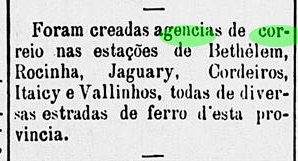
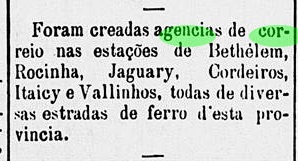
The station post office was created in December 1879, according to the regional press:

A Constituinte, 25/12/1879

The imperial postmark of this is the French type VSP-2030a (Coll. José A. Junges): a double circle with the inscription EST. DE VALLINHOS at the top and the star between brackets at the bottom. The dates in the middle have been found so far for the period 1888 and 1891ff.

Arthur D. Ribeiro: Estado de São Paulo, 1924

Der Bahnhof Vallinhos wurde durch die Cia. Paulista Bahngesellschaft (Hauptlinie) im März 1872 eingeweiht und lag im Município von Campinas, 90 km nordwestlich der Provinzhauptstadt São Paulo entfernt. 1913 wurde ein neuer Bahnhof gebaut, der bis zur Streckenstilllegung 1998 in Betrieb war. Der alte Bahnhof wurde dennoch nicht abgerissen und soll heute noch als Wohngebäude dienen. Ab 1971 gehörte die Bahnlinie der FEPASA (estacoesferroviarias.com.br).

1908 (Foto: O Malho, in estacoesferroviarias.com.br)

Rund um den Bahnhof wuchs die Siedlung weiter und wurde Mai 1896 zum Distrikt von Campinas erhoben. Seit Dezember 1953 ist Valinhos (wie es heute geschrieben wird) ein eigenständiger Municipio.

Das Bahnhofspostamt wurde im Dezember 1879 ins Leben gerufen, wie die Regionalpresse mitteilte:

A Constituinte, 25.12.1879

Der kaiserliche Poststempel davon ist der französischer Typus VSP-2030a (Samml. José A. Junges): ein Doppelkreis mit der Inschrift EST. DE VALLINHOS oben und dem Stern zwischen Klammern unten. Die Daten in der Mitte wurden bisher für den Zeitraum 1888 und 1891ff gefunden.

Categories
Carimbologia T-Z

Vallão dos Veados, Rio de Janeiro (VRJ-0985)

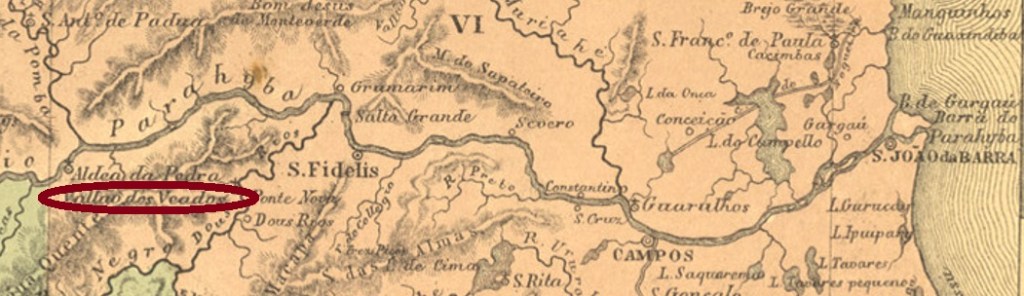
Atals do Imperio do Brasil, 1868

Other names: Dois Rios, Colonia

See also Conceição da Ponte Nova (Koester: Carimbologia XIII).

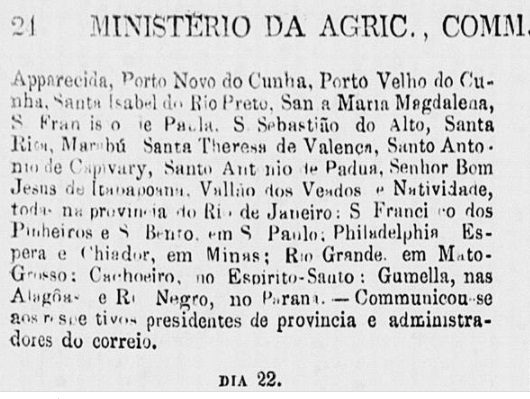
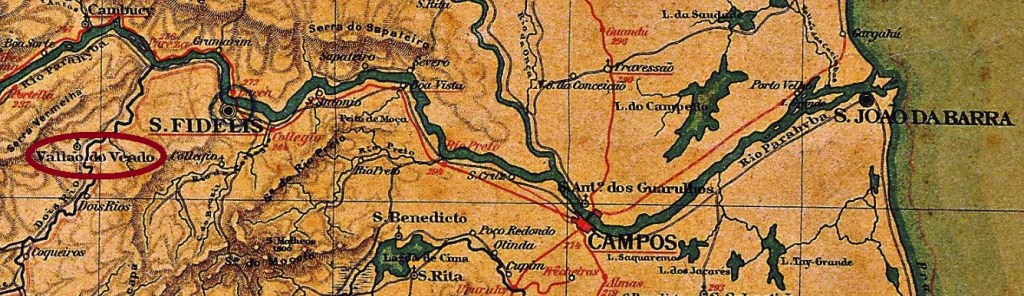
In addition to the Tapir Rift, there was also the Deer Rift (Vallão dos Veados) in the Imperial Province of Rio de Janeiro. This parish was named S. João Baptista do Vallão dos Veados in October 1857 and was located on the stream of the same name in the Município of São Fidélis, 270 km northeast of the capital Rio de Janeiro. Afterwards, the place name changed twice: in October 1890 to Dois Rios and in December 1938 to the district of Colônia, which is still valid today. 

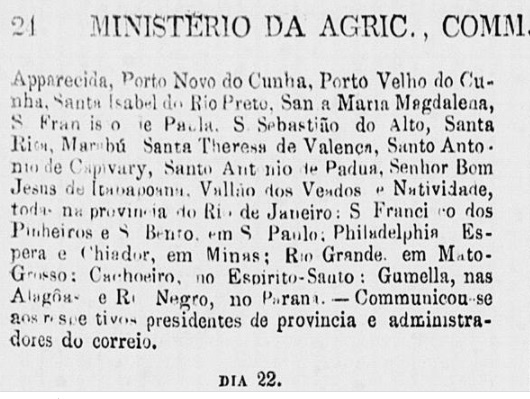
According to Nova Monteiro (Administrações e Agencias Postaes do Brasil Imperio, in Brasil Filatelico/RJ, 1934-5; Reprint SPP 1994-1999), the local post office came into being in July 1855. It had a short period of operation, as only six years later its closure was announced:

Expediente do Ministerio do Imperio, 21.06.1861

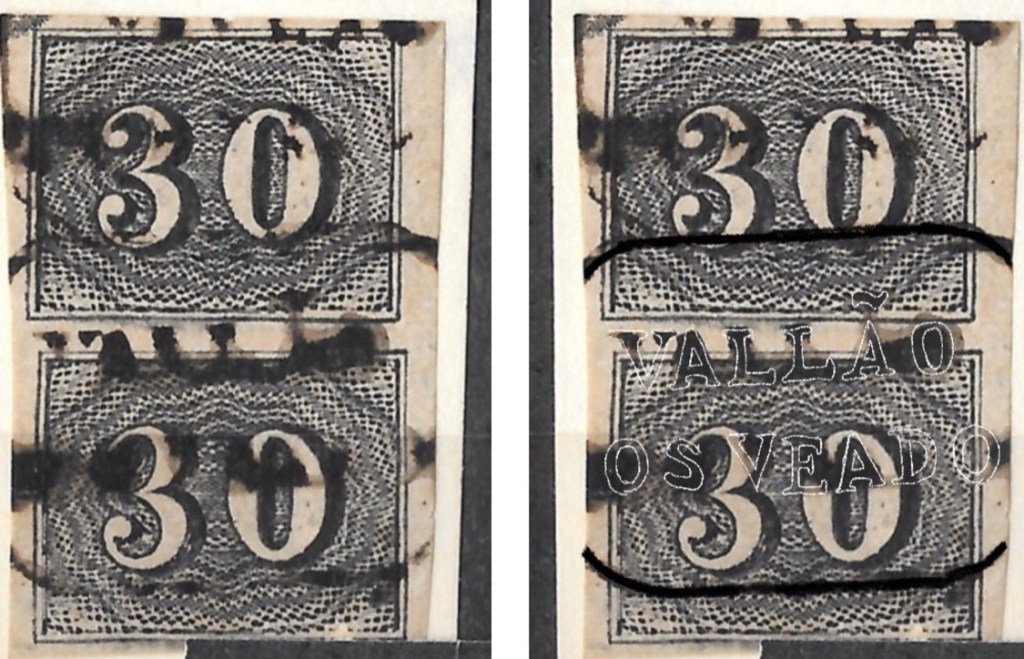
The postmark VRJ-0985a (RHM) is therefore rarely seen:

VRJ-0985a (RHM) 1855-1861

The post office reopened in 1873 in the neighbouring town of Conceição da Ponte Nova. For these postmarks see R. Koester: Carimbologia XIII.

Almanak Laemmert, 1892

Andere Namen: Dois Rios, Colonia

Siehe auch Conceição da Ponte Nova (Koester: Carimbologia XIII)

Außer dem Tapirgraben gab es ebenfalls den Rehgraben (Vallão dos Veados) in der kaiserlichen Provinz Rio de Janeiro. Diese Pfarrei wurde im Oktober 1857 mit Namen S. João Baptista do Vallão dos Veados und lag am gleichnamigen Bach im Município von São Fidélis, 270 km nordöstlich der Hauptstadt Rio de Janeiro entfernt. Danach wechselte der Ortsname zweimal: im Oktober 1890 zu Dois Rios und im Dezember 1938 zum heute noch gültigen Distrikt Colônia. 

Laut Nova Monteiro (Administrações e Agencias Postaes do Brasil Imperio, in Brasil Filatelico/RJ, 1934-5; Reprint SPP 1994-1999) entstand das örtliche Postamt im Juli 1855. Es hatte eine kurze Betriebsdauer, denn bereits sechs Jahre später wurde seine Schließung angekündigt:

Expediente do Ministerio do Imperio, 21.06.1861

Der Poststempel VRJ-0985a (RHM) ist daher selten anzutreffen:

VRJ-0985a (RHM) 1855-1861

Das Postamt eröffnete wieder 1873, allerdings im Nachbarort Conceição da Ponte Nova. Für diese Poststempel siehe R. Koester: Carimbologia XIII.

Categories
Carimbologia T-Z

Vallão das Antas (train station/Bahnhof), Rio de Janeiro (VRJ-0980)

Almanak Laemmert, 1892

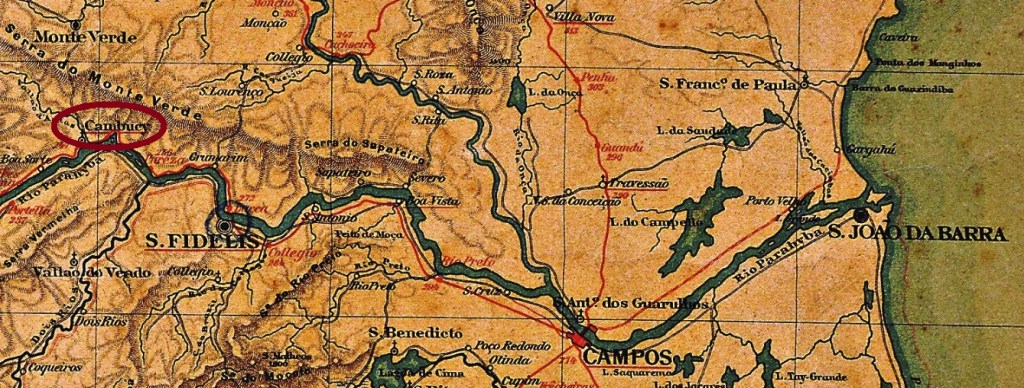
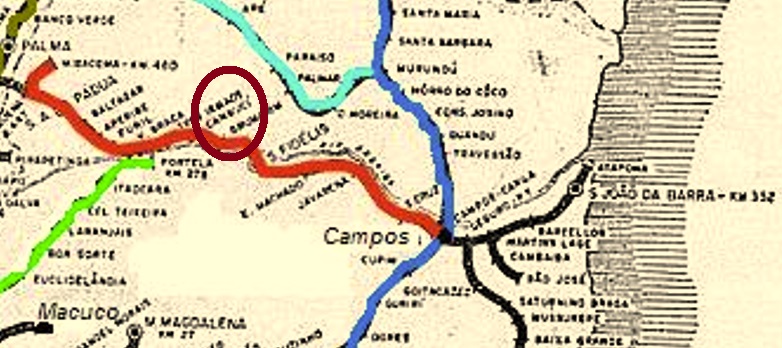
This station was inaugurated in July 1880 by the E.F. Santo Antonio de Padua Railway Company and was located on the north bank of the Paraíba do Sul River in the Município of São Fidélis, 300 km northeast of the capital Rio de Janeiro. The line changed hands in 1884 to E.F. Macahe e Campos, in 1887 to E.F. Leopoldina, and from 1975 until its closure in 1996 it belonged to Rede Ferroviária Federal S.A. (estacoesferroviarias.com.br). The name Vallão das Antas means Creek of the Tapirs, but from about 1886 the station was renamed Cambucy. The local jurisdiction changed to the Município of Monte Verde in May 1891, and since October 1918 Cambuci (as it is written today) has been an independent municipality.

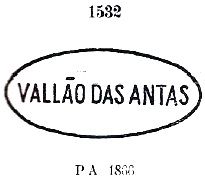
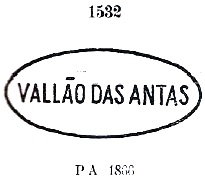
As listed in the Directory of Imperial Post Offices (Tabella das Agencias do Correio do Imperio, Rio de Janeiro, 1885), there was a station post office from 1880. The imperial postmark from this is VRJ-0980a, as shown in the Paulo Ayres (Catálogo de Carimbos Brasil-Império, S. Paulo, 1937, 1942):

VRJ-0980a (P.A. 1532) 1880-1885ff

For postmarks with Cambucy (from 1886) see R. Koester: Carimbologia VIII.

Estrada de Ferro Leopoldina

Dieser Bahnhof wurde im Juli 1880 durch die E.F. Santo Antonio de Padua Bahngesellschaft eingeweiht und lag im Município von São Fidélis, 300 km nordöstlich der Hauptstadt Rio de Janeiro entfernt. Die Linie wechselte 1884 zur E.F. Macahe e Campos, 1887 zur E.F. Leopoldina, und von 1975 bis zur Stilllegung 1996 gehörte sie der Rede Ferroviária Federal S.A. (estacoesferroviarias.com.br). Der Name Vallão das Antas bedeutet Graben der Tapire, aber ab ca. 1886 hieß der Bahnhof Cambucy. Die Ortszuständigkeit wechselte im Mai 1891 zum Município von Monte Verde, und seit Oktober 1918 ist Cambuci (wie man es heute schreibt) ein eigenständiger Município.

Wie im Verzeichnis der kaiserlichen Postämter (Tabella das Agencias do Correio do Imperio, Rio de Janeiro, 1885) aufgelistet, gab es ein Bahnhofspostamt ab 1880. Das kaiserliche Poststempel davon ist VRJ-0980a, wie im Paulo Ayres (Catálogo de Carimbos Brasil-Império, S. Paulo, 1937, 1942) abgebildet:

VRJ-0980a (P.A. 1532) 1880-1885ff

Für Poststempel mit Cambucy (ab 1886) siehe R. Koester: Carimbologia VIII.

Categories
Carimbologia T-Z

Valença (VRJ-0975) – Valença (train station/Bahnhof), Rio de Janeiro (VRJ-0976)

Atlas do Imperio do Brasil, 1868

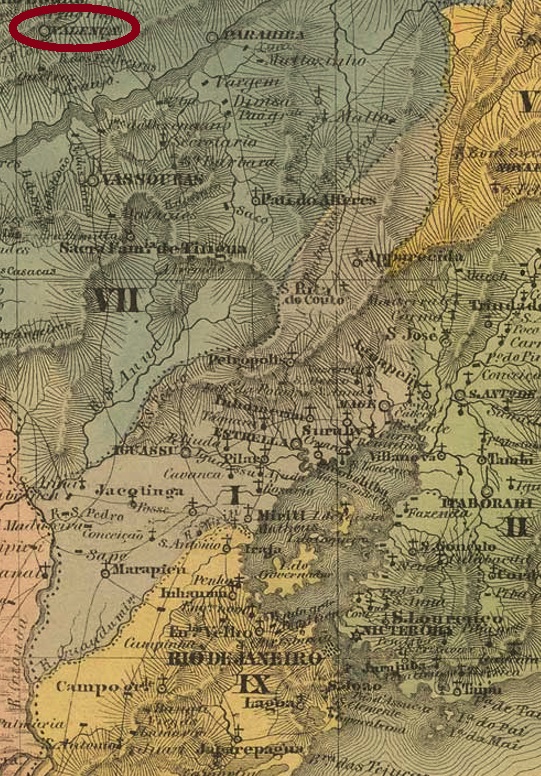
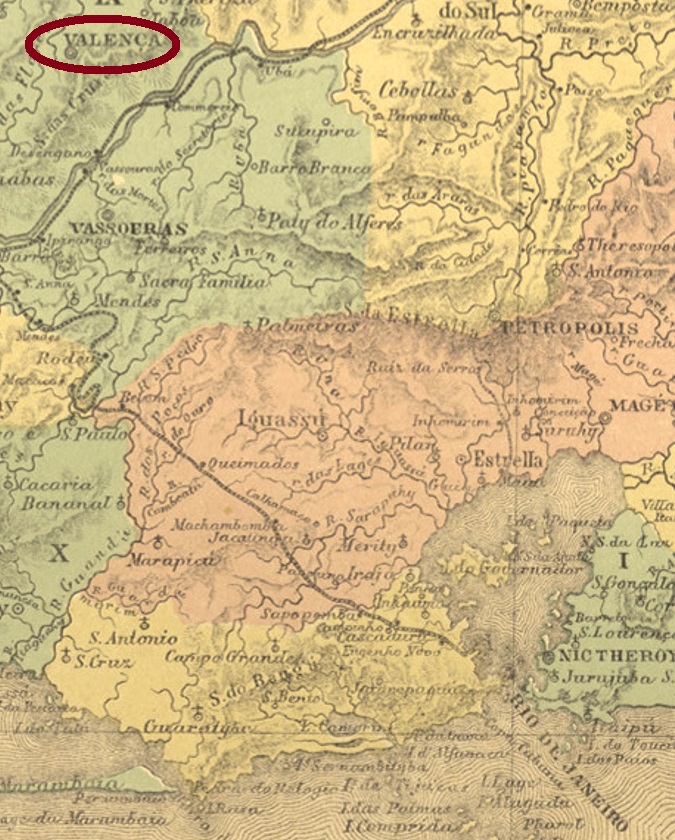
The Freguesia of Nossa Senhora da Glória de Valença was founded in August 1808, located 150 km northwest of the capital Rio de Janeiro. It was already elevated to Vila in August 1823. Valença has been a town since September 1857. In May 1871, a railway station of the E.F. Valenciana railway company, Jacutinga branch, was inaugurated there. The railway line belonged to the E.F. Central do Brasil in 1910 until its closure in 1970.

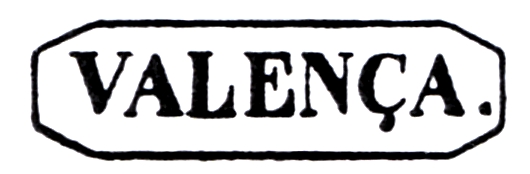
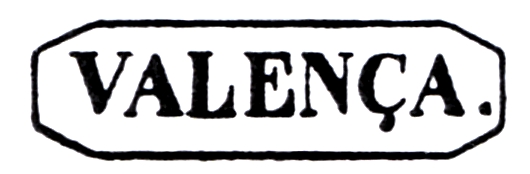
Now for the post offices. Nova Monteiro writes in Administrações e Agencias Postaes do Brasil Imperio (Brasil Filatelico/RJ, 1934-5; Reprint SPP 1994-1999) that there was a local post office there from June 1829. The first two postmarks are very similar and thus bring a risk of confusion. VRJ-0975a has already been presented in the RHM catalogue under P-RJ-45:

VRJ-0975a (RHM P-RJ-45) 1842-1869

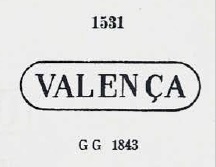
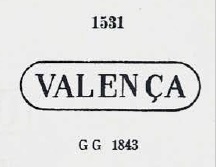
VRJ-0975b was also in use at about the same time. This cancel is in Paulo Ayres (Catálogo de Carimbos Brasil-Império, S. Paulo, 1937, 1942) with no. 1531 and, unlike the previous one, has rounded corners and no dot at the end:

VRJ-0975b (P.A. 1531) 1843-1869

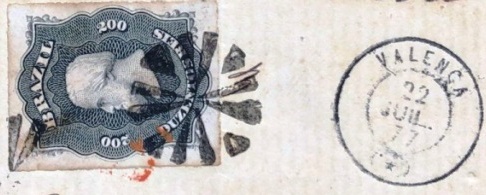
Three postmarks as double circles followed. VRJ-0975c (Coll. Fuad Ferreira Fo.) is a French type with the inscription VALENÇA above and the star between brackets below. The dates in the centre go from 1874 to 1879. VRJ-0975d was added somewhat later, as can be seen in Paulo Ayres (op.cit.) on p. 126:

VRJ-0975d (P.A. p./p. 126) 1878ff-1892

The last place cancel in the Empire is probably VRJ-0975e (Coll. Fuad Ferreira Fo.). This double circle has the same inscription at the top as its predecessors, but now has an eight-pointed star at the bottom. The dates in the middle go from 1888 to 1890.

From the station post office comes VRJ-0976a (agenciaspostais.com.br): a double circle with the inscription EST. DE VALENÇA. The only example so far has a date from 1888 in the centre.

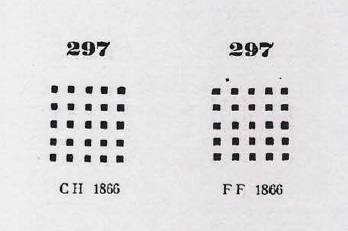
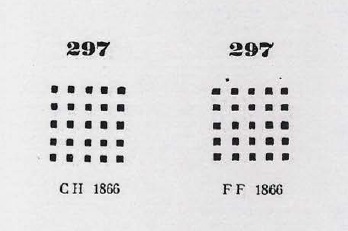
There are also mute cancellations from Valença. Paulo Ayres shows two variants here under no. 297. This cancel was often used in conjunction with VRJ-0975a and VRJ-0975b:

P.A. 297 (BPA 2992) 1868-1877 (JJ)

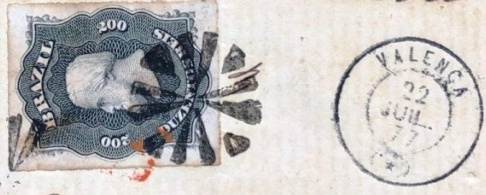
From the Luis Claudio Fritzen collection there comes a previously unrecorded mute cancel:

1877 (LCF)
Villiers de l’Ile Adam: Carta (…) da Provincia do Rio de Janeiro, 1850

Die Freguesia von Nossa Senhora da Glória de Valença wurde im August 1808 gegründet und lag 150 km nordwestlich der Hauptstadt Rio de Janeiro entfernt. Sie wurde bereits im August 1823 zur Vila erhoben. Seit September 1857 ist Valença eine Stadt. Im Mai 1871 wurde dort ein Bahnhof der E.F. Valenciana Bahngesellschaft, Jacutinga-Abzweigung, eingeweiht. Die Bahnlinie gehörte 1910 bis zur Stilllegung 1970 der E.F. Central do Brasil.
Nun zu den Postämtern. Nova Monteiro schreibt in Administrações e Agencias Postaes do Brasil Imperio (Brasil Filatelico/RJ, 1934-5; Reprint SPP 1994-1999), dass es dort ab Juni 1829 ein Ortspostamt gab. Die ersten beiden Poststempel sind sich sehr ähnlich und bringen dadurch Verwechslungsgefahr. VRJ-0975a wurde bereits im RHM Katalog unter P-RJ-45 vorgestellt:

VRJ-0975a (RHM P-RJ-45) 1842-1869

Etwa zur gleichen Zeit war auch VRJ-0975b in Gebrauch. Dieser Stempel steht in Paulo Ayres (Catálogo de Carimbos Brasil-Império, S. Paulo, 1937, 1942) mit Nr. 1531 und hat – in Unterschied zum vorigen – abgerundete Ecken und keinen Punkt am Ende:

VRJ-0975b (P.A. 1531) 1843-1869

Es folgten drei Poststempel als Doppelkreise. VRJ-0975c (Samml. Fuad Ferreira Fo.) ist ein französischer Typus mit der Inschrift VALENÇA oben und dem Stern zwischen Klammern unten. Die Daten in der Mitte gehen von 1874 bis 1879. Etwas später kam VRJ-0975d dazu, wie im Paulo Ayres (op.cit.) auf S. 126 zu sehen ist:

VRJ-0975d (P.A. p./S. 126) 1878ff-1892

Der letzte Ortsstempel im Kaiserreich dürfte VRJ-0975e (Samml. Fuad Ferreira Fo.) sein. In diesem Doppelkreis hat man oben die gleiche Inschrift wie bei seinen Vorgängern, unten ist nun ein achtzackiger Stern zu sehen. Die Daten in der Mitte gehen von 1888 bis 1890.

Aus dem Bahnhofspostamt kommt VRJ-0976a (agenciaspostais.com.br): ein Doppelkreis mit der Inschrift EST. DE VALENÇA. Das bisher einzige Beispiel hat ein Datum aus 1888 in der Mitte.

Auch stumme Abstempelungen aus Valença sind vorhanden. Paulo Ayres zeigt hier gleich zwei Varianten unter Nr 297. Dieser Stempel wurde oft in Verbindung mit den beiden ersten Ortsstempel verwendet:

P.A. 297 (BPA 2992) 1868-1877 (JJ)

Aus der Sammlung Luis Claudio Fritzen kommt ein bisher unterfasstet stummer Stempel:

1877 (LCF)