See also Freguezia da Lage (FRJ-1075)
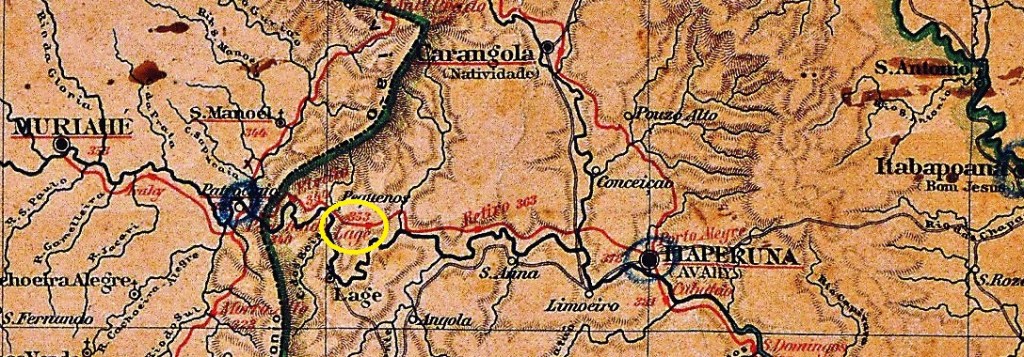
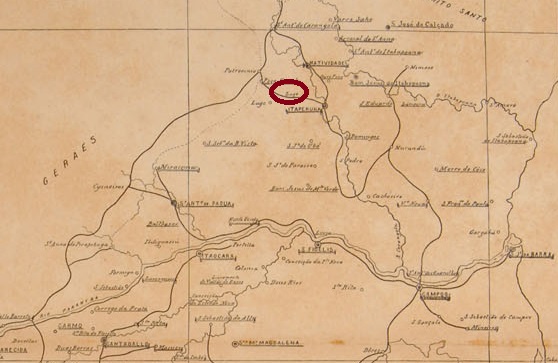
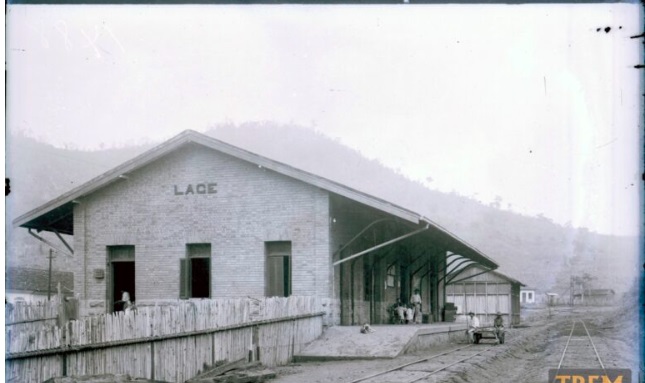
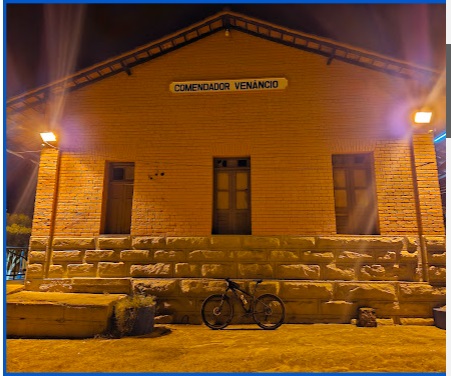
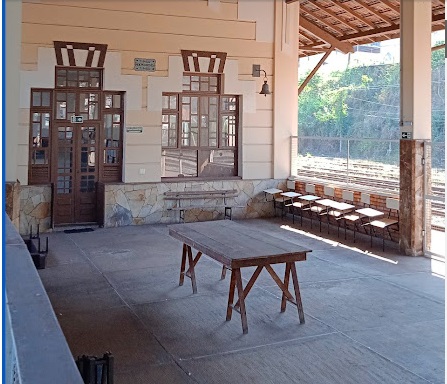
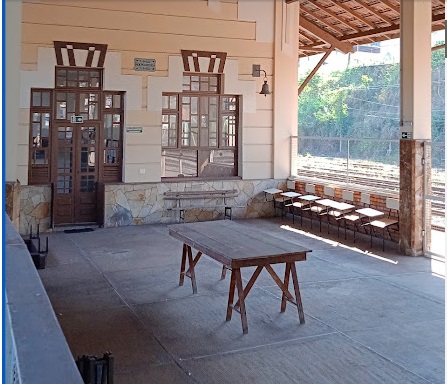
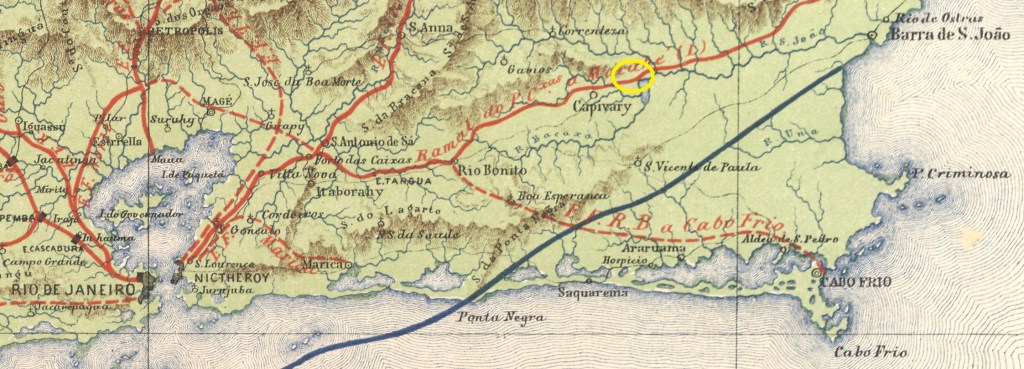
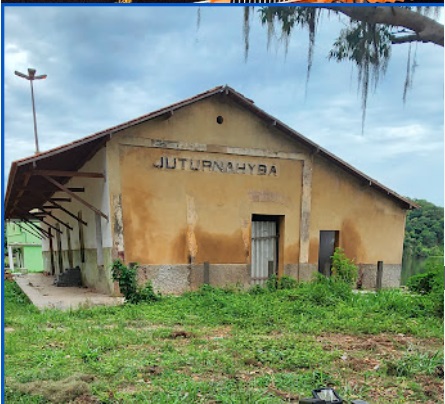
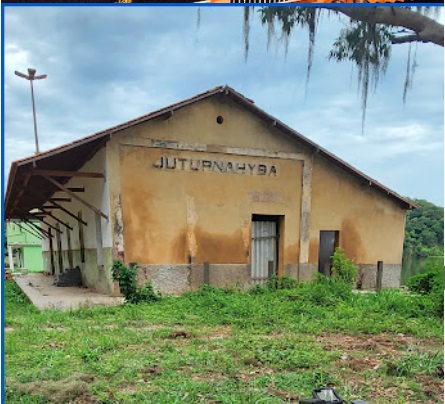
Lage station was opened in October 1884 by the E.F. Carangola railway company (Poço Fundo Branch Line) and was located on the north bank of the Muriaé in the Município de Campos, 320 km north-east of the capital Rio de Janeiro. The area around the railway station belonged to the Vila de Natividade do Itaperuna from November 1885, to the Município de Itaperuna from December 1889 and to the Distrito de Comendador Venâncio from December 1938. Shortly afterwards, the railway station was also renamed Comendador Venâncio. In 1890, the railway line became the property of Cia. Barão de Araruama and in the same year – until its closure in 1974 – it belonged to E.F. Leopoldina (estacoesferroviarias.com.br). Today, the tracks have disappeared and the station building serves as a community hall with a post office.
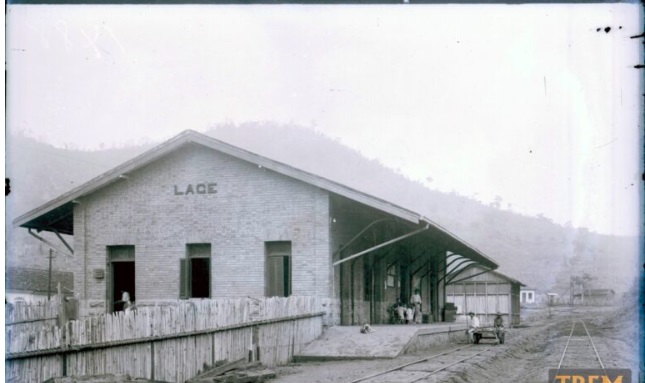
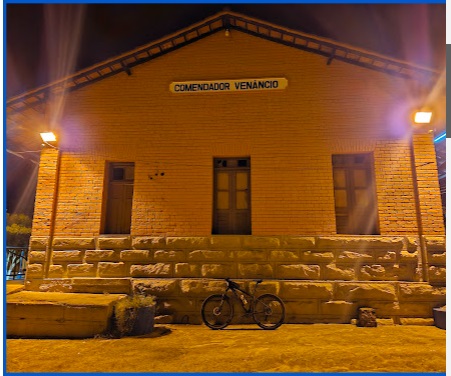
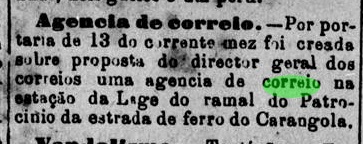
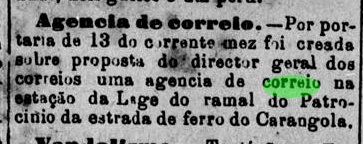
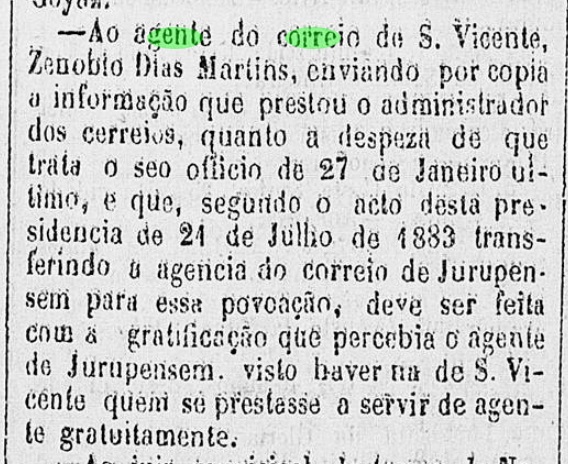
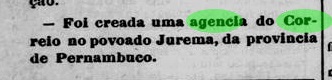
As reported in the regional press, there had been a post office at the station since January 1886:
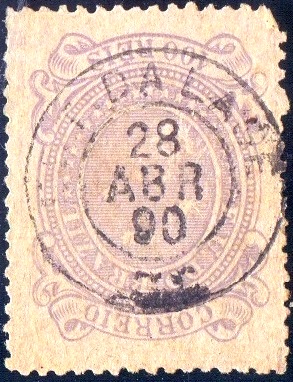
The oldest postmark here to date is LRJ-1075a, shown here in an illustration by Cícero Antonio Almeida (Carimbos Postais – século XIX, Rio de Janeiro, 1989) under no. 764:

This was followed by the rare LRJ-1075b (illus. Rodrigo Baldassare):
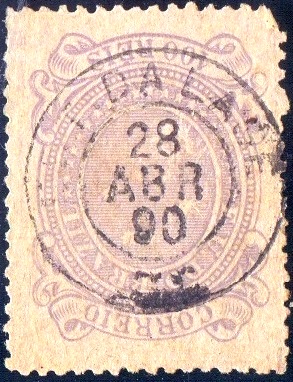
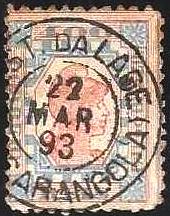
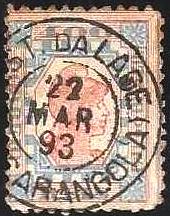
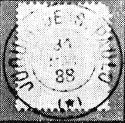
At the beginning of the Republic, LRJ-1075c also appeared (Fig. agenciaspostais.com.br):
For postmarks from Freguezia da Lage, 6 km to the south, see FRJ-1095.
Siehe auch Freguezia da Lage (FRJ-1075)
Der Bahnhof Lage wurde im Oktober 1884 von der Eisenbahngesellschaft E.F. Carangola (Zweigbahn Poço Fundo) eröffnet und lag am Nordufer des Muriaé im Município de Campos, 320 km nordöstlich der Hauptstadt Rio de Janeiro. Das Gebiet um den Bahnhof gehörte ab November 1885 zur Vila de Natividade do Itaperuna, ab Dezember 1889 zum Município de Itaperuna und ab Dezember 1938 zum Distrito de Comendador Venâncio. Kurz darauf wurde auch der Bahnhof in Comendador Venâncio umbenannt. Die Bahnlinie ging 1890 in den Besitz der Cia. Barão de Araruama und noch im selben Jahr – bis zu ihrer Stilllegung 1974 – gehörte sie der E.F. Leopoldina (estacoesferroviarias.com.br). Heute sind die Gleise verschwunden, das Bahnhofsgebäude dient als Gemeindesaal mit Postamt.
Wie die regionale Presse berichtete, gab es seit Januar 1886 ein Postamt am Bahnhof:
Der bisher älteste Poststempel ist hier LRJ-1075a, hier in einer Abbildung von Cícero Antonio Almeida (Carimbos Postais – século XIX, Rio de Janeiro, 1989) unter Nr. 764:

Es folgte der seltene LRJ-1075b (Abb. Rodrigo Baldassare):
Am Anfang der Republik erschien auch LRJ-1075c (Abb. agenciaspostais.com.br):
Für Poststempel aus der 6 km südlich gelegenen Freguezia da Lage siehe FRJ-1095.






















 Carimbologia