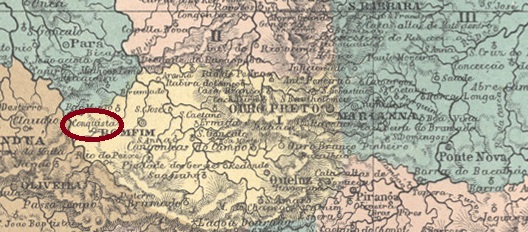
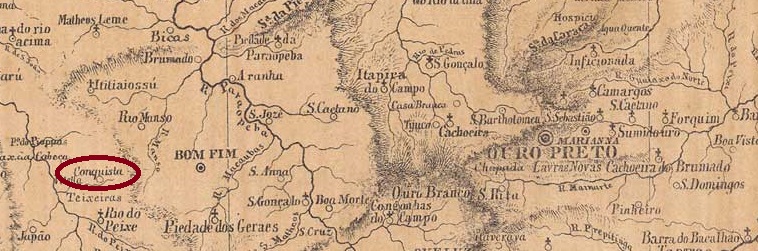
The Freguesia de N. Sra. das Dores da Conquista was founded in September 1870, belonged to the Vila de Bonfim and was located 150 km west of the provincial capital Ouro Preto. In September 1901, the municipality was incorporated into the município de Itaúna and was renamed Itaguara in September 1923. Itaguara has been an independent município since December 1943. The name from the Tupi language is said to mean stone well.
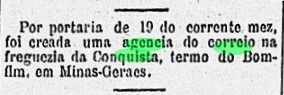
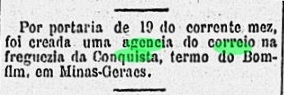
As the Rio press reported, there had been a post office there since January 1885:
Gazeta de Noticias/RJ, 20/01/1885
No imperial postmark from Conquista/MG has yet been found.
Provincia de Minas Geraes, 1873
Andere Namen: Itaguara (1923)
Die Freguesia de N. Sra. das Dores da Conquista wurde im September 1870 gegründet, gehörte zur Vila de Bonfim und lag 150 km westlich der Provinzhauptstadt Ouro Preto. Im September 1901 wurde die Gemeinde in das Município de Itaúna eingegliedert und im September 1923 in Itaguara umbenannt. Seit Dezember 1943 ist Itaguara ein eigenständiger Município. Der Name aus der Tupi-Sprache soll Steinbrunnen bedeuten.
Wie die Presse von Rio berichtete, gab es dort seit Januar 1885 ein Postamt:
Gazeta de Noticias/RJ, 20.01.1885
Bisher wurde kein kaiserlicher Poststempel aus Conquista/MG gefunden.
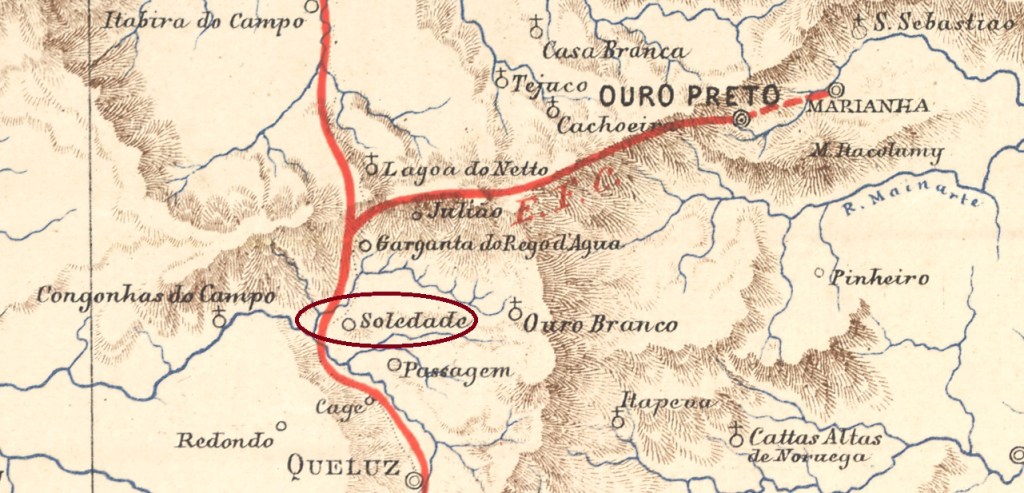
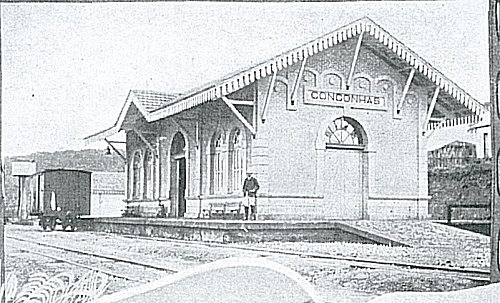
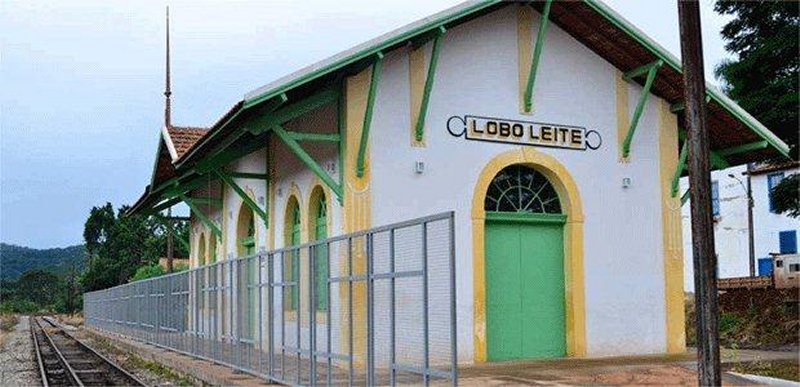
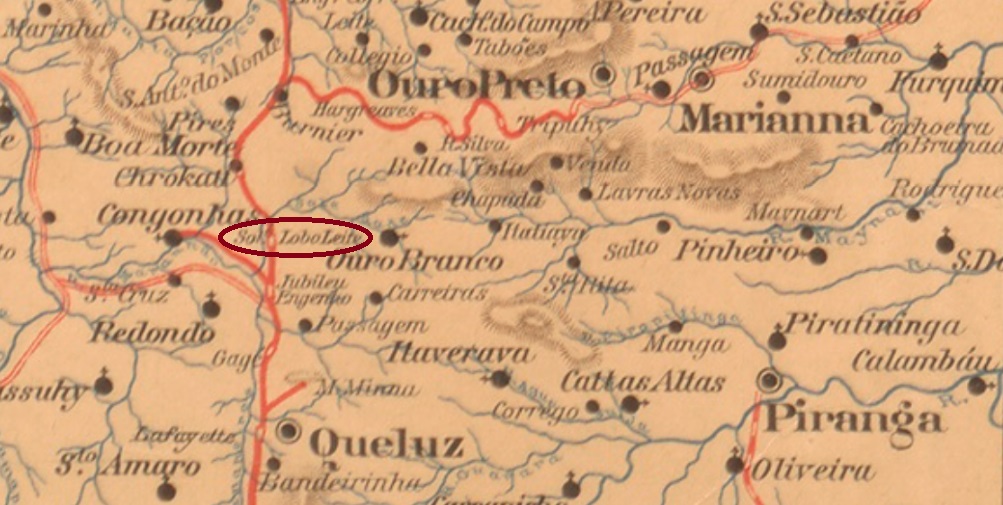
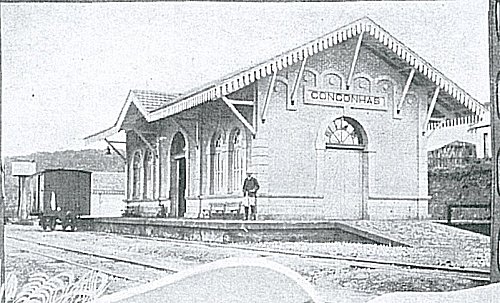
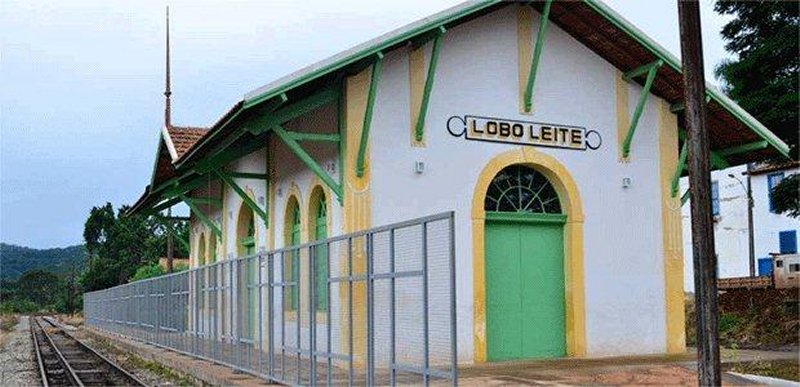
Congonhas station, originally called Soledade, was opened in August 1886 by the railway company E.F. D. Pedro II (main line) around Vila de Congonhas do Campo, a good 40 km west of the provincial capital Ouro Preto. The line was transferred to E.F. Central do Brasil in 1889 and belonged to Rede Ferroviária Federal S.A. (estacoesferroviarias.com.br) from 1975 until its closure in 1996. The tracks still exist today, the station building is a multi-purpose hall of the municipality.
1910 (Photo: Impressões do Brasil, séc. XX, on estacoesferroviarias.com.br)2013 (Photo NN, on estacoesferroviarias.com.br)
The station was renamed Lobo Leite in August 1907, and the area surrounding the station has been called Distrito de Lobo Leite since December 1938. The name commemorates Francisco Lobo Leite, the engineer of E.F. Dom Pedro II who was responsible for this section of the line,
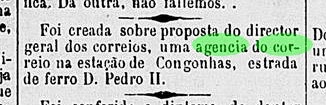
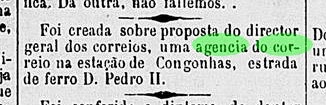
According to the Rio press, there had been a post office at the station since October 1886:
Gazeta da Tarde RJ, 06/10/1886
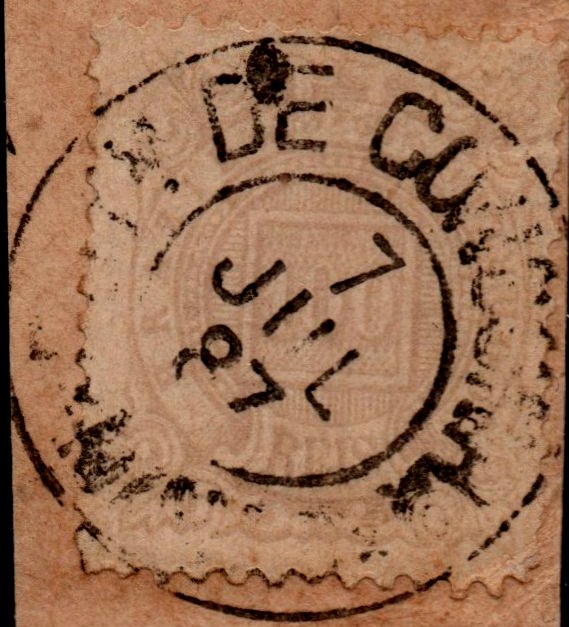
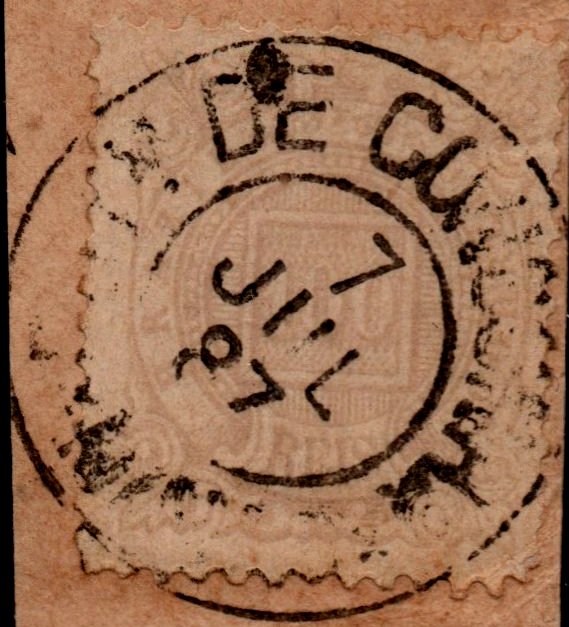
The imperial postmark is CMG-0840a (coll. José A. Junges):
CMG-0840a (JJ) 1887Estado do Minas Geraes, 1910
Andere Namen: Soledade, Lobo Leite (1907)
Der Bahnhof Congonhas, der ursprünglich Soledade heißen sollte, wurde im August 1886 von der Eisenbahngesellschaft E.F. D. Pedro II (Hauptlinie) eröffnet und lag auf dem Gebiet der Vila de Congonhas do Campo, gut 40 km westlich der Provinzhauptstadt Ouro Preto. Die Strecke ging 1889 an die E.F. Central do Brasil über und gehörte von 1975 bis zu ihrer Stilllegung 1996 der Rede Ferroviária Federal S.A. (estacoesferroviarias.com.br). Die Gleise sind heute noch vorhanden, das Bahnhofsgebäude ist eine Mehrzweckhalle der Gemeinde.
1910 (Foto: Impressões do Brasil, séc. XX, auf estacoesferroviarias.com.br)2013 (Foto NN, auf estacoesferroviarias.com.br)
Der Bahnhof wurde im August 1907 in Lobo Leite umbenannt, die Umgebung des Bahnhofs heißt seit Dezember 1938 auch Distrito de Lobo Leite. Der Name erinnert an Francisco Lobo Leite, der als Ingenieur der E.F. Dom Pedro II für diesen Streckenabschnitt verantwortlich war,
Wie die Presse aus Rio berichtet, gab es seit Oktober 1886 ein Postamt am Bahnhof:
Gazeta da Tarde RJ, 06.10.1886
Der kaiserliche Poststempel ist CMG-0840a (Samml. José A. Junges):
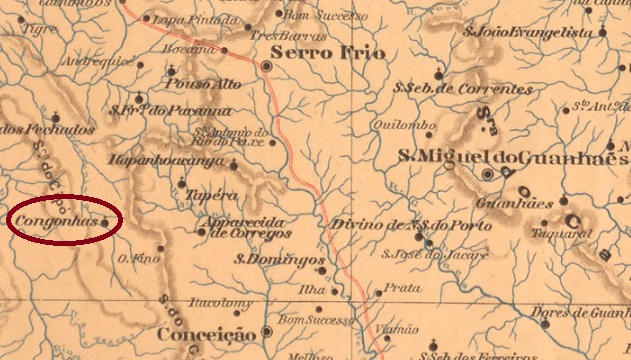
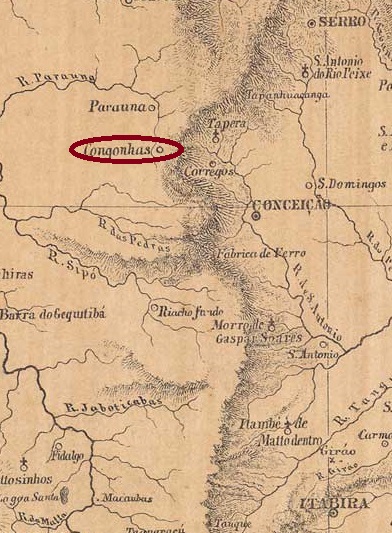
This Freguesia de Congonhas was founded in July 1857 and belonged to the Vila da Conceição do Serro, 310 kilometres north of the provincial capital Ouro Preto. It has been called Município de Congonhas do Norte since December 1962.
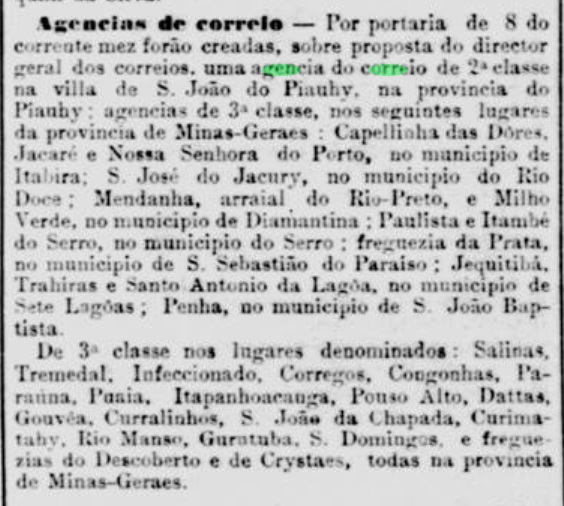
According to the press in Rio, there had been a post office there since November 1881:
Jornal do Commercio/RJ, 12/11/1881
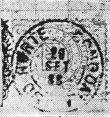
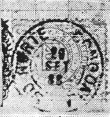
The imperial postmark here is CMG-0865a (fig. R. Koester in Carimbologia XIV):
CMG-0865a (RK) 1888Provincia de Minas Geraes, 1873
Andere Namen: Congonhas
Diese Freguesia de Congonhas wurde im Juli 1857 gegründet und gehörte zur Vila da Conceição do Serro, 310 km nördlich der Provinzhauptstadt Ouro Preto. Seit Dezember 1962 heißt sie Município de Congonhas do Norte.
Wie der Presse in Rio zu entnehmen ist, gab es dort seit November 1881 ein Postamt:
Jornal do Commercio/RJ, 12.11.1881
Der kaiserliche Poststempel ist hier CMG-0865a (Abb. R. Koester in Carimbologia XIV):
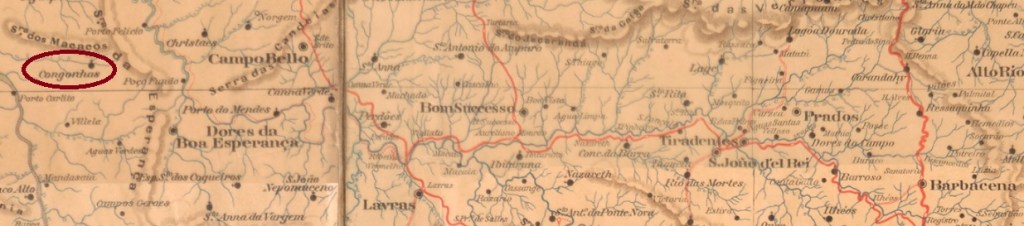
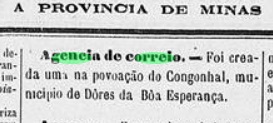
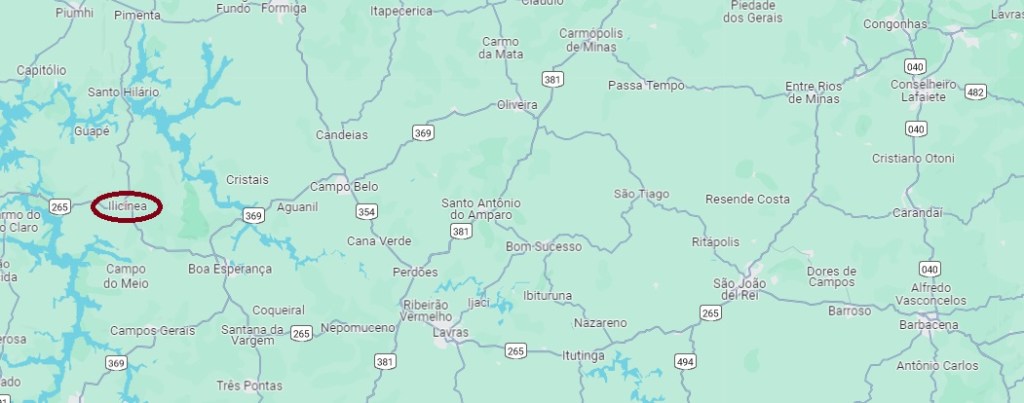
Congonhas da Boa Esperança had been a district of the Vila de Dores da Boa Esperança since November 1875 and was located on the north bank of the Ribeirão Itaci, 350 kilometres west of the provincial capital Ouro Preto. In October 1883, the village was elevated to a freguesia and renamed Ilcínea in September 1923. Ilcínea has been an independent município since December 1953.
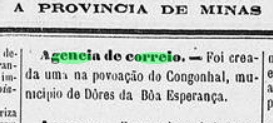
According to the regional press, there has been a post office there since August 1887:
A Provincia de Minas, 19/08/1887
Imperial postmarks from Congonhas da Boa Esperança have not yet been found.
Google Maps
Andere Namen: Ilicínea (1923)
Congonhas da Boa Esperança war seit November 1875 ein Distrikt der Vila de Dores da Boa Esperança und lag am Nordufer des Ribeirão Itaci, 350 km westlich der Provinzhauptstadt Ouro Preto. Im Oktober 1883 wurde der Ort zur Freguesia erhoben und im September 1923 in Ilcínea umbenannt. Seit Dezember 1953 ist Ilcínea ein unabhängiger Município.
Wie aus der regionalen Presse hervorgeht, gab es dort seit August 1887 ein Postamt:
A Provincia de Minas, 19.08.1887
Kaiserliche Poststempel aus Congonhas da Boa Esperança wurden bisher nicht gefunden.
Villiers de l’Ile Adam: Carta (…) da Provincia de Minas Geraes, 1849
Other names: Congonhas das Minas de Ouro, Vila Nova de Lima, Nova Lima (1923)
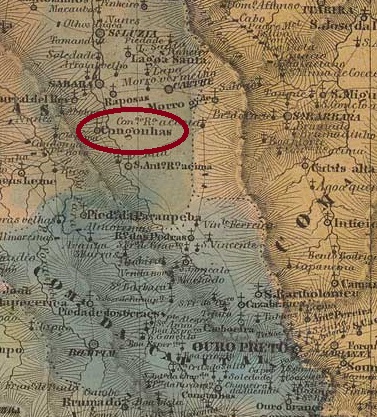
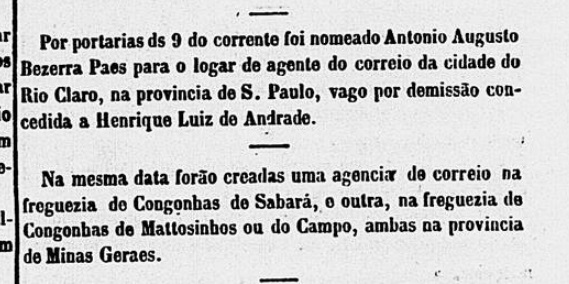
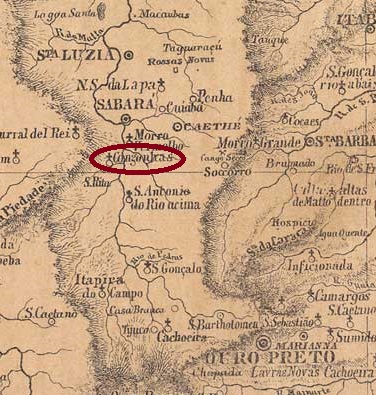
The second village of Congonhas in the province of Minas Gerais had been a freguesia of Vila de Sabará since February 1836, located on the east bank of the Rio das Velhas, 90 kilometres northwest of the provincial capital Ouro Preto. In February 1891, it was renamed Vila Nova de Lima, which has been Município de Nova Lima since September 1923.
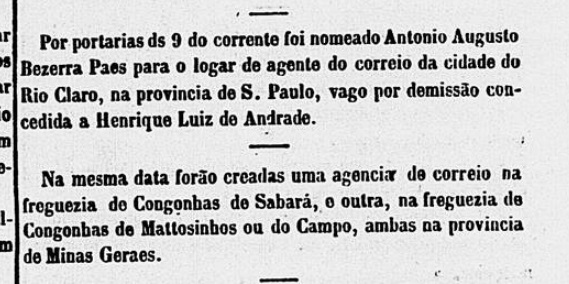
As the press in Rio reported, there had been a post office there since December 1864:
Correio Mercantil/RJ, 11/12/1864
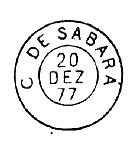
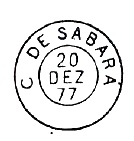
The original oldest postmark here is CMG-0855b, which was previously erroneously assigned to the city (Cidade) of Sabará. It also exists in blue and is illustrated by P. Ayres (Catálogo de Carimbos Brasil-Império, S. Paulo, 1937, 1942):
CMG-0855b (P.A. p. 126) 1877-1892
R. Koester (Carimbologia XIV) also shows two mute postmarks from Congonhas de Sabará:
1877ff (RK)1888 (RK)Provincia de Minas Geraes, 1873
Andere Namen: Congonhas das Minas de Ouro, Vila Nova de Lima, Nova Lima (1923)
Die zweite Ortschaft Congonhas in der Provinz Minas Gerais war seit Februar 1836 eine Freguesia der Vila de Sabará, gelegen am Ostufer des Rio das Velhas, 90 km nordwestlich der Provinzhauptstadt Ouro Preto. Im Februar 1891 wurde sie in Vila Nova de Lima umbenannt, die seit September 1923 Município de Nova Lima ist.
Wie die Presse in Rio berichtete, gab es dort seit Dezember 1864 ein Postamt:
Correio Mercantil/RJ, 11.12.1864
Der zunächst älteste Poststempel hier ist CMG-0855b, der früher irrtümlich der Stadt (Cidade) Sabará zugeordnet wurde. Er existiert auch in blau und ist bei P. Ayres (Catálogo de Carimbos Brasil-Império, S. Paulo, 1937, 1942) abgebildet:
CMG-0855b (P.A. S. 126) 1877-1892
Aus Congonhas de Sabará zeigt R. Koester (Carimbologia XIV) zwei stumme Poststempel:
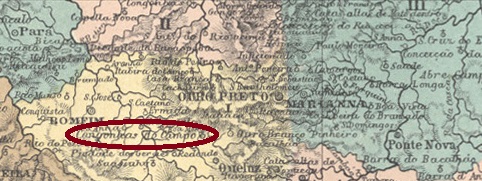
Other names: Congonhas de Mattosinhos, Congonhas (1948)
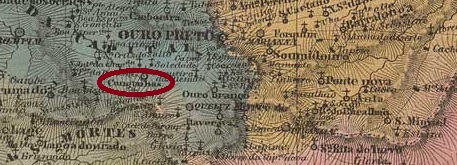
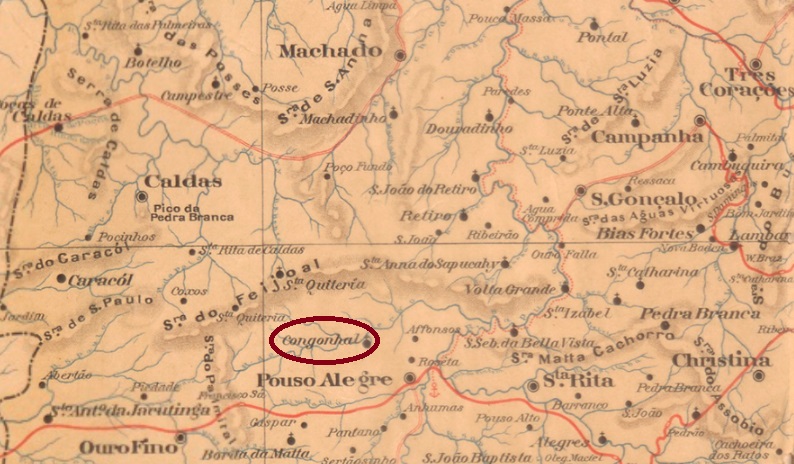
In addition to the Congonhal post office (CMG-0835), there were five post offices in the imperial province of Minas Gerais that bore the name Congonhas. The first among them had been a freguesia since November 1746, which belonged to the capital Vila Rica (later: Ouro Preto) and was located 50 kilometres west of it on the north bank of the Maranhão. In September 1923, it was transferred as a district to the Município de Queluz and in December 1938 became the Município de Congonhas do Campo, which shortened the place name to Congonhas 10 years later.
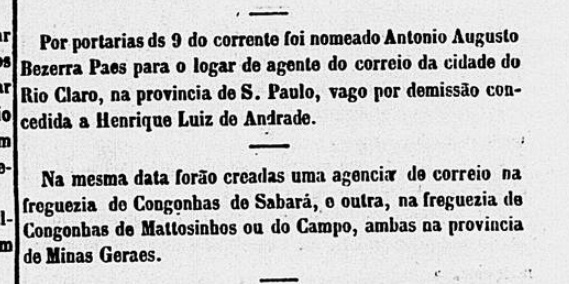
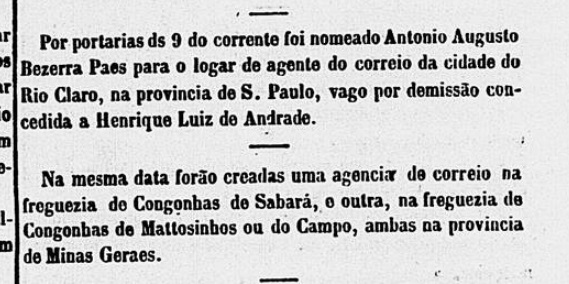
According to consistent sources, there has been a post office there since December 1864, which is also confirmed by the press in Rio:
Correio Mercantil/RJ, 11/12/1864
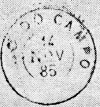
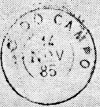
The oldest postmark to date is CMG-0860b (ill. R. Koester in Carimbologia XIV):
CMG-0860b (RK) 1882-1885
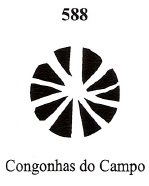
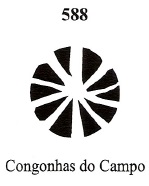
A mute cancellation is also known from there, which was given the no. 588 in Mute Cancellations of the Brazil Empire / Carimbos Mudos do Brasil Império (Brazil Philatelic Association, Rio de Janeiro, 2000) by James Dingler and Klerman W. Lopes:
BPA 588 (1882)Villiers de l’Ile Adam: Carta (…) da provincia de Minas Geraes, 1849
Andere Namen: Congonhas de Mattosinhos, Congonhas (1948)
Neben dem Postamt Congonhal (CMG-0835) gab es in der kaiserlichen Provinz Minas Gerais fünf Postämter, die den Namen Congonhas trugen. Das erste war seit November 1746 eine Freguesia, die zur Hauptstadt Vila Rica gehörte und 50 km westlich von dieser am Nordufer des Maranhão lag. Im September 1923 ging sie als Distrikt an das Município de Queluz über und wurde im Dezember 1938 zum Município de Congonhas do Campo, das 10 Jahre später den Ortsnamen zu Congonhas verkürzte.
Nach übereinstimmenden Quellen gibt es dort seit Dezember 1864 ein Postamt, was auch von der Presse in Rio bestätigt wird:
Correio Mercantil/RJ, 11.12.1864
Der bisher älteste Poststempel ist CMG-0860b (Abb. R. Koester in Carimbologia XIV):
CMG-0860b (RK) 1882-1885
Von dort ist auch ein stummer Stempel bekannt, der in Mute Cancellations of the Brazil Empire / Carimbos Mudos do Brasil Império (Brazil Philatelic Association, Rio de Janeiro, 2000) von James Dingler und Klerman W. Lopes die Nr. 588 erhielt:
Founded in June 1876, the district of S. José do Congonhal belonged to the Vila de Pouso Alegre and was located on the south bank of the Rio Cervo, 450 kilometres southwest of the provincial capital Ouro Preto. In November 1880, the village was declared a freguesia and in December 1953 a município.
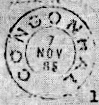
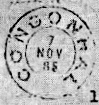
As Paula Sobrinho (História Postal de Minas Gerais, Belo Horizonte, 1997) and R. Koester (Carimbologia XIV) write, there had been a post office there since September 1881. The imperial postmark here is CMG-0835a (fig. R. Koester, op. cit.):
CMG-0835a (RK) 1885-1898Google Maps
Der im Juni 1876 gegründete Distrikt S. José do Congonhal gehörte zur Vila de Pouso Alegre und lag am Südufer des Rio Cervo, 450 km südwestlich der Provinzhauptstadt Ouro Preto. Im November 1880 wurde der Ort zur Freguesia und im Dezember 1953 zum Município erklärt.
Wie Paula Sobrinho (História Postal de Minas Gerais, Belo Horizonte, 1997) und R. Koester (Carimbologia XIV) schreiben, gab es dort seit September 1881 ein Postamt. Der kaiserliche Poststempel davon ist CMG-0835a (Abb. R. Koester, op. cit.):
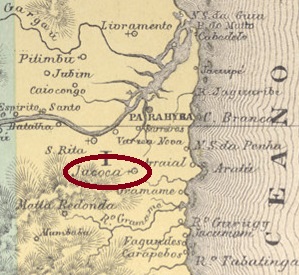
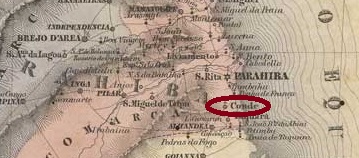
From 1768, Conde was the name of a freguesia of the Vila da Paraíba do Norte, which was located 20 kilometres south of the later provincial capital. It is said to have been elevated to a Vila around 1800, but lost this status in June 1846 and became the Freguesia de Jacoca, named after a Tabajara Indian settlement. In September 1886, it was again elevated to Vila and retained this status until December 1943, when the Distrito de Jacoca was founded in the Município de João Pessoa. The name Vila do Conde returned in January 1949, and since November 1963 the town has been Município de Conde. The Count (Conde) here could have been the Dutch commander Moritz of Nassau, who conquered north-east Brazil at the beginning of the 17th century.
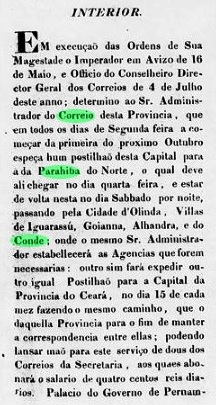
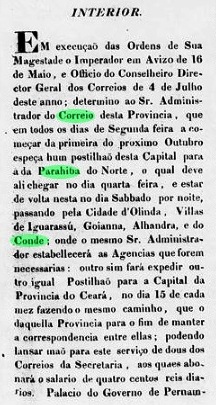
Three foundation dates have been found for the local post office, the last two of which are very close to each other and probably belong together. The first was around October 1829, as reported in the Pernambuco press:
O Cruzeiro/PE, 13/10/1829
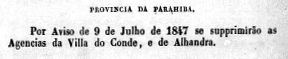
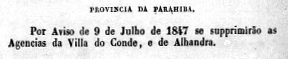
The agency was closed in July 1847, as reported by the Imperial Ministry:
Relatorio do Ministerio do Imperio, 1847
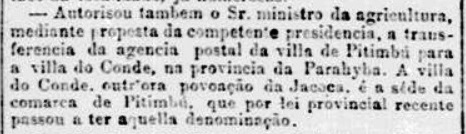
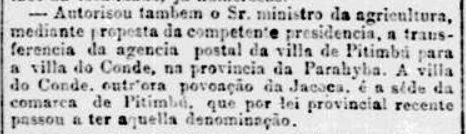
The Conde post office in the province of Paraíba only reopened in January 1887, as reported in the Rio press:
Jornal do Commercio/RJ, 05/01/1887
R. Koester (Carimbologia XIV) gives a date a few days later. No imperial postmark of this conde has yet been found.
Villiers de l’Ile Adam: Carta (…) das Provincias do Rio Grande e Parahiba do Norte
Andere Namen: Jacoca
Conde war ab 1768 der Name einer Freguesia der Vila da Paraíba do Norte, die 20 km südlich der späteren Provinzhauptstadt lag. Sie soll um 1800 zur Vila erhoben worden sein, verlor diesen Status aber im Juni 1846 und wurde zur Freguesia de Jacoca, benannt nach einer Tabajara-Indianersiedlung. Im September 1886 wurde sie erneut zur Vila erhoben und behielt diesen Status bis Dezember 1943, als der Distrito de Jacoca im Município de João Pessoa gegründet wurde. Der Name Vila do Conde kehrte im Januar 1949 zurück, und seit November 1963 ist die Stadt Município de Conde. Der Graf (Conde) hier könnte der niederländische Befehlshaber Moritz von Nassau gewesen sein, der den Nordosten Brasiliens zu Beginn des 17.
Es wurden drei Gründungsdaten für das örtliche Postamt gefunden, wobei die letzten beiden sehr nahe beieinander liegen und wahrscheinlich zusammengehören. Das erste um Oktober 1829, wie die Presse von Pernambuco berichtete:
O Cruzeiro/PE, 13.10.1829
Die Agentur wurde im Juli 1847 geschlossen, wie das kaiserliche Ministerium berichtete:
Relatorio do Ministerio do Imperio, 1847
Das Postamt Conde der Provinz Paraíba öffnete erst wieder im Januar 1887, wie die Presse aus Rio berichtete:
Jornal do Commercio/RJ, 05.01.1887
R. Koester (Carimbologia XIV) gibt dafür ein Datum einige Tage später an. Bisher wurde kein kaiserlicher Poststempel von diesem Conde gefunden.
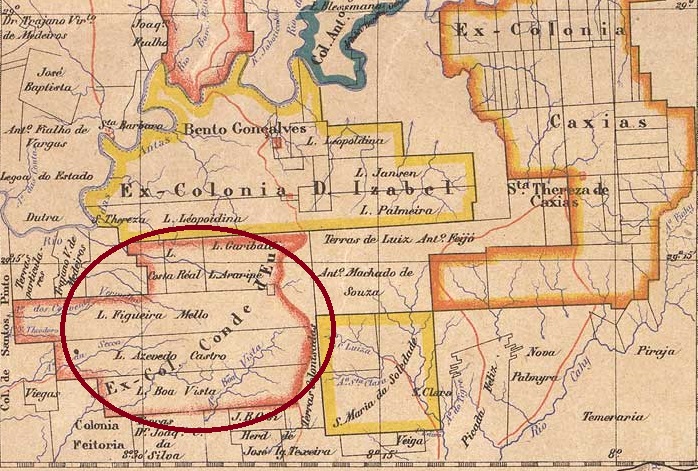
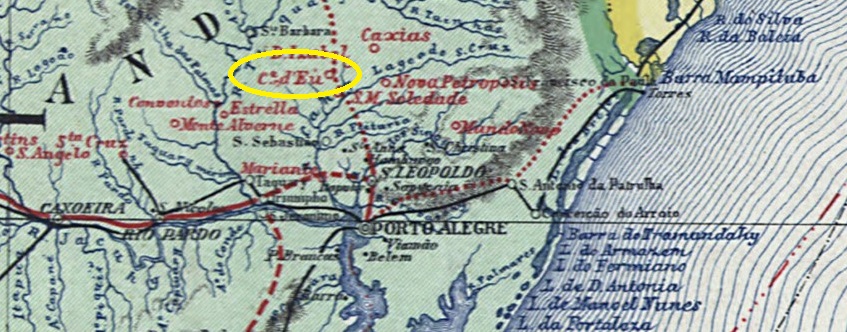
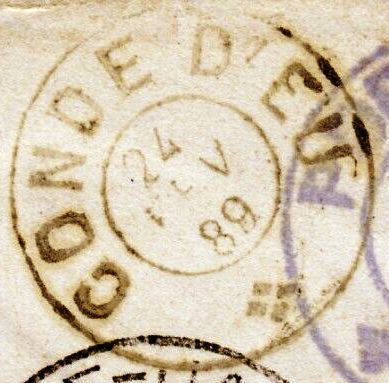
Conde d’Eu in the province of São Pedro do Rio Grande was founded in May 1870 to provide a new home for Italian immigrants 110 kilometres north of the provincial capital Porto Alegre. In April 1884, the colony became the Freguesia de S. Pedro do Conde d’Eu, which belonged to the Vila de S. João do Montenegro. In October 1890, it was incorporated as a district into the newly founded Município de Bento Gonçalves and has been the Município de Garibaldi since October 1900. The name commemorates the Italian freedom fighter Giuseppe Garibaldi (1807-1882), who also played an active role in the Farroupilha Revolution (1835-1845) in southern Brazil.
The local post office was created in 1881, as R. Koester writes in Carimbologia XIV and the provincial president’s report the following year confirms:
Relatorio do Presidente da Provincia, 1882
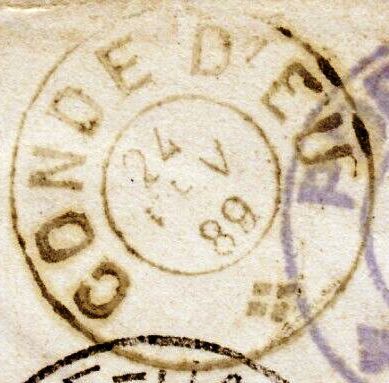
The oldest postmark to date is CRS-0125a (image from the Internet):
CRS-0125a (EB) 1885-1899
R. Koester (op. cit.) also shows the CRS-0125b postmark:
CRS-0125b (RK)Carta da Republica dos Estados Unidos do Brasil, 1892
Andere Namen: Garibaldi (1900)
Conde d’Eu in der Provinz São Pedro do Rio Grande wurde im Mai 1870 gegründet, um italienischen Einwanderern 110 km nördlich der Provinzhauptstadt Porto Alegre eine neue Heimat zu bieten. Die Kolonie wurde im April 1884 zur Freguesia de S. Pedro do Conde d’Eu, die zur Vila de S. João do Montenegro gehörte. Im Oktober 1890 wurde sie als Distrikt in das neu gegründete Município de Bento Gonçalves eingegliedert und ist seit Oktober 1900 das Município de Garibaldi. Der Name erinnert an den italienischen Freiheitskämpfer Giuseppe Garibaldi (1807-1882), der auch eine aktive Rolle in der Farroupilha-Revolution (1835-1845) im Süden Brasiliens spielte.
Das örtliche Postamt entstand 1881, wie R. Koester in Carimbologia XIV schreibt und der Bericht des Provinzpräsidenten im folgenden Jahr bestätigt:
Relatorio do Presidente da Provincia, 1882
Der bisher älteste Poststempel ist CRS-0125a (Abbildung aus dem Internet):
CRS-0125a (EB) 1885-1899
R. Koester (op. cit.) zeigt auch den Siegelstempel CRS-0125b:
Other names: Núcleo Colonial de Santa Cruz, Bocaiúva, Guaraná, Pau Gigante, Ibiraçu (1943)
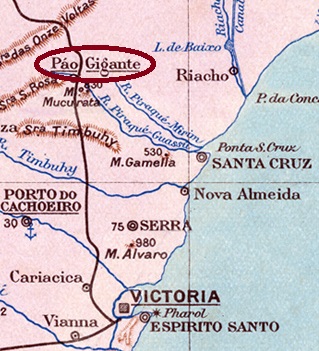
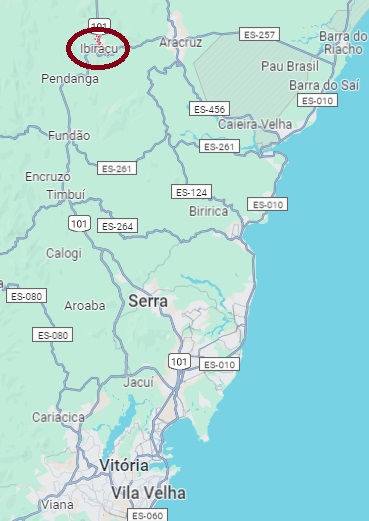
The village was founded in 1877 by Italian immigrants as the colony Conde d’Eu, belonged to the Vila de Santa Cruz (today: Aracruz) and was located a good 70 kilometres north of the provincial capital Vitória. It was renamed several times: around 1890 to Bocaiúva (as a district), in September 1891 to Município de Guaraná, in March 1892 to Pau Gigante (made a town in 1938) and finally in December 1943 to Ibiraçu.
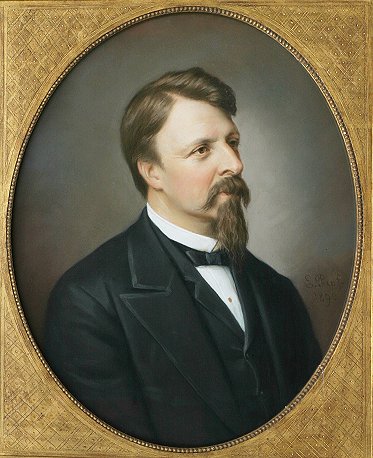
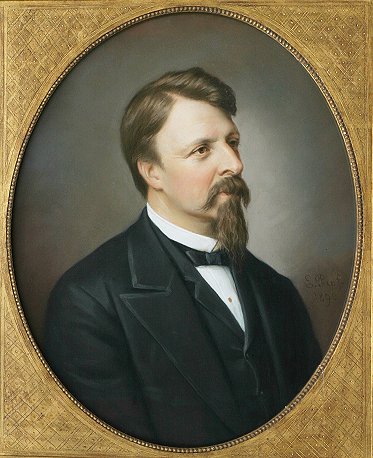
Gaston d’Orléans, Count d’Eu (1842-1922), the son-in-law of Emperor D. Pedro II, was not very popular among the Brazilians.
Conde d’Eu, Portrait by Karl E. Papf (around 1900)
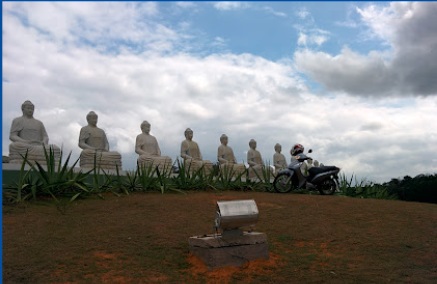
After the end of the empire, the name was changed to Bocaiúva, probably in homage to the republican Quintino Bocaiúva (1836-1912). The strange-sounding name Guaraná was intended to commemorate Aristides Arminio Guaraná (1843-1927), a veteran of the Paraguay War who was appointed chief administrator of the colony. Pau Gigante (Giant Trunk) commemorates a 60 metre high tree nearby that was the symbol of the settlement. And Ibiraçu translates it into the Indian language tupi. Today, a Buddhist monastery is the town’s main attraction.
Photo: Eduardo Lucas (Google Maps)
As Paulo Novaes writes in agenciaspostais.com.br, there should be a post office there since July 1885, but it only started operating by 1887. No imperial postmarks from Conde d’Eu have yet been found.
Google Maps
Andere Namen: Núcleo Colonial de Santa Cruz, Bocaiúva, Guaraná, Pau Gigante, Ibiraçu (1943)
Der Ort wurde 1877 von italienischen Einwanderern als Kolonie Conde d’Eu gegründet, gehörte zur Vila de Santa Cruz (heute: Aracruz) und lag gut 70 km nördlich der Provinzhauptstadt Vitória. Es folgten mehrere Umbenennungen: um 1890 in Bocaiúva (als Distrikt), im September 1891 in Município de Guaraná, im März 1892 in Pau Gigante (1938 zur Stadt ernannt) und schließlich im Dezember 1943 in Ibiraçu.
Gaston d’Orléans, Graf d’Eu (1842-1922), war der bei den Brasilianern wenig beliebte Schwiegersohn des Kaisers D. Pedro II.
Der Graf d’Eu, Porträt von Karl E. Papf (um 1900)
Nach dem Ende des Kaiserreichs folgte die Umbenennung in Bocaiúva, wohl eine Hommage an den Republikaner Quintino Bocaiúva (1836-1912). Der seltsam klingende Name Guaraná sollte an Aristides Arminio Guaraná (1843-1927) erinnern, einen Veteranen des Paraguay-Krieges, der zum Hauptverwalter der Kolonie ernannt wurde. Pau Gigante (Riesenstamm) erinnert an einen 60 Meter hohen Baum der Gegend, der als Wahrzeichen der Siedlung galt. Und Ibiraçu heißt es übersetzt in der Indianersprache Tupi. Heute ist ein buddhistisches Kloster die Hauptattraktion des Städtchens.
Foto: Eduardo Lucas (Google Maps)
Wie Paulo Novaes in agenciaspostais.com.br schreibt, soll es dort seit Juli 1885 ein Postamt gegeben haben, das aber erst 1887 seinen Betrieb aufnahm. Bisher wurden keine kaiserlichen Poststempel von Conde d’Eu gefunden.




 Carimbologia