Categories
Carimbologia C-D

Concordia (train station/Bahnhof), Rio de Janeiro (CRJ-1020)

Almanak Laemmert, 1892

Other names: Teixeira Leite (ca. 1925)

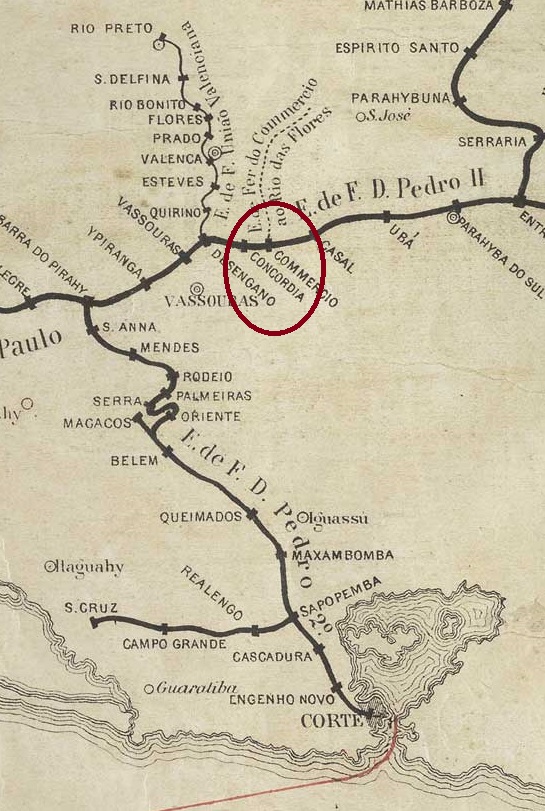
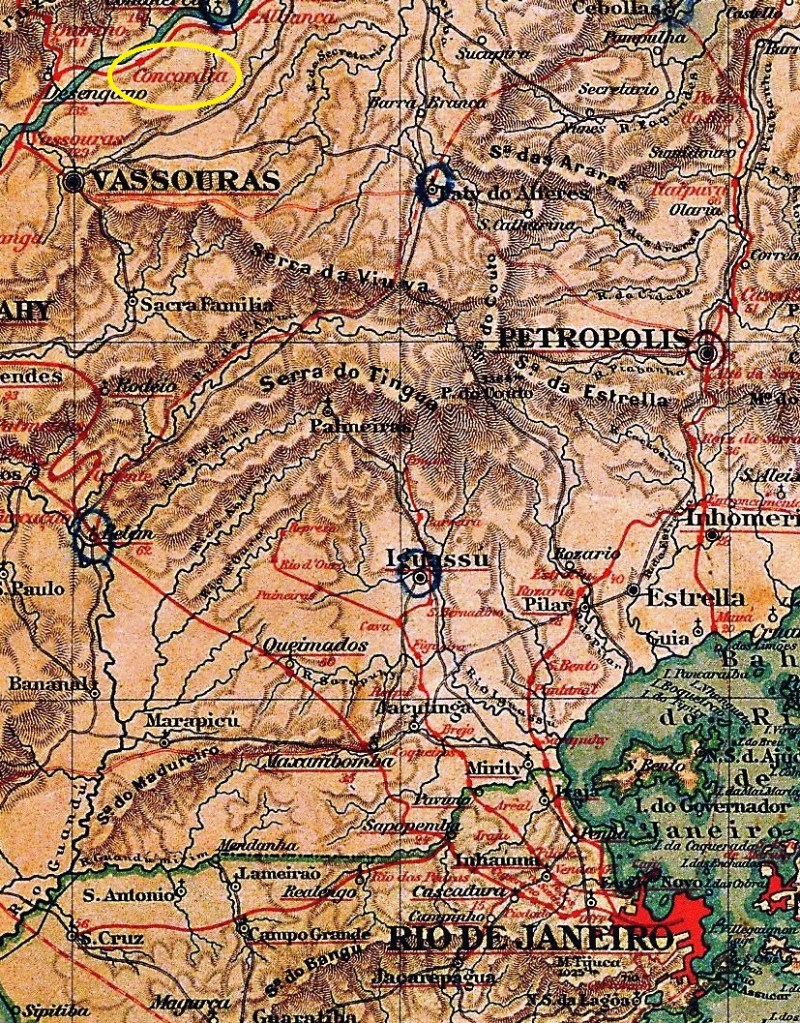
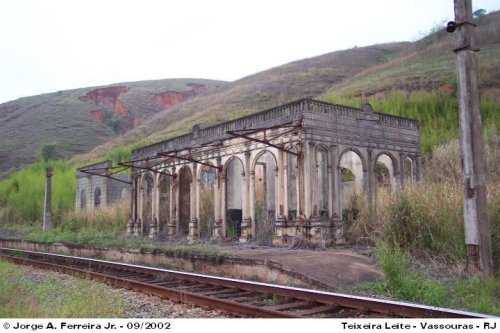
Concordia station was opened in April 1879 by the railway company E.F. D. Pedro II (Central line) on the south bank of the Paraíba do Sul in the Município de Vassouras, 130 km north-west of the capital Rio de Janeiro. The line was transferred to E.F. Central do Brasil in 1889 and belonged to Rede Ferroviária Federal S.A. (estacoesferroviarias.com.br) from 1975 until its closure in 1996. Today the tracks are still there, the station building is a ruin.

2002 (Photo: Jorge A. Ferreira Jr, on estacoesferroviarias.com.br)

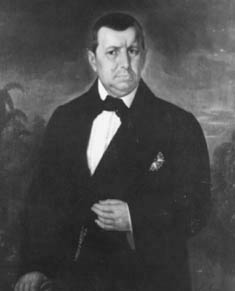
The station was renamed Teixeira Leite around 1925 in honour of Francisco José de Teixeira Leite, Baron of Vassouras, a prominent landowner in the region.
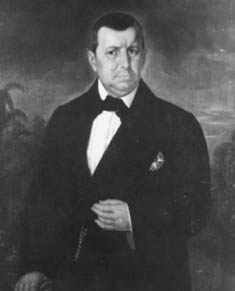
The Barão de Vassouras (Museu Histórico Nacional)

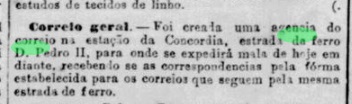
As reported in the Rio press, there was a post office at the railway station from April 1879:

Jornal do Commercio/30/04/1879

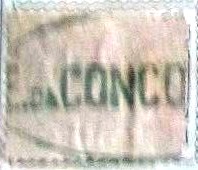
The oldest postmark to date is the rare CRJ-1020a (image from the Internet):
CRJ-1020a (EB) 1880ff

R. Koester showed the CRJ-1020b seal postmark in Carimbologia XIV:

CRJ-1020b (RK)

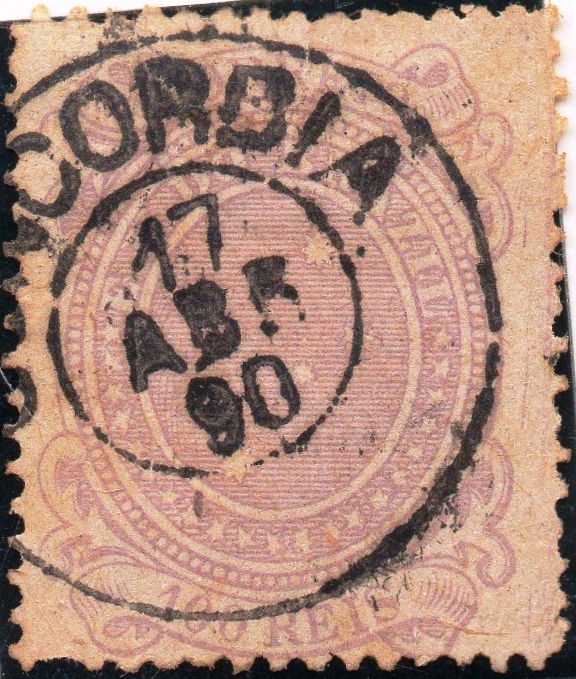
Later the double circle CRJ-1020c also appeared (picture from the internet):
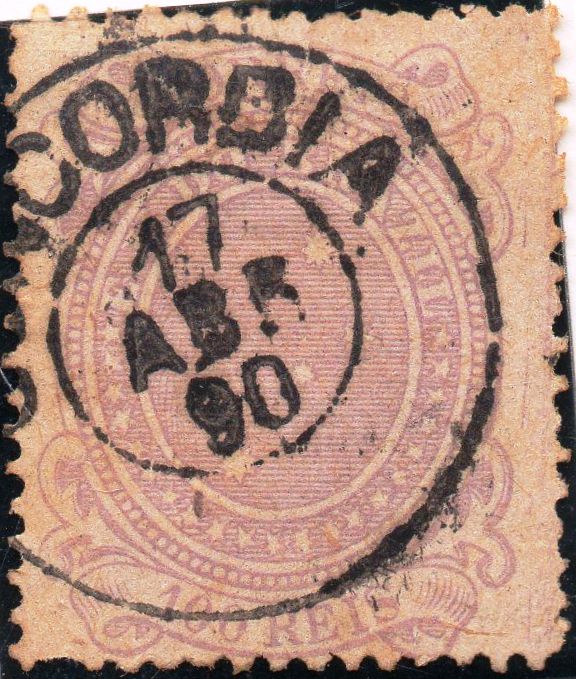
CRJ-1020c (EB) 1883ff-1890
Estações (…) do Rio de Janeiro, São Paulo e Minas Geraes, 1880

Andere Namen: Teixeira Leite (ca. 1925)

Der Bahnhof Concordia wurde im April 1879 von der Bahngesellschaft E.F. D. Pedro II (Hauptstrecke) eröffnet und lag am Südufer des Paraíba do Sul im Município de Vassouras, 130 km nordwestlich der Hauptstadt Rio de Janeiro. Die Strecke ging 1889 an die E.F. Central do Brasil über und gehörte von 1975 bis zu ihrer Stilllegung 1996 der Rede Ferroviária Federal S.A. (estacoesferroviarias.com.br). Heute sind die Gleise noch vorhanden, das Bahnhofsgebäude ist eine Ruine.
2002 (Foto: Jorge A. Ferreira Jr, auf estacoesferroviarias.com.br)

Der Bahnhof wurde um 1925 in Teixeira Leite umbenannt, zu Ehren von Francisco José de Teixeira Leite, Baron von Vassouras, einem prominenten Landbesitzer der Region.
Der Barão de Vassouras (Museu Histórico Nacional)

Wie die Presse in Rio berichtete, gab es ab April 1879 ein Postamt am Bahnhof:
Jornal do Commercio/30.04.1879

Der bisher älteste Poststempel ist der seltene CRJ-1020a (Bild aus dem Internet):
CRJ-1020a (EB) 1880ff

R. Koester zeigte den Siegelstempel CRJ-1020b in Carimbologia XIV:

CRJ-1020b (RK)

Später erschien auch der Doppelkreis CRJ-1020c (Bild aus dem Internet):
CRJ-1020c (EB) 1883ff-1890
Categories
Carimbologia C-D

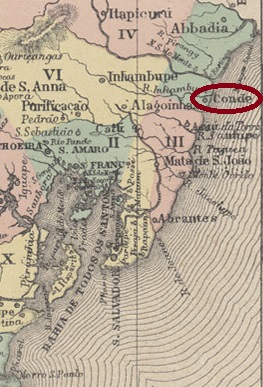
Conde, Bahia (CBA-0310)

Villiers de l’Ile Adam: Carta (…) da Provincia da Bahia, 1848

Other names: Itapicuru de Baixo, Itapicuru da Praia, Villa do Conde

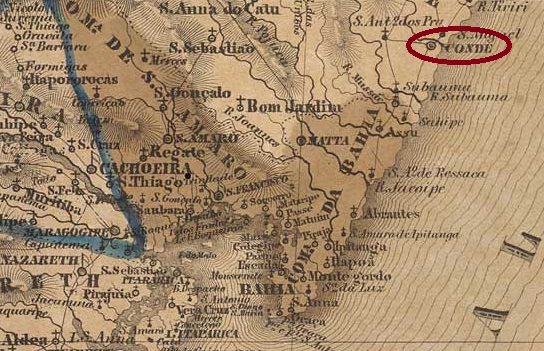
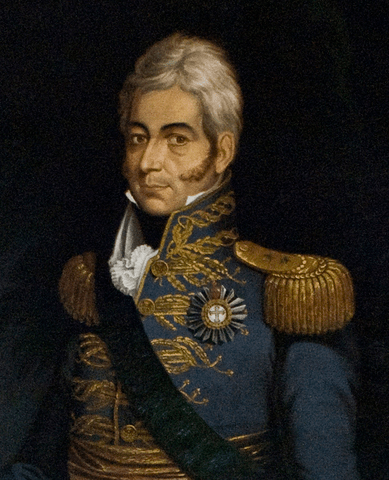
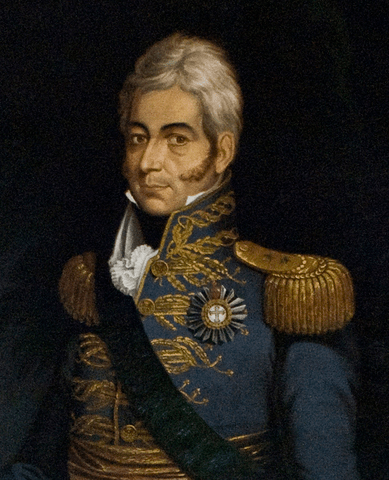
Itapicuru de Baixo was originally the name of the settlement on the south bank of the Itapicuru near its mouth in the Atlantic, 190 kilometres north of the later provincial capital Salvador da Bahia. In 1702 it became the Freguesia de N. Sra. do Monte de Itapicuru da Praia, which was elevated to Vila do Conde in December 1806. This count (Conde) is said to have been the last Brazilian viceroy, D. Marcos de Noronha e Brito (1771-1828), 8th Conde dos Arcos:

The 8th Conde dos Arcos (Wikipedia)

In August 1921, Conde was elevated to the status of a town, but in June 1931 it became a district of the Município de Esplanada. It has been called Município do Conde again since August 1935.

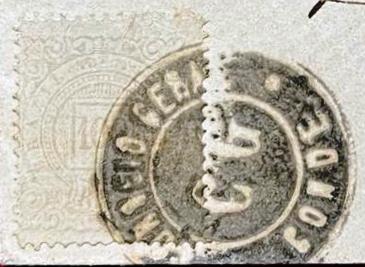
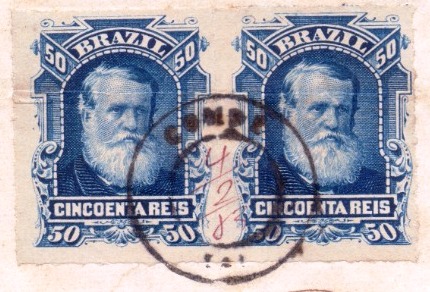
According to consistent sources, there has been a post office since October 1858. The oldest postmark to date is CBA-0310b (coll. Klerman W. Lopes) in a beautiful negative look:

CBA-0310b (KL) 1877ff-1898ff

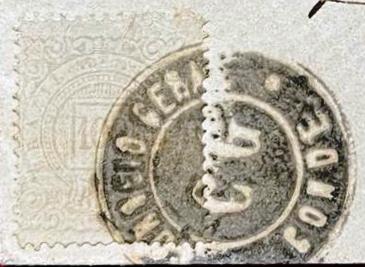
This was followed by the French type CBA-0310c (fig. Rodrigo Baldassare)

CBA-0310c (RB) 1883-1890

Towards the end of the 19th century, CBA-0310d (illustration from the Internet) was added:

CBA-0310d (EB) 1890
Atlas do Imperio do Brasil, 1868

Andere Namen: Itapicuru de Baixo, Itapicuru da Praia, Villa do Conde

Itapicuru de Baixo war ursprünglich der Name der Siedlung am Südufer des Itapicuru nahe seiner Mündung in den Atlantik, 190 km nördlich der späteren Provinzhauptstadt Salvador da Bahia. 1702 wurde daraus die Freguesia de N. Sra. do Monte de Itapicuru da Praia, die im Dezember 1806 zur Vila do Conde erhoben wurde. Dieser Graf (Conde) soll der letzte brasilianische Vizekönig, D. Marcos de Noronha e Brito (1771-1828), 8. Conde dos Arcos, gewesen sein:

Der 8. Conde dos Arcos (Abb. Wikipedia)

Im August 1921 folgte die Erhebung zur Stadt, doch im Juni 1931 wurde Conde ein Distrikt des Município de Esplanada. Seit August 1935 heißt es wieder Município do Conde.

Nach übereinstimmenden Quellen gab es dort seit Oktober 1858 ein Postamt. Der bisher älteste Poststempel ist CBA-0310b (Samml. Klerman W. Lopes) im schönen Negativ-Look:

CBA-0310b (KL) 1877ff-1898ff

Es folgte der französische Typ CBA-0310c (Abb. Rodrigo Baldassare)

CBA-0310c (RB) 1883-1890

Gegen Ende des 19. Jahrhunderts kam CBA-0310d (Abb. aus dem Internet) hinzu:

CBA-0310d (EB) 1890
Categories
Carimbologia C-D

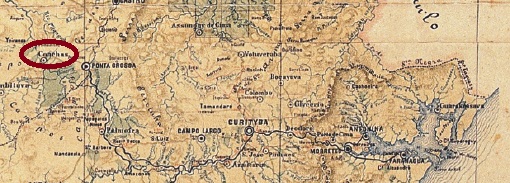
Conchas, Paraná (CPR-0060)

Estado do Paraná, 1896

Other names: Uvaia (1943)

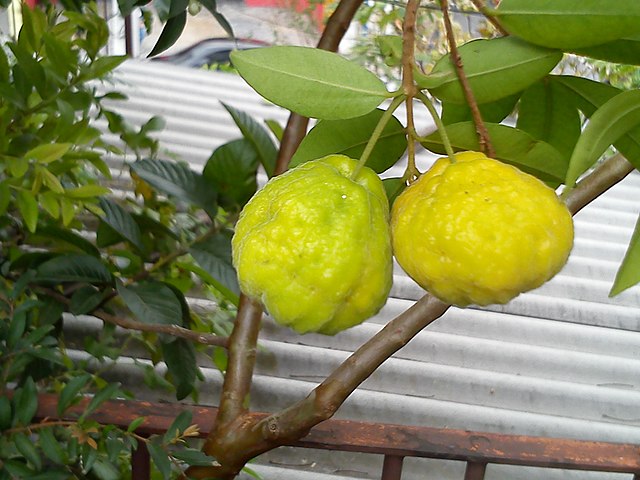
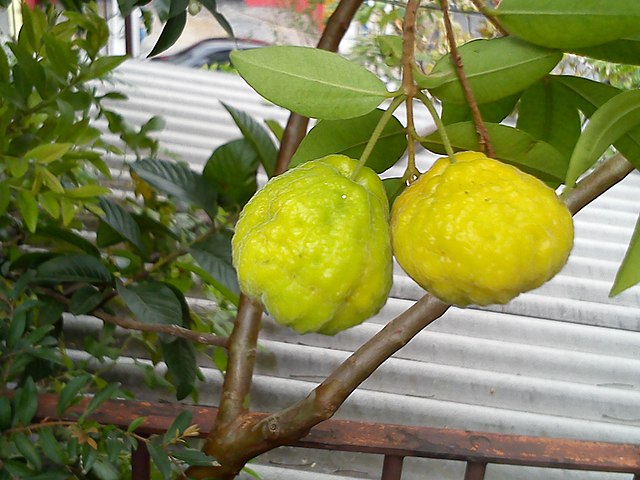
The Freguesia de S. Sebastião das Conchas was founded in March 1872, belonged to the Vila de Ponta Grossa and was located on the east bank of the Tibagi, 140 kilometres west of the provincial capital Curitiba. In March 1881, it was elevated to the status of Vila and retained this status until December 1931, when it was downgraded to a district again. Since December 1943, the district has been called Uvaia. This is the sour fruit of a plant from the myrtle family:

Uvaia (Photo: Divinomar Severino, Wikipedia)

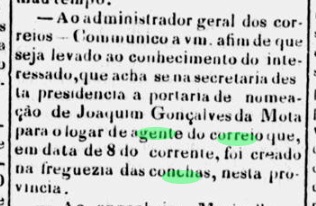
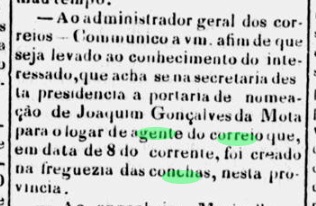
There had been a post office here since April 1874, as can be seen from the regional press:

Dezenove de Dezembro, 13/05/1874

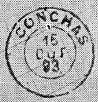
The imperial postmark is CPR-0060a (illustration by R. Koester in Carimbologia XIII):
CPR-0060a (RK) 1878-1897
Provincia do Paraná, 1881

Andere Namen: Uvaia (1943)
Die Freguesia de S. Sebastião das Conchas wurde im März 1872 gegründet, gehörte zur Vila de Ponta Grossa und lag am Ostufer des Tibagi, 140 km westlich der Provinzhauptstadt Curitiba. Im März 1881 wurde es zur Vila erhoben und behielt diesen Status bis Dezember 1931, als es wieder zum Distrikt herabgestuft wurde. Seit Dezember 1943 heißt der Distrikt Uvaia. Das ist die saure Frucht einer Pflanze aus der Familie der Myrtengewächse:

Uvaia (Foto: Divinomar Severino, Wikipedia)

Seit April 1874 gab es hier ein Postamt, wie aus der regionalen Presse hervorgeht:

Dezenove de Dezembro, 13.05.1874

Der kaiserliche Poststempel ist CPR-0060a (Abb. R. Koester in Carimbologia XIII):

CPR-0060a (RK) 1878-1897
Categories
Carimbologia C-D

Conchas (train station/Bahnhof), São Paulo (CSP-0365)

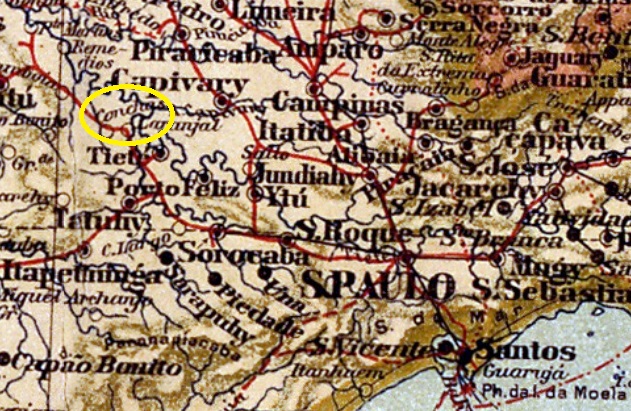
Cia. Sorocabana e Ytuana, 1898 (IBGE)

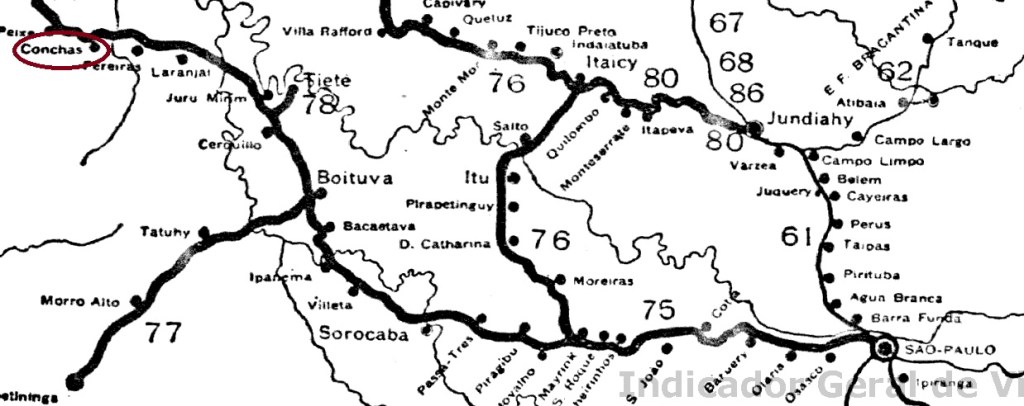
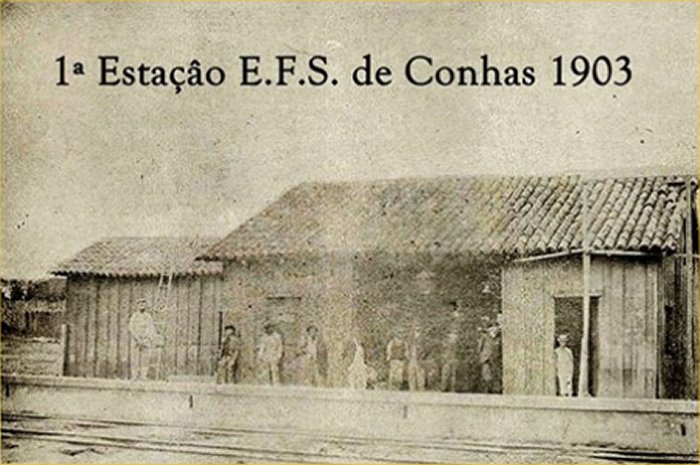
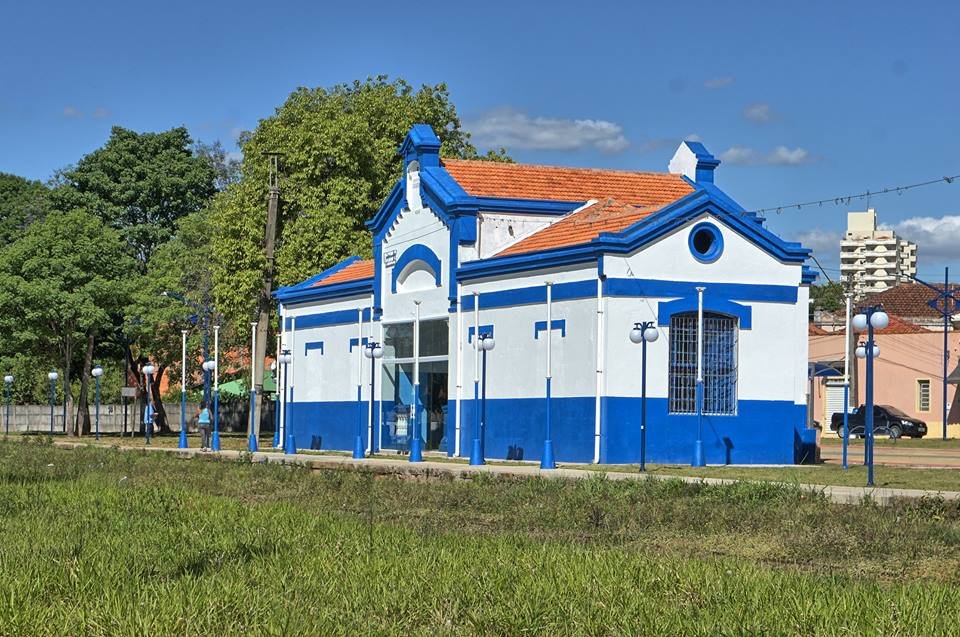
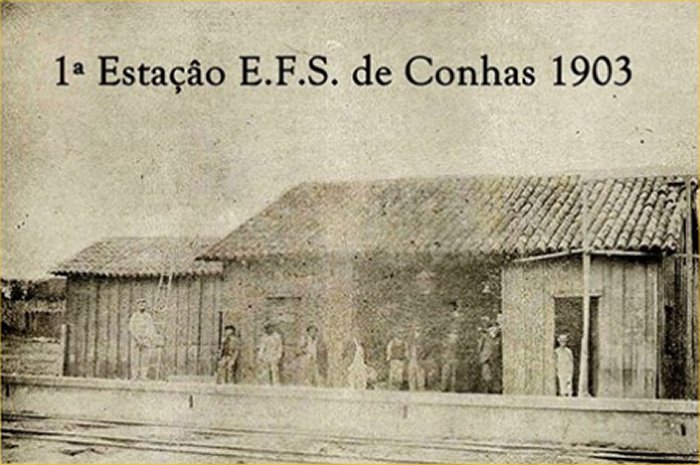
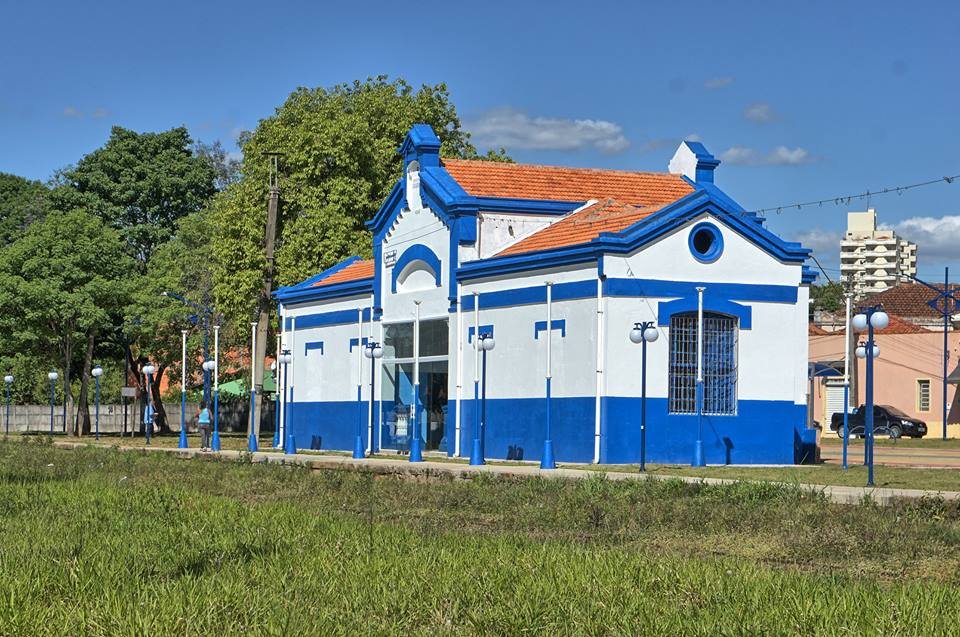
Conchas station was opened in July 1887 by the E.F. Sorocabana railway company (main line) and was located on the west bank of the Ribeirão das Conchas in the Município de Tietê, 180 km west of the provincial capital of São Paulo. The line passed to the Cia. União Sorocabana e Ytuana in 1892, to the Sorocabana Railway in 1907, to the E.F. Sorocabana in 1919 and finally belonged to FEPASA from 1971 until its closure in 1998 (estacoesferroviarias.com.br).

In 1903 (Photo: NN, on estacoesferroviarias.com.br)
In 2016 (Photo: Julio Cesar de Paiva, on estacoesferroviarias.com.br)

The area around the railway station became a district in December 1896 and twenty years later it became the Município de Conchas.

There had been a post office at the station since October 1888, as the Rio press reported:

Jornal do Commercio/RJ, 03/10/1888

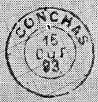
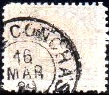
The imperial postmark is CSP-0365a (illus. Mário Celso Orsi Jr.):

CSP-0365a (MO) 1889-1897
Mappa Geral do Brasil, 1911

Der Bahnhof Conchas wurde im Juli 1887 von der Eisenbahngesellschaft E.F. Sorocabana (Hauptlinie) eröffnet und lag am Westufer des Ribeirão das Conchas im Município de Tietê, 180 km westlich der Provinzhauptstadt São Paulo. Die Strecke ging 1892 an die Cia. União Sorocabana e Ytuana, 1907 an die Sorocabana Railway, 1919 an die E.F. Sorocabana und gehörte zuletzt von 1971 bis zur Stilllegung 1998 der FEPASA (estacoesferroviarias.com.br). Heute sind die Gleise noch vorhanden, das Bahnhofsgebäude dient als Museum.

1903 (Foto: NN, auf estacoesferroviarias.com.br)
2016 (Foto: Julio Cesar de Paiva, auf estacoesferroviarias.com.br)

Das Gebiet um den Bahnhof wurde im Dezember 1896 zum Distrikt und zwanzig Jahre später zum Município de Conchas.

Seit Oktober 1888 gab es am Bahnhof ein Postamt, wie die Presse von Rio berichtete:

Jornal do Commercio/RJ, 03.10.1888

Der kaiserliche Poststempel ist CSP-0365a (Abb. Mário Celso Orsi Jr.):

CSP-0365a (MO) 1889-1897
Categories
Carimbologia C-D

Conceição, Paraíba (CPB-0110)

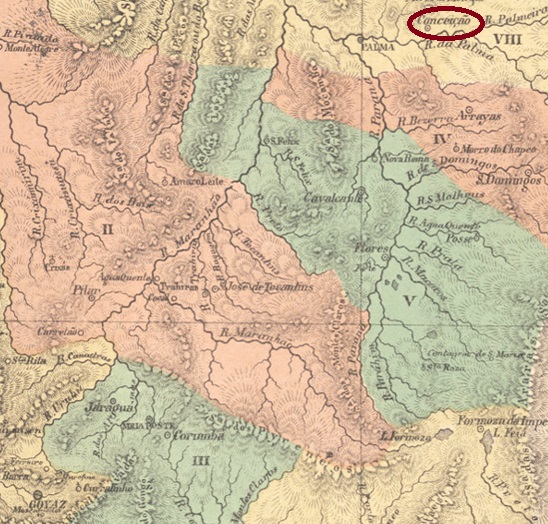
Atlas do Imperio do Brasil, 1868

Text update of March 2, 2024

Other names: Conceição da Misericordia, Conceição do Piancó

The settlement called Vila Federal de Conceição was founded in October 1866 and was located on the west bank of the Piancó near the Vila de Misericórdia, 470 kilometres west of the provincial capital Paraíba do Norte (today João Pessoa). It was declared a freguesia in December 1871 and received the status of a vila in October 1881.

As R. Koester writes in Carimbologia XIII, there had been a post office there since March 1888. The oldest postmark from this town so far is CPB-0110a (fig. Luiz C. Fritzen):

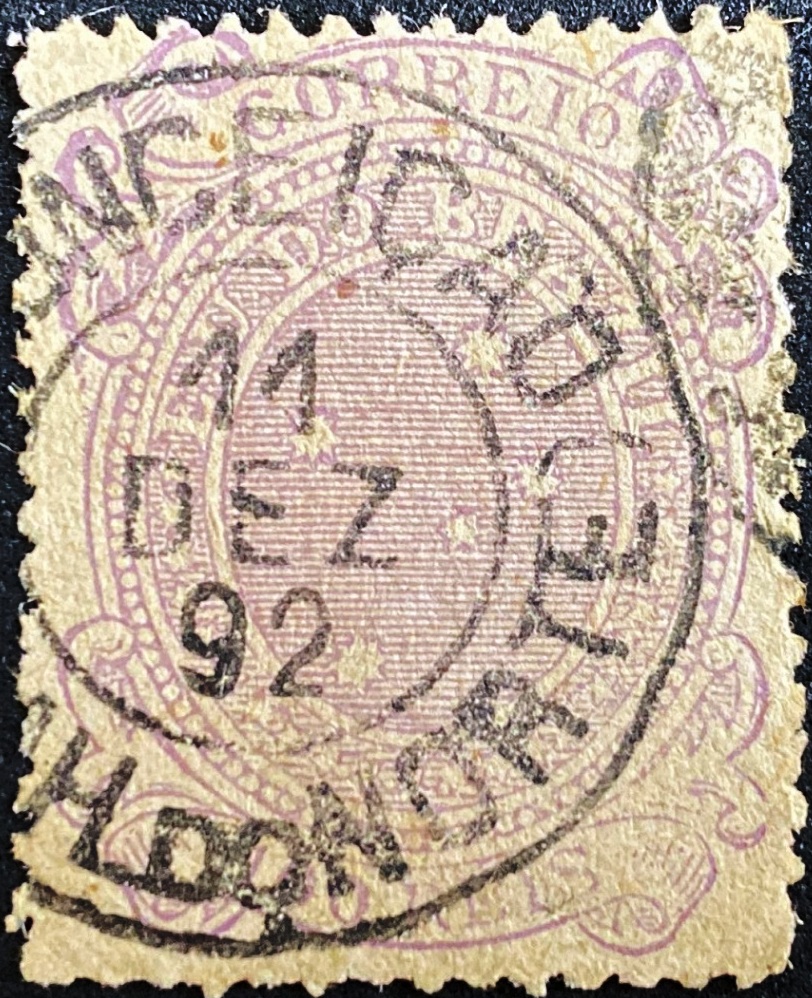
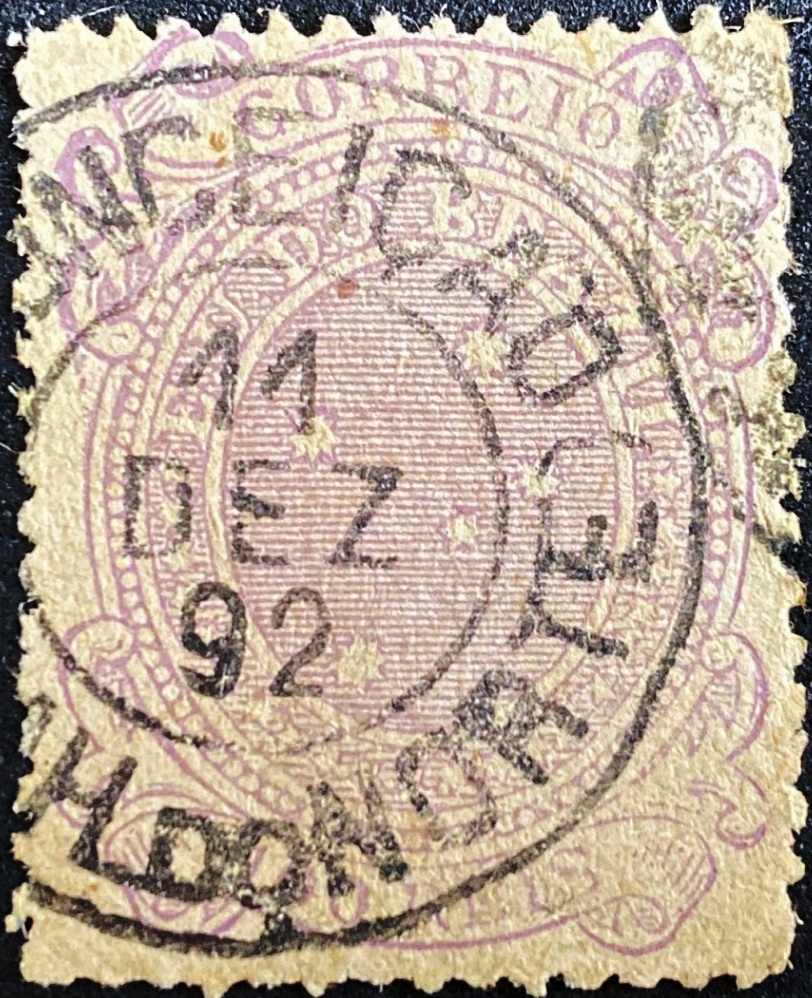
CPB-0110a (LCF) 1892
Sociedade Geologica e Mineralógica, 1910

Textaktualisierung am 2. März 2024

Andere Namen: Conceição da Misericordia, Conceição do Piancó

Die Siedlung mit dem Namen Vila Federal de Conceição wurde im Oktober 1866 gegründet und lag am Westufer des Piancó in der Nähe der Vila de Misericórdia, 470 km westlich der Provinzhauptstadt Paraíba do Norte (heute João Pessoa). Es wurde im Dezember 1871 zur Freguesia erklärt und erhielt im Oktober 1881 den Status einer Vila.

Wie R. Koester in Carimbologia XIII schreibt, gab es dort seit März 1888 ein Postamt. Der bisher älteste Poststempel aus diesem Ort ist CPB-0110a (Abb. Luiz C. Fritzen):

CPB-0110a (LCF) 1892
Categories
Carimbologia C-D

Conceição, Goiás (CGO-0045)

Atlas do Imperio do Brasil, 1868

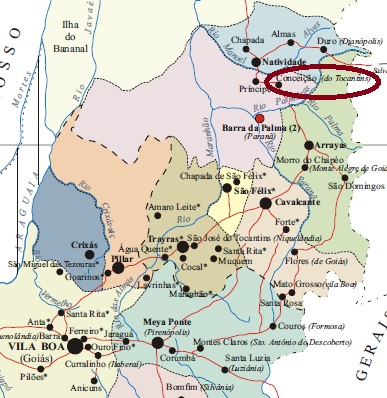
Other names: Conceição do Norte, Conceição do Tocantins (1988)

This Freguesia de N. Sra. da Conceição was founded in June 1835 and was located 660 kilometres north-east of the provincial capital of Goyaz (now Goiás Velho). It was elevated to a vila in October 1854, but lost this status in August 1884 when it was downgraded to the district of Conceição do Norte around the Vila de S. José do Duro. In June 1938, this district was incorporated into the newly founded Município de Dianópolis and only became an independent Município again in August 1963, which has been called Conceição do Tocantins since 1988.

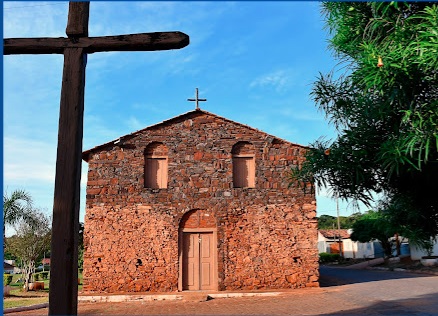
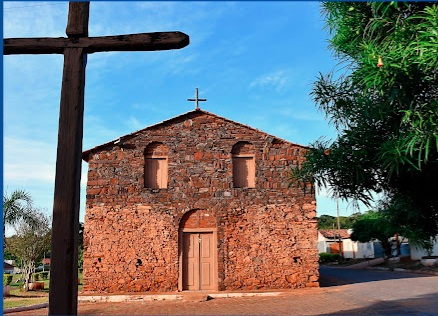
Main church N. Sra. da Conceição (Google Maps)

Two dates have been found for the creation of the local post office. Once in March 1829, as Nova Monteiro writes in Administrações e Agencias Postaes do Brasil Imperio (Brasil Filatelico/RJ, 1934-5; reprint SPP 1994-1999). Then again in 1832, as can be seen from the Directory of Imperial Post Offices (Tabella das Agencias do Correio do Imperio, Rio de Janeiro, 1885). Reinhold Koester writes in Carimbologia XIII that the two dates belong together and that 1832 is the year in which this postal agency went into operation.

No imperial postmark has yet been seen for Conceição/GO.

Teixeira Neto (apud Silva e Souza): Capitania de Goiás, 1809

Andere Namen: Conceição do Norte, Conceição do Tocantins (1988)

Diese Freguesia de N. Sra. da Conceição wurde im Juni 1835 gegründet und lag 660 km nordöstlich der Provinzhauptstadt Goyaz (heute Goiás Velho). Sie wurde im Oktober 1854 zur Vila erhoben, verlor diesen Status jedoch im August 1884, als sie zum Distrikt Conceição do Norte im Gebiet der Vila de S. José do Duro herabgestuft wurde. Im Juni 1938 wurde dieser Distrikt in das neu gegründete Município de Dianópolis eingegliedert und erst im August 1963 wieder zu einem eigenständigen Município erhoben, das seit 1988 Conceição do Tocantins heißt.

Hauptkirche N. Sra. da Conceição (Google Maps)

Für die Gründung des örtlichen Postamtes wurden zwei Daten gefunden. Einmal im März 1829, wie Nova Monteiro in Administrações e Agencias Postaes do Brasil Imperio (Brasil Filatelico/RJ, 1934-5; Nachdruck SPP 1994-1999) schreibt. Dann wieder 1832, wie aus dem Verzeichnis der kaiserlichen Postämter (Tabella das Agencias do Correio do Imperio, Rio de Janeiro, 1885) hervorgeht. Reinhold Koester meint in Carimbologia XIII, dass beide Daten zusammengehören und 1832 das Jahr der Inbetriebnahme dieser Postagentur sei.

Von Conceição/GO wurde bisher kein kaiserlicher Poststempel gesehen.

Categories
Carimbologia C-D

Conceição (train station/Bahnhof), Minas Gerais (CMG-0780)

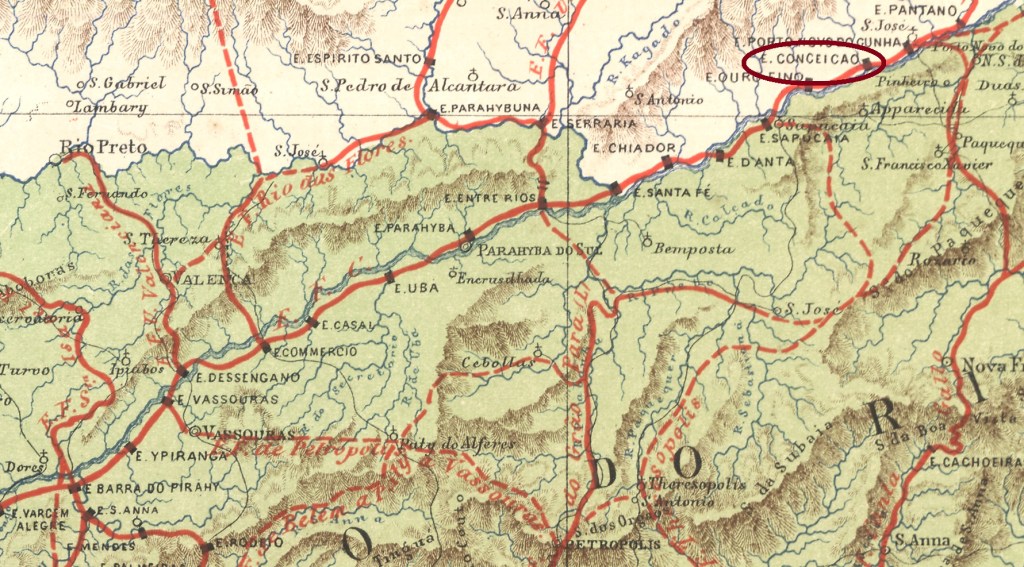
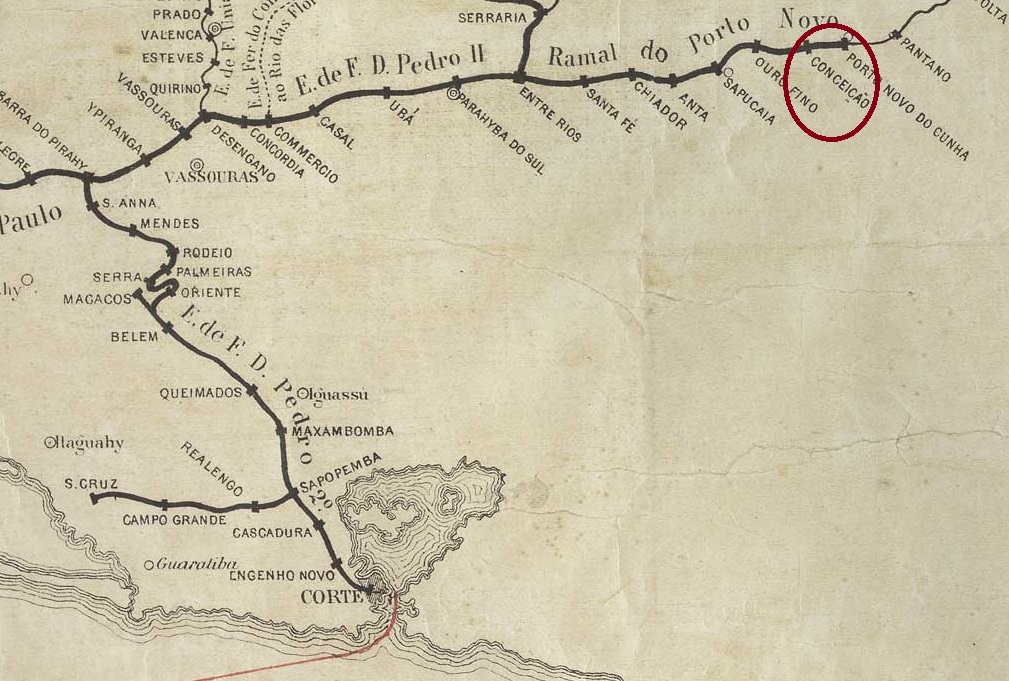
Estações (…) do Rio de Janeiro, São Paulo e Minas Gerais, 1880

Text update of March 1, 2024

Other names: Simplício

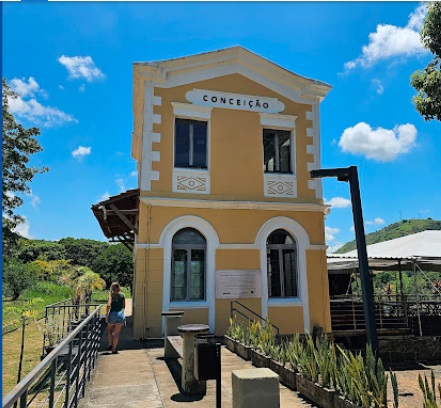
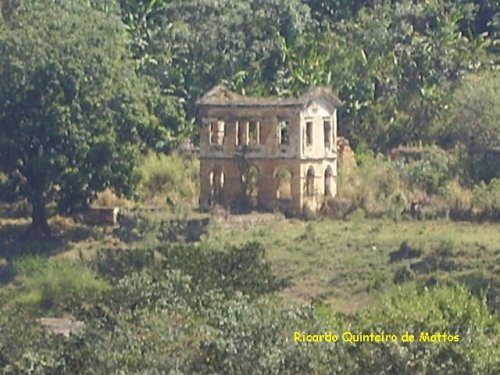
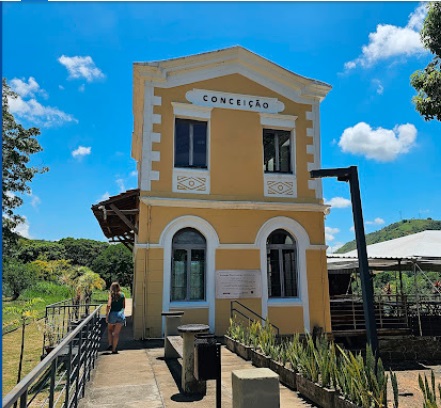
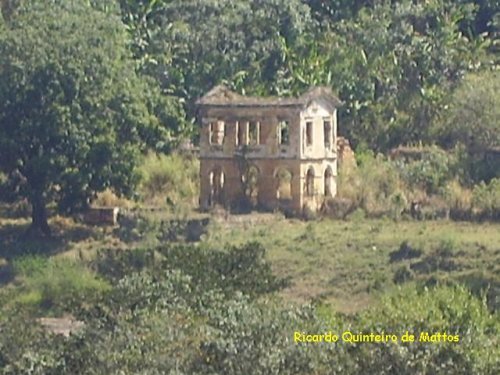
Conceição station was opened in August 1871 by the railway company E.F. D. Pedro II (Porto Novo – Branch) on the north bank of the Paraíba do Sul around Vila de S. José d’Além Paraíba, 320 km south of the provincial capital Ouro Preto. The railway line went to E.F. Central do Brasil in 1890, to E.F. Leopoldina in 1965 and belonged to Rede Ferroviária Federal S.A. from 1975 to 1997 (estacoesferroviarias.com.br). Today, the tracks are still there and the station building serves as a restaurant.

2007, before the restoration of the building (Photo: Ricardo Q. de Matos, on estacoesferroviarias.com.br)
Around 2020 (Photo: Fabio Pereira, Google Maps)

After the turn of the century, the station was named Simplício, after Simplicio José Ferreira da Fonseca, a landowner in the region. The station post office was opened in July 1871, according to Paula Sobrinho (História Postal de Minas Gerais, Belo Horizonte, 1997). The oldest postmark here to date is CMG-0780a, which was already illustrated by Paulo Ayres (Catálogo de Carimbos Brasil-Império, S. Paulo, 1937, 1942):

CMG-0780a (P.A. p. 121) 1879-1880

It was followed by CMG-0780b (ill. Luiz Claudio Fritzen)

CMG-0780b (LCF) 1881-1894

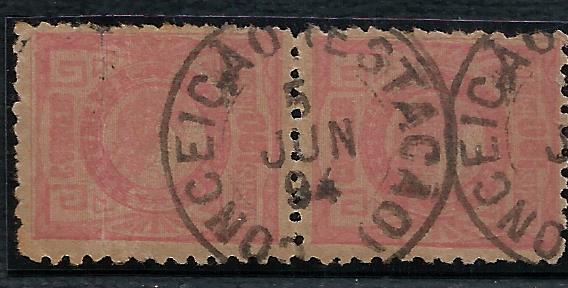
In the meantime, a mute postmark (fig. Alexandre Andrade) from this station post office has also been found:

1880 (AA)
E. F. Central do Brasil, 1890

Textaktualisierung am 1. März 2024

Andere Namen: Simplício

Der Bahnhof Conceição wurde im August 1871 von der Eisenbahngesellschaft E.F. D. Pedro II (Porto Novo – Abzweig) eröffnet und lag am Nordufer des Paraíba do Sul im Gebiet der Vila de S. José d’Além Paraíba, 320 km südlich der Provinzhauptstadt Ouro Preto. Die Bahnlinie ging 1890 an die E.F. Central do Brasil, 1965 an die E.F. Leopoldina und gehörte von 1975 bis 1997 der Rede Ferroviária Federal S.A. (estacoesferroviarias.com.br). Heute sind die Gleise noch vorhanden, das Bahnhofsgebäude dient als Restaurant.

2007, vor der Restaurierung des Gebäudes (Foto: Ricardo Q. de Matos, auf estacoesferroviarias.com.br)
Um 2020 (Foto: Fabio Pereira, Google Maps)

Nach der Jahrhundertwende erhielt der Bahnhof den Namen Simplício, nach Simplicio José Ferreira da Fonseca, einem Großgrundbesitzer der Region. Das Bahnhofspostamt wurde im Juli 1871 eröffnet, wie Paula Sobrinho (História Postal de Minas Gerais, Belo Horizonte, 1997) schreibt. Der bisher älteste Poststempel hier ist CMG-0780a, der bereits von Paulo Ayres (Catálogo de Carimbos Brasil-Império, S. Paulo, 1937, 1942) abgebildet wurde:

CMG-0780a (P.A. S. 121) 1879-1880

Er wurde von CMG-0780b gefolgt ((Abb. Luiz Claudio Fritzen):

CMG-0780b (LCF) 1881-1894

Inzwischen wurde auch ein stummer Stempel (Abb. Alexandre Andrade) von diesem Bahnhofspostamt gefunden:

1880 (AA)
Categories
Carimbologia C-D

Conceição dos Guarulhos, São Paulo (CSP-0360)

Villiers de l’Ile Adam: Carta (…) da Provincia de São Paulo, 1847

Text update of March 8, 2024

Other names: Guarulhos (1906)

The settlement of N. Sra. da Conceição dos Guarulhos was founded in December 1560 on the west bank of the Córrego das Cubas, 20 kilometres north-east of the later provincial capital of São Paulo. In May 1865 it was made a freguesia of the Vila de São Paulo and in March 1880 it became a Vila itself. Since November 1906, the Município has only been called Guarulhos. The Tupi word means paunchy and was supposed to describe the indigenous people…

As the regional press reported, there had been a post office there since June 1880:

A Constituinte, 18/06/1880

The oldest postmark from Conceição de Guarulhos so far is the French type CSP-0360a (collect. Fuad Ferreira Fo.):

CSP-0360a (FF) 1893-1904
Atlas do Imperio do Brasil, 1868

Textaktualisierung am 8. März 2024

Andere Namen: Guarulhos (1906)

Die Siedlung N. Sra. da Conceição dos Guarulhos entstand im Dezember 1560 am Westufer des Córrego das Cubas, 20 km nordöstlich der späteren Provinzhauptstadt São Paulo. Im Mai 1865 wurde sie zur Freguesia der Vila de São Paulo ernannt und im März 1880 selbst zur Vila. Seit November 1906 heißt der Município nur noch Guarulhos. Das indianische Wort bedeutet bauchig und sollte die Ureinwohner beschreiben…

Wie die regionale Presse berichtete, gab es dort seit Juni 1880 ein Postamt:

A Constituinte, 18.06.1880

Der bisher älteste Poststempel aus Conceição de Guarulhos ist der französische Typ CSP-0360a (Samml. Fuad Ferreira Fo.):

CSP-0360a (FF) 1893-1904
Categories
Carimbologia C-D

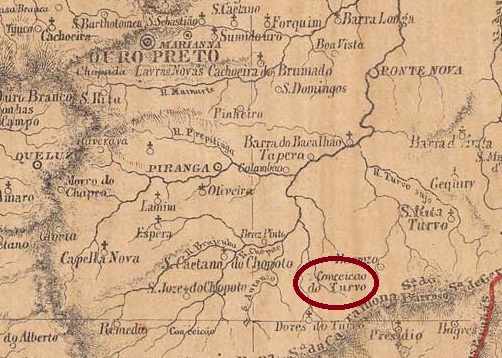
Conceição do Turvo, Minas Gerais (CMG-0830)

Provincia de Minas Geraes, 1873

Other names: Senador Firmino

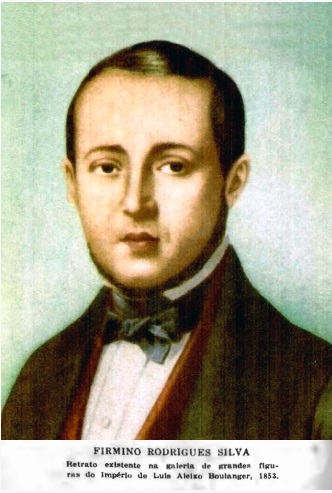
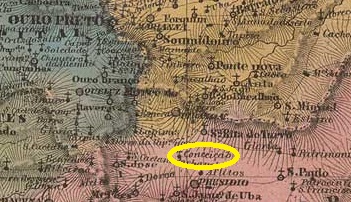
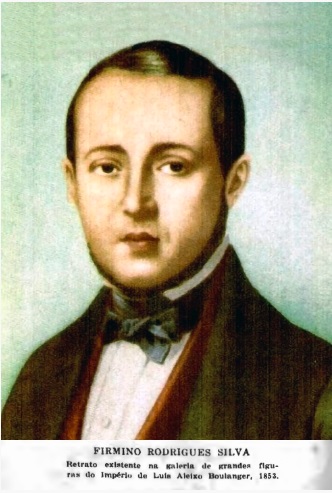
The chapel of N. Sra. da Conceição do Turvo, built in 1753, was located on the west bank of the Turvo River, 120 kilometres south-east of the later provincial capital Ouro Preto. In December 1865, the village was declared a freguesia of the Vila de Piranga and has been Município Senador Firmino since December 1938. The name commemorates the jurist Firmino Rodrigues da Silva (1816-1879), who was a judge in Piranga before becoming a senator of the empire.

Senator Firmino (culturaniteroi.com.br)

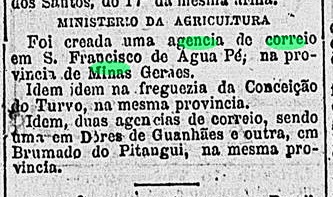
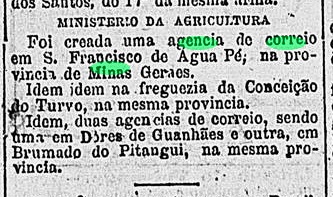
Two foundation dates have been found for the local post office. The first in February 1829, as Nova Monteiro writes in Administrações e Agencias Postaes do Brasil Imperio (Brasil Filatelico/RJ, 1934-5; reprint SPP 1994-1999). As this date seems very early and is not confirmed anywhere, it could be a printing error. Then again in February 1881, according to several sources and as announced in the Rio press as well:

Gazeta de Noticias/RJ, 21/02/1881

Reinhold Koester describes – unfortunately without illustration – the imperial postmark CMG-0830a as a double circle without ornament.

Villiers de l’Ile Adam: Carta (…) da Provincia de Minas Geraes, 1849

Andere Namen: Senador Firmino

Die 1753 erbaute Kapelle N. Sra. da Conceição do Turvo lag am Westufer des Turvo, 120 km südöstlich der späteren Provinzhauptstadt Ouro Preto. Im Dezember 1865 wurde der Ort zur Freguesia der Vila de Piranga ernannt und ist seit Dezember 1938 Município Senador Firmino. Der Name erinnert an den Juristen Firmino Rodrigues da Silva (1816-1879), der Richter in Piranga war, bevor er Senator des Kaiserreichs wurde.

Senator Firmino (culturaniteroi.com.br)

Für das örtliche Postamt wurden zwei Gründungsdaten gefunden. Das erste im Februar 1829, wie Nova Monteiro in Administrações e Agencias Postaes do Brasil Imperio (Brasil Filatelico/RJ, 1934-5; Nachdruck SPP 1994-1999) schreibt. Da dieses Datum sehr früh erscheint und nirgends bestätigt ist, könnte es sich hier um einen Druckfehler handeln. Dann wieder im Februar 1881, nach mehreren Quellen und auch durch die Presse von Rio angekündigt:

Gazeta de Noticias/RJ, 21.02.1881

Reinhold Koester beschreibt – leider ohne Abbildung – den kaiserlichen Poststempel CMG-0830a als Doppelkreis ohne Ornament.

Categories
Carimbologia C-D

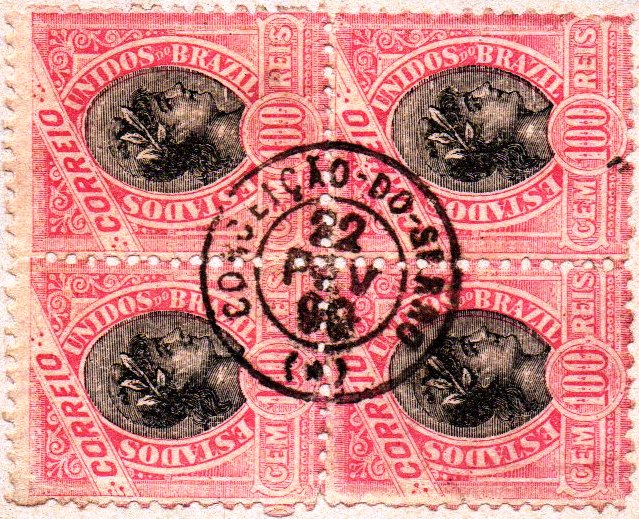
Conceição do Serro, Minas Gerais (CMG-0825)

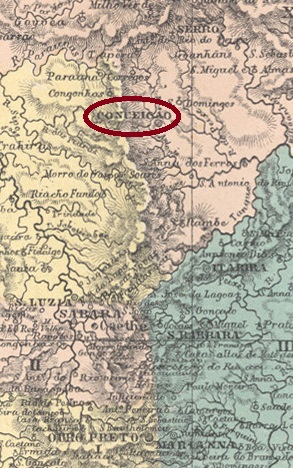
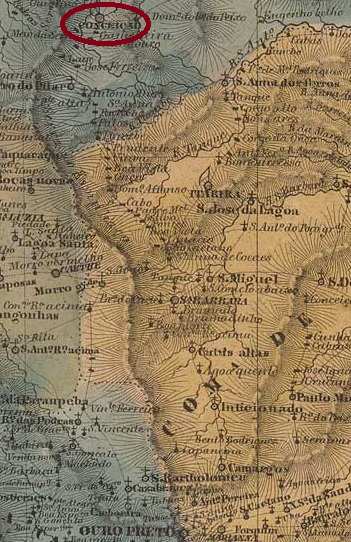
Atlas do Imperio do Brasil, 1868

Other names: Conceição do Mato Dentro (1724-1840, 1943)

The Freguesia de N. Sra. da Conceição do Mato Dentro, founded in February 1724, belonged to the Vila do Príncipe (later: Serro) and was located on the east bank of the Rio Santo Antonio, 270 kilometres north of the later provincial capital Ouro Preto. In March 1840 it was elevated to Vila de N. Sra. da Conceição and in October 1851 to the town of Conceição do Serro. This was followed by two renamings: in September 1923 to Município de Conceição and in December 1943 to the current Município de Conceição do Mato Dentro.

Three creation dates have been found for the local post office. First in February 1829, as Nova Monteiro writes in Administrações e Agencias Postaes do Brasil Imperio (Brasil Filatelico/RJ, 1934-5; reprint SPP 1994-1999). Then in 1839, as can be seen from the Directory of Imperial Post Offices (Tabella das Agencias do Correio do Imperio, Rio de Janeiro, 1885). And most recently in October 1860, as can be seen from the postal report (Relatorio Postal) for 1887.

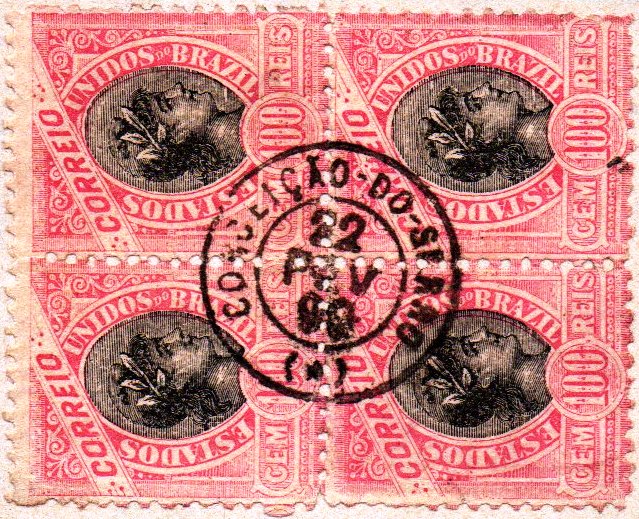
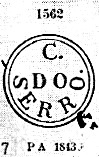
The oldest postmark to date is the double circle CMG-0825c (Fig. Rölli Auctions):

CMG-0825c (Rölli) 1877-1889

The French type CMG-0825d (fig. Felipe Piccinini) appeared at the end of the Empire:

CMG-0825d (FP) 1889-1904

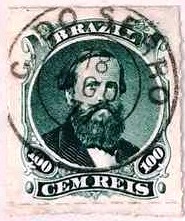
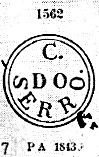
Please note: the following cancel comes from Cidade do Serro (see SMG-3100):

Serro (SMG-3100a)
Villiers de l’Ile Adam: Carta (…) da Provincia de Minas Geraes, 1849

Andere Namen: Conceição do Mato Dentro (1724-1840, 1943)

Die im Februar 1724 gegründete Freguesia de N. Sra. da Conceição do Mato Dentro gehörte zur Vila do Príncipe (später: Serro) und lag am Ostufer des Rio Santo Antonio, 270 km nördlich der späteren Provinzhauptstadt Ouro Preto. Im März 1840 wurde es zur Vila de N. Sra. da Conceição und im Oktober 1851 zur Stadt Conceição do Serro erhoben. Es folgten zwei Umbenennungen: im September 1923 in Município de Conceição und im Dezember 1943 in das heutige Município de Conceição do Mato Dentro.

Für das örtliche Postamt wurden drei Gründungsdaten gefunden. Zuerst im Februar 1829, wie Nova Monteiro in Administrações e Agencias Postaes do Brasil Imperio (Brasil Filatelico/RJ, 1934-5; Nachdruck SPP 1994-1999) schreibt. Dann 1839, wie aus dem Verzeichnis der kaiserlichen Postämter (Tabella das Agencias do Correio do Imperio, Rio de Janeiro, 1885) hervorgeht. Und zuletzt im Oktober 1860, wie im Postbericht (Relatorio Postal) für 1887 zu lesen ist.

Der bisher älteste Poststempel ist der Doppelkreis CMG-0825c (Abb. Rölli-Auktionen):

CMG-0825c (Rölli) 1877-1889

Zum Ende des Kaiserreichs erschien auch der französische Typ CMG-0825d (Abb. Felipe Piccinini):

CMG-0825d (FP) 1889-1904

Bitte beachten: dieser Stempel kommt aus der Cidade do Serro (siehe SMG-3100):

Serro (SMG-3100a)