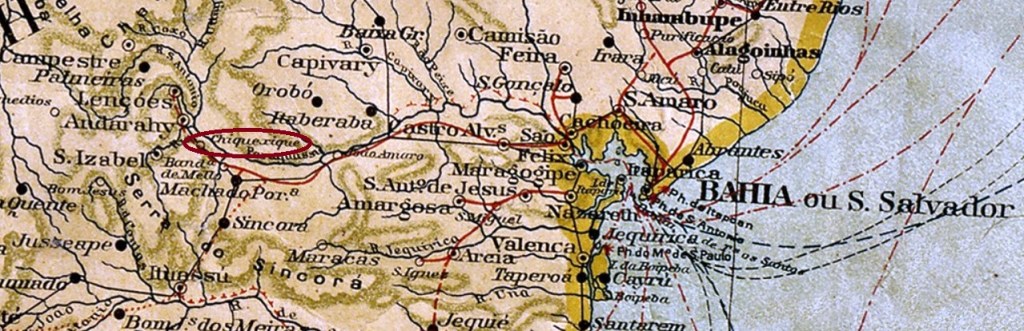
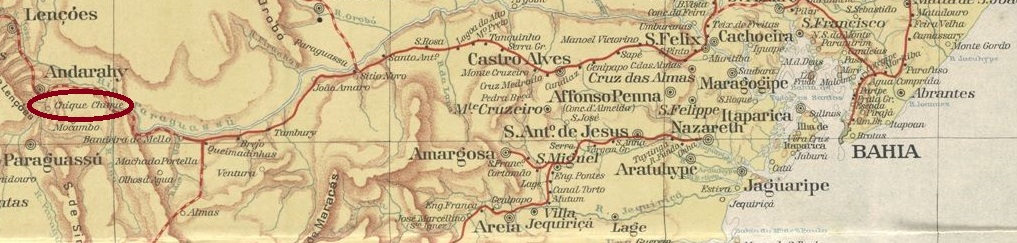
A forgotten village in the middle of the Chapada Diamantina, 440 kilometres west of the then provincial capital Salvador da Bahia. It was an arraial of the Vila de Sta. Izabel do Paraguaçu, which became a freguesia of the then newly founded Vila de Andarahy in May 1884. In the 20th century, it was renamed Igatu, presumably to avoid confusion with the larger Vila de Chique-Chique on the Rio S. Francisco.
Diamonds were found there in the late 18th century, the town grew rapidly and is said to have had around 9,000 inhabitants. In 2011, there were still 382, living mainly from tourism. Igatu means “good river” – although no water can be seen on the map – and is considered the “Macchu-Picchu” of the state of Bahia.
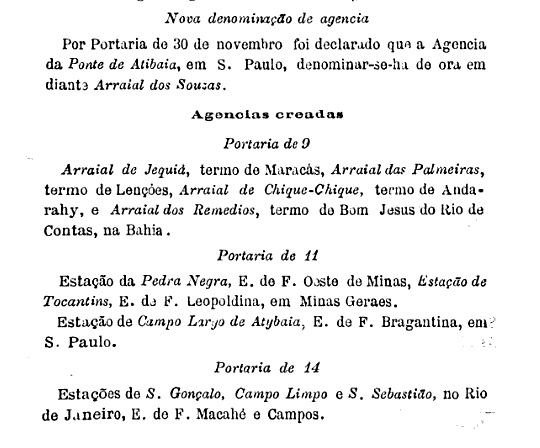
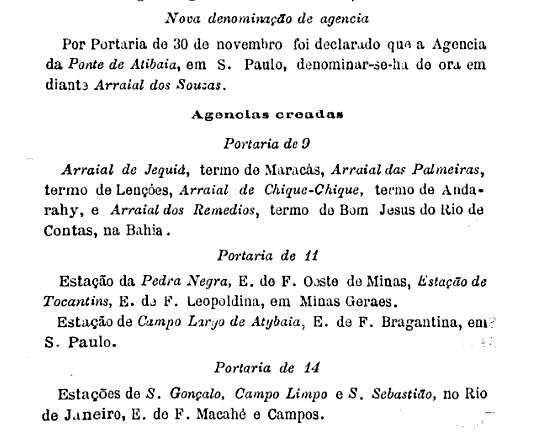
The local post office was created in November 1889, one week before the end of the Brazilian Empire, as can be seen from the postal report (Boletim Postal) of the following month:
Boletim Postal No. 8, December 1889
To date, no imperial postmark of this Chique-Chique has been found. It would be a miracle if one did exist.
Estado da Bahia, 1913
Andere Namen: Xique-Xique de Igatu, Igatu
Ein vergessenes Dorf inmitten der Chapada Diamantina, 440 km westlich der damaligen Provinzhauptstadt Salvador da Bahia. Es war ein Arraial der Vila de Sta. Izabel do Paraguaçu, das im Mai 1884 als Freguesia zur damals neu gegründeten Vila de Andarahy kam. Im 20. Jahrhundert erfolgte die Umbenennung in Igatu, vermutlich um Verwechslungen mit der größeren Vila de Chique-Chique am Rio S. Francisco zu vermeiden.
Im späten 18. Jahrhundert wurden dort Diamanten gefunden, der Ort wuchs schnell und soll etwa 9.000 Einwohner gehabt haben. Im Jahr 2011 waren es noch 382, die hauptsächlich vom Tourismus lebten. Igatu bedeutet “Guter Fluss” – obwohl auf der Karte kein Wasser zu sehen ist – und gilt als “Macchu-Picchu” des Bundesstaates Bahia.
Das örtliche Postamt wurde im November 1889 ins Leben gerufen, eine Woche vor dem Ende des brasilianischen Kaiserreichs, wie aus dem Postbericht (Boletim Postal) des folgenden Monats hervorgeht:
Boletim Postal Nr. 8, Dezember 1889
Bis heute wurde kein kaiserlicher Poststempel von diesem Chique-Chique gefunden. Es wäre ein Wunder, wenn es einen gäbe.
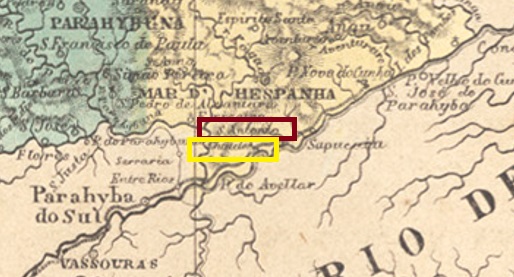
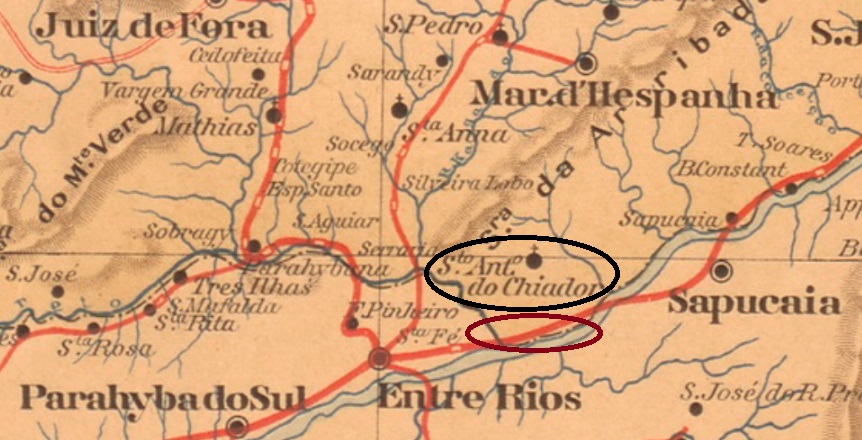
The Arraial de Sto. Antonio do Chiador was established around 1841 near the north bank of the Paraíba do Sul, about 300 kilometres south of the provincial capital Ouro Preto. It became a freguesia of the Vila de Mar d’Hespanha in January 1880, a district in December 1938 and an independent município in December 1953.
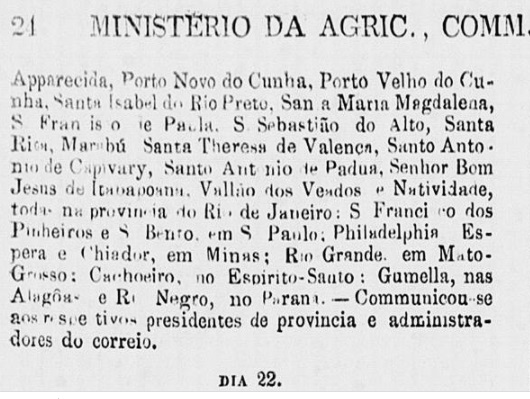
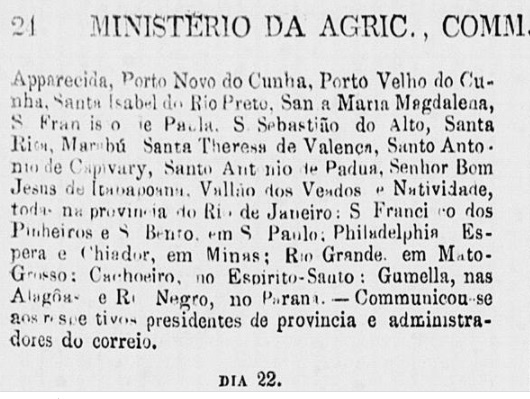
As Nova Monteiro writes in Administrações e Agencias Postaes do Brasil Imperio (Brasil Filatelico/RJ, 1934-5; Reprint SPP 1994-1999), there was already a post office there in July 1859, but it was closed again in June 1861, as reported by the Ministry of Agriculture (Ministerio da Agricultura):
Expediente do Ministerio da Agricultura, 21/06/1861
Apparently the agency then remained closed until May 1880, when it was reopened as Sto. Antonio do Chiador, as Paula Sobrinho reports in História Postal de Minas Gerais (Belo Horizonte, 1997). A postal route between Chiador and Chiador station (see below) was also in operation from 1880, and postmarks with Santo Antonio do Chiador have so far been found with dates from 1885 onwards (see SMG-3020).
A Actualidade, 02.10.1880
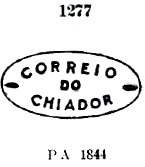
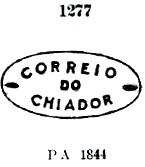
The postmark CMG-0735a could date from the first period of operation in Chiador. It was assigned no. 1277 by Paulo Ayres in the Catálogo de Carimbos Brasil-Império (S. Paulo, 1937, 1942) and is said to have been used on Inclinados stamps of 1844:
CMG-0735a (P.A. 1277) 1859-1885ff
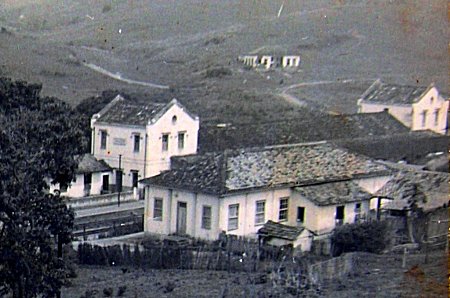
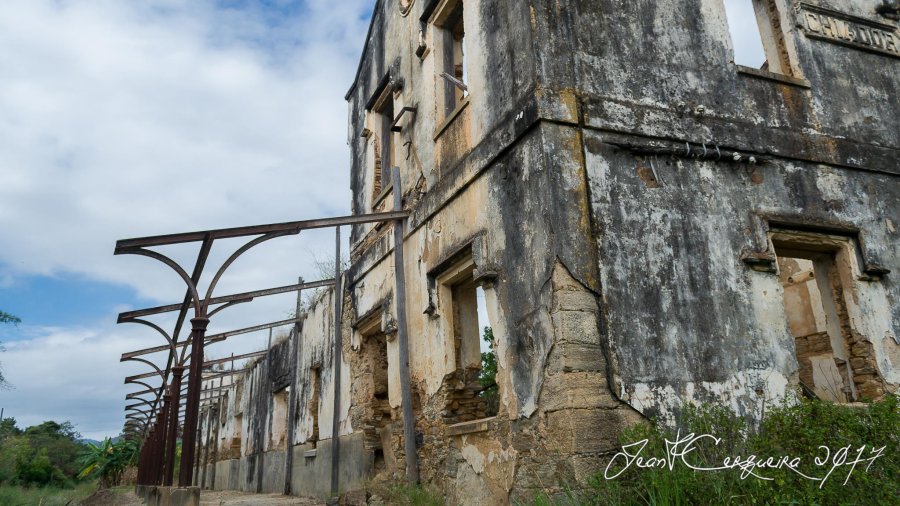
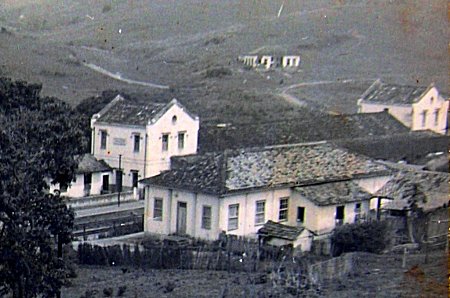
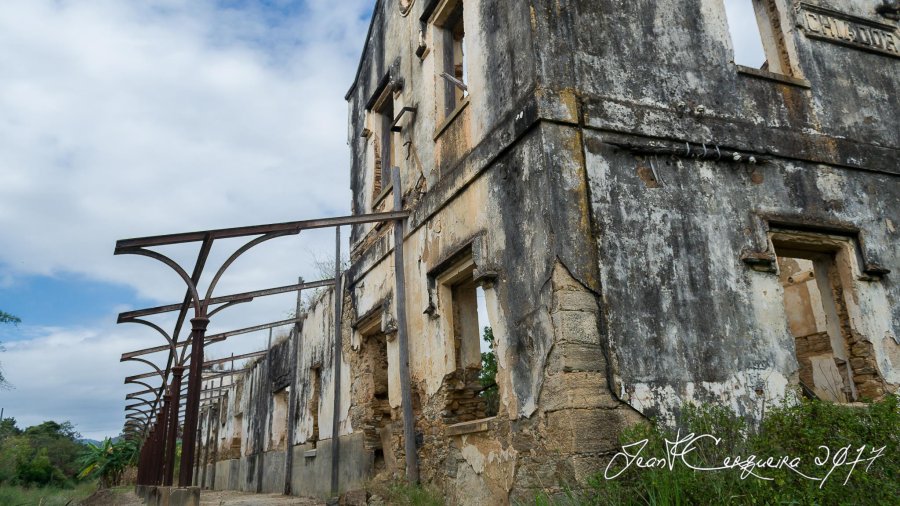
In June or July 1869, 5 km further south, practically directly on the banks of the Paraíba, a railway station of the E.F.D. Pedro II railway company (Porto Novo Branch) was inaugurated. The railway line passed to E.F. Central do Brasil in 1890, to E.F. Leopoldina in 1965 and belonged to Rede Ferroviaria Federal S.A. (estacoesferroviarias.com.br) from 1975 until its closure in 1997. Today the tracks are still there, the station building is an abandoned ruin:
In 1948 (Photo: Edson de Lima Lucas on estacoesferroviarias.com.br)In 2017 (Photo: Jean Cerqueira on estacoesferroviarias.com.br)
As Paulo Novaes writes on agenciaspostais.com.br, a post office was opened at the railway station in July 1869. It was managed by the Rio General Direction until December 1908, when it was transferred to the Minas Gerais Postal Bureau. It is not certain whether CMG-0735b (fig. Corinphila auctions) is the first postmark of this railway station post office. However, since it has already been seen with dates from 1877 – also in blue (when apparently no post office was in operation in the Freguesia de Chiador), it is very likely that it is a railway station postmark.
CMG-0735b (CO) 1877-1888
The same applies to its successors CMG-0735c (In Paulo Ayres with no. 1275) and CMG-0735d (fig. R. Koester, in Carimbologia XI).
CMG-0735c (P.A. 1725) 1883ffCMG-0735d (RK)
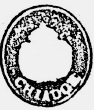
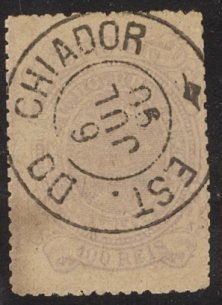
The cancel CMG-0736a (Coll. Marcio Protzner) is certainly from the Chiador station post office:
CMG-0736a (MP) 1888-1896
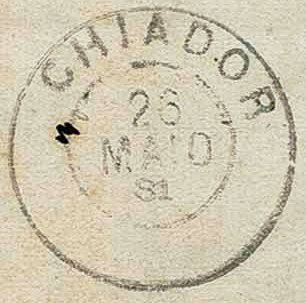
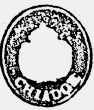
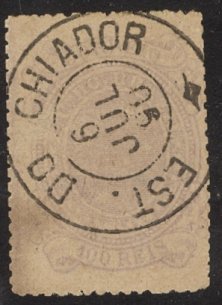
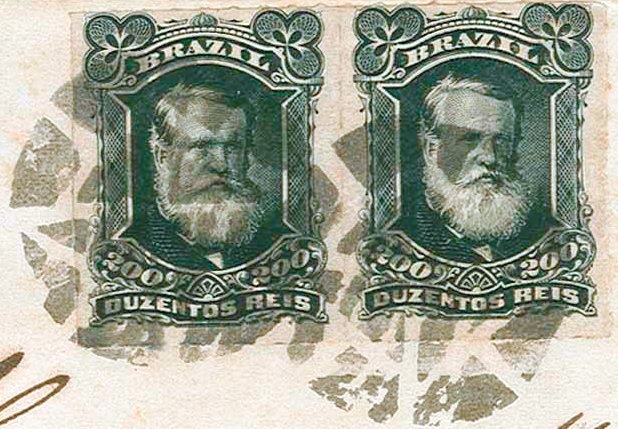
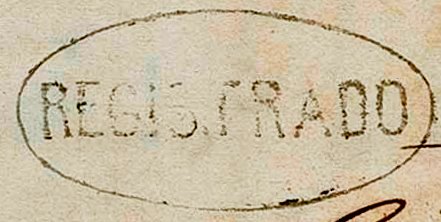
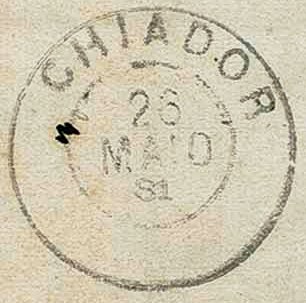
The mute postmark and the registered postmark from 1881 probably also belong to the Chiador railway station post office (illus. Corinphila auctions):
1881 (CO)1881 (CO)Estado de Minas Geraes, 1910
Siehe auch Sto. Antonio do Chiador (SMG-3020)
Die Arraial de Sto. Antonio do Chiador entstand um 1841 nahe dem Nordufer des Paraíba do Sul, etwa 300 km südlich der Provinzhauptstadt Ouro Preto. Es wurde im Januar 1880 eine Freguesia der Vila de Mar d’Hespanha, im Dezember 1938 ein Distrikt und im Dezember 1953 ein eigenständiges Município.
Wie Nova Monteiro in Administrações e Agencias Postaes do Brasil Imperio (Brasil Filatelico/RJ, 1934-5; Reprint SPP 1994-1999) schreibt, gab es dort bereits im Juli 1859 ein Postamt, das aber im Juni 1861 wieder geschlossen wurde, wie das Landwirtschaftsministerium (Ministerio da Agricultura) berichtete:
Expediente do Ministerio da Agricultura, 21.06.1861
Anscheinend blieb die Agentur dann bis Mai 1880 geschlossen, als sie als Sto. Antonio do Chiador wiedereröffnet wurde, wie Paula Sobrinho in História Postal de Minas Gerais (Belo Horizonte, 1997) berichtet. Ab 1880 war auch eine Postroute zwischen Chiador und dem Bahnhof Chiador (s.u.) in Betrieb, und Poststempel mit Santo Antonio do Chiador wurden bisher mit Daten ab 1885 gefunden (s. SMG-3020).
A Actualidade, 02.10.1880
Aus der ersten Betriebsperiode in Chiador könnte der Poststempel CMG-0735a stammen. Er wurde von Paulo Ayres mit der Nr. 1277 im Catálogo de Carimbos Brasil-Império (S. Paulo, 1937, 1942) versehen und soll auf Inclinados-Marken von 1844 verwendet worden sein:
CMG-0735a (P.A. 1277) 1859-1885ff
Im Juni oder Juli 1869 wurde 5 km weiter südlich, praktisch direkt am Ufer des Paraíba, ein Bahnhof der Eisenbahngesellschaft E.F.D. Pedro II (Abzweigung Porto Novo) eingeweiht. Die Bahnlinie ging 1890 an die E.F. Central do Brasil, 1965 an die E.F. Leopoldina und gehörte von 1975 bis zu ihrer Schließung 1997 der Rede Ferroviaria Federal S.A. (estacoesferroviarias.com.br). Heute sind die Gleise noch vorhanden, das Bahnhofsgebäude ist eine verlassene Ruine:
1948 (Foto: Edson de Lima Lucas auf estacoesferroviarias.com.br)2017 (Foto: Jean Cerqueira auf estacoesferroviarias.com.br)
Wie Paulo Novaes auf agenciaspostais.com.br schreibt, wurde im Juli 1869 am Bahnhof ein Postamt eröffnet. Dieses wurde bis Dezember 1908 von der Postdirektion von Rio verwaltet und dann an die Postdirektion von Minas Gerais übergeben. Es ist nicht sicher, ob CMG-0735b (Abb. Corinphila-Auktionen) der erste Stempel dieses Bahnhofspostamtes ist. Da er aber bereits mit Daten von 1877 – und auch in Blau – gesehen wurde (als in der Freguesia de Chiador anscheinend kein Postamt in Betrieb war), ist es sehr wahrscheinlich, dass es sich um einen Bahnhofsstempel handelt.
CMG-0735b (CO) 1877-1888
Dasselbe gilt für seine Nachfolger CMG-0735c (In Paulo Ayres mit Nr. 1275) und CMG-0735d (Abb. R. Koester, in Carimbologia XI).
CMG-0735c (P.A. 1725) 1883ffCMG-0735d (RK)
Mit Sicherheit vom Bahnhofspostamt Chiador stammt der Stempel CMG-0736a (Abb. Márcio Protzner):
CMG-0736a (MP) 1888-1896
Ebenfalls zum Bahnhofspostamt Chiador gehören wohl der stumme Stempel und der Einschreibestempel von 1881 (Abb. Corinphila-Auktionen):
Villiers de l’Ile Adam: Carta (…) das Provincias dp Grão-Pará e Alto Amazonas, 1850
Other names: Equador, Sto. Antonio de Aruãs
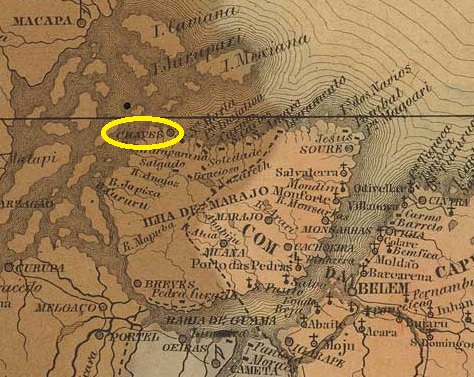
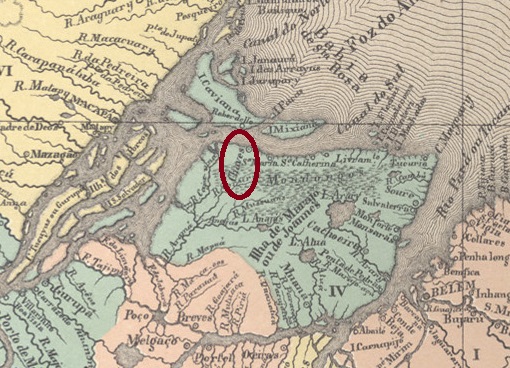
According to tradition, this place was also named after a Portuguese community. Although Santo Antonio de Chaves is in the province of Pará just 220 km north-west of the provincial capital Belém, the journey there today still takes 2 days and 10 hours for 500 km. Chaves was already a Vila in July 1755, which was renamed Equador in August 1834. This name was probably not well received, as the old name returned just ten years later. In January 1891, the locality was elevated to town status. In June 1932, titwas renamed Sto. Antonio de Aruãs, which was also not well received. The name Chaves returned definitively in October 1938.
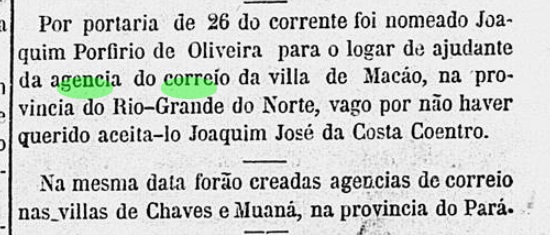
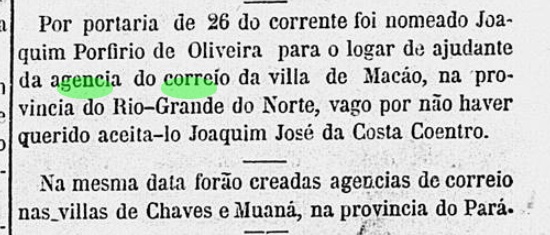
As the Rio press reported, there had been a post office in the town since April 1865:
Correio Mercantil/RJ, 28/04/1865
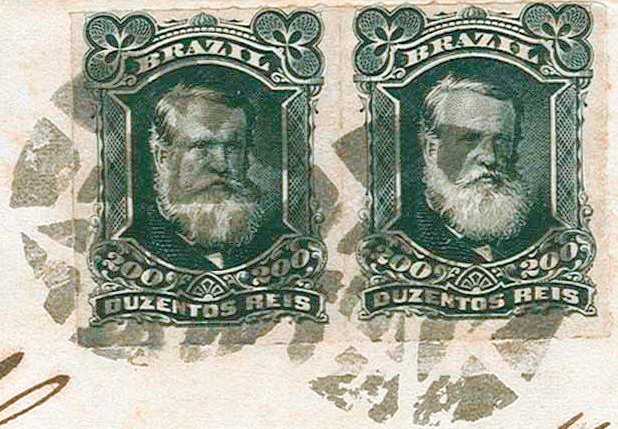
The first postmark has not yet been seen and will probably have been broken soon, as the stamps were cancelled by hand there from around 1876 (illustration from the Internet):
1876ff (EB)
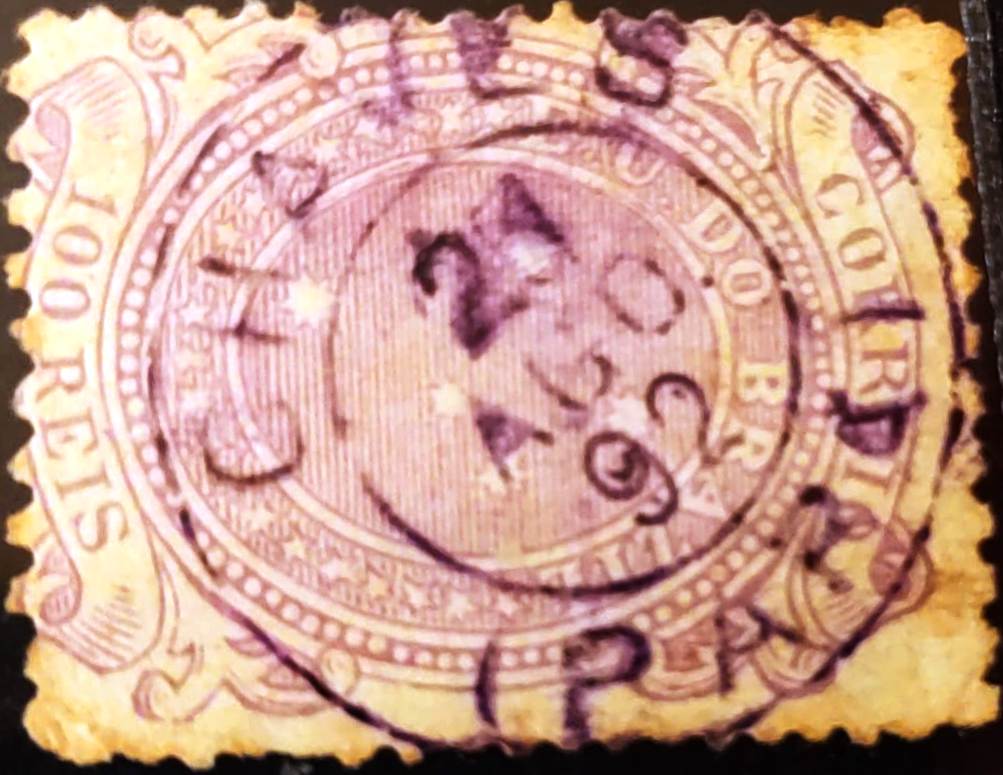
The oldest cancel is the double circle CPA-0075b (illustration from the Internet), which was found with a date of 1892:
CPA-0075b (EB) 1892
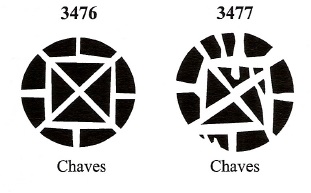
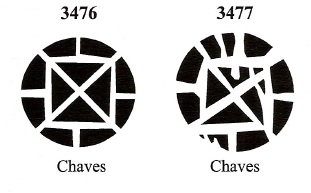
James Dingler and Klerman W. Lopes have recorded two mute cancels from Chaves in Mute Cancellations of the Brazil Empire / Carimbos Mudos do Brasil Império (Brazil Philatelic Association, Rio de Janeiro, 2000):
BPA 3476 (1876ff) – 3477Atlas do Imperio do Brasil, 1868
Andere Namen: Equador, Sto. Antonio de Aruãs
Der Überlieferung nach wurde auch dieser Ort nach einer portugiesischen Gemeinde benannt. Obwohl Santo Antonio de Chaves in der Provinz Pará 220 km nordwestlich der Provinzhauptstadt Belém liegt, dauert die Fahrt dorthin heute noch 2 Tage und 10 Stunden für 500 km. Chaves war bereits im Juli 1755 eine Vila, die im August 1834 in Equador umbenannt wurde. Dieser Name kam wohl nicht gut an, denn schon zehn Jahre später kehrte der alte Name zurück. Im Januar 1891 folgte die Erhebung zur Stadt. Im Juni 1932 wurde die Stadt in Sto. Antonio de Aruãs, der ebenfalls nicht gut ankam. Der Name Chaves kehrte im Oktober 1938 zurück.
Wie die Presse in Rio berichtete, gab es seit April 1865 ein Postamt am Ort:
Correio Mercantil/RJ, 28.04.1865
Der erste Poststempel ist noch nicht gesehen worden und wird wohl bald zerbrochen sein, denn ab etwa 1876 wurden die Marken dort von Hand entwertet (Abb. aus dem Internet):
1876ff (EB)
Der bisher älteste Stempel ist der Doppelkreis CPA-0075b (Abb. aus dem Internet), der mit einem Datum von 1892 gefunden wurde:
CPA-0075b (EB) 1892
Aus Chaves haben James Dingler und Klerman W. Lopes in Mute Cancellations of the Brazil Empire / Carimbos Mudos do Brasil Império (Brazil Philatelic Association, Rio de Janeiro, 2000) zwei stumme Stempel registriert:
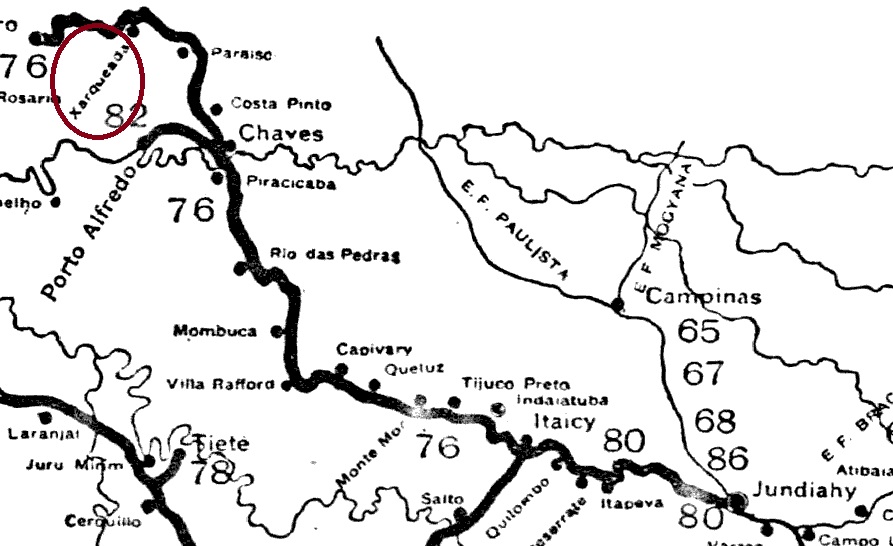
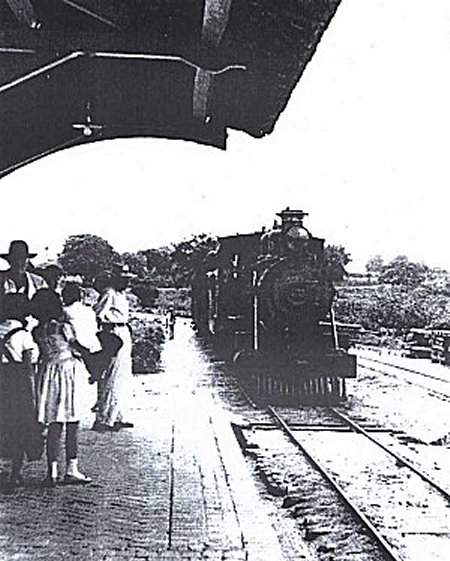
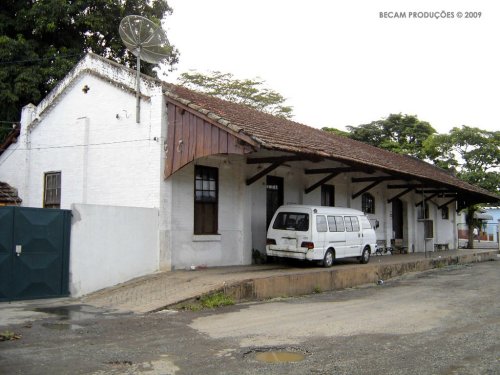
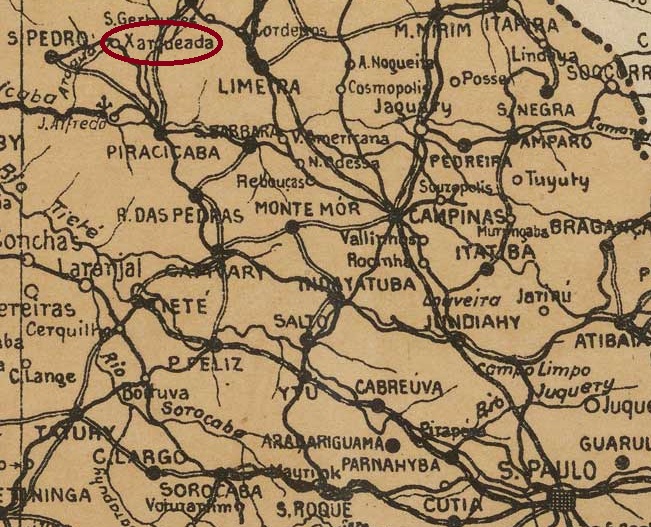
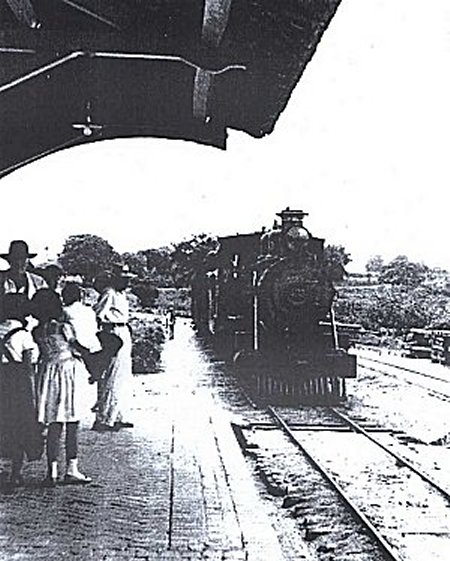
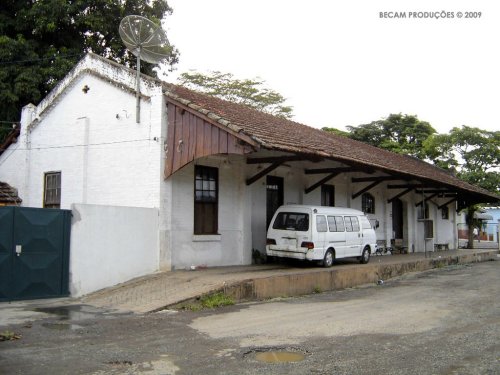
Charqueada station was opened in October 1887 by the E.F. Ytuana (Piracicaba branch) on the east bank of the Ribeirão Fregadoli in the Município Piracicaba, 180 km northwest of the provincial capital of São Paulo. The line went to the Cia. União Sorocabana e Ytuana in 1892, to the Sorocabana Railway in 1907 and belonged to E.F. Sorocabana from 1919 until it was closed in 1966 (estacoesferroviarias.com.br). Today, the tracks have disappeared and the station building serves as a warehouse for Charqueada, which has been an independent município since December 1953.
Charqueada station in the 1960s (Photo: Paulo Roberto Szabad, on estacoesferroviarias.com.br)In January 2009 (Photo: Adriano Martins, on estacoesferroviarias.com.br)
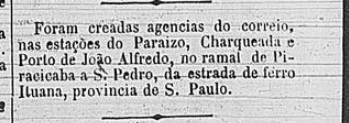
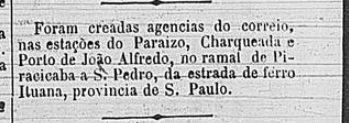
According to the Rio press, there had been a post office at the railway station since March 1888:
Cidade do Rio, 09/03/1888
No imperial postmark has yet been seen from this station.
Arthur D. Ribeiro: Estado de São Paulo, 1924
Der Bahnhof Charqueada wurde im Oktober 1887 von der E.F. Ytuana (Piracicaba-Abzweigung) eröffnet und lag am Ostufer des Ribeirão Fregadoli im Município Piracicaba, 180 km nordwestlich der Provinzhauptstadt São Paulo. Die Strecke ging 1892 an die Cia. União Sorocabana e Ytuana, 1907 an die Sorocabana Railway und gehörte von 1919 bis zur Stilllegung der Strecke 1966 der E.F. Sorocabana (estacoesferroviarias.com.br). Heute sind die Gleise verschwunden und das Bahnhofsgebäude dient als Lager der Gemeinde Charqueada, die seit Dezember 1953 ein eigenständiges Município ist.
Der Bahnhof in den 60er Jahren (Foto: Paulo Roberto Szabad, auf estacoesferroviarias.com.br)Im Januar 2009 (Foto: Adriano Martins, auf estacoesferroviarias.com.br)
Wie die Presse von Rio berichtet, gab es seit März 1888 ein Postamt am Bahnhof:
Cidade do Rio, 09.03.1888
Bisher wurde kein kaiserlicher Poststempel von diesem Bahnhof gesehen.
Villiers de l’Ile Adam: Carta (…) da Provincia de Minas Geraes, 1849
Other names: Paula Lima (1891)
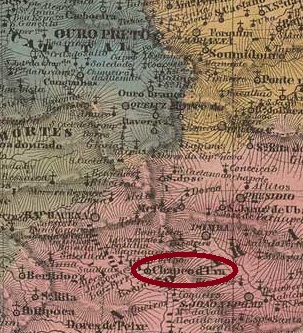
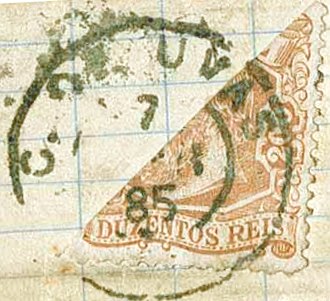
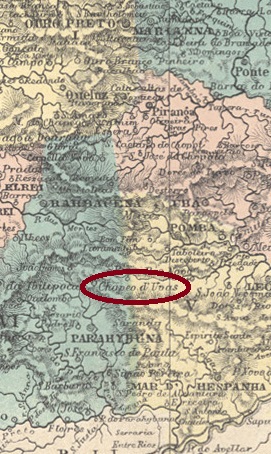
The Freguesia de N. Sra. da Assumpção do Chapeo d’Uvas was founded in 1810, belonged to the Vila de Barbacena, and lay 180 kilometres south of the later provincial capital of Ouro Preto. It was an important station on the Caminho Velho (Old Road) to Rio de Janeiro. In May 1850, the freguesia was incorporated into the newly founded Vila de Sto. Antonio do Paraibuna, which was given the name Juiz de Fora in December 1865. The name Chapeo d’Uvas is said to come from the indigenous name Chapetuva, “path through the swamp”. So, it is no wonder that the town was renamed Paula Lima in March. Paula Lima has been a rural suburb of the city of Juiz de Fora since May 1976. The name commemorates Count Francisco de Paula Lima (1812-1865), a wealthy landowner in the region.
Francisco de Paula Lima ca 1865
The local post office was opened at least three times. The first date could not be determined, but the postmark CMG-0730a (Fig. RHM catalogue) is said to have been used in 1835.
CMG-0730a (RHM) 1835
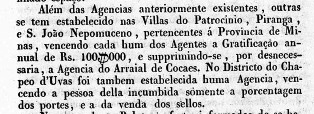
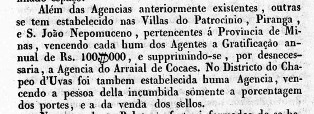
The second creation was commissioned at the end of October 1843, according to concurring information from R. Koester (Carimbologia XI), Nova Monteiro (Administrações e Agencias Postaes do Brasil Imperio, in Brasil Filatelico/RJ, 1934-5; reprint SPP 1994-1999) and a ministerial report from Rio:
Relatorio do Ministerio do Imperio, 1843
The agency was still in operation in 1859, but must have been closed shortly afterwards, as it was reopened in May 1864, as can be seen from the postal report (Relatorio dos Correios) for 1886.
In the 70s, the next postmark was not yet available, as the stamps were cancelled by hand:
1876ff (fig. R. Koester, op. cit.)
It was not until the 80s that CMG-0730b appeared (fig. Corinphila Auctions):
CMG-0730b (CO) 1883-1885
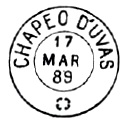
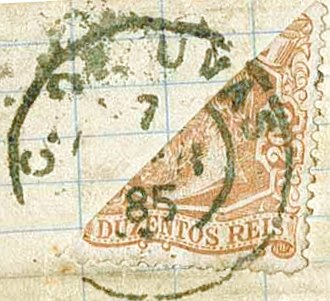
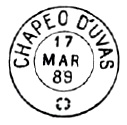
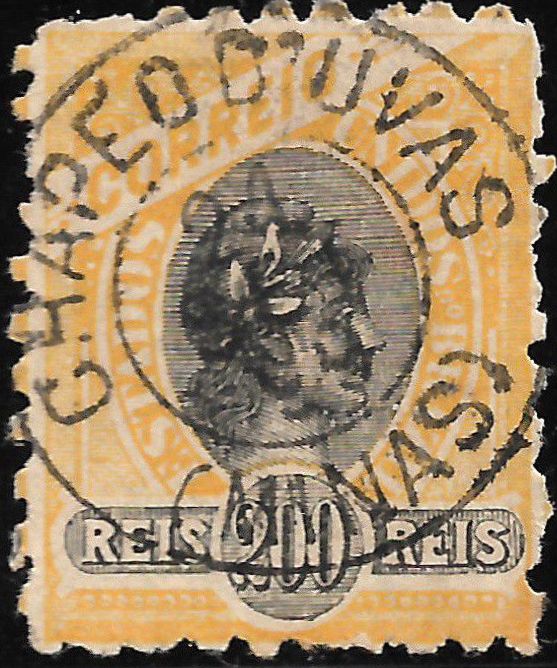
CMG-0730c also appeared in the late imperial period, as illustrated in Paulo Ayres’ Catálogo de Carimbos Brasil-Império, (S. Paulo, 1937, 1942) on p. 121:
CMG-0730c (P.A. p. 121) 1888-1889
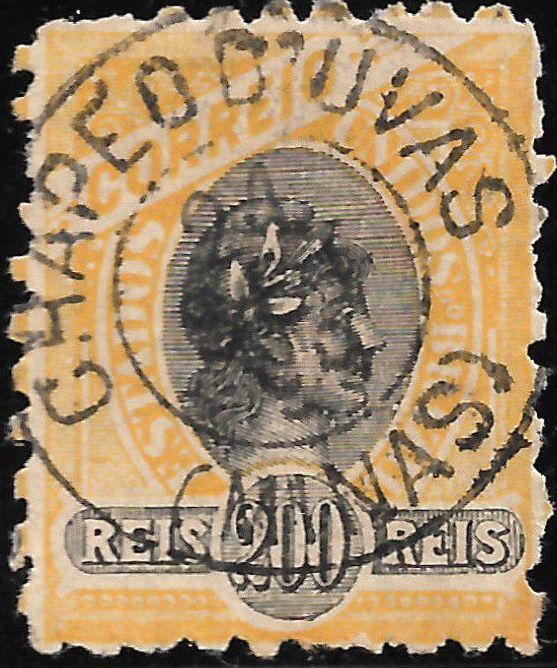
In the early Republic, the old place name was still used on postmarks:
CMG-0730d (EB) 1895-1899
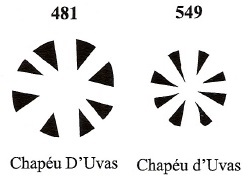
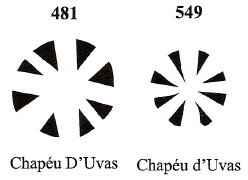
Two mute cancellations of Chapeo d’Uvas are also registered by James Dingler and Klerman W. Lopes in Mute Cancellations of the Brazil Empire / Carimbos Mudos do Brasil Império (Brazil Philatelic Association, Rio de Janeiro, 2000):
BPA 481 (1883) – 549Atlas do Imperio do Brasil, 1868
Andere Namen: Paula Lima (1891)
Die Freguesia de N. Sra. da Assumpção do Chapeo d’Uvas wurde 1810 gegründet und gehörte zur Vila de Barbacena, sie lag 180 km südlich der späteren Provinzhauptstadt Ouro Preto und war eine wichtige Station am Caminho Velho (Alter Weg) nach Rio de Janeiro. Im Mai 1850 wurde die Freguesia in die neu gegründete Vila de Sto. Antonio do Paraibuna, die im Dezember 1865 den Namen Juiz de Fora erhielt. Der Name Chapeo d’Uvas soll von der indigenen Bezeichnung Chapetuva, „Weg durch den Sumpf“, stammen. Kein Wunder also, dass der Ort im März in Paula Lima umbenannt wurde. Seit Mai 1976 ist Paula Lima ein ländlicher Vorort der Stadt Juiz de Fora. Der Name erinnert an den Komtur Francisco de Paula Lima (1812-1865), einen reichen Großgrundbesitzer der Region.
Francisco de Paula Lima ca 1865
Das örtliche Postamt wurde mindestens dreimal eröffnet. Das erste Datum konnte nicht ermittelt werden, aber der Poststempel CMG-0730a (Abb. RHM-Katalog) soll 1835 verwendet worden sein.
CMG-0730a (RHM) 1835
Die zweite Entstehung wurde Ende Oktober 1843 in Auftrag gegeben, nach übereinstimmenden Angaben von R. Koester (Carimbologia XI), Nova Monteiro (Administrações e Agencias Postaes do Brasil Imperio, in Brasil Filatelico/RJ, 1934-5; Reprint SPP 1994-1999) und einem Ministerialbericht aus Rio:
Relatorio do Ministerio do Imperio, 1843
Die Agentur war 1859 noch in Betrieb, muss aber kurz danach geschlossen worden sein, da sie im Mai 1864 wieder eröffnet wurde, wie aus dem Postbericht (Relatorio dos Correios) für 1886 hervorgeht.
In den 7oer Jahren ist der nächste Poststempel noch nicht vorhanden, da die Marken von Hand entwertet wurden:
1876ff (Abb. R. Koester, op.cit.)
Erst in den 80er Jahren erschien CMG-0730b (Abb. Corinphila Auktionen):
CMG-0730b (CO) 1883-1885
In der späten Kaiserzeit wurde auch CMG-0730c verwendet, wie in Paulo Ayres‘ Catálogo de Carimbos Brasil-Império (S. Paulo, 1937, 1942) auf S. 121 abgebildet:
CMG-0730c (P.A. S. 121) 1888-1889
In der frühen Republik wurde noch der alte Ortsname auf Poststempeln verwendet:
CMG-0730d (EB) 1895-1899
Von Chapeo d’Uvas sind auch zwei stumme Entwertungen von James Dingler und Klerman W. Lopes in Mute Cancellations of the Brazil Empire / Carimbos Mudos do Brasil Império (Brazil Philatelic Association, Rio de Janeiro, 2000) registriert:
Other names: Campo de Palmas, Passo Bormann, Passo dos Indios
In its relatively short history, the locality has experienced many turbulent times. At times it belonged to the province of São Paulo, at other times to the province of Paraná, was courted by Argentina, was placed in an autonomous region and yet has been part of the state of Santa Catarina for more than a century.
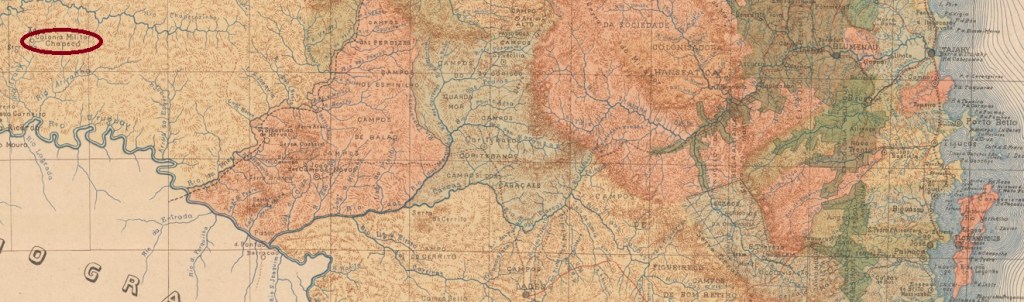
Settlement began around 1839 as Povoação de Campo de Palmas, 560 kilometres west of the future capital Florianópolis, but still part of the province of São Paulo. In August 1853, it became a colony called Vila de Palmas, which then belonged to the province of Paraná. The territory aroused covetousness in Argentina, which is why the Brazilian Empire established a military colony called Xapecó in November 1859. However, this did not begin operations until March 1882, a sign of political détente.
Three name changes followed. The first in August 1917 as Município de Passo Bormann, already in the state of Sta. The lieutenant José Bernardino Bormann (1844-1919), born in Porto Alegre from a German family, was the colony’s first director. In April 1931, it was renamed Município de Passo dos Indios. This name was obviously not well received, because in March 1938 it was renamed for the third time to Chapecó, as it is still known today. Between 1943 and 1946, Chapecó was in the Território do Iguaçu, an autonomous region created for geopolitical reasons.
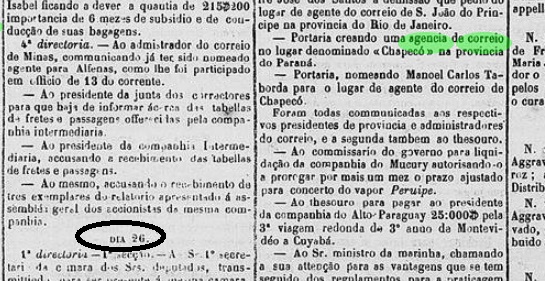
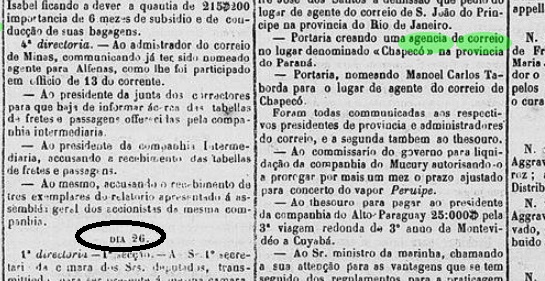
The historical turmoil is reflected in the postal system. So far, three creation dates have been found for the local post office, but no postmarks. First in June 1862, as Nova Monteiro writes in Administrações e Agencias Postaes do Brasil Imperio (Brasil Filatelico/RJ, 1934-5; reprint SPP 1994-1999) and is confirmed by the press in Rio:
Diario do Rio de Janeiro, 18/07/1862
Then again in 1864, as R. Koester (Carimbologia XI) notes. And finally in June 1882, as also reported by Koester and the press in Rio:
Jornal do Commercio/RJ, 27/06/1882
The only “postmark” to date is a handwritten cancellation on a D. Pedro stamp from 1866, as mentioned by R. Koester – unfortunately without illustration.
Estado de Santa Catharina, 1907
Andere Namen: Campo de Palmas, Passo Bormann, Passo dos Indios
In seiner relativ kurzen Geschichte hat der Ort viele bewegte Zeiten erlebt. Sie gehörte mal zur Provinz São Paulo, mal zur Provinz Paraná, wurde von Argentinien umworben, lag in einem autonomen Gebiet und ist doch seit mehr als einem Jahrhundert Teil des Bundesstaates Santa Catarina.
Die Besiedlung begann um 1839 als Povoação de Campo de Palmas, 560 km westlich der späteren Hauptstadt Florianópolis, aber noch zur Provinz São Paulo gehörig. Im August 1853 wurde daraus eine Kolonie mit dem Namen Vila de Palmas, die dann zur Provinz Paraná gehörte. Das Gebiet weckte Begehrlichkeiten in Argentinien, weshalb das bras. Kaiserreich im November 1859 eine Militärkolonie namens Xapecó. Diese nahm jedoch erst im März 1882, als Zeichen der politischen Entspannung, ihren Betrieb auf.
Es folgten drei Namensänderungen. Die erste im August 1917 als Município de Passo Bormann, bereits im Staat Sta. Catarina. Der in Porto Alegre geborene, deutschstämmige Leutnant José Bernardino Bormann (1844-1919) war der erste Direktor der Kolonie. Im April 1931 wurde sie dann in Município de Passo dos Indios umbenannt. Dieser Name kam offensichtlich nicht gut an, denn bereits im März 1938 erfolgte die dritte Umbenennung in die Stadt Chapecó, wie sie heute noch bekannt ist. Zwischen 1943 und 1946 lag Chapecó im Território do Iguaçu, einem aus geopolitischen Gründen geschaffenen autonomen Gebiet.
Die historischen Wirren spiegeln sich im Postwesen wider. Für das örtliche Postamt wurden bisher drei Gründungsdaten, aber keine Poststempel gefunden. Zuerst im Juni 1862, wie Nova Monteiro in Administrações e Agencias Postaes do Brasil Imperio (Brasil Filatelico/RJ, 1934-5; Nachdruck SPP 1994-1999) schreibt und von der Presse in Rio bestätigt wird:
Diario do Rio de Janeiro, 18.07.1862
Dann wieder 1864, wie R. Koester (Carimbologia XI) bemerkt. Und zuletzt im Juni 1882, wie ebenfalls von Koester und der Presse in Rio berichtet:
Jornal do Commercio/RJ, 27.06.1882
Als bisher einziger „Poststempel“ gilt eine handschriftliche Entwertung auf einer D. Pedro-Marke von 1866, wie bei R. Koester – leider ohne Abbildung – erwähnt.
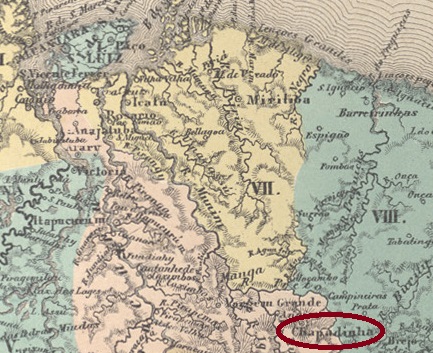
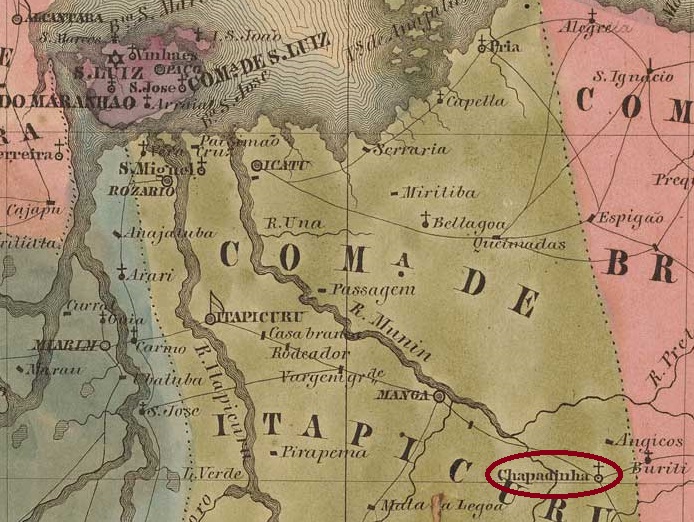
The settlement was originally called Chapada das Mulatas (Hillside of the Mulatines) and was located 240 kilometres south-east of the later provincial capital of S. Luís do Maranhão. In September 1801, it became the Freguesia de N. Sra. das Dores da Chapadinha, which belonged to the Vila de Vargem Grande. Chapadinha has been an independent município since October 1890.
The local post office was established in December 1882, as reported by R. Koester in Carimbologia XI. The only imperial postmark to date is CMA-0090a (illus. R. Koester):
CMA-0090a (RK) 1889Villiers de l’Ile Adam: Carta (…) da Provincia do Maranhão, 1850
Andere Namen: Chapada das Mulatas
Die Siedlung hieß ursprünglich Chapada das Mulatas (Berghang der Mulattinen) und lag 240 km südöstlich der späteren Provinzhauptstadt S. Luís do Maranhão. Im September 1801 wurde sie die Freguesia de N. Sra. das Dores da Chapadinha, die zur Vila de Vargem Grande gehörte. Seit Oktober 1890 ist Chapadinha ein selbständiger Município.
Das örtliche Postamt wurde im Dezember 1882 eingerichtet, wie R. Koester in Carimbologia XI berichtet. Der bisher einzige kaiserliche Poststempel ist CMA-0090a (Abb. R. Koester):
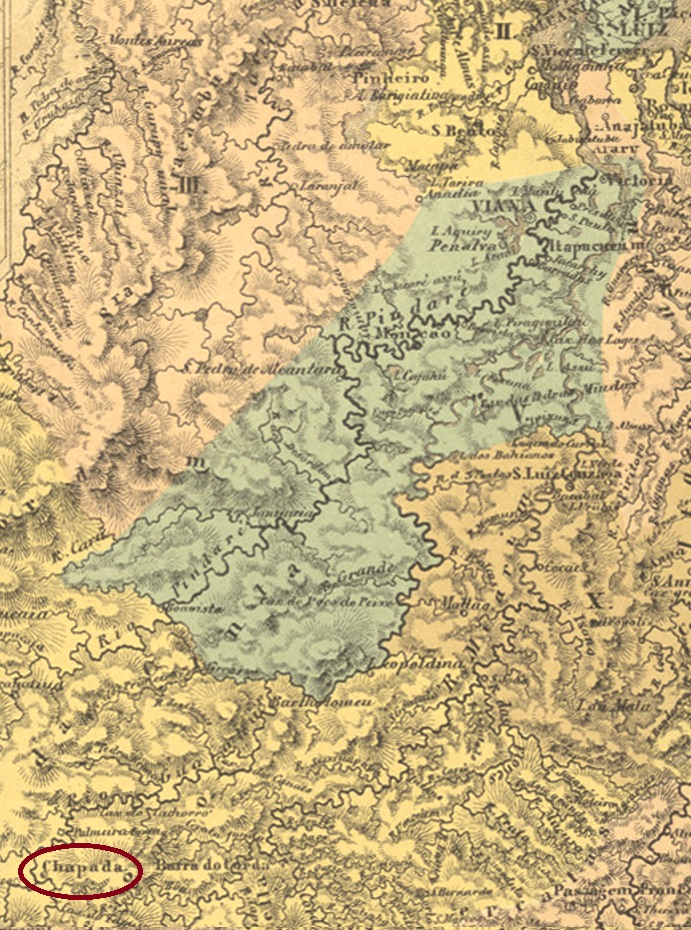
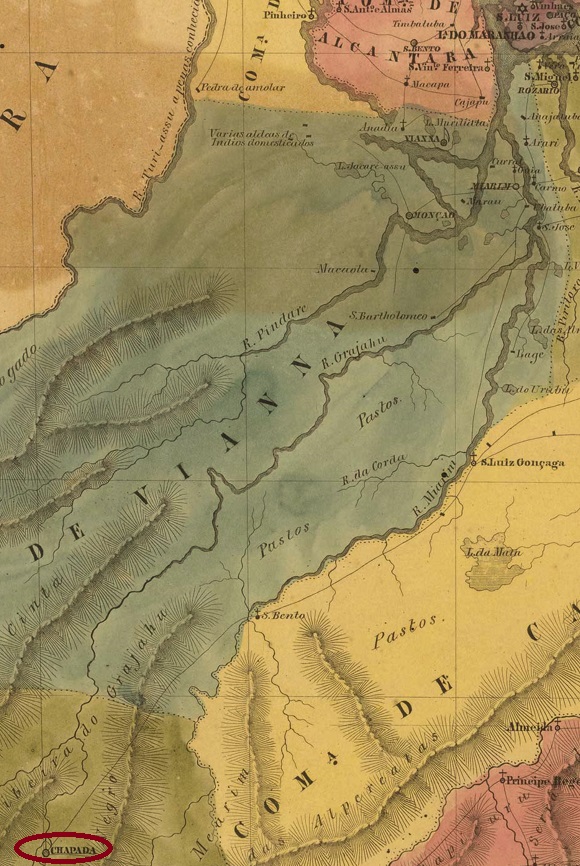
The history of this settlement begins around 1811 with the construction of a harbour at Fazenda Chapada on the west bank of the Grajaú, 560 km south of the later provincial capital S. Luís do Maranhão. As early as 1817, the Arraial was called S. Paulo do Norte and belonged to the Vila de Pastos Bons. In April 1835, it was elevated to Vila do Senhor do Bomfim da Chapada, which became the town of Grajaú in April 1881.
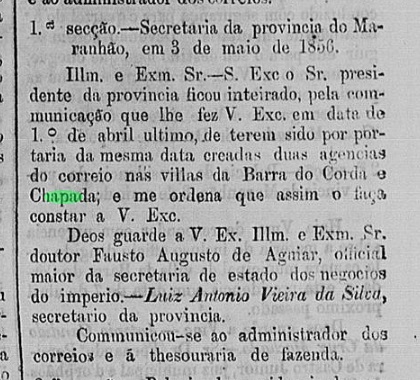
There are three creation dates for the local post office. They are so close together that they can be safely summarised. The first was at the end of March 1856, as Aureo G. Santos writes in Agências de Correio Criadas e Suprimidas 1851, 1855, 1856 e 1857 (Brasil Filatélico 181, Rio de Janeiro, 1977):
Aureo G. Santos (op. cit.)
The regional press mentions on the other hand 1 April 1856:
Publicador Maranhense, 06/05/1856
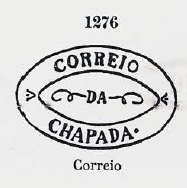
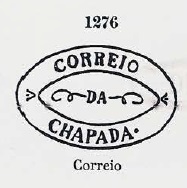
And R. Koester indicates 5 April 1856 in Carimbologia XI. The oldest postmark to date is CMA-0085a with the typical shape for the province of Maranhão, which was already presented by P. Ayres in Catálogo de Carimbos Brasil-Império (S. Paulo, 1937, 1942) with no. 1276:
CMA-0085a (P.A. 1276) 1856ff
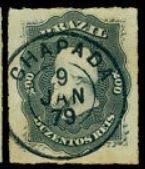
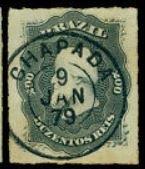
It was followed by the double circle CMA-0085b (illustration from the Internet):
CMA-0085b (EB) 1879Villiers de l’Ile Adam: Carta (…) da provincia do Maranhão, 1850
Die Geschichte der Siedlung beginnt um 1811 mit dem Bau eines Hafens der Fazenda Chapada am Westufer des Grajaú, 560 km südlich der späteren Provinzhauptstadt S. Luís do Maranhão. Bereits 1817 hieß der Arraial S. Paulo do Norte und gehörte zur Vila de Pastos Bons. Im April 1835 erfolgte die Erhebung zur Vila do Senhor do Bomfim da Chapada, die seit April 1881 die Stadt Grajaú ist.
Es gibt drei Gründungsdaten für das örtliche Postamt. Sie liegen so nahe beieinander, dass man sie getrost zusammenfassen kann. Zum ersten Mal Ende März 1856, wie Aureo G. Santos in Agências de Correio Criadas e Suprimidas 1851, 1855, 1856 e 1857 (Brasil Filatélico 181, Rio de Janeiro, 1977) schreibt:
Aureo G. Santos (op. cit.)
Die regionale Presse erwähnt dafür den 1. April 1856:
Publicador Maranhense, 06.05.1856
Und R. Koester gibt in Carimbologia XI den 5. April 1856 an. Der bisher älteste Poststempel ist CMA-0085a mit der für die Provinz Maranhão typischen Form, der bereits von P. Ayres in Catálogo de Carimbos Brasil-Império (S. Paulo, 1937, 1942) mit Nr. 1276 vorgestellt wurde:
CMA-0085a (P.A. 1276) 1856ff
Ihm folgte der Doppelkreis CMA-0085b (Abbildung aus dem Internet):
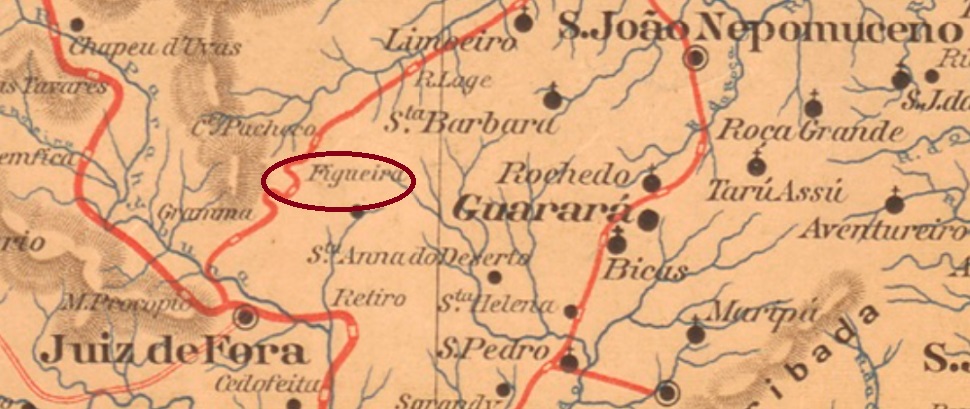
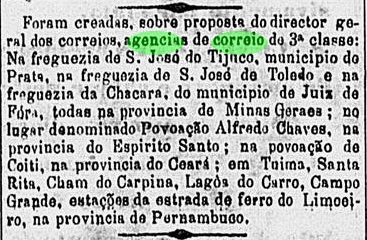
Chácara (estate) was a settlement of the Vila de Juiz de Fora on the south bank of the Cágado, 240 kilometres south of the provincial capital Ouro Preto. In October 1884, it was elevated to the Freguesia de S. Sebastião da Chácara, which has been an independent município since March 1963.
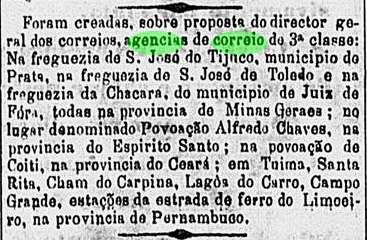
As Paula Sobrinho writes in História Postal de Minas Gerais (Belo Horizonte, 1997), there has been a post office there since October 1882, which is confirmed by the press in Rio:
O Globo/RJ, 28/10/1882
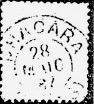
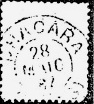
The oldest postmark to date is CMG-0725a, illustrated in R. Koester’s Carimbologia XI:
CMG-0725a (RK) 1882ff
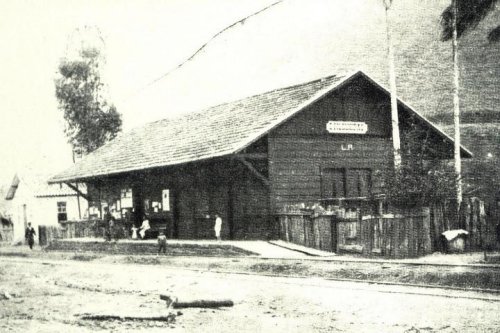
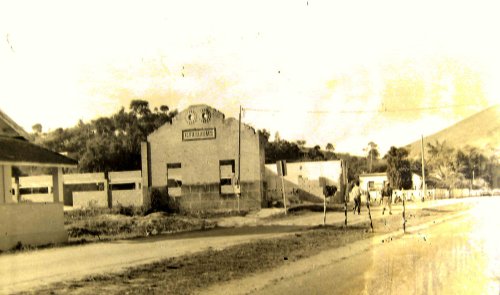
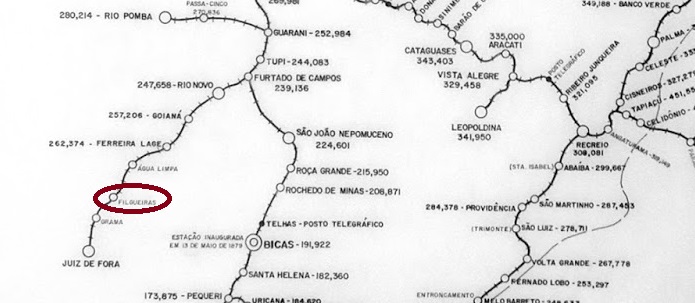
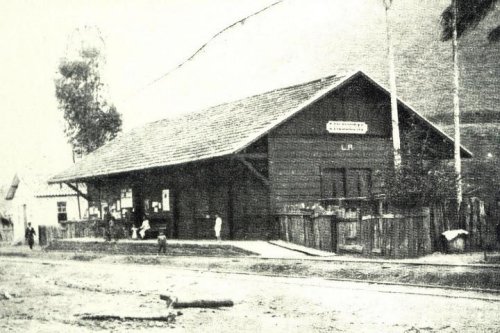
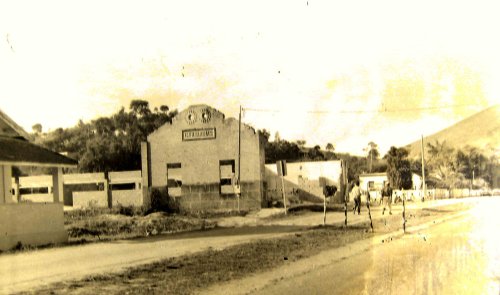
In 1884, the railway station of the E.F. de Juiz de Fora ao Piau, later called Comemdador Filgueiras, was inaugurated. The railway line belonged to E.F. Leopoldina from 1888 until it was closed in 1972. Today, the tracks have disappeared, and the station building has been demolished.
In 1915 (Photo: Album de Juiz de Fora/Albino Esteves, on estacoesferroviarias.com.br)In 1987: Demolition of the station (ph.: Hugo Caramuru, on estacoesferroviarias.com.br)
As the Rio press reported, a railway station post office was opened in March 1885:
Jornal do Commercio/RJ, 06/03/1885
No postmark has yet been found for the Chácara railway station. It is possible that the old local postmarks continued to be used there.
Estrada de Ferro Leopoldina
Chácara (Landgut) war eine Siedlung der Vila de Juiz de Fora am Südufer des Cágado, 240 km südlich der Provinzhauptstadt Ouro Preto. Im Oktober 1884 wurde sie zur Freguesia de S. Sebastião da Chácara erhoben, die seit März 1963 ein eigenständiges Município ist.
Wie Paula Sobrinho in História Postal de Minas Gerais (Belo Horizonte, 1997) schreibt, gab es dort seit Oktober 1882 ein Postamt, was von der Presse in Rio bestätigt wird:
O Globo/RJ, 28.10.1882
Der bisher älteste Poststempel ist CMG-0725a, abgebildet in R. Koesters Carimbologia XI:
CMG-0725a (RK) 1882ff
1884 wurde der Bahnhof der E.F. de Juiz de Fora ao Piau, später Comemdador Filgueiras, eingeweiht. Die Bahnlinie gehörte von 1888 bis zu ihrer Stilllegung 1972 der E.F. Leopoldina. Heute sind die Gleise verschwunden, das Bahnhofsgebäude wurde abgerissen.
1915 (Foto aus Album de Juiz de Fora/Albino Esteves, auf estacoesferroviarias.com.br)1987: Abriss des Bahnhofs (Foto Hugo Caramuru, auf estacoesferroviarias.com.br)
Wie die Presse von Rio berichtete, wurde im März 1885 ein Bahnhofspostamt eröffnet:
Jornal do Commercio/RJ, 06.03.1885
Vom Bahnhof Chácara wurde bisher kein Poststempel gefunden. Möglicherweise wurden dort die alten Ortsstempel weiterverwendet.
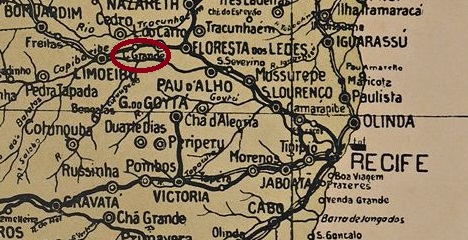
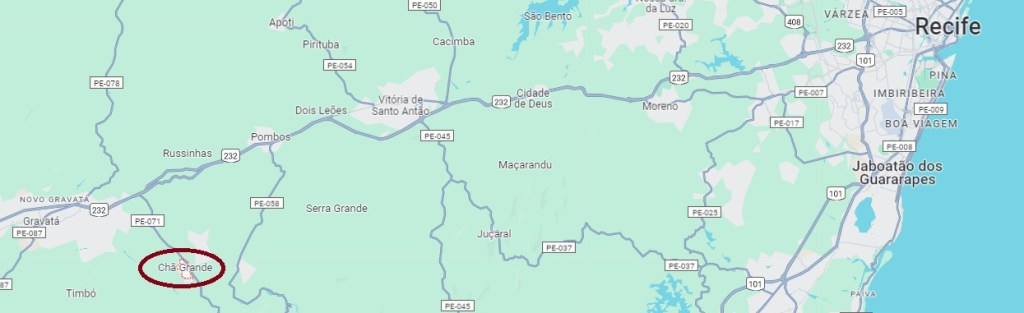
From around 1878, Chã Grande was a settlement of the Vila de Gravatá near the east bank of the Ipojuca, 80 kilometres west of the provincial capital Recife. The village became a district around 1910 and has been an independent município since December 1963.
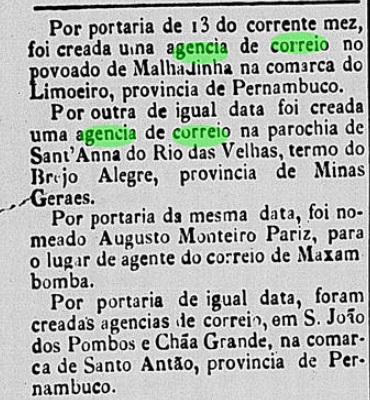
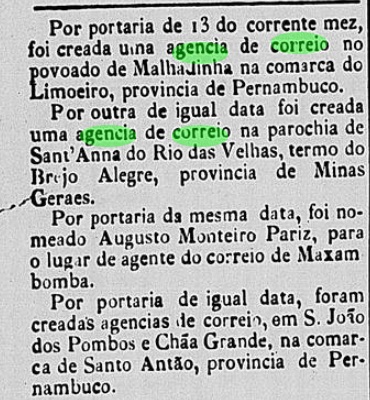
According to the Rio press, there has been a post office there since August 1884.
Diario do Brazil/RJ, 15/08/1884
No imperial postmarks are yet known from Chã Grande.
Google Maps
Chã Grande war ab ca. 1878 eine Siedlung der Vila de Gravatá nah am Ostufer des Ipojuca, 80 km westlich der Provinzhauptstadt Recife. Der Ort wurde um 1910 ein Distrikt und ist seit Dezember 1963 ein eigenständiger Município.
Laut Presse aus Rio gab es dort seit August 1884 ein Postamt.
Diario do Brazil/RJ, 15.08.1884
Aus Chã Grande sind bisher keine kaiserlichen Poststempel bekannt.
























 Carimbologia