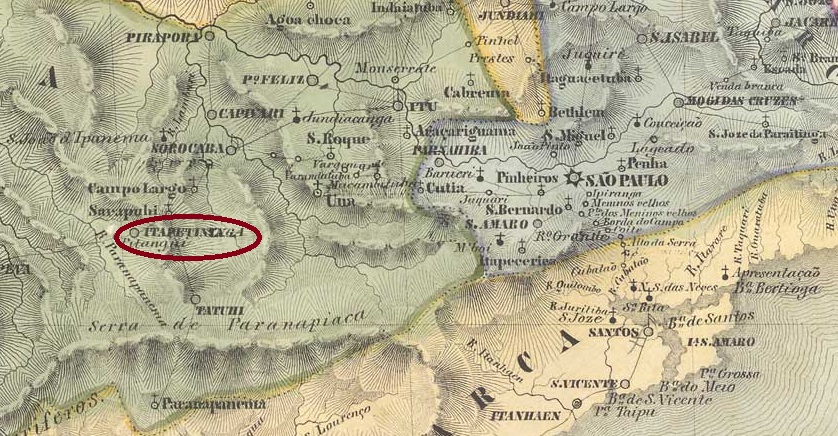
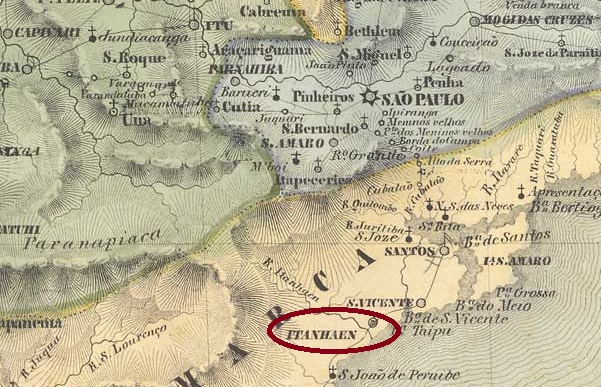
The Freguesia de N. Sra. dos Prazeres de Itapetininga (also spelt Itapeteninga), which belonged to the Vila de Sorocaba and was located 170 kilometres west of the later provincial capital of São Paulo, had existed since 1766 (other source: 1770). It became a vila in October 1770 (other source: January 1771) and was elevated to a town in March 1855. The name comes from the Tupi-Guarani and means place with dry stones.
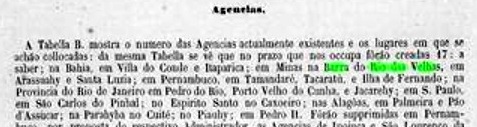
Three foundation dates have been found for the local post office. First in April 1828, as Nova Monteiro writes in Administrações e Agencias Postaes do Brasil Imperio (Brasil Filatelico/RJ, 1934-5; reprint SPP 1994-1999). Then in 1840 according to the philatelist Mário Celso Orsi Jr. and finally in 1844 according to the Directory of Imperial Post Offices (Tabella das Agencias do Correio do Imperio, Rio de Janeiro, 1885). It follows from this that the agency was closed at least once in the meantime. It is certain that a postal route between Sorocaba and Curitiba via Itapetininga was active in February 1831:

The oldest postmark to date is ISP-0620a (fig. Mário Celso Orsi Jr.):

This was followed by the double circle ISP-0620b, also in blue, illustrated by P. Ayres in Catálogo de Carimbos Brasil-Império (S. Paulo, 1937, 1942):

This was followed by the French type ISP-0620c (fig. Mário Orsi), also existent in blue:

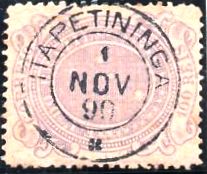
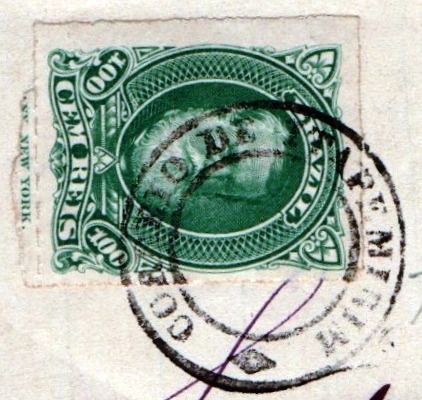
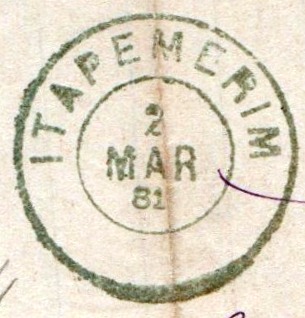
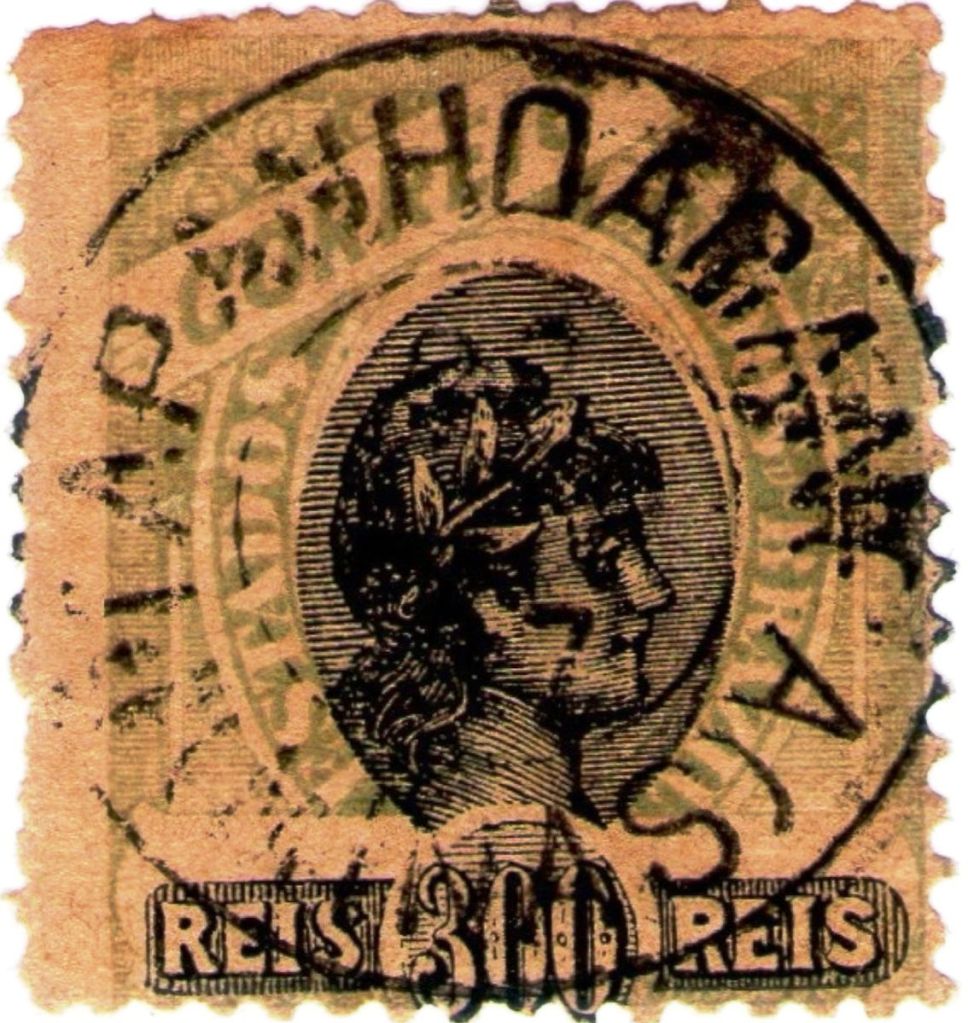
Towards the end of the Empire, ISP-0620d (ill. from the internet) appeared, also in blue and violet:
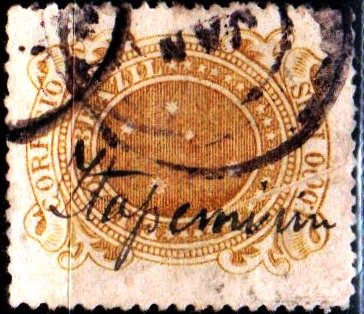
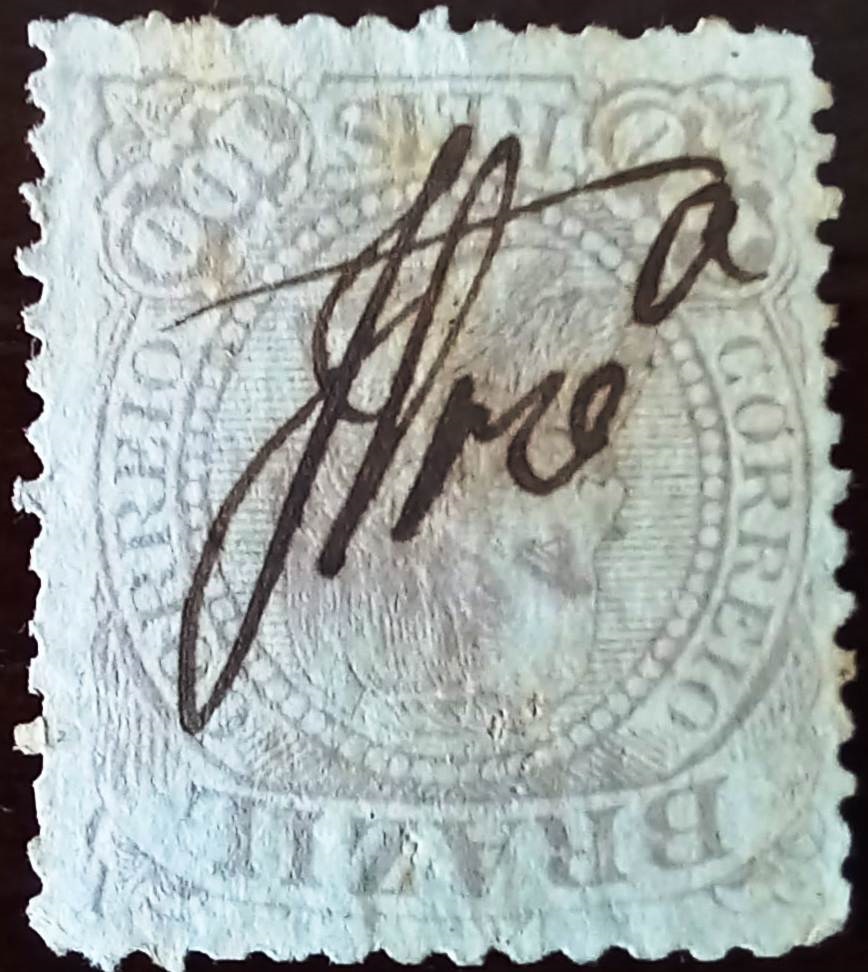
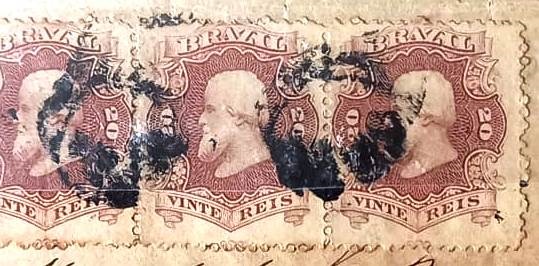
Two mute cancellations are known from the imperial Itapetininga:


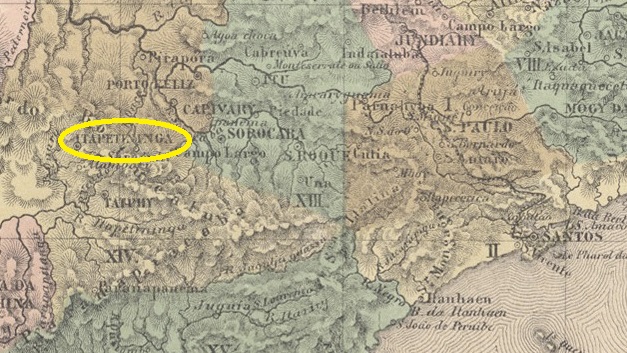
Seit 1766 (andere Quelle: 1770) bestand die Freguesia de N. Sra. dos Prazeres de Itapetininga (auch Itapeteninga geschrieben), die zur Vila de Sorocaba gehörte und 170 km westlich der späteren Provinzhauptstadt São Paulo lag. Sie wurde im Oktober 1770 (andere Quelle: Januar 1771) zur Vila und im März 1855 zur Stadt erhoben. Der Name stammt aus dem Tupi-Guarani und bedeutet Ort mit trockenen Steinen.
Für das örtliche Postamt wurden drei Gründungsdaten gefunden. Zuerst im April 1828, wie Nova Monteiro in Administrações e Agencias Postaes do Brasil Imperio (Brasil Filatelico/RJ, 1934-5; Nachdruck SPP 1994-1999) schreibt. Dann 1840 nach dem Philatelisten Mário Celso Orsi Jr. und schließlich 1844 nach dem Verzeichnis der kaiserlichen Postämter (Tabella das Agencias do Correio do Imperio, Rio de Janeiro, 1885). Daraus folgt, dass die Agentur zwischenzeitlich mindestens einmal geschlossen wurde. Sicher ist, dass im Februar 1831 eine Postroute zwischen Sorocaba und Curitiba über Itapetininga aktiv war:

Der bisher älteste Poststempel ist ISP-0620a (Abb. Mário Celso Orsi Jr.):

Es folgte der Doppelkreis ISP-0620b, auch in blau, abgebildet von P. Ayres in Catálogo de Carimbos Brasil-Império (S. Paulo, 1937, 1942):

Danach kam der französische Typ ISP-0620c (Abb. Mário Orsi), auch in blau:

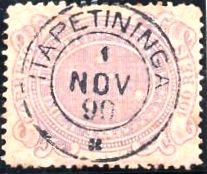
Gegen Ende des Kaiserreichs erschien auch ISP-0620d (Abb. aus dem Internet), den es auch in blau und violett gibt:
Vom kaiserlichen Itapetininga sind zwei stumme Stempel bekannt:




































 Carimbologia