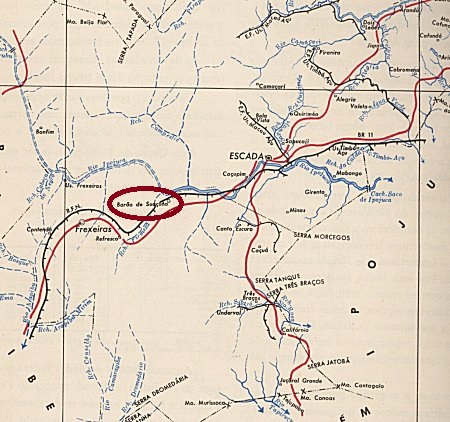
Carta Corographica da Provincia de Pernambuco, 1880
Other names: Barão de Suassuna (ca. 1941)
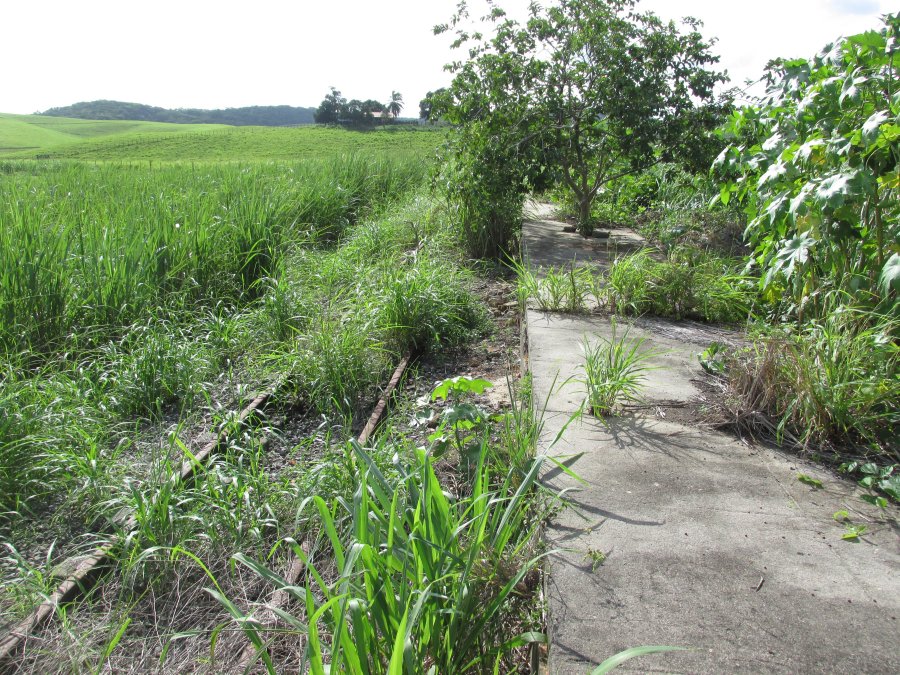
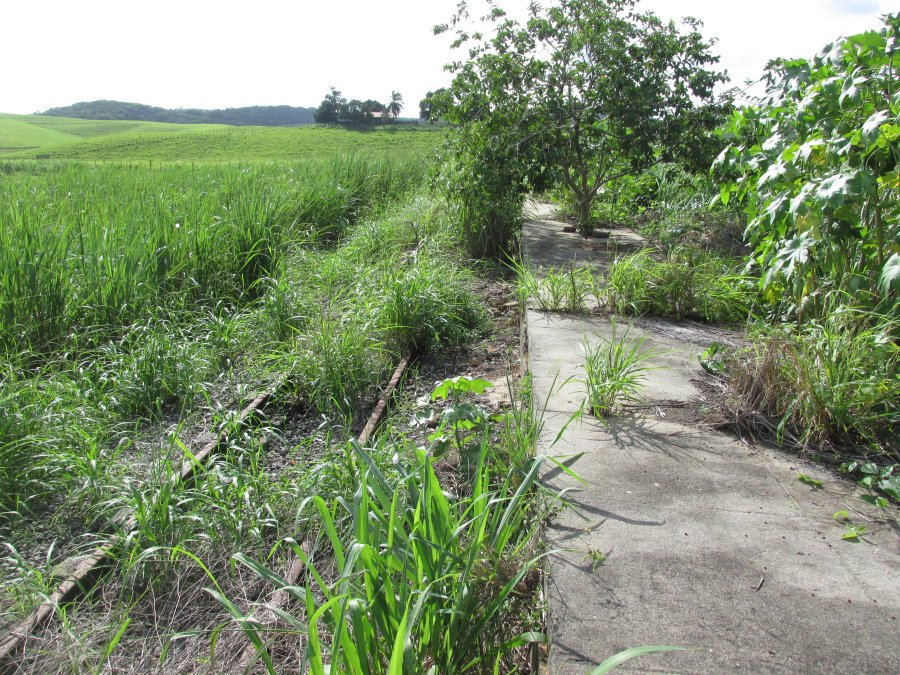
Limoeiro station was opened in May 1862 by the railway company E.F. do Recife ao S. Francisco on the south bank of the Ipojuca in the Município de Escada, 70 km southwest of the provincial capital Recife. The name (lemon tree) comes from a sugar cane processing plant (Engenho) in the region. The railway line went to Great Western in 1901, to Rede Ferroviária do Nordeste in 1950 and belonged to Rede Ferroviária Federal S.A. (estacoesferroviarias.com.br) from 1975 until its closure in 1996. The tracks are still there today, but the station building has been demolished.
In November 2019 (Photo: Sydney Correa, on estacoesferroviarias.com.br)
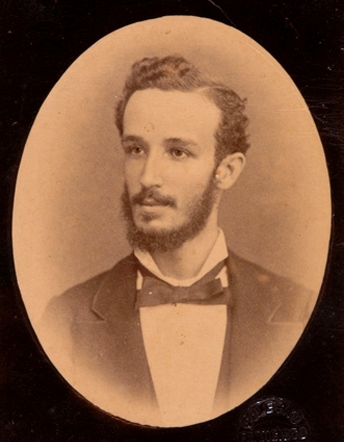
Around 1941, the station was renamed Barão de Suassuna in memory of the owner of the Engenho Limoeiro, Henrique Marques de Hollanda Cavalcanti (1854-1941).
The 2nd Barão de Suassuna (on parentesco.com.br)
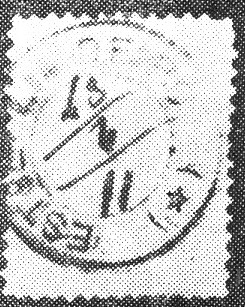
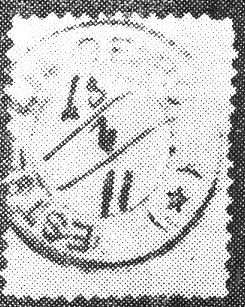
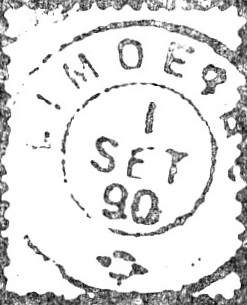
As can be seen from the list of imperial post offices (Tabella das Agencias do Correio do Imperio, Rio de Janeiro, 1885), there had been a post office at the station since 1875. The only imperial postmark to date is the French type LPE-0795a (fig. R. Koester, in Carimbologia XXVI):
LPE-0795a (RK) 1887IBGE, 1958
Andere Namen: Barão de Suassuna (ca. 1941)
Der Bahnhof Limoeiro wurde im Mai 1862 von der Eisenbahngesellschaft E.F. do Recife ao S. Francisco am Südufer des Ipojuca im Município de Escada, 70 km südwestlich der Provinzhauptstadt Recife, eröffnet. Der Name (Zitronenbaum) stammt von einer Zuckerrohrverarbeitungsanlage (Engenho) in der Region. Die Bahnlinie ging 1901 an die Great Western, 1950 an die Rede Ferroviária do Nordeste und gehörte von 1975 bis zu ihrer Stilllegung 1996 der Rede Ferroviária Federal S.A. (estacoesferroviarias.com.br). Heute sind die Gleise noch vorhanden, das Bahnhofsgebäude wurde abgerissen.
Im November 2019 (Foto: Sydney Correa, auf estacoesferroviarias.com.br)
Um 1941 wurde der Bahnhof in Barão de Suassuna umbenannt, in Erinnerung an den Besitzer des Engenho Limoeiro, Henrique Marques de Hollanda Cavalcanti (1854-1941).
Der 2. Barão de Suassuna (auf parentesco.com.br)
Wie aus demVerzeichnis der kaiserlichen Postämter (Tabella das Agencias do Correio do Imperio, Rio de Janeiro, 1885) gab es am Bahnhof ein Postamt seit 1875. Der bisher einzige kaiserliche Poststempel ist der französische Typ LPE-0795a (Abb. R. Koester, in Carimbologia XXVI):
Carta da Republica dos Estados Unidos do Brazil, 1892
Other names: Limoeiro de Sto. Antonio (ca. 1963)
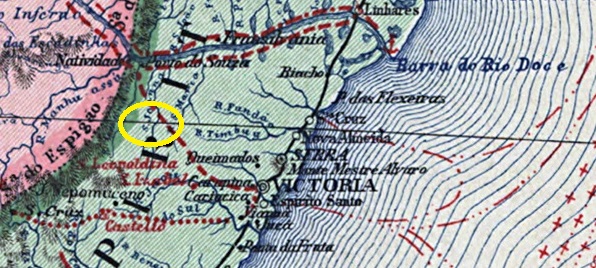
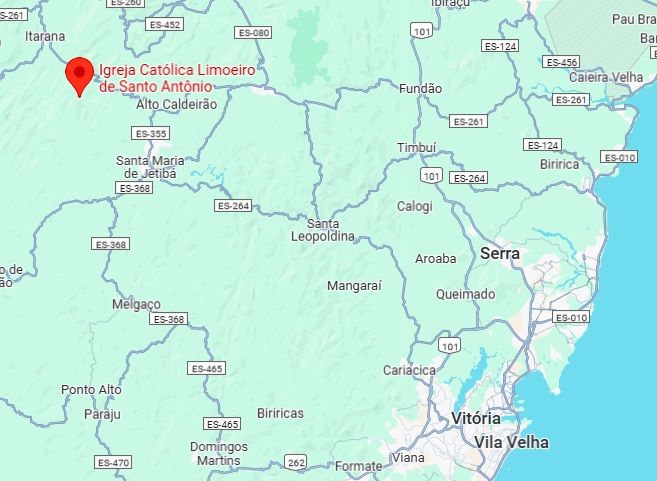
Founded late by European immigrants, the settlement belonged to the Vila de Cachoeiro de Sta. Leopoldina as a district from April 1884 and was located on the Santo Antonio River, 110 km north-west of the provincial capital Vitória. The administrative jurisdiction then changed several times: in November 1890 to the Vila de Affonso Claudio, in November 1914 to the Município de Boa Família and in December 1921 to the Município de Itaguassú. Since December 1963, the village has been called Comunidade de Limoeiro de Sto. Antonio and now belongs to the Município de Itarana.
As Paulo Novaes writes in agenciaspostais.com.br, there had been a post office there since February 1887. This is confirmed by the postal report of that year:
Relatorio Postal 1887
Novaes writes that the agency was closed for the first time in October 1892. No imperial postmarks are known to date from Limoeiro in the province of Espírito Santo.
Google Maps
Andere Namen: Limoeiro de Sto. Antonio (ca. 1963)
Die erst spät von europäischen Einwanderern gegründete Siedlung gehörte ab April 1884 als Distrikt zur Vila de Cachoeiro de Sta. Leopoldina und lag am Fluss Santo Antonio, 110 km nordwestlich der Provinzhauptstadt Vitória. Danach wechselte die Verwaltungszuständigkeit mehrmals: im November 1890 zur Vila de Affonso Claudio, im November 1914 zum Município de Boa Família und im Dezember 1921 zum Município de Itaguassú. Seit Dezember 1963 heißt der Ort Comunidade de Limoeiro de Sto. Antonio und gehört nun zum Município de Itarana.
Wie Paulo Novaes in agenciaspostais.com.br schreibt, gab es dort seit Februar 1887 ein Postamt. Dies wird durch den Postbericht des Jahres bestätigt:
Relatorio Postal 1887
Novaes schreibt, dass die Agentur zum ersten Mal im Oktober 1892 geschlossen wurde. Aus Limoeiro in der Provinz Espírito Santo sind bisher keine kaiserlichen Poststempel bekannt.
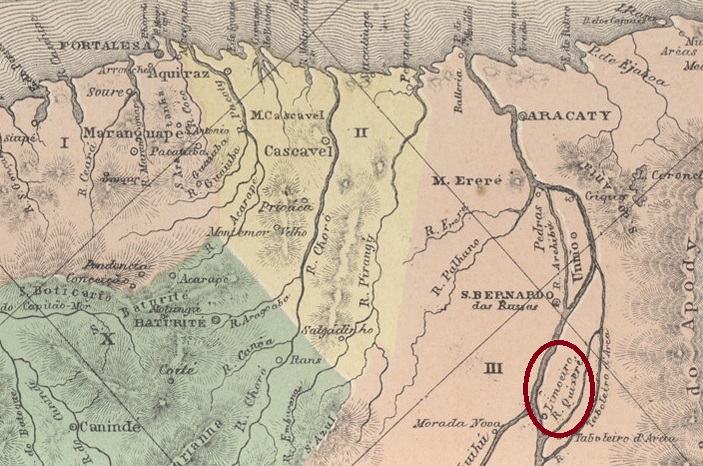
The Freguesia de N. Sra. da Conceição do Limoeiro had existed since December 1864. It belonged to the Vila de S. Bernardo das Russas and was located on a large island in the Jaguaribe, 200 kilometres south of the provincial capital Fortaleza. Four years later it became a Vila and in August 1897 a town. Since December 1943, the município has been known as Limoeiro do Norte.
As can be seen from the list of imperial post offices (Tabella das Agencias do Correio do Imperio, Rio de Janeiro, 1885), there had been a post office there since 1873, of which R. Koester has shown in Carimbologia XXVI the only imperial postmark LCE-0195a that has been verified to date:
LCE-0195a (RK)Carta da Republica dos Estados Unidos do Brasil, 1892
Andere Namen: Limoeiro do Norte (1943)
Die Freguesia de N. Sra. da Conceição do Limoeiro bestand seit Dezember 1864. Sie gehörte zur Vila de S. Bernardo das Russas und lag auf einer großen Insel des Jaguaribe, 200 km südlich der Provinzhauptstadt Fortaleza. Vier Jahre später wurde der Ort zur Vila und im August 1897 zur Stadt erhoben. Seit Dezember 1943 trägt der Município den Namen Limoeiro do Norte.
Wie aus dem Verzeichnis der kaiserlichen Postämter (Tabella das Agencias do Correio do Imperio, Rio de Janeiro, 1885) hervorgeht, gab es dort seit 1873 ein Postamt, von dem R. Koester in Carimbologia XXVI den bisher einzigen gesicherten Poststempel LCE-0195a gezeigt hat:
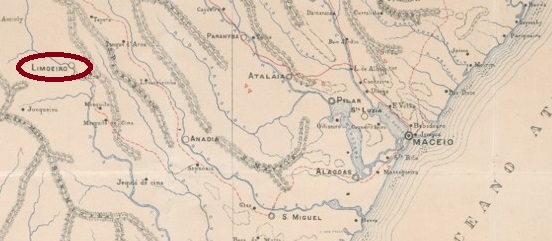
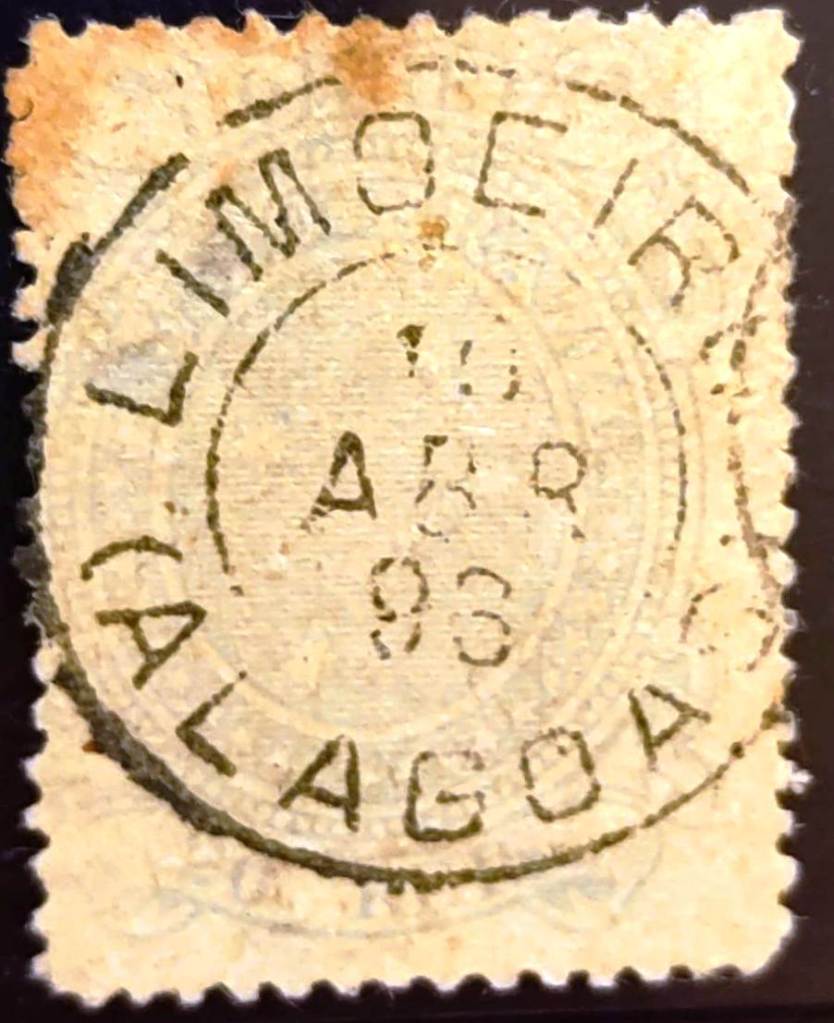
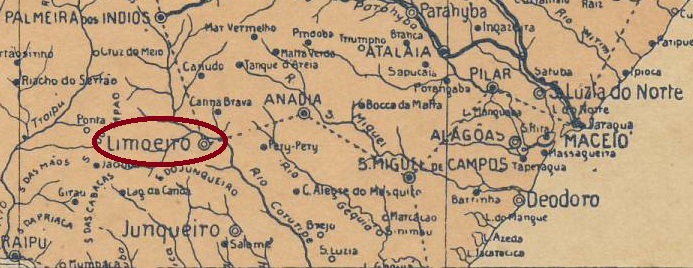
The Freguesia de N. Sra. da Conceição do Limoeiro, which had existed since June 1865, belonged to the Vila de Anadia and was located on the north bank of the Coruripe, 110 kilometres west of the provincial capital Maceió. In May 1882 it was elevated to a Vila, and since December 1943 the Município has been called Limoeiro de Anadia, probably to avoid confusion with other Limoeiros in Brazil.
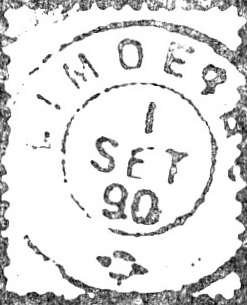
Aldo Cardoso writes in Contribuição para a História dos Correios de Alagoas (Maceió, 1969) that there had been a post office there since 1876. The oldest postmark to date is LAL-0100b (illustration by Aldo Cardoso):
LAL-0100b (AC) 1887-1890
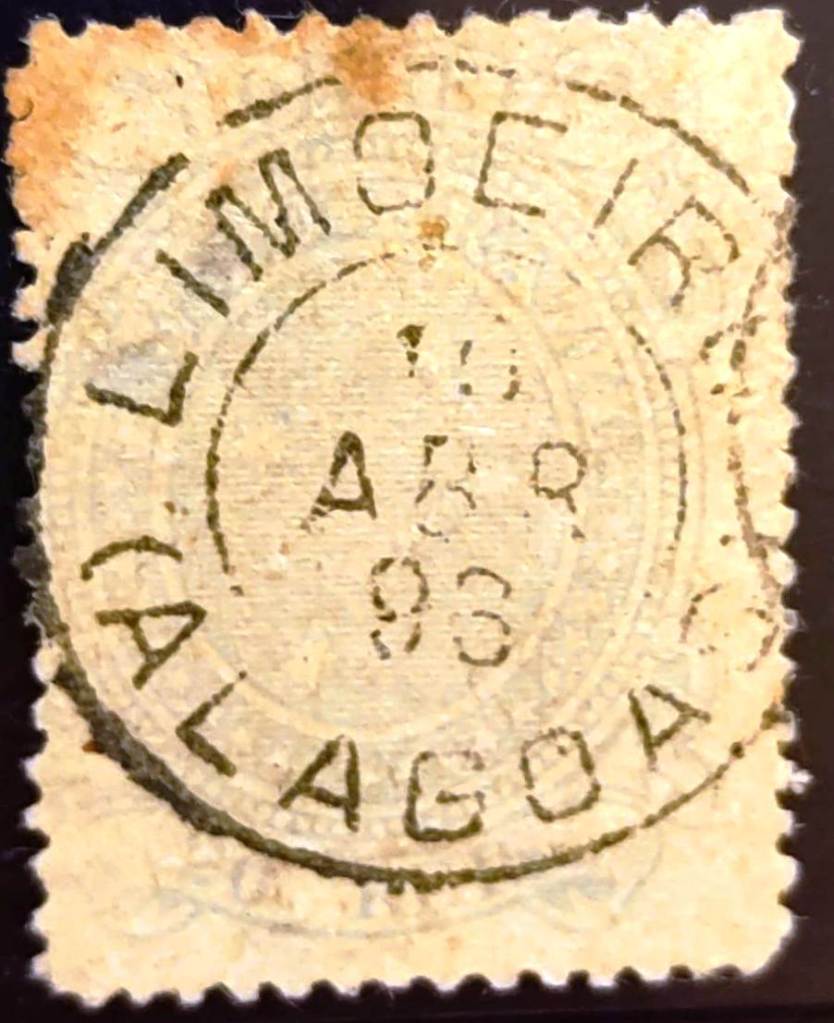
LAL-0100c also appeared at the beginning of the Republic (illustration by Jorge L. Pedreira):
LAL-0100c (JLP) 1893Arthur D. Ribeiro: Estado de Alagoas, 1923
Andere Namen: Limoeiro de Anadia (1943)
Die seit Juni 1865 bestehende Freguesia de N. Sra. da Conceição do Limoeiro gehörte zur Vila de Anadia und lag am Nordufer des Coruripe, 110 km westlich der Provinzhauptstadt Maceió. Im Mai 1882 wurde sie zur Vila erhoben, seit Dezember 1943 heißt der Município Limoeiro de Anadia, wohl um Verwechslungen mit anderen Limoeiros in Brasilien zu vermeiden.
Aldo Cardoso schreibt in Contribuição para a História dos Correios de Alagoas (Maceió, 1969), dass es dort seit 1876 ein Postamt gab. Der bisher älteste Poststempel ist LAL-0100b (Abb. Aldo Cardoso):
LAL-0100b (AC) 1887-1890
Am Anfang der Republik erschien auch LAL-0100c (Abb. Jorge L. Pedreira):
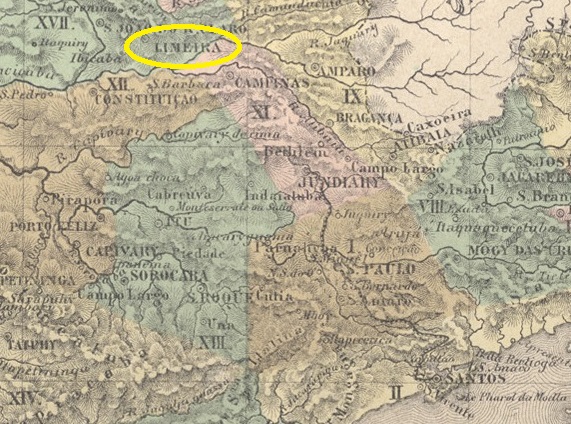
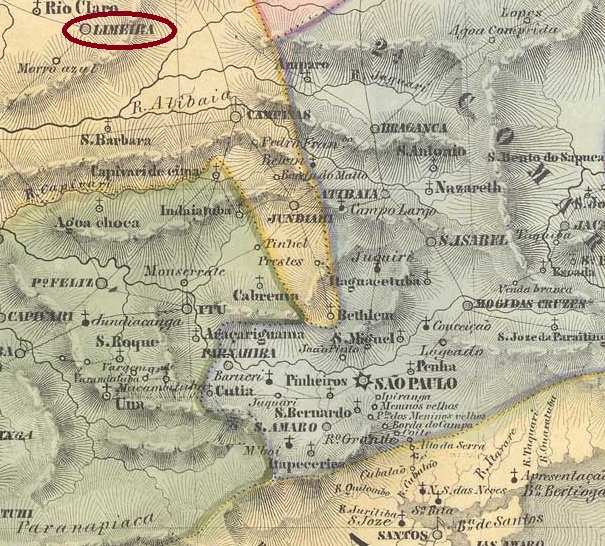
The Rancho da Limeira cattle station had existed since 1824 on the Morro Azul (Blue Mountain), more precisely on the west bank of the Ribeirão do Tatu (Armadillo Stream), 170 kilometres northwest of the provincial capital of São Paulo. The village became the Freguesia de N. Sra. das Dores do Tatuhiby in December 1830 and belonged to the Vila de Constituição (now Piracicaba) until March 1842, when the Vila de N. Sra. das Dores de Limeira was proclaimed. Limeira has been a town since April 1863.
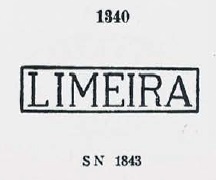
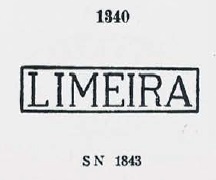
As Nova Monteiro writes in Administrações e Agencias Postaes do Brasil Imperio (Brasil Filatelico/RJ, 1934-5; reprint SPP 1994-1999), a post office existed in the town since January 1832, but since the Directory of Imperial Post Offices (Tabella das Agencias do Correio do Imperio, Rio de Janeiro, 1885) indicates the opening of the post office for 1844, it had closed in the meantime. The oldest postmark to date is LSP-0765a, which was given the number 1340 in P. Ayres’ Catálogo de Carimbos Brasil-Império (S. Paulo, 1937, 1942):
LSP-0765a (P.A. 1340) 1843ff
Then came the smaller cancel variant LSP-0765b, as R. Koester shows in Carimbologia XXVI:
LSP-0765b (RK) 1850ff
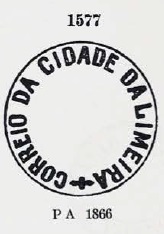
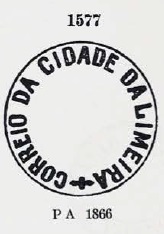
Two peculiar cancellations followed, beginning with LSP-0765c, which also occurs in brown, red and blue and was given the no. 1577 by P. Ayres (op. cit.):
LSP-0765c (P.A. 1577) 1864-1871
LSP-0765d was also presented by P. Ayres:
LSP-0765d (P.A. p. 122) 1874-1876
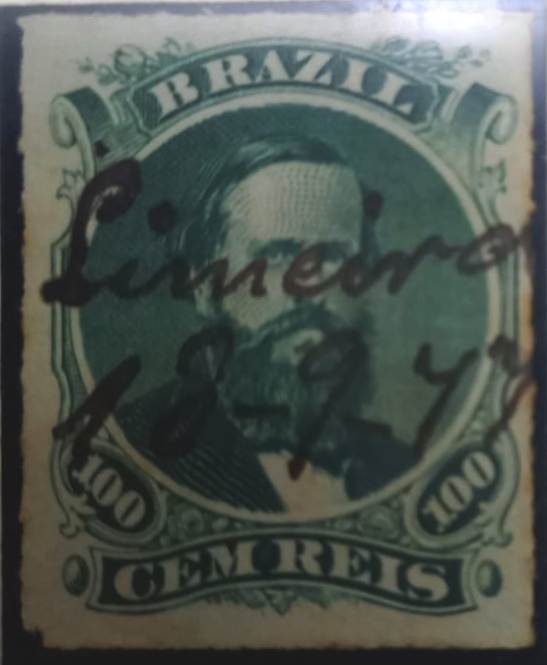
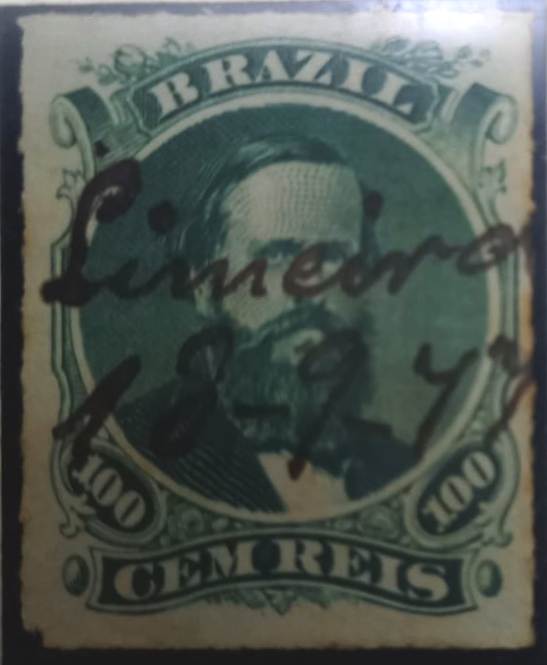
Shortly afterwards, the stamps in Limeira were also cancelled by hand, as the illustration from the Fuad Ferreira Fo. collection shows:
1877 (FF)
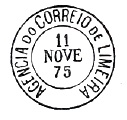
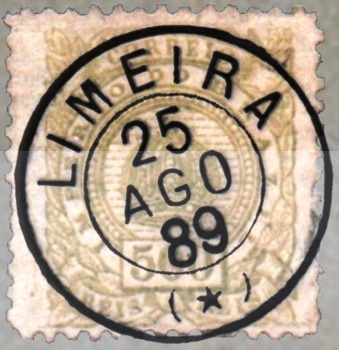
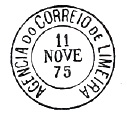
This was followed by the double circle cancellation LSP-0765e (illustration by Luiz C. Fritzen):
LSP-0765e (LCF) 1878-1888
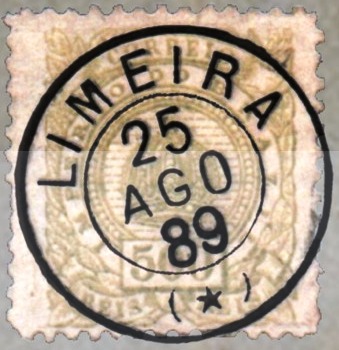
At the end of the Empire, the French type LSP-0765f also appeared (illustration by Walter Sonnenberg):
LSP-0765f (WS) 1889-1895
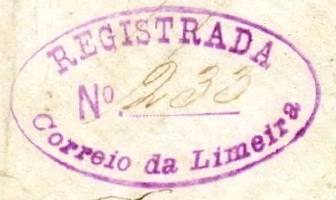
The beautiful LSP-0765g registered postmark in violet comes from the Klerman Lopes collection:
LSP-0765g (KL) 1883
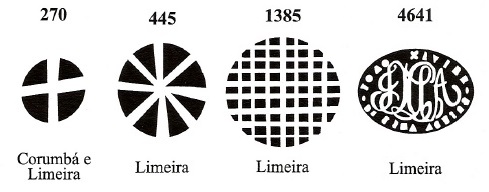
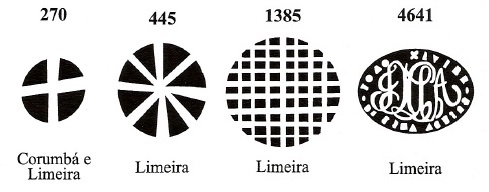
Klerman W. Lopes and James Dingler have listed four mute postmarks from Limeira in Mute Cancellations of the Brazil Empire/ Carimbos Mudos do Brasil Império (Brazil Philatelic Association, Rio de Janeiro, 2000):
BPA 270 – 445 (1879) – 1385 (1882) – 4641 (1883)
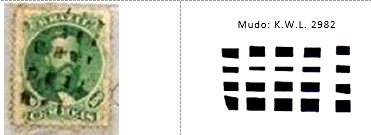
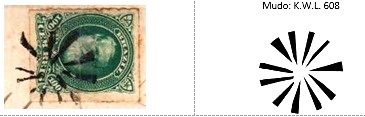
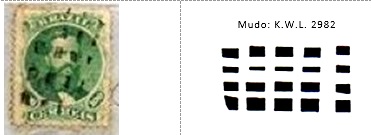
The philatelist Mário Celso Orsi Jr. was able to assign two further postmarks from the same work to Limeira:
BPA 2982 (MO) 1868BPA 608 (MO) 1878
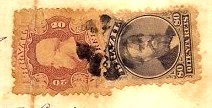
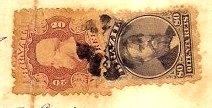
José L. Fevereiro found another mute postmark for Limeira:
1876 (JLF)Villiers de l’Ile Adam: Carta (…) da Provincia de São Paulo, 1847
Andere Namen: Rancho da Limeira, Dores do Tatuhiby
Seit 1824 bestand die Viehstation Rancho da Limeira am Morro Azul (Blauer Berg), genauer am Westufer des Ribeirão do Tatu (Gürteltierbach), 170 km nordwestlich der Provinzhauptstadt São Paulo. Der Ort wurde im Dezember 1830 zur Freguesia de N. Sra. das Dores do Tatuhiby und gehörte bis März 1842 zur Vila de Constituição (heute Piracicaba), als die Vila de N. Sra. das Dores de Limeira ausgerufen wurde. Seit April 1863 ist Limeira eine Stadt.
Wie Nova Monteiro in Administrações e Agencias Postaes do Brasil Imperio (Brasil Filatelico/RJ, 1934-5; Reprint SPP 1994-1999) schreibt, existierte ein Postamt am Ort seit Januar 1832, aber da das Verzeichnis der kaiserlichen Postämter (Tabella das Agencias do Correio do Imperio, Rio de Janeiro, 1885) die Eröffnung des Postamtes für 1844 angibt, war es zwischenzeitlich geschlossen. Der bisher älteste Poststempel ist LSP-0765a, der in P. Ayres‘ Catálogo de Carimbos Brasil-Império (S. Paulo, 1937, 1942) die Nr. 1340 erhielt:
LSP-0765a (P.A. 1340) 1843ff
Danach kam die kleinere Stempelvariante LSP-0765b, wie R. Koester in Carimbologia XXVI schreibt:
LSP-0765b (RK) 1850ff
Es folgten zwei eigentümliche Stempel, beginnend mit LSP-0765c, der auch in braun, rot und blau vorkommt und von P. Ayres (op. cit.) die Nr. 1577 erhielt:
LSP-0765c (P.A. 1577) 1864-1871
LSP-0765d wurde ebenfalls von P. Ayres vorgestellt:
LSP-0765d (P.A. S. 122) 1874-1876
Kurz danach wurden die Marken in Limeira auch von Hand entwertet, wie die Abbildung aus der Sammlung Fuad Ferreira Fo. zeigt:
1877 (FF)
Es folgte der Doppelkreisstempel LSP-0765e (Abbildung Luiz C. Fritzen):
LSP-0765e (LCF) 1878-1888
Am Ende des Kaiserreichs erschien auch der französische Typ LSP-0765f (Abb. Walter Sonnenberg):
LSP-0765f (WS) 1889-1895
Aus der Sammlung Klerman Lopes stammt der schöne Einschreibstempel LSP-0765g in violett:
LSP-0765g (KL) 1883
Klerman W. Lopes und James Dingler haben in Mute Cancellations of the Brazil Empire/ Carimbos Mudos do Brasil Império (Brazil Philatelic Association, Rio de Janeiro, 2000) vier stumme Poststempel aus Limeira aufgeführt :
BPA 270 – 445 (1879) – 1385 (1882) – 4641 (1883)
Zwei weitere Stempel aus demselben Werk konnte der Philatelist Mário Celso Orsi Jr. Limeira zuordnen :
BPA 2982 (MO) 1868BPA 608 (MO) 1878
Ein weiterer stummer Poststempel hat José L. Fevereiro für Limeira gefunden:
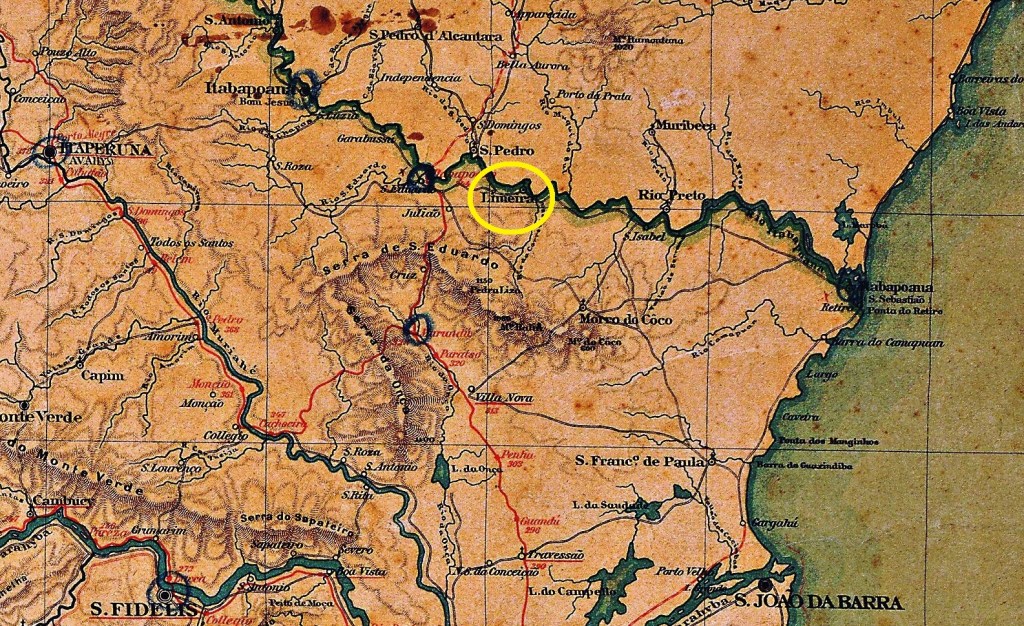
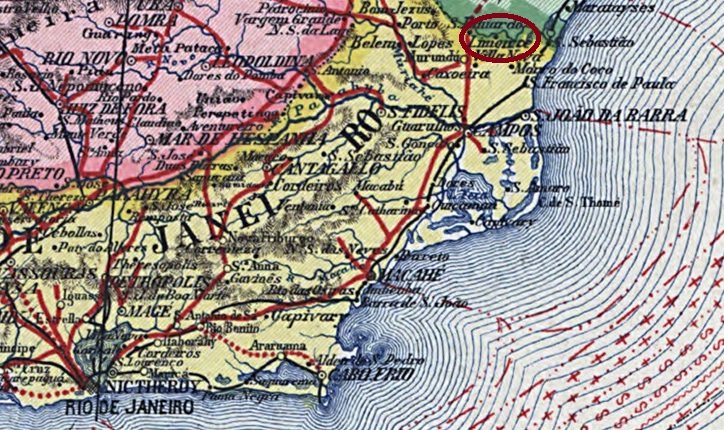
Here we have another place that has since disappeared from the map. According to research by R. Koester (Brasil Filatelico 124, 1959), Cachoeira da Limeira was founded by a certain Dr. Maria Angelica de Abreu e Lima, a Fazendeira from Minas Gerais, who had her estate on the banks of the Itabapoana opposite the Cachoeira do Inferno (Hell’s Waterfall) in Município of Campos, 350 km northeast of the capital Rio de Janeiro. A river port developed, the Porto da Limeira, which quickly became prosperous through trade.
The economic decline of Cachoeira da Limeira was initiated from 1872 by the construction of the railway lines of the E.F. de Macaé e Campos and the E.F. de Carangola, which did not provide for a railway station for this village, as Paulo Novaes writes in agenciaspostais.com.br. All that remains of the original village today are ruins and a few fishermen’s houses. The waterfalls have also disappeared because a dam was built starting in 2007.
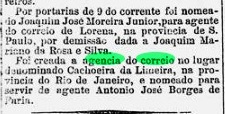
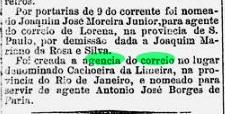
As the Rio press reports, there was a post office there from March 1864:
Diario do Rio de Janeiro, 12.03.1864
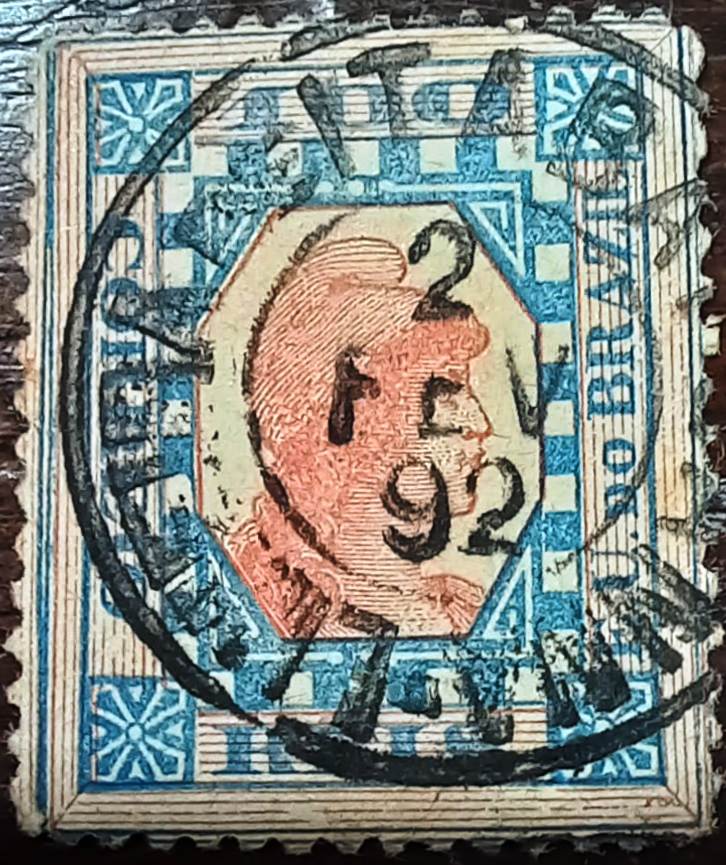
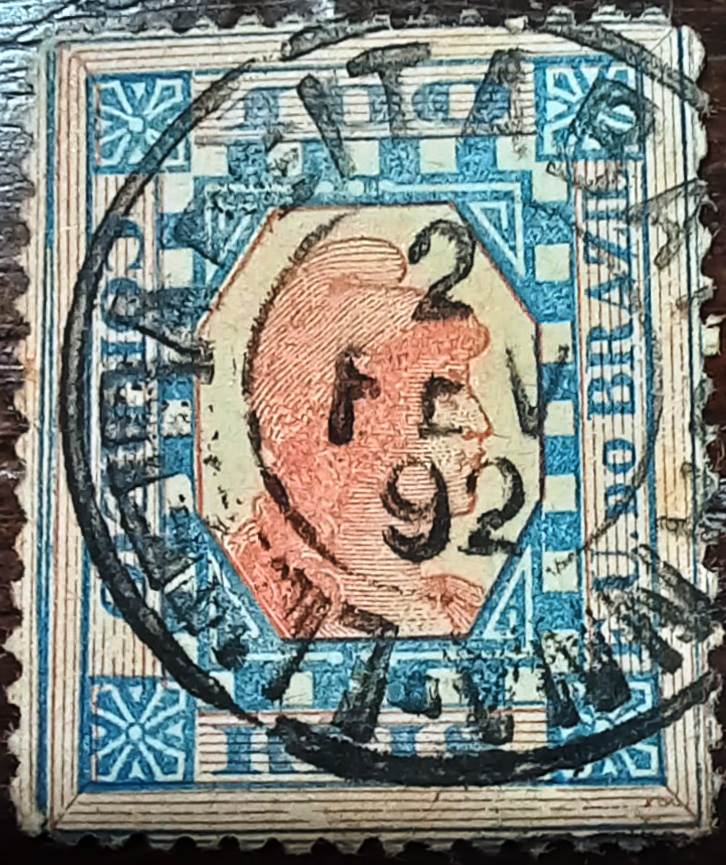
This was closed by 1884, as it is no longer listed in the Directory of Imperial Post Offices (Tabella das Agencias do Correio do Imperio, Rio de Janeiro, 1885). According to Paulo Novaes (agenciaspostais.com.br), a post office was opened under Limeira do Itabapoanna around 1885, which was closed in October 1910. The only postmark in the 19th century to date is LRJ-0692a (collect. Fuad Ferreira Fo.):
LRJ-0692a (FF) 1892
For postmarks with Cachoeira da Limeira, see CRJ-0025.
Carta da republica dos Estados Unidos do Brazil, 1892
Andere Namen: Porto da Limeira
Siehe auch Cachoeira da Limeira (CRJ-0025)
Hier haben wir einen weiteren Ort, der inzwischen von der Landkarte verschwunden ist. Nach Recherchen von R. Koester (Brasil Filatelico 124, 1959) wurde Cachoeira da Limeira von einer gewissen Dr. Maria Angelica de Abreu e Lima, einer Fazendeira aus Minas Gerais, gegründet, die ihr Landgut am Südufer des Itabapoana gegenüber der Cachoeira do Inferno (Höllenwasserfall), im Município von Campos, 350 km nordöstlich der Hauptstadt Rio de Janeiro, hatte. Es entstand ein Flusshafen, der Porto da Limeira, der durch den Handel schnell zu Wohlstand kam.
Der wirtschaftliche Niedergang von Cachoeira da Limeira wurde ab 1872 durch den Bau der Eisenbahnlinien der E.F. de Macaé e Campos und der E.F. de Carangola eingeleitet, die für diesen Ort keinen Bahnhof vorsahen, wie Paulo Novaes in agenciaspostais.com.br schreibt. Vom ursprünglichen Dorf sind heute nur noch Ruinen und einige Fischerhäuser übriggeblieben. Auch die Wasserfälle sind verschwunden, weil ab 2007 ein Staudamm gebaut wurde.
Wie die Presse von Rio berichtet, gab es dort ab März 1864 ein Postamt:
Diario do Rio de Janeiro, 12.03.1864
Dieses wurde bis 1884 geschlossen, da es im Verzeichnis der kaiserlichen Postämter (Tabella das Agencias do Correio do Imperio, Rio de Janeiro, 1885) nicht mehr aufgeführt ist. Laut Paulo Novaees (agenciaspostais.com.br) wurde ein Postamt unter Limeira do Itabapoana um 1885 eröffnet, das im Oktober 1910 geschlossen wurde. Der bisher einzige Poststempel im 19. Jahrhundert ist LRJ-0692a (Samml. Fuad Ferreira Fo.):
LRJ-0692a (FF) 1892
Für Poststempel mit Cachoeira da Limeira siehe CRJ-0025.
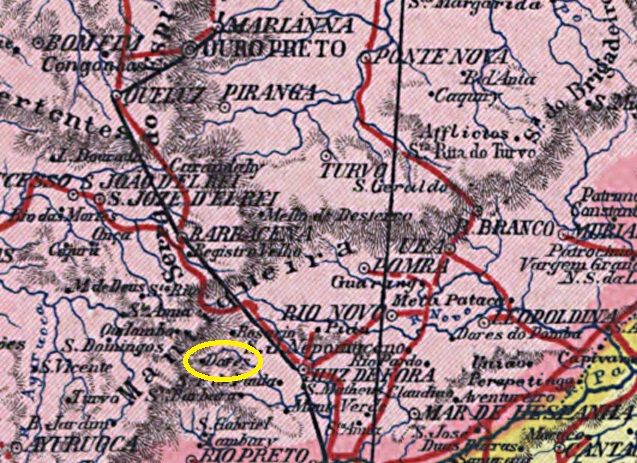
N. Sra. das Dores do Rio do Peixe had been a distrito of the Vila de Barbacena since 1839 and was located on the east bank of the Rio do Peixe, 250 kilometres south of the provincial capital Ouro Preto. The village became a freguesia in June 1859, an independent vila in October 1881 and a town in October 1884, which was given the name Lima Duarte. The Vicomte de Lima Duarte, born as José Rodrigues de Lima Duarte (1826-1896), was a doctor and politician from Barbacena.
Two foundation dates have been found for the local post office. The first in September 1866, as Nova Monteiro writes in Administrações e Agencias Postaes do Brasil Imperio (Brasil Filatelico/RJ, 1934-5; reprint SPP 1994-1999) and Paula Sobrinho in História Postal de Minas Gerais (Belo Horizonte, 1997). The agency is mentioned in the Directory of Imperial Post Offices (Tabella das Agencias do Correio do Imperio, Rio de Janeiro, 1885) with creation year 1872.
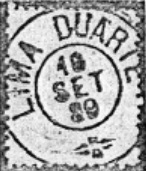
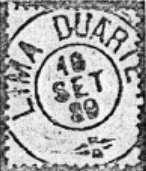
The first postmark with Lima Duarte is LMG-1505a (fig. R. Koester) and appeared around 1889:
LMG-1505a (RK) 1889-1893ff
For postmarks with Dores do Rio do Peixe see DMG-1080.
Carta da Republica dos Eestados Unidos do Brazil, 1892
Andere Namen: Rio do Peixe, Dores do Rio do Peixe
N. Sra. das Dores do Rio do Peixe war seit 1839 ein Distrito der Vila de Barbacena und lag am Ostufer des Rio do Peixe, 250 km südlich der Provinzhauptstadt Ouro Preto. Der Ort wurde im Juni 1859 eine Freguesia, im Oktober 1881 eine eigenständige Vila und im Oktober 1884 eine Stadt, die den Namen Lima Duarte erhielt. Der Vicomte de Lima Duarte, geboren als José Rodrigues de Lima Duarte (1826-1896), war ein Arzt und Politiker aus Barbacena.
Für das örtliche Postamt wurden zwei Gründungsdaten gefunden. Die erste im September 1866, wie Nova Monteiro in Administrações e Agencias Postaes do Brasil Imperio (Brasil Filatelico/RJ, 1934-5; Reprint SPP 1994-1999) und Paula Sobrinho in História Postal de Minas Gerais (Belo Horizonte, 1997) schreiben. Ab 1872 wird die Agentur im Verzeichnis der Kaiserlichen Postämter (Tabella das Agencias do Correio do Imperio, Rio de Janeiro, 1885) erwähnt.
Der erste Poststempel mit Lima Duarte ist LMG-1505a (Abb. R. Koester) und erschien um 1889:
LMG-1505a (RK) 1889-1893ff
Für Poststempel mit Dores do Rio do Peixe siehe DMG-1080.
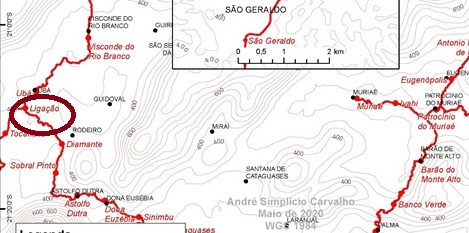
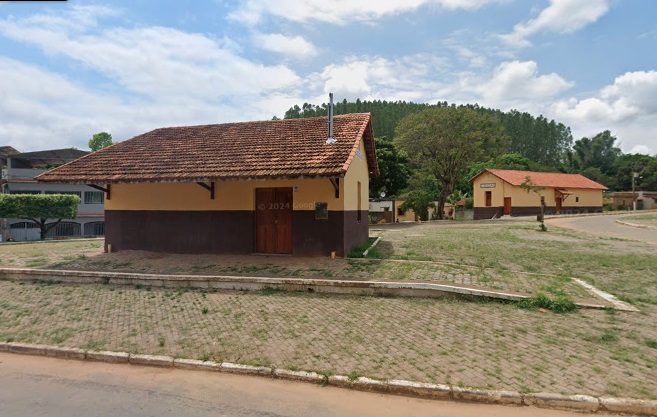
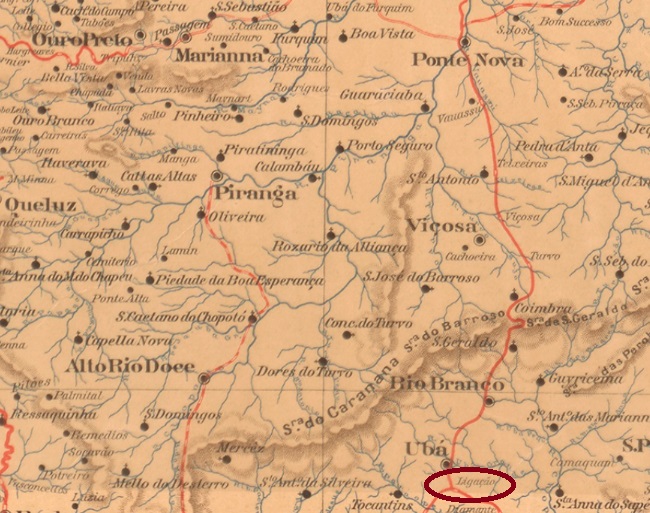
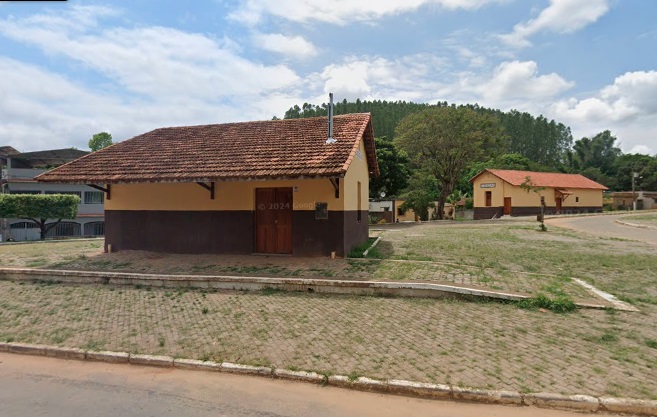
Ligação (Connection) was the name of the station that was opened in February 1880 (according to Paula Sobrinho) or in July 1886 (according to estacoesferroviarias.com.br) by the railway company E.F. Leopoldina (Caratinga Line) in the Município de Ubá, 160 km south-east of the provincial capital Ouro Preto. From 1975 until its closure in 1996, the line belonged to Rede Ferroviária Federal S.A. (estacoesferroviarias.com.br). Today, the tracks have disappeared and the station building is a cultural and leisure centre for the municipality.
In November 2023 (Google Street View)
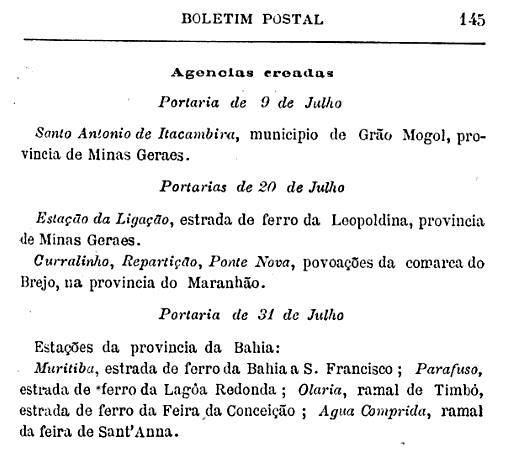
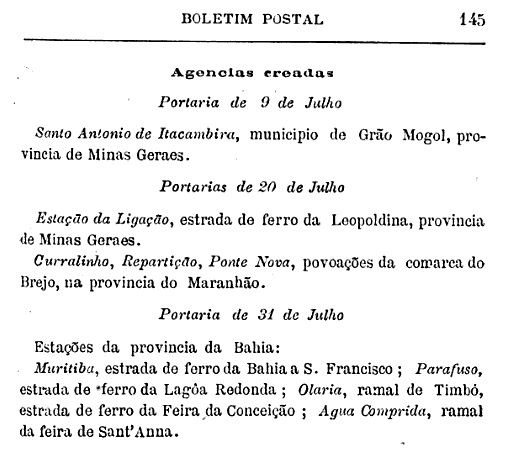
Paula Sobrinho (História Postal de Minas Gerais, Belo Horizonte, 1997) and R. Koester (Carimbologia XXVI) agree that there has been a post office there since July 1889. This is confirmed by the postal bulletin (Boletim Postal) of that year:
Boletim Postal No. 4 (August 1889)
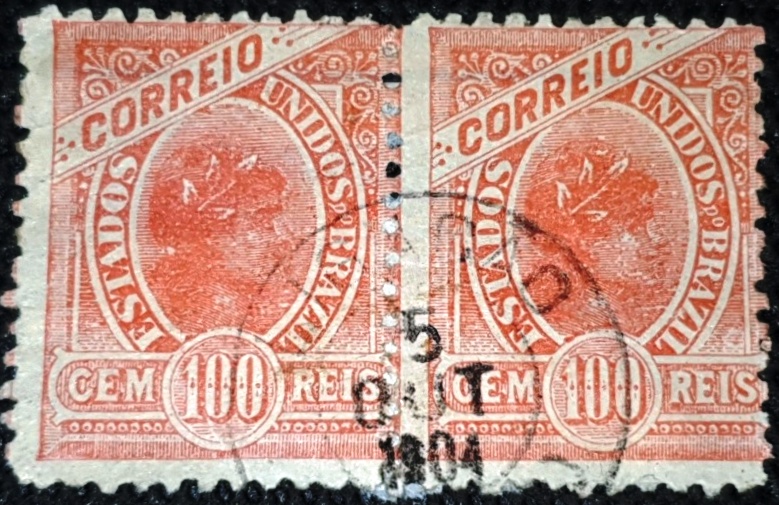
The oldest postmark to date is LMG-1500a (fig. Luiz C. Fritzen) and already bears a date from the 20th century:
LMG-1500a (LCF) 1904Estado de Minas Geraes, 1910
Ligação (Verbindung) war der Name des Bahnhofs, der im Februar 1880 (nach Paula Sobrinho) oder im Juli 1886 (nach estacoesferroviarias.com.br) von der Eisenbahngesellschaft E.F. Leopoldina (Caratinga-Linie) im Município de Ubá, 160 km südöstlich der Provinzhauptstadt Ouro Preto, eröffnet wurde. Von 1975 bis zu ihrer Stilllegung 1996 gehörte die Strecke der Rede Ferroviária Federal S.A. (estacoesferroviarias.com.br). Heute sind die Gleise verschwunden, das Bahnhofsgebäude ist ein Kultur- und Freizeitzentrum der Gemeinde.
Im November 2023 (Google Street View)
Paula Sobrinho (História Postal de Minas Gerais, Belo Horizonte, 1997) und R. Koester (Carimbologia XXVI) sind sich einig, dass es dort seit Juli 1889 ein Postamt gab. Dies wird durch das Postbulletin (Boletim Postal) des Jahres bestätigt:
Boletim Postal Nr. 4 (August 1889)
Der bisher älteste Poststempel ist LMG-1500a (Abb. Luiz C. Fritzen) und trägt bereits ein Datum aus dem 20. Jahrhundert:
Carta da Republica dos Estados Unidos do Brazil, 1892
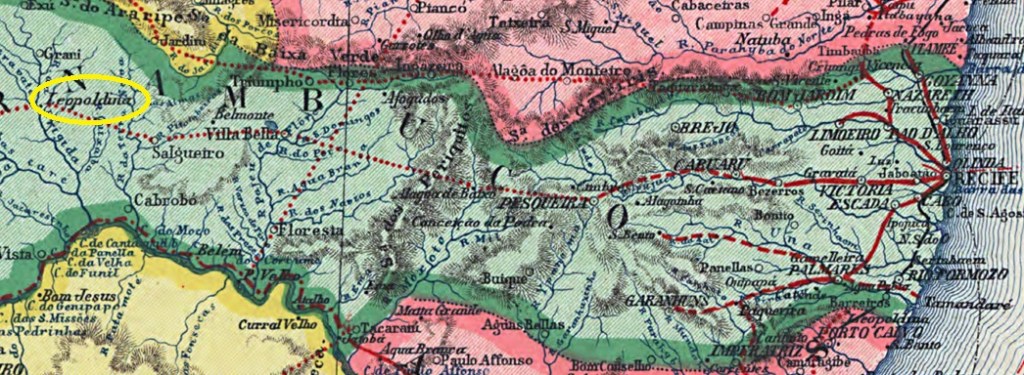
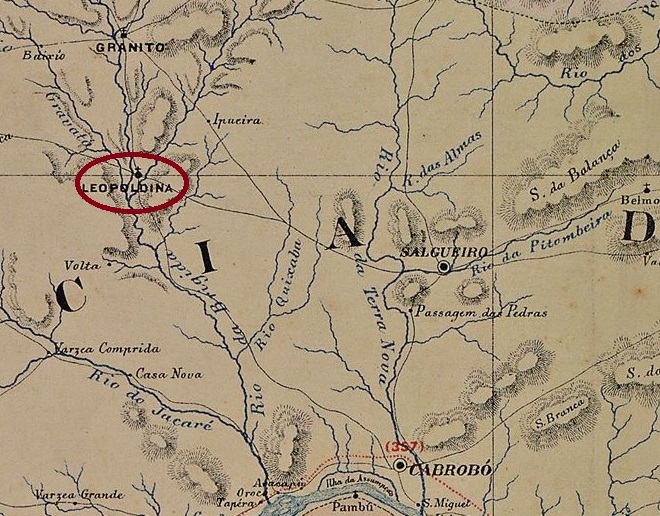
Other names: Sacco, Parnamirim (1943)
The Freguesia de Sant’Anna do Sacco had existed since June 1867, belonged to the Vila de Cabrobó and was located on the east bank of the Riacho da Brígida, 560 km west of the provincial capital Recife. In May 1870 it became a Freguesia de Leopoldina, in June 1879 a Vila and in July 1909 a town. In March 1934, Leopoldina was downgraded to a Distrito in the Município de Granito. As such, it was transferred to the Município de Bodocó in March 1938. It was not until December 1938 that Leopoldina became a município again, which was renamed five years later to what is now Parnamirim.
As can be seen from the list of imperial post offices (Tabella das Agencias do Correio do Imperio, Rio de Janeiro, 1885), there had been a post office there since 1877. The only postmark from 19th century to date is LPE-0375b (Fig. R. Koester in Carimbologia XXVI):
LPE-0375b (RK) 1891Carta Corographica da Provincia de Pernambuco, 1880
Andere Namen: Sacco, Parnamirim (1943)
Die Freguesia de Sant‘Anna do Sacco bestand seit Juni 1867, gehörte zur Vila de Cabrobó und lag am Ostufer des Riacho da Brígida, 560 km westlich der Provinzhauptstadt Recife. Im Mai 1870 wurde es zur Freguesia de Leopoldina, im Juni 1879 zur Vila und im Juli 1909 zur Stadt. Im März 1934 wurde Leopoldina zu einem Distrito im Município de Granito herabgestuft. Als solcher wechselte es im März 1938 zum Município de Bodocó. Erst im Dezember 1938 wurde Leopoldina wieder ein Município, das fünf Jahre später in das heutige Parnamirim umbenannt wurde.
Wie aus dem Verzeichnis der kaiserlichen Postämter (Tabella das Agencias do Correio do Imperio (Rio de Janeiro, 1885) hervorgeht, gab es dort ein Postamt seit 1877. Der bisher älteste Poststempel ist LPE-0375b (Abb. R. Koester in Carimbologia XXVI):
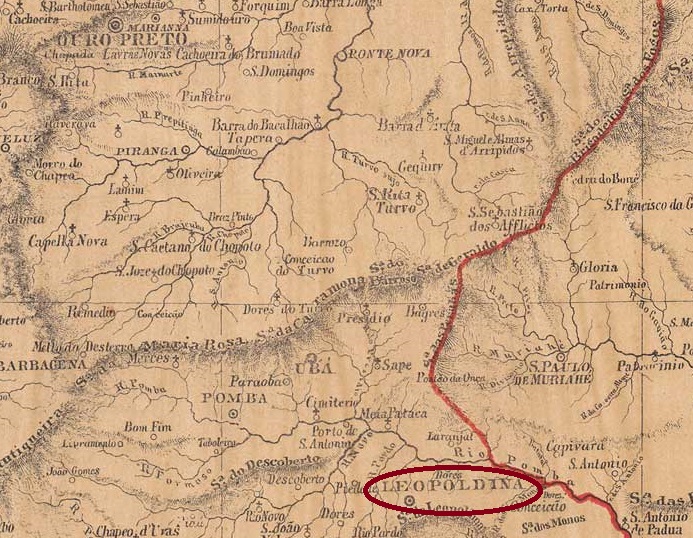
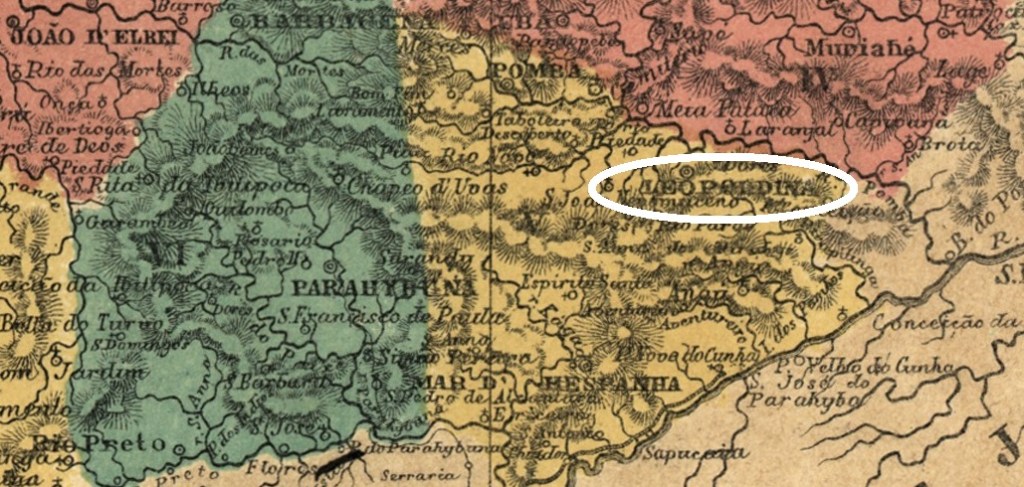
The village was originally called Distrito de S. Sebastião do Feijão Cru (Raw Beans), belonged to Vila de Mar d’Hespanha and was located 250 km south-east of the provincial capital Ouro Preto. In April 1854, it became both Vila and Freguesia de Leopoldina. Leopoldina has been a town since October 1861.
Two dates were found for the founding of the local post office. Firstly in March 1857, as Nova Monteiro writes in Administrações e Agencias Postaes do Brasil Imperio (Brasil Filatelico/RJ, 1934-5; reprint SPP 1994-1999). Then 6 months later, as shown in História Postal de Minas Gerais (Belo Horizonte, 1997) by Paula Sobrinho.
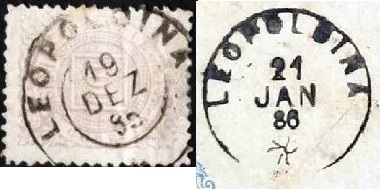
Unfortunately, we only have a description of the oldest postmark LMG-1495a by R. Koester in Carimbologia XXVI, a green-blue double circle on a D. Pedro issue of 1866 with the inscription Cidade LEOPOLDINA between the circles and MINAS in the centre.
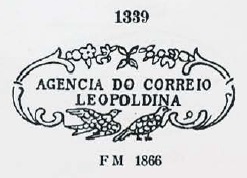
This was followed by the beautiful LMG-1495b, which was given the no. 1339 by P. Ayres in Catálogo de Carimbos Brasil-Império (S. Paulo, 1937, 1942):
LMG-1495b (P.A. 1339) 1866ff-1873
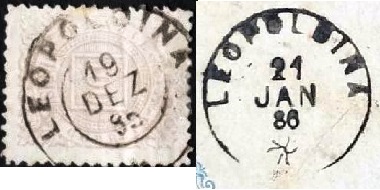
Then came LMG-1495c (fig. F. Piccinini/ José L. Fevereiro), which possibly occurs in variants:
LMG-1495c (FP-JLF) 1884-1889
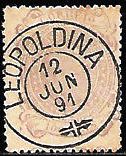
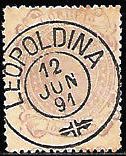
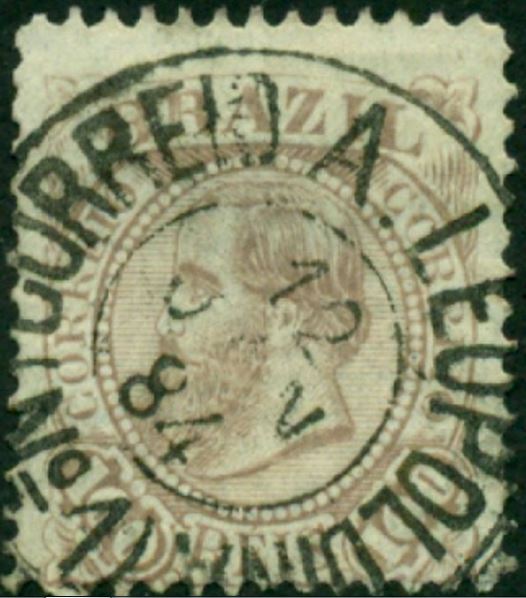
Towards the end of the Empire, the well-known LMG-1495d (fig. from the Internet) also appeared:
LMG-1495d (EB) 1887-1900ff
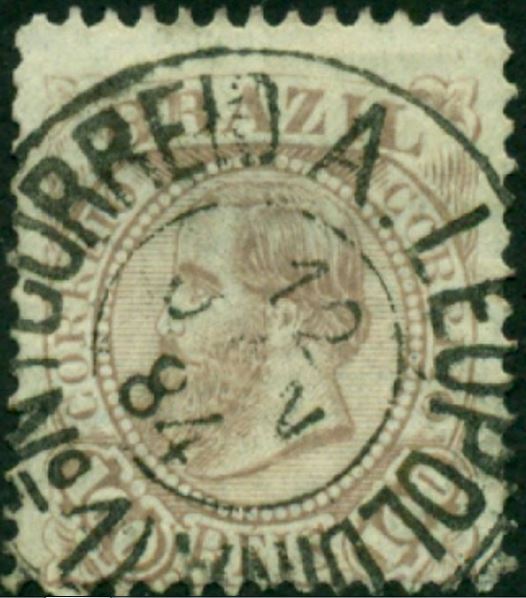
In July 1887, a railway station of the E.F. Leopoldina railway company (Leopoldina branch) was opened here. Although the post office was not relocated to the station, two railway postmarks were used along the route:
LMG-1496a (EB) 1882-1898, also in blueLMG-1496b (RK) 1882-1898
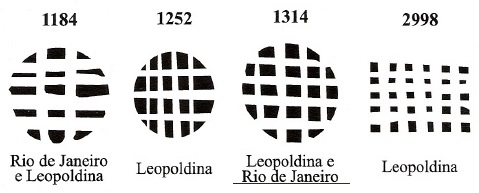
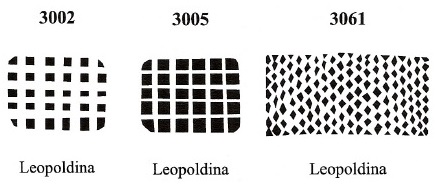
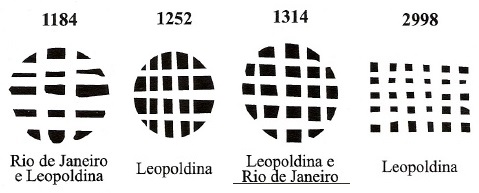
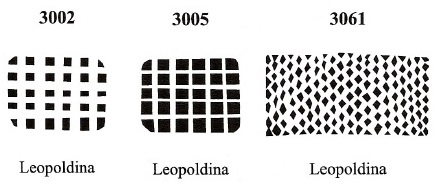
Finally, James Dingler and Klerman W. Lopes have listed seven mute postmarks from Leopoldina in Mute Cancellations of the Brazil Empire / Carimbos Mudos do Brasil Império (Brazil Philatelic Association, Rio de Janeiro, 2000):
BPA 1184 – 1252 (1882) – 1314 – 2998BPA 3002 (P.A. 299) – 3005 – 3061Atlas do Imperio do Brasil, 1868
Andere Namen: Feijão Cru
Ursprünglich hieß der Ort Distrito de S. Sebastião do Feijão Cru (Rohe Bohnen), gehörte zu Vila de Mar d’Hespanha und lag 250 km südöstlich der Provinzhauptstadt Ouro Preto. Im April 1854 wurde er gleichzeitig Vila und Freguesia de Leopoldina. Seit Oktober 1861 ist Leopoldina eine Stadt.
Für die Gründung des örtlichen Postamtes wurden zwei Daten gefunden. Zuerst im März 1857, wie Nova Monteiro in Administrações e Agencias Postaes do Brasil Imperio (Brasil Filatelico/RJ, 1934-5; Reprint SPP 1994-1999) schreibt. Dann 6 Monate später, wie aus História Postal de Minas Gerais (Belo Horizonte, 1997) von Paula Sobrinho hervorgeht.
Von dem ältesten Stempel LMG-1495a haben wir leider nur eine Beschreibung von R. Koester in Carimbologia XXVI. Ein grünblauer Doppelkreis auf einer D. Pedro-Ausgabe von 1866 mit der Inschrift Cidade LEOPOLDINA zwischen den Kreisen und MINAS in der Mitte.
Es folgte der schöne LMG-1495b, der von P. Ayres in Catálogo de Carimbos Brasil-Império (S. Paulo, 1937, 1942) die Nr. 1339 erhielt:
LMG-1495b (P.A. 1339) 1866ff-1873
Danach kam LMG-1495c (Abb. F. Piccinini/ José L. Fevereiro), der evtl. In Varianten vorkommt:
LMG-1495c (FP-JLF) 1884-1889
Gegen Ende des Kaiserreichs erschien auch der bekannte LMG-1495d (Abb. aus dem Internet):
LMG-1495d (EB) 1887-1900ff
Im Juli 1887 wurde hier ein Bahnhof der Eisenbahngesellschaft E.F. Leopoldina (Leopoldina-Zweig) eröffnet. Obwohl das Postamt nicht in den Bahnhof verlegt wurde, wurden entlang der Strecke zwei Bahnpoststempel verwendet:
LMG-1496a (EB) 1882-1898, auch in blauLMG-1496b (RK) 1882-1898
Dann haben James Dingler und Klerman W. Lopes sieben stumme Poststempel aus Leopoldina in Mute Cancellations of the Brazil Empire / Carimbos Mudos do Brasil Império (Brazil Philatelic Association, Rio de Janeiro, 2000) aufgeführt:


















 Carimbologia