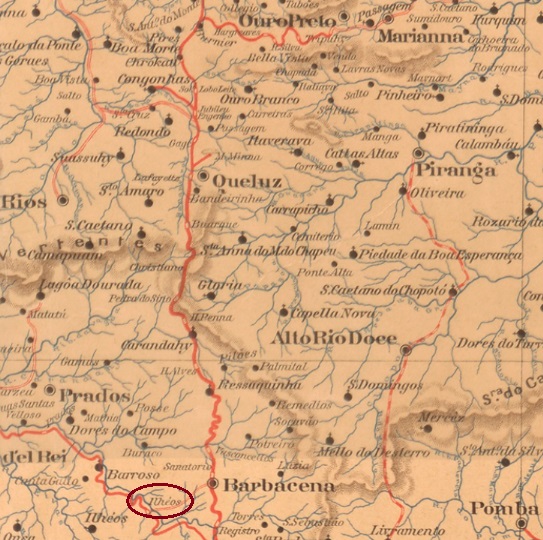
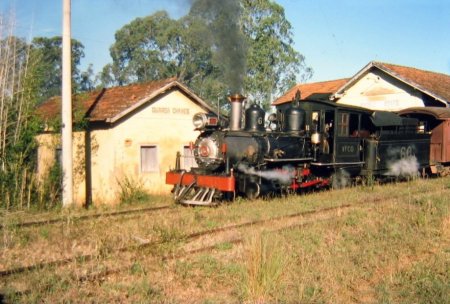
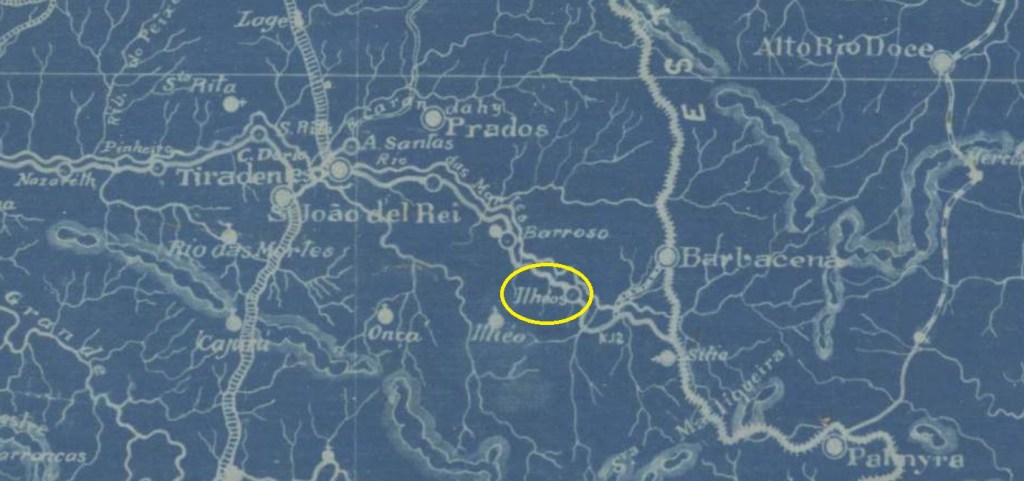
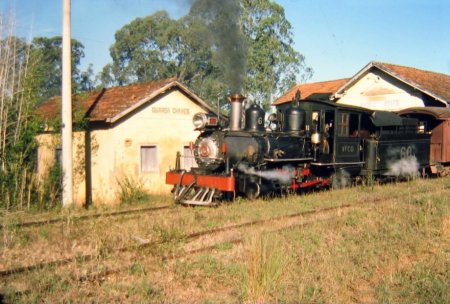
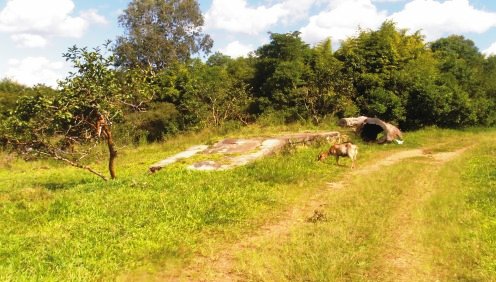
Ilheos station was opened in September 1880 by the railway company E.F. Oeste de Minas, Paraopeba Line, located in the Município de Barbacena on the south bank of the Rio das Mortes, 150 km south of the provincial capital Ouro Preto. The name is said to come from Portuguese immigrants from the islands (Ilhas), who founded the settlement of Ilheos nearby. The railway line went to Rede Mineira de Viação in 1931, to V.F. Centro-Oeste in 1965 and belonged to Rede Ferroviária Federal S.A. from 1975 until its closure in 1984. Today, neither the station nor the tracks have been preserved (estacoesferroviarias.com.br).
Ca. 1975 (Photo NN, on estacoesferroviarias.com.br)In 2006 (Photo Edmilson Gomes, on estacoesferroviarias.com.br)
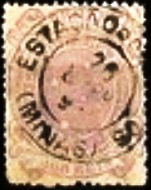
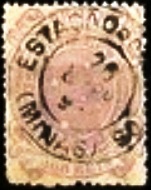
As Paula Sobrinho writes in História Postal de Minas Gerais (Belo Horizonte, 1997), there was a post office in the station from February 1883 with the imperial postmark IMG-1330a (illustration by Carlos A. Balata), which also appears in blue:
IMG-1330a (CB) 1887-1891Estrada de Ferro Oeste de Minas, 1917
Andere Namen: Padre Brito
Der Bahnhof Ilheos wurde im September 1880 von der Eisenbahngesellschaft E.F. Oeste de Minas, Linie Paraopeba, eröffnet und liegt im Município de Barbacena am Südufer des Rio das Mortes, 150 km südlich der Provinzhauptstadt Ouro Preto. Der Name soll von portugiesischen Einwanderern von den Inseln (Ilhas) stammen, die in der Nähe die Siedlung Ilheos gründeten. Die Bahnlinie ging 1931 an die Rede Mineira de Viação, 1965 an die V.F. Centro-Oeste und gehörte von 1975 bis zu ihrer Stilllegung 1984 der Rede Ferroviária Federal S.A. Heute sind weder der Bahnhof noch die Gleise erhalten (estacoesferroviarias.com.br).
Ca. 1975 (Foto NN, auf estacoesferroviarias.com.br)2006 (Foto Edmilson Gomes, auf estacoesferroviarias.com.br)
Wie Paula Sobrinho in História Postal de Minas Gerais (Belo Horizonte, 1997) schreibt, gab es im Bahnhof seit Februar 1883 ein Postamt mit dem kaiserlichen Poststempel IMG-1330a (Abb. Carlos A. Balata), der auch in blau vorkommt:
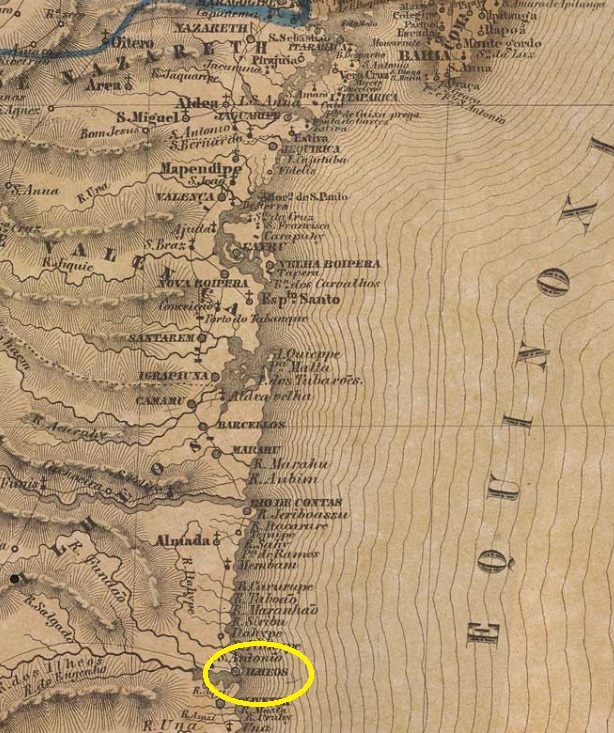
Villiers de l’Ile Adam: Carta (…) da Provincia da Bahia, 1848
Other names: Ilhéus
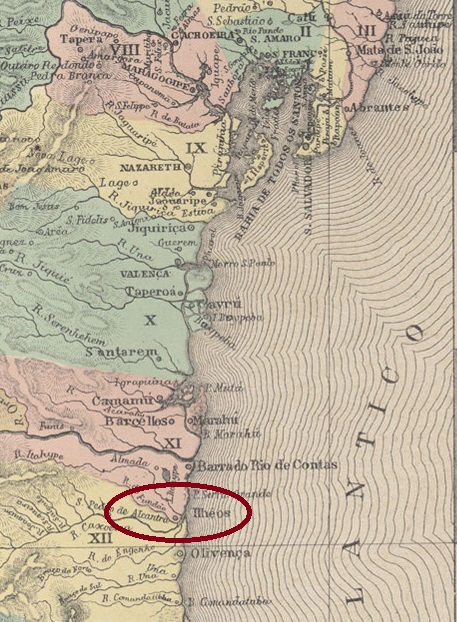
The history of this town, which is very old by Brazilian standards, is rather atypical: S. Jorge dos Ilheos became a capitania by royal letter (Carta Régia) as early as 1534, a vila the following year and a freguesia in 1556. Ilhéus – as it is spelt today – has been a town at the mouth of the river Cachoeira (formerly: Rio dos Ilheos) into the Atlantic Ocean, 310 kilometres south of the state capital Salvador da Bahia, since June 1881.
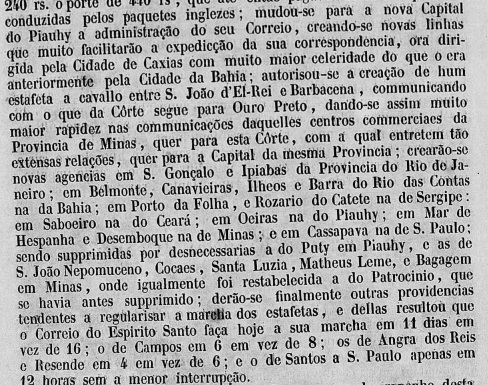
The local post office was created in December 1852, as can be seen from the report of the imperial ministry:
Relatorio do Ministerio do Imperio, 1852
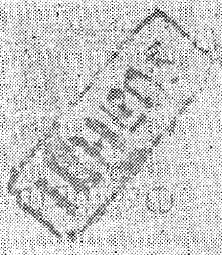
The oldest postmark to date is IBA-0385a, which was given the number 1317 by P. Ayres in Catálogo de Carimbos Brasil-Império (S. Paulo, 1937, 1942):
IBA-0385a (P.A. 1317) 1878ff
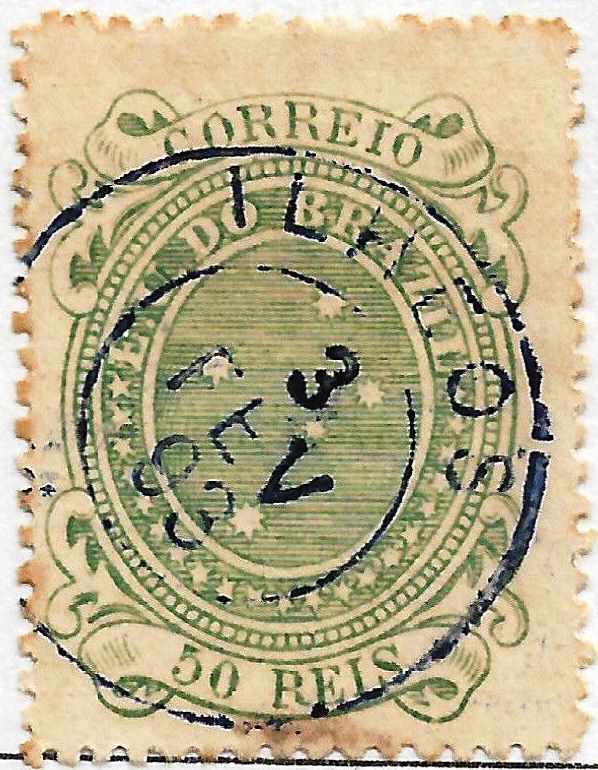
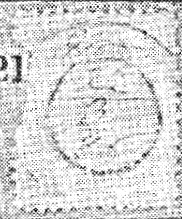
This was followed by the double circle IBA-0385b (illustration from the Internet):
IBA-0385b (EB) 1887-1890Atlas do Imperio do Brasil, 1868
Andere Namen: Ilhéus
Der Werdegang dieses für brasilianische Verhältnisse sehr alten Ortes ist eher untypisch: Bereits 1534 wurde S. Jorge dos Ilheos durch königlichen Brief (Carta Régia) zur Capitania, im Jahr darauf zur Vila und erst 1556 zur Freguesia. Ilhéus – wie es heute geschrieben wird – ist seit Juni 1881 eine Stadt an der Mündung des Flusses Cachoeira (früher: Rio dos Ilheos) in den Atlantik, 310 km südlich der Landeshauptstadt Salvador da Bahia.
Das örtliche Postamt wurde im Dezember 1852 gegründet, wie aus dem Bericht des kaiserlichen Ministeriums hervorgeht:
Relatorio do Ministerio do Imperio, 1852
Der bisher älteste Poststempel ist IBA-0385a, der von P. Ayres in Catálogo de Carimbos Brasil-Império (S. Paulo, 1937, 1942) die Nr. 1317 erhielt:
IBA-0385a (P.A. 1317) 1878ff
Es folgte der Doppelkreis IBA-0385b (Abb. aus dem Internet):
Other names: Lazareto da Ilha Grande, Abraão (1938)
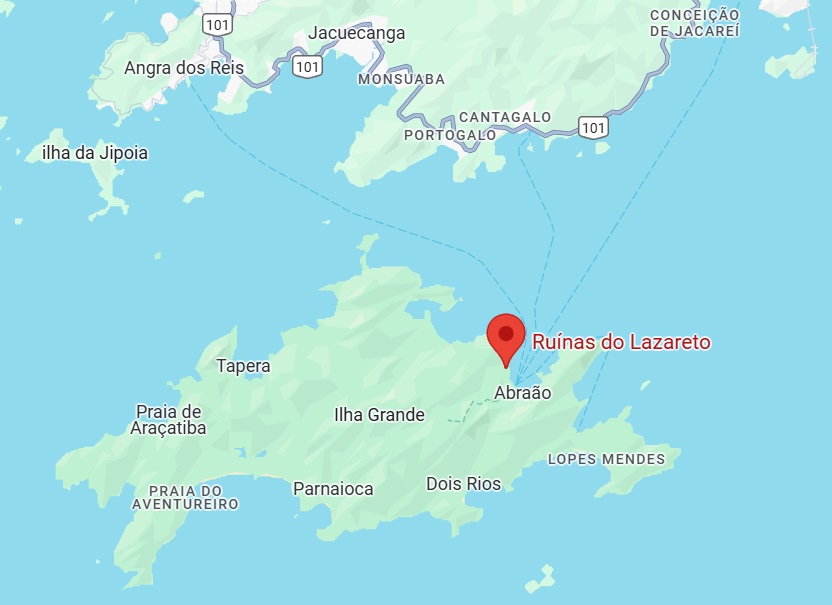
Around 1844, the Freguesia de Sant’Anna da Ilha Grande was founded on the large island (Ilha Grande) off Angra dos Reis, 140 kilometres west of the capital Rio de Janeiro. Around 1890, it became a district of the Município de Angra dos Reis, which was renamed Abraão in March 1938.
Between 1882 and 1884, a military hospital was built in the freguesia, where ship travellers should spend their quarantine period if necessary. This hospital was closed in 1913. During the Vargas dictatorship in the 1930s, a prison for political prisoners was built here. Today, only ruins remain:
(Photo: Paulo G. Belarmino, on Google Maps)
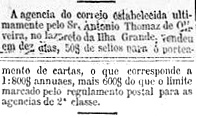
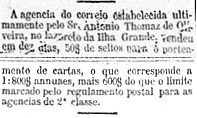
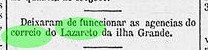
According to the press in Rio, there was a post office on place from December 1886:
Gazeta de Noticias, 31/12/1886
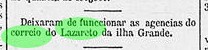
The postal agency was closed in June 1887:
Gazeta de Noticias, 14/06/1887
According to Paulo Novaes (agenciaspostaiscom.br), this post office was only reopened in March 1891 and closed again in December 1896 (Boletim Postal). The imperial postmark is IRJ-0605a (collect. Klerman w. Lopes):
IRJ-0605a (KL) 1886-1890
As this postmark is also known with a date of October 1890, this would indicate that the post office had a further period of operation between 1887 and 1891.
Google Maps
Andere Namen: Lazareto da Ilha Grande, Abraão (1938)
Um 1844 wurde auf der großen Insel (Ilha Grande) vor Angra dos Reis, 140 km westlich der Hauptstadt Rio de Janeiro, die Freguesia de Sant’Anna da Ilha Grande gegründet. Um 1890 wurde es ein Distrikt des Município de Angra dos Reis, das im März 1938 in Abraão umbenannt wurde.
Zwischen 1882 und 1884 wurde in der Freguesia ein Lazarett errichtet, in dem Schiffsreisende bei Bedarf ihre Quarantänezeit verbringen mussten. Das Lazarett wurde 1913 aufgelöst. Während der Vargas-Diktatur in den 30er Jahren des 20. Jahrhunderts wurde hier ein Gefängnis für politische Gefangene errichtet. Heute sind nur noch Ruinen zu sehen:
(Foto: Paulo G. Belarmino, auf Google Maps)
Wie der Presse in Rio zu entnehmen ist, befand sich seit Dezember 1886 ein Postamt im Lazarett:
Gazeta de Noticias, 31.12.1886
Die Postagentur wurde im Juni 1887 geschlossen:
Gazeta de Noticias, 14.06.1887
Laut Paulo Novaes (agenciaspostaiscom.br) wurde dieses Postamt erst im März 1891 wieder eröffnet und im Dezember 1896 wieder geschlossen (Boletim Postal). Der kaiserliche Poststempel ist IRJ-0605a (Samml. Klerman W. Lopes):
IRJ-0605a (KL) 1886-1890
Da dieser Stempel auch mit einem Datum vom Oktober 1890 bekannt ist, wäre dies ein Hinweis darauf, dass das Postamt zwischen 1887 und 1891 eine weitere Betriebsperiode hatte.
Carta Corographica da Provincia de Pernambuco, 1880
Other names: Ponte dos Carvalhos
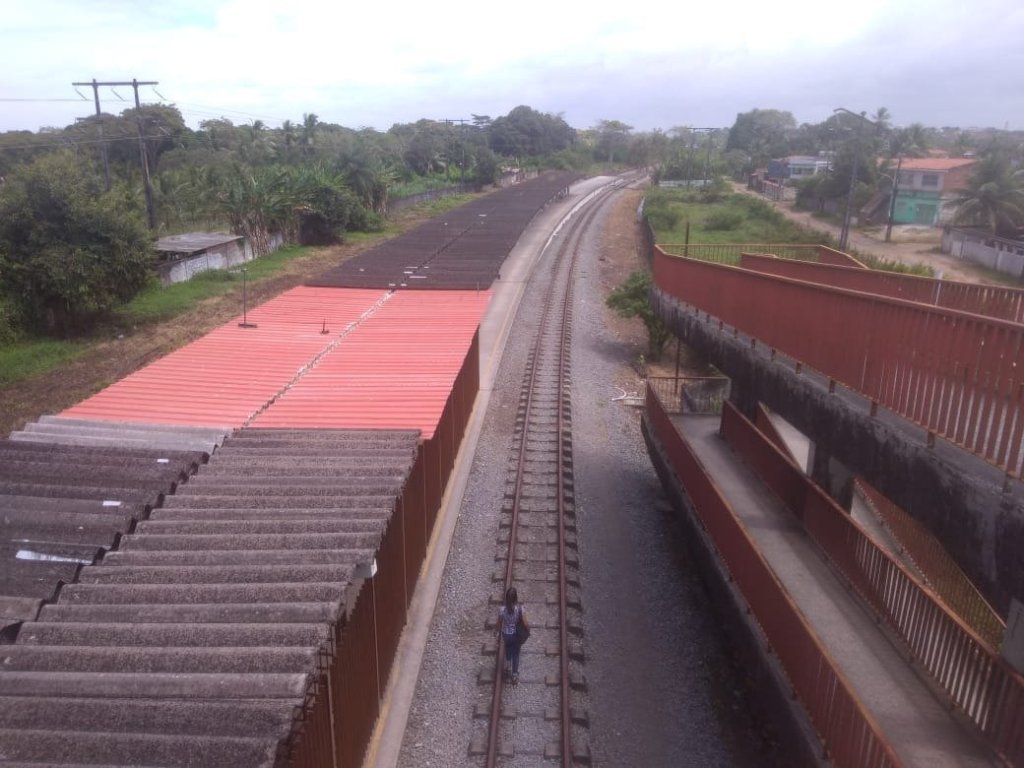
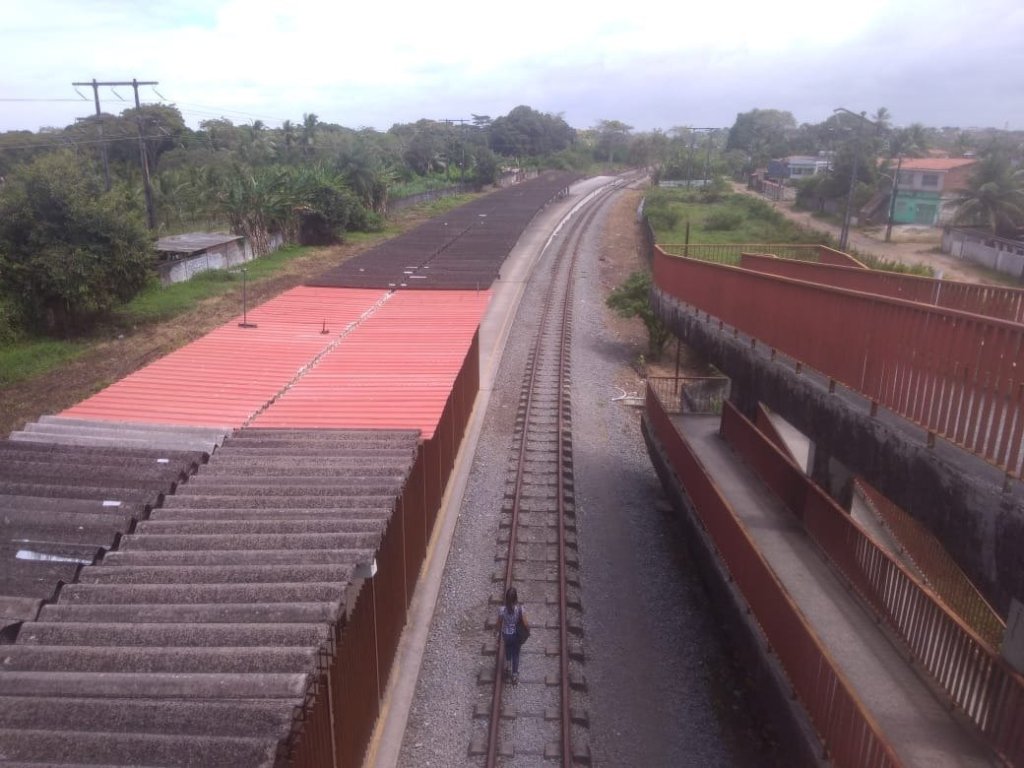
The Ilha (island) railway station was opened in February 1858 by the railway company E.F. do Recife ao S. Francisco in the Município de Cabo (today: Cabo de Sto. Agostinho), 30 km south of the provincial capital Recife. The line then changed hands four times: in 1901 to Great Western, in 1950 to Rede Ferroviária do Nordeste, in 1975 to Rede Ferroviária Federal and since 1996 it has been operated as a suburban railway by METROREC (estacoesferroviarias.com.br). In the meantime, the name of the station has been changed to Ponte dos Carvalhos.
In September 2019 (Photo: Thiago Albuquerque, on estacoesferroviarias.com.br)
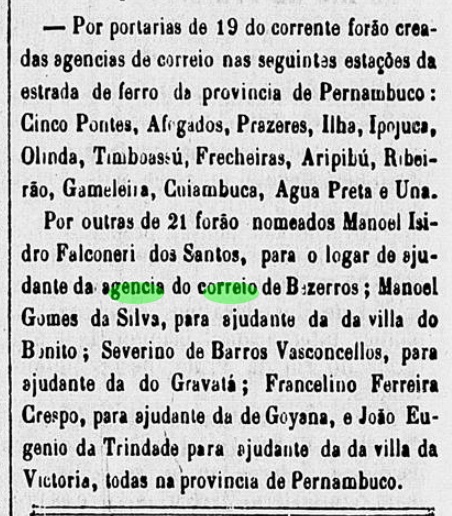
As the press in Rio reported, there had been a post office at the station since December 1864:
Constitucional/RJ, 24/12/1864
The oldest postmark to date is the French type IPE-0745b (fig. R. Koester, in Carimbologia XXII):
IPE-0745b (RK) 1885
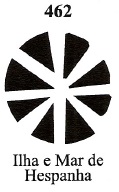
In Mute Cancellations of the Brazil Empire / Carimbos Mudos do Brasil Império (Brazil Philatelic Association, Rio de Janeiro, 2000), James Dingler and Klerman W. Lopes have listed a mute cancellation from Ilha with the no. 462:
BPA 462Google Maps
Andere Namen: Ponte dos Carvalhos
Der Bahnhof Ilha (Insel) wurde im Februar 1858 von der Eisenbahngesellschaft E.F. do Recife ao S. Francisco eröffnet und lag im Município de Cabo (heute: Cabo de Sto. Agostinho), 30 km südlich der Provinzhauptstadt Recife. Danach wechselte die Strecke viermal den Besitzer: 1901 an Great Western, 1950 an Rede Ferroviária do Nordeste, 1975 an Rede Ferroviária Federal und seit 1996 wird sie als Vorortbahn von METROREC (estacoesferroviarias.com.br) betrieben. Zwischenzeitlich wurde der Name des Bahnhofs in Ponte dos Carvalhos geändert.
Im September 2019 (Foto: Thiago Albuquerque, auf estacoesferroviarias.com.br)
Wie die Presse in Rio berichtete, gab es seit Dezember 1864 ein Postamt am Bahnhof:
Constitucional/RJ, 24.12.1864
Der bisher älteste Poststempel ist der französische Typ IPE-0745b (Abb. R. Koester, in Carimbologia XXII):
IPE-0745b (RK) 1885
James Dingler und Klerman W. Lopes haben in Mute Cancellations of the Brazil Empire / Carimbos Mudos do Brasil Império (Brazil Philatelic Association, Rio de Janeiro, 2000) einen stummen Stempel von Ilha mit der Nr. 462 aufgeführt:
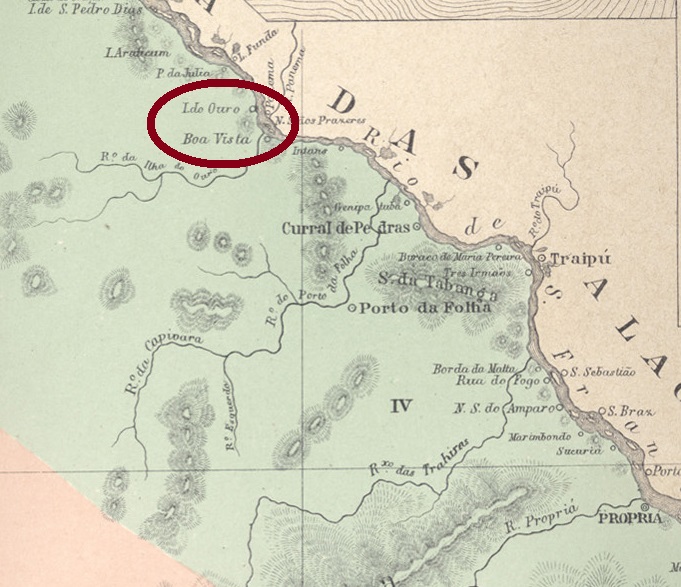
The old settlement of Boa Vista belonged to the Vila do Porto da Folha and was located on the south bank of the river São Francisco near the mouth of the river Capivara, 160 kilometres north of the provincial capital Aracaju. In March 1870, it became the seat of the Município with the name N. Sra. da Conceição da Ilha do Ouro. In April 1880, Ilha do Ouro lost this status and became first a freguesia and later a district of Porto da Folha.
The list of imperial post offices (Tabella das Agencias do Correio do Imperio, Rio de Janeiro, 1885) shows that there had been a post office in Porto da Folha since 1853. We do not know exactly when this agency adopted the new place name Ilha do Ouro, but it must have been before 1879, when the imperial postal guide (Guia Postal do Imperio) was published.
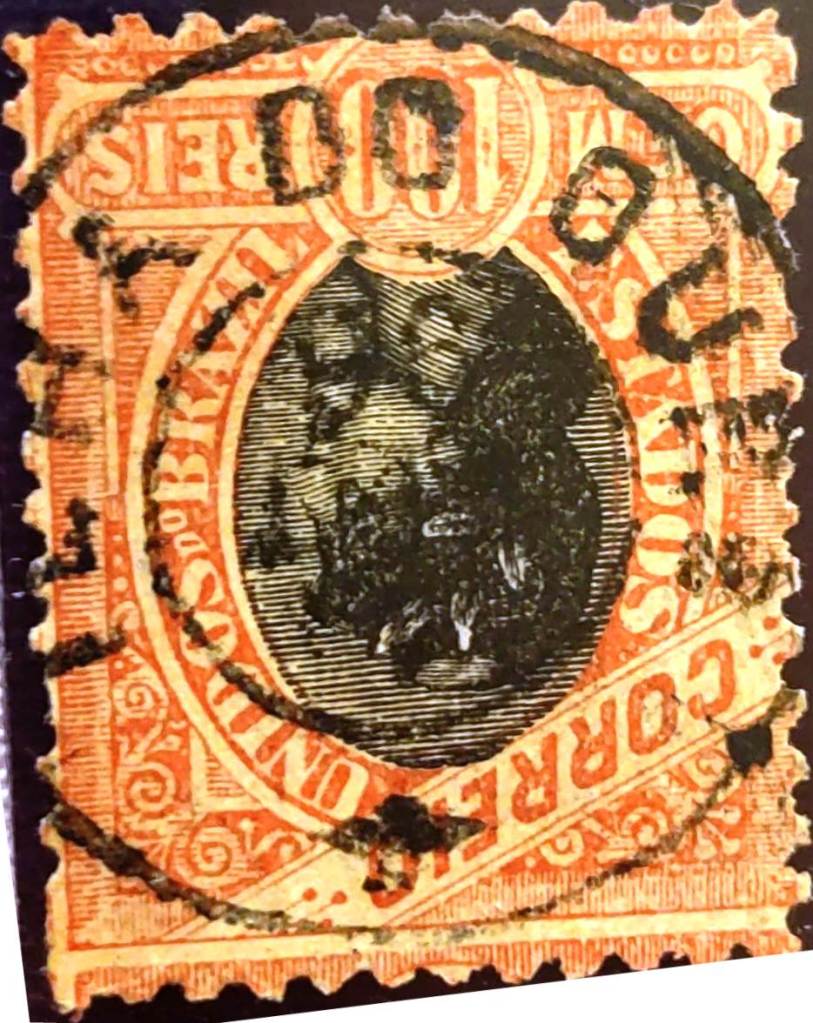
The only 19th century postmark from there so far is ISE-0080a (Jorge L. Pedreira collection):
ISE-0080a (JLP) 1896Arthur D. Ribeiro: Estado de Sergipe, 1924
Andere Namen: Boa Vista
Die alte Siedlung Boa Vista gehörte zur Vila do Porto da Folha und lag am Südufer des Flusses São Francisco nahe der Mündung des Flusses Capivara, 160 km nördlich der Provinzhauptstadt Aracaju. Im März 1870 wurde sie Sitz des Município mit dem Namen N. Sra. da Conceição da Ilha do Ouro. Im April 1880 verlor Ilha do Ouro diesen Status und wurde zunächst eine Freguesia und später ein Ortsteil von Porto da Folha.
Aus dem Verzeichnis der kaiserlichen Postämter (Tabella das Agencias do Correio do Imperio, Rio de Janeiro, 1885) geht hervor, dass es in Porto da Folha seit 1853 ein Postamt gab. Wir wissen nicht genau, wann diese Agentur den neuen Ortsnamen Ilha do Ouro annahm, aber es muss vor 1879 gewesen sein, als der kaiserliche Postführer (Guia Postal do Imperio) herausgegeben wurde.
Der bisher einzige Poststempel aus dem 19. Jahrhundert von dort ist ISE-0080a (Sammlung Jorge L. Pedreira):
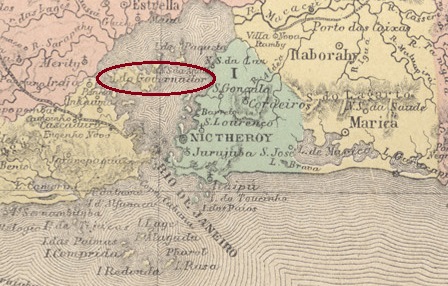
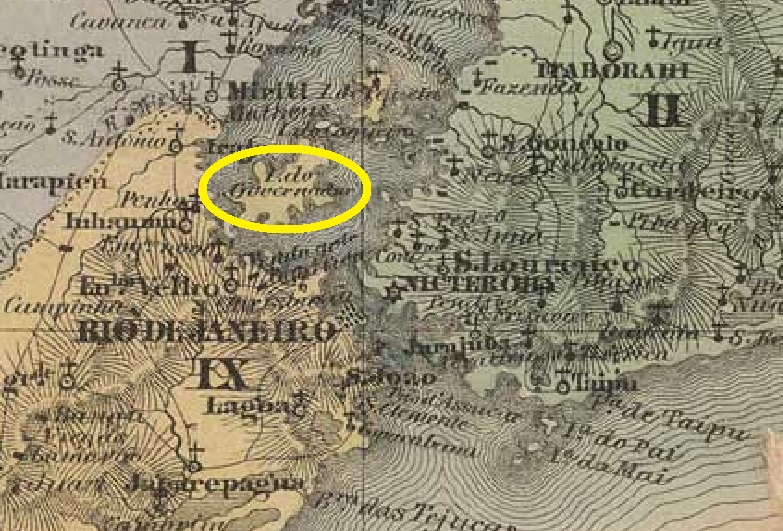
The Freguesia de N. Sra. da Ajuda da Ilha do Governador was founded in 1710 by royal decree (Alvará Real). Since July 1981, Ilha do Governador has been an administrative district (Região Administrativa) of the Município do Rio de Janeiro.
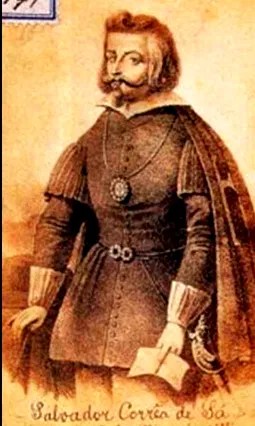
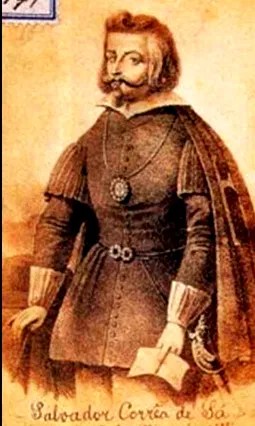
The island (Ilha) is located in Guanabara Bay, 20 km north of the city centre of Rio de Janeiro. The governor (governador) was the Portuguese Salvador Correia de Sá the Elder (approx. 1543-1631), who ruled Rio de Janeiro from 1578 to 1598. His grandson Salvador Correia de Sá e Benevides (1602-1688) was also governor of Rio.
Salvador Correia de Sá, the Elder (Wikipedia)
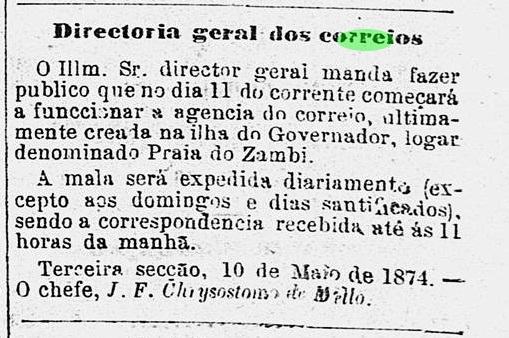
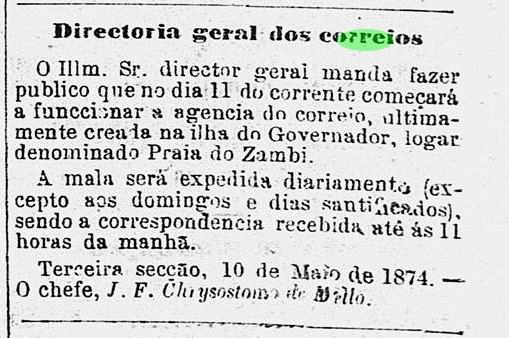
According to the Rio press, there had been a post office on the island since May 1874:
Diario do Rio de Janeiro, 11/05/1874
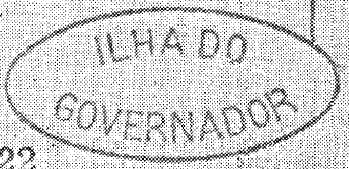
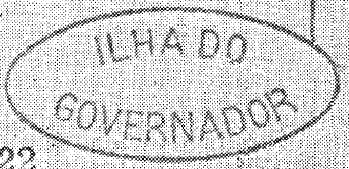
The oldest postmark IMN-0040a was shown by R. Koester (Carimbologia XXII):
IMN-0040a (RK) 1874ff
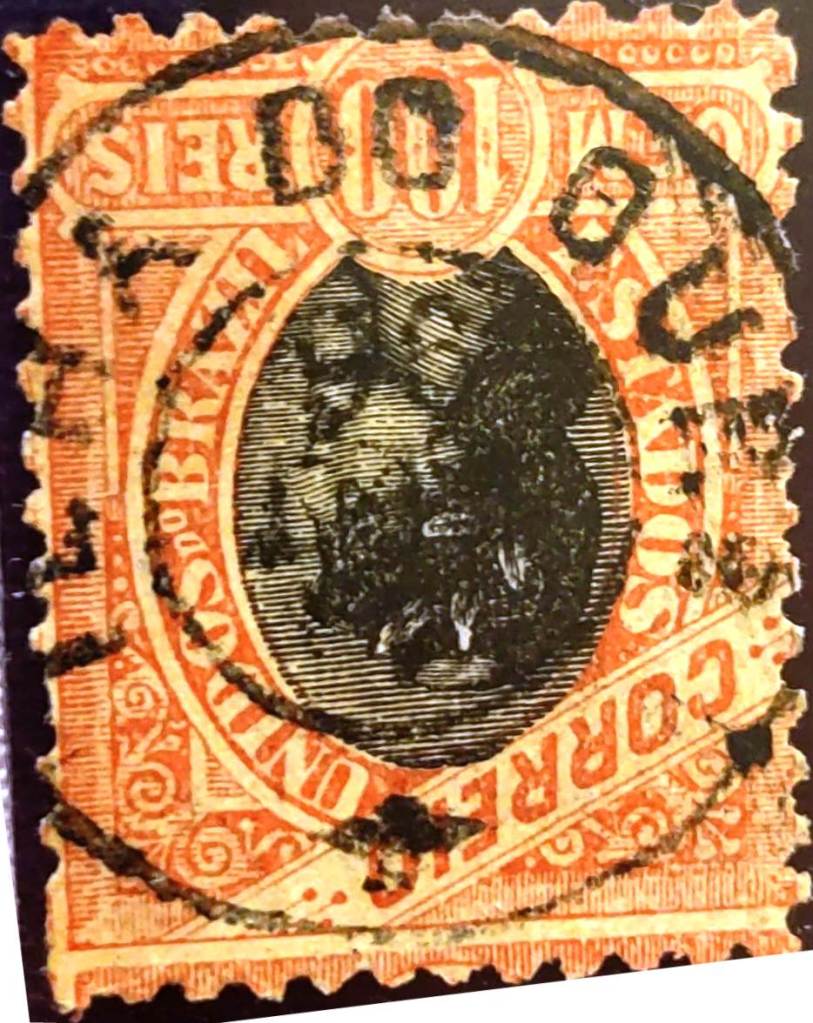
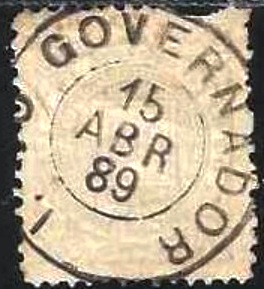
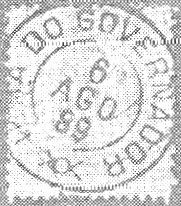
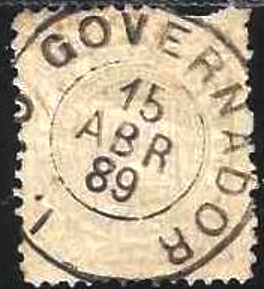
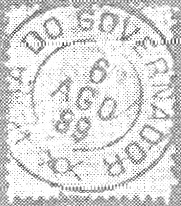
Towards the end of the Empire, two cancellations as double circles appeared, IMN-0040b (fig. agenciaspostais.com.br) and IMN-0040c (fig. Koester, op. cit.):
IMN-0040b (PN) 1889IMN-0040c (RK) 1889-1890Villiers de l’Ile Adam: Carta (…) da provincia do Rio de Janeiro, 1850
Siehe auch Freguezia (FMN-0100)
1710 wurde die Freguesia de N. Sra. da Ajuda da Ilha do Governador durch königliches Dekret (Alvará Real) gegründet. Seit Juli 1981 ist die Ilha do Governador ein Verwaltungsbezirk (Região Administrativa) des Município do Rio de Janeiro.
Die Insel (Ilha) liegt in der Guanabara-Bucht, 20 km nördlich des Stadtzentrums von Rio de Janeiro, Gouverneur (Governador) war der Portugiese Salvador Correia de Sá der Alte (ca. 1543-1631), der von 1578 bis 1598 in Rio de Janeiro regierte. Sein Enkel Salvador Correia de Sá e Benevides (1602-1688) war ebenfalls Gouverneur von Rio.
Salvador Correia de Sá, der Alte (Wikipedia)
Laut der Presse von Rio gab es seit Mai 1874 ein Postamt auf der Insel:
Diario do Rio de Janeiro, 11.05.1874
Der älteste Poststempel IMN-0040a wurde von R. Koester (Carimbologia XXII) gezeigt:
IMN-0040a (RK) 1874ff
Gegen Ende des Kaiserreichs erschienen zwei Stempel als Doppelkreise, IMN-0040b (Abb. agenciaspostais.com.br) und IMN-0040c (Abb. Koester, op. cit.):
Carta da Republica dos Estados Unidos do Brazil, 1892
Other names: Igatu, Aguatu
See also Telha (TCE-0370)
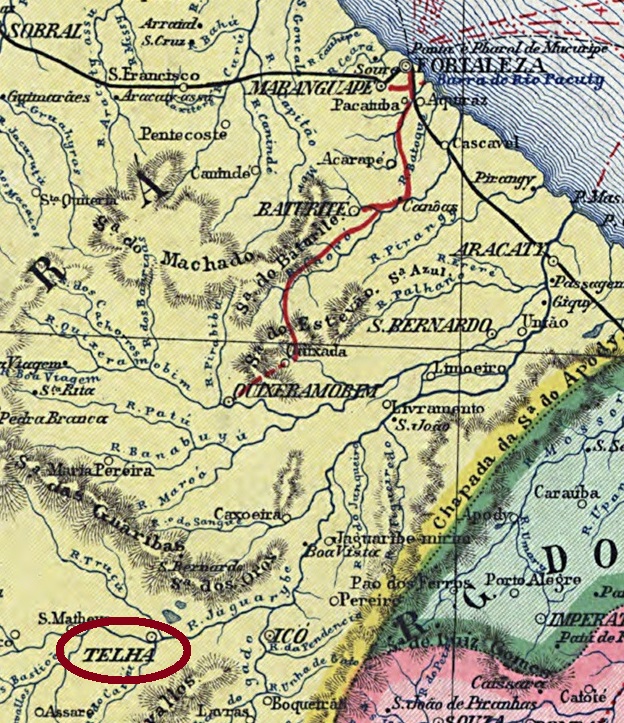
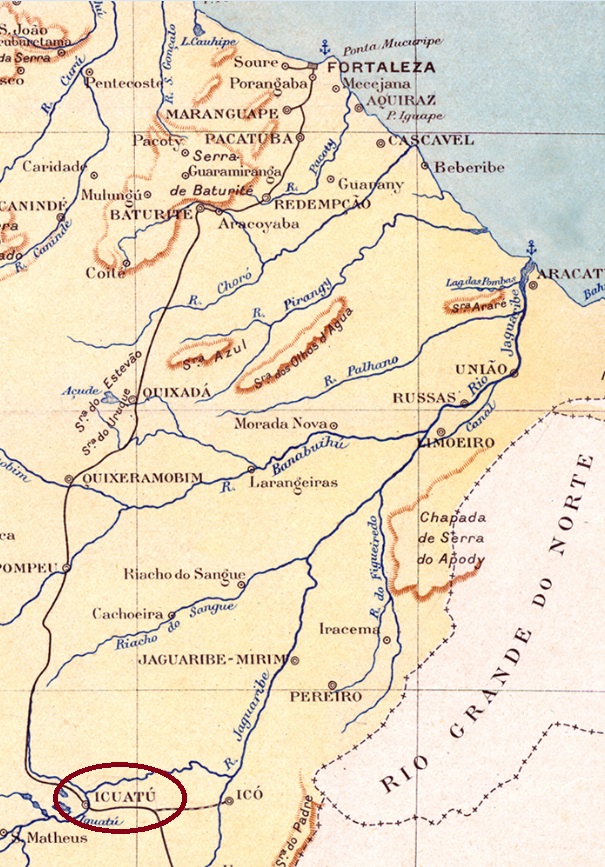
In October 1831, the Freguesia de Sant’Anna da Telha was founded by imperial decree. It belonged to the Vila de Icó and was located on the west bank of the Jaguaribe, 360 kilometres south of the provincial capital Fortaleza. In November 1851, it was elevated to a Vila and in August 1874 to a town, which has borne the name Iguatú since October 1883. The name comes from the Indian language and means good water.
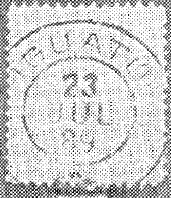
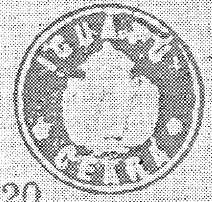
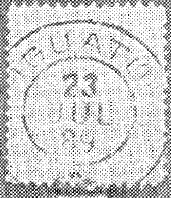
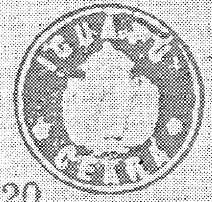
Nova Monteiro writes in Administrações e Agencias Postaes do Brasil Imperio (Brasil Filatelico/RJ, 1934-5; reprint SPP 1994-1999) that there has been a post office there since August 1866. R. Koester (Carimbologia XXII) shows two imperial postmarks with the place name Iguatu, current at least since 1883:
ICE-0160a (RK) 1889ICE-0160b (RK)Estado do Ceará, 1923
Andere Namen: Igatu, Aguatu
Siehe auch Telha (TCE-0370)
Im Oktober 1831 wurde durch kaiserliches Dekret die Freguesia de Sant’Anna da Telha gegründet, die zur Vila de Icó gehörte und am Westufer des Jaguaribe, 360 km südlich der Provinzhauptstadt Fortaleza, lag. Im November 1851 erfolgte die Erhebung zur Vila und im August 1874 zur Stadt, die seit Oktober 1883 den Namen Iguatú trägt. Der Name stammt aus der Indianersprache und bedeutet Gutes Wasser.
Nova Monteiro schreibt in Administrações e Agencias Postaes do Brasil Imperio (Brasil Filatelico/RJ, 1934-5; Reprint SPP 1994-1999), dass es dort seit August 1866 ein Postamt gab. R. Koester (Carimbologia XXII) zeigt zwei kaiserliche Poststempel mit dem mindestens seit 1883 gültigen Ortsnamen Iguatu:
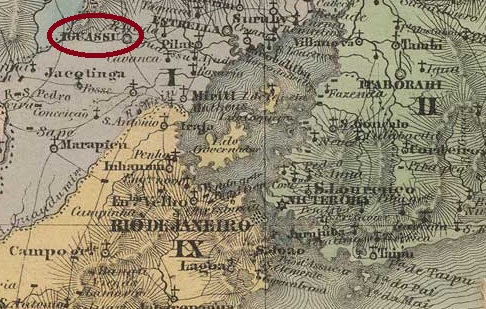
Colton & Colton: Provincia do Rio de Janeiro, 1866
Other names: N. Sra. da Piedade do Caminho Velho, Aguassú, Piedade do Iguassú, Cava, José Bulhões
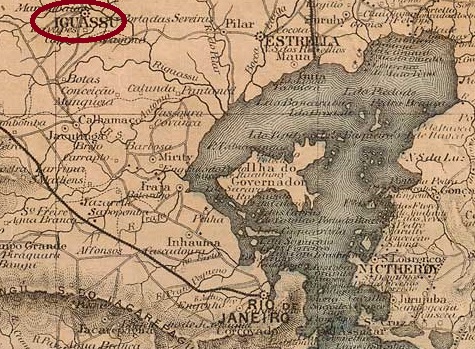
The village, which already had a chapel in 1669, became the Freguesia de N. Sra. da Piedade do Iguassú in 1719, 50 kilometres northwest of the capital Rio de Janeiro. It was elevated to a Vila in January 1833, two years later Piedade do Iguassú was downgraded to a Freguesia, but regained the status of a Vila in December 1836.
This was followed by a long period of decline, which had both economic and environmental causes. In May 1892, Piedade do Iguassú became a district of the then founded Município de Maxambomba, which was later given the name Nova Iguassú. Further name changes followed: around 1920 to Cava, in January 1924 to Estação José Bulhões, in 1939 back to Cava, and since 1997 it has also lost its status as a district: this rural suburb of Nova Iguaçu (as it is spelt today) is now called Vila de Cava.
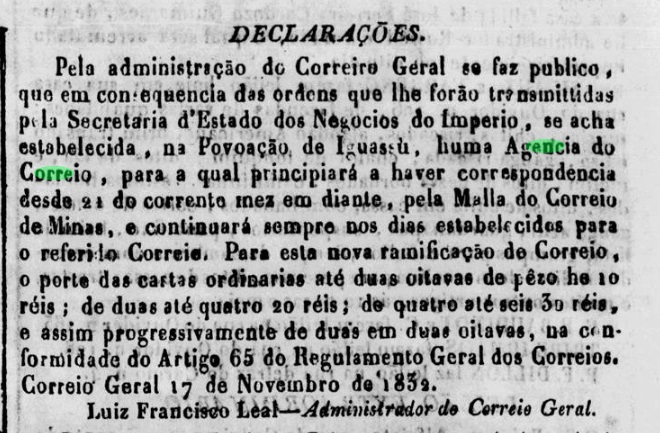
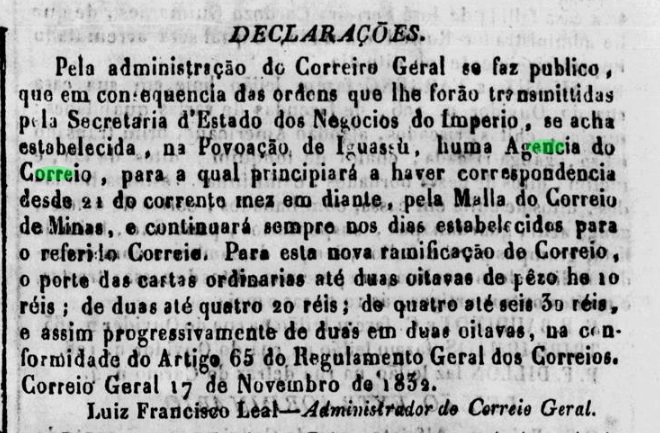
Nova Monteiro writes in Administrações e Agencias Postaes do Brasil Imperio (Brasil Filatelico/RJ, 1934-5; Reprint SPP 1994-1999), that there had been a post office there since October 1832. This is confirmed by the press in Rio:
Jornal do Commercio, 19/11/1832
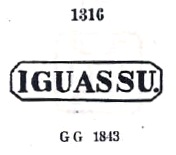
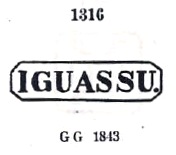
According to Paulo Novaes (agenciaspostais.com.br), the post office was closed in August 1931; the first postmark is IRJ-0600a, which was given the number 1316 by P. Ayres in his Catálogo de Carimbos Brasil-Império (S. Paulo, 1937, 1942):
IRJ-0600a (P.A. 1316) 1832ff-1879
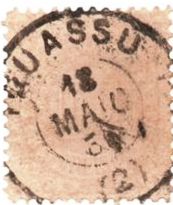
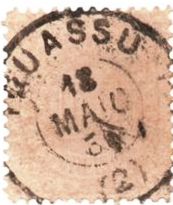
Then came IRJ-0600b (illus. Claudio Coelho), which also exists in blue:
IRJ-0600b (CC) 1883ff-1889
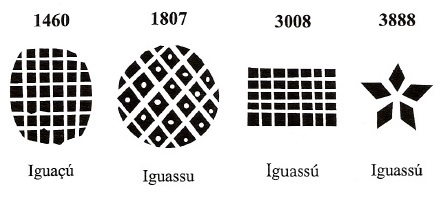
James Dingler and Klerman W. Lopes have listed four mute cancellations from Iguassú in Mute Cancellations of the Brazil Empire / Carimbos Mudos do Brasil Império (Brazil Philatelic Association, Rio de Janeiro, 2000):
BPA 1460 – 1807 – 3008 – 3888Viiers de l’Ie Adam: Carta (..) da Provincia do Rio de Janeiro, 1850
Andere Namen: N. Sra. da Piedade do Caminho Velho, Aguassú, Piedade do Iguassú, Cava, José Bulhões
Der Ort, der bereits 1669 eine Kapelle besaß, wurde 1719 zur Freguesia de N. Sra. da Piedade do Iguassú erhoben und liegt 50 km nordwestlich der Hauptstadt Rio de Janeiro. Die Erhebung zur Vila erfolgte im Januar 1833, zwei Jahre später wurde Piedade do Iguassú zur Freguesia herabgestuft, erhielt aber im Dezember 1836 wieder den Status einer Vila.
Es folgte eine lange Zeit des Niedergangs, der sowohl wirtschaftliche als auch ökologische Ursachen hatte. Im Mai 1892 wurde Piedade do Iguassú ein Distrikt des neu gegründeten Município de Maxambomba, das später den Namen Nova Iguassú erhielt. Danach folgten weitere Namensänderungen: um 1920 in Cava, im Januar 1924 in Estação José Bulhões, 1939 wieder in Cava, und seit 1997 ist auch der Status als Distrikt verloren: Vila de Cava heißt nun dieser ländliche Vorort von Nova Iguaçu, wie es heute geschrieben wird.
Nova Monteiro schreibt in Administrações e Agencias Postaes do Brasil Imperio (Brasil Filatelico/RJ, 1934-5; Reprint SPP 1994-1999), dass es dort seit Oktober 1832 ein Postamt gab. Dies wird von der Presse in Rio bestätigt:
Jornal do Commercio, 19.11.1832
Laut Paulo Novaes (agenciaspostais.com.br) wurde das Postamt im August 1931 geschlossen. Der erste Poststempel ist IRJ-0600a, der von P. Ayres im Catálogo de Carimbos Brasil-Império (S. Paulo, 1937, 1942) die Nr. 1316 erhielt:
IRJ-0600a (P.A. 1316) 1832ff-1879
Danach kam IRJ-0600b (Abb. Claudio Coelho), den es auch in blau gibt:
IRJ-0600b (CC) 1883ff-1889
James Dingler und Klerman W. Lopes haben in Mute Cancellations of the Brazil Empire / Carimbos Mudos do Brasil Império (Brazil Philatelic Association, Rio de Janeiro, 2000) vier stumme Abstempelungen aus Iguassú aufgeführt:
Other names: Assunguy, Tindiqüera, Araucária (1890)
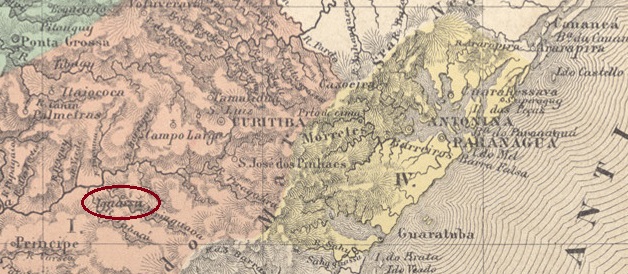
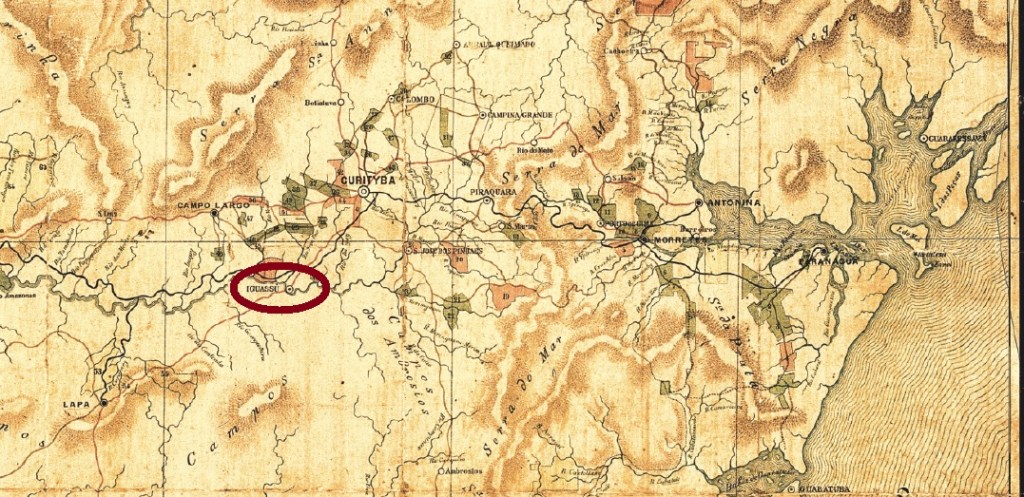
In 1837, the chapel of N. Sra. da Luz de Tindiqüera was built on the north bank of the Iguaçu, 30 kilometres southwest of the later provincial capital Curitiba. In February 1855, the settlement around the chapel became the Freguesia de N. Sra. dos Remédios de Iguassu. In 1868, the village moved from the Município de Curitiba to the municipality of S. José dos Pinhais, but returned 20 years later as the Freguesia de Curitiba. Araucária has been an independent município since February 1890.
R. Koester writes in Carimbologia XXII that there had been a post office there since 1874. So far, no imperial postmark could be assigned to this municipality with certainty.
Estado do Paraná, 1892
Andere Namen: Assunguy, Tindiqüera, Araucária (1890)
1837 wurde am Nordufer des Iguaçu, 30 km südwestlich der späteren Provinzhauptstadt Curitiba, die Kapelle N. Sra. da Luz de Tindiqüera errichtet. Im Februar 1855 wurde die Siedlung um die Kapelle zur Freguesia de N. Sra. dos Remédios de Iguassu. Im Jahr 1868 wechselte der Ort vom Município de Curitiba zur Gemeinde S. José dos Pinhais, kehrte aber 20 Jahre später als Freguesia de Curitiba zurück. Seit Februar 1890 ist Araucária ein selbständiges Município.
R. Koester schreibt in Carimbologia XXII, dass es dort seit 1874 ein Postamt gab. Bisher konnte kein kaiserlicher Poststempel mit Sicherheit dieser Gemeinde zugeordnet werden.
Villiers de l’Ile Adam: Carta (…) das Provincias de Pernambuco, Alagoas e Sergipe, 1848
Other names: Juarassú, Igarassú (1938)
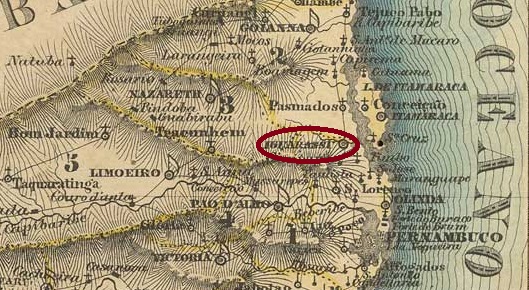
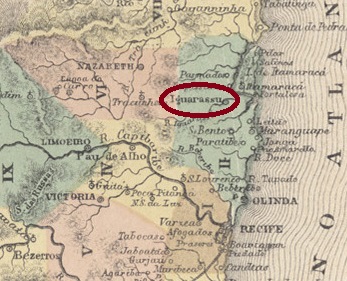
As early as September 1535, the Capela dos Santos Cosme e Damião was built around 30 kilometres north of the later provincial capital of Recife. Around 1564, it became the Vila de Santa Cruz de Santos Cosme e Damião de Iguarassú, which only became a freguesia in 1594. It has been a town since June 1895 and its name was changed to Igarassú in December 1938. The small difference in the place name has great significance: in the Indian language, Iguarassú means large water bird and Igarassú means large canoe.
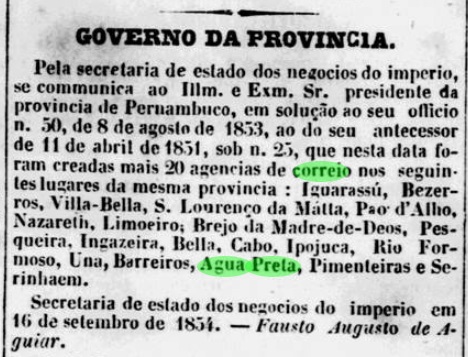
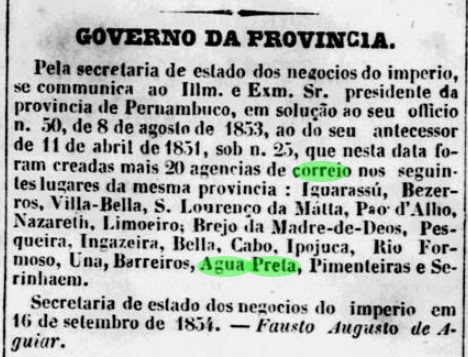
Nova Monteiro writes in Administrações e Agencias Postaes do Brasil Imperio (Brasil Filatelico/RJ, 1934-5; reprint SPP 1994-1999) that there has been a post office there since September 1854. This is confirmed by the regional press:
Diario de Pernambuco, 07/10/1854
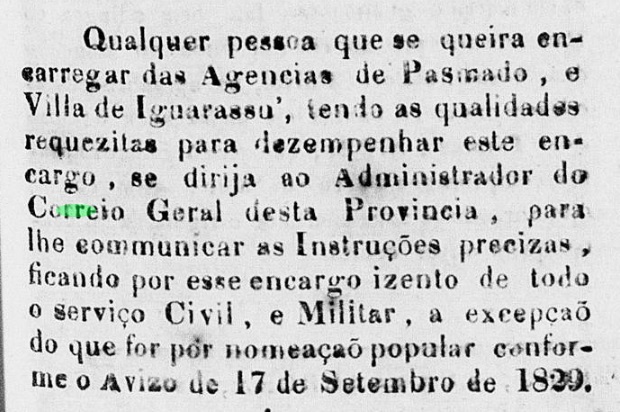
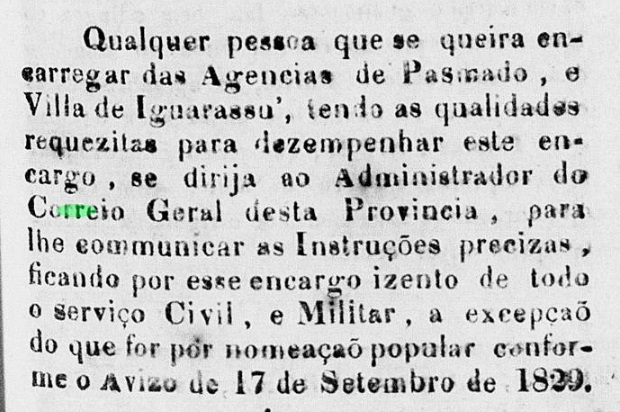
In addition, R. Koester mentions a date of January 1855 for the creation of the postal agency. These two dates could well be new openings, as the provincial postal administration was already looking for someone to run the Iguarassú post office in December 1830:
O Cruzeiro, 24/12/1830
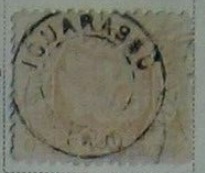
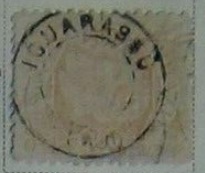
The only postmark from the imperial era to date is certainly not the oldest. The French type IPE-0305b (illustration from the Internet) was found with dates from the 1980s:
IPE-0305b (EB) 1882ff-1886Atlas do Imperio do Brasil, 1868
Andere Namen: Juarassú, Igarassú (1938)
Bereits im September 1535 wurde ca. 30 km nördlich der späteren Provinzhauptstadt Recife die Capela dos Santos Cosme e Damião errichtet. Um 1564 wurde daraus die Vila de Santa Cruz de Santos Cosme e Damião de Iguarassú, die erst 1594 zur Freguesia wurde. Seit Juni 1895 ist es eine Stadt, deren Name sich im Dezember 1938 in Igarassú änderte. Der kleine Unterschied im Ortsnamen hat eine große Bedeutung: In der indianischen Sprache bedeutet Iguarassú großer Wasservogel und Igarassú bedeutet großes Kanu.
Nova Monteiro schreibt in Administrações e Agencias Postaes do Brasil Imperio (Brasil Filatelico/RJ, 1934-5; Nachdruck SPP 1994-1999), dass es dort seit September 1854 ein Postamt gab. Dies wird von der regionalen Presse bestätigt:
Diario de Pernambuco, 07.10.1854
Darüber hinaus nennt R. Koester ein Datum vom Januar 1855 für die Gründung der Postagentur. Bei diesen beiden Daten könnte es sich durchaus um eine Neueröffnung handeln, denn bereits im Dezember 1830 suchte die Provinzialpostverwaltung nach einem Verantwortlichen für das Postamt Iguarassú:
O Cruzeiro, 24.12.1830
Der bisher einzige Poststempel aus der Kaiserzeit ist sicher nicht der älteste. Der französische Typ IPE-0305b (Abbildung aus dem Internet) wurde mit Daten aus den 80er Jahren gefunden:










 Carimbologia