See also Campina Grande (R. Koester: Carimbologia VIII)
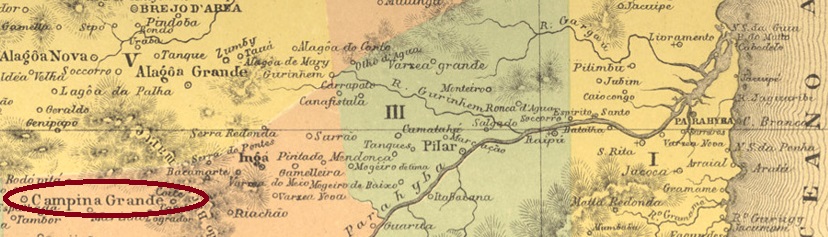
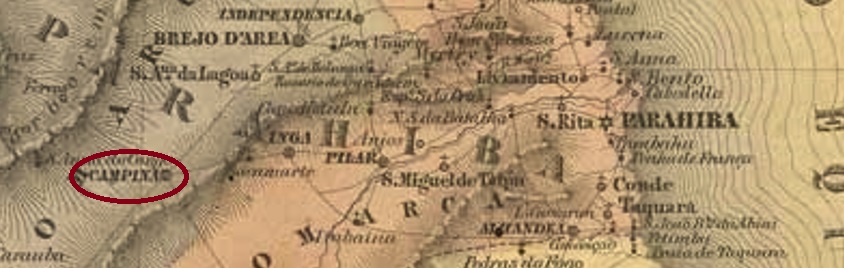
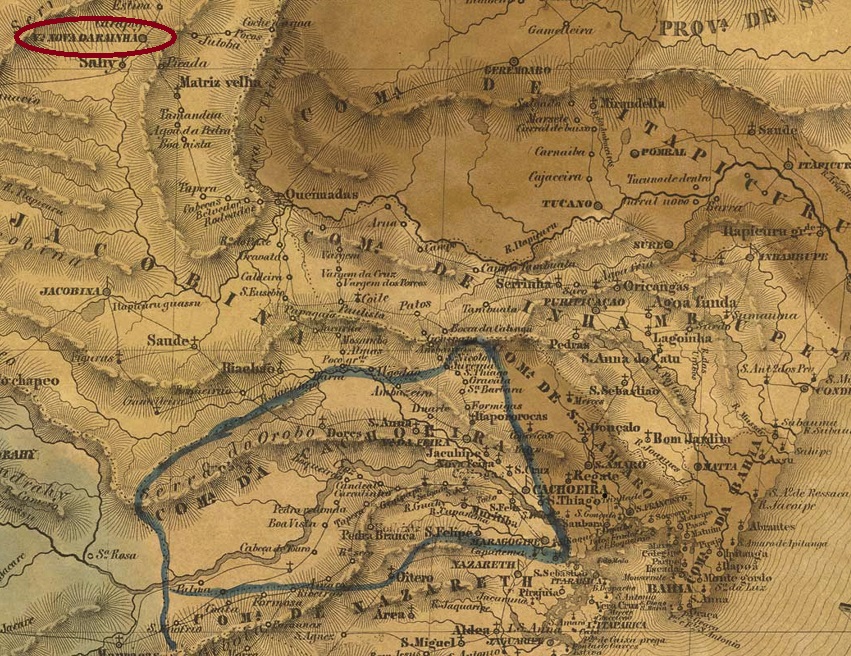
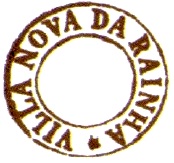
The freguesia of N. Sra. da Conceição de Campina Grande was established in 1769, situated 120 km west of the future provincial capital Parahyba do Norte (today: João Pessoa). It was promoted to Villa Nova da Rainha by royal decree (Alvará Real) in August 1788 and retained this name for almost 80 years. It was not until October 1864, when it was granted city status, that it was renamed Campina Grande.
There had been a post office there since May 1829, as can be read both in the postal report (Relatorio Postal) for 1887 and in the directory of imperial post offices (Tabella das Agencias do Correio do Imperio, Rio de Janeiro, 1885). So far, no postmark with the old place name has turned up. For postmarks with Campina Grande see Koester, Carimbologia VIII.
Villiers de l’Ile Adam: Carta (…) das Provincias do Rio Grande do Norte e Parahiba, 1848
Anderer Name: Campina Grande
Siehe auch Campina Grande (R. Koester: Carimbologia VIII)
Die Freguesia von N. Sra. da Conceição de Campina Grande wurde 1769 errichtet und lag 120 km westlich der künftigen Provinzhauptstadt Parahyba do Norte (heute: João Pessoa) entfernt. Sie stieg im August 1788 durch königliche Verfügung (Alvará Real) zur Villa Nova da Rainha auf und behielt diesen Namen immerhin fast 80 Jahre lang. Erst im Oktober 1864, bei der Vergabe des Stadt-Status, wurde der Ort zu Campina Grande umbenannt.
Dort gab es ein Postamt seit Mai 1829, wie man sowohl im Postbericht (Relatorio Postal) für 1887 als auch im Verzeichnis der kaiserlichen Postämter (Tabella das Agencias do Correio do Imperio, Rio de Janeiro, 1885) lesen kann. Bisher ist noch kein Poststempel mit der alten Ortsbezeichnung aufgetaucht. Für Stempel mit Campina Grande siehe Koester, Carimbologia VIII.
Villiers de l’Ile Adam: Carta (…) da Provincia da Bahia, 1848
Other names: Senhor do Bomfim da Tapera, Senhor do Bonfim (1943)
See also Bomfim/BA (R. Koester: Carimbologia V)
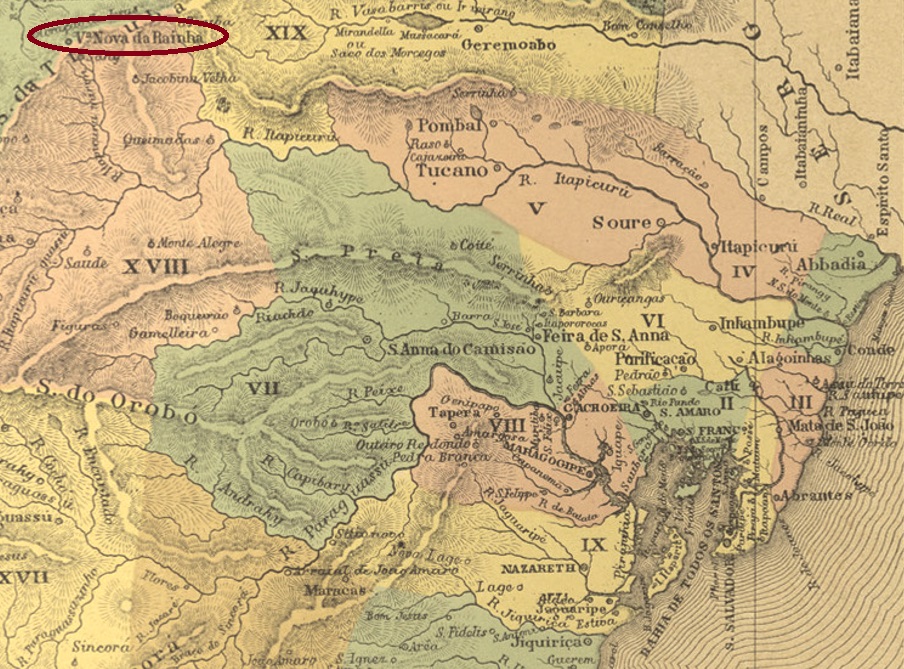
The settlement called Arraial de Senhor do Bomfim da Tapera was founded in 1750 and was situated on the south bank of the river Itapicuru, 380 km northwest of the later provincial capital Salvador da Bahia. In July 1797, by royal decree (Carta Régia), it was elevated to Villa Nova da Rainha. In May 1885 – by which time the Portuguese queen was barely remembered – it became the town of Bomfim, which has been called Senhor do Bonfim since December 1943.
Two opening dates for the local post office were found. First in March 1836, as Nova Monteiro writes in Administrações e Agencias Postaes do Brasil Imperio (Brasil Filatelico/RJ, 1934-5; Reprint SPP 1994-1999). Then again in 1846, as can be read in the Directory of Imperial Post Offices (Tabella das Agencias do Correio do Imperio, Rio de Janeiro, 1885). The oldest postmark is VBA-0790a, which was probably used from 1836 onwards and was already presented in the RHM catalogue:
VBA-0790a (RHM P-BA-09)
It was followed by VBA-0790b, which was used from about 1843 until at least 1846 and can also be seen in the RHM catalogue:
VBA-0790b (RHM)
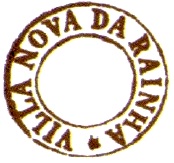
The last postmark in the Empire is VBA-0790c (Coll. José A. Junges): a double circle with the inscription V.N. DA RAINHA above. The dates in the centre go from 1882 to 1891.
Atlas do Imperio do Brasil, 1868
Andere Namen: Senhor do Bomfim da Tapera, Senhor do Bonfim (1943)
Siehe auch Bomfim/BA (R. Koester: Carimbologia V)
Die Siedlung namens Arraial de Senhor do Bomfim da Tapera entstand 1750 und lag am Südufer des Flusses Itapicuru, 380 km nordwestlich der späteren Provinzhauptstadt Salvador da Bahia. Im Juli 1797 erfolgte durch Königliche Verfügung (Carta Régia) der Aufstieg zur Villa Nova da Rainha. Im Mai 1885 – da war die portugiesische Königin kaum noch in Erinnerung – wurde daraus die Stadt von Bomfim, die seit Dezember 1943 Senhor do Bonfim heißt.
Zwei Eröffnungsdaten fürs örtliche Postamt wurden gefunden. Erstmals im März 1836, wie Nova Monteiro in Administrações e Agencias Postaes do Brasil Imperio (Brasil Filatelico/RJ, 1934-5; Reprint SPP 1994-1999) schreibt. Dann wieder 1846, wie im Verzeichnis der kaiserlichen Postämter (Tabella das Agencias do Correio do Imperio, Rio de Janeiro, 1885) zu lesen ist. Der älteste Poststempel ist VBA-0790a, der wohl ab 1836 Verwendung fand und bereits im RHM-Katalog vorgestellt wurde:
VBA-0790a (RHM P-BA-09)
Ihm folgte VBA-0790b, der ab ca. 1843 bis zumindest 1846 gebraucht wurde und auch im RHM-Katalog zu sehen ist:
VBA-0790b (RHM)
Der letzte Poststempel im Kaiserreich ist VBA-0790c (Samml. José A. Junges). Ein Doppelkreis mit der obigen Inschrift V.N. DA RAINHA. Die Daten in der Mitte gehen zunächst von 1882 bis 1891.
Villiers de l’Ile Adam: Carta (…) das Provincias de Pernambuco, Alagoas e Sergipe, 1848
Other names: Santa Maria Magdalena, União, União dos Palmares
See also Imperatriz/AL (R. Koester: Carimbologia XXII)
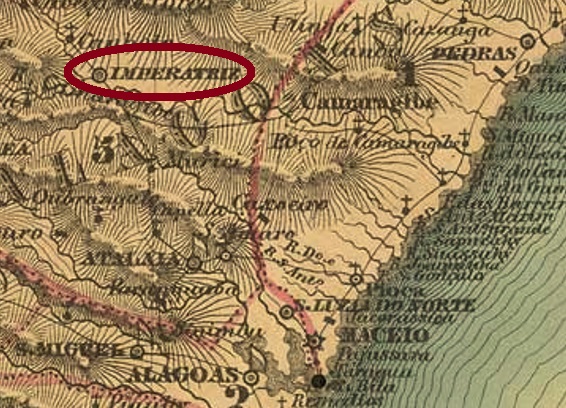
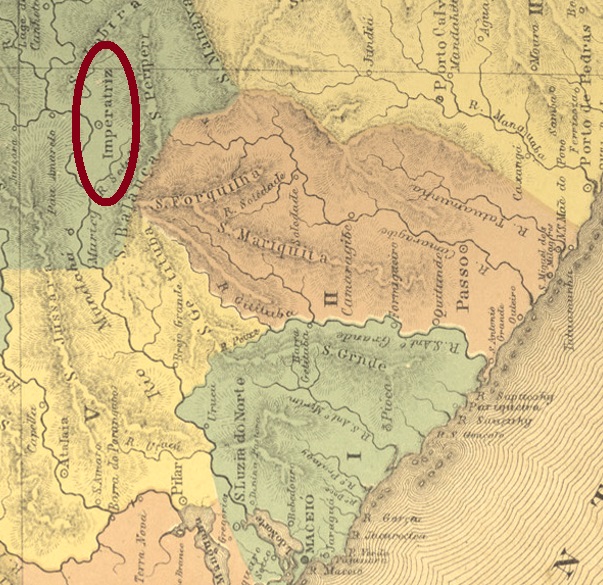
The former freguesia of Santa Maria Magdalena was located near the vila of Atalaia on the east bank of the river Mundaú, 75 km northwest of the provincial capital Maceió. In October 1831, the place became Villa Nova da Imperatriz. In July 1876, it was downgraded to the district of Atalaia, but regained villa status nine years later and became a town in August 1889. After the military coup that introduced the Republic, the empress was not even tolerated as a place name, and the town was renamed União (Unity) in September 1890. Since December 1943, it has been the Municipio of União dos Palmares, in memory of the quilombo (refuge for escaped slaves) that existed there from 1580 to 1694.
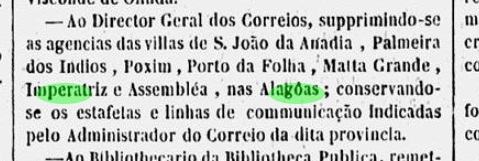
Three periods of operation for the local post office were found. A first opening is said to have taken place around 1835, as Aldo Cardoso writes in Contribuição para a História dos Correios de Alagoas (Maceió, 1969). The second period began in 1845, as both Cardoso and the Directory of Imperial Post Offices (Tabella das Agencias do Correio do Imperio, Rio de Janeiro, 1885) record, and ended in October 1847, according to the Official Press in Rio:
Gazeta Official/RJ, 13/10/1847
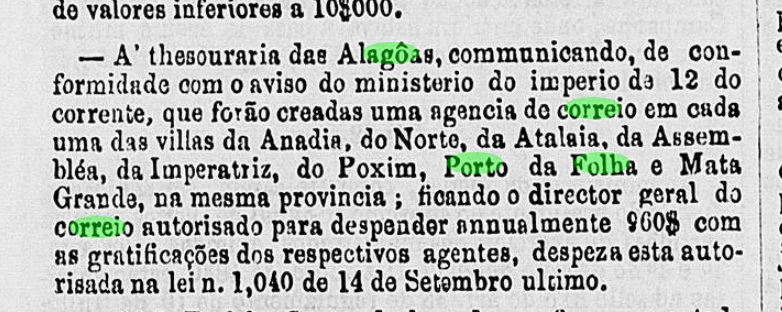
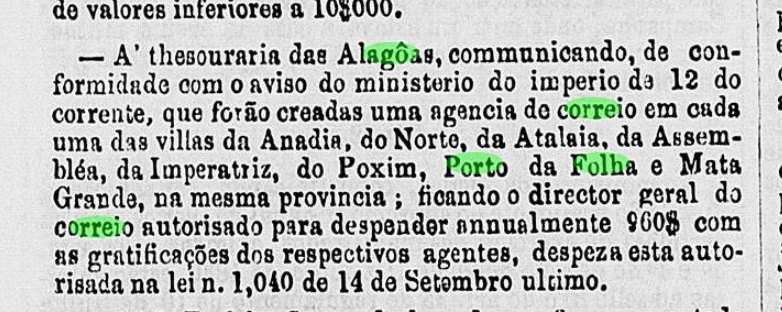
The agency was created for the third time in November 1859, according to a report by the Imperial Ministry:
Boletim do Ministerio do Imperio/14.11.1859
So far, unfortunately, no postmark of the imperial period could be assigned to this locality with certainty.
Atlas do Imperio do Brasil, 1868
Andere Namen: Santa Maria Magdalena, União, União dos Palmares
Siehe auch Imperatriz/AL (R. Koester: Carimbologia XXII)
Die ehemalige Freguesia von Santa Maria Magdalena lag bei der Vila von Atalaia am Ostufer des Flusses Mundaú, 75 km nordwestlich der Provinzhauptstadt Maceió. Im Oktober 1831 wurde der Ort zur Villa Nova da Imperatriz. Im Juli 1876 wurde die Villa zum Distrikt von Atalaia herabgestuft, erlangte aber neun Jahre später den Villa-Status wieder und wurde im August 1889 eine Stadt. Nach dem Militärputsch, der die Republik einführte, wurde die Kaiserin nicht mal als Ortsbezeichnung toleriert, und die Stadt wurde im September 1890 zu União (Eintracht) umbenannt. Seit Dezember 1943 ist es der Municipio von União dos Palmares, in Erinnerung an den Quilombo (Zufluchtstätte für geflohene Sklaven), der dort von 1580 bis 1694 existierte.
Drei Betriebsperioden fürs örtliche Postamt wurden gefunden. Eine erste Eröffnung soll ca. 1835 stattgefunden haben, wie Aldo Cardoso in Contribuição para a História dos Correios de Alagoas (Maceió, 1969) schreibt. Die zweite Periode fing 1845 an, wie sowohl Cardoso als auch das Verzeichnis der kaiserlichen Postämter (Tabella das Agencias do Correio do Imperio, Rio de Janeiro, 1885) registrieren, und endete im Oktober 1847, wie aus der Amtspresse in Rio hervorgeht:
Gazeta Official/RJ, 13.10.1847
Die Agentur wurde im November 1859 zum dritten Mal ins Leben gerufen, laut Bericht des Imperialministeriums:
Boletim do Ministerio do Imperio/14.11.1859
Bisher konnte leider kein Poststempel der Kaiserzeit dieser Ortschaft mit Sicherheit zugeordnet werden.
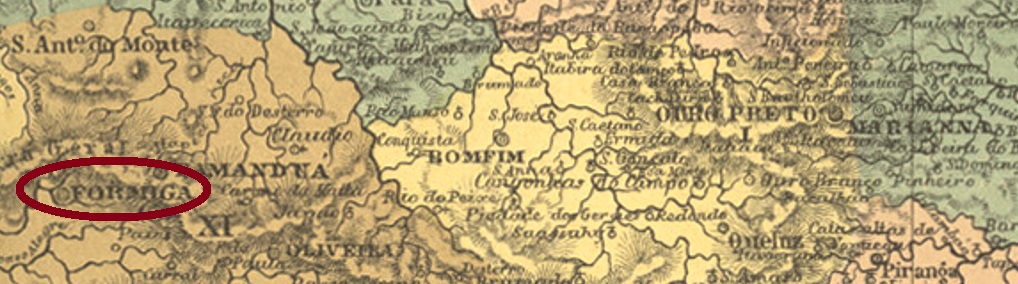
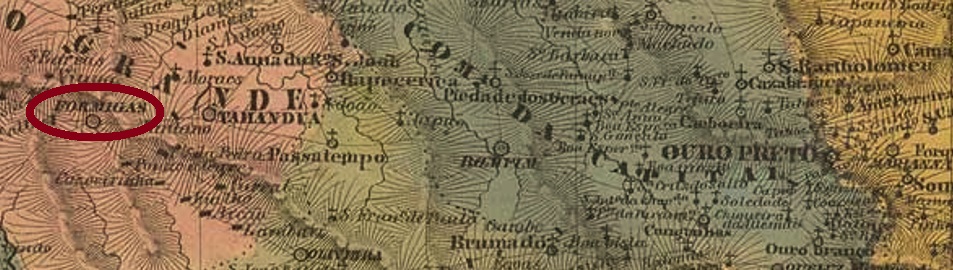
The parish of S. Vicente Ferrer da Formiga was established in July 1832 in the município of Tamanduá, 290 km west of the provincial capital Ouro Preto. There was no danger to the ant (Formiga) from the anteater (Tamanduá) because the Serra Geral lies between both. In March 1839, the village rose to become Villa Nova da Formiga, and has been a town since June 1858.
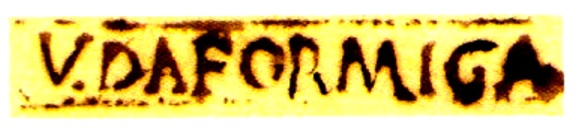
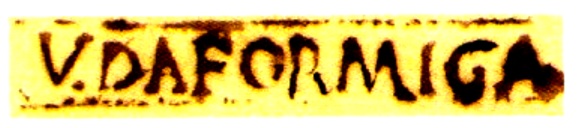
Both Paula Sobrinho (História Postal de Minas Gerais, Belo Horizonte, 1997) and Reinhold Koester (Carimbologia XIX) agree that the local post office was created in March 1840. Two early postmarks have already been recorded. VMG-3644a also exists in sepia, was used from 1840 to at least 1843 and is known through the RHM catalogue:
VMG-3644a (RHM P-MG-28)
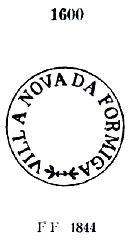
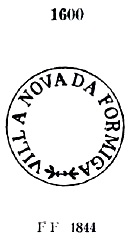
Its successor VMG-3645a was in use from about 1843 and was already known by Paulo Ayres (Catálogo de Carimbos Brasil-Império, S. Paulo, 1937, 1942) with no. 1600:
VMG-3645a (P.A.1600) 1843ff-1846
Later postmarks bear only the place name FORMIGA and have already been presented by Koester (op. cit.).
Villiers de l’Ile Adam: Carta (…) da Provincia de Minas Geraes, 1849
Siehe auch Formiga (R. Koester: Carimbologia XIX)
Die Pfarrei von S. Vicente Ferrer da Formiga wurde im Juli 1832 im Município von Tamanduá errichtet und lag 290 km westlich der Provinzhauptstadt Ouro Preto entfernt. Da bestand für die Ameise (Formiga) keine Gefahr durch den Ameisenbär (Tamanduá), denn zwischen beiden liegt die Serra Geral. Im März 1839 stieg der Ort zur Villa Nova da Formiga auf, und ist seit Juni 1858 eine Stadt.
Sowohl Paula Sobrinho (História Postal de Minas Gerais, Belo Horizonte, 1997) als auch Reinhold Koester (Carimbologia XIX) sind sich darüber einig, dass das örtliche Postamt im März 1840 entstanden ist. Zwei frühe Poststempel sind bereits erfasst. VMG-3644a gibt es auch in sepia, wurde von 1840 bis zumindest 1843 verwendet und ist durch den RHM-Katalog bekannt:
VMG-3644a (RHM P-MG-28)
Sein Nachfolger VMG-3645a war ab ca. 1843 in Gebrauch und wurde bereits durch Paulo Ayres (Catálogo de Carimbos Brasil-Império, S. Paulo, 1937, 1942) mit Nr. 1600 bekannt:
VMG-3645a (P.A.1600) 1843ff-1846
Spätere Poststempel tragen lediglich die Ortsbezeichnung FORMIGA und sind durch Koester (op. cit.) bereits vorgestellt.
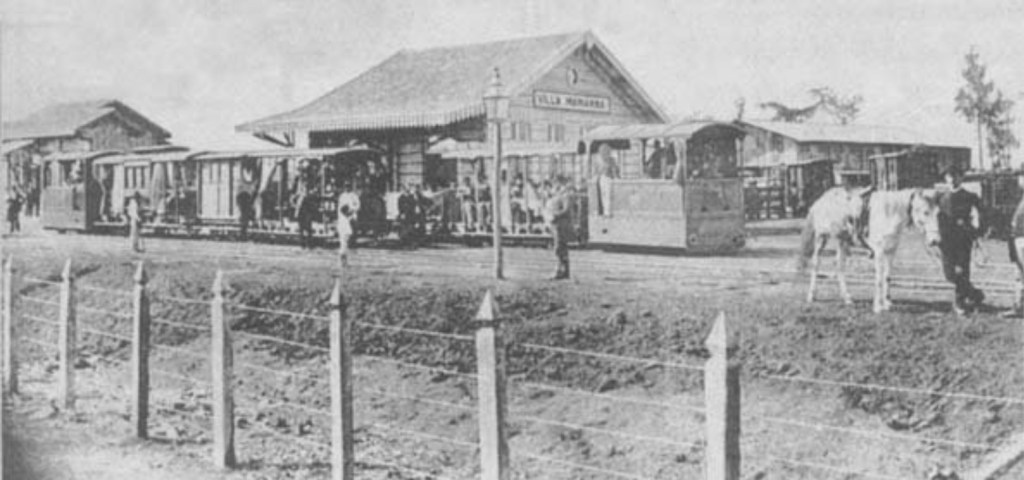
See also Vila Mariana (R. Koester: Carimbologia XXVII)
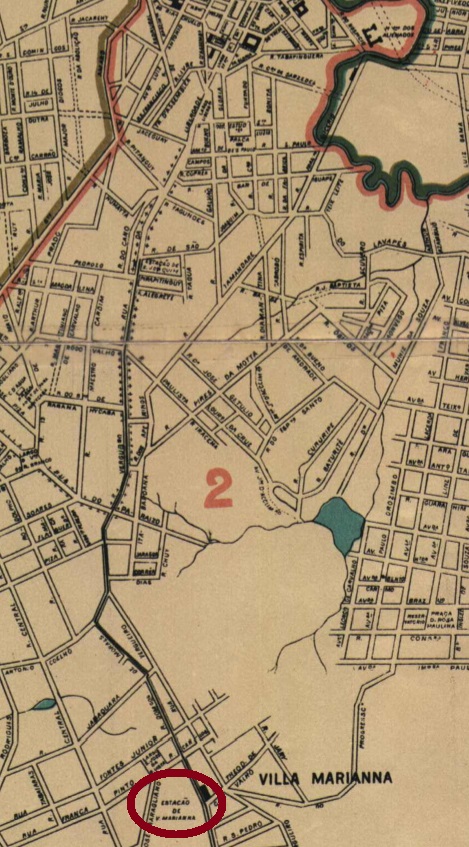
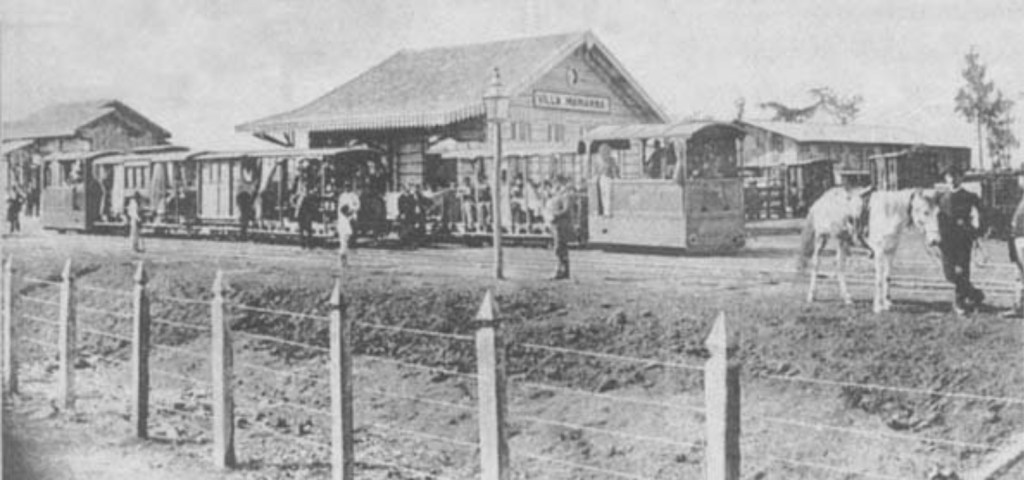
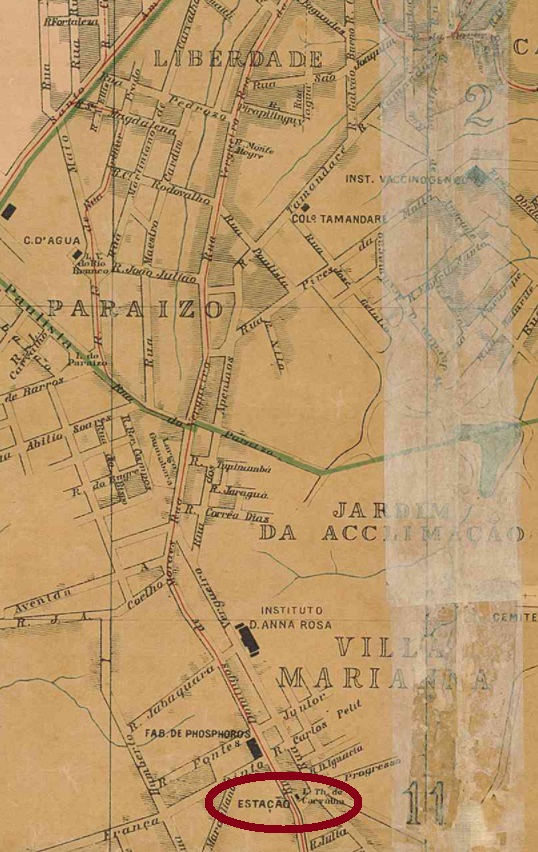
The present-day district of Vila Mariana was formerly a suburb of São Paulo, located about 6 km south of the city centre. A railway station of the Cia. Carris de Ferro de Santo Amaro was inaugurated there in December 1885. In 1900 the railway line passed to the Light and Power Company, but five years later the station was demolished to build tram shunting yards.
ca. 1905 (in estacoesferroviarias.com.br)
The station post office started operations in November 1886, according to the local press:
Correio Paulistano, 13/11/1886
The first postmark is probably VSP-1880a (Coll. José A. Junges): a double circle with the inscription ESTAÇÃO V. MARIANA above and a small ornament in circle below. The dates in the middle have been found so far for the period 1890-1895.
Cidade de São Paulo, 1905
Siehe auch Vila Mariana (R. Koester: Carimbologia XXVII)
Der heutige Stadtteil Vila Mariana war ehemals ein Vorort von São Paulo, der ca. 6 km südlich der Stadtmitte lag. Dort wurde im Dezember 1885 ein Bahnhof der Cia. Carris de Ferro de Santo Amaro eingeweiht. 1900 ging die Bahnlinie zur Light and Power Gesellschaft über, doch fünf Jahre später wurde der Bahnhof abgerissen, um einen Tram-Rangierbahnhof zu bauen.
ca. 1905 (in estacoesferroviarias.com.br)
Der Bahnhofspostamt nahm seinen Betrieb im November 1886 auf, wie die Lokalpresse berichtet:
Correio Paulistano, 13.11.1886
Der erste Poststempel wird wohl VSP-1880a (Samml. José A. Junges) sein: ein Doppelkreis mit der Inschrift ESTAÇÃO V. MARIANA oben und einem kleinen Ornament in Kreis unten. Die Daten in der Mitte wurden bisher für den Zeitraum 1890-1895 gefunden.
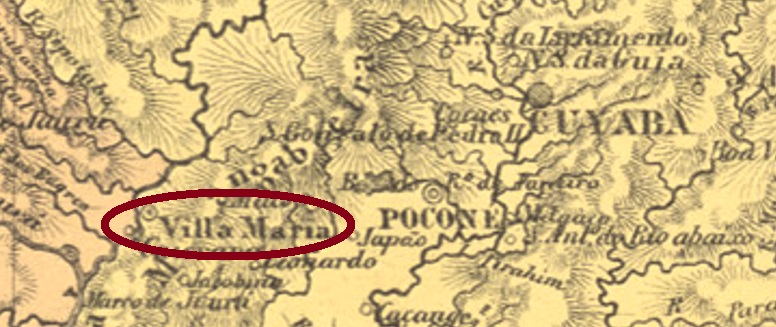
Since the end of the 18th century, this village was the early freguesia of São Luiz de Villa Maria, located on the east bank of the Paraguay River, 220 km west of the later provincial capital Cuiabá (then written Cuyaba). The name is a tribute to Queen Maria I of Portugal. In October 1859, the place emancipated itself as a villa, and in May 1874 it became a town called São Luiz de Caceres, after the former governor Luís de Albuqerque de Mello Pereira e Cáceres (1739-1797). Since 1938, the simplified place name has been Cáceres.
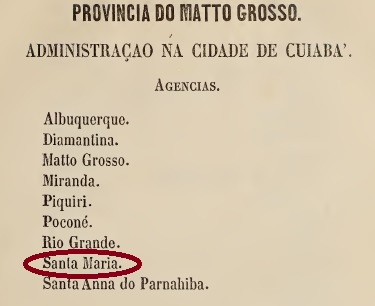
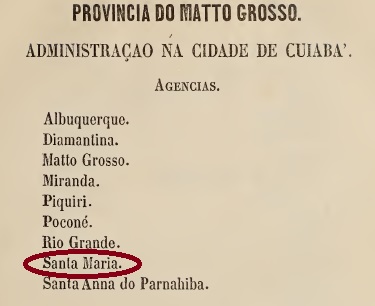
There was a former post office for Villa Maria, which was located on the important postal route between Cuyabá and the old capital Villa Bella do Matto Grosso and was operated with the interruption of the war against Paraguay (1864-1870). The oldest mention is in the Guia do Correio do Brazil of 1856, although under Santa Maria:
Guia do Correio do Brazil, 1856
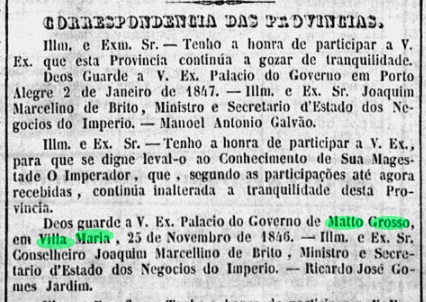
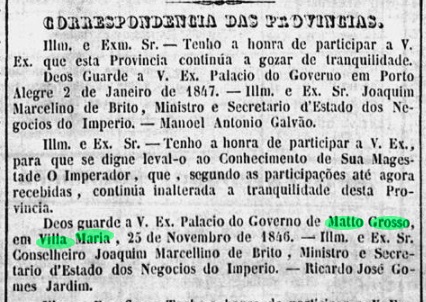
Before that, it is quite possible that a post office was already in operation in Villa Maria, at least temporarily, in the 1840s, because it was mentioned as a provisional provincial capital in the official press from Rio de Janeiro at the end of 1846:
Gazeta Official/RJ, 17.02.1847
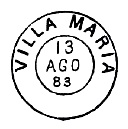
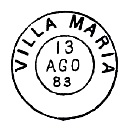
The oldest postmark so far is VMT-0115b, used from about 1877 to 1890 and made known by Paulo Ayres in Catálogo de Carimbos Brasil-Império (S. Paulo, 1937, 1942):
VMT-0115b (P.A. p. 126)
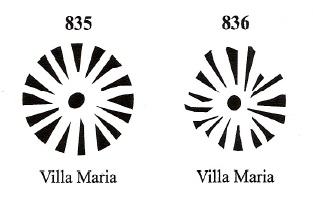
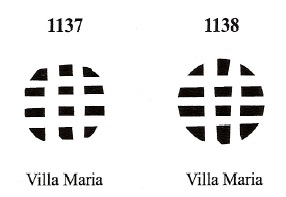
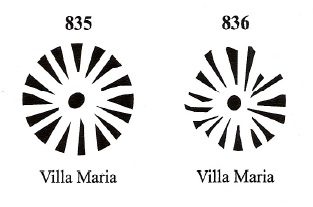
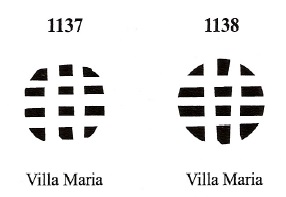
J. Dingler and K.W. Lopes have presented four mute cancellations from Villa Maria in Mute Cancellations of the Brazil Empire / Carimbos Mudos do Brasil Império (Brazil Philatelic Association, Rio de Janeiro, 2000):
BPA 835-836 (P.A. 234) 1883BPA 1137-1138 (1880ff)
For postmarks featuring S. Luiz de Cáceres see SMT-0070.
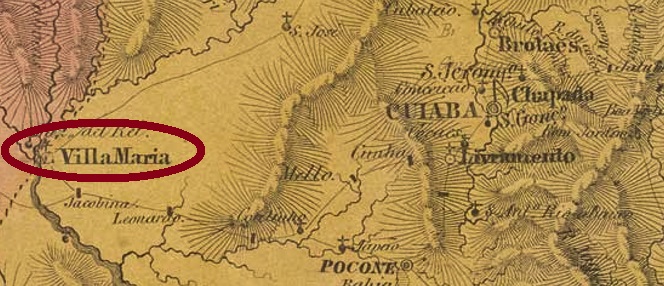
Villiers de l’Ile Adam: Carta (…) da Provincia do Matto Grosso, 1850
Andere Namen: São Luiz de Cáceres, Cáceres (1938)
Diese Ortschaft war seit dem Ende des 18. Jahrhunderts die frühe Freguesia von São Luiz de Villa Maria, die am Ostufer des Flusses Paraguay lag, 220 km westlich der späteren Provinzhauptstadt Cuiabá (damals Cuyabá geschrieben) entfernt. Der Name ist eine Hommage an die Königin Maria I von Portugal. Im Oktober 1859 emanzipierte sich der Ort als Villa, und im Mai 1874 wurde daraus eine Stadt, die São Luiz de Caceres heißt, nach dem ehemaligen Gouverneur Luís de Albuqerque de Mello Pereira e Cáceres (1739-1797). Seit 1938 gilt der vereinfachte Ortsname Cáceres.
Es gab ein früheres Postamt für Villa Maria, die an der wichtigen Postroute zwischen Cuyabá und der alten Hauptstadt Villa Bella do Matto Grosso lag und – mit der Unterbrechung des Kriegs gegen Paraguay (1864-1870) – wohl ständig betrieben wurde. Die älteste Erwähnung ist im Guia do Correio do Brazil von 1856 zu lesen, allerdings unter Santa Maria:
Guia do Correio do Brazil, 1856
Darüber hinaus ist es gut möglich, dass bereits in den 40er Jahren zumindest vorübergehend ein Postamt in Villa Maria in Betrieb war, denn die Villa wurde Ende 1846 als provisorische Provinzhauptstadt in der Amtspresse aus Rio de Janeiro erwähnt:
Gazeta Official/RJ, 17.02.1847
Der bisher älteste Poststempel ist VMT-0115b, der ab ca. 1877 bis 1890 verwendet und durch Paulo Ayres in Catálogo de Carimbos Brasil-Império (S. Paulo, 1937, 1942) bekannt gemacht wurde:
VMT-0115b (P.A.-S. 126)
J. Dingler und K.W. Lopes haben vier stumme Abstempelungen aus Villa Maria in Mute Cancellations of the Brazil Empire / Carimbos Mudos do Brasil Império (Brazil Philatelic Association, Rio de Janeiro, 2000) präsentiert:
BPA 835-836 (P.A. 234) 1883BPA 1137-1138 (1880ff)
Für Poststempel mit S. Luiz de Cáceres siehe SMT-0070.
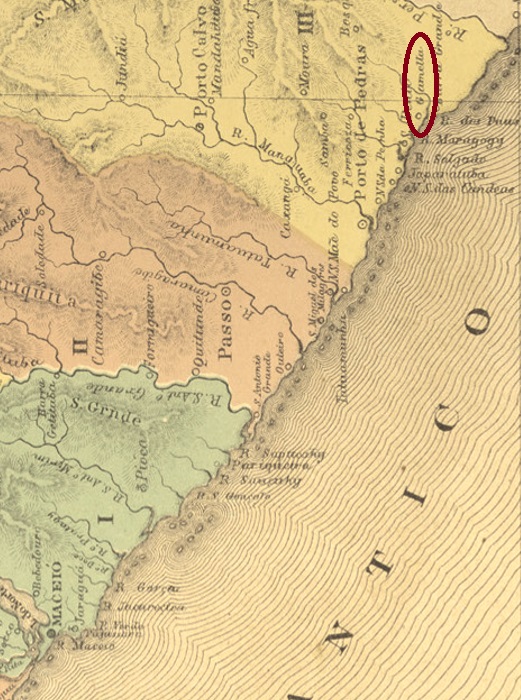
Carta Corographica da Provincia de Pernambuco, 1880
Other names: Gamella, Maragogy (1876)
See also Gamella (R. Koester: Carimbologia XX)
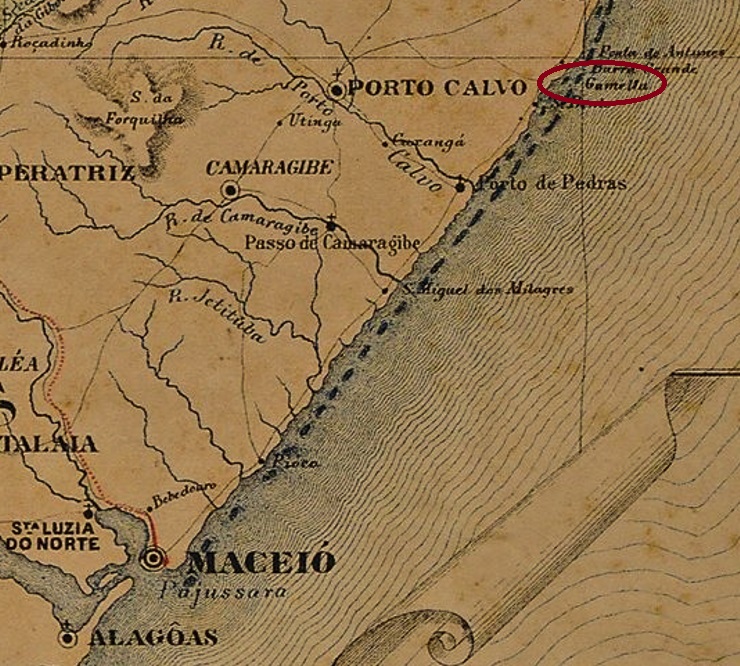
The old settlement of Gamella (= trough) grew near the vila of Porto Calvo and was situated on the north bank of the Maragogi River, 130 km northeast of the provincial capital Maceió. In April 1875, the village rose to become a vila, probably named after Princess Isabel. However, the place name changed again in July 1876 to Maragogy. Since May 1892, Maragogi (as it is written today) has been a town.
Three years of origin for the local post office have been found, of which Nova Monteiro’s indication of 1865 in Administrações e Agencias Postaes do Brasil Imperio (Brasil Filatelico/RJ, 1934-5; Reprint SPP 1994-1999) is said to be a transcription error, as R. Koester claims in Carimbologia XX. He pleads for December 1855. The third date would be February 1876, as Aldo Cardoso writes in Contribuição para a História dos Correios de Alagoas (Maceió, 1969). So far, no postmark has been seen under Gamella or Villa Izabel, Koester shows in Carimbologia XX a cancellation under Maragogy from 1885.
Atlas do Imperio do Brasil, 1868
Andere Namen: Gamella, Maragogy (1876)
Siehe auch Gamella (R. Koester: Carimbologia XX)
Die alte Siedlung von Gamella (= Trog) wuchs bei der Vila von Porto Calvo und lag am Nordufer des Maragogi-Flusses, 130 km nordöstlich der Provinzhauptstadt Maceió entfernt. Im April 1875 stieg der Ort zur Vila auf, die wohl nach der Prinzessin Isabel genannt wurde. Allerdings wechselte der Ortsname abermals im Juli 1876 zu Maragogy. Seit Mai 1892 ist Maragogi (wie es heute geschrieben wird) eine Stadt.
Drei Entstehungsjahre fürs örtliche Postamt wurden gefunden, davon soll Nova Monteiros Angabe über 1865 in Administrações e Agencias Postaes do Brasil Imperio (Brasil Filatelico/RJ, 1934-5; Reprint SPP 1994-1999) ein Abschreibfehler sein, wie R. Koester in Carimbologia XX behauptet. Er plädiert für den Dezember 1855. Der dritte Termin wäre der Februar 1876, wie Aldo Cardoso in Contribuição para a História dos Correios de Alagoas (Maceió, 1969) schreibt. Bisher war kein Poststempel unter Gamella oder Villa Izabel zu sehen, Koester zeigt in Carimbologia XX eine Entwertung unter Maragogy aus 1885.
See also Alfenas and Formosa de Alfenas (R. Koester: Carimbologia I and XIX)
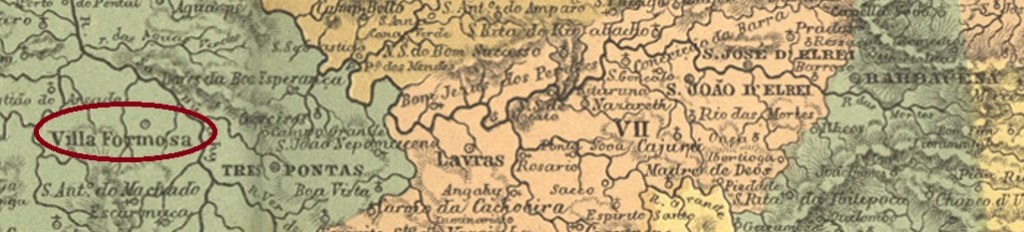
The freguesia of São José de Alfenas was established in July 1832 in the município of Caldas and was situated between the São Tomé and Sapucaí rivers, about 390 km southwest of the provincial capital Ouro Preto. In October 1860, it was promoted to Villa Formosa de Alfenas, and exactly nine years later it became a town whose name was shortened to Alfenas in September 1871. Reinhard Koester (Carimbologia XIX) states that this name change was to avoid confusion with the older Villa Formosa (da Imperatriz) in Goiás.
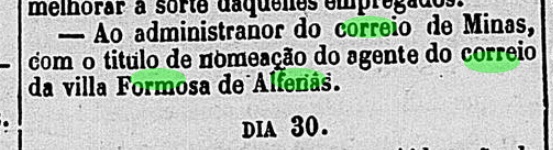
Three dates have been established for the birth of the post office from 1862. Nova Monteiro, in Administrações e Agencias Postaes do Brasil Imperio (Brasil Filatelico/RJ, 1934-5; Reprint SPP 1994-1999) writes the month of March for it, while Paula Sobrinho (História Postal de Minas Gerais, Belo Horizonte, 1997) and Koester (op.cit.) prefer June. The third date is in April 1862 as reported by the Rio press:
Jornal do Commercio/RJ, 25.04.1862, exped. 09.04.
Consequently, Nova Monteiro’s indication could be a transcription error, whereas the date mentioned by Paula Sobrinho and Koester would be the start of operation of the agency. So far, no postmark with Villa Formosa (or de Alfenas) has appeared. Koester (op.cit.) lists postmarks with Alfenas from 1880 on.
Provincia de Minas Geraes, 1873
Siehe auch Alfenas und Formosa de Alfenas (R. Koester: Carimbologia I und XIX)
Die Freguesia von São José de Alfenas wurde im Juli 1832 im Município von Caldas errichtet und lag zwischen den Flüssen São Tomé und Sapucaí, ca. 390 km südwestlich der Provinzhauptstadt Ouro Preto entfernt. Im Oktober 1860 erfolgte der Aufstieg zur Villa Formosa de Alfenas, und genau neun Jahre später wurde daraus eine Stadt, deren Name im September 1871 zu Alfenas verkürzt wurde. Reinhard Koester (Carimbologia XIX) meint, diese Namensänderung sollte Verwechslungen mit der älteren Villa Formosa (da Imperatriz) in Goiás vermeiden.
Aus dem Jahr 1862 wurden drei Daten für die Entstehung des Postamtes ermittelt. Nova Monteiro schreibt dafür im Administrações e Agencias Postaes do Brasil Imperio (Brasil Filatelico/RJ, 1934-5; Reprint SPP 1994-1999) den Monat März, während Paula Sobrinho (História Postal de Minas Gerais, Belo Horizonte, 1997) und Koester (op.cit.) den Juni bevorzugen. Der dritte Zeitpunkt liegt im April 1862 und wurde in der Presse aus Rio bekannt gemacht:
Jornal do Commercio/RJ, 25.04.1862, exped. 09.04.
Folglich könnte Nova Monteiros Angabe ein Abschreibfehler sein, während das durch Paula Sobrinho und Koester erwähnte Datum den Betriebsbeginn der Agentur wäre. Bisher ist kein Poststempel mit Villa Formosa (bzw. de Alfenas) erschienen. Koester (op.cit.) listet Poststempel mit Alfenas ab 1880.
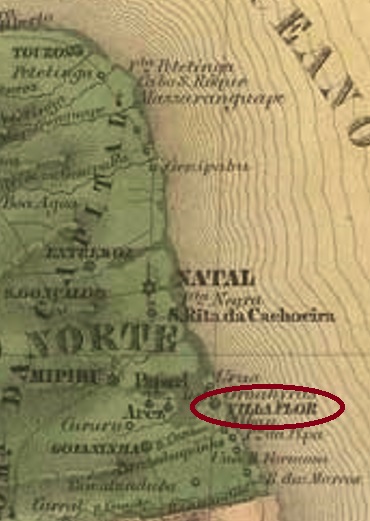
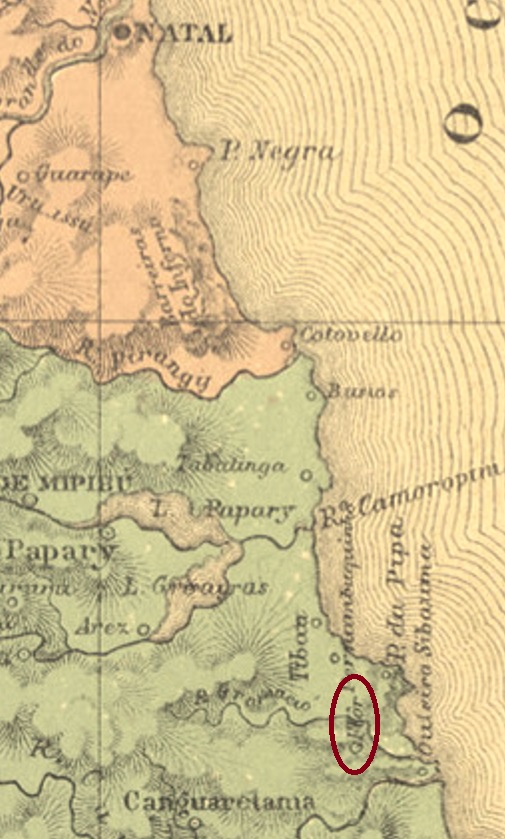
Villiers de l’Ile Adam: Carta (:::) das Provincias do Rio Grande do Norte e Parahiba, 1848
Other names: Gramació, Flor
See also Flor (R. Koester: Carimbologia XIX)
This village was originally an Indian settlement called Gramació, situated on the north bank of the Curimataú River, more than 80 km south of the future provincial capital Natal. In May 1755, the village rose to the status of a vila, but three years later it was moved to the neighbouring village of Canguaretama. In November 1892, Villa Flor became a district of Canguaretama and only regained political independence as a município in December 1963.
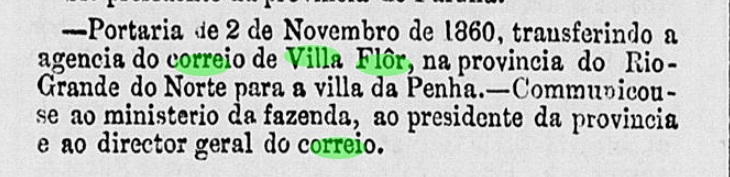
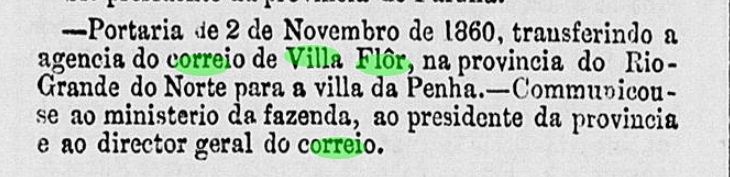
As Nova Monteiro writes in Administrações e Agencias Postaes do Brasil Imperio (Brasil Filatelico/RJ, 1934-5; Reprint SPP 1994-1999), there was a post office there as early as April 1818. With the move to Penha de Canguaretama (1858), the postal agency also moved there two years later, according to the capital’s official press:
Expediente do Ministerio do Imperio, 02.11.1860
Unfortunately, no 19th century postmark from this locality has been seen so far.
Atlas do Imperio do Brasil, 1868
Andere Namen: Gramació, Flor
Siehe auch Flor (R. Koester: Carimbologia XIX)
Diese Ortschaft war ursprünglich eine Indianersiedlung namens Gramació, die am Nordufer des Flusses Curimataú lag, über 80 km südlich der künftigen Provinzhauptstadt Natal entfernt. Im Mai 1755 stieg der Ort zur Vila auf, die aber drei Jahre später zum Nachbarort Canguaretama verlegt wurde. Im November 1892 wurde Villa Flor ein Distrikt von Canguaretama und erhielt erst im Dezember 1963 die politische Selbständigkeit als Município wieder.
Wie Nova Monteiro in Administrações e Agencias Postaes do Brasil Imperio (Brasil Filatelico/RJ, 1934-5; Reprint SPP 1994-1999) schreibt, gab es dort ein Postamt bereits ab April 1818. Mit dem Umzug nach Penha de Canguaretama (1858) zog die Postagentur zwei Jahre später auch dorthin, wie die Amtspresse der Hauptstadt berichtet:
Expediente do Ministerio do Imperio, 02.11.1860
Leider wurde bisher kein Poststempel des 19. Jahrhunderts aus dieser Ortschaft gesehen.
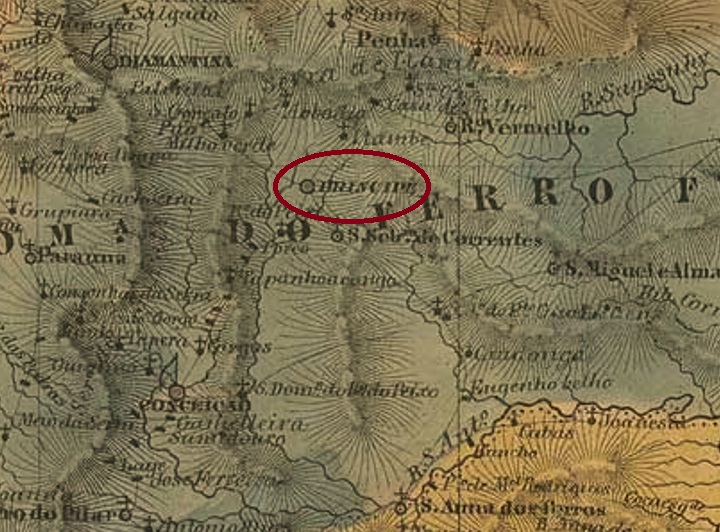
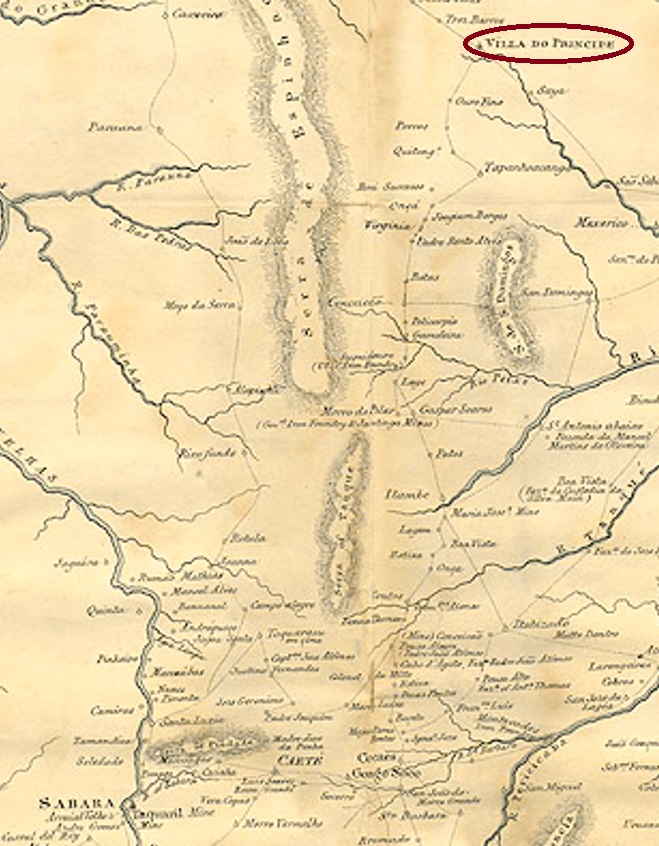
Villiers de l’Ile Adam: Carta (…) da Provincia de Minas Geraes, 1849
Other names: Grande Serro do Frio, Arraial das Lavras Velhas do Ivituruhy, Cidade do Serro See also Serro (SMG-3100)
This very old settlement was already the Villa do Principe in January 1714, located in the north of the Capitania of Minas Gerais, 330 km north of the future provincial capital Ouro Preto. In March 1838, the place rose to become a town, and is today a tourist magnet as a historical site.
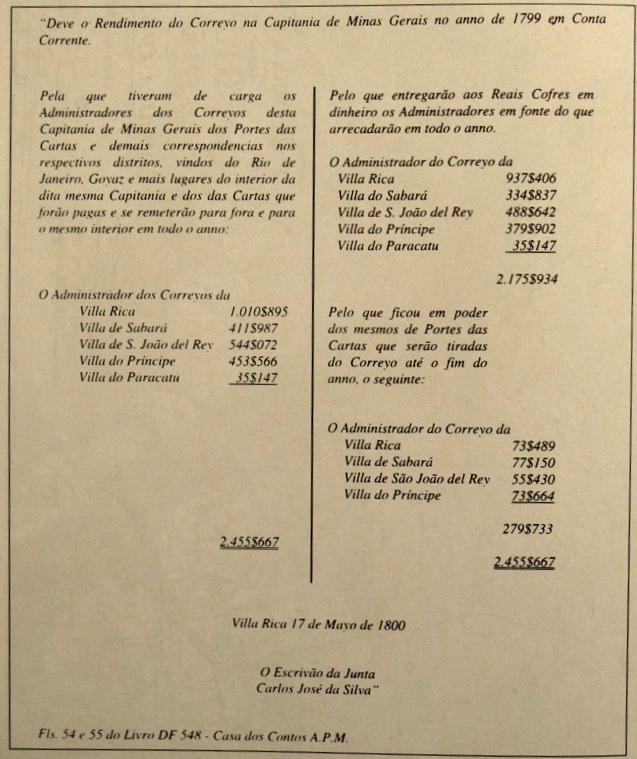
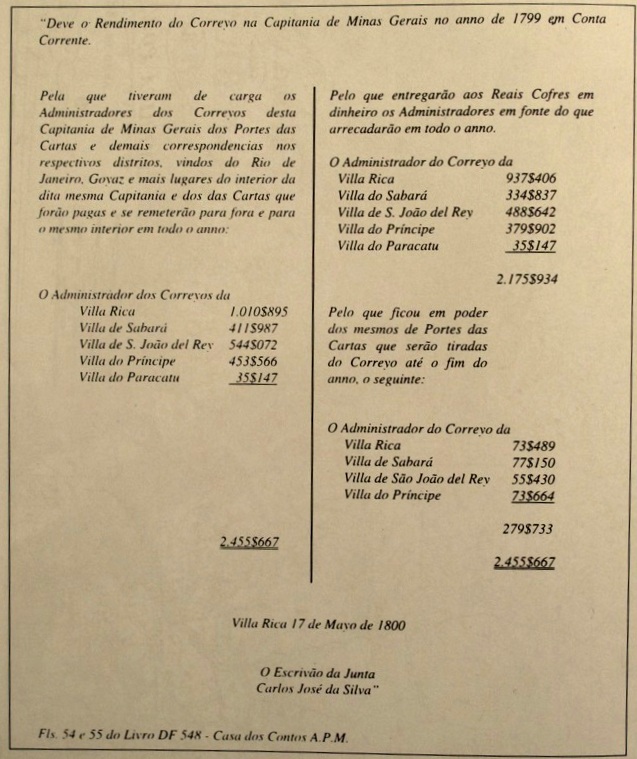
Paula Sobrinho writes in História Postal de Minas Gerais (Belo Horizonte, 1997) that there was a post office there from March 1798. This can be confirmed by a document discovered and published by the Portuguese philatelist Luís Brito Frazão, the balance sheet figures of the five post offices in Minas Gerais for the fiscal year 1799:
Jornal de Filatelia No. 64, Oporto, January 2001
Later post office openings are said to have taken place in 1829 and 1836, as recorded in the Directory of Imperial Post Offices (Tabella das Agencias do Correio do Imperio, Rio de Janeiro, 1885) and in the Catálogo Enciclopédico RHM (São Paulo, 1999) respectively. The oldest postmark is probably VMG-3820a, which was already presented in the RHM catalogue under P-MG-51 and was in use before 1840:
VMG-3820a (RHM P-MG-51)
Later postmarks bear the place name Serro and can be found under SMG-3100.
Province of Minas Geraes, 1835
Andere Namen: Grande Serro do Frio, Arraial das Lavras Velhas do Ivituruhy, Cidade do Serro Siehe auch Serro (SMG-3100)
Diese sehr alte Siedlung war bereits im Januar 1714 die Villa do Principe und lag im Norden der Capitania von Minas Gerais, 330 km nördlich der künftigen Provinzhauptstadt Ouro Preto entfernt. Im März 1838 stieg der Ort zur Stadt auf und ist bis heute als historische Stätte ein Touristenmagnet.
Paula Sobrinho schreibt in História Postal de Minas Gerais (Belo Horizonte, 1997) dass es dort ab März 1798 ein Postamt gab. Das kann durch ein Dokument bestätigt werden, das vom portugiesischen Philatelisten Luís Brito Frazão entdeckt und veröffentlicht wurde, die Bilanzzahlen der fünf Postämter in Minas Gerais fürs Geschäftsjahr 1799:
Jornal de Filatelia Nr. 64, Porto, Januar 2001
Spätere Postamteröffnungen sollen 1829 und 1836 stattgefunden haben, wie im Verzeichnis der kaiserlichen Postämter (Tabella das Agencias do Correio do Imperio, Rio de Janeiro, 1885) bzw. im Catálogo Enciclopédico RHM (São Paulo, 1999) registriert wurde. Der älteste Poststempel ist wohl VMG-3820a, der bereits im RHM Katalog unter P-MG-51 vorgestellt wurde und vor 1840 Verwendung fand:
VMG-3820a (RHM P-MG-51)
Spätere Poststempel tragen die Ortsbezeichnung Serro und sind unter SMG-3100 zu finden.








 Carimbologia