Categories
Carimbologia T-Z

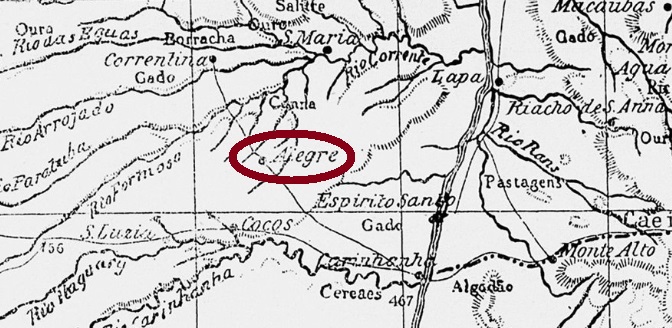
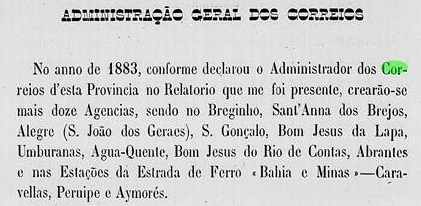
Virginia, Minas Gerais (VMG-3310)

Estado de Minas Geraes, 1910

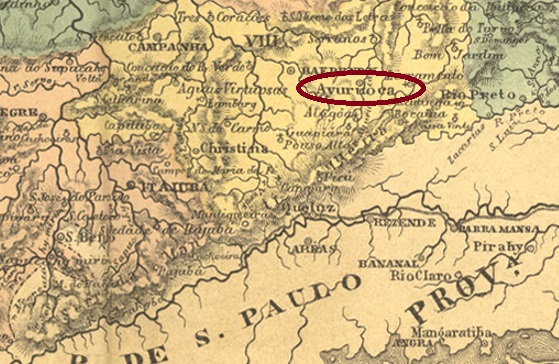
Around 1850, the chapel of N. Sra. da Conceição da Virginia do Pouso Alto was built, 370 km southwest of the provincial capital of Ouro Preto. In November 1866, the locality was elevated to a district in the município of Christina. In the following period, the locality changed several times between the municipalities of Christina and Pouso Alto until it was declared an independent município in August 1911.

As Paula Sobrinho writes in História Postal de Minas Gerais (Belo Horizonte, 1997), there was a post office there from November 1878. The oldest postmark is VMG-3310a (Coll. Klerman Lopes): an oval with the upper inscription VIRGINIA, the only specimen so far bearing a date from 1881 in the centre. It was followed by VMG-3110b (Coll. José A. Junges): a double circle with the inscriptions VIRGINIA at the top and (MINAS) at the bottom. The dates inside originate from the period 1885-1898.

Google Maps

Um 1850 wurde die Kapelle von N. Sra. da Conceição da Virginia do Pouso Alto errichtet, die 370 km südwestlich der Provinzhauptstadt Ouro Preto entfernt lag. Im November 1866 wurde die Ortschaft zum Distrikt im Município von Christina erhoben. In der darauf folgenden Zeit wechselte der Ort mehrmals zwischen den Gemeinden von Christina und Pouso Alto, bis er im August 1911 zum selbständigen Município erklärt wurde.

Wie Paula Sobrinho im História Postal de Minas Gerais (Belo Horizonte, 1997) schreibt, gab es dort ein Postamt seit November 1878. Der älteste Poststempel ist VMG-3310a (Samml. Klerman Lopes): eine Ovale mit der oberen Inschrift VIRGINIA, das bisher einzige Exemplar trägt ein Datum aus 1881 in der Mitte. Ihm folgte VMG-3110b (Samml. José A. Junges): ein Doppelkreis mit den Inschriften VIRGINIA oben und (MINAS) unten. Die Daten im Inneren entstammen dem Zeitraum 1885-1898.

Categories
Carimbologia T-Z

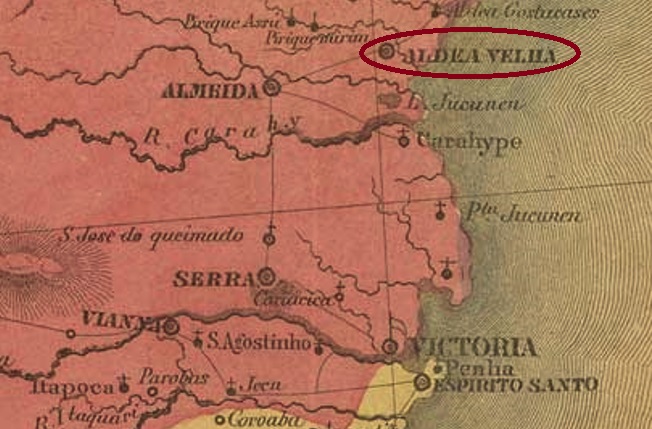
Villarinho do Monte, Pará (VPA-0250)

Atlas do Imperio do Brasil, 1868

The original village of Villarinho do Monte is located in the Trás-os-Montes region of northern Portugal and had only 67 inhabitants in 2011. Its descendant, the freguesia of Santa Cruz do Villarinho do Monte was created before 1768, belonged to the Vila of Gurupá and was located close to the south bank of the Amazon, 390 km flight line west of the later provincial capital Belém do Pará. Around 1880, the village rose to the status of vila, but lost its autonomy in December 1904, when it was downgraded to the district of Porto de Moz. And so it has remained to this day.

The local post office was created in November 1886, according to the regional press:

A Republica, 10.11.1886

No imperial-era postmark from this locality has yet surfaced.

Google Maps

Die originale Ortschaft Villarinho do Monte liegt in der Region Trás-os-Montes im Nordportugal und zählte 2011 nur 67 Einwohner. Ihre Nachfahrerin, die Freguesia von Santa Cruz do Villarinho do Monte entstand vor 1768, gehörte der Vila von Gurupá und lag nah am Südufer des Amazonas, 390 km Fluglinie westlich der späteren Provinzhauptstadt Belém do Pará entfernt. Um 1880 stieg der Ort zur Vila auf, verlor aber seine Eigenständigkeit im Dezember 1904, als er zum Distrikt von Porto de Moz herabgestuft wurde. Und so ist es bis heute geblieben.

Das örtliche Postamt wurde im November 1886 ins Leben gerufen, wie die Regionalpresse berichtet:

A Republica, 10.11.1886

Bisher ist kein Poststempel der Kaiserzeit aus dieser Ortschaft aufgetaucht.

Categories
Carimbologia T-Z

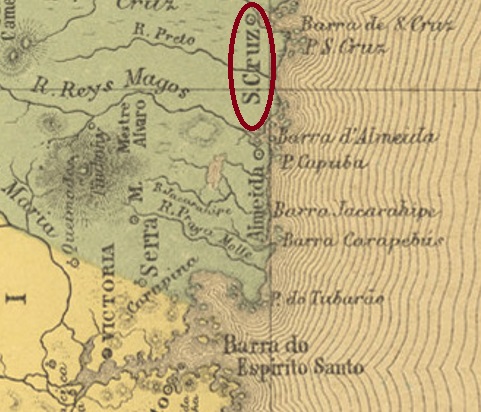
Viçoza (VBA-0765) – Villa Viçosa, Bahia (VBA-0845)

Villers de l’Ile Adam: Carta (…) da Provincia da Bahia, 1848

Other names: Campinhos, Marobá, Nova Viçosa (1953)

The Arraial of Nossa Senhora da Conceição de Campinhos was founded in 1748, belonged to the Vila of Mucury and was located directly on the Atlantic Ocean, 900 km south of the later provincial capital Salvador da Bahia. By Royal Decree (Alvará Real) of October 1768, it became the Villa Viçosa. After the Republic, there was a period of stagnation, and the place was downgraded as a district of the município of Mucury in January 1931. After that two name changes came: in December 1943 to Marobá and exactly ten years later to Nova Viçosa. Since July 1962, Nova Viçosa has once again been an independent município.

As can be read in the Directory of Imperial Post Offices (Tabella das Agencias do Correio do Imperio, Rio de Janeiro, 1885), there had been a post office there since 1870. The oldest postmark is the French type VBA-0765a (Coll. José A. Junges), which was used until at least 1876: the inscription at the top is VIÇOZA, and the small star between brackets can be seen at the bottom. It was followed by VBA-0845a (Coll. Dieter Kerkhoff): in this double circle the upper inscription is now VILLA VIÇOSA, below there is an (I), and the dates inside go from 1880 to 1894.

Atlas do Imperio do Brasil, 1868

Andere Namen: Campinhos, Marobá, Nova Viçosa (1953)

Der Arraial von Nossa Senhora da Conceição de Campinhos wurde 1748 gegründet und lag bei der Vila von Mucury direkt am Atlantik, 900 km südlich der späteren Provinzhauptstadt Salvador da Bahia entfernt. Durch Königliche Verfügung (Alvará Real) vom Oktober 1768 wurde daraus die Villa Viçosa. Nach der Republik kam eine Periode der Stagnation, und der Ort wurde im Januar 1931 als Distrikt im Município von Mucury herabgestuft. Danach kamen zwei Namensänderungen: im Dezember 1943 zu Marobá und genau zehn Jahre später zu Nova Viçosa. Seit Juli 1962 ist Nova Viçosa wieder ein eigenständiger Município.

Wie im Verzeichnis der kaiserlichen Postämter (Tabella das Agencias do Correio do Imperio, Rio de Janeiro, 1885) zu lesen ist, gab es dort seit 1870 ein Postamt. Der älteste Poststempel ist der französische Typus VBA-0765a (Samml. José A. Junges), der bis mindestens 1876 verwendet wurde: die Inschrift oben lautet VIÇOZA, unten ist der kleine Stern zwischen Klammern zu sehen. Ihm folgte VBA-0845a (Samml. Dieter Kerkhoff): in diesem Doppelkreis lautet die obere Inschrift VILLA VIÇOSA, unten ist eine (I), und die Daten in Inneren gehen von 1880 bis 1894.

Categories
Carimbologia T-Z

Viçosa (VCE-0360) – Villa Viçosa, Ceará (VCE-0375)

Atlas do Imperio do Brasil, 1868

Other names: Aldeia de Ipiapaba, Viçosa do Ceará (1943)

The former Jesuit-administered Indian settlement of Aldeia de Ipiapaba was established by Royal Decree (Carta Regia) of October 1735 and was located 350 km west of the later provincial capital Fortaleza. In July 1759, the place became an independent municipality under the pompous name Villa Viçosa Real da América, which was only elevated to the status of a town – now with the shortened name Viçosa – in August 1882. Since December 1943, the município has been called Viçosa do Ceará.

As can be read in the Directory of Imperial Post Offices (Tabella das Agencias do Correio do Imperio, Rio de Janeiro, 1885, there was a post office there since 1832. Unfortunately, the first postmark is still unknown. Much later came VCE-0375b, in use from about 1880 to 1888, which was shown in Cicero A. Almeida’s Carimbos Postais – século XIX (Rio de Janeiro, 1989) under no. 814:

VCE-0375b (MPT-814/JJ)

It was followed by VCE-0360a (Coll. José A. Junges): a double circle with the inscriptions VIÇOSA above and (CEARÁ) below. A single specimen was seen, dated 1896 in the centre.

Villiers de l’Ile Adam: Carta (…) da Provincia do Ceará, 1849

Andere Namen: Aldeia de Ipiapaba, Viçosa do Ceará (1943)

Die ehemalige durch Jesuiten verwaltete Indianersiedlung Aldeia de Ipiapaba entstand durch Königlichen Brief (Carta Regia) vom Oktober 1735 und lag 350 km westlich der späteren Provinzhauptstadt Fortaleza. Im Juli 1759 wurde der Ort unter dem pompösen Namen Villa Viçosa Real da América eine eigenständige Gemeinde, der erst im August 1882 zur Stadt – mit gekürzten Namen Viçosa – erhoben wurde. Seit Dezember 1943 heißt der Município Viçosa do Ceará.

Wie im Verzeichnis der kaiserlichen Postämter (Tabella das Agencias do Correio do Imperio, Rio de Janeiro, 1885 zu lesen ist, gab es dort ein Postamt seit 1832. Leider ist der erste Poststempel immer noch unbekannt. Viel später kam VCE-0375b, der ab ca. 1880 bis 1888 verwendet wurde und in Cicero A. Almeidas Carimbos Postais – século XIX (Rio de Janeiro, 1989) unter Nr. 814 zu sehen ist:

VCE-0375b (MPT-814/JJ)

Ihm folgte VCE-0360a (Samml. José A. Junges): ein Doppelkreis mit den Inschriften VIÇOSA oben und (CEARÁ) unten. Ein einiges Exemplar gesehen, datiert 1896 in der Mitte.

Categories
Carimbologia T-Z

Villa Risonha, Minas Gerais (VMG-3825)

Atlas do Imperio do Brasil, 1868

Other names: Risonha, São Romão, Villa da Manga

See also São Romão (SMG-2565)

This locality has a turbulent history that began around 1700, when gold miners forcibly expelled the Indians living there. The battle took place on St. Roman’s Day, and an island of São Francisco was named after him. Later, the place became a freguesia of Paracatu, located on the west bank of the São Francisco River, almost 590 km northwest of the provincial capital Ouro Preto. It rose to villa status as early as October 1831, under the record-breaking name of Villa Risonha de Santo Antonio da Manga de São Romão. In the 1960s, a fever epidemic led to the villa’s social and economic decline. In March 1871, the place became a district under Pedra dos Angicos, a newly created município located on the other bank of the river. It became a villa again in 1887, now under the place name Villa Rizonha de São Romão. Since September 1923 it has been the town of São Romão.

Paula Sobrinho writes in História Postal de Minas Gerais (Belo Horizonte, 1997) that there was a post office there from October 1833. The oldest postmark is probably VMG-3825a, registered with dates between 1841 and 1848 and already seen in the RHM catalogue under P-MG-56:

VMG-3825a (RHM P-MG-56)

Later postmarks bear the place name São Romão and were presented under SMG-2565.

Villiers de l’Ile Adam: Carta (…) da Provincia de Minas Geraes, 1849

Andere Namen: Risonha, São Romão, Villa da Manga

Siehe auch São Romão (SMG-2565)

Diese Ortschaft hat eine bewegte Geschichte, die ca. 1700 begann, als Goldgräber die dort lebenden Indianer gewaltsam vertrieben. Die Schlacht fand am Tag des Hl. Roman, und nach diesem wurde die Insel des São Francisco genannt. Später wurde der Ort zur Freguesia von Paracatu, die am Westufer des Flusses São Francisco lag, fast 590 km nordwestlich der Provinzhauptstadt Ouro Preto entfernt. Bereits im Oktober 1831 stieg sie zur Villa auf, unter dem rekordverdächtigten Namen Villa Risonha de Santo Antonio da Manga de São Romão. In den 60er Jahren des 19. Jahrhunderts leitete eine Fieberepidemie den sozialen und wirtschaftlichen Verfall der Villa. Im März 1871 wurde der Ort ein Distrikt von Pedra dos Angicos, einem neu entstandenen Município, der am anderen Ufer des Flusses lag. Der Wiederaufstieg zur Villa erfolgte 1887, nun unter den Ortsnamen Villa Rizonha de São Romão. Seit September 1923 ist es die Stadt São Romão.

Paula Sobrinho schreibt in História Postal de Minas Gerais (Belo Horizonte, 1997), dass es dort ab Oktober 1833 ein Postamt gab. Der älteste Poststempel dürfte VMG-3825a sein, der mit Daten zwischen 1841 und 1848 registriert wurde und bereits im RHM-Katalog unter P-MG-56 zu sehen ist:

VMG-3825a (RHM P-MG-56)

Spätere Poststempel tragen die Ortsbezeichnung São Romão und wurden unter SMG-2565 vorgestellt.

Categories
Carimbologia T-Z

Villa Rica, Rio Grande do Sul (VRS-0485)

Briguiet: Mappa do Rio Grande do Sul, 1923

Other names: Povo Novo, Júlio de Castilhos (1904)

The young history of this locality began in 1870, with the settlement of Povo Novo in the freguesia of São Martinho near Cruz Alta, 340 km west of the provincial capital Porto Alegre. In May 1880, it became the freguesia of N. Sra. da Piedade do Povo Novo, when São Martinho was elevated to município. In December 1885, the place name changed to Villa Rica, which was promoted to município in July 1891. Since December 1904, this municipality has borne the name Júlio de Castilhos, in honour of the politician of the same name (1860-1903) who was born there.

The local post office was created in January 1888, according to the Rio press:

Gazeta Nacional/RJ, 27/01/1888

The oldest postmark is VRS-0485a (Coll. Dieter Kerkhoff): a double circle with the inscription VILLA RICA above; below is an ornament in X formed by four converging arrowheads. Previous dates in the centre: 1888 to 1893. Its successor VRS-0485b (Coll. Dieter Kerkhoff) may already be republican: here the double circle has the same inscription above, below one now reads (S. PEDRO DO SUL), and the inner dates so far go from 1896 to 1908.

Google Maps

Andere Namen: Povo Novo, Júlio de Castilhos (1904)

Die junge Geschichte dieser Ortschaft fing 1870 an, mit der Siedlung von Povo Novo in der Freguesia von São Martinho bei Cruz Alta, 340 km westlich der Provinzhauptstadt Porto Alegre entfernt. Im Mai 1880 wurde daraus die Freguesia von N. Sra. da Piedade do Povo Novo, als São Martinho zum Município erhoben wurde. Im Dezember 1885 änderte sich der Ortsname zu Villa Rica, die im Juli 1891 zum Município aufstieg. Seit Dezember 1904 trägt diese Gemeinde den Namen Júlio de Castilhos, zu Ehren des gleichnamigen Politikers (1860-1903), der dort geboren wurde.

Das örtliche Postamt entstand im Januar 1888, wie die Presse aus Rio mitteilte:

Gazeta Nacional/RJ, 27.01.1888

Der älteste Poststempel ist VRS-0485a (Samml. Dieter Kerkhoff): ein Doppelkreis mit der obigen Inschrift VILLA RICA; unten ist ein Ornament in X, das aus vier konvergierenden Pfeilspitzen gebildet wird. Bisherige Daten in der Mitte: 1888 bis 1893. Sein Nachfolger VRS-0485b (Samml. Dieter Kerkhoff) dürfte bereits republikanisch sein: hier hat der Doppelkreis die gleiche Inschrift oben, unten liest man nun (S. PEDRO DO SUL), und die inneren Daten gehen bisher von 1896 bis 1908.

Categories
Carimbologia T-Z

Villa Raffard (train station/Bahnhof), São Paulo (VSP-1495)

Companhia Sorocabana e Ytuana, 1898

Another name: Rafard (1929)

The present-day Município of Rafard began in 1883 as a workers’ settlement, housing mostly European immigrants contracted to the sugar cane processing factory Engenho Central de S. João do Capivary. Since both the factory and the settlement were model projects and were built upon personal initiative of Emperor D. Pedro II, the enterprise was particularly successful. The Villa Henrique Raffard was named after the company’s first director – Júlio Henrique Raffard (1851-1906), son of a Swiss consul in Rio – and was located on the south bank of the Capivary River, 140 km northwest of the provincial capital São Paulo. In November 1929, Raffard became a district of Capivary and has been a Município since February 1964. The sugar factory is still in operation today.

A Companhia Ytuana railway station (Piracicaba branch) was inaugurated there as early as September 1884. The railway line changed to the Cia. União Sorocabana e Ytuana in 1892 and to the Sorocabana Railway in 1907; from 1919 until its closure in 1971, it belonged to the Estrada de Ferro Sorocabana (estacoesferroviarias.com.br). Most recently, the station building served as the headquarters of the Municipal Culture and Tourism Office:

Photo: Carlos R. Almeida, 2008 (estacoesferroviarias.com.br)

The station post office was established as early as August 1884 – before the station was built – according to the Rio press:

Gazeta de Noticias/RJ, 28/08/1884

The oldest station postmark is VSP-1495a (Coll. José A. Junges): a double circle with the inscription EST. V. RAFFARD above and an ornament in cross below. The dates in the middle were found for the period 1884-1886. It was followed by VSP-1495b (Coll. José A. Junges): in this double circle the inscription above reads VILLA RAFFARD, and below it reads (S. PAULO). All dates in the middle are from the Republic so far: 1900-1904.

Anderer Name: Rafard (1929)

Der heutige Município von Rafard begann 1883 als eine Arbeitersiedlung, die meistens europäische Immigranten beherbergte, die an der Zuckerrohr-Verarbeitungsfabrik Engenho Central de S. João do Capivary unter Vertrag standen. Da sowohl Fabrik als auch Siedlung Modellprojektcharakter hatten und auf persönliche Initiative des Kaisers D. Pedro II entstanden sind, war das Unternehmen besonders erfolgreich. Die Villa Henrique Raffard wurde nach dem ersten Direktor der Firma genannt – Júlio Henrique Raffard (1851-1906), Sohn eines schweizerischen Konsuls in Rio – und lag am Südufer des Flusses Capivary, 140 km nordwestlich der Provinzhauptstadt São Paulo entfernt. Im November 1929 wurde Raffard ein Distrikt von Capivary und ist ein Município seit Februar 1964. Die Zuckerfabrik ist noch heute in Betrieb.

Bereits im September 1884 wurde dort ein Bahnhof der Companhia Ytuana (Piracicaba-Abzweigung) eingeweiht. Die Bahnlinie wechselte 1892 zur Cia. União Sorocabana e Ytuana und 1907 zur Sorocabana Railway; von 1919 bis zur Stilllegung 1971 gehörte sie der Estrada de Ferro Sorocabana (estacoesferroviarias.com.br). Zuletzt diente das Bahnhofsgebäude als Sitz des städtischen Kultur- und Tourismusamts:

Foto Carlos R. Almeida, 2008 (estacoesferroviarias.com.br)

Das Bahnhofspostamt wurde bereits im August 1884 – also noch vor dem Bahnhof – ins Leben gerufen, wie die Presse aus Rio mitteilte:

Gazeta de Noticias/RJ, 28.08.1884

Der älteste Poststempel des Bahnhofs ist VSP-1495a (Samml. José A. Junges): ein Doppelkreis mit der Inschrift EST. V. RAFFARD oben und einem Ornament in Kreuz unten. Die Daten in der Mitte wurden für den Zeitraum 1884-1886 gefunden. Ihm folgte VSP-1495b (Samml. José A. Junges): in diesem Doppelkreis lautet die obige Inschrift VILLA RAFFARD, unten liest man (S. PAULO). Alle Daten in der Mitte entstammen bisher der Republik: 1900-1904.

Categories
Carimbologia T-Z

Villa Nova, Sergipe (VSE-0185)

Atlas do Imperio do Brasil, 1868

Other names: Villa Nova de Santo Antonio, Neópolis (1940)

The freguesia of Villa Nova de Santo Antonio originated as early as October 1678 and was located on the south bank of the mythical São Francisco River, 120 km northeast of the future provincial capital Aracaju. In 1733, the place name changed for the first time, to Villa Nova d’El-Rey, and again three times after the colonial period: in March 1835 to Villa Nova do Rio São Francisco, in November 1910 to the town of Villa Nova, and finally in April 1940 to the present-day Neópolis.

Two years of origin for the local post office were found: first in December 1844, as Nova Monteiro writes in Administrações e Agencias Postaes do Brasil Imperio (Brasil Filatelico/RJ, 1934-5; Reprint SPP 1994-1999). Then again in 1848, as can be read in the Directory of Imperial Post Offices (Tabella das Agencias do Correio do Imperio, Rio de Janeiro, 1885). Unfortunately, no postmark of the imperial period could be assigned to this locality with certainty so far.

Villiers de l’Ile Adam: Carta (…) das Provincias de Pernambuco, Alagoas e Sergipe, 1848

Andere Namen: Villa Nova de Santo Antonio, Neópolis (1940)

Die Freguesia von Villa Nova de Santo Antonio entstand bereits im Oktober 1678 und lag am Südufer des mythischen Flusses São Francisco, 120 km nordöstlich der späteren Provinzhauptstadt Aracaju entfernt. 1733 wechselte der Ortsname erstmals, zu Villa Nova d’El-Rey, und nach der Kolonialzeit wieder dreimal: im März 1835 zu Villa Nova do Rio São Francisco, im November 1910 zur Stadt Villa Nova, schließlich im April 1940 zum heutigen noch aktuellen Neópolis.

Zwei Entstehungsjahre fürs örtliche Postamt wurden gefunden: erstmals im Dezember 1844, wie Nova Monteiro in Administrações e Agencias Postaes do Brasil Imperio (Brasil Filatelico/RJ, 1934-5; Reprint SPP 1994-1999) schreibt. Dann wieder 1848, wie im Verzeichnis der kaiserlichen Postämter (Tabella das Agencias do Correio do Imperio, Rio de Janeiro, 1885) zu lesen ist. Leider konnte bisher kein Poststempel der Kaiserzeit dieser Ortschaft mit Sicherheit zugeordnet werden.

Categories
Carimbologia T-Z

Villa Nova, Santa Catarina (VSC-0275)

Villiers de l’Ile Adam: Carta (…) da Provincia de Santa Catharina, 1848

Other names: Villa Nova de Sant’Anna, Henrique Lage, Imbituba (1927, 1938, 1959)

The freguesia of Villa Nova de Sant’Anna originated in 1811, belonging to the Vila of Laguna and was located barely 100 km south of the later provincial capital Desterro (now Florianópolis). In January 1927, the place was designated a district called Imbituba. The Indian word means many imbés (shrubs or climbing plants). After that, the place name changed four times: back to Villa Nova (1930), then to Henrique Lage (1949), in honour of the founder (1881-1941) of the port there. But the name Imbituba returned twice: in 1938 and 1959.

There had been a post office there since May 1881, as can be seen from the regional press:

O Despertador, 08.06.1881

No imperial-era postmark with this locality name has been seen so far.

Atlas do Imperio do Brasil, 1868

Andere Namen: Villa Nova de Sant’Anna, Henrique Lage, Imbituba (1927, 1938, 1959)

Die Freguesia von Villa Nova de Sant’Anna entstand 1811 bei der Vila von Laguna und lag knapp 100 km südlich der späteren Provinzhauptstadt Desterro (heute Florianópolis) entfernt. Im Januar 1927 wurde der Ort zu einem Distrikt namens Imbituba ernannt. Das indianische Wort bedeutet viele Imbés (Sträucher bzw. Kletterpflanzen). Danach wechselte der Ortsname viermal: zurück zu Villa Nova (1930), dann zu Henrique Lage (1949), zu Ehren vom Gründer (1881-1941) des dortigen Hafens. Aber der Name Imbituba kehrte zweimal zurück: 1938 und 1959.

Dort gab es ein Postamt seit Mai 1881, wie aus der Regionalpresse zu entnehmen ist:

O Despertador, 08.06.1881

Bisher war kein Poststempel der Kaiserzeit unter diesem Ortsnamen zu sehen.

Categories
Carimbologia T-Z

Villa Nova do Carangola (train station/Bahnhof), Rio de Janeiro (VRJ-2280)

E.F. Central do Brasil, 1890

Another name: Vila Nova de Campos (1960)

Villa Nova do Carangola railway station was inaugurated in April 1878 by the Estrada de Ferro do Carangola railway company and was in the Município of Campos, over 300 km northeast of the capital Rio de Janeiro. The railway line passed to E.F. Leopoldina in 1890 and belonged to Rede Ferroviária Federal S.A. from 1975 until its closure in 1996 (estacoesferroviarias.com.br). Around 1940, the station name changed to Morro do Coco. Today, the station building serves as the headquarters of a residents’ association:

Photo: Carlos Latuff, 2007 (in estacoesferroviarias.com.br)

The former Arraial of Villa Nova became a district of Campos in August 1891, which has been called Vila Nova de Campos since 1960.

The station post office was created in September 1889, as can be seen from Boletim Postal No.6 of that year:

Boletim Postal No.06, Oct./1889

The first station postmark is probably VRJ-2280a (Coll. Karlheinz Wittig): a double circle with the above inscription V. NOVA DO CARANGOLA and an ornament in X below. The dates in the centre have so far been found for the period 1893-1905.

Almanak Laemmert, 1892

Anderer Name: Vila Nova de Campos (1960)

Der Bahnhof Villa Nova do Carangola wurde im April 1878 durch die Estrada de Ferro do Carangola Bahngesellschaft eingeweiht und lag im Município von Campos, über 300 km nordöstlich der Hauptstadt Rio de Janeiro entfernt. Die Bahnlinie ging 1890 zur E.F. Leopoldina über und gehörte von 1975 bis zur Stilllegung 1996 der Rede Ferroviária Federal S.A. (estacoesferroviarias.com.br). Um 1940 wechselte der Bahnhofname zu Morro do Coco. Heute dient das Bahnhofsgebäude als Sitz eines Ortsvereins:

Foto: Carlos Latuff, 2007 (in estacoesferroviarias.com.br)

Aus der früheren Arraial von Villa Nova wurde im August 1891 ein Distrikt von Campos, der seit 1960 Vila Nova de Campos heißt.

Das Bahnhofspostamt entstand im September 1889, wie aus dem Boletim Postal Nr.6 d. J. hervorgeht:

Boletim Postal Nr. 6, Okt./1889

Der erste Bahnhofspoststempel ist wohl VRJ-2280a (Samml. Karlheinz Wittig): ein Doppelkreis mit der obigen Inschrift V. NOVA DO CARANGOLA und einem Ornament in X unten. Die Daten in der Mitte wurden bisher für den Zeitraum 1893-1905 gefunden.