Categories
Carimbologia T-Z

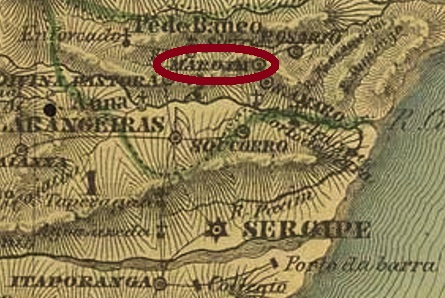
União, Piauí (UPI-0170)

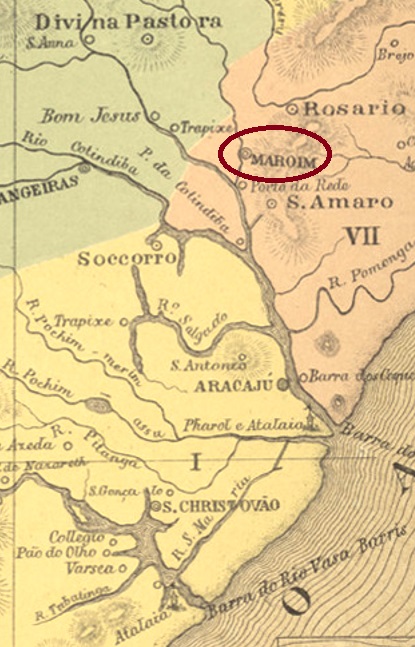
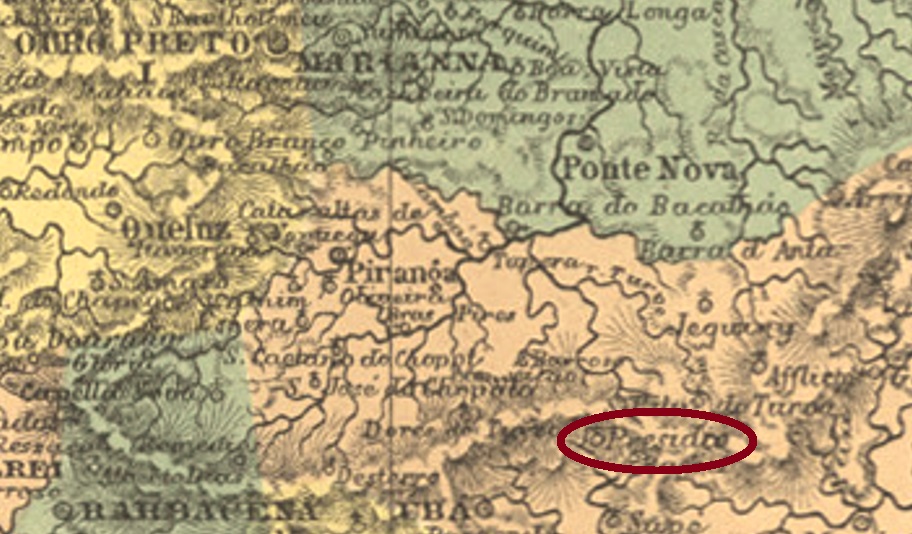
Atlas do Imperio do Brasil, 1868

The Freguesia of N. Sa. dos Remedios da União came into being in August 1853 and was located on the east bank of the river Parnaiba, 90 km north of the then newly crowned provincial capital Teresina. Only a month later, it was promoted to a vila, and since December 1889, União has been a town.

Two years of origin for the local post office were found. First in March 1856, as Nova Monteiro writes in Administrações e Agencias Postaes do Brasil Imperio (Brasil Filatelico/RJ, 1934-5; Reprint SPP 1994-1999). Then 1880, as listed in the Directory of Imperial Post Offices (Tabella das Agencias do Correio do Imperio, Rio de Janeiro, 1885). There are also two 19th century local postmarks, the first of which has not yet been definitively confirmed.

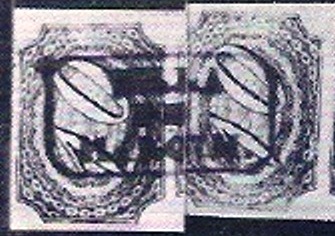
UPI-0170a was already presented by Paulo Ayres in the Catálogo de Carimbos Brasil-Império (S. Paulo, 1937, 1942) under No. 1522, and Cicero A. Almeida assigned it to the province of Piauí in his Carimbos Postais – século XIX (Rio de Janeiro, 1989) under no. MPT 353:

UPI-0170a (P.A. 1522, MPT 353) 1883ff

Also from Almeida’s work there comes UPI 0170b, which is then clearly from Piauí:

UPI-0170b (MPT 780)
Arthur D. Ribeiro: Estado do Piauhy, 1924

Die Freguesia von N. Sa. dos Remedios da União entstand im August 1853 und lag am Ostufer des Flusse Parnaiba, 90 km nördlich der damals frisch gekürten Provinzhauptstadt Teresina entfernt. Bereits ein Monat später erfolgte der Aufstieg zur Vila, und seit Dezember 1889 ist União eine Stadt.

Zwei Entstehungsjahre fürs örtliche Postamt wurden gefunden. Erstmals im März 1856, wie Nova Monteiro in Administrações e Agencias Postaes do Brasil Imperio  (Brasil Filatelico/RJ, 1934-5; Reprint SPP 1994-1999) schreibt. Dann 1880, wie im Verzeichnis der kaiserlichen Postämter (Tabella das Agencias do Correio do Imperio, Rio de Janeiro, 1885) aufgelistet. Ebenfalls zwei Ortsstempel für den 19. Jahrhundert liegen vor, wobei der erste davon noch nicht endgültig bestätigt ist.

UPI-0170a wurde bereits durch Paulo Ayres im Catálogo de Carimbos Brasil-Império (S. Paulo, 1937, 1942) unter der Nr. 1522 vorgestellt, und Cicero A. Almeida hat ihn der Provinz Piauí in seinem Carimbos Postais – século XIX (Rio de Janeiro, 1989) unter Nr. MPT 353 zugeordnet:

UPI-0170a (P.A. 1522, MPT 353) 1883ff

Auch aus Almeidas Werk kommt UPI 0170b, der dann eindeutig aus Piauí zu erkennen ist:

UPI-0170b (MPT 780)

Categories
Carimbologia T-Z

União (train station/Bahnhof), Rio de Janeiro (URJ-1623)

Estrada de Ferro Leopoldina

See also Rocha Leão (RRJ-2154)

The Rocha Leão train station in the Coastal Line of the Estrada de Ferro Leopoldina was inaugurated in November 1888 near Rio das Ostras (RRJ-0845). Some sources state the original station name was União, but this could not be confirmed. The railway belonged to the E.F. Leopoldina until 1975. From then on until 1996 it was run by the Rede Ferroviária Federal S.A. Now the station house serves as a museum and cultural centre (see image below), and Rocha Leão is a district of Rio das Ostras.

According to Paulo Novaes (agenciaspostais.com.br), the station post office was created in November 1888, which can be confirmed by the regional press:

Gazeta de Noticias, November 17, 1888

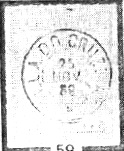
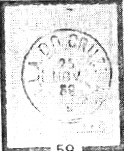
A single early cancel is known: RRJ-2154a (image from the internet) has a double circle with the inscription ROCHA LEÃO above and a cross-like ornament below. Dates inside found for 1897-1899.

Almanak Laemmert, 1892

Siehe auch Rocha Leão (RRJ-2154)

Der Bahnhof Rocha Leão wurde im November 1888 durch die Estrada de Ferro Leopoldina in der so genannten Küstenlinie eingeweiht und lag etwas nördlich von Rio das Ostras (RRJ-0845). Einige Quellen behaupten, União war der ursprüngliche Name des Bahnhofs, aber dies konnte nicht bestätigt werden. Die Eisenbahnlinie gehörte bis 1975 der E. F. Leopoldina. Von nun an bis Betriebsende in 1996 war sie Eigentum der Rede Ferroviária Federal S. A. Heute dient das Bahnhofshaus als Museum und Kulturzentrum, und Rocha Leão ist ein Distrikt im Município von Rio Das Ostras.
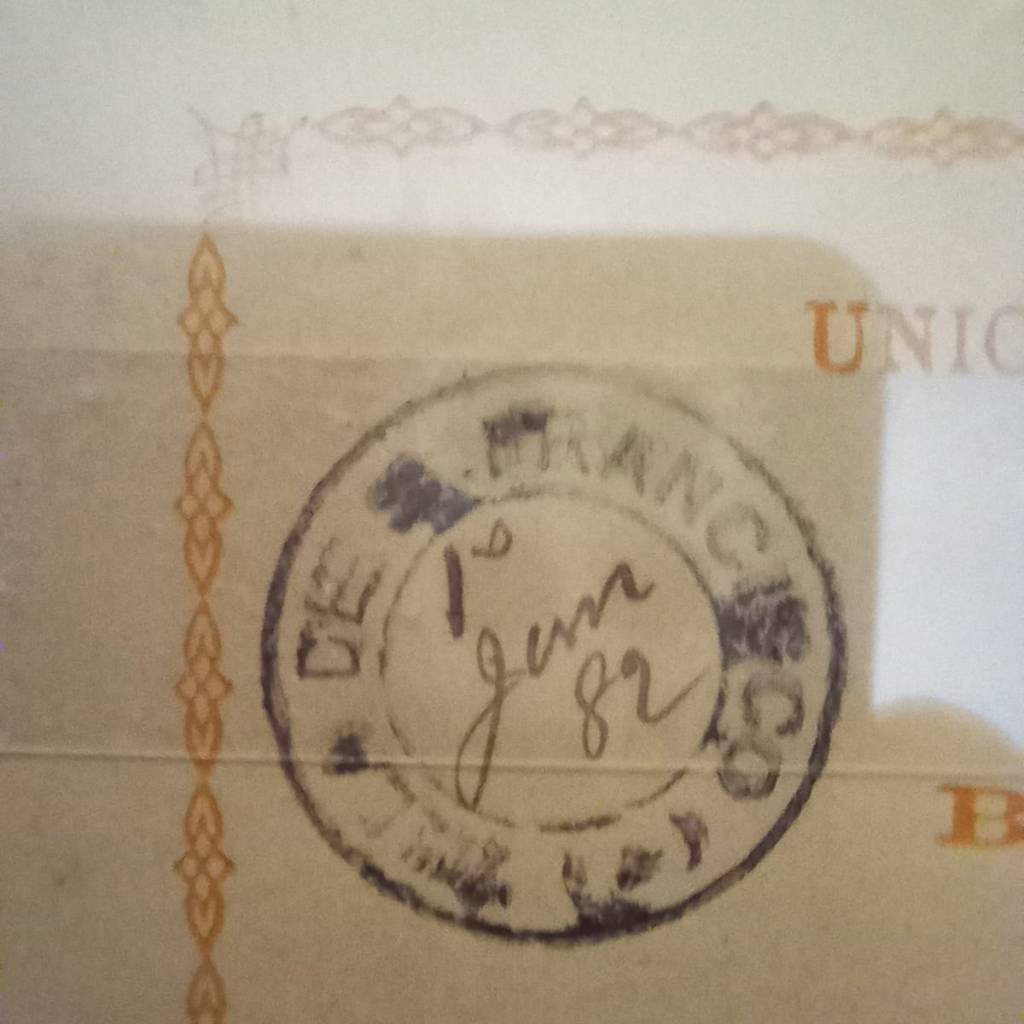
Laut Paulo Novaes (agenciaspostais.com.br) wurde das Postamt im November 1888 in die Wege geleitet, was auch in der Presse zu lesen ist:

Gazeta de Noticias, 17.11.1888

Ein einziger Stempel der Frühzeit ist überliefert: RRJ-2154a (Abb. aus dem Internet) hat einen Doppelkreis mit der Inschrift ROCHA LEÃO oben und ein kreuzförmiges Ornament unten. Im Gebrauch zwischen 1897 und 1899.

Categories
Carimbologia T-Z

União, Ceará (UCE-0350)

Atlas do Imperio do Brasil, 1868

Other names: Caatinga do Góis, Jaguaruana (1943)

The freguesia of Sant’Anna da União was created in December 1863 and was located in the Município of Aracati, on the west bank of the river Jaguaribe, 180 km southeast of the provincial capital Fortaleza. Exactly two years later the place rose to the status of a vila, it became a town in September 1890 and has been called Jaguaruana since December 1943. The name originates from the Indian language and means Black Jaguar.

The local post office was established in February 1871, according to the regional press:

Cearense, 16.02.1871

So far, no imperial postmark could be assigned with certainty to this locality.

Carta da Republica dos Estados Unidos do Brazil, 1892

Andere Namen: Caatinga do Góis, Jaguaruana (1943)

Die Freguesia von Sant’Anna da União entstand im Dezember 1863 und lag im Município von Aracati am Westufer des Flusses Jaguaribe, 180 km südöstlich der Provinzhauptstadt Fortaleza entfernt. Genau zwei Jahre später stieg der Ort zur Vila auf und wurde im September 1890 eine Stadt, die seit Dezember 1943 Jaguaruana heißt. Der Name aus der Indianersprache bedeutet Schwarzer Jaguar.

Das örtliche Postamt wurde im Februar 1871 ins Leben gerufen, wie die Regionalpresse mitteilte:

Cearense, 16.02.1871

Bisher konnte kein kaiserlicher Poststempel mit Sicherheit dieser Ortschaft zugeordnet werden.
Categories
Carimbologia T-Z

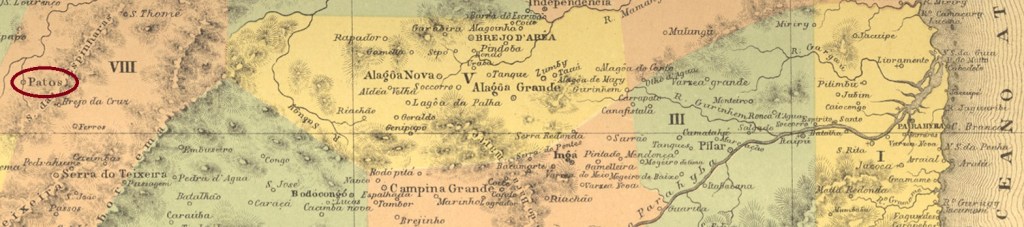
Una, São Paulo (USP-1450)

Atlas do Imperio do Brasil, 1868

This locality was the freguesia of N. Sa. das Dores do Una from August 1811 and was located near São Roque, 70 km west of the provincial capital of São Paulo. Between February 1846 and May 1850, the district belonged to Sorocaba before returning to São Roque. In March 1857, the ascent to the Villa took place, and since November 1944, this Município has been called Ibiúna. The word from the Tupi-Guarani language means dark earth.

The local post office was created in August 1857, according to Nova Monteiro in Administrações e Agencias Postaes do Brasil Imperio (Brasil Filatelico/RJ, 1934-5; Reprint SPP 1994-1999). This is confirmed by Aureo G. Santos in Agências de Correio Criadas e Suprimidas 1851, 1855, 1856 e 1857 (Brasil Filatélico 181, Rio de Janeiro, 1977):

Aureo G. Santos, Brasil Filatelico 181, 1977

Three place stamps were used in the imperial period, which show great similarity among themselves. First USP-1450a (Coll. José A. Junges), which was in circulation between 1857 and 1863: a square with rounded corners showing UNA inside. It was followed by USP-1451b (Coll. José A. Junges), which can only be distinguished from its predecessor by the dot after the A. It is also found in red. It also appears in red and was found between about 1866 and after 1883.

The third town cancel USP-1450c also exists in blue and was already made known by Paulo Ayres under no. 1521. Here the comparison with USP-1450a:

USP-1450c (P.A. 1521) x USP-1450a (JJ) 1866ff-1889ff

A mute cancellation from Una in São Paulo was found in the collection José A. Junges:

1866ff (JJ)
Villiers de l’Ile Adam: Carta (…) da Provincia de São Paulo, 1847

Diese Ortschaft war ab August 1811 die Freguesia von N. Sa. das Dores do Una und lag bei São Roque, 70 km westlich der Provinzhauptstadt São Paulo entfernt. Zwischen Februar 1846 und Mai 1850 gehörte der Distrikt zu Sorocaba, bevor er zu São Roque zurückkehrte. Im Marz 1857 fand der Aufstieg zur Villa statt, und seit November 1944 heißt dieser Município Ibiúna. Das Wort aus der Tupi-Guarani-Sprache bedeutet dunkle Erde.

Das örtliche Postamt wurde im August 1857 ins Leben gerufen, wie Nova Monteiro in Administrações e Agencias Postaes do Brasil Imperio (Brasil Filatelico/RJ, 1934-5; Reprint SPP 1994-1999) schreibt. Dies wird bestätigt durch Aureo G. Santos in Agências de Correio Criadas e Suprimidas 1851, 1855, 1856 e 1857 (Brasil Filatélico 181, Rio de Janeiro, 1977):

Aureo G. Santos, Brazil Philatelico 181, 1977

Drei Ortsstempel wurden in der Kaiserzeit verwendet, die untereinander große Ähnlichkeit aufweisen. Erstmals USP-1450a (Samml. José A. Junges), der zwischen 1857 und 1863 im Umlauf war: ein Viereck mit abgerundeten Ecken, der darinnen UNA zeigt. Ihm folgte USP-1451b (Samml. José A. Junges), der von seinem Vorgänger nur durch den Punkt nach dem A zu unterscheiden ist. Er kommt auch in rot vor und war zwischen ca. 1866 bis nach 1883 zu finden.

Den dritten Ortsstempel USP-1450c gibt es auch in blau und wurde bereits durch Paulo Ayres unter Nr. 1521 bekannt gemacht. Hier der Vergleich mit USP-1450a:

USP-1450c (P.A. 1521) x USP-1450a (JJ) 1866ff-1889ff

Eine stumme Entwertung aus Una in São Paulo wurde in der Samml. José A. Junges entdeckt:

1866ff (JJ)

Categories
Carimbologia T-Z

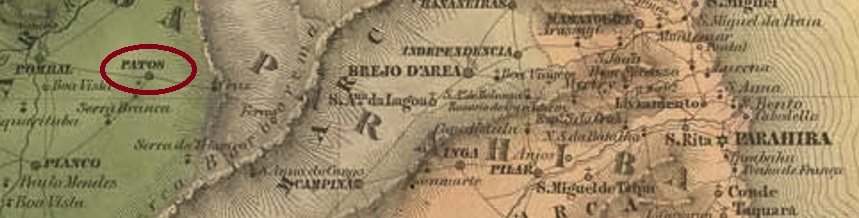
Una (train station/Bahnhof), Pernambuco (UPE-0731)

Carta Corographica da Provincia de Pernambuco, 1880

See also Trombetas (TPE-0657)

Una station was inaugurated in November 1862 by the E.F. Recife ao São Francisco railway company (Southern Line) and was then located in the Município of Água Preta on the north bank of the Una River, 120 km southwest of the provincial capital Recife. Despite the name, the station did not serve the Freguesia of Una near Rio Formoso (UPE-0730, post office since 1854), but the nearby large estate (Engenho) of Trombeta. The railway line went to the Great Western Company in 1901, to Rede Ferroviária do Nordeste in 1950, and from 1975 until its closure in 1996 it belonged to Rede Ferroviária Federal S.A. (estacoesferroviarias.com.br). Today, the station building houses a cultural foundation dedicated to the writer Hermilo Borba Filho (1917-1976).

ca. 1875 (Commissão Geologica do Imperio, in estacoesferroviarias.com.br)
2016 (Photo: Fernando Marietan, in estacoesferroviarias.com.br)

The station post office was created in December 1864, as reported by the Rio press:

Constitucional/RJ, 24/12/1864

The village between the engenho and the railway station continued to grow, and in September 1866 Trombetas also received its own post office. Shortly after, the population increased very rapidly, due to the arrival of the descendants of escaped slaves from Palmares Quilombo in Alagoas. As early as 1868, the town was elevated to a district called Palmares, and five years later it became a villa, with a population of over 25 thousand by the end of the Empire. Between 1875 and 1879, the station was renamed Palmares.

So far, no postmark of Una station for the imperial period could be identified with certainty. For postmarks with PALMARES see Koester, Carimbologia XXIX.

Carta da Republica dos Estados Unidos do Brazil, 1892

Siehe auch Trombetas (TPE-0657)

Der Bahnhof Una wurde im November 1862 von der E.F. Recife ao São Francisco Bahngesellschaft (Südlinie) eingeweiht und lag damals im Município von Água Preta am Nordufer des Flusses Una, 120 km südwestlich der Provinzhauptstadt Recife entfernt. Trotz des Namens diente der Bahnhof nicht die Freguesia von Una bei Rio Formoso (UPE-0730, Postamt seit 1854), sondern den nahen Großlandbesitz (Engenho) Trombetas. Die Bahnhlinie ging 1901 zur Great Western Gesellschaft, 1950 zur Rede Ferroviária do Nordeste, und von 1975 bis zur Stilllegung 1996 gehörte sie der Rede Ferroviária Federal S.A. (estacoesferroviarias.com.br). Heute beherbergt das Bahnhofsgebäude eine dem Schriftsteller Hermilo Borba Filho (1917-1976) gewidmete Kulturstiftung.

ca. 1875 (Commissão Geologica do Imperio, in estacoesferroviarias.com.br)
2016 (Foto: Fernando Marietan, in estacoesferroviarias.com.br)

Im Dezember 1864 entstand das Bahnhofspostamt, wie die Presse aus Rio berichtet:

Constitucional/RJ, 24.12.1864

Die Ortschaft zwischen dem Engenho und dem Bahnhof wuchs weiter, und im September 1866 erhielt auch Trombetas ein eigenes Postamt. Kurz darauf stieg die Einwohnerzahl sehr rasch, bedingt durch die Ankunft des Nachkommens von geflohenen Sklaven aus dem Quilombo Palmares in Alagoas. Bereits 1868 wurde der Ort zu einem Distrikt namens Palmares erhoben und fünf Jahre später zu einer Villa, die am Ende des Kaiserreichs über 25 Tausend Einwohner hatte. Zwischen 1875 und 1879 wurde der Bahnhof zu Palmares umbenannt.

Bisher konnte kein Poststempel des Bahnhofs Una für die Kaiserzeit mit Sicherheit identifiziert werden. Für Stempel mit PALMARES siehe Koester, Carimbologia XXIX.
Categories
Carimbologia T-Z

Una, Pernambuco (UPE-0730)

Villiers de l’Ile Adam: Carta (…) das Provincias de Pernambuco, Alagoas e Sergipe, 1847

Updated on April 7, 2022

This other locality called Una, in the province of Pernambuco, was already before 1831 the Freguesia of N. Sa. da Purificação e São Gonçalo de Una, which was directly subordinate to Recife, although it was about 100 km south of the main city. In May 1833, the freguesia changed to the Município of Rio Formoso, and 100 years later to the Município of Barreiros. And so it has remained until today as the district of Rio Una at Barreiros.

Two years were found for the creation of the local post office. Firstly in 1854, as noted in the Directory of Imperial Post Offices (Tabella das Agencias do Correio do Imperio, Rio de Janeiro, 1885). Then again in 1877, as shown in the regional press:

 Diario de Pernambuco, 28.05.1877

An imperial postmark of this locality could be assigned with certainty so far, but not the oldest one. UPE-0730b (Coll. Ginaldo Bezerra da Silva) is a double circle with the inscription UNA above and one (2) below. The dates in the middle were found for the period 1887-1890ff.

Atlas do Imperio do Brasil, 1868

Aktualisiert am 07.04.2022

Diese andere Ortschaft namens Una in der Provinz Pernambuco war bereits vor 1831 die Freguesia von N. Sa. da Purificação e São Gonçalo de Una, die direkt Recife unterstellt war, obwohl sie ca. 100 km südlich der Hauptsstadt lag. Im Mai 1833 wechselte die Freguesia zum Município von Rio Formoso, und 100 Jahre später zum Município von Barreiros. Und so es bis heute der Ortsteil Rio Una bei Barreiros geblieben.

Zwei Entstehungsjahre fürs örtliche Postamt wurden gefunden. Erstmals 1854, wie im Verzeichnis der kaiserlichen Postämter (Tabella das Agencias do Correio do Imperio, Rio de Janeiro, 1885) vermerkt. Dann wieder 1877, wie aus der regionalen Presse hervorgeht:

 Diario de Pernambuco, 28.05.1877

Ein kaiserlicher Poststempel dieser Ortschaft konnte bisher mit Sicherheit zugeordnet werden, nicht aber der älteste. UPE-0730b (Samml. Ginaldo Bezerra da Silva) ist ein Doppelkreis mit der Inschrift UNA oben und eine (2) unten. Die Daten in der Mitte wurden für den Zeitraum 1887-1890ff gefunden.

Categories
Carimbologia T-Z

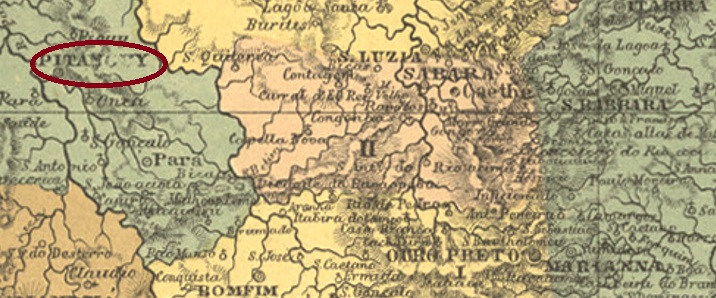
Una, Bahia (UBA-0750)

Villiers de l’Ile Adam: Carta (…) da Provincia da Bahia, 1848

Other names: Barra de Una, Cachoeirinha

This village was a freguesia near Ilhéus from July 1860, located on the north bank of the Una River, 380 km south of the provincial capital Salvador da Bahia. In August 1923, the place – now under the name Cachoeirinha – changed to the newly founded município of Canavieiras. Exactly one year later, it became a vila, and since January 1939 it has again borne the old place name of Una.

The local post office was creatd in February 1885, according to the Rio press:

Jornal do Commercio/RJ, 04.02.1885

So far, no imperial postmark could be surely assigned to this locality.

Atlas do Imperio do Brasil, 1868

Andere Namen: Barra de Una, Cachoeirinha

Diese Ortschaft war ab Juli 1860 eine Freguesia bei Ilhéus, die am Nordufer des Flusses Una lag, 380 km südlich der Provinzhauptstadt Salvador da Bahia entfernt. Im August 1923 wechselte der Ort – nun unter dem Namen Cachoeirinha – zum neu gegründeten Município von Canavieiras. Genau ein Jahr später folgte der Aufstieg zu einer Vila, die seit Januar 1939 den alten Ortsnamen Una wieder trägt.

Das örtliche Postamt entstand im Februar 1885, wie die Presse aus Rio mitteilte:

Jornal do Commercio/RJ, 04.02.1885

Bisher konnte kein kaiserlicher Poststempel mit Sicherheit dieser Ortschaft zugeordnet werden.
Categories
Carimbologia T-Z

Umburanas (Feira de Sant’Anna), Bahia (UBA-0746)

Estado da Bahia, 1913

Other names: Capela de Sto. Estevão, Resgate de Umburanas, Uberlândia, Tinguatiba, Antonio Cardoso (1962)

The second Umburanas with post office in the imperial province of Bahia also has a turbulent history behind it. The former Capela de Santo Estêvão (St. Stephen’s Chapel) rose in April 1843 to become the Freguesia of Nossa Senhora do Resgate de Umburanas in the municipio of Cachoeira and was located close to the north bank of the Paraguaçu River, over 170 km northwest of the provincial capital Salvador da Bahia. In July 1876, the freguesia switched to the município of Feira de Sant’Anna, but returned to Cachoeira two years later. In July 1884, there was another change, this time to the município of São Gonçalo dos Campos. After that, the district was renamed twice: in November 1938 to Uberlândia and in December 1943 to Tinguatiba. It was not until April 1962 that the place would become the município of Antonio Cardoso. The name was supposed to commemorate a political leader of the area, who however was by no means very popular.

The local post office was established in 1876, according to the provincial president’s report for the following year:

Relatorio do Conselho Interino do Governo da Bahia, 1877

The post office must have had a very short operational life, as it was no longer listed in the Imperial Postal Guide (Guia Postal do Imperio) of 1880. No postmark from the Empire has been seen so far.

Google Maps

Andere Namen: Capela de Sto. Estevão, Resgate de Umburanas, Uberlândia, Tinguatiba, Antonio Cardoso (1962)

Die zweite Umburanas mit Postamt in der kaiserlichen Provinz Bahia hat ebenfalls eine bewegte Geschichte hinter sich. Die frühere Capela de Santo Estêvão (St. Stephanskapelle) stieg im April 1843 zur Freguesia de Nossa Senhora do Resgate de Umburanas im Municipio von Cachoeira und lag nah am Nordufer des Flusse Paraguaçu, gut 170 km nordwestlich der Provinzhauptstadt Salvador da Bahia entfernt. Im Juli 1876 wechselte die Freguesia zum Município von Feira de Sant’Anna, kam aber zwei Jahre später zurück zu Cachoeira. Im Juli 1884 gab es einen erneuten Wechsel, diesmal zum Município von São Gonçalo dos Campos. Danach wurde der Distrikt zweimal umbenannt: im November 1938 zu Uberlândia und im Dezember 1943 zu Tinguatiba. Erst im April 1962 stieg der Ort zum Município von Antonio Cardoso auf, der Name soll an einem politischen Führer der Gegend erinnern, der beileibe nicht besonders beliebt war.

Das örtliche Postamt entstand 1876, wie aus dem Bericht des Provinzpräsidenten fürs darauf folgende Jahr hervorgeht:

Relatorio do Conselho Interino do Governo da Bahia, 1877

Das Postamt hatte eine sehr kurze Betriebsdauer, denn es wurde nicht mehr im kaiserlichen Postführer (Guia Postal do Imperio, 1880) aufgelistet. Bisher war kein Poststempel aus dem Kaiserreich zu sehen.
Categories
Carimbologia T-Z

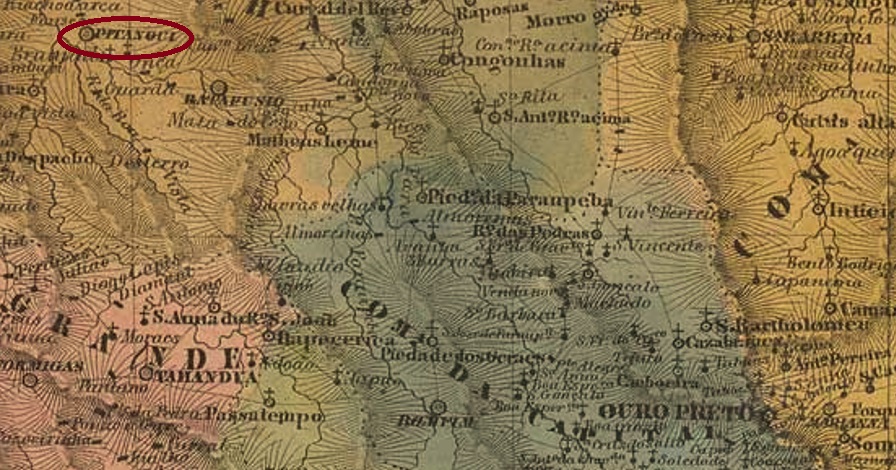
Umburanas (Caetités), Bahia (UBA-0745)

Carta da Republica dos Estados Unidos do Brazil, 1892

Other names: Villa Bella das Umburanas, Guirapá (1943)

In the imperial province of Bahia there were at least five localities called Umburanas, and when we know how difficult it is to get hold of 19th century postal objects from this area, the assignment of postmarks becomes a difficult task. Umburana, also called amburana or imburana, is the common name for a genus of plants in the Fabaceae family whose bark and seeds have valuable medicinal properties. The wood is also used to make cachaça barrels:

Amburana cearensis (Photo: Jorge Vallmitjana) 

The freguesia of São Sebastião do Amparo das Umburanas was created in July 1877 near Caetités, 700 km southwest of the provincial capital Salvador da Bahia. The village rose to become Villa Bella das Umburanas in July 1889, at a time when the economic decline could not be stopped anymore: in August 1918, Umburanas was demoted to the district of Urandy. In December 1943, the place name changed to the current Guirapá, which has been a district of the Município of Pindaí since February 1962. In the Indian language Tupi-guarani, Guirapá means crooked tree.

Two dates of origin have been found for the local post office. Firstly in 1863, as noted in the Directory of Imperial Post Offices (Tabella das Agencias do Correio do Imperio, Rio de Janeiro, 1885). And finally in August 1883, according to a press release from Rio de Janeiro:

Jornal do Commercio/RJ, 25/08/1883

The only imperial postmark so far is certainly not the oldest: UBA-0745b (Coll. José A. Junges) is a plain double circle with the inscription UMBURANAS at the top. The dates in the middle are from the period 1887-1891.

Estado da Bahia, 1913

Andere Namen: Villa Bella das Umburanas, Guirapá (1943)

In der kaiserlichen Provinz Bahia gab es mindestens fünf Ortschaften, die Umburanas hießen, und wenn wir wissen, wie schwer man an postalischen Belegen des 19. Jahrhunderts aus dieser Gegend kommt, wird die Zuordnung der Poststempel zu einer schwer lösbaren Aufgabe. Umburana, auch Amburana oder Imburana genannt, ist die allgemeine Bezeichnung für eine Pflanzengattung der Familie Fabaceae, deren Baumrinde und Samen wertvolle medizinische Eigenschaften aufweisen. Das Holz wird auch zur Herstellung von Cachaça-Fässern verwendet:

Amburana cearensis (Photo: Jorge Vallmitjana) 

Die Freguesia von São Sebastião do Amparo das Umburanas entstand im Juli 1877 bei Caetités und lag 700 km südwestlich der Provinzhauptstadt Salvador da Bahia. Der Ort stieg zwar im Juli 1889 zur Villa Bella das Umburanas, als der wirtschaftliche Rückgang der Region nicht mehr aufzuhalten war: im August 1918 war Umburanas zum Distrikt von Urandy degradiert. Im Dezember 1943 wechselte der Ortsname zum aktuellen Guirapá, der seit Februar 1962 ein Distrikt des Município von Pindaí ist. In der Indianersprache Tupi-guarani bedeutet Guirapá krummer Baum.
Zwei Entstehungszeitpunkte wurden fürs örtliche Postamt ermittelt. Erstmals 1863, wie im Verzeichnis der kaiserlichen Postämter (Tabella das Agencias do Correio do Imperio, Rio de Janeiro, 1885) vermerkt. Und schließlich im August 1883, nach einer Pressemitteilung aus Rio de Janeiro:

Jornal do Commercio/RJ, 25.08.1883

Der bisher einzige kaiserliche Poststempel ist bestimmt nicht der älteste: UBA-0745b (Samml. José A. Junges) ist ein schlichter Doppelkreis mit der Inschrift UMBURANAS oben. Die Daten in der Mitte entstammen dem Zeitraum 1887-1891.

Categories
Carimbologia T-Z

Umary, Ceará (UCE-0345)

Atlas do Imperio do Brasil, 1868

The district of Nossa Senhora da Conceição do Umary was founded in June 1860 at Lavras, on the provincial border with Parahyba, 400 km south of the capital Fortaleza. In November 1883, it was promoted to a Vila, but lost this status in October 1920 and once again became a district of Lavras. In May 1931, the town changed to the newly created Município of Baixio and finally emancipated itself in September 1956 as the Município of Umari. The name refers to a tree of the Fabaceae family:

Geoffroea spinosa/Jacq. (naturezabela.com.br)

There was a post office there from January 1887, according to the Provincial President’s report for July the same year:

Relatorio do Presidente da Provincia/CE, 07/1887

The 19th century postmark is UCE-0345a (Coll. José A. Junges): a double circle with the inscriptions UMARY above and (CEARÁ) below. The only specimen so far bears a date from 1893 in the centre.

Villiers de l’Ile Adam: Carta (…) da Provincia do Ceara, 1849

Der Distrikt von Nossa Senhora da Conceição do Umary wurde im Juni 1860 bei Lavras gegründet und lag an der Provinzgrenze zu Parahyba, 400 km südlich der Hauptstadt Fortaleza entfernt. Im November 1883 stieg der Ort zur Vila auf, verlor aber diesen Status im Oktober 1920 und wurde abermals ein Distrikt von Lavras. Im Mai 1931 wechselte der Ort zum neu gegründeten Município von Baixio und emanzipierte sich endgültig im September 1956 als der Município von Umari. Der Name bezieht sich auf einen Baum der Familie Fabaceae:

Geoffroea spinosa/Jacq. (naturezabela.com.br)

Dort gab es ein Postamt ab Januar 1887, wie aus dem Bericht des Provinzpräsidenten für Juli d. Js. hervorgeht:

Relatorio do Presidente da Provincia/CE, 07/1887

Der Poststempel des 19. Jahrhunderts ist UCE-0345a (Samml. José A. Junges): ein Doppelkreis mit den Inschriften UMARY oben und (CEARÁ) unten. Das bisher einzige Exemplar trägt ein Datum aus 1893 in der Mitte.