Categories
Carimbologia S

São Sebastião do Rio Bonito, Rio de Janeiro (SRJ-1500)

Atlas do Imperio do Brasil, 1868

Another name: Pentagna (1938)

São Sebastião do Rio Bonito was a freguesia of Valença, located about 170 km northwest of the capital Rio de Janeiro. In November 1885, the place became a district, which has been called Pentagna since December 1938. The name recalls a former mayor, Humberto Pentagna.

Paulo Novaes (agenciaspostais.com.br) writes that the local post office was created in June 1861. In the Rio press, the first postal agent was presented in the same month:

Correio Mercantil, 27 June 1861

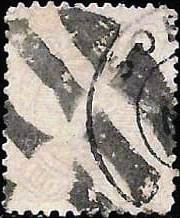
Four 19th century postmarks were found. The oldest one is SRJ-1500a, which also exists in blue and was already presented by Paulo Ayres in Catálogo de Carimbos Brasil-Império, (S. Paulo, 1937, 1942) under No. 1481:

SRJ-1500a (P.A. 1481) ca.1861- 1866ff

Three postmarks in double circle followed. SRJ-1500b (Coll. José A. Junges) has the inscription S.S. DO RIO BONITO at the top and dates inside from ca. 1876 to 1879. Its successors may be train station postmarks, since a station of the railway company Estrada de Ferro do Rio Bonito was inaugurated there in April 1880 (estacoesferroviarias.com.br).

In 1928 (Photo: Max Vasconcellos)

However, there is no corresponding reference in any postmark. SRJ-1500c (Coll. José A. Junges) has its outer circle doubled and the inscription S. SEB. DO RIO BONITO on the top; below is an ornament in lozenge formed by four small lozenges. Dates in the centre: 1883ff to 1889. SRJ-1500d (Coll. José A. Junges) could already be Republican because the only specimen bears a date from 1892 in the centre. Here the inscription at the top reads S. SEBAST. DO R. BONITO; below there is a Maltese cross.

Almanak Laemmert, 1892

Anderer Name: Pentagna (1938)

São Sebastião do Rio Bonito war eine Freguesia von Valença, die ca. 170 km nordwestlich der Hauptstadt Rio de Janeiro entfernt lag. Im November 1885 wurde der Ort zum Distrikt, der seit Dezember 1938 Pentagna heißt. Der Name erinnert an den ehemaligen Bürgermeister Humberto Pentagna.

Paulo Novaes (agenciaspostais.com.br) schreibt, dass das örtliche Postamt im Juni 1861 entstanden ist. In der Presse aus Rio wurde im gleichen Monat der erste Postagent vorgestellt:

Correio Mercantil, 27.06.1861

Vier Poststempel des 19. Jahrhunderts wurden gefunden. Der älteste ist SRJ-1500a, den es auch in blau gibt und der bereits durch Paulo Ayres in Catálogo de Carimbos Brasil-Império, (S. Paulo, 1937, 1942) unter Nr. 1481 vorgestellt wurde:

SRJ-1500a (P.A. 1481) ca.1861- 1866ff

Es folgten drei Poststempel in Doppelkreis. SRJ-1500b (Samml. José A. Junges) hat oben die Inschrift S.S. DO RIO BONITO und Daten im Inneren von ca. 1876 bis 1879. Seine Nachfolger dürfen Bahnhofsstempel sein, da im April 1880 ein Bahnhof der Bahngesellschaft Estrada de Ferro do Rio Bonito dort eingeweiht wurde (estacoesferroviarias.com.br).

1928 (Foto: Max Vasconcellos)

Allerdings ist auf keinem Stempel ein entsprechender Hinweis zu lesen. SRJ-1500c (Samml. José A. Junges) hat den äußeren Stempelkreis verdoppelt und oben die Inschrift S. SEB. DO RIO BONITO; unten ist ein Ornament in Raute, das aus vier kleinen Rauten gebildet wird. Daten in der Mitte: 1883ff bis 1889. SRJ-1500d (Samml. José A. Junges) könnte bereits republikanisch sein, denn das einzige Exemplar trägt ein Datum aus 1892 in der Mitte. Hier lautet die Inschrift oben S. SEBAST. DO R. BONITO; unten ist ein Malteser Kreuz zu sehen.

Categories
Carimbologia S

São Sebastião de Pouso Alegre, Minas Gerais (SMG-2247)

Atlas do Imperio do Brasil, 1868

Other names: São Sebastião da Confusão, São Gothardo

See also São Gothardo (SMG-2340)

São Sebastião de Pouso Alegre was the second name of this settlement in the Minas Gerais province, located near Pitangui, about 400 km west of the capital Ouro Preto. In the beginning, the village was called São Sebastião da Confusão (= of the Confusion). Such a name was apparently too bizarre for the authorities, so in May 1852 the place was officially renamed to São Sebastião de Pouso Alegre, although the old name remained in use. In July 1868, the town changed to the new municipality of Dores do Indayá, and it was not until August 1885 that it was called São Gothardo. After that, it changed the municipality twice: in November 1890 to Carmo do Paranahyba, and in August 1911 to Rio Paranahyba. Since September 1914, São Gotardo has been an independent municipality.

According to Paula Sobrinho (História Postal de Minas Gerais, Belo Horizonte, 1997), there has been a post office there since November 1883. The imperial postmark is SMG-2247a (Coll. Márcio Protzner): a double circle with the inscription S. SEBASTIĀO DE POUSO ALEGRE above and a five-leg star below, plus the dates 1887 to 1896 in the centre. Therefore, probably all cancels featuring São Gothardo are republican.

Provincia de Minas Geraes, 1873

Andere Namen: São Sebastião da Confusão, São Gothardo
Siehe auch São Gothardo (SMG-2340)

São Sebastião de Pouso Alegre war der zweite Name dieser Siedlung in der Provinz Minas Gerais, die in der Nähe von Pitangui lag, etwa 400 km westlich der Hauptstadt Ouro Preto entfernt. Am Anfang hieß das Dorf São Sebastião da Confusão (=der Verwirrung). Solcher Name war der Obrigkeit offenbar zu bunt, also wurde der Ort im Mai 1852 offiziell zu São Sebastião de Pouso Alegre umbenannt, obwohl der alte Name weiterhin in Gebrauch blieb. Im Juli 1868 wechselte der Ort zum neuen Municipio von Dores do Indayá, und erst im August 1885 hieß er dann São Gothardo. Er wechselte noch zweimal seine Zuständigkeit: im November 1890 zu Carmo do Paranahyba, und im August 1911 zu Rio Paranahyba. Seit September 1914 ist São Gotardo ein eigenständiger Município.

Laut Paula Sobrinho (História Postal de Minas Gerais, Belo Horizonte, 1997) gibt es dort ein Postamt seit November 1883. Der kaiserliche Poststempel ist SMG-2247a (Samml. Márcio Protzner): ein Doppelkreis mit der Inschrift S. SEBASTIĀO DE POUSO ALEGRE oben und einem fünfzackigen Stern unten, dazu die Jahreszahlen 1887 bis 1896 in der Mitte. Also ist es wahrscheinlich, dass alle Stempel mit São Gothardo republikanisch sind.

Categories
Carimbologia S

São Sebastião da Ponte Nova, São Paulo (SSP-1235)

Mappa de Minas Geraes, 1910

Another name: Jeriquara (1926)

São Sebastião da Ponte Nova (= of the New Bridge) was a freguesia of Franca from March 1885, located close to the south bank of the Ponte Nova River, barely 440 km north of the provincial capital São Paulo. It was not until October 1919 that the place rose to district, which was renamed Jeriquara seven years later. The Indian word means “parrot hideout”. Jeriquara has been an independent município since February 1964.

The local post office was created in November 1883, according to the Rio Press:

Gazeta de Noticias/RJ, 24/11/1883

However, as the agency was not listed in the Imperial Mail Register (Tabella das Agencias do Correio do Imperio) of 1885, it probably started operations later. The oldest postmark so far is SSP-1235a (Coll. José A. Junges): a double circle with the inscription S.S. DA PONTE NOVA at the top. The only specimen is dated 1891 in the centre and unfortunately does not show the lower part completely.

Arthur D. Ribeiro: Estado de São Paulo, 1924

Anderer Name: Jeriquara (1926)

São Sebastião da Ponte Nova (=der Neuen Brücke) war ab März 1885 eine Freguesia von Franca, die nah am Südufer des Flusses Ponte Nova lag, knapp 440 km nördlich der Provinzhauptstadt São Paulo entfernt. Erst im Oktober 1919 stieg der Ort zum Distrikt auf, der sieben Jahre später zu Jeriquara umbenannt wurde. Das indianische Wort bedeutet „Papagaienversteck“. Seit Februar 1964 ist Jeriquara ein eigenständiger Município.

Das örtliche Postamt wurde im November 1883 ins Leben gerufen, wie aus der Rio Presse hervorgeht:

Gazeta de Noticias/RJ, 24.11.1883

Da allerdings die Agentur nicht im Verzeichnis der kaiserlichen Postämter (Tabella das Agencias do Correio do Imperio) von 1885 aufgelistet wurde, hat sie wohl erst später den Betrieb aufgenommen. Der bisher älteste Poststempel ist SSP-1235a (Samml. José A. Junges): ein Doppelkreis mit der Inschrift S.S. DA PONTE NOVA oben. Das einzige Exemplar ist 1891 in der Mitte datiert und zeigt den unteren Teil leider nicht vollständig.

Categories
Carimbologia S

São Sebastião da Pedra do Anta, Minas Gerais (SMG-2600)

Atlas do Imperio do Brasil, 1868

See also Pedra do Anta (R. Koester: Carimbologia XXXI).

São Sebastião da Pedra do Anta, also called Pedra do Anta, or simply Anta (Tapir), was a district of Santa Rita do Turvo (now Viçosa) from October 1848, located close to the west bank of the Casca River, a good 130 km east of the provincial capital Ouro Preto. In September 1923, the place name was officially simplified to Pedra do Anta, and the district became part of the newly created Município of Teixeiras in December 1938, before political emancipation took place in December 1962.

Two creation dates for the local post office have been found, and since there are also newspaper reports of local postal traffic between both dates, we can assume that the agency was closed in the meantime. Both Reinhold Koester and the Imperial Mail Register (Tabella das Agencias do Correio do Imperio, Rio de Janeiro, 1885) state that the post office was created in 1871, while Paula Sobrinho (História Postal de Minas Gerais, Belo Horizonte, 1997) gives the exact date of 25 August 1881 for it. A newspaper notice from Rio in October 1875 confirms the existence of the post office in Anta:

A Reforma/RJ, 17 October 1875

So far, no imperial postmark with the complete place name has been found. For postmarks with PEDRA DO ANTA see R. Koester: Carimbologia XXXI.

Villeers de l’Ile Adam: Carta (…) da Provincia de Minas Geraes, 1849

Siehe auch Pedra do Anta (R. Koester: Carimbologia XXXI)

São Sebastião da Pedra do Anta, auch Pedra do Anta, oder einfach Anta (Tapir) genannt, war ab Oktober 1848 ein Distrikt von Santa Rita do Turvo (heute: Viçosa), der nah am Westufer des Flusses Casca lag, gut 130 km östlich der Provinzhauptstadt Ouro Preto entfernt. Im September 1923 wurde der Ortsname offiziell zu Pedra do Anta vereinfacht, und der Distrikt ging im Dezember 1938 zum neu gegründeten Município von Teixeiras, bevor die politische Emanzipation im Dezember 1962 stattfand.

Zwei Gründungsdaten fürs örtliche Postamt wurden gefunden, und da auch Zeitungsberichte über lokalen Postverkehr zwischen beiden Angaben vorliegen, können wir davon ausgehen, dass die Agentur in der Zwischenzeit geschlossen wurde. Sowohl Reinhold Koester als auch das Verzeichnis der kaiserlichen Postämter (Tabella das Agencias do Correio do Imperio, Rio de Janeiro, 1885) schreiben, das Postamt entstand anno 1871, während Paula Sobrinho (História Postal de Minas Gerais, Belo Horizonte, 1997) dafür das genaue Datum 25. August 1881 angibt. Eine Zeitungsnachricht aus Rio vom Oktober 1875 bestätigt das Vorhandensein des Postamts in Anta:

A Reforma/RJ, 17. Oktober 1875

Bisher wurde kein kaiserlicher Poststempel mit dem vollständigen Ortsnamen gefunden. Für Stempel mit PEDRA DO ANTA siehe R. Koester: Carimbologia XXXI.

Categories
Carimbologia S

São Sebastião do Paraíso, Minas Gerais (SMG-2645)

Atlas do Imperio do Brasil, 1868

This St. Sebastian “from Paradise” was a freguesia of Jacuhy from May 1855, located on the provincial border with São Paulo, almost 500 km west of the capital Ouro Preto. In September 1870, the place rose to the status of a villa.

As Paula Sobrinho writes in História Postal de Minas Gerais (Belo Horizonte, 1997), the local post office came into being in May 1871. Three early postmarks in double circle were found. SMG-2645a (Coll. José A. Junges) has the inscription S.S. DO PARAISO at the top, and the dates inside go from 1877 to 1886. In SMG-2645b (Coll. José A. Junges) the inscription above now reads S. SEBASTIĀO DO PARAIZO, and at the bottom we see a diamond formed by four small diamonds, with dates inside from 1887 to 1890. In SMG-2645c (coll. Dieter Kerkhoff), the small tilde floats between A and O in the above inscription S. SEBASTIÃO DO PARAIZO. Below, the inscription reads (MINAS) and the inner dates are already Republican: 1890 to 1900.
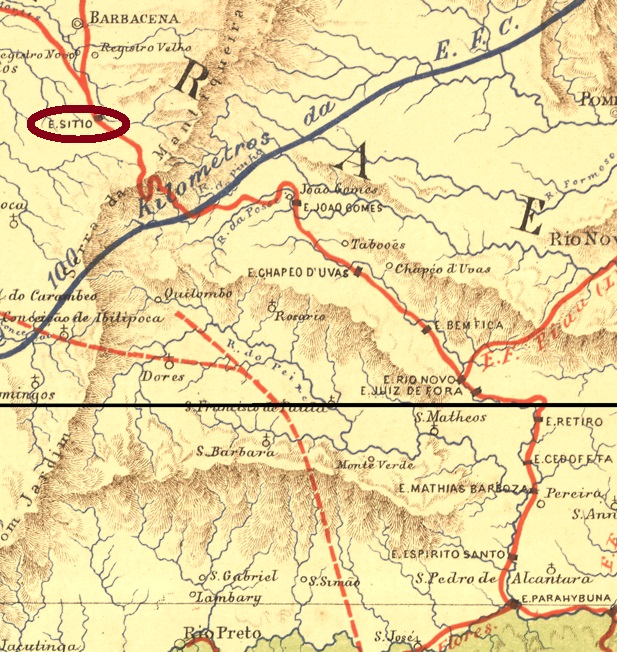
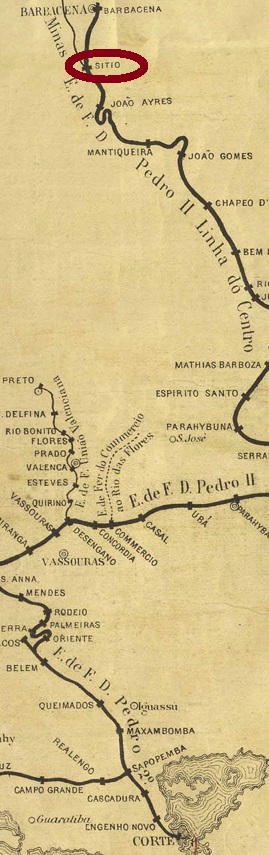
E.F. Central do Brasil, 1890

Dieser Hl. Sebastian “aus dem Paradies” war ab Mai 1855 eine Freguesia von Jacuhy, die an der Provinzgrenze zu São Paulo lag, fast 500 km westlich der Hauptstadt Ouro Preto entfernt. Im September 1870 stieg der Ort zur Villa auf.

Wie Paula Sobrinho in História Postal de Minas Gerais (Belo Horizonte, 1997) schreibt, entstand das örtliche Postamt im Mai 1871. Drei frühe Poststempel in Doppelkreis wurden gefunden. SMG-2645a (Samml. José A. Junges) hat oben die Inschrift S.S. DO PARAISO, und die Daten im Inneren gehen von 1877 bis 1886. Im SMG-2645b (Samml. José A. Junges) lautet die obige Inschrift nun S. SEBASTIĀO DO PARAIZO, unten sehen wir eine Raute, die aus vier kleinen Rauten gebildet wird, mit Daten im Inneren von 1887 bis 1890. Bei SMG-2645c (Samml. Dieter Kerkhoff) schwebt die kleine Tilde zwischen A und O in der obigen Inschrift S. SEBASTIÃO DO PARAIZO. Unten lautet die Inschrift (MINAS) und die inneren Daten sind bereits republikanisch: 1890 bis 1900.
Categories
Carimbologia S

São Sebastião do Parahyba, Rio de Janeiro (SRJ-1490)

Atlas do Imperio do Brasil, 1868

Another name: Euclides da Cunha (1938-1943)

This locality was a district of Cantagallo from December 1874, located on the south bank of the Parahyba do Sul River, over 220 km northeast of the capital Rio de Janeiro. It rose to villa status around 1890, but soon reverted to district. Between 1938 and 1943, the village was called Euclides da Cunha, in memory of the famous engineer and writer (1866-1909) who was born in the area. After that, the old name returned for the district, and so it remains today.

The Imperial Mail Register (Tabella das Agencias do Correio do Imperio, Rio de Janeiro, 1885) reports a post office there from 1871. Three postmarks of the imperial period were found. The oldest one, SRJ-1490a, was probably in use from the beginning and was presented by Paulo Ayres in Catálogo de Carimbos Brasil-Império (S. Paulo, 1937, 1942) under No. 1480:

SRJ-1490a (P.A. 1480) ca. 1871-1877ff

Two cancels in double circle followed. SRJ-1490b (agenciaspostais.com.br) was seen only once in reddish brown and has the inscription S.S. DO PARAHYBA at the top, with an inner date of 1883. Its successor SRJ-1490c (coll. Karlheinz Wittig) has the inscription S. SEBASTIĀO DO PARAHYBA at the top and an ornament in X at the bottom. Dates in the middle between 1888 and 1891.

Almanak Laemmert, 1892

Anderer Name: Euclides da Cunha (1938-1943)

Diese Ortschaft war ab Dezember 1874 ein Distrikt von Cantagallo, der am Südufer des Flusses Parahyba do Sul lag, gut 220 km nordöstlich der Hauptstadt Rio de Janeiro entfernt. Um ca. 1890 stieg er zur Villa auf, kehrte aber bald zum Distrikt-Status zurück. Zwischen 1938 und 1943 hieß der Ort Euclides da Cunha, in Erinnerung an den berühmten Ingenieur und Schriftsteller (1866-1909), der in der Gegend geboren wurde. Danach kehrte der alte Name des Distrikts zurück, und so ist es bis heute geblieben.

Im Verzeichnis der kaiserlichen Postämter (Tabella das Agencias do Correio do Imperio, Rio de Janeiro, 1885) liest man, dass es dort ab 1871 ein Postamt gab. Drei Poststempel der Kaiserzeit waren zu finden. Der älteste davon, SRJ-1490a, war wohl von Anfang an in Gebrauch und wurde bereits durch Paulo Ayres in Catálogo de Carimbos Brasil-Império (S. Paulo, 1937, 1942) unter Nr. 1480 vorgestellt:

SRJ-1490a (P.A. 1480) ca. 1871-1877ff

Es folgten zwei Stempel in Doppelkreis. SRJ-1490b (agenciaspostais.com.br) war bisher nur einmal in rotbraun zu sehen und hatte oben die Inschrift S.S. DO PARAHYBA, mit einem inneren Datum aus 1883. Sein Nachfolger SRJ-1490c (Samml. Karlheinz Wittig) hat oben die Inschrift S. SEBASTIĀO DO PARAHYBA und unten ein Ornament in X. Daten in der Mitte zwischen 1888 und 1891.

Categories
Carimbologia S

São Sebastião da Matta, Minas Gerais (SMG-2590)

Provincia de Minas Geraes, 1873

Other names: São Manoel, Eugenópolis (1943).

This São Sebastião “in the woods” (da Matta) was a district of São Paulo do Muriahé from December 1870, located on the Gavião (Hawk) River, about 240 km southeast of the provincial capital Ouro Preto. In March 1891, the village rose to a villa called São Manoel, which became a town in September 1925. Since December 1943, the Município is now called Eugenópolis, in memory of Luiz Eugenio Monteiro de Barros, a local landowner and politician who had worked for the political emancipation of the municipality.

The local post office was created in November 1881, as Paula Sobrinho writes in História Postal de Minas Gerais (Belo Horizonte, 1997). This is also reported by the press in Rio de Janeiro:

Jornal do Commercio/RJ, December 2, 1881

The imperial postmark is SMG-2590a (Coll. José A. Junges): a double circle, which also exists in blue, with the inscription S. SEBASTIĀO DA MATTA above and an ornament in lozenge below, the four sides of which are open. Dates in the centre from 1885 to 1891.

Estado de Minas Geraes, 1910

Andere Namen: São Manoel, Eugenópolis (1943)

Dieser São Sebastião „im Walde” (da Matta) war ab Dezember 1870 ein Distrikt von São Paulo do Muriahé, der am Fluss Gavião (Habicht) lag, rund 240 km südöstlich der Provinzhauptstadt Ouro Preto entfernt. Im März 1891 steigt der Ort zu einer Villa namens São Manoel, die im September 1925 zur Stadt aufstieg. Seit Dezember 1943 heißt der Município Eugenópolis, zur Erinnerung an Luiz Eugenio Monteiro de Barros, einem einheimischen Großgrundbesitzer und Politiker, der sich um die politische Emanzipation der Gemeinde verdient gemacht hatte.

Das örtliche Postamt entstand im November 1881, wie Paula Sobrinho in História Postal de Minas Gerais (Belo Horizonte, 1997) schreibt.

Jornal do Commercio/RJ, 2. Dezember 1881

Der kaiserliche Poststempel ist SMG-2590a (Samml. José A. Junges): ein Doppelkreis, den es auch in blau gibt, mit der Inschrift S. SEBASTIĀO DA MATTA oben und einem Ornament in Raute unten, deren vier Seiten offen sind. Daten in der Mitte von 1885 bis 1891.

Categories
Carimbologia S

São Sebastião do Jaguary, Minas Gerais (SMG-2640)

Estado de Minas Geraes, 1910

The series of towns in honour of St. Sebastian in Minas Gerais continues with this one on the north bank of the river Jaguary-Mirim (Little River of the Jaguars). Since October 1860, it was a district of Caldas, more than 520 km southwest of the provincial capital, Ouro Preto. In September 1888, it became the Villa of Caracol (Snail), which was elevated to a town in September 1925 and changed its name to Andradas three years later. The still current place name is said to commemorate the former governor of Minas Antonio Carlos Ribeiro de Andrada (1870-1946).

According to Paula Sobrinho (História Postal de Minas Gerais, Belo Horizonte, 1997), there has been a post office there since November 1876. The imperial postmark is SMG-2640a (Coll. José A. Junges): a double circle with the inscription S. SEBASTIĀO DO JAGUARY above and an ornament in cross below formed by four small diamonds. The previous dates inside are from the period 1886-1888ff.

Mappa Geral do Brasil, 1911

Andere Namen: Caracol, Andradas (1928)

Die Reihe der Ortschaften zu Ehren vom Hl. Sebastian in Minas Gerais wird mit dieser am Nordufer des Flusses Jaguary-Mirim (Kleiner Fluss der Jaguare) fortgesetzt. Seit Oktober 1860 war sie ein Distrikt von Caldas, der über 520 km südwestlich der Provinzhauptstadt Ouro Preto entfernt lag. Im September 1888 wurde daraus die Villa von Caracol (Schnecke), die im September 1925 zur Stadt erhoben wurde und den Namen drei Jahre später zu Andradas änderte. Der noch aktuelle Ortsname soll an den ehemaligen Gouverneur von Minas Antonio Carlos Ribeiro de Andrada (1870-1946) erinnern.

Laut Paula Sobrinho (História Postal de Minas Gerais, Belo Horizonte, 1997) gibt es dort ein Postamt seit November 1876. Der kaiserliche Poststempel ist SMG-2640a (Samml. José A. Junges): ein Doppelkreis mit der Inschrift S. SEBASTIĀO DO JAGUARY oben und ein Ornament in Kreuz unten, das aus vier kleinen Rauten gebildet wird. Die bisherigen Daten im Inneren entstammen dem Zeitraum 1886-1888ff.

Categories
Carimbologia S

São Sebastião dos Ferreiros, Rio de Janeiro (SRJ-1505)

Atlas do Imperio do Brasil, 1868

Another name: Ferreiros

There were two localities with this name in 19th century Brazil, but the São Sebastião dos Ferreiros of Minas Gerais province did not open its post office until 1892. Its counterpart from the province of Rio was already a district of Vassouras in 1858, about 120 km northwest of the capital Rio de Janeiro. It has remained so to this day, although between 1909 and 1938 the district was simply called Ferreiros.

As Paulo Novaes (agenciaspostais.com.br) writes, there was a post office there since September 1867. SRJ-1505a is the earliest postmark, already presented by Paulo Ayres in Catálogo de Carimbos Brasil-Império (S. Paulo, 1937, 1942) under No. 1479:

SRJ-1505a (P.Ayres 1479) ca. 1867-1876

It was followed by the double circle SRJ-1505b (Coll. Dieter Kerkhoff), with the above inscription S. S. DOS FERREIROS and an inner date of 1890. SRJ-1505c (Coll. Fuad Ferreira Fo.) might probably be already Republican: a double circle with the inscription S. SEBAST. DOS FERREIROS above and an ornament in cross below. Dates inside between 1899 and 1900.

agenciaspostais.com.br

Anderer Name: Ferreiros

Im Brasilien des 19. Jahrhunderts gab es zwei Ortschaften mit diesem Namen, aber der São Sebastião dos Ferreiros der Provinz Minas Gerais hat sein Postamt erst 1892 eröffnet. Sein Kollege aus der Provinz Rio war schon 1858 ein Distrikt von Vassouras, der ca. 120 km nordwestlich der Hauptstadt Rio de Janeiro entfernt lag. So ist es bis heute geblieben, wenngleich der Distrikt zwischen 1909 und 1938 lediglich Ferreiros hieß.

Wie Paulo Novaes (agenciaspostais.com.br) schreibt, gab es dort ein Postamt seit September 1867. SRJ-1505a ist der früheste Poststempel, der bereits durch Paulo Ayres in Catálogo de Carimbos Brasil-Império (S. Paulo, 1937, 1942) unter Nr. 1479 vorgestellt wurde:

SRJ-1505a (P.Ayres 1479) ca.1867-1876

Ihm folgte der Doppelkreis SRJ-1505b (Samml. Dieter Kerkhoff), mit der obigen Inschrift S. S. DOS FERREIROS und einem inneren Datum aus 1890. SRJ-1505c (Samml. Fuad Ferreira Fo.) wird wohl bereits republikanisch sein: ein Doppelkreis mit der Inschrift S. SEBAST. DOS FERREIROS oben und einem Ornament in Kreuz unten. Daten im Inneren zwischen 1899 und 1900.

Categories
Carimbologia S

São Sebastião da Encruzilhada, Minas Gerais (SMG-2585)

Estado de Minas Geraes, 1910

Other names: Encruzilhada (see also R. Koester: Carimbologia XVII), Cruzília (1948)

This locality was a freguesia of Baependy from November 1873, located on the Rio do Peixe, barely 300 km southwest of the provincial capital of Ouro Preto. Only in December 1938 did it rise to the status of a district – under the name Encruzilhada (=crossroads) – and another ten years later it became the Município of Cruzília.

As Paula Sobrinho writes in História Postal de Minas Gerais (Belo Horizonte, 1997), there has been a post office there since May 1876. So far, no imperial postmark with the complete place name has been found. For postmarks with ENCRUZILHADA see R. Koester: Carimbologia XVII.

Google Maps

Andere Namen: Encruzilhada (siehe auch R. Koester: Carimbologia XVII), Cruzília (1948)

Diese Ortschaft war ab November 1873 eine Freguesia von Baependy, die am Fluss Rio do Peixe lag, knapp 300 km südwestlich der Provinzhauptstadt Ouro Preto entfernt. Erst im Dezember 1938 stieg sie zum Distrikt auf – unter dem Namen Encruzilhada (=Wegkreuzung) – und weitere zehn Jahre später wurde daraus der Município von Cruzília.

Wie Paula Sobrinho in História Postal de Minas Gerais (Belo Horizonte, 1997) schreibt, gibt es dort ein Postamt seit Mai 1876. Bisher wurde kein kaiserlicher Poststempel mit dem vollständigen Ortsnamen gefunden. Für Stempel mit ENCRUZILHADA siehe R. Koester: Carimbologia XVII.