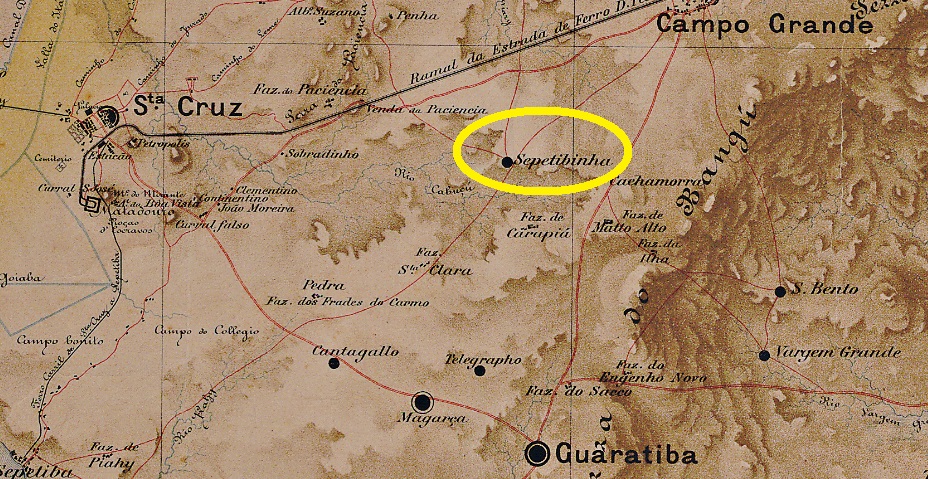
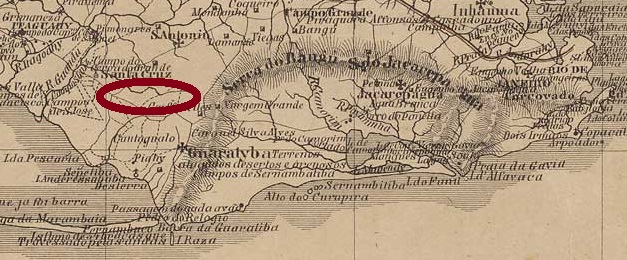
Sepetibinha is another village that has disappeared from the map. The small settlement near Campo Grande was located south of the railway road to Santa Cruz, about 60 km west of the imperial capital of Rio de Janeiro. Today, the village belongs to the district of Guaratiba.
As Nova Monteiro writes in Administrações e Agencias Postaes do Brasil Imperio (Brasil Filatelico/RJ, 1934-5; Reprint SPP 1994-1999), there was a post office there from May 1867, but it was closed around 1882, still during the Empire, as Paulo Novaes reports in agenciaspostais.com.br. No postmark from there has been seen so far, it must be a rarity.
Bellegard-Niemeyer: Carta Corographica do Rio de Janeiro, 1867
Sepetibinha ist wieder eine heute von der Landkarte verschwundene Ortschaft. Die kleine Siedlung bei Campo Grande lag südlich der Bahnstrasse nach Santa Cruz, ca. 60 km westlich der kaiserlichen Hautpstadt Rio de Janeiro entfernt. Heute gehört der Ort zum Stadtteil Guaratiba.
Wie Nova Monteiro in Administrações e Agencias Postaes do Brasil Imperio (Brasil Filatelico/RJ, 1934-5; Reprint SPP 1994-1999) schreibt, gab es dort ein Postamt ab Mai 1867. Allerdings wurde dieses ca. 1882, also noch im Kaiserreich geschlossen, wie Paulo Novaes in agenciaspostais.com.br berichtet. Bisher war kein Poststempel von dort zu sehen, er muss eine Seltenheit sein.
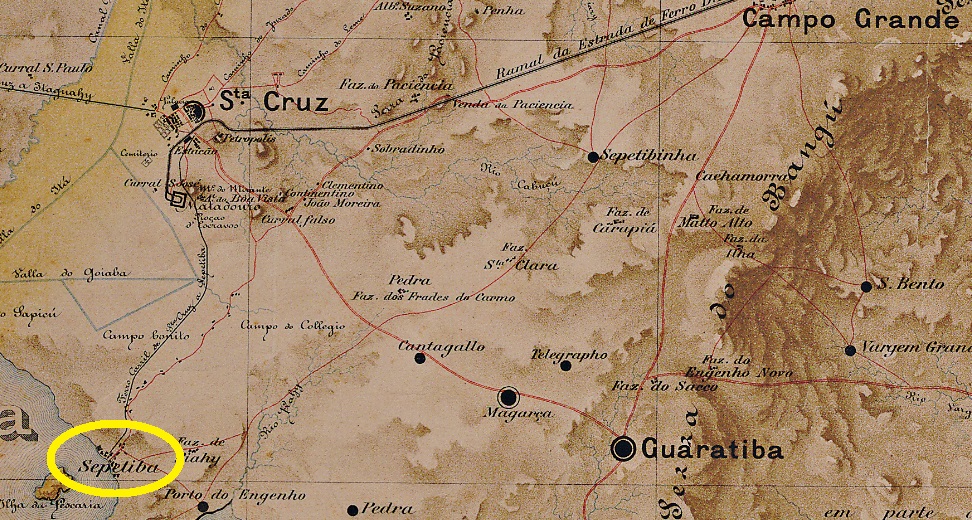
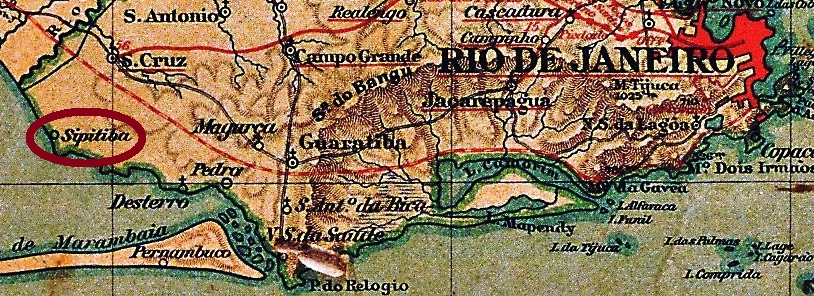
Sepetiba was a freguesia on the Atlantic Ocean belonging to the imperial curato of Santa Cruz, about 70 km west of the capital Rio de Janeiro. The word comes from the Tupi-Guarani language and means place with many reeds. Today it is a district of Rio, without the tourist charm of the better-known beaches, but remaining bucolic and peaceful, not least due to the presence of a military base nearby.
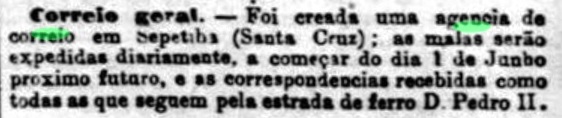
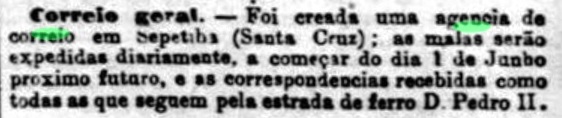
The local post office was established in May 1880, according to the Rio Press:
Jornal do Commercio, 28.05.1880
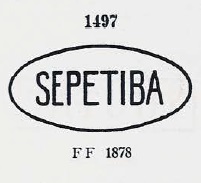
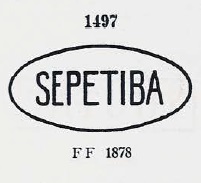
The first postmark is SMN-0185a and was already presented by Paulo Ayres in Catálogo de Carimbos Brasil-Império (S. Paulo, 1937, 1942) under No. 1497:
SMN-0185a (P.A. 1497)
It was followed by SMN-0185b (Coll. Dieter Kerkhoff): a double circle with the inscription SEPETIBA above and an ornament in lozenge below formed by four small lozenges. The only copy so far bears a date from 1893 in the centre.
Almanak Laemmert, 1892
Sepetiba war eine Freguesia am Atlantik, die dem kaiserlichen Curato von Santa Cruz angehörte, ca. 70 km westlich der Hauptstadt Rio de Janeiro entfernt. Das Wort stammt aus der Tupi-Guarani-Sprache und bedeutet Ort mit viel Schilf. Heute ist die Ortschaft ein Stadtteil Rios, zwar ohne den touristischen Charme der bekannteren Strände, doch bukolisch und friedlich geblieben, nicht zuletzt durch die Anwesenheit einer Militärbasis in der Nähe.
Das örtliche Postamt entstand im Mai 1880, wie aus der Rio-Presse hervorgeht:
Ihm folgte SMN-0185b (Samml. Dieter Kerkhoff): ein Doppelkreis mit der Inschrift SEPETIBA oben und einem Ornament in Raute unten, das aus vier kleinen Rauten gebildet wird. Das bisher einzige Exemplar trägt in der Mitte ein Datum aus 1893.
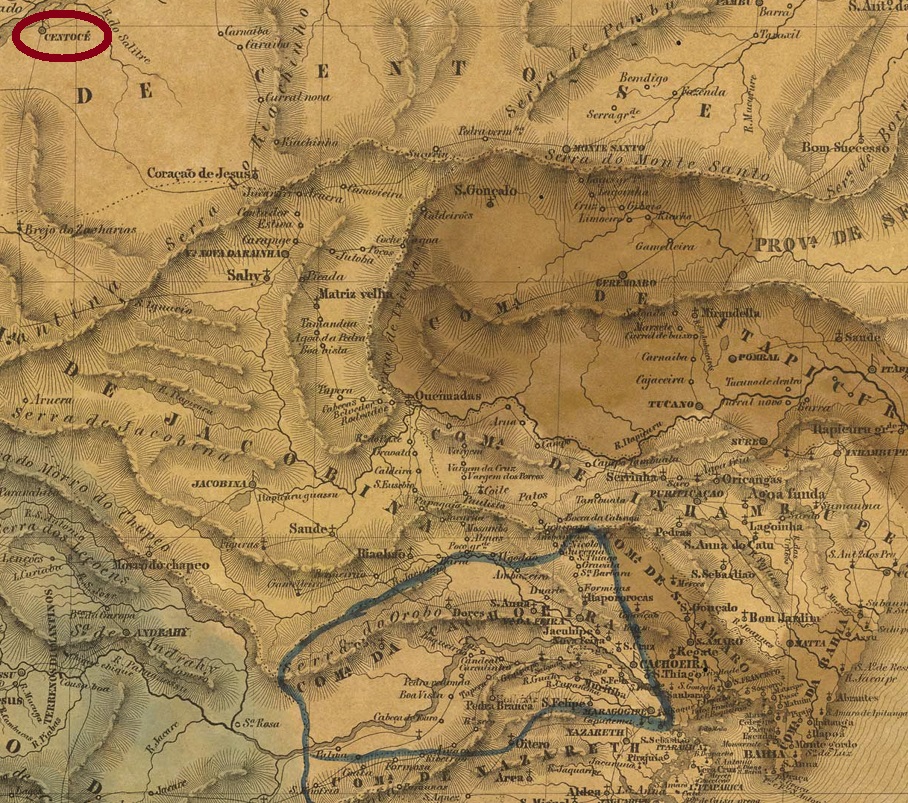
Sento Sé already had a chapel called São José da Barra de Sento Sé in 1719 and was located on the south bank of the mythical São Francisco River, barely 700 km northwest of the former colonial capital Salvador da Bahia. In July 1832, the place became a freguesia, and in January 1883, a villa in its own município.
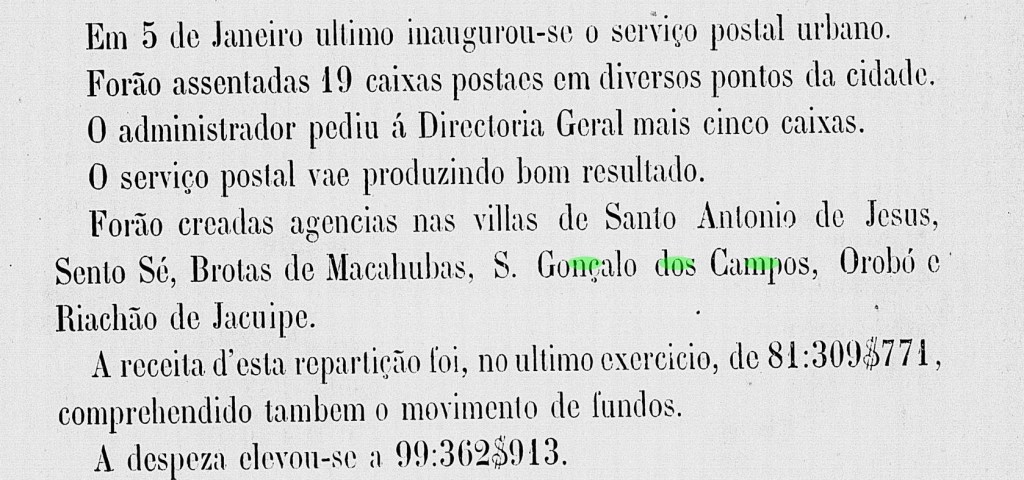
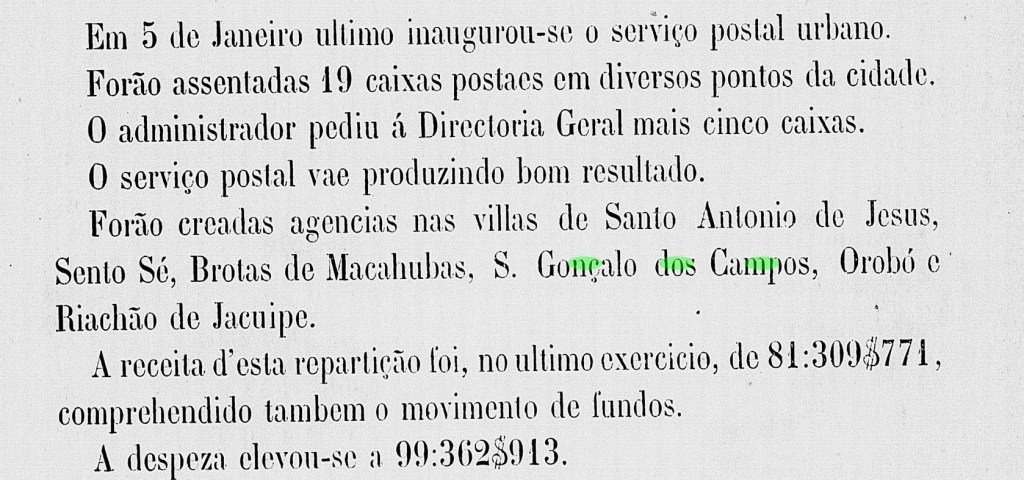
The Imperial Mail Register (Tabella das Agencias do Correio do Imperio, Rio de Janeiro, 1885) lists the local post office from 1879. However, as this agency does not appear in the Imperial Postal Guide (Guia Postal do Imperio) of 1880, it is more likely that its actual creation and commissioning took place later, as shown in the Provincial President’s Report for 1881:
Relatório (…) do Conselho Interino do Governo da Bahia, 1881
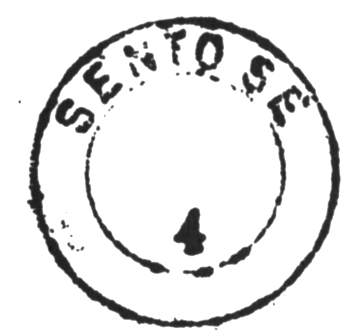
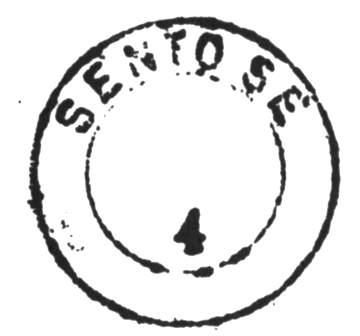
The only postmark in the 19th century is SBA-0850a, as shown in Carimbos Postais – século XIX, (Rio de Janeiro, 1989) by Cicero A. Almeida:
SBA-0850a (MPT 760)Villiers de l’Ile Adam: Carta (…) da Provincia da Bahia, 1848
Sento Sé hatte bereits 1719 eine Kapelle namens São José da Barra de Sento Sé und lag am Südufer des mythischen Flusses São Francisco, knapp 700 km nordwestlich der ehemaligen Kolonialhauptstadt Salvador da Bahia entfernt. Im Juli 1832 wurde der Ort zu einer Freguesia, und im Januar 1883 zur Villa im eigenen Município.
Das Verzeichnis der kaiserlichen Postämter (Tabella das Agencias do Correio do Imperio, Rio de Janeiro, 1885) listet das örtliche Postamt ab 1879 auf. Da aber diese Agentur nicht im Kaiserlichen Postführer (Guia Postal do Imperio) von 1880 zu sehen ist, ist wahrscheinlicher, dass sich ihre tatsächlichen Entstehung und Inbetriebnahme erst später stattfand, wie im Bericht des Provinzpräsidenten für 1881 hervorgeht:
Relatório (…) do Conselho Interino do Governo da Bahia, 1881
Other names: Bom Jesus do Monte Verde, Monte Verde
See also Bom Jesus do Monte Verde (R. Koester: Carimbologia V)
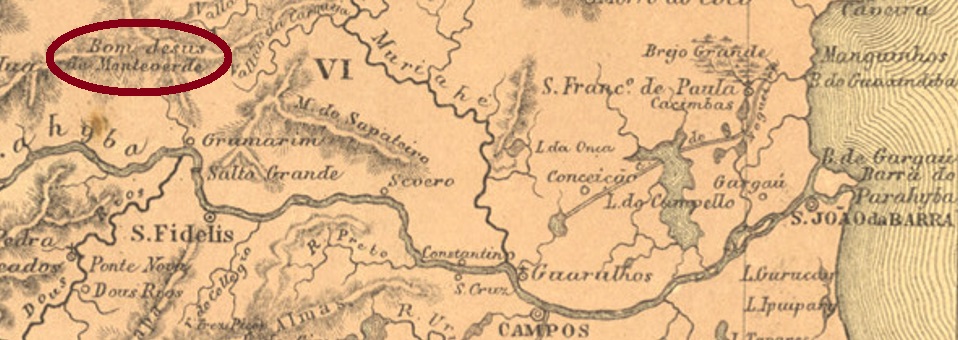
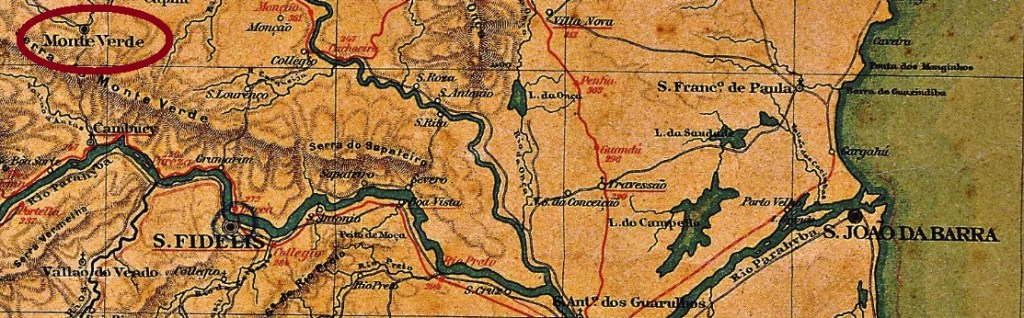
Senhor Bom Jesus do Monte Verde (Our Lord, Kind Jesus of Green Mountain) was a freguesia of São Fidelis from November 1861, about 280 km northeast of the capital Rio de Janeiro. In May 1891, the village rose to become a vila called Monte Verde within its own município but lost political administrative autonomy in December 1929. Since then, Monte Verde has been a district in the município of Cambuci.
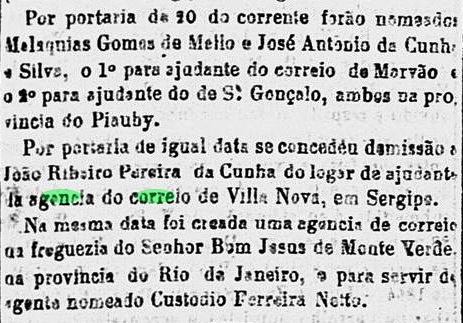
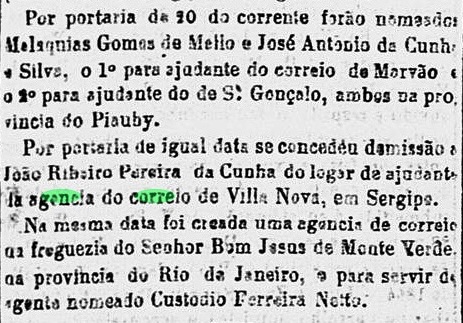
The local post office was established in July 1864, as reported by the Rio press:
Correio Mercantil/RJ, 25 July 1864
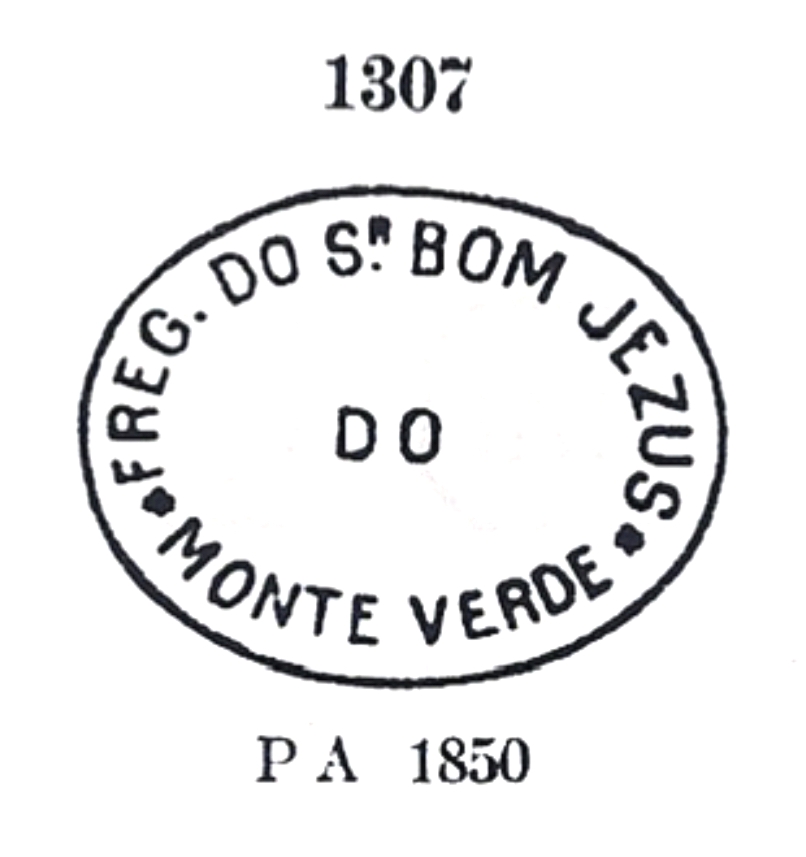
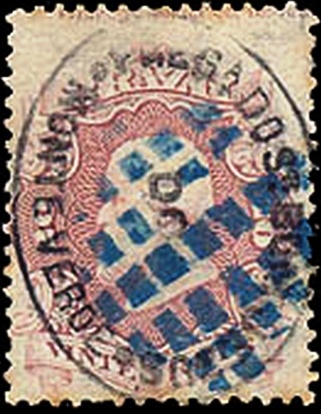
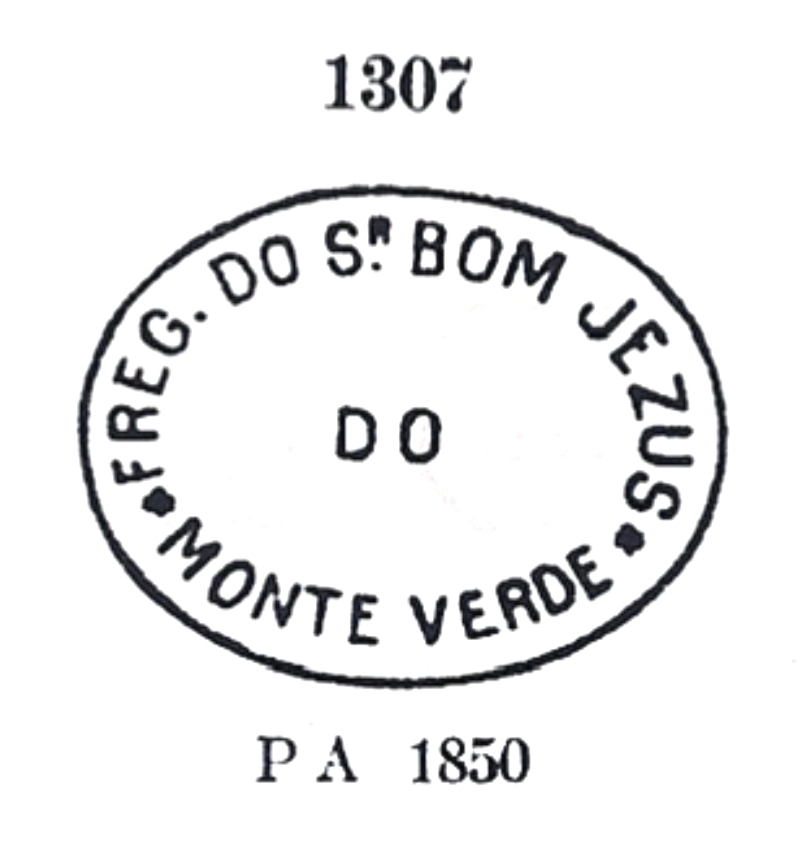
In his Catálogo de Carimbos Brasil-Império (S. Paulo, 1937, 1942) Paulo Ayres shows two early postmarks from this place. However, R. Koester in Carimbologia V considers the first of them (P.A. 1306) to be wrong. The other one (P.A. 1307) would then be SRJ-0205a, which was in use from the beginning until 1883:
SRJ-0205a (P.A. 1307)
A mute cancellation used in conjunction with SRJ-0205a also dates from this period:
1866ff (RHM)
Later postmarks of this locality bear the inscription BOM JESUS.
Almanak Laemmert, 1892
Andere Namen: Bom Jesus do Monte Verde, Monte Verde
Siehe auch Bom Jesus do Monte Verde (R. Koester: Carimbologia V)
Senhor Bom Jesus do Monte Verde (Unser Herr, gütiger Jesus aus dem Grünen Berg) war ab November 1861 eine Freguesia von São Fidelis, die ca. 280 km nordöstlich der Hauptstadt Rio de Janeiro entfernt lag. Im Mai 1891 stieg der Ort zu einer Vila namens Monte Verde mit eigenem Município, verlor aber die politische Verwaltungsautonomie im Dezember 1929. Seitdem ist Monte Verde ein Distrikt im Município von Cambuci.
Das örtliche Postamt wurde im Juli 1864 ins Leben gerufen, wie die Presse aus Rio berichtete:
Correio Mercantil/RJ, 25.07.1864
In Catálogo de Carimbos Brasil-Império (S. Paulo, 1937, 1942) zeigt Paulo Ayres gleich zwei frühe Poststempel aus diesem Ort. Allerdings hält R. Koester in Carimbologia V den ersten davon (P.A. 1306) für falsch. Der andere (P.A. 1307) wäre dann SRJ-0205a, der vom Beginn an bis 1883 in Gebrauch war:
SRJ-0205a (P.A. 1307)
Aus dieser Zeit stammt auch eine stumme Abstempelung, die in Verbindung zu SRJ-0205a benutzt wurde:
1866ff (RHM)
Spätere Posttempel dieser Ortschaft tragen die Inschrift BOM JESUS.
Villiers de l’Ile Adam: Carta (…) da Provincia do Piauhy, 1850
Other names: Buritizinho, Bom Jesus (1943)
See also Bom Jesus do Gurgueia (R. Koester: Carimbologia V)
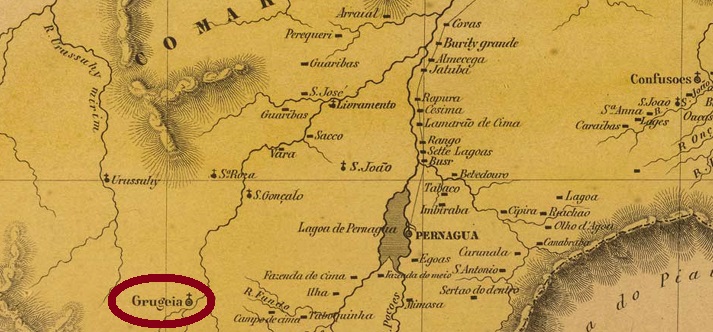
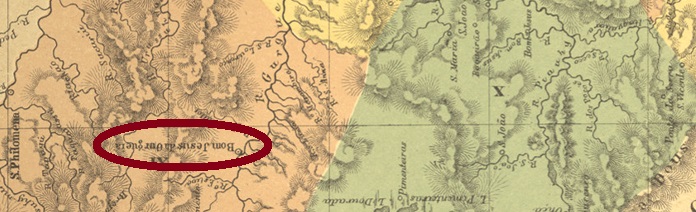
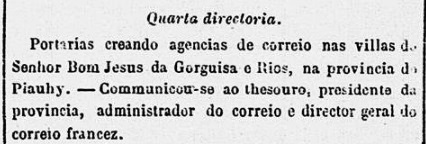
This locality is said to have been first called Buritizinho, then became a district of Parnaguá in September 1838, lying northwest of the Gurgueia River, 600 km south of the future provincial capital of Teresina. The village rose to the status of a villa in December 1855, and in August 1843 its name was simplified to Bom Jesus. Today, it is the centre of a region that wants to separate from the state of Piauí as the new state of Gurgueia.
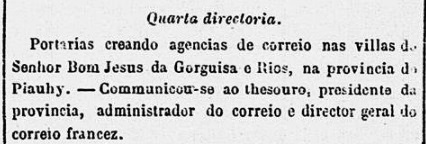
Two dates have been found for the origin of the local post office, but it is possible that the second date is a transcription error. Nova Monteiro, in Administrações e Agencias Postaes do Brasil Imperio (Brasil Filatelico/RJ, 1934-5; Reprint SPP 1994-1999) writes March 1861 for it, which is confirmed by the Rio press:
Correio Mercantil/RJ, 28.03.1861
However, Reinhold Koester (Carimbologia V) has given 1881 as the year of origin. Now this agency was mentioned in the reports of the Provincial President (Relatorio do Presidente da Provincia) for 1867, 1870 and 1877, and it is also listed in the Imperial Postal Guide (Guia Postal do Império) from 1880. Koester is probably wrong here.
So far, no postmark has been found from this place in the imperial period.
Atlas do Imperio do Brasil, 1868
Andere Namen: Buritizinho, Bom Jesus (1943)
Siehe auch Bom Jesus do Gurgueia (R. Koester: Carimbologia V)
Diese Ortschaft soll zuerst Buritizinho geheißen haben, wurde dann im September 1838 zu einem Distrikt von Parnaguá, der nordwestlich des Flusses Gurgueia lag, 600 km südlich der künftigen Provinzhaupt Teresina entfernt. Der Ort stieg im Dezember 1855 zur Villa auf und hat im August 1843 den Namen zu Bom Jesus vereinfacht bekommen. Heute ist er das Zentrum einer Region, die sich als neues Bundesstaat Gurgueia vom Staat Piauí trennen möchte.
Es wurden zwei Daten für die Entstehung des örtlichen Postamtes gefunden, aber womöglich handelt es sich beim zweiten Datum um einen Abschreibfehler. Nova Monteiro schreibt in Administrações e Agencias Postaes do Brasil Imperio (Brasil Filatelico/RJ, 1934-5; Reprint SPP 1994-1999) dafür den März 1861, was durch die Presse aus Rio bestätigt wird:
Correio Mercantil/RJ, 28.03.1861
Allerdings hat Reinhold Koester (Carimbologia V) das Jahr 1881 als Entstehungsjahr angegeben. Nun wurde diese Agentur in den Berichten des Provinzpräsidenten (Relatorio do Presidente da Provincia) für 1867, 1870 und 1877 erwähnt, und im kaiserlichen Postführer (Guia Postal do Império) aus 1880 ist sie auch aufgelistet. Hier wird Koester wohl falsch liegen.
Bisher wurde kein Poststempel in der Kaiserzeit aus diesem Ort gefunden.
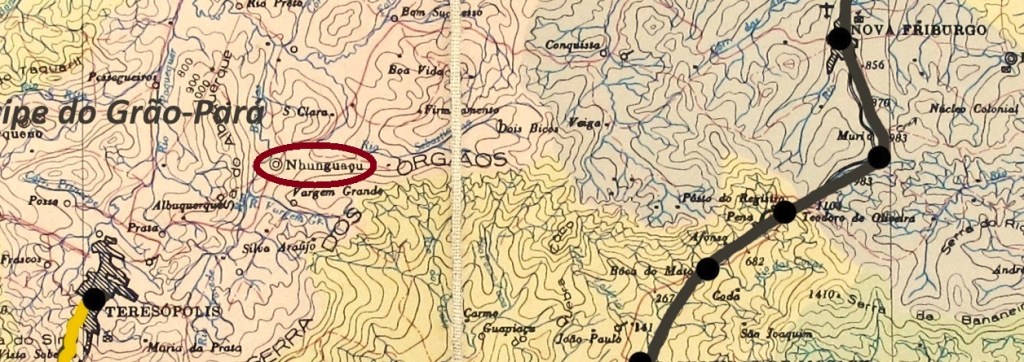
Other names: Venda Nova, Nhunguaçu, Vale de Bonsucesso (1990)
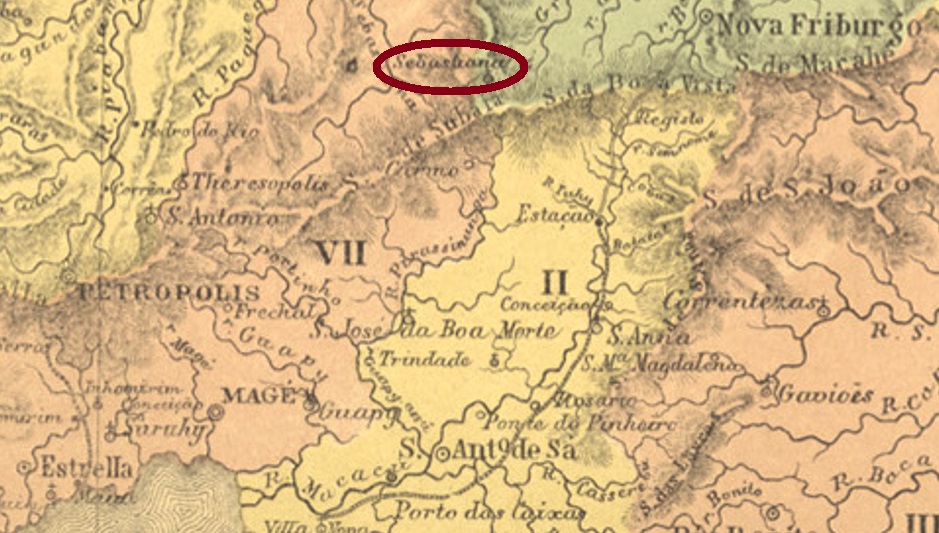
Sebastianna was a district of Nova Friburgo, located on the river of the same name, about 120 km northeast of the capital Rio de Janeiro. In December 1901, the place changed to the Município of Teresópolis. The place name was changed twice after that: in December 1843 to Nhunguaçu and in April 1990 to the still current Vale de Bonsucesso.
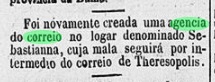
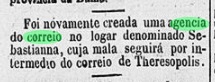
Two foundation dates for the local post office were found. Paulo Novaes writes March 1869 in agenciaspostais.com.br. The agency was closed sometime later, as a reopening was announced in the Rio press in July 1876:
Gazeta de Noticias, 14 July, 1876
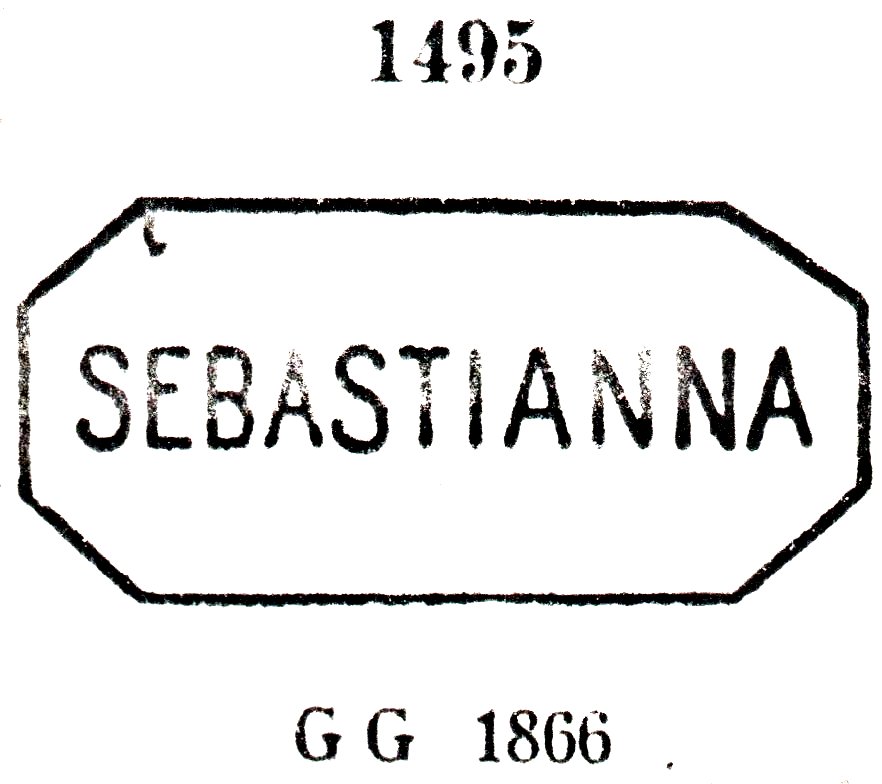
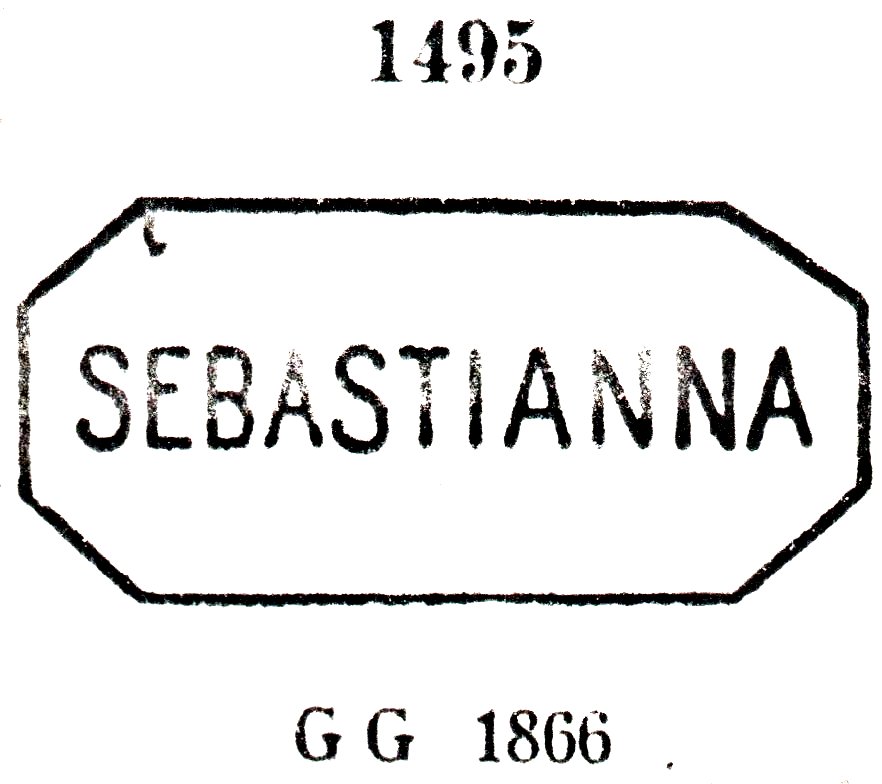
Three 19th century postmarks were seen. SRJ-1580a is the oldest of them; it was used at least until 1877 and is also illustrated by Paulo Ayres in Catálogo de Carimbos Brasil-Império, (S. Paulo, 1937, 1942) under No. 1495:
SRJ-1580a (P.A. 1495)
It was followed by SRJ-1580b (Coll. José A. Junges): a double circle with the inscription SEBASTIANNA above and an ornament in lozenge below, dated in the centre from 1886 to 1890. SRJ-1580c (Coll. José A. Junges) could already be Republican, as its earliest date is from 1893. The double circle reads the same inscription as before, the ornament at the bottom is now X-shaped.
agenciaspostais.com.br
Printausgabe-Aktualisierung, am 25. Oktober 2021
Andere Namen: Venda Nova, Nhunguaçu, Vale de Bonsucesso (1990)
Sebastianna war ein Distrikt von Nova Friburgo, der am gleichnamigen Fluss lag, ca. 120 km nordöstlich der Hauptstadt Rio de Janeiro entfernt. Im Dezember 1901 wechselte der Ort zum Município von Teresópolis. Der Ortsname wurde danach zweimal geändert: im Dezember 1843 zu Nhunguaçu und im April 1990 zum noch aktuellen Vale de Bonsucesso.
Zwei Gründungsdaten fürs örtliche Postamt wurden gefunden. Paulo Novaes schreibt in agenciaspostais.com.br den März 1869. Die Agentur wurde irgendwann später geschlossen, denn eine Wiedereröffnung wurde im Juli 1876 in der Rio-Presse bekannt gemacht:
Gazeta de Noticias, 14.07.1876
Drei Poststempel aus dem 19. Jahrhundert sind vorhanden. SRJ-1580a ist der älteste davon; er wurde mindestens bis 1877 verwendet und ist auch bei Paulo Ayres im Catálogo de Carimbos Brasil-Império, (S. Paulo, 1937, 1942) unter Nr. 1495 abgebildet:
SRJ-1580a (P.A. 1495)
Ihm folgte SRJ-1580b (Samml. José A. Junges): Ein Doppelkreis mit der Inschrift SEBASTIANNA oben und einem Ornament in Raute unten, datiert in der Mitte von 1886 bis 1890. SRJ-1580c (Samml. José A. Junges) könnte bereits republikanisch sein, da sein frühestes Datum aus 1893 ist. Im Doppelkreis liest man die gleiche Inschrift wie bisher, das Ornament unten ist nun X-förmig.
Villiers de l’Ile Adam: Carta (…) das provinicas de Pernambuco, Alagoas e Sergipe, 1848
Print edition update, on October 24, 2021
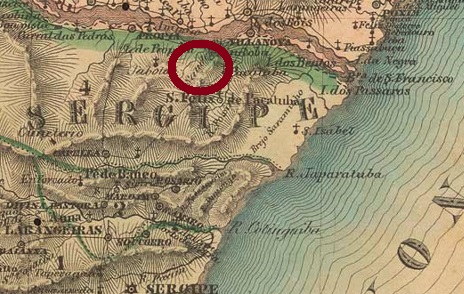
This post office is one of the biggest enigmas of Carimbologia S2, because the only information about it is a cancel image, shown in Cicero A. Almeida’s Carimbos Postais – século XIX, (Rio de Janeiro, 1989) under no. MPT 789:
SSE-0205a, C.A. Almeida (op.cit.) MPT 789
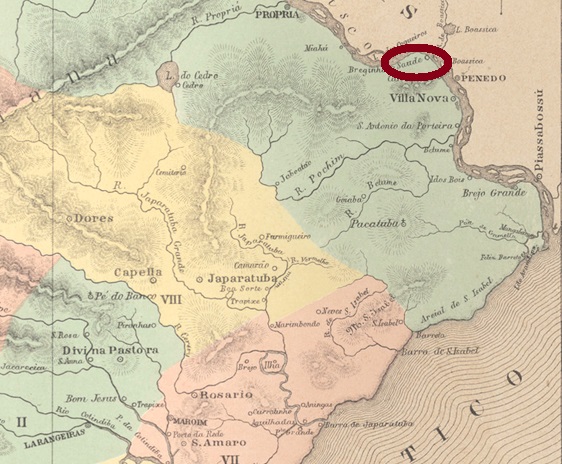
The cancel is said to belong to the 19th century, but according to the Brazilian Institute for Geography and Statistics (IBGE), the only locality with this name around 1890 was the parish of Nossa Senhora da Saúde near Japaratuba. However, no post office has been found there so far. The alternative location would be the small village of Saúde, which lay on the south bank of the Rio São Francisco, in today’s Município of Santana do São Francisco. The locality was, after all, to be found on maps from 1848 (see above) and 1868 (see below).
Although as little is known of this post office as of its alternative, a postal agency seems more plausible here, since this place was not only registered on maps, but its situation was also strategically important.
Atlas do Imperio do Brasil, 1868
Aktualisierung der Printausgabe, am 24. Oktober 2021
Dieses Postamt stellt ein großes Rätsel der Carimbologia S2 dar, denn die einzige Information darüber ist ein Stempel, der in Cicero A. Almeidas Carimbos Postais – século XIX, (Rio de Janeiro, 1989) unter Nr. MPT 789 abgebildet wurde:
SSE-0205a, C.A. Almeida (op.cit.) MPT 789
Der Stempel soll demnach dem 19. Jahrhundert angehören. Laut der brasilianischen Geografie- und Statistikbehörde (IBGE) die einzige Ortschaft mit diesem Namen um 1890 war die Pfarrei Nossa Senhora da Saúde bei Japaratuba. Allerdings war dort bisher kein Postamt zu finden. Der Alternativort hinzu wäre die kleine Gemeinde Saúde, die am Südufer des Rio São Francisco lag, im heutigen Município von Santana do São Francisco. Diese Ortschaft war immerhin auf Karten von 1848 und 1868 (siehe oben) zu finden.
Auch wenn von diesem Postamt ebenso wenig bekannt ist, wie von seiner Alternative, eine Postagentur erscheint hier plausibler, da dieser Ort nicht nur auf Karten registriert wurde, sondern auch strategisch wichtig lag.
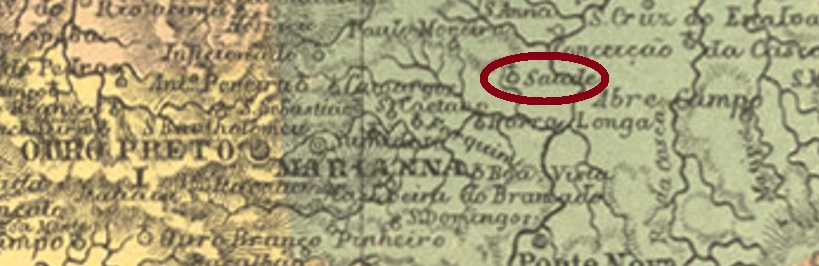
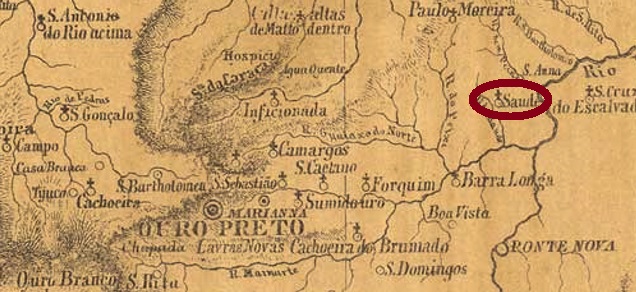
Nossa Senhora da Saúde (Our Lady of Health) was a freguesia of Mariana from April 1841, located on the north bank of the Rio do Peixe, barely 90 km northeast of the provincial capital of Ouro Preto. In December 1873, it became a district, which changed to the newly founded Município of Alvinópolis in February 1891. Since December 1938, the place has been the independent Município of Dom Silvério. The name commemorates the Archbishop of Mariana Dom Silvério Gomes Pimenta (1840-1922), who was also a teacher and poet, in addition to being Brazil’s first black archbishop.
As Paula Sobrinho writes in História Postal de Minas Gerais (Belo Horizonte, 1997), there has been a post office there since June 1879. The imperial postmark is SMG- 3090a (Coll. José A. Junges). A double circle with the inscription SAUDE at the top and an ornament in lozenge at the bottom, which is formed by four small lozenges. The dates in the centre were found for the period 1886-1894.
Provincia de Minas Geraes, 1873
Anderer Name: Dom Silvério (1938)
Nossa Senhora da Saúde (Unsere Liebe Frau der Gesundheit) war ab April 1841 eine Freguesia von Mariana, die am Nordufer des Rio do Peixe lag, knapp 90 km nordöstlich der Provinzhauptstadt Ouro Preto entfernt. Im Dezember 1873 wurde daraus ein Distrikt, der im Februar 1891 zum neu gegründeten Município von Alvinópolis wechselte. Seit Dezember 1938 ist der Ort der eigenständige Município von Dom Silvério. Der Name erinnert an den Erzbischof von Mariana Dom Silvério Gomes Pimenta (1840-1922), der auch Lehrer und Dichter war, dazu noch den ersten schwarzen Erzbischof Brasiliens.
Wie Paula Sobrinho in História Postal de Minas Gerais (Belo Horizonte, 1997) schreibt, gibt es dort ein Postamt seit Juni 1879. Der kaiserliche Poststempel ist SMG- 3090a (Samml. José A. Junges). Ein Doppelkreis mit der Inschrift SAUDE oben und einem Ornament in Raute unten, das aus vier kleinen Rauten gebildet wird. Die Daten in der Mitte wurden für den Zeitraum 1886-1894 gefunden.
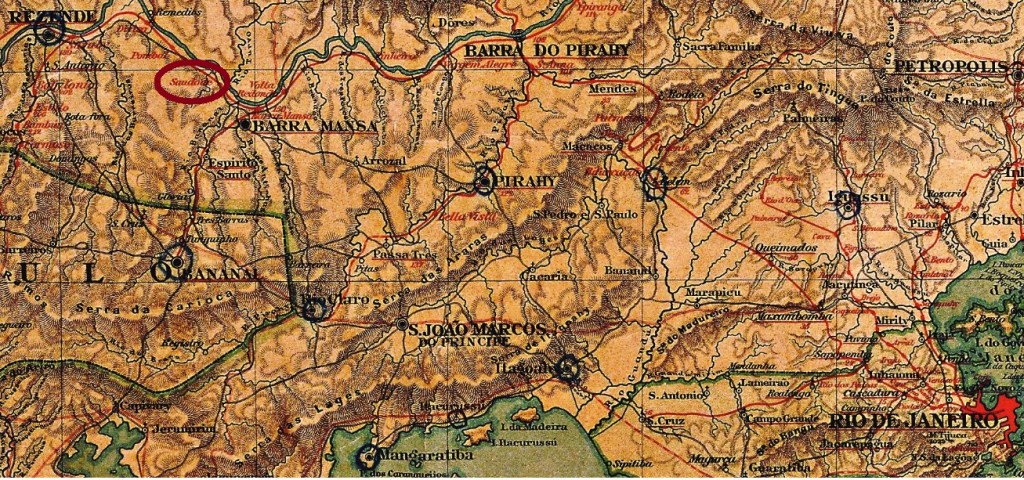
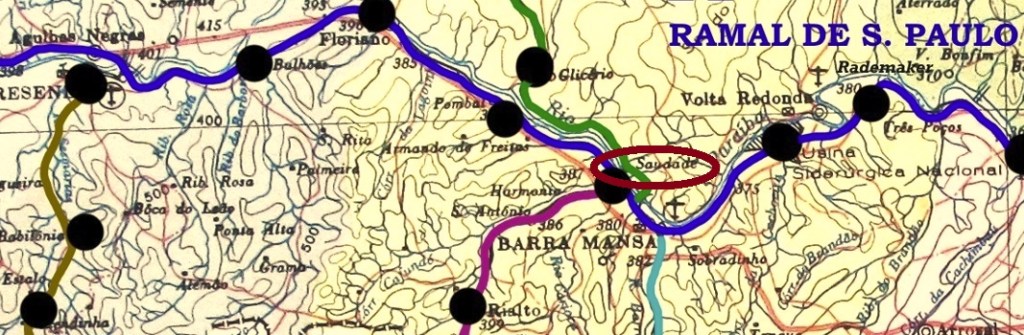
Saudade (Longing) was a railway station of the E.F. Dom Pedro II company, inaugurated in August 1883 and located in the Município of Barra Mansa, over 130 km northwest of the capital Rio de Janeiro. After the end of the Empire, the railway company was renamed E.F. Central do Brasil, and from 1975 until the end of operations in 1996, the railway line belonged to Rede Ferroviária Federal SA.
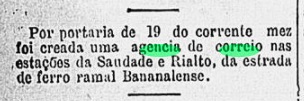
As can be read in the Rio press, there was a station post office there since September 1883:
Gazeta de Noticias, 21.09.1883
Two postmarks in double circle have survived from the imperial period: SRJ-2260a (Coll. José A. Junges) has the inscription SAUDADE above and an ornament in lozenge below, its four sides open. Dates in the centre from 1887 to 1889. SRJ-2260b (Coll. Karlheinz Wittig) has the same inscription at the top, the ornament at the bottom is now X-shaped. All dates so far are from the Republic: 1891-1893.
agenciaspostais.com.br
Saudade (Sehnsucht) war ein Bahnhof der E.F. Dom Pedro II-Gesellschaft, der im August 1883 eingeweiht wurde und im Município von Barra Mansa lag, über 130 km nordwestlich der Hauptstadt Rio de Janeiro entfernt. Nach dem Ende des Kaiserreichs wurde die Bahngesellschaft zu E.F. Central do Brasil umbenannt, und von 1975 bis zum Betriebsende 1996 gehörte der Bahnlinie der Rede Ferroviária Federal S.A.
Wie in der Rio-Presse zu lesen ist, gab es dort ein Bahnhofspostamt seit September 1883:
Gazeta de Noticias, 21.09.1883
Zwei Poststempel in Doppelkreis sind in der Kaiserzeit überliefert: SRJ-2260a (Samml. José A. Junges) hat die Inschrift SAUDADE oben und ein Ornament in Raute unten, dessen vier Seiten offen sind. Daten in der Mitte von 1887 bis 1889. SRJ-2260b (Samml. Karlheinz Wittig) hat die gleiche Inschrift oben, das Ornament unten ist nun X-förmig. Alle Daten bisher entstammen der Republik: 1891-1893.
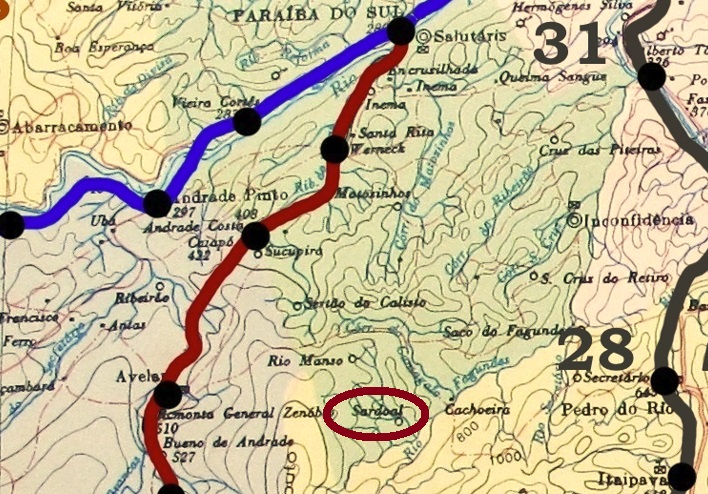
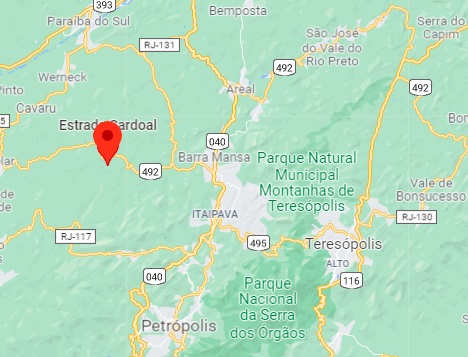
This early settlement of the Freguesia of Sant’Anna de Cebollas was in the Município of Parahyba do Sul, about 115 km north of the capital Rio de Janeiro. This is how it remained until December 1938, when the place was designated a district in the district of Inconfidência.
According to the postal report (Relatorio dos Correios) of 1887, there was a post office there from March 1887. The imperial postmark is SRJ- 2285a (Coll. José A. Junges): a double circle with the inscription SARDOAL above and an ornament in lozenge below, whose four sides are open. The dates in the middle were found for the period 1887-1896.
Google Maps
Diese frühe Siedlung der Freguesia von Sant’Anna de Cebollas lag im Município von Parahyba do Sul, ca. 115 km nördlich der Hauptstadt Rio de Janeiro entfernt. So ist es bis Dezember 1938 geblieben, als der Ort zum Stadtteil im Distrikt von Inconfidência ernannt wurde.
Wie aus dem Postbericht (Relatorio dos Correios) von 1887 hervorgeht, gab es dort ein Postamt ab März 1887. Der kaiserliche Poststempel ist SRJ- 2285a (Samml. José A. Junges): ein Doppelkreis mit der Inschrift SARDOAL oben und einem Ornament in Raute unten, dessen vier Seiten offen sind. Die Daten in der Mitte wurden für den Zeitraum 1887-1896 gefunden.



 Carimbologia