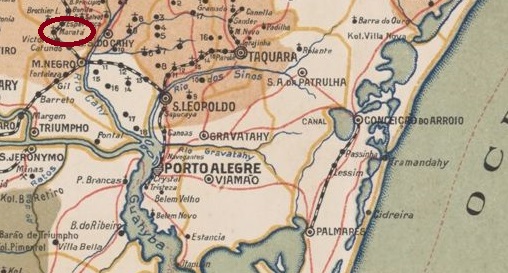
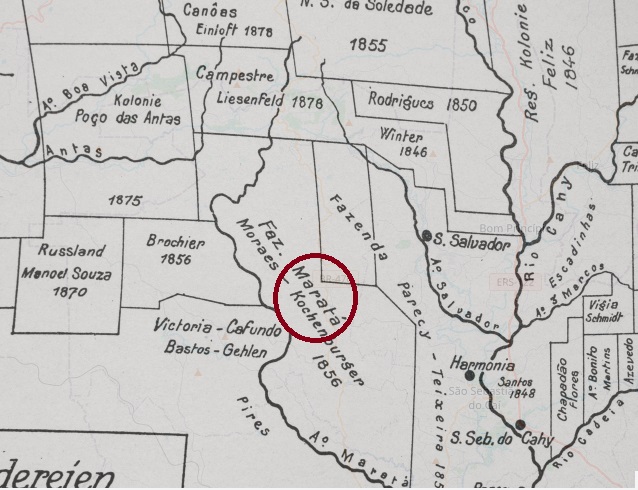
The Fazenda Maratá was first mentioned in documents in 1856. It belonged to the Vila de Triunfo, was located on the west bank of the Arroio Maratá in the german colony region, 80 kilometres northwest of the provincial capital Porto Alegre. In May 1873, the settlement came under the administration of Vila de S. João de Montenegro, and in August 1892 it became a district and, as such, was placed under the authority of the then newly founded Município de Brochier in April 1988. Maratá has been an independent municipality since March 1992.
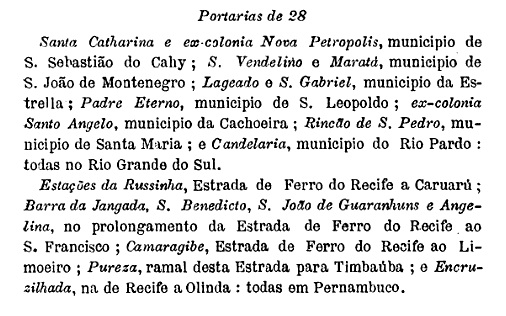
In October 1889, the establishment of a post office in Maratá was decided, as reported in the Post Bulletin (Boletim Postal) of the following month.
Boletim Postal No. 7, November 1889
It is therefore very unlikely that there are any imperial postmarks from Maratá.
colonias.heuser.pro.br
Im Jahr 1856 wurde die Fazenda Maratá erstmals urkundlich erwähnt. Sie gehörte zur Vila de Triunfo, lag am Westufer des Arroio Maratá in der deutschen Kolonieregion, 80 Kilometer nordwestlich der Provinzhauptstadt Porto Alegre. Im Mai 1873 ging die Siedlung unter der Verwaltung der Vila de S. João de Montenegro über, im August 1892 wurde sie zum Distrito und war als solcher ab April 1988 dem damals neu gegründeten Município de Brochier unterstellt. Seit März 1992 ist Maratá eine eigenständige Gemeinde.
Im Oktober 1889 wurde die Einrichtung eines Postamts in Maratá beschlossen, wie im Postbulletin (Boletim Postal) des Folgemonats berichtet wurde.
Boletim Postal Nr. 7, November 1889
Daher ist es sehr unwahrscheinlich, dass es kaiserliche Poststempel aus Maratá gibt.
Carta da Republica dos Estados Unidos do Brazil, 1892
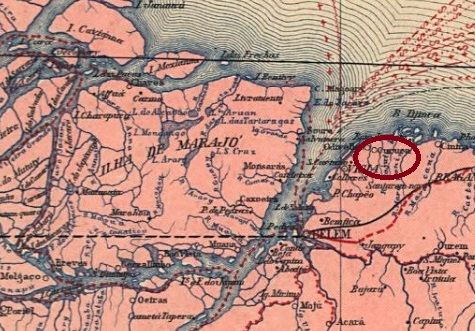
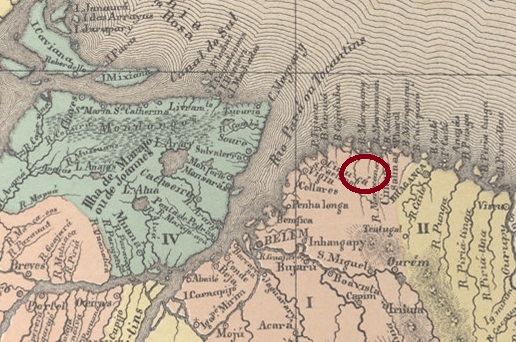
The Freguesia de Nossa Senhora da Vitória de Marapanim existed since October 1869 and belonged to the Vila de Curuçá. It was located on the west bank of the Marapanim, 150 kilometres northeast of the provincial capital Belém do Pará. Marapanim became a vila in March 1874 and a city in July 1895. The name comes from the Nheengatu language and means ‘little water butterfly’.
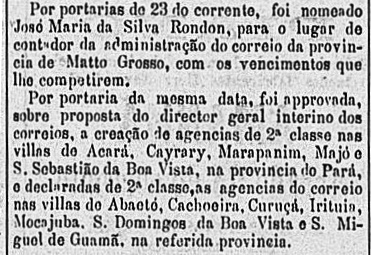
The press in Rio de Janeiro reported that the local post office was established in March 1882.
O Globo/RJ, 24 March 1882
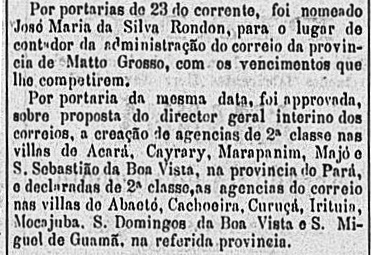
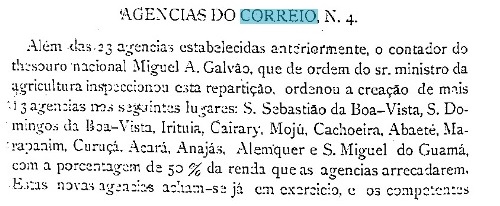
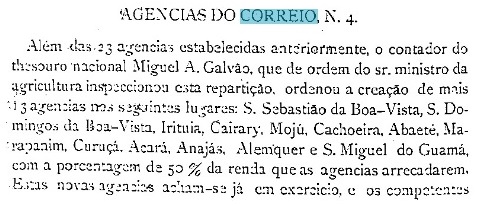
However, a post office in Marapanim was already mentioned in February of the previous year in the provincial president’s report:
Relatorio do Presidente da Provincia, February 1881
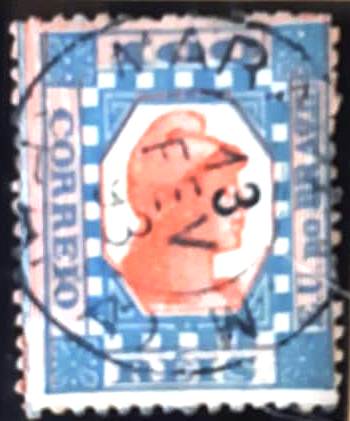
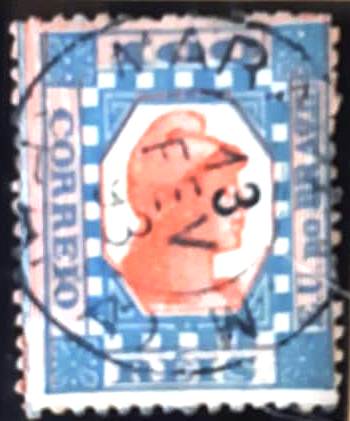
The oldest postmark to date is MPA-0150a (Fuad Ferreira Fo. collection):
MPA-0150a (FF) 1893Atlas do Imperio do Brasil, 1868
Die Freguesia de Nossa Senhora da Vitória de Marapanim bestand seit Oktober 1869 und gehörte zur Vila de Curuçá. Sie lag am Westufer des Marapanim, 150 Kilometer nordöstlich der Provinzhauptstadt Belém do Pará. Marapanim wurde im März 1874 zur Vila und im Juli 1895 zur Stadt. Der Name stammt aus der Nheengatu-Sprache und soll „kleiner Wasserschmetterling“ bedeuten.
Die Presse aus Rio de Janeiro schrieb, dass das örtliche Postamt im März 1882 entstanden sei.
O Globo/RJ, 24.03.1882
Allerdings wurde ein Postamt in Marapanim bereits im Februar des Vorjahres im Bericht des Provinzpräsidenten erwähnt:
Relatorio do Presidente da Provincia, Februar 1881
Der bisher älteste Poststempel ist MPA-0150a (Samml. Fuad Ferreira Fo.):
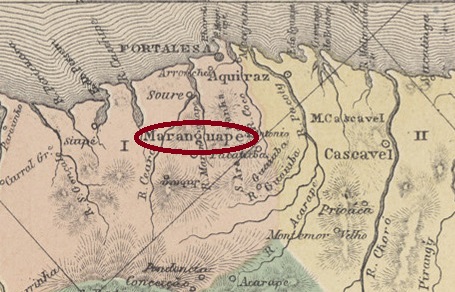
Villiers de l’Ile Adam: Carta (…) da Provincia do Ceara, 1849
Other names: Alto da Vila
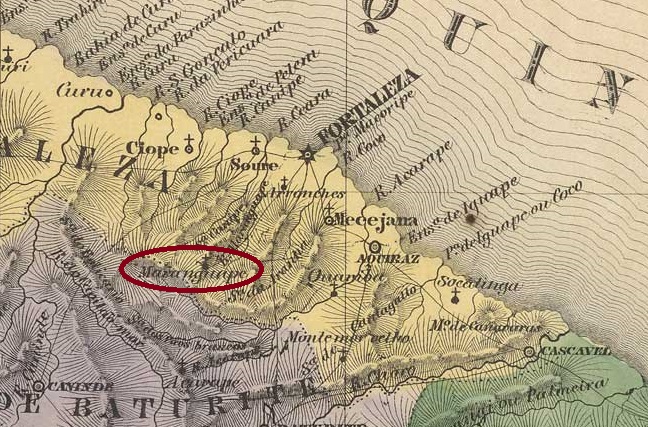
The Freguesia de N. Sra. da Penha de Maranguape was located on the west bank of the river of the same name, 25 km southwest of the provincial capital Fortaleza, and had existed since March 1849. Maranguape became a vila in November 1851 and a city in September 1869. The name comes from the Tupi language and means ‘expert warriors’.
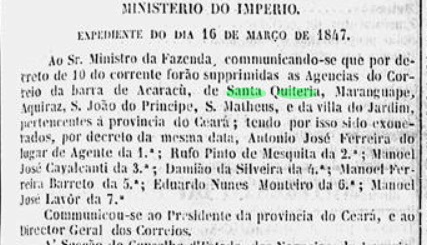
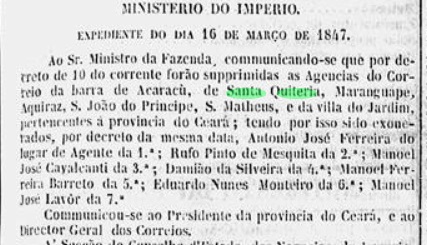
Two periods of operation were found for the local post office. It is not yet known when the first one began, but it ended in March 1847, as announced by the press in Rio.
Gazeta Official/RJ, 24 March 1847
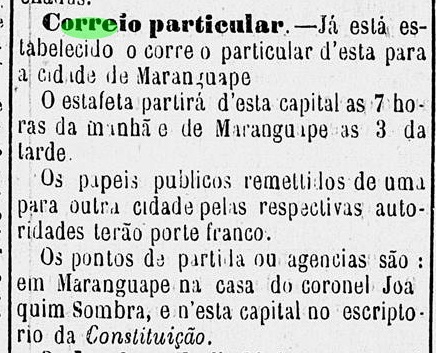
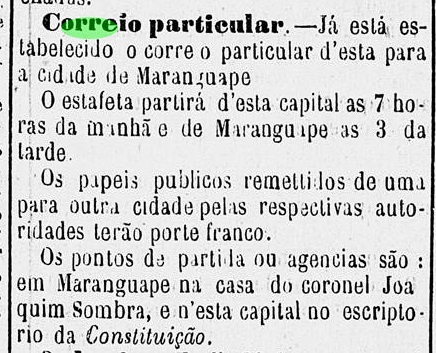
The second opening took place in June 1866, as Nova Monteiro writes in Administrações e Agencias Postaes do Brasil Imperio (Brasil Filatelico/RJ, 1934–1935; reprinted by SPP 1994–1999). In addition, a private postal route between Maranguape and Fortaleza was established in 1871, as reported in the regional press.
Cearense, 2 March 1871
However, no imperial postmark from Maranguape has been sighted to date.
Atlas do Imperio do Brasil, 1868
Andere Namen: Alto da Vila
Die Freguesia de N. Sra. da Penha de Maranguape lag am Westufer des gleichnamigen Flusses, 25 km südwestlich der Provinzhauptstadt Fortaleza, und bestand seit März 1849. Maranguape wurde im November 1851 zur Vila und im September 1869 zur Stadt. Der Name stammt aus der Tupi-Sprache und bedeutet „beschlagene Krieger”.
Es wurden zwei Betriebsperioden für das örtliche Postamt gefunden. Wann die erste begann, ist noch nicht bekannt, sie endete jedoch im März 1847, wie die Presse aus Rio bekannt gab.
Gazeta Official/RJ, 24.03.1847
Die zweite Eröffnung fand im Juni 1866 statt, wie Nova Monteiro in Administrações e Agencias Postaes do Brasil Imperio (Brasil Filatelico/RJ, 1934–1935; Nachdruck SPP 1994–1999) schreibt. Darüber hinaus wurde im Jahr 1871 eine private Postroute zwischen Maranguape und Fortaleza eingerichtet, wie aus der regionalen Presse hervorgeht.
Cearense, 02.03.1871
Bisher wurde jedoch kein kaiserlicher Poststempel aus Maranguape gesichtet.
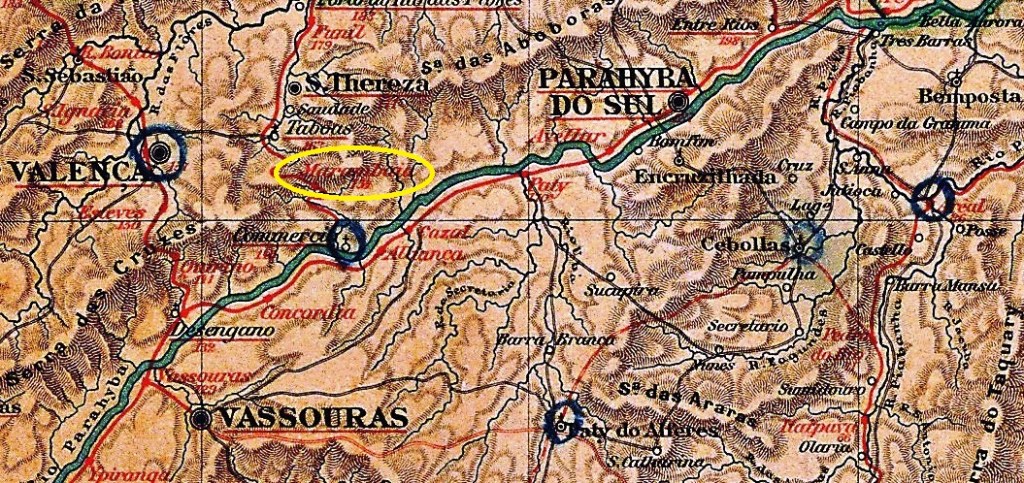
Marambaia Station was opened in November 1882 by the E. F. Rio das Flores railway company. It was in the municipality of Valença, 150 km northwest of the capital Rio de Janeiro. From 1910 until its closure in 1922, the railway line belonged to E.F. Central do Brasil. Today, the tracks and station building no longer exist (estacoesferroviarias.com.br). The area around the station was transferred to the newly founded municipality of Santa Teresa in March 1890 and has belonged to the municipality of Rio das Flores since December 1943.
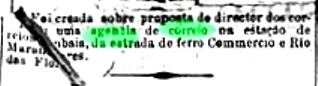
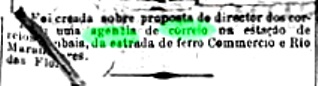
According to reports in the Rio press, there had been a post office at the station since January 1883:
O Globo, 31 January 1883
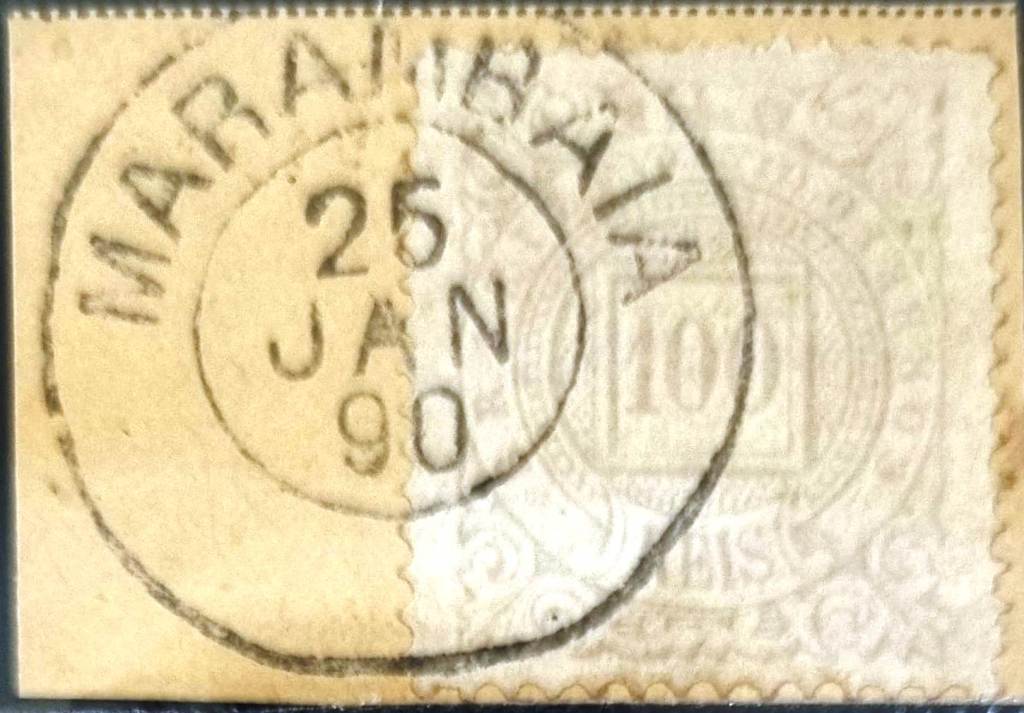
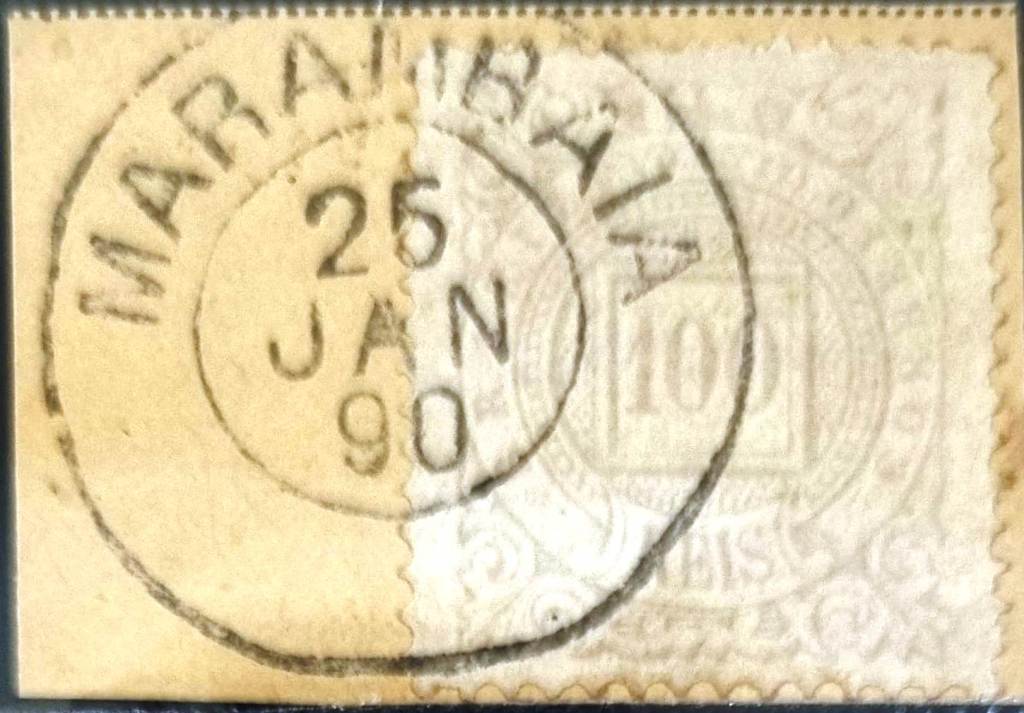
Paulo Novaes writes in agenciaspostais.com.br that the station post office was closed in April 1907. The only imperial postmark to date is MRJ-2085a (Marcio Duarte collection):
MRJ-2085a (MDu) 1888-1893Google Maps
Der Bahnhof Marambaia wurde im November 1882 von der Eisenbahngesellschaft E. F. Rio das Flores eröffnet. Er lag im Município de Valença, 150 km nordwestlich der Hauptstadt Rio de Janeiro. Die Bahnlinie gehörte von 1910 bis zur Stilllegung im Jahr 1922 der E.F. Central do Brasil. Heute sind Gleise und Bahnhofsgebäude nicht mehr vorhanden (estacoesferroviarias.com.br). Das Areal um den Bahnhof ging im März 1890 an die neu gegründete Gemeinde Santa Teresa über und gehört seit Dezember 1943 zur Gemeinde Rio das Flores.
Wie die Presse aus Rio bekannt gab, gab es ein Postamt am Bahnhof seit Januar 1883:
O Globo, 31.01.1883
Paulo Novaes schreibt in agenciaspostais.com.br, dass das Bahnhofspostamt im April 1907 geschlossen wurde. Der bisher einzige kaiserliche Poststempel ist MRJ-2085a (Samml. Marcio Duarte):
Villiers de l’Ile Adam: Carta (…) da Provincia da Bahia, 1848
Alternative spelling: Maraú
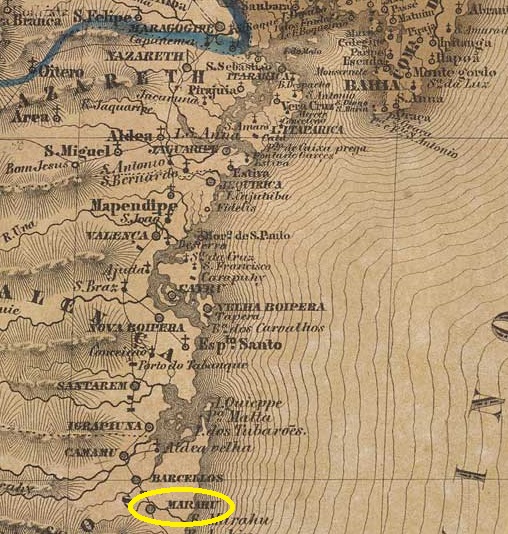
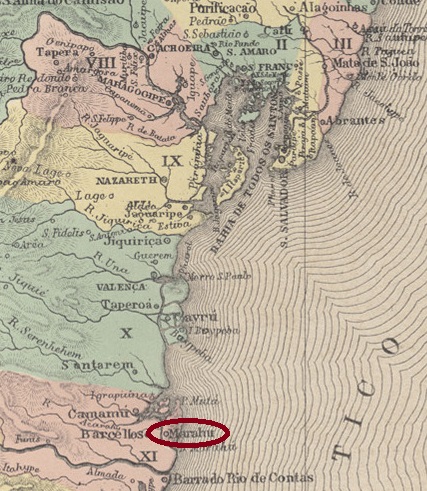
The town was originally called Povoado dos Funis, located on the east bank of the Rio da Serra, 250 kilometres south of the provincial capital Salvador da Bahia. In 1717, it became the Freguesia de S. Sebastião de Marahu and belonged to the Vila de Camamu. In June 1761, it was elevated to the status of Vila. Since March 1938, Maraú (as it is spelled today) has been a city.
Two dates have been found for the establishment of the local post office. One is October 1857, as Nova Monteiro writes in Administrações e Agencias Postaes do Brasil Imperio (Brasil Filatelico/RJ, 1934–1935; reprinted SPP 1994–1999), which is confirmed by Aureo G. Santos in Agências de Correio Criadas e Suprimidas 1851, 1855, 1856 e 1857 (Brasil Filatélico 181, Rio de Janeiro, 1977).
Aureo G. Santos (op. cit.)
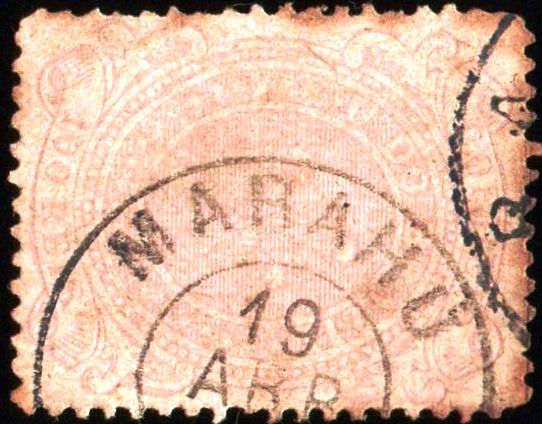
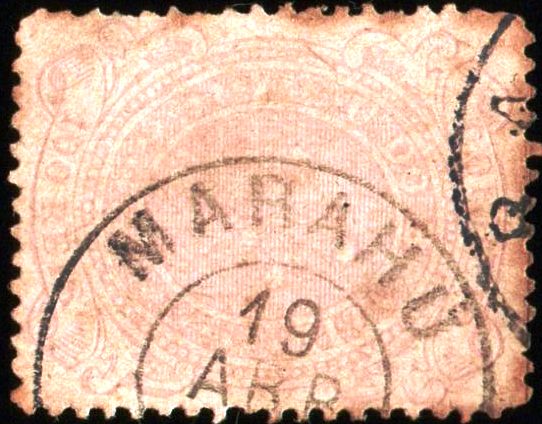
A second time in November 1858, as noted by R. Koester in Carimbologia XXVII. The only imperial postmark to date is MBA-0470b (illustration by Claudio Coelho):
MBA-0470b (CC) 1887ff-1890ffatlas do Imperio do Brasil, 1868
Andere Schreibweise: Maraú
Die Ortschaft hieß ursprünglich Povoado dos Funis, lag am Ostufer des Rio da Serra und befand sich 250 Kilometer südlich der Provinzhauptstadt Salvador da Bahia. Im Jahr 1717 wurde sie zur Freguesia de S. Sebastião de Marahu und gehörte zur Vila de Camamu. Im Juni 1761 erfolgte der Aufstieg zur Vila. Seit März 1938 ist Maraú (wie es heute geschrieben wird) eine Stadt.
Es wurden zwei Daten für die Entstehung des örtlichen Postamts gefunden. Zum einen im Oktober 1857, wie Nova Monteiro in Administrações e Agencias Postaes do Brasil Imperio (Brasil Filatelico/RJ, 1934–1935; Nachdruck SPP 1994–1999) schreibt, was von Aureo G. Santos in Agências de Correio Criadas e Suprimidas 1851, 1855, 1856 e 1857 (Brasil Filatélico 181, Rio de Janeiro, 1977) bestätigt wird.
Aureo G. Santos (op. cit.)
Ein zweites Mal im November 1858, wie von R. Koester in Carimbologia XXVII vermerkt. Der bisher einzige kaiserliche Poststempel ist MBA-0470b (Abb. Claudio Coelho):
Carta Corographica da Provincia de Pernambuco, 1880
Other names: Gamella (GAL-0065), Villa Izabel (VAL-0255)
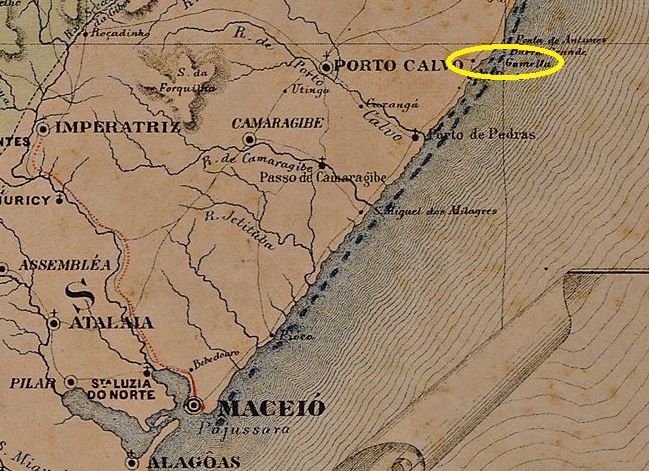
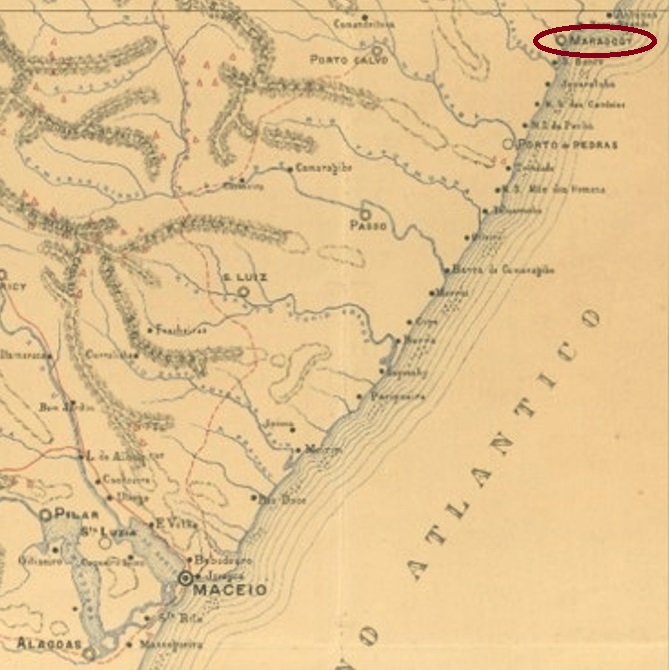
Gamela was an idyllic beachside settlement of the Vila de Porto Calvo near the provincial border with Pernambuco, 130 kilometres north-east of the capital Maceió. In April 1875, the village was renamed Villa Izabel, but in July 1876 it was renamed Vila de São Bento de Maragogy, which became the town of Maragogi in May 1892.
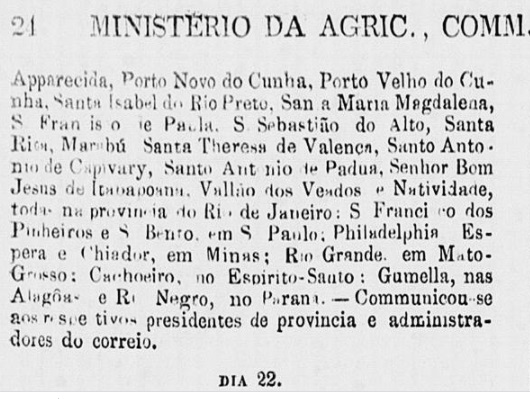
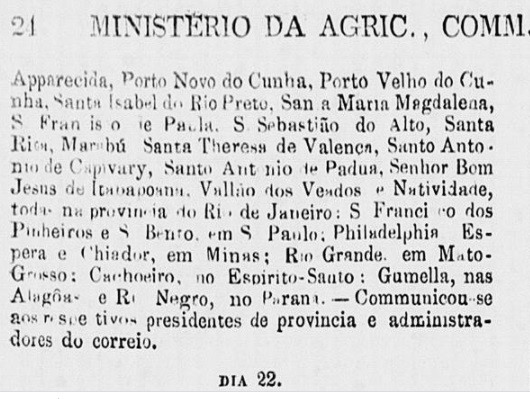
As Aureo G. Santos writes in Agências de Correio Criadas e Suprimidas 1851, 1855, 1856 e 1857 (Brasil Filatélico 181, Rio de Janeiro, 1977), there had been a post office there since December 1855, which was closed in June 1861, as can be seen from the minutes of the imperial ministry:
Expediente do Ministerio do Imperio, 21.06.1861
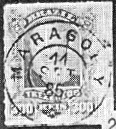
The postal agency was reopened in October 1876, as Aldo Cardoso reports in Contribuição para a História dos Correios de Alagoas (Maceió, 1969). If the postmarks were delivered on time, there were imperial postmarks with the place name Villa Isabel for 10 months. Postmarks with Gamela have not yet been found. The only imperial postmark featuring Maragogy to date is MAL-0110a (ill. by R. Koester, in Carimbologia XXVII):
MAL-0110a (RK) 1885Carta Corographica do Estado de Alagoas, 1893
Andere Namen: Gamella (GAL-0065), Villa Izabel (VAL-0255)
Gamela war eine idyllisch am Strand gelegene Siedlung der Vila de Porto Calvo nahe der Provinzgrenze zu Pernambuco, 130 km nordöstlich der Hauptstadt Maceió. Im April 1875 wurde der Ort in Villa Izabel umbenannt, aber bereits im Juli 1876 erfolgte die Umbenennung in Vila de São Bento de Maragogy, aus der im Mai 1892 die Stadt Maragogi wurde.
Wie Aureo G. Santos in Agências de Correio Criadas e Suprimidas 1851, 1855, 1856 e 1857 (Brasil Filatélico 181, Rio de Janeiro, 1977) schreibt, gab es dort seit Dezember 1855 ein Postamt, das im Juni 1861 geschlossen wurde, wie aus den Protokollen des kaiserlichen Ministeriums hervorgeht:
Expediente do Ministerio do Imperio, 21.06.1861
Die Postagentur wurde im Oktober 1876 wieder eröffnet, wie Aldo Cardoso in Contribuição para a História dos Correios de Alagoas (Maceió, 1969) berichtet. Wenn die Poststempel rechtzeitig geliefert wurden, gab es also 10 Monate lang kaiserliche Stempel mit dem Ortsnamen Villa Isabel. Stempel mit Gamela wurden bisher nicht gefunden. Der bisher einzige kaiserliche Poststempel mit Maragogy ist MAL-0110a (Abb. R. Koester, in Carimbologia XXVII):
Villiers de l’Ile Adam: Carta (…) da Provincia da Bahia, 1848
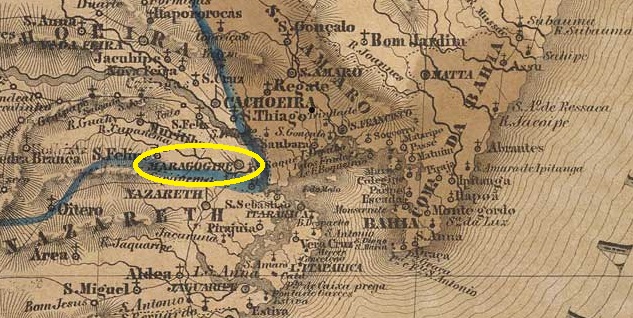
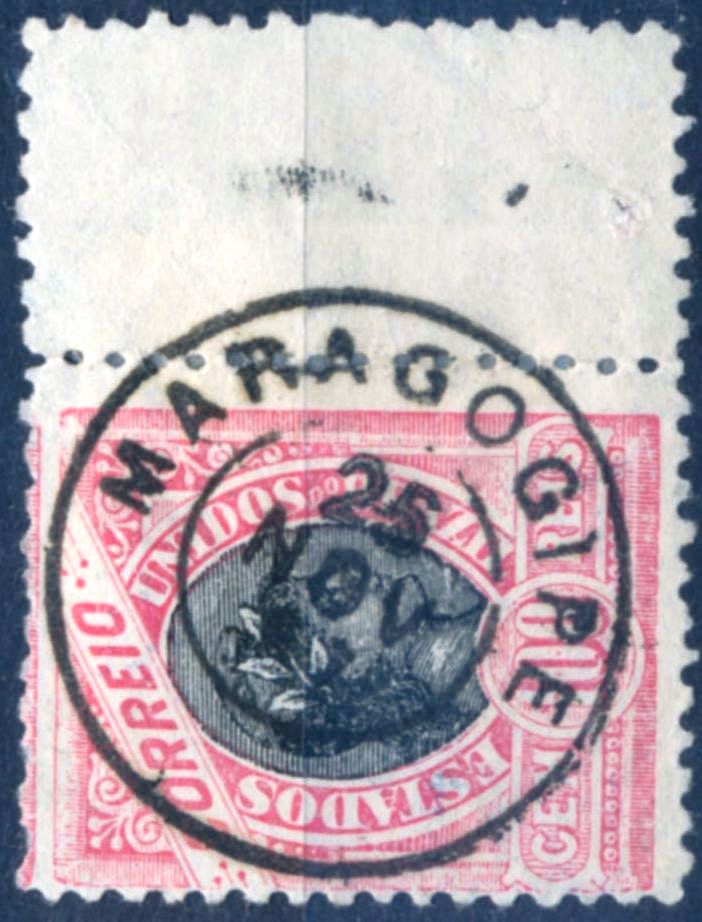
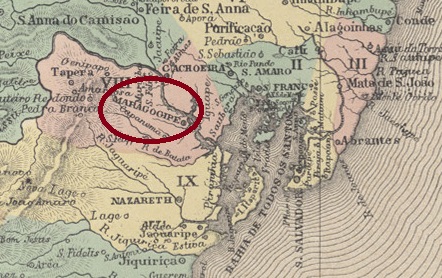
The Freguesia de S. Bartolomeu de Maragogipe existed since 1640 on the west bank of the Paraguaçu, 150 kilometres west of the colonial capital Salvador da Bahia. In February 1725, it was elevated to the status of a vila and in May 1850 to that of a city.
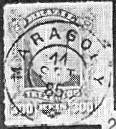
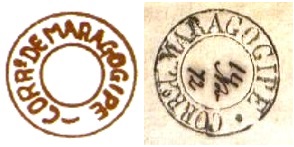
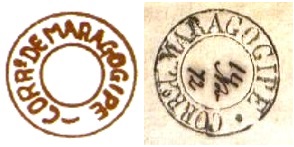
Two possible opening dates for the local post office have been found. The first was in May 1832, as Nova Monteiro writes in Administrações e Agencias Postaes do Brasil Imperio (Brasil Filatelico/RJ, 1934–1935; reprinted by SPP 1994–1999). A second time it was opened in 1864, as can be seen from the directory of imperial post offices (Tabella das Agencias do Correio do Imperio, Rio de Janeiro, 1885). The oldest postmark to date is MBA-0465a, the illustration of it in the RHM catalogue has been corrected by a specimen from the Klerman W. Lopes collection:
MBA-0465a (RHM – recte KL) 1843ff-1875
This was followed by MBA-0465b (image from the Internet), which was given the number 1352 in P. Ayres’ Catálogo de Carimbos Brasil-Império (S. Paulo, 1937, 1942):
MBA-0465b (EB – P.A. 1352) 1866ff
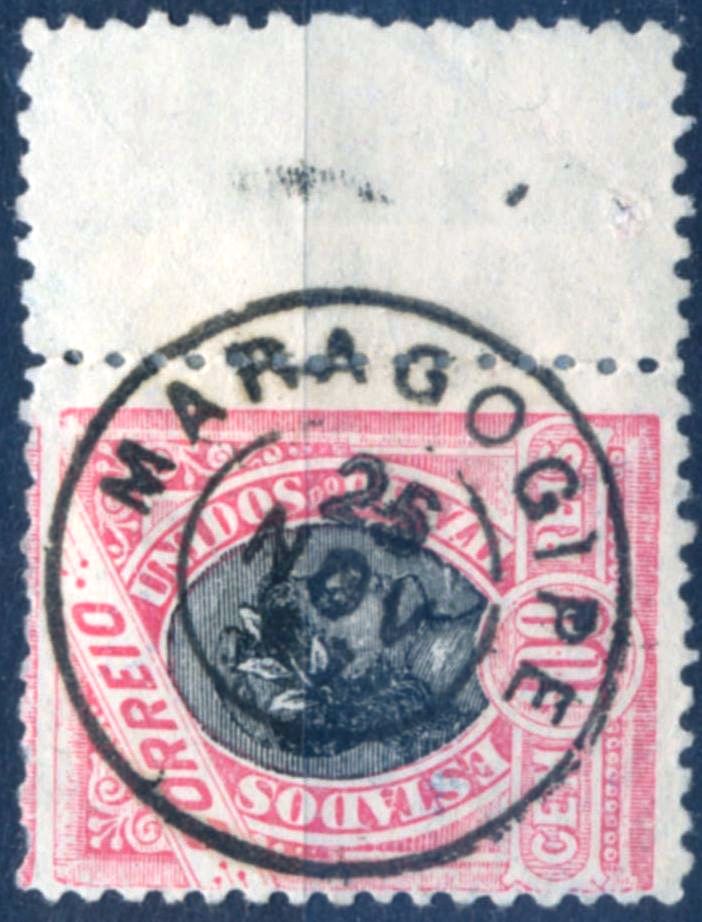
This was followed by the double circle MBA-0465c (illustration from the Internet):
MBA-0465c (EB) 1890-1899
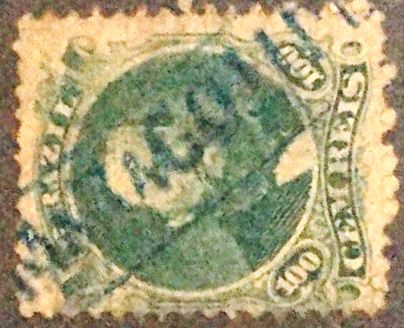
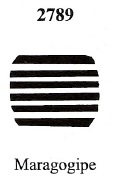
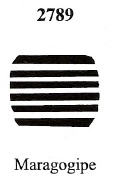
James Dingler and Klerman W. Lopes listed a mute postmark from Maragogipe under No. 2789 in Mute Cancellations of the Brazil Empire / Carimbos Mudos do Brasil Império (Brazil Philatelic Association, Rio de Janeiro, 2000):
BPA 2789 (1872)Atlas do Imperio do Brasil, 1868
Die Freguesia de S. Bartolomeu de Maragogipe bestand seit 1640 am Westufer des Paraguaçu, 150 Kilometer westlich der Kolonialhauptstadt Salvador da Bahia. Im Februar 1725 wurde sie zur Vila und im Mai 1850 zur Stadt erhoben.
Es wurden zwei mögliche Eröffnungsdaten für das örtliche Postamt gefunden. Erstmals im Mai 1832, wie Nova Monteiro in Administrações e Agencias Postaes do Brasil Imperio (Brasil Filatelico/RJ, 1934–1935; Nachdruck SPP 1994–1999) schreibt. Ein zweites Mal wurde es im Jahr 1864 eröffnet, wie aus dem Verzeichnis der kaiserlichen Postämter (Tabella das Agencias do Correio do Imperio, Rio de Janeiro, 1885) hervorgeht. Der bisher älteste Poststempel ist MBA-0465a, wobei hier die Abbildung im RHM-Katalog durch ein Exemplar der Sammlung Klerman W. Lopes korrigiert werden konnte:
MBA-0465a (RHM – recte KL) 1843ff-1875
Es folgte MBA-0465b (Abb. aus dem Internet), der im Catálogo de Carimbos Brasil-Império (S. Paulo, 1937, 1942) von P. Ayres die Nr. 1352 erhielt:
MBA-0465b (EB – P.A. 1352) 1866ff
Danach kam der Doppelkreis MBA-0465c (Abb. aus dem Internet):
MBA-0465c (EB) 1890-1899
James Dingler und Klerman W. Lopes haben in Mute Cancellations of the Brazil Empire / Carimbos Mudos do Brasil Império (Brazil Philatelic Association, Rio de Janeiro, 2000) einen stummen Poststempel aus Maragogipe unter Nr. 2789 aufgeführt :
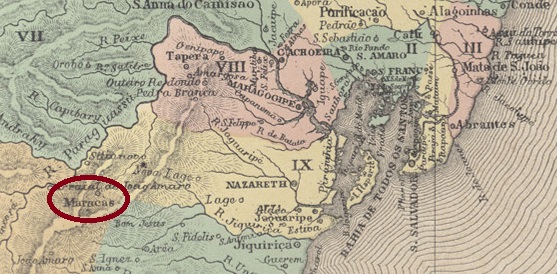
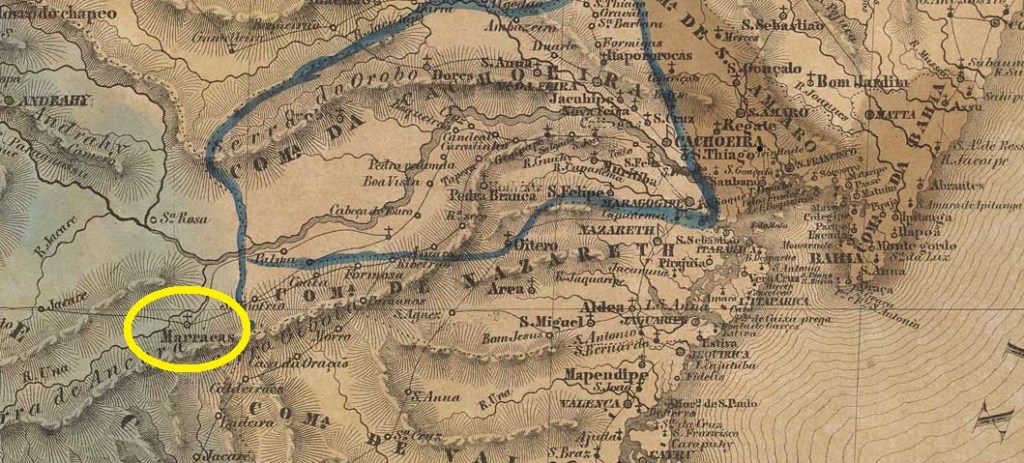
The Freguesia de N. Sra. da Graça de Maracás existed since May 1842 on the west bank of the Jequiriçá River. It belonged to the Vila do Rio de Contas and was located 350 kilometres west of the provincial capital Salvador da Bahia. Five years later, the Freguesia fell under the jurisdiction of the Vila de Santa Izabel do Paraguaçu. In April 1855, Maracás became a Vila and in July 1910, it finally became a city. The name refers to a former Indian tribe from the area.
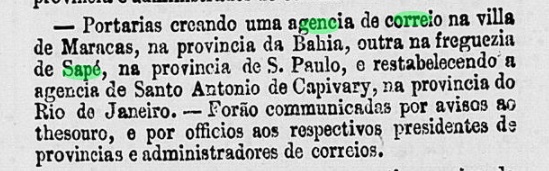
R. Koester writes in Carimbologia XXVII that there had been a post office there since January 1861. However, the correct date is likely to be nine months later, as can be seen from a ministerial protocol.
Expediente do Ministerio da Agricultura, 07.10.1861
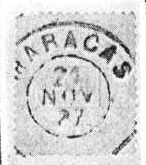
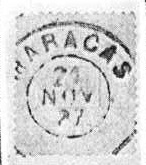
The oldest postmark to date is MBA-0460b (illustration Koester, op. cit.).
MBA-0460b (RK) 1887–1894Villiers de l’Ile Adam: Carta (…) da Provincia da Bahia, 1848
Die Freguesia de N. Sra. da Graça de Maracás bestand seit Mai 1842 am Westufer des Jequiriçá. Sie gehörte zur Vila do Rio de Contas und lag 350 Kilometer westlich der Provinzhauptstadt Salvador da Bahia. Fünf Jahre später fiel die Freguesia unter die Zuständigkeit der Vila de Santa Izabel do Paraguaçu. Im April 1855 wurde Maracás zur Vila und im Juli 1910 schließlich zur Stadt. Der Name bezieht sich auf einen früheren Indianerstamm aus der Gegend.
R. Koester schreibt in Carimbologia XXVII, dass es dort seit Januar 1861 ein Postamt gab. Allerdings dürfte das richtige Datum neun Monate später liegen, wie aus einem Ministerialprotokoll hervorgeht.
Expediente do Ministerio da Agricultura, 07.10.1861
Der bisher älteste Poststempel ist MBA-0460b (Abbildung Koester, op. cit.).
Other names: Arraial do Kagado, Ponte do Kagado, Mar de Espanha
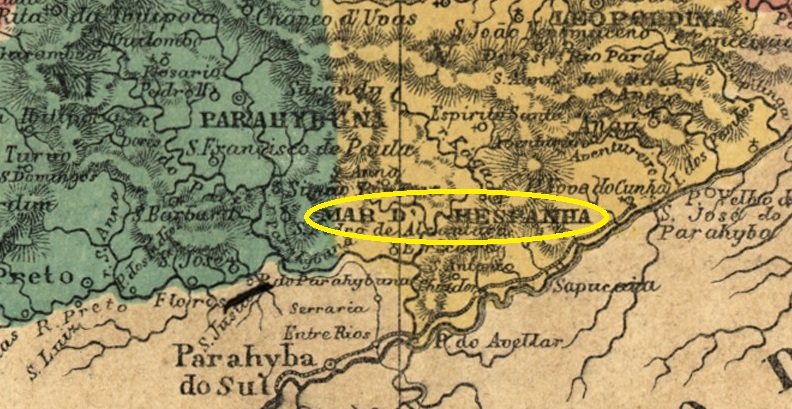
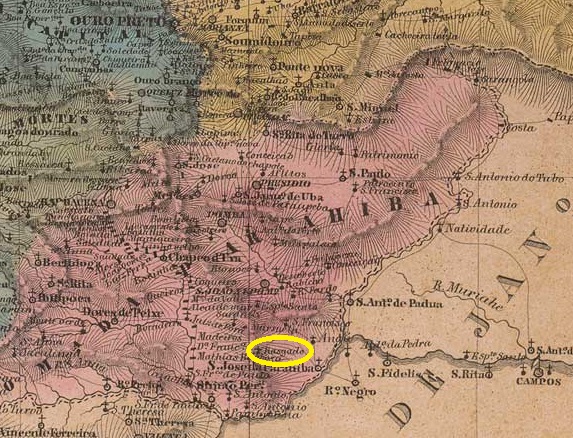
The word ‘Cágado’ means turtle in Brazil. However, it used to be written without an accent on the front A, which made it sound like a word from the toilet language. To avoid misunderstandings, the small river Kagado and the arraial of the same name on its eastern bank were written with a K, a letter that does not otherwise occur in Portuguese. The village was in the area of Vila de S. João Nepomuceno, 280 kilometres south of the provincial capital Ouro Preto. In October 1851, it became the Freguesia de N. Sra. das Mercês do Kagado. A month earlier, it was officially renamed Vila de Mar d’Hespanha – after a neighbouring fazenda – and thus lost its former name problem. Since June 1859, Mar de Espanha (as it is spelled today) has been a city.
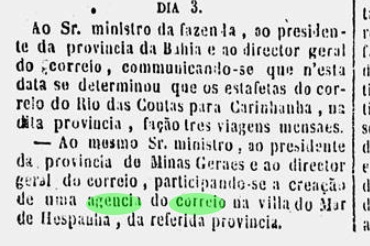
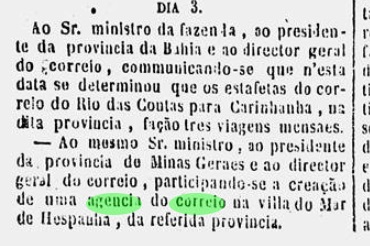
No fewer than four dates have been found for the establishment of the local post office, with the first three being close together. Nova Monteiro writes in Administrações e Agencias Postaes do Brasil Imperio (Brasil Filatelico/RJ, 1934–1935; reprinted SPP 1994–1999) that May 1852 was the correct date, which is also confirmed by the Rio press.
Diario do Rio de Janeiro, 25 May 1852
Paula Sobrinho writes in História Postal de Minas Gerais (Belo Horizonte, 1997) that it was June 1852, while the postal report (Relatorio dos Correios) from 1886 indicates July 1852. Finally, the directory of imperial post offices (Tabella das Agencias do Correio do Imperio, Rio de Janeiro, 1885) mentions the year 1881.
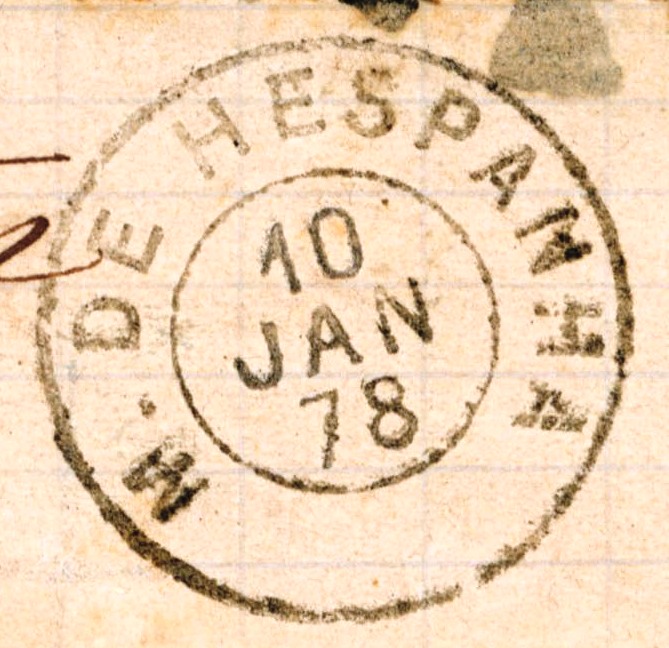
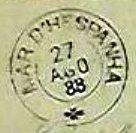
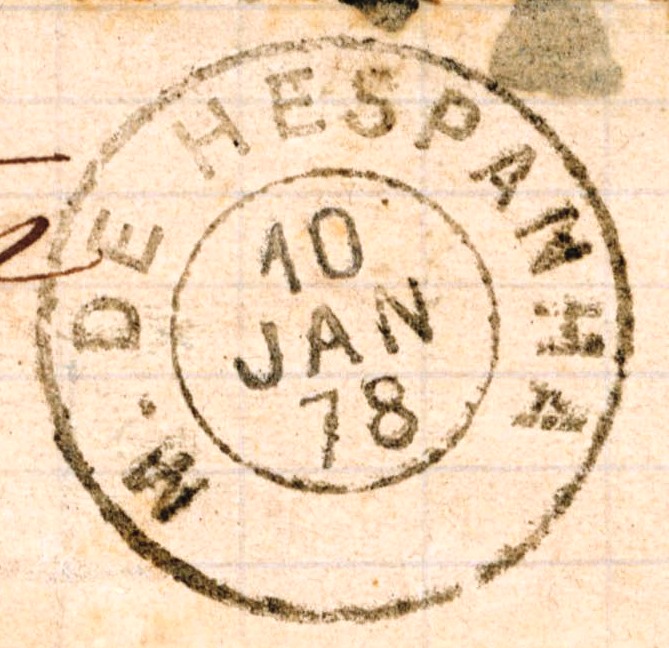
The problems with names and dates are also reflected in the postmarks. R. Koester reports in Carimbologia XXVII on handwritten cancellations from 1855 and 1856 – unfortunately without illustrations. The oldest postmark to date, MMG-1550b, only shows dates from 1878 onwards (ill. D. Feldman).
MMG-1550b (DF) 1878–1885, also in shades of blue
This was followed by MMG-1550c (Dieter Kerkhoff collection), which also occurs in red and blue-green.
MMG-1550c (DK) 1885–1894
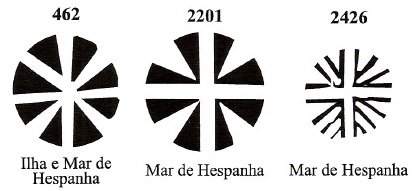
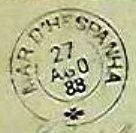
James Dingler and Klerman W. Lopes have listed three silent postmarks from Mar d’Hespanha in Mute Cancellations of the Brazil Empire/Carimbos Mudos do Brasil Império (Brazil Philatelic Association, Rio de Janeiro, 2000).
BPA 462 (1878) – 2201 – 2426 (P.A. 423, 1866ff)Villiers de l’Ile Adam: Carta (…) da Provincia de Minas Geraes, 1849
Andere Namen: Arraial do Kagado, Ponte do Kagado, Mar de Espanha
Das Wort „Cágado” bezeichnet in Brasilien eine Schildkröte. Früher wurde es jedoch ohne Akzent auf dem vorderen A geschrieben, wodurch es wie ein Wort aus der Fäkalsprache klang. Um Missverständnisse zu vermeiden, schrieb man den kleinen Fluss Kagado und auch den gleichnamigen Arraial an dessen Ostufer mit K, einem Buchstaben, der sonst im Portugiesischen nicht vorkommt. Die Ortschaft lag im Gebiet der Vila de S. João Nepomuceno, 280 Kilometer südlich der Provinzhauptstadt Ouro Preto. Im Oktober 1851 wurde sie zur Freguesia de N. Sra. das Mercês do Kagado. Einen Monat zuvor wurde sie offiziell in Vila de Mar d’Hespanha umbenannt – nach einer benachbarten Fazenda – und verlor damit ihren früheren Namen. Seit Juni 1859 ist Mar de Espanha (wie es heute geschrieben wird) eine Stadt.
Es wurden nicht weniger als vier Daten für die Entstehung des örtlichen Postamts gefunden, wobei die ersten drei nah beieinander liegen. Nova Monteiro schreibt in Administrações e Agencias Postaes do Brasil Imperio (Brasil Filatelico/RJ, 1934–1935; Nachdruck SPP 1994–1999), der Mai 1852 sei der richtige Zeitpunkt gewesen, was auch von der Presse aus Rio bestätigt wird.
Diario do Rio de Janeiro, 25.05.1852
Paula Sobrinho schreibt in História Postal de Minas Gerais (Belo Horizonte, 1997) den Juni 1852, während aus dem Postbericht (Relatorio dos Correios) von 1886 der Juli 1852 hervorgeht. Im Verzeichnis der kaiserlichen Postämter (Tabella das Agencias do Correio do Imperio, Rio de Janeiro, 1885) wird schließlich das Jahr 1881 genannt.
Die Probleme mit Namen und Daten spiegeln sich auch bei den Poststempeln wider. R. Koester berichtet in Carimbologia XXVII über handschriftliche Entwertungen aus den Jahren 1855 und 1856 – leider ohne Abbildungen. Der bisher älteste Poststempel MMG-1550b zeigt Daten erst ab 1878 (Abb. D. Feldman).
MMG-1550b (DF) 1878–1885, auch in Blautönen
Es folgte MMG-1550c (Sammlung Dieter Kerkhoff), der auch in Rot und Blaugrün vorkommt.
MMG-1550c (DK) 1885–1894
James Dingler und Klerman W. Lopes haben in Mute Cancellations of the Brazil Empire/Carimbos Mudos do Brasil Império (Brazil Philatelic Association, Rio de Janeiro, 2000) drei stumme Poststempel aus Mar d’Hespanha aufgeführt.
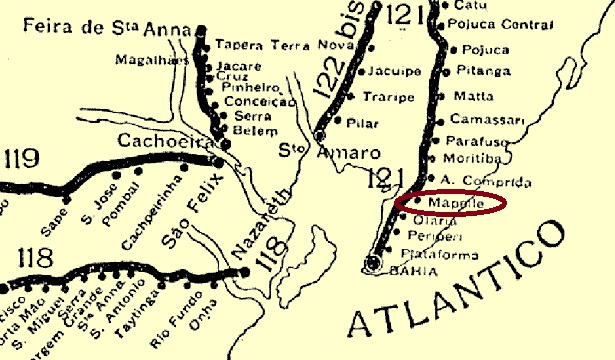
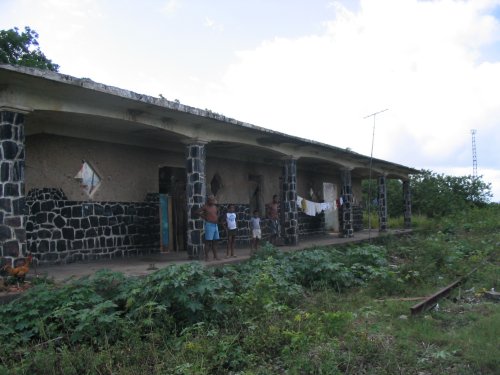
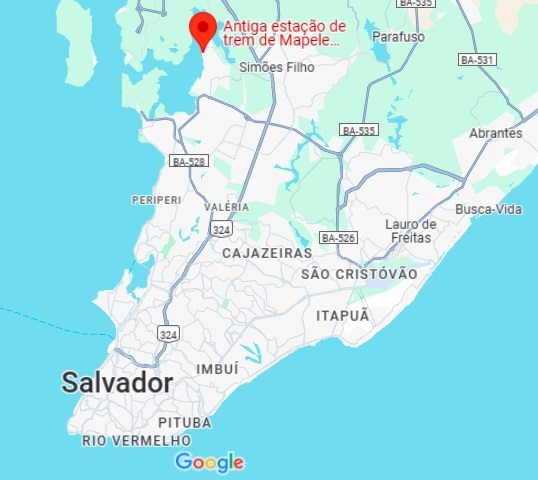
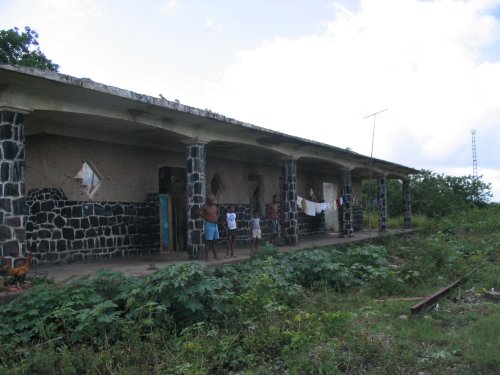
Mapelle railway station was opened in September 1860 by the railway company E.F. da Bahia ao S. Francisco (Main Line). It was located near Capadócia Beach on Aratu Bay, 30 kilometres north of the provincial capital Salvador da Bahia. The railway line was transferred to Cie. Chemins de Fer Fédéraux du l’Est Brésilien in 1911 and to V.F.F. Leste Brasileiro in 1935. From 1975 until its closure in 1996, it belonged to Rede Ferroviária Federal S.A. (estacoesferroviarias.com.br). Today, the tracks are still in place and the station building was still being used as a residential building in 2005.
In October 2005 (photo on estacoesferroviarias.com.br)
The area around the station belonged to the district of Água Comprida from December 1953 and to the municipality of Simões Filho from November 1961.
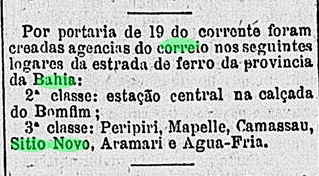
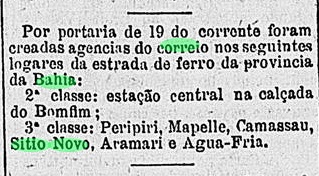
R. Koester writes in Carimbologia XXVII that there had been a post office there since May 1881. The press in Rio de Janeiro reported as early as April the creation of a station post office in Mapelle.
Gazeta de Noticias/RJ, 21 April 1881
So far, we have not seen any imperial postmarks from Mapelle.
Google Maps
Andere Schreibweise: Mapele
Der Bahnhof Mapelle wurde im September 1860 durch die Eisenbahngesellschaft E.F. da Bahia ao S. Francisco (Hauptlinie) eröffnet. Er lag nahe dem Capadócia-Strand an der Aratu-Bucht, 30 Kilometer nördlich der Provinzhauptstadt Salvador da Bahia. Die Bahnlinie ging 1911 an die Cie. Chemins de Fer Fédéraux du l’Est Brésilien und 1935 an die V.F.F. Leste Brasileiro über. Von 1975 bis zur Stilllegung im Jahr 1996 gehörte sie der Rede Ferroviária Federal S.A. (estacoesferroviarias.com.br). Heute sind die Gleise noch vorhanden und das Bahnhofsgebäude diente im Jahr 2005 noch als Wohnhaus.
Im Oktober 2005 (Foto auf estacoesferroviarias.com.br)
Das Areal um den Bahnhof gehörte ab Dezember 1953 zum Distrikt Água Comprida und ab November 1961 zum Município Simões Filho.
R. Koester schreibt in Carimbologia XXVII, dass es dort seit Mai 1881 ein Postamt gab. Die Presse aus Rio de Janeiro berichtete bereits im April über den Beschluss, ein Bahnhofspostamt in Mapelle einzurichten.
Gazeta de Noticias/RJ, 21.04.1881
Bisher haben wir keinen kaiserlichen Poststempel aus Mapelle gesehen.




 Carimbologia