Categories
Carimbologia E-G

Engenho Central, Maranhão (EMA-0120)

Atlas do Imperio do Brasil, 1868

Other Names: S. Pedro, S. Pedro de Alcântara, Pindaré-Mirim (1943)

The modern history of the locality began in 1839 with the founding of the agricultural colony of S. Pedro on the south bank of the Pindaré, 250 kilometres south of the provincial capital of São Luís do Maranhão. In August 1880, a large sugar factory was inaugurated there, the Engenho Central de S. Pedro de Alcântara do Pindaré, which belonged to the agricultural company Cia. Progresso Agrícola and is now the town’s landmark.
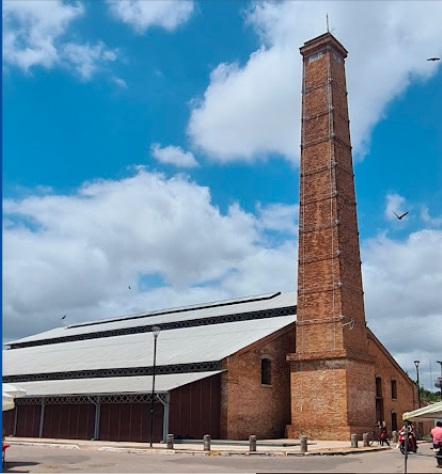
Photo: Gustavo Brito (Google Maps)

However, the imposing building cannot hide the fact that the region’s infrastructure had remained precarious, which is also reflected in the town’s chequered administrative history. Around 1890, it became a district of the Vila de Monção, and in April 1918 it was elevated to the Vila de S. Pedro, which became a town five years later. In April 1931 it was downgraded to a district of the Município de Monção and two months later it was re-elevated to the Município de São Pedro, which has been called Pindaré-Mirim since December 1943.

Pindaré-Mirim post office, mid-20th century (Photo: IBGE)

Reinhold Koester writes in Carimbologia XVII that there has been a post office there since December 1887, but this must be a transcription error, as the new postal agency was reported in the regional press a year earlier:
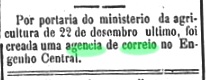
A Pacotilha, 08/01/1887

Unfortunately, we have not yet been able to see a postmark from the Engenho Central of the Imperial Province of Maranhão.
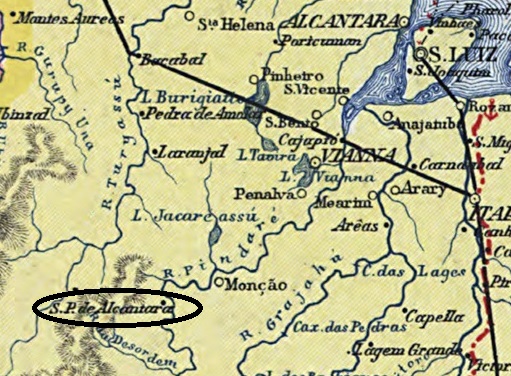
Carta da Republica dos Estados Unidos do Brazil, 1892

Andere Namen: S. Pedro, S. Pedro de Alcântara, Pindaré-Mirim (1943)

Die moderne Geschichte des Ortes begann 1839 mit der Gründung der Landwirtschaftskolonie S. Pedro am Südufer des Pindaré, 250 km südlich der Provinzhauptstadt São Luís do Maranhão. Im August 1880 wurde dort eine große Zuckerfabrik eingeweiht, der Engenho Central de S. Pedro de Alcântara do Pindaré, der dem landwirtschaftlichen Unternehmen Cia. Progresso Agrícola gehörte und heute das Wahrzeichen der Stadt ist.
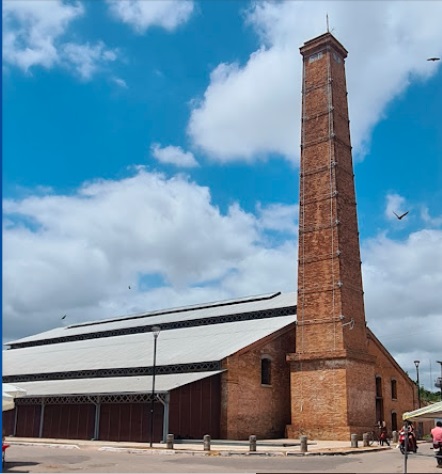
Foto: Gustavo Brito (Google Maps)

Das imposante Gebäude kann jedoch nicht darüber hinwegtäuschen, dass die Infrastruktur der Region nach wie vor prekär war, was sich auch in der wechselvollen Verwaltungsgeschichte des Ortes widerspiegelt. Um 1890 wurde es ein Distrito der Vila de Monção, im April 1918 erfolgte die Erhebung zur Vila de S. Pedro, die fünf Jahre später zur Stadt wurde. Im April 1931 erfolgte die Herabstufung zum Distrito des Município de Monção und zwei Monate später die Wiederaufstufung zum Município de São Pedro, das seit Dezember 1943 Pindaré-Mirim heißt.
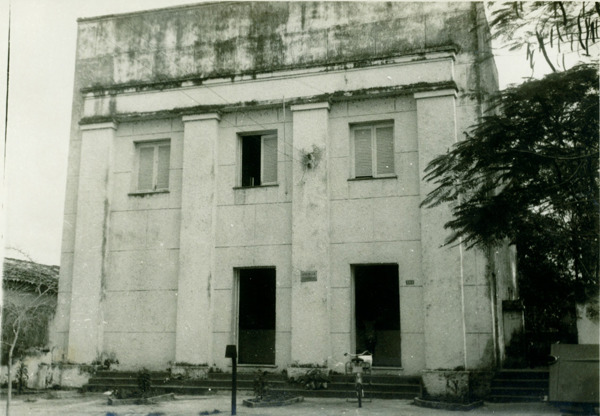
Postamt von Pindaré-Mirim, Mitte des 20. Jahrhunderts (Foto: IBGE)

Reinhold Koester schreibt in Carimbologia XVII, dass es dort seit Dezember 1887 ein Postamt gab, aber das muss ein Abschreibfehler sein, denn schon ein Jahr zuvor wurde in der regionalen Presse über die neue Postagentur berichtet:
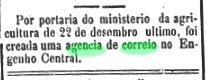
A Pacotilha, 08.01.1887

Leider konnten wir bisher keinen Poststempel aus dem Engenho Central der Kaiserprovinz Maranhão sehen.
Categories
Carimbologia E-G

Engenheiro Mendes (train station/Bahnhof), São Paulo (ESP-0450)

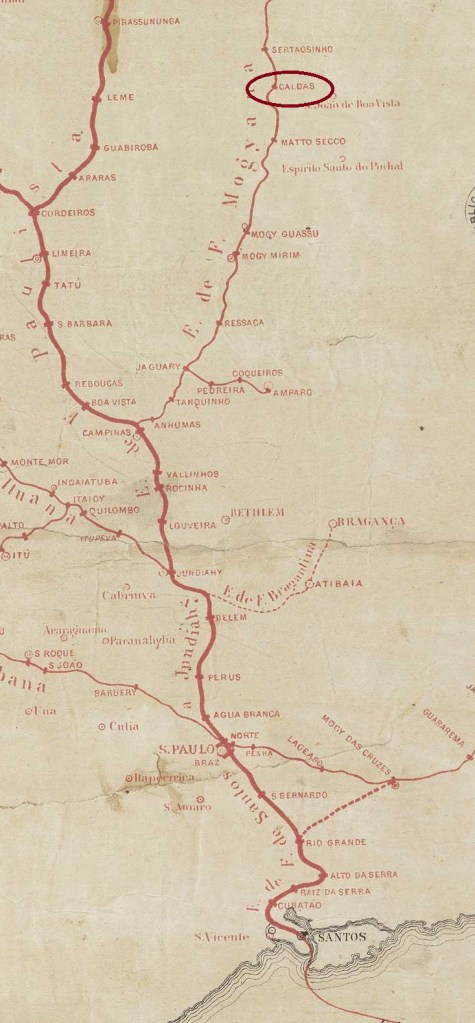
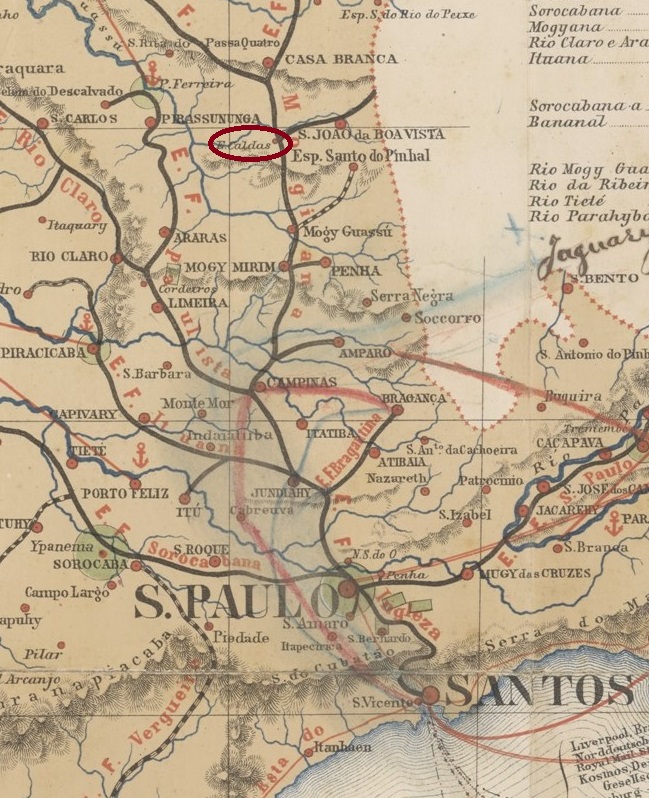
Mappa da Provincia de São Paulo, 1886

Siehe auch Caldas (CSP-0450)

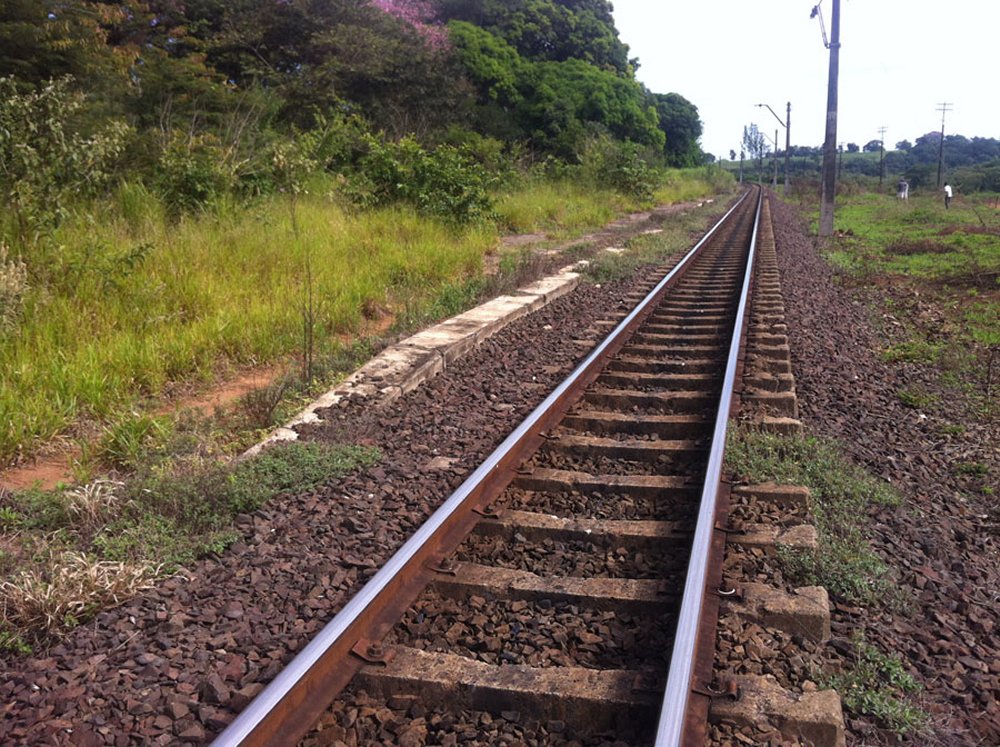
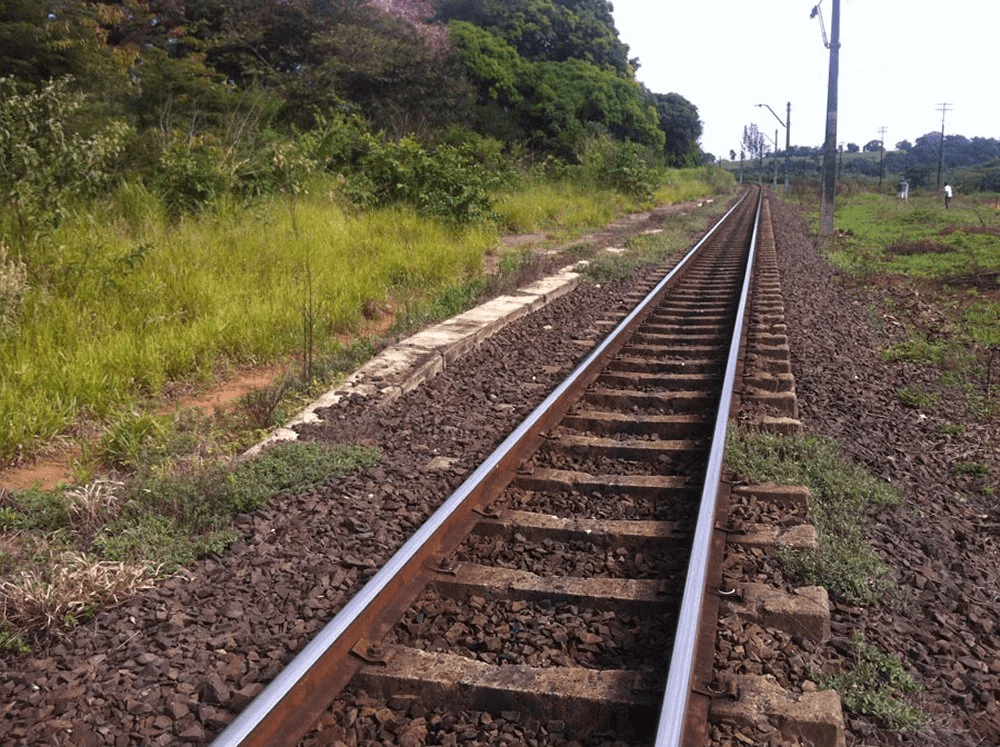
The Caldas (Thermes) railway station was opened in January 1878 by the Cia. Mogyana railway company (main line) and was in the Município S. João da Boa Vista, 200 km north of the provincial capital São Paulo. In 1886, the station was renamed after the Mogyana engineer Manoel da Silva Mendes, who died in June 1884. The area around the station belonged to the Cascavel district from August 1898 and has been in the Município Aguaí since November 1944. The railway line belonged to the FEPASA company from 1971 until its closure. Today, the tracks are still there, but the station building no longer exists.

In 2012 (Photo: Marcelo Thomaz, on estacoesferroviarias.com.br)

According to the Directory of Imperial Post Offices (Tabella das Agencias do Correio do Imperio, Rio de Janeiro, 1885), there had been a post office at the station since 1882, and the regional press reported a postal agent in September of the same year:

Correio Paulistano, 27.09.1882

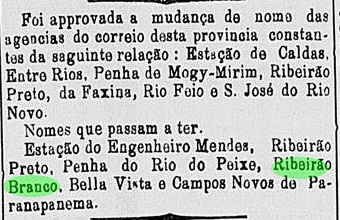
In September 1886, the railway station post office was renamed Engenheiro Mendes, as reported in the regional press:

Correio Paulistano, 14/09/1886

The existence of an Engenheiro Mendes imperial postmark is still unknown on the basis of these dates. The oldest postmark to date, ESP-0450a (fig. Felipe Piccinini), bears a date from April 1891:

ESP-0450a (FP) 1891

For postmarks with CALDAS see CSP-0450.

Estações (…) do Rio de Janeiro, São Paulo e Minas Geraes, 1880

Siehe auch Caldas (CSP-0450)

Der Bahnhof Caldas (Thermen) wurde im Januar 1878 von der Eisenbahngesellschaft Cia. Mogyana (Hauptlinie) eröffnet und lag im Município S. João da Boa Vista, 200 km nördlich der Provinzhauptstadt São Paulo. 1886 wurde der Bahnhof nach dem im Juni 1884 verstorbenen Mogyana-Ingenieur Manoel da Silva Mendes umbenannt. Das Gebiet um den Bahnhof gehörte ab August 1898 zum Distrikt Cascavel und liegt seit November 1944 im Município Aguaí. Die Bahnlinie gehörte von 1971 bis zu ihrer Stilllegung der Gesellschaft FEPASA. Heute sind die Gleise noch vorhanden, das Bahnhofsgebäude existiert nicht mehr.

2012 (Foto: Marcelo Thomaz, auf estacoesferroviarias.com.br)

Wie aus dem Verzeichnis der kaiserlichen Postämter (Tabella das Agencias do Correio do Imperio, Rio de Janeiro, 1885) hervorgeht, gab es am Bahnhof seit 1882 ein Postamt, und die regionale Presse berichtete im September desselben Jahres von einem Postagenten:

Correio Paulistano, 27.09.1882

Im September 1886 erfolgte die Umbenennung des Postamts am Bahnhof zu Engenheiro Mendes, wie die regionale Presse berichtete:

Correio Paulistano, 14.09.1886

Das Vorhandensein eines kaiserlichen Poststempels Engenheiro Mendes ist aufgrund dieser Daten noch unbekannt. Der bisher älteste Poststempel ESP-0450a (Abb. Felipe Piccinini) trägt ein Datum aus April 1891:

ESP-0450a (FP) 1891

Für Poststempel mit CALDAS siehe CSP-0450.

Categories
Carimbologia E-G

Engenheiro Gomide (train station/Bahnhof), São Paulo (ESP-0445)

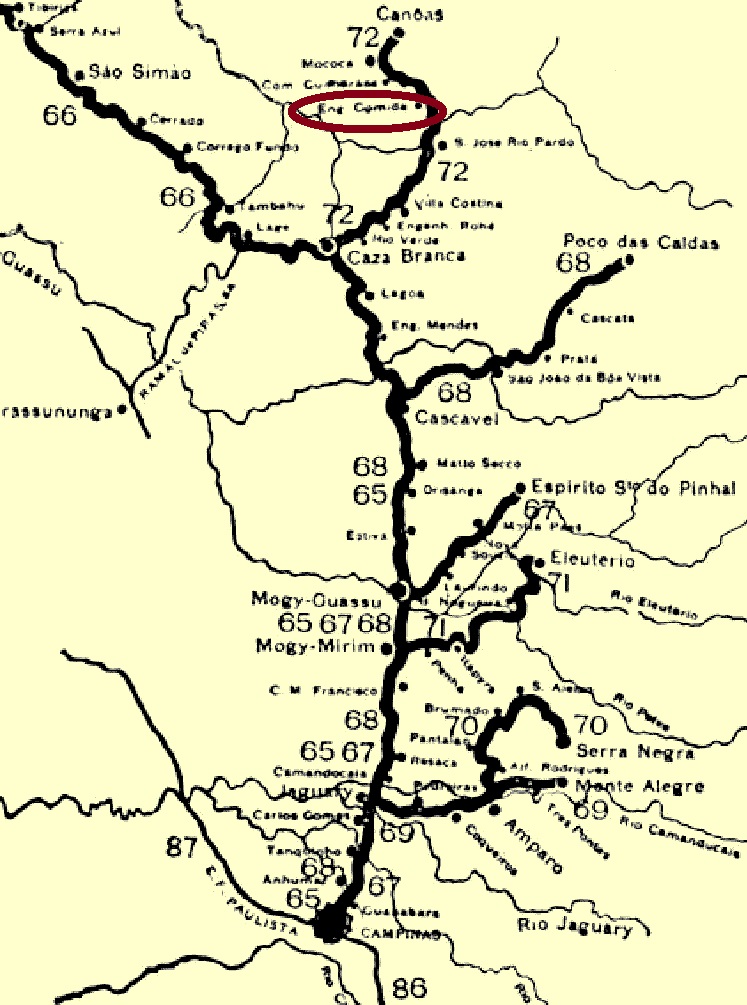
Cia. Mogyana de Estradas de Ferro, 1898 (IBGE)

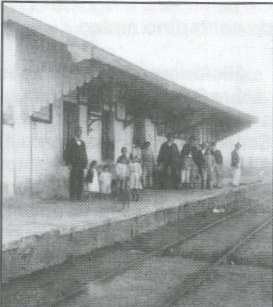
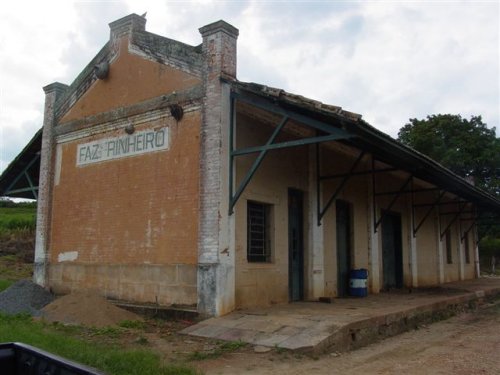
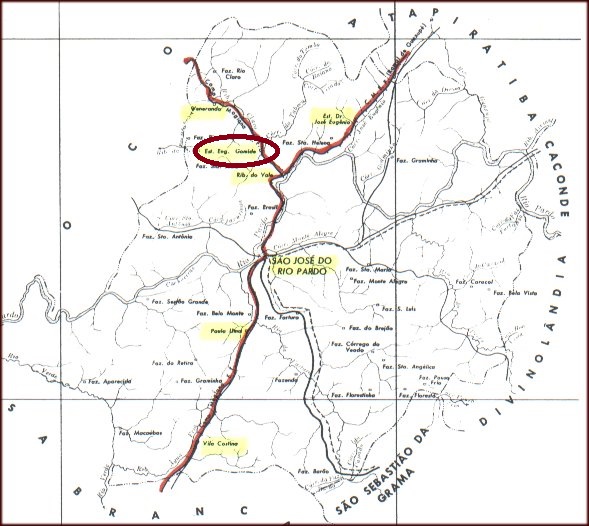
Engenheiro Gomide station was opened in August 1889 by the railway company Cia. Mogiana, Mococa line, in the Município de S. José do Rio Pardo, 270 km north of the provincial capital of São Paulo. The name commemorates the Mogiana engineer Candido Gonçalves Gomide. The railway line was closed in 1966, today the tracks have disappeared, and the station building was a warehouse in 1999 (estacoesferroviarias.com.br).

Ca.1910 (Photo NN, on estacoesferroviarias.com.br)
In March 2009 (Photo Eduardo R. Nobre, on estacoesferroviarias.com.br)

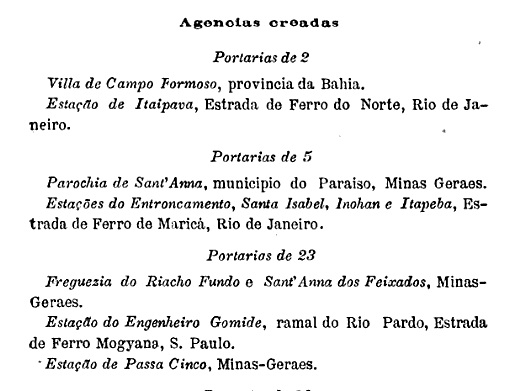
According to postal bulletin no. 7 (Boletim Postal, November 1889), there had been a post office at the station since October 1889:

Boletim Postal No. 7, November 1889

No imperial postmarks have been preserved from this railway station either.

Instituto Brasiliero de Geografia e Estatística, 1960

Der Bahnhof Engenheiro Gomide wurde im August 1889 von der Eisenbahngesellschaft Cia. Mogiana, Linie Mococa, eröffnet und liegt im Município de S. José do Rio Pardo, 270 km nördlich der Provinzhauptstadt São Paulo. Der Name erinnert an den Mogiana-Ingenieur Candido Gonçalves Gomide. Die Bahnstrecke wurde 1966 stillgelegt, heute sind die Gleise verschwunden, das Bahnhofsgebäude war 1999 eine Lagerhalle (estacoesferroviarias.com.br).

Ca.1910 (Foto NN, auf estacoesferroviarias.com.br)
Im März 2009 (Foto Eduardo R. Nobre, auf estacoesferroviarias.com.br)

Wie aus dem Postbulletin Nr. 7 (Boletim Postal, November 1889) hervorgeht, gab es am Bahnhof seit Oktober 1889 ein Postamt:

Boletim Postal Nr. 7, November 1889

Auch von diesem Bahnhof wurden bisher keine kaiserlichen Poststempel gefunden.
Categories
Carimbologia E-G

Encruzilhada (train station/Bahnhof), Pernambuco (EPE-0230)

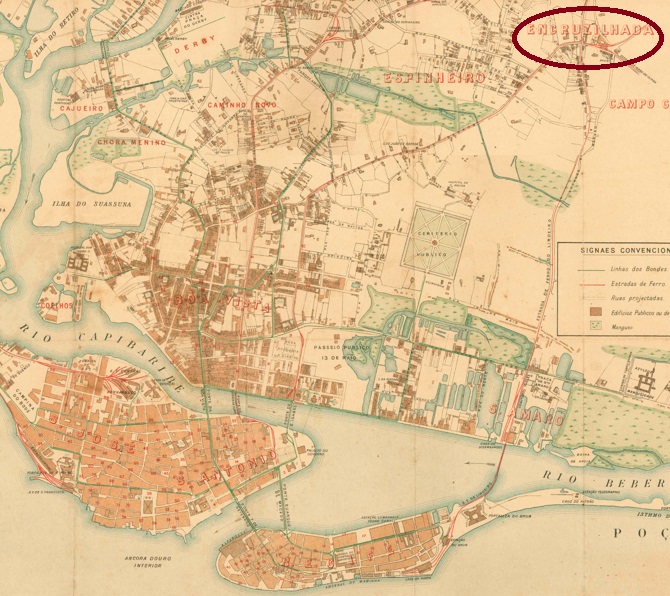
Mappa do Recife, 1906

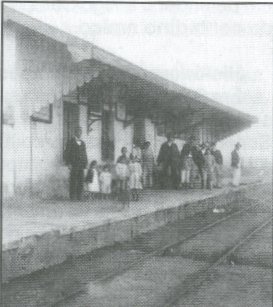
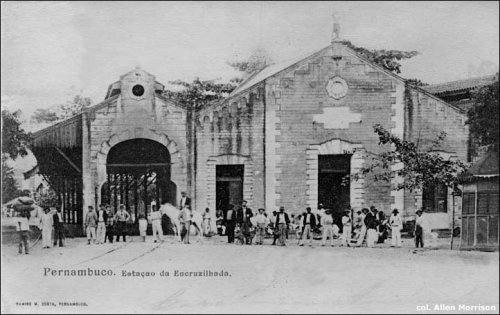
Encruzilhada station was opened in November 1881 by the railway company E.F. do Recife ao Limoeiro (which belonged to Great Western) and was located on the northern line (Linha Norte), 4 km north of the city centre of Recife. The line was closed around 1934. Neither the station building nor the tracks still exist today (estacoesferroviarias.com.br).

Around 1900 (Photo: Allen Morrisson, on estacoesferroviarias.com.br)

The area around the railway station became the Distrito de Encruzilhada in April 1892, which has been an administrative zone (Zona Administrativa) of the state capital Recife since July 1960.

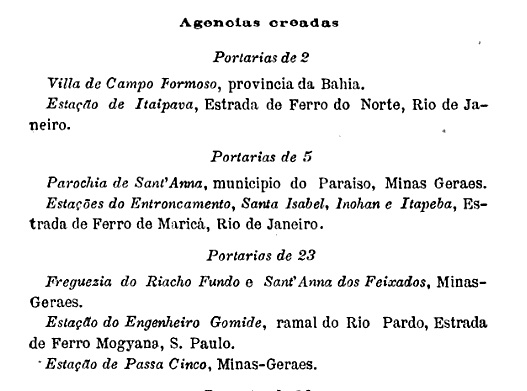
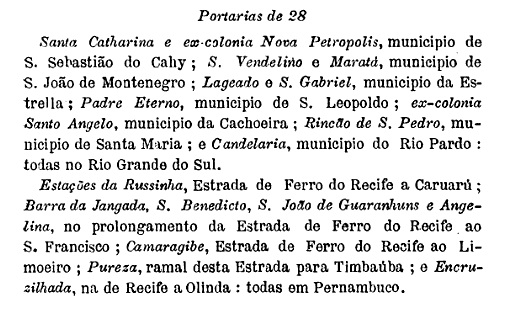
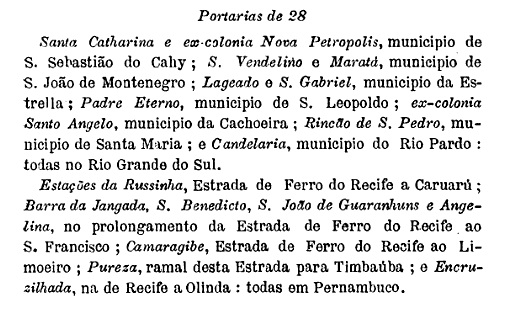
A railway station post office existed from October 1889, as can be seen from the postal bulletin (Boletim Postal) of the following month:

Boletim Postal No. 7, November/1889

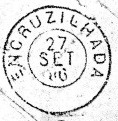
An imperial postmark has not yet been found and is probably very rare, if it exists at all.

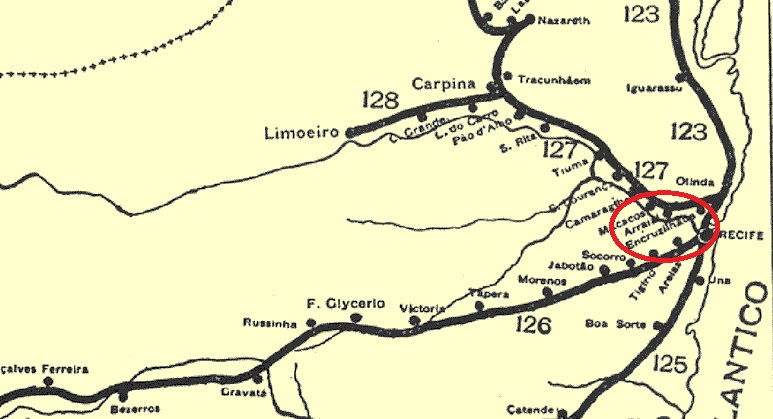
Rede Ferroviaria de Pernambuco, 1898 (IBGE)

Der Bahnhof Encruzilhada wurde im November 1881 von der Eisenbahngesellschaft E.F. do Recife ao Limoeiro (die zur Great Western gehörte) eröffnet und lag an der Nordstrecke (Linha Norte), 4 km nördlich des Stadtzentrums von Recife. Die Strecke wurde um 1934 stillgelegt. Weder das Bahnhofsgebäude noch die Gleise sind heute noch vorhanden (estacoesferroviarias.com.br).

Um 1900 (Foto: Allen Morrisson, auf estacoesferroviarias.com.br)

Das Gebiet um den Bahnhof wurde im April 1892 zum Distrito de Encruzilhada, der seit Juli 1960 eine Verwaltungszone (Zona Administrativa) der Landeshauptstadt Recife ist.

Ein Bahnhofspostamt existierte ab Oktober 1889, wie aus dem Postbulletin (Boletim Postal) des Folgemonats hervorgeht:

Boletim Postal Nr. 7, November/1889

Ein kaiserlicher Poststempel wurde bisher nicht gefunden und dürfte, wenn überhaupt, sehr selten sein.
Categories
Carimbologia E-G

Encruzilhada (Baependy), Minas Gerais (EMG-1105)

Estado de Minas Geras,1910

Other names: Cruzília (1943)

See also São Sebastião da Encruzilhada (SMG-2585)

This locality was a freguesia of Baependy from November 1873, located on the Rio do Peixe, barely 300 km southwest of the provincial capital of Ouro Preto. Only in December 1938 did it rise to the status of a district – under the name Encruzilhada (=crossroads) – and another ten years later it became the Município of Cruzília.
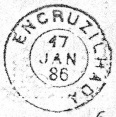
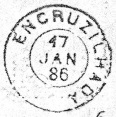
As Paula Sobrinho writes in História Postal de Minas Gerais (Belo Horizonte, 1997), there has been a post office there since May 1876. R. Koester showed in Carimbologia XVII EMG-1105a, which, however, can easily be confused with the postmark ERS-0165c of the locality of the same name in Rio Grande do Sul.

EMG-1105a (RK) 1885-1888
Google Maps

Andere Namen: Cruzília (1943)

Siehe auch São Sebastião da Encruzilhada (SMG-2585)

Diese Ortschaft war ab November 1873 eine Freguesia von Baependy, die am Fluss Rio do Peixe lag, knapp 300 km südwestlich der Provinzhauptstadt Ouro Preto entfernt. Erst im Dezember 1938 stieg sie zum Distrikt auf – unter dem Namen Encruzilhada (=Wegkreuzung) – und weitere zehn Jahre später wurde daraus der Município von Cruzília.

Wie Paula Sobrinho in História Postal de Minas Gerais (Belo Horizonte, 1997) schreibt, gibt es dort ein Postamt seit Mai 1876. R. Koester zeigte in Carimbologia XVII EMG-1105a, der jedoch leicht mit dem Poststempel ERS-0165c der gleichnamigen Ortschaft in Rio Grande do Sul verwechselt werden kann.

EMG-1105a (RK) 1885-1888
Categories
Carimbologia E-G

Encruzilhada, Rio Grande do Sul (ERS-0165)

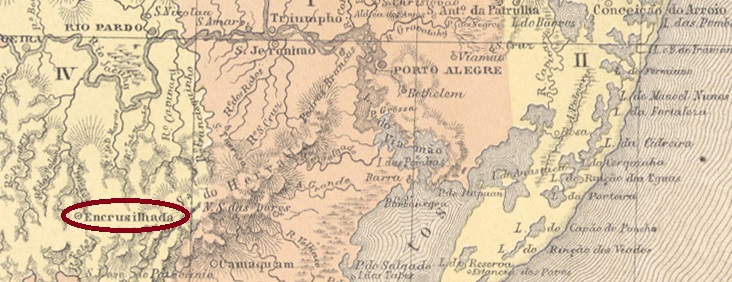
Atlas do Imperio do Brasil, 1868

Other names: Encruzilhada do Sul (1944)

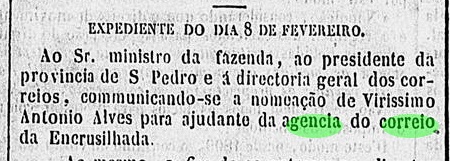
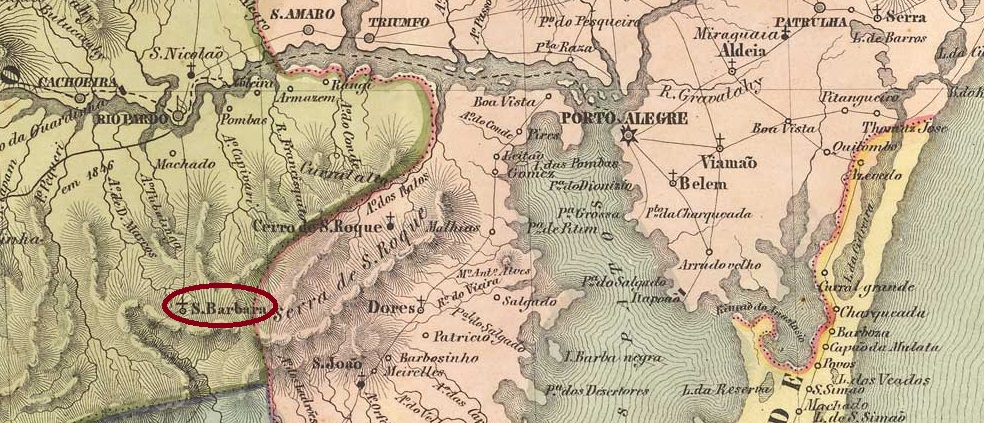
The Freguesia de Sta. Barbara de Encruzilhada, which had existed since November 1837, belonged to the Vila de Rio Pardo and was located 170 kilometres southwest of the provincial capital Porto Alegre. In July 1849 it was elevated to a Vila and has been Município de Encruzilhada do Sul since December 1944.

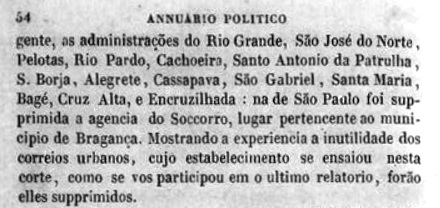
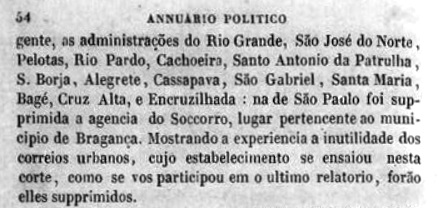
R. Koester writes in Carimbologia XVII that there had been a post office there since 1853, which is confirmed by the list of imperial post offices (Tabella das Agencias do Correio do Imperio, Rio de Janeiro, 1885). However, it was probably a reopening, as the Annuario Politico, Historico e Estatistico do Brazil of 1846 already states that the post office in Encruzilhada – presumably built by the Farroupilhas insurgents – was to be retained:

Annuario Politico, Historico e Estatistico do Brazil, 1846

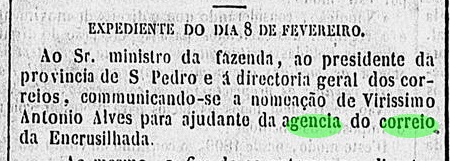
Furthermore, in February 1850, a postal employee for Encruzilhada was presented in the Rio press:

Diario do Rio de Janeiro, 16/02/1850

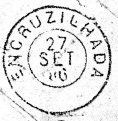
No postmark is known from the early days of the agency. R. Koester (op. cit.) shows two others that were obviously used later:

ERS-0165b (RK)
ERS-0165c (RK) 1880-1894

The latter postmark still needs to be examined more closely to rule out confusion with Encruzilhada from the province of Minas Gerais.

Villiers de l’Ile Adam: Carta (…) da Provincia de São Pedro do Sul, 1847

Andere Namen: Encruzilhada do Sul (1944)

Die seit November 1837 bestehende Freguesia de Sta. Barbara de Encruzilhada gehörte zur Vila de Rio Pardo und lag 170 km südwestlich der Provinzhauptstadt Porto Alegre. Im Juli 1849 wurde sie zur Vila erhoben und ist seit Dezember 1944 Município de Encruzilhada do Sul.

R. Koester schreibt in Carimbologia XVII, dass es dort seit 1853 ein Postamt gab, was durch das Verzeichnis der kaiserlichen Postämter (Tabella das Agencias do Correio do Imperio, Rio de Janeiro, 1885) bestätigt wird. Es dürfte sich aber um eine Wiedereröffnung gehandelt haben, denn bereits im Annuario Politico, Historico e Estatistico do Brazil von 1846 ist zu lesen, dass das Postamt in Encruzilhada – vermutlich von den Aufständischen Farroupilhas errichtet – beibehalten werden sollte:

Annuario Politico, Historico e Estatistico do Brazil, 1846

Außerdem wurde im Februar 1850 in der Presse von Rio ein Postangestellter für Encruzilhada vorgestellt:

Diario do Rio de Janeiro, 16.02.1850

Aus der Anfangszeit der Agentur ist kein Poststempel bekannt. R. Koester (op. cit.) zeigt zwei weitere, die offensichtlich später verwendet wurden:

ERS-0165b (RK)
ERS-0165c (RK) 1880-1894

Der letztgenannte Stempel muss noch genauer untersucht werden, um Verwechslungen mit Encruzilhada aus der Provinz Minas Gerais auszuschließen.

Categories
Carimbologia E-G

Empossado, Minas Gerais (EMG-1100)

Estado de Minas Geraes, 1910

Other names: Cataguarino (1894)

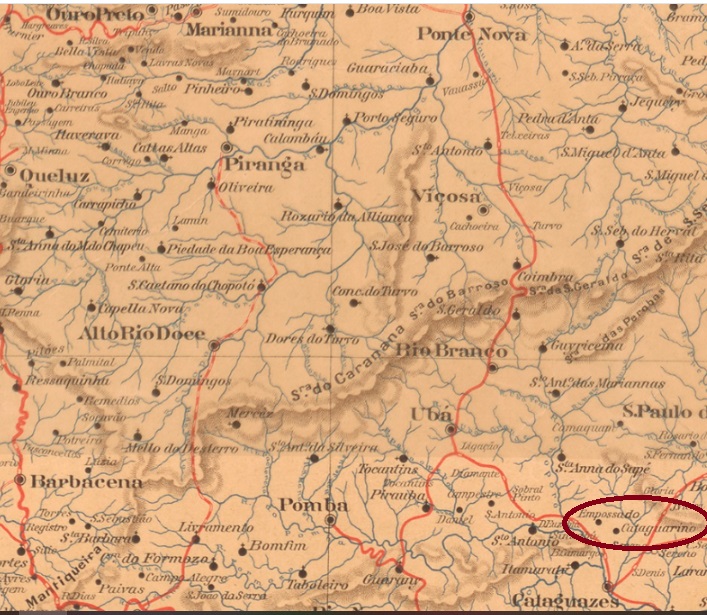
From November 1869, Espírito Santo do Empossado (also spelt Empoçado) was a distrito of the Vila de Leopoldina, 200 kilometres south-east of the provincial capital Ouro Preto. The village was elevated to a freguesia in December 1873 and incorporated into the Vila de Cataguazes almost two years later. The new place name Cataguarino has been in force since October 1894.

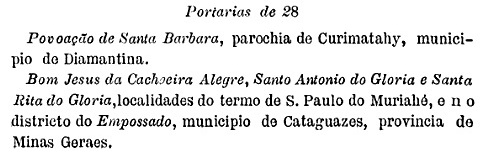
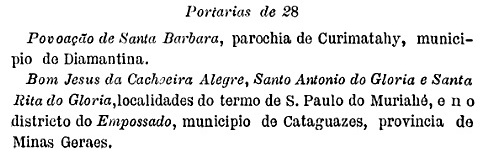
The local post office has existed since September 1889, as can be seen from the Postal Bulletin (Boletim Postal) of the following month:

Boletim Postal No. 6, October 1889

No imperial postmarks are yet known from Empossado/MG.

Google Maps

Andere Namen: Cataguarino (1894)

Seit November 1869 war Espírito Santo do Empossado (auch Empoçado geschrieben) ein Distrito der Vila de Leopoldina, 200 km südöstlich der Provinzhauptstadt Ouro Preto. Der Ort wurde im Dezember 1873 zur Freguesia erhoben und knapp zwei Jahre später in die Vila de Cataguazes eingegliedert. Seit Oktober 1894 ist der neue Ortsname Cataguarino in Kraft.

Das örtliche Postamt besteht seit September 1889, wie aus dem Postbulletin (Boletim Postal) des Folgemonats hervorgeht:

Boletim Postal Nr. 6, Oktober 1889

Aus Empossado/MG sind bisher keine kaiserlichen Poststempel bekannt.

Categories
Carimbologia E-G

Ega, Amazonas / Pará (EAM-0045)

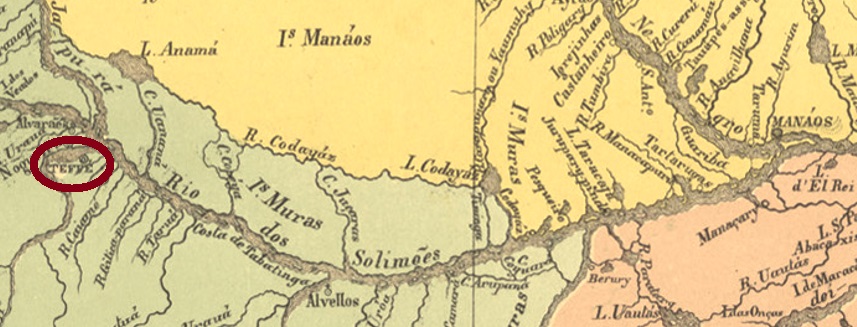
Atlas do Imperio do Brasil, 1868

See also Teffé (TAM-1000)

This village was a settlement on the south bank of the Rio Tefé, where it flows into the Amazon. The word comes from the nheengatu Indian language and means deep. In 1759, it became a vila called Egas (or also Ega), and since June 1859, the place has been the town of Teffé.

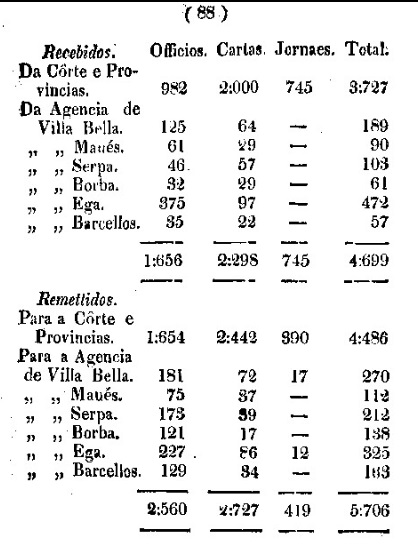
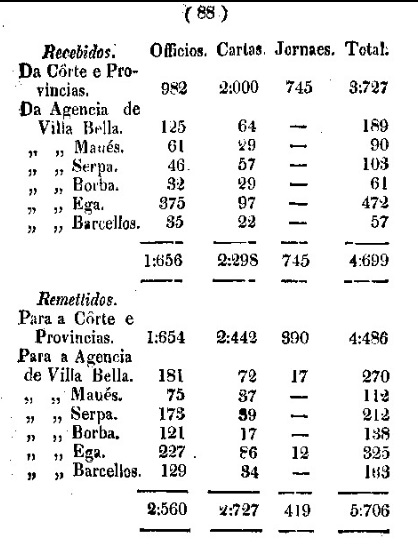
There were three years in which the local post office was founded. Nova Monteiro writes March 1829 for it in Administrações e Agencias Postaes do Brasil Imperio (in Brasil Filatelico/RJ, 1934-5; Reprint SPP 1994-1999). The Directory of Imperial Post Offices (Tabella das Agencias do Correio do Imperio, Rio de Janeiro, 1885) lists the postal agency from 1851. Indeed, the agency was operating in 1853:

Relatorio do Presidente da Provincia, August 1853

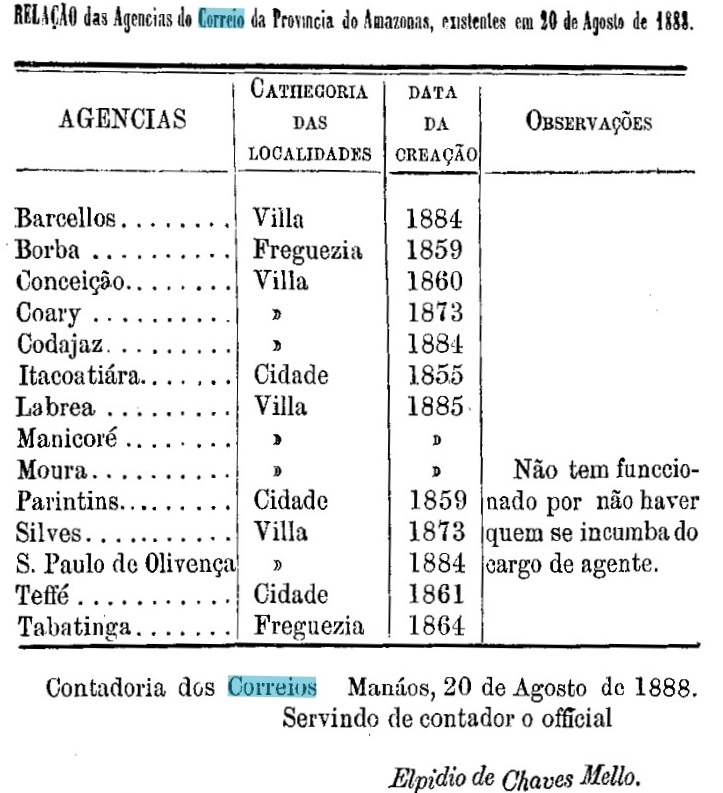
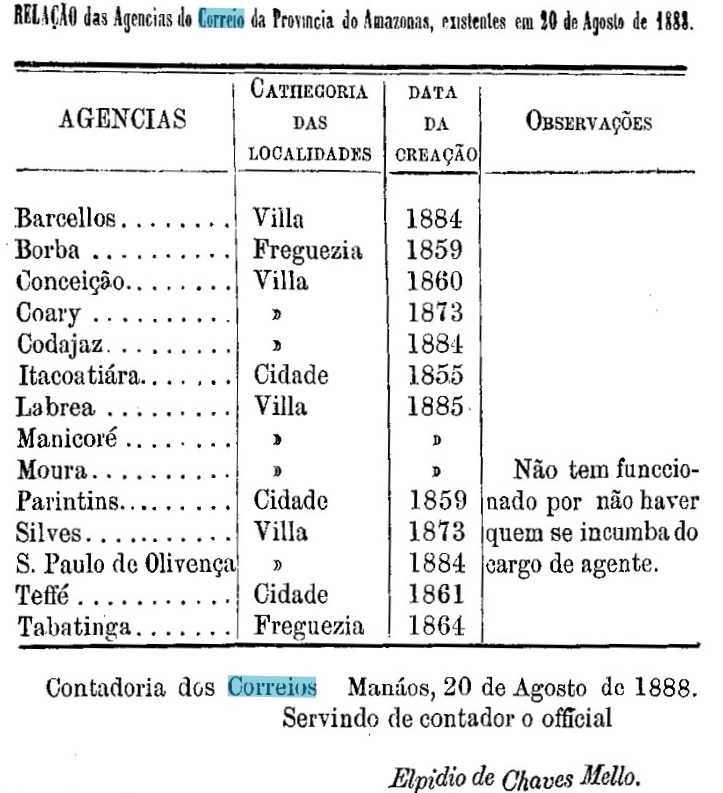
In a list published in the Provincial President’s Report in August 1888, the Teffé post office is mentioned as created in 1861:

Relatório do Presidente da Província/AM, August 1888

So far, no imperial postmark with Ega/Egas has been found. For postmarks under Teffé siehe TAM-0100

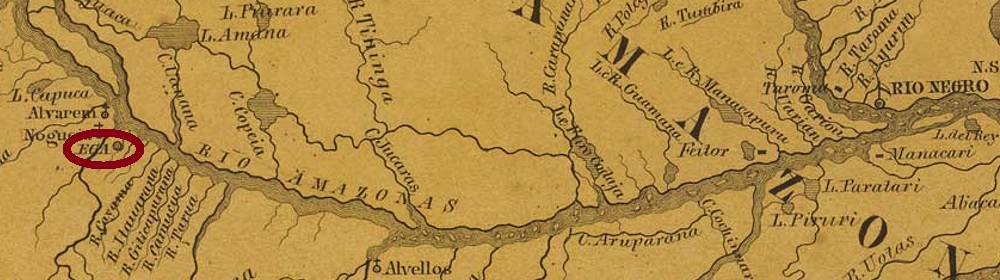
Villiers de l’Ile Adam: Carta (…) das Provincias do Grão-Pará e Alto Amazonas, 1850

Siehe auch Teffé (TAM-1000)

Diese Ortschaft war eine Siedlung am Südufer des Rio Tefé, wo dieser in den Amazonas mündet. Das Wort kommt aus der Nheegatu-Indianersprache und bedeutet tief. 1759 wurde daraus eine Vila, die Egas (oder auch Ega) hieß, und seit Juni 1859 ist der Ort die Stadt Teffé.

Drei Gründungsjahre fürs örtliche Postamt waren zu finden. Nova Monteiro schreibt dafür in Administrações e Agencias Postaes do Brasil Imperio (in Brasil Filatelico/RJ, 1934-5; Reprint SPP 1994-1999) den März 1829. Das Verzeichnis der kaiserlichen Postämter (Tabella das Agencias do Correio do Imperio, Rio de Janeiro, 1885) listet die Postagentur ab 1851 auf. Und tatsächlich war das Postamt 1853 in Betrieb:

Relatorio do Presidente da Provincia, August 1853

In einer Liste, die im Bericht des Provinzpräsidenten im August 1888 veröffentlicht wurde, wird das Postamt Teffé mit Gründungsjahr 1861 geführt:

Relatório do Presidente da Província/AM, August 1888

Bisher wurde kein kaiserlicher Poststempel mit Ega/Egas gefunden. Für Poststempel mit Teffé siehe TAM-0100

Categories
Carimbologia C-D

Duas Barras, Rio de Janeiro (DRJ-0365)

Almanak Laemmert, 1892

See also Conceição das Duas Barras do Rio Negro (CRJ-0365)

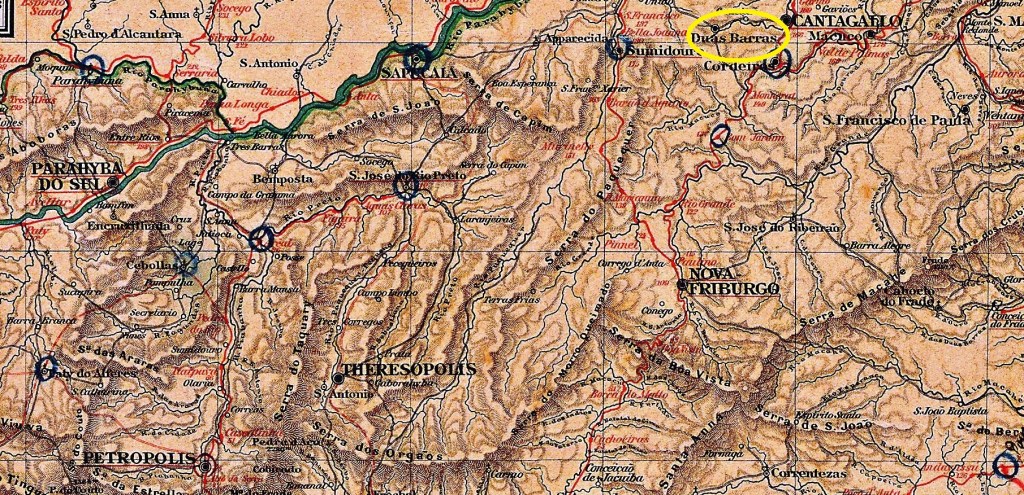
The small chapel was built in December 1836 near the Vila de Cantagalo on the west bank of the Rio Negro, approx. 180 km north-east of the capital Rio de Janeiro. In October 1856, the Freguesia de N. Sra. da Conceição das Duas Barras was founded there, which was declared a vila in May 1891 and a town in December 1929.

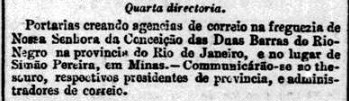
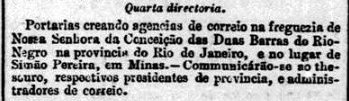
The local post office had existed since November 1861, as reported in the regional press:

Jornal do Commercio, 07/11/1861

The first postmark is CRJ-0365a (fig. R. Koester, in Carimbologia XIII):

CRJ-0365a (RK) 1861-1866ff

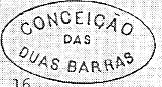
Koester also shows the seal cancel CRJ-0365b:

CRJ-0365b (RK)

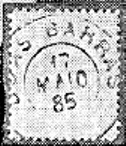
In the next postmark DRJ-0365a (fig. R. Koester, op.cit.) the place name is already abbreviated:

DRJ-0365a (RK) 1884ff-1892
Atlas do Imperio do Brasil, 1868

Siehe auch Conceição das Duas Barras do Rio Negro (CRJ-0365)

Die kleine Kapelle wurde im Dezember 1836 erbaut und lag nahe der Vila de Cantagalo am Westufer des Rio Negro, ca. 180 km nordöstlich der Hauptstadt Rio de Janeiro. Im Oktober 1856 wurde dort die Freguesia de N. Sra. da Conceição das Duas Barras gegründet, die im Mai 1891 zur Vila und im Dezember 1929 zur Stadt erklärt wurde.

Das örtliche Postamt bestand seit November 1861, wie die regionale Presse berichtete:

Jornal do Commercio, 07.11.1861

Der erste Poststempel ist CRJ-0365a (Abb. R. Koester, in Carimbologia XIII):

CRJ-0365a (RK) 1861-1866ff

Koester zeigt auch den Siegelstempel CRJ-0365b:

CRJ-0365b (RK)

Beim nächsten Stempel DRJ-0365a (Abb. R. Koester, op.cit.) ist der Ortsname bereits abgekürzt:

DRJ-0365a (RK) 1884ff-1892
Categories
Carimbologia C-D

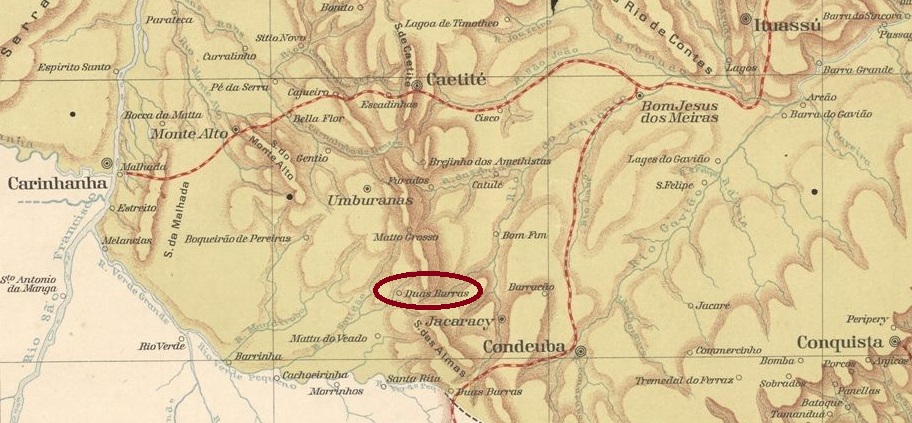
Duas Barras, Bahia (DBA-0345)

Estado da Bahia, 1913

Other names: Urandi (1918)

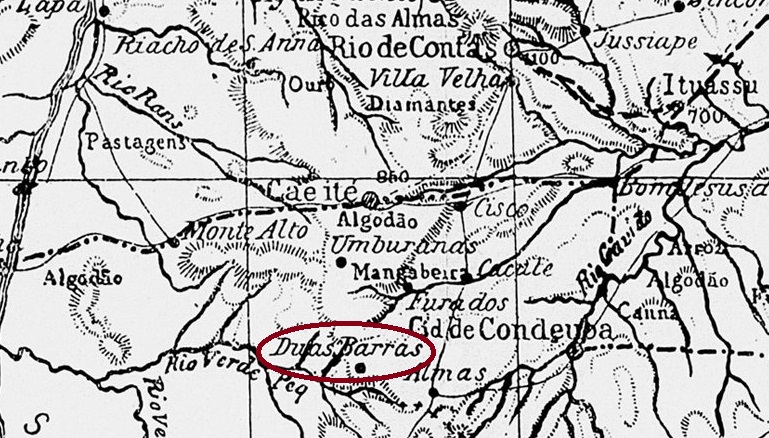
Santo Antonio das Duas Barras was a freguesia of the Vila de Caetité from May 1877, near the provincial border with Minas Gerais, 710 km south-west of the capital Salvador da Bahia. The municipality was incorporated into the newly founded Vila de Umburanas in July 1889 and has been Município de Urandi since August 1918. The name comes from the Indian language Tupi and means black wood.

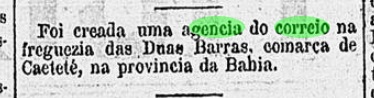
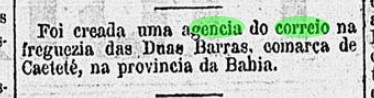
R. Koester writes in Carimbologia XVI that there has been a post office there since January 1887. This is confirmed by the press in Rio:

Gazeta de Noticias/RJ, 04/01/1877

No imperial postmarks are yet known from Duas Barras in the province of Bahia.

Laemmert: Estado da Bahia, 1913

Andere Namen: Urandi (1918)

Santo Antonio das Duas Barras war ab Mai 1877 eine Freguesia der Vila de Caetité, nahe der Provinzgrenze zu Minas Gerais, 710 km südwestlich der Hauptstadt Salvador da Bahia. Die Gemeinde wurde im Juli 1889 in die neu gegründete Vila de Umburanas eingegliedert und ist seit August 1918 Município de Urandi. Der Name stammt aus der Indianersprache Tupi und bedeutet schwarzes Holz.

R. Koester schreibt in Carimbologia XVI, dass es dort seit Januar 1887 ein Postamt gab. Dies wird von der Presse in Rio bestätigt:

Gazeta de Noticias/RJ, 04.01.1877

Aus Duas Barras in der Provinz Bahia sind bisher keine kaiserlichen Poststempel bekannt.