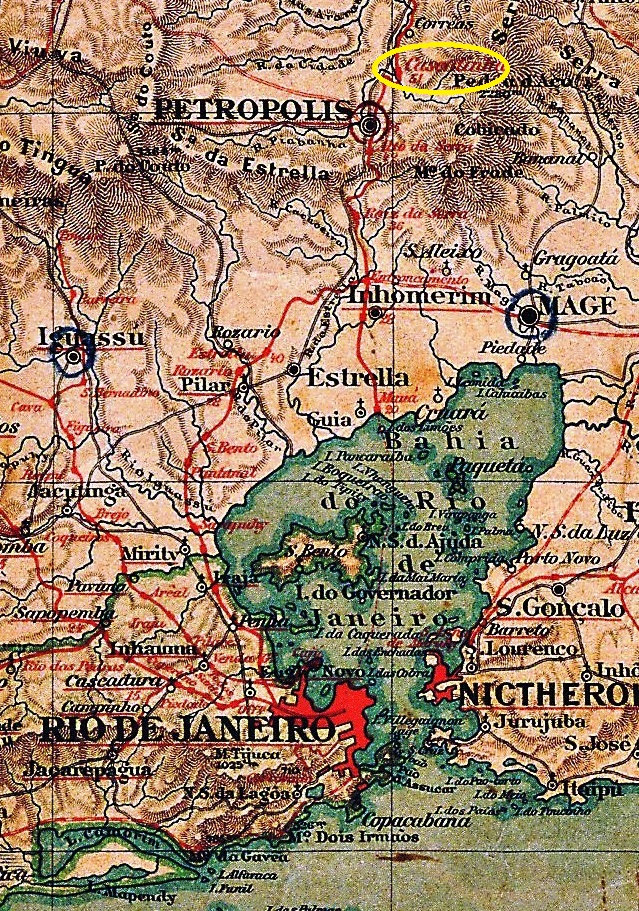
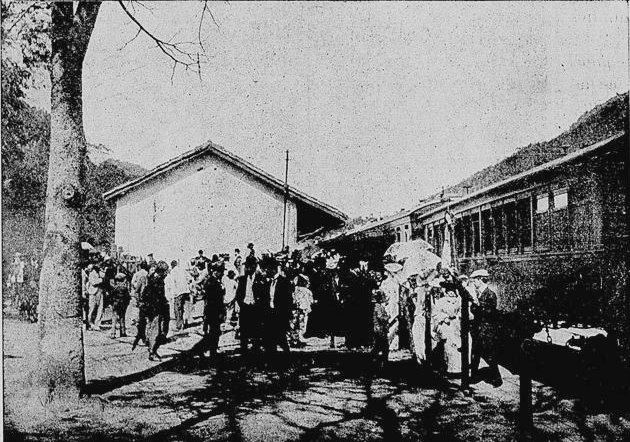
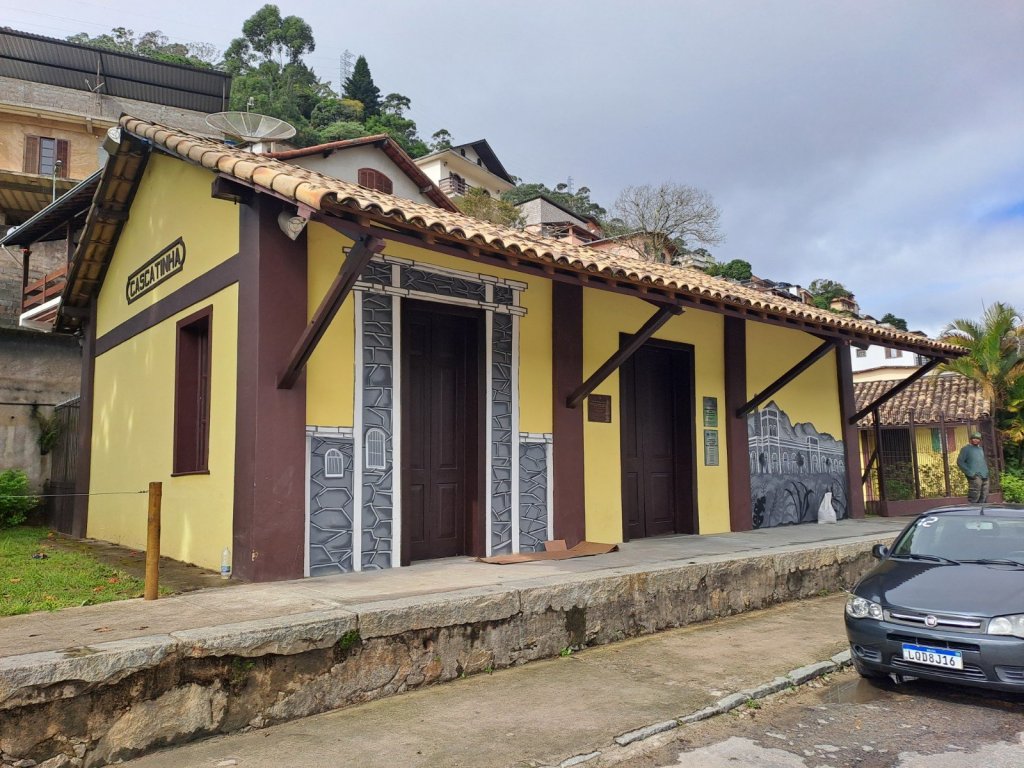
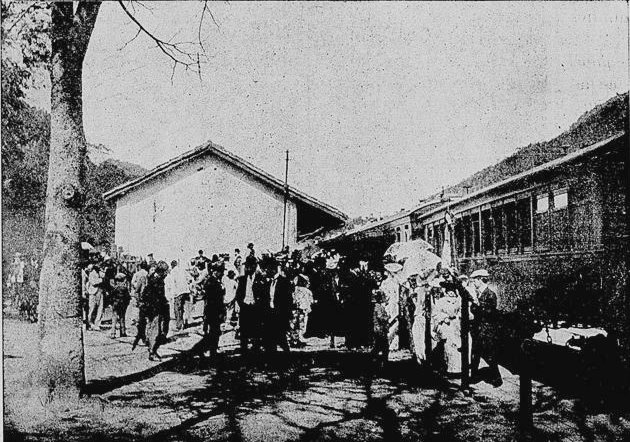
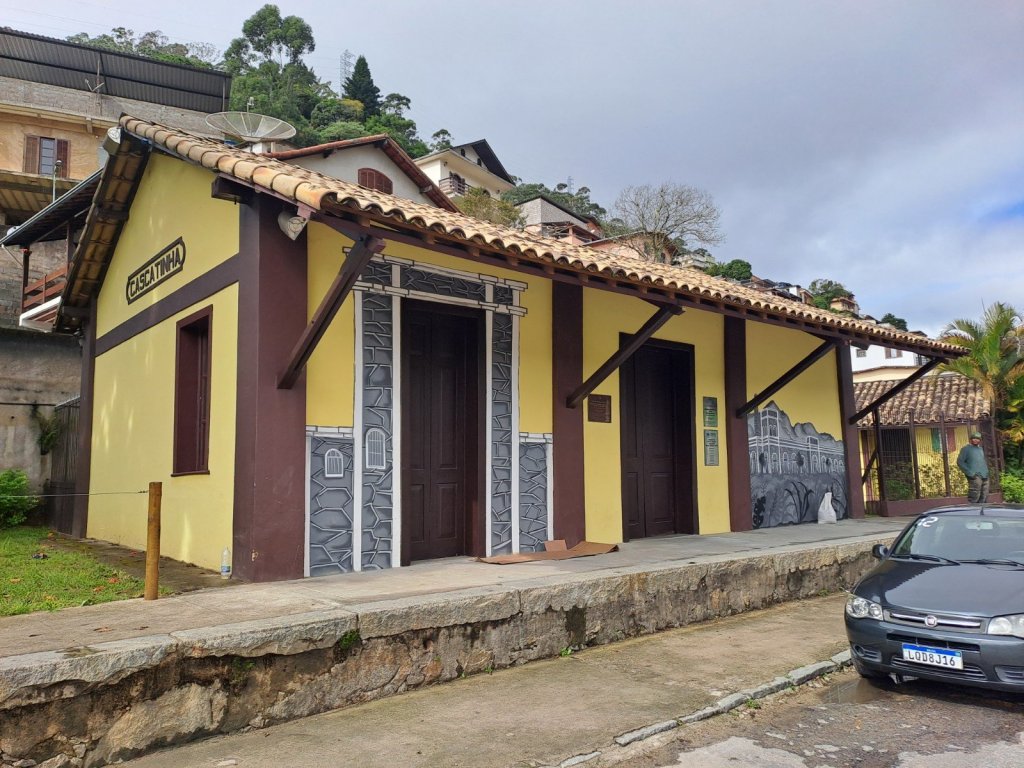
Cascatinha (Little Waterfall) station was opened in February 1886 by the E.F. Príncipe do Grão-Pará railway company and was located on the east bank of the Piabanha in the Vila de Petrópolis region, over 70 km north of the capital Rio de Janeiro. The line belonged to E.F. Leopoldina from 1890 until it was closed. Today, the tracks have disappeared and the station building serves as a museum (estacoesferroviarias.com.br).
In 1905 (Photo: Revista da Semana, on estacoesferroviarias.com.br)In June 2023 (Photo: Renato Ramos, on estacoesferroviarias.com.br)
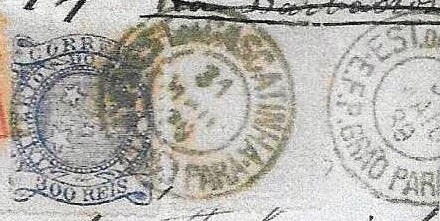
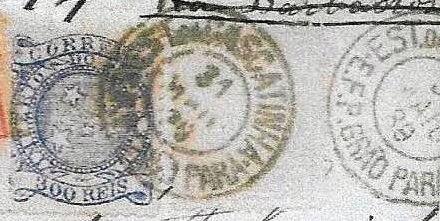
As R. Koester writes in Carimbologia X, there had been a post office at the railway station since 1886. Three postmarks were found for the 19th century. CRJ-0325a (agenciaspostais.com.br) is the oldest one and bears internal dates from 1887 to 1889:
CRJ-0325a (PN) 1887-1889
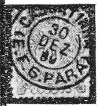
R. Koester showed the successor postmark CRJ-0325b in Carimbologia X:
CRJ-0325b (RK) 1889
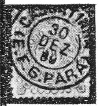
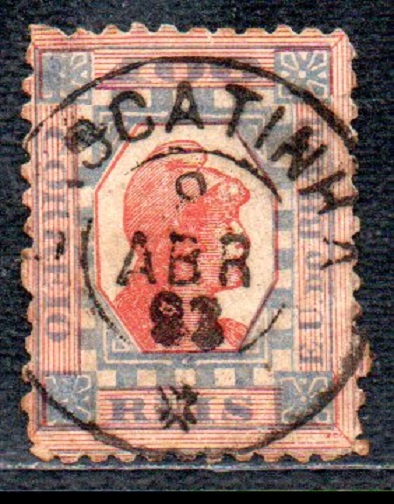
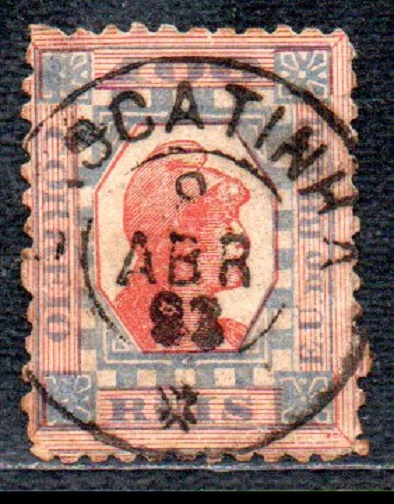
CRJ-0325c also appeared at the beginning of the Republic (picture: Luiz C. Fritzen):
CRJ-0325c (LCF) 1893-1901agenciaspostais.com.br
Der Bahnhof Cascatinha (Kleiner Wasserfall) wurde im Februar 1886 von der Eisenbahngesellschaft E.F. Príncipe do Grão-Pará eröffnet und lag am Ostufer des Piabanha in der Region Vila de Petrópolis, über 70 km nördlich der Hauptstadt Rio de Janeiro. Die Strecke gehörte von 1890 bis zu ihrer Stilllegung der E.F. Leopoldina. Heute sind die Gleise verschwunden, das Bahnhofsgebäude dient als Museum (estacoesferroviarias.com.br).
1905 (Foto: Revista da Semana, auf estacoesferroviarias.com.br)Im Juni 2023 (Foto: Renato Ramos, auf estacoesferroviarias.com.br)
Wie R. Koester in Carimbologia X schreibt, gab es seit 1886 ein Postamt am Bahnhof. Für das 19. Jahrhundert wurden drei Poststempel gefunden. CRJ-0325a (agenciaspostais.com.br) ist der älteste und trägt interne Daten von 1887 bis 1889:
CRJ-0325a (PN) 1887-1889
R. Koester zeigte in Carimbologia X den Nachfolgestempel CRJ-0325b:
CRJ-0325b (RK) 1889
Zu Beginn der Republik erschien auch CRJ-0325c (Abb. Luiz C. Fritzen):
Estações Ferroviarias (…) do Rio de Janeiro, São Paulo e Minas Geraes, 1880
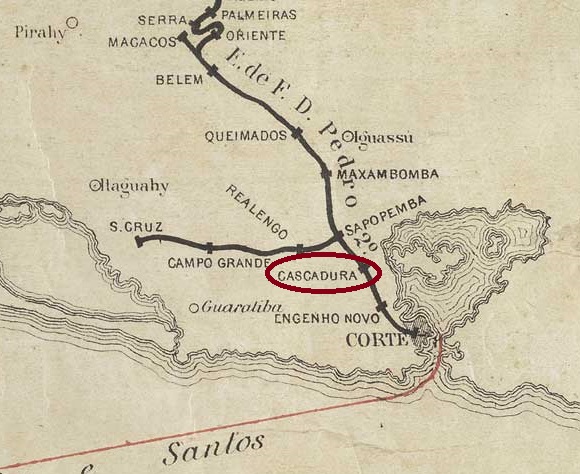
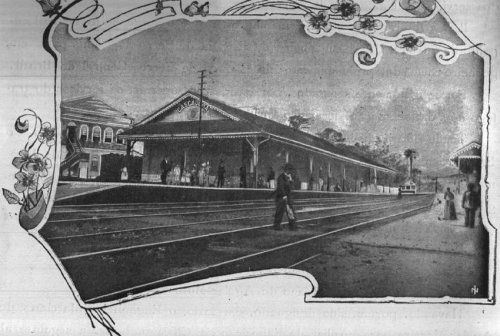
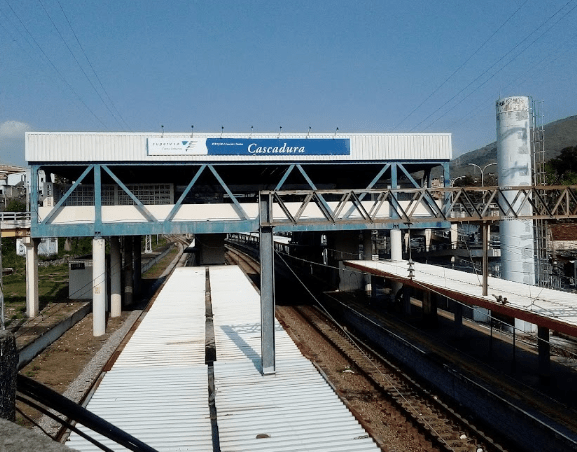
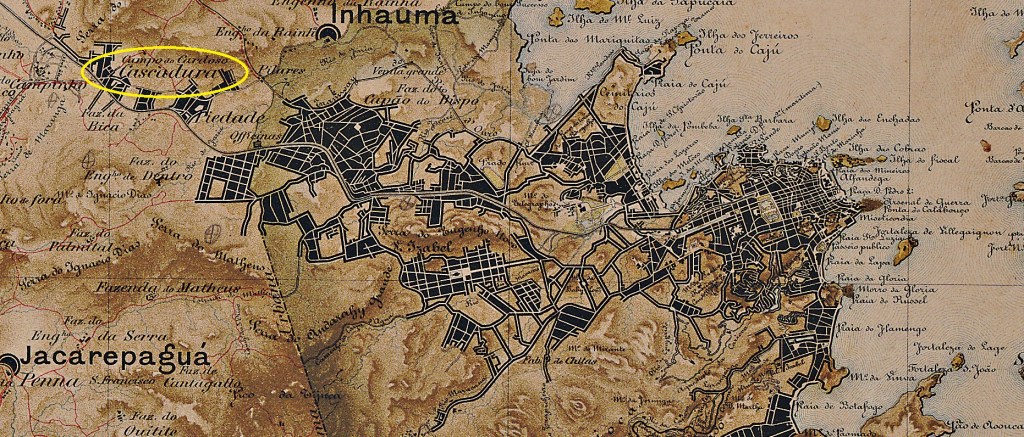
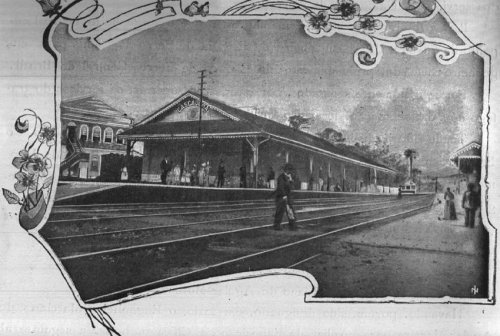
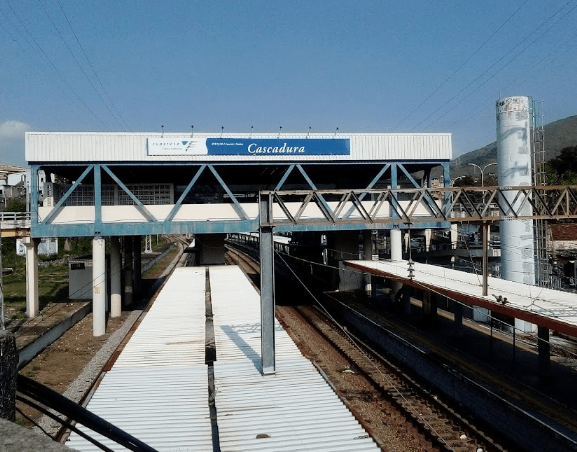
Cascadura station (= hard rind) was opened in March 1858 by the railway company E.F. D. Pedro II (Center Line) and is located just under 20 km west of the city centre of Rio de Janeiro. The line was transferred to E.F. Central do Brasil in 1889, to Rede Ferroviária Federal S.A. in 1975 and has been operated by the Supervia consortium (estacoesferroviarias.com.br) since 1997.
1908 (Photo: M.F. Figueira, Memória Histórica da EFCB, on estacoesferroviarias.com.br)2022 (Photo: Renato-Simões, on agenciaspostais.com.br)
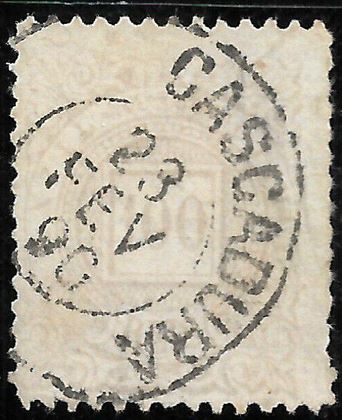
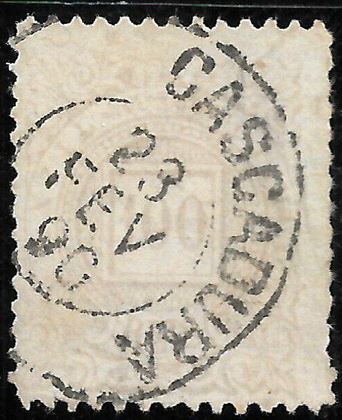
As Nova Monteiro writes in Administrações e Agencias Postaes do Brasil Imperio (Brasil Filatelico/RJ, 1934-5; reprint SPP 1994-1999), there had been a post office at the railway station since May 1862, making Cascadura the oldest railway station post office in Brazil. Three postmarks were found for the 19th century, unfortunately not the oldest one. The double circle CMN-0085b (fig. R. Koester, in Carimbologia X) shows a date of 1885:
CMN-0085b (RK) 1885
The successor CMN-0085c (fig. from the Internet) appears to be a variant in which both the inscription EST. DE and the ornament at the bottom have been removed:
CMN-0085c (EB) 1888ff-1890
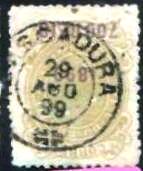
CMN-0085d was added later (image from the Internet):
CMN-0085d (EB) 1883ff-1899Mappa do Municipio Neutro, ca. 1880
Der Bahnhof Cascadura (= Harte Schale) wurde im März 1858 von der Eisenbahngesellschaft E.F. D. Pedro II (Hauptstrecke) eröffnet und liegt knapp 20 km westlich des Stadtzentrums von Rio de Janeiro. Die Strecke ging 1889 an die E.F. Central do Brasil, 1975 an die Rede Ferroviária Federal S.A. über und wird seit 1997 vom Konsortium Supervia (estacoesferroviarias.com.br) betrieben.
1908 (Foto: M.F. Figueira, Memória Histórica da EFCB, auf estacoesferroviarias.com.br)2022 (Foto: Renato-Simões, auf agenciaspostais.com.br)
Wie Nova Monteiro in Administrações e Agencias Postaes do Brasil Imperio (Brasil Filatelico/RJ, 1934-5; Nachdruck SPP 1994-1999) schreibt, gab es am Bahnhof seit Mai 1862 ein Postamt, womit Cascadura das älteste Bahnhofspostamt Brasiliens wäre. Für das 19. Jahrhundert wurden drei Poststempel gefunden, leider nicht der älteste. Der Doppelkreis CMN-0085b (Abb. R. Koester, in Carimbologia X) zeigt ein Datum von 1885:
CMN-0085b (RK) 1885
Der Nachfolger CMN-0085c (Abb. aus dem Internet) scheint eine Variante zu sein, bei der sowohl die Inschrift EST. DE und die Verzierung unten entfernt wurden:
CMN-0085c (EB) 1888ff-1890
Später kam CMN-0085d hinzu (Abbildung aus dem Internet):
Estações Ferroviarias (…) do Rio de Janeiro, São Paulo e Minas Geraes, 1880
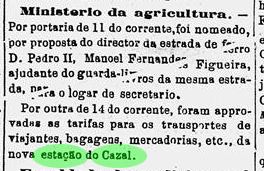
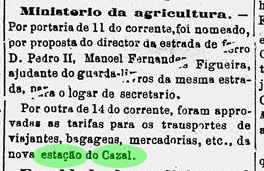
Cazal station (also spelt Casal) is said to have been inaugurated in October 1867 by the E.F.D. Pedro II railway company (Center Line), although Paulo Novaes (agenciaspostais.com.br) assumes that the inauguration did not take place until the end of 1876. He refers to a newspaper article from November 1876, which mentions a “new” Cazal railway station:
Diario do Rio de Janeiro,15 Nov. 1876
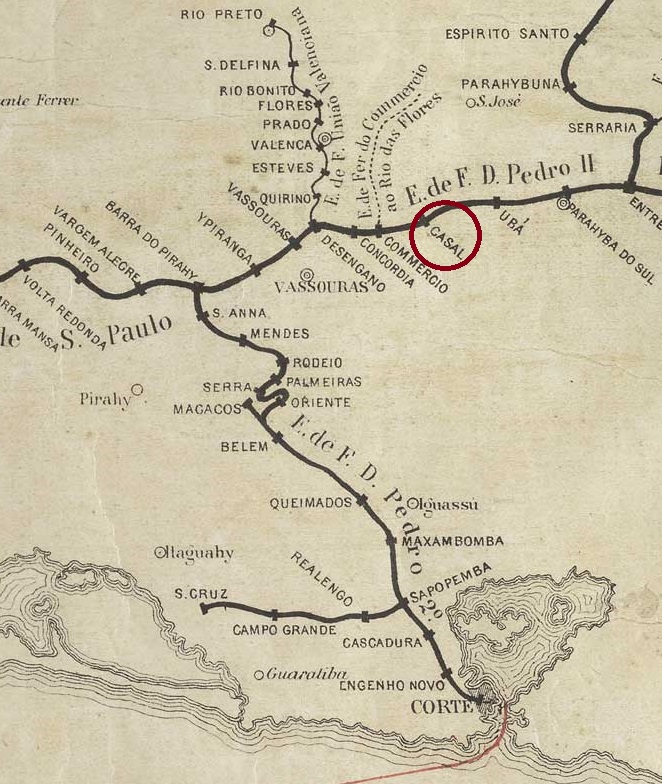
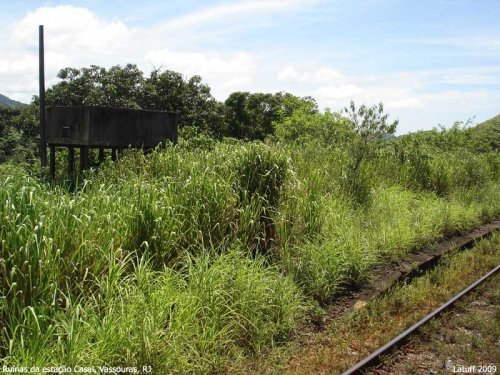
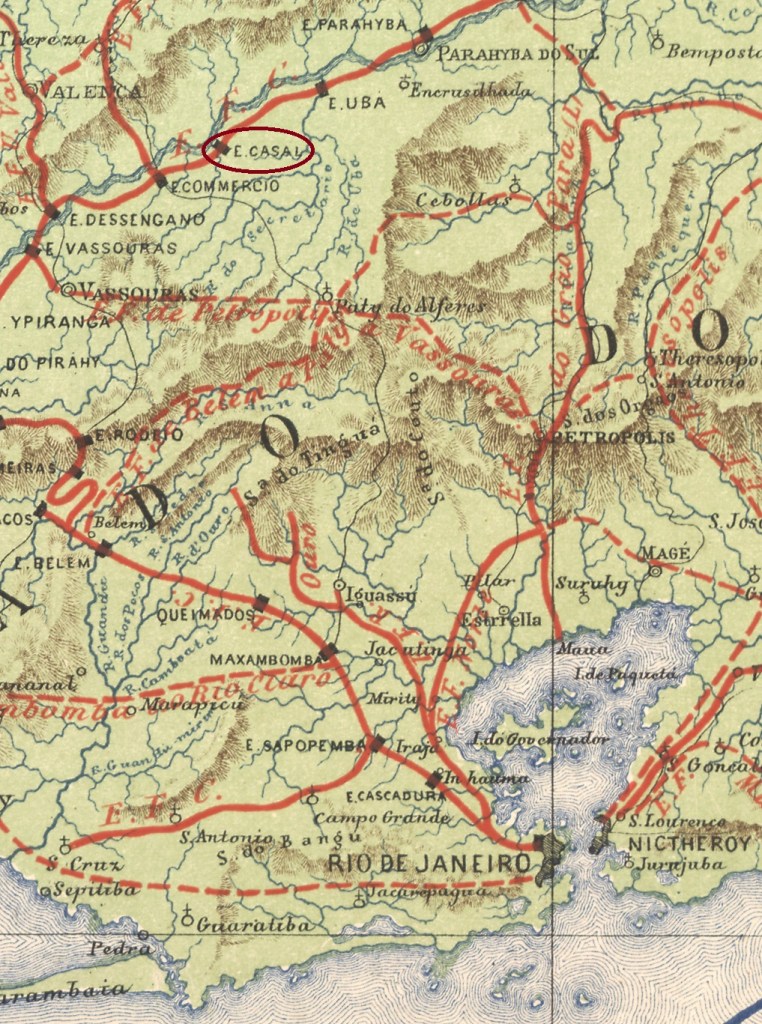
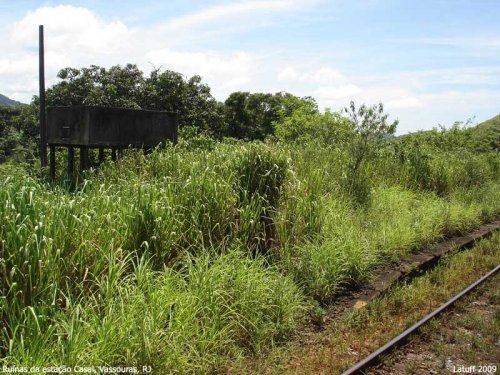
In any case, the station was in the Vila de Vassouras area, 130 kilometres north of the capital Rio de Janeiro, named after a fazenda in the region. The line went to E. F. Central do Brasil in 1889 and belonged to Rede Ferroviária Federal S.A. (estacoesferroviarias.com.br) from 1975 until it was closed in 1996. The tracks are still there today, but the station building has long since been demolished.
In 2009 (Photo: Carlos Latuff on estacoesferroviarias.com.br)
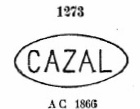
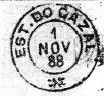
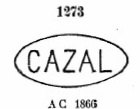
According to the Directory of Imperial Post Offices (Tabella das Agencias do Correio do Imperio, Rio de Janeiro, 1885), there had been a post office at the station since 1876, and three postmarks were found for the 19th century. The first, CRJ-0320a, was used at least until 1878 and is recorded in Paulo Ayres’ Catálogo de Carimbos Brasil-Império (S. Paulo, 1937, 1942) under the number 1273:
CRJ-0320a (P.A. 1273) 1876ff-1878ff
This is followed by CRJ-0320b, the only example of which (agenciaspostais.com.br) is dated 1885:
CRJ-0320b (PN) 1885
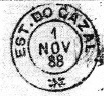
Finally, at the end of the Empire, CRJ-0320c (fig. R. Koester, in Carimbologia X) was added:
CRJ-0320c (RK) 1888-1895Estrada de Ferro Central do Brasil, 1890
Der Bahnhof Cazal (auch Casal geschrieben) soll im Oktober 1867 von der Eisenbahngesellschaft E.F.D. Pedro II (Hauptstrecke) eingeweiht worden sein, obwohl Paulo Novaes (agenciaspostais.com.br) vermutet, dass die Einweihung erst Ende 1876 stattfand. Er beruft sich dabei auf einen Zeitungsartikel vom November 1876, in dem von einem „neuen“ Bahnhof Cazal die Rede ist:
Diario do Rio de Janeiro,15.11.1876
Jedenfalls lag der Bahnhof in der Gegend von Vila de Vassouras, 130 km nördlich der Hauptstadt Rio de Janeiro, und wurde nach einer Fazenda der Region benannt. Die Strecke ging 1889 an die E. F. Central do Brasil und gehörte von 1975 bis zu ihrer Stilllegung 1996 der Rede Ferroviária Federal S.A. (estacoesferroviarias.com.br). Heute sind die Gleise noch vorhanden, das Bahnhofsgebäude ist längst abgerissen.
2009 (Foto: Carlos Latuff auf estacoesferroviarias.com.br)
Wie aus dem Verzeichnis der kaiserlichen Postämter (Tabella das Agencias do Correio do Imperio, Rio de Janeiro, 1885) hervorgeht, gab es im Bahnhof seit 1876 ein Postamt, für das 19. Jahrhundert wurden drei Poststempel gefunden. Der erste, CRJ-0320a, wurde mindestens bis 1878 verwendet und ist in Paulo Ayres‘ Catálogo de Carimbos Brasil-Império (S. Paulo, 1937, 1942) unter der Nummer 1273 verzeichnet:
CRJ-0320a (P.A. 1273) 1876ff-1878ff
Es folgt CRJ-0320b, dessen einziges Exemplar (agenciaspostais.com.br) 1885 datiert ist:
CRJ-0320b (PN) 1885
Am Ende des Kaiserreichs kam schließlich CRJ-0320c (Abb. R. Koester, in Carimbologia X) hinzu:
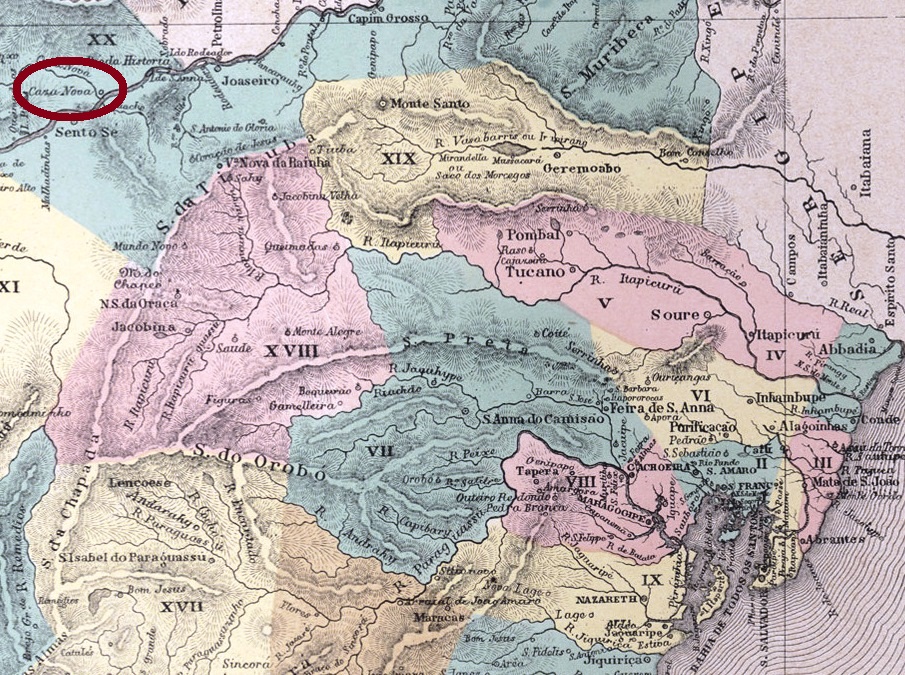
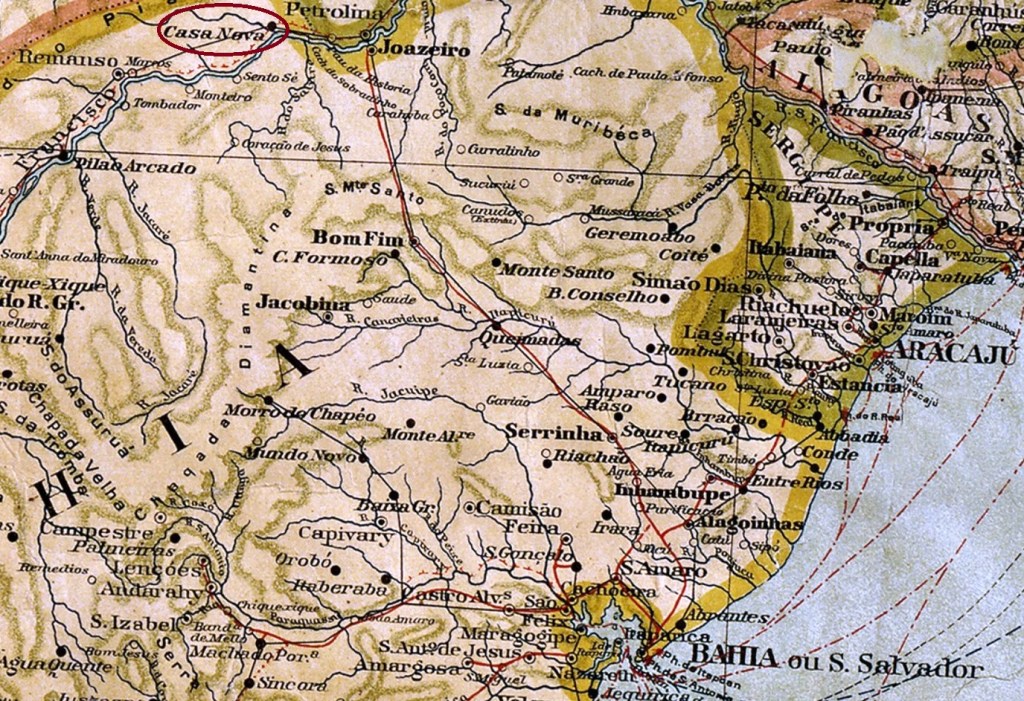
The locality of São José do Riacho da Casa Nova was founded in 1873 as part of the Vila Remanso de Pilão Arcado and is located approximately 570 kilometres northwest of the provincial capital Salvador da Bahia. In 1879 it became an independent município, São José da Casa Nova, which simplified its name to Casa Nova in 1931. And Casa Nova was not the famous Venetian seducer, but a tributary of the Rio São Francisco, which gave the town its name. A dam built by the Brazilian military dictatorship in 1976 near Sobradinho on the São Francisco flooded the entire region and relocated at least four historic communities: Pilão Arcado, Remanso, Sento Sé and Casa Nova.
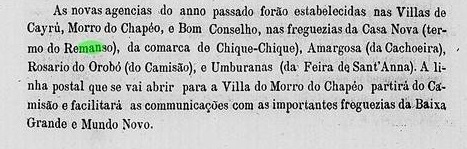
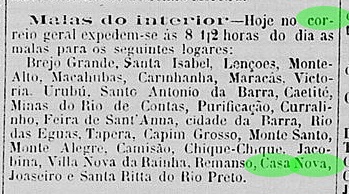
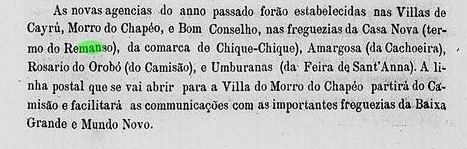
The report of the Provisional Government Council of Bahia for 1877 mentions a post office that had been established the year before:
Relatorio do Conselho Interino do Governo da Bahia, 1877
This is again confirmed by the regional press:
O Monitor, November 30, 1876
We are eagerly awaiting the first imperial stamp from Casa Nova. Hopefully it will have survived the flooding.
Mappa Geral do Brasil, 1911
Siehe auch Riacho da Casa Nova (RBA-0595)
Die Gemeinde São José do Riacho da Casa Nova wurde 1873 als Teil der Vila Remanso de Pilão Arcado gegründet und liegt ca. 570 km nordwestlich der Provinzhauptstadt Salvador da Bahia. Im Jahre 1879 wurde es ein eigenständiges Município, São José da Casa Nova, das 1931 seinen Namen in Casa Nova vereinfachte. Und Casa Nova war nicht der berühmte venezianische Verführer, sondern ein Nebenfluss des Rio São Francisco, der dem Ort seinen Namen gab. Ein 1976 von der brasilianischen Militärdiktatur errichteter Staudamm bei Sobradinho am São Francisco überflutete die gesamte Region und siedelte mindestens vier historische Gemeinden um: Pilão Arcado, Remanso, Sento Sé und auch Casa Nova.
Der Bericht des provisorischen Regierungsrates von Bahia für 1877 erwähnt ein Postamt, das im Jahr zuvor eingerichtet worden war:
Relatorio do Conselho Interino do Governo da Bahia, 1877
Dies wird wiederum von der regionalen Presse bestätigt:
O Monitor, November 30, 1876
Wir sind gespannt auf den ersten kaiserlichen Stempel von Casa Nova. Hoffentlich hat er die Überschwemmung überstanden.
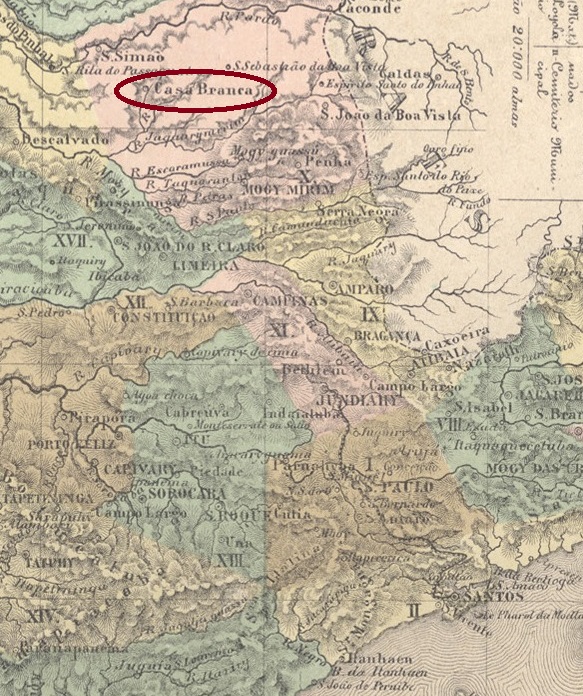
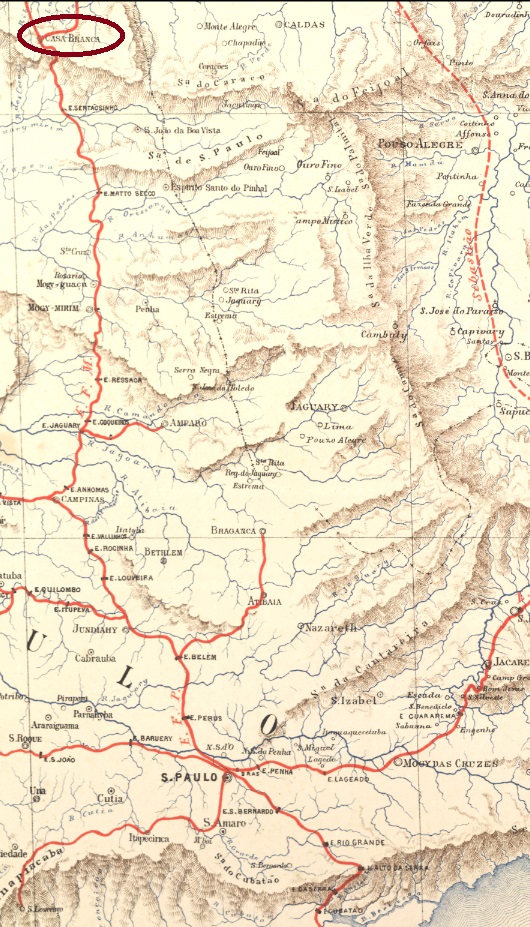
The Freguesia de N. Sa. das Dores de Casa Branca was founded in March 1814; it belonged to the Vila de Mogy Mirim and was located 230 kilometres north of the later provincial capital São Paulo. In February 1841 it became a Vila and in March 1872 a city.
Nova Monteiro writes in Administrações e Agencias Postaes do Brasil Imperio (Brasil Filatelico/RJ, 1934-5; reprint SPP 1994-1999) that there had been a post office there since February 1832. In the directory of imperial post offices (Tabella das Agencias do Correio do Imperio, Rio de Janeiro, 1885), the agency is listed as having been founded in 1846.
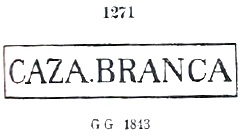
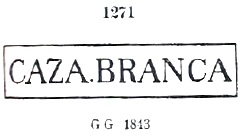
The oldest postmark to date is CSP-0325a, which also occurs in the colours brown, sepia and blue and was already registered by P. Ayres in the Catálogo de Carimbos Brasil-Império (S. Paulo, 1937, 1942) under no. 1271:
CSP-0325a (P.A. 1271) 1843ff-1869ff
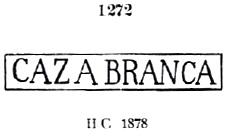
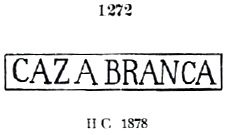
Its successor is very similar to it. CSP-0325b also exists in blue and has the no. 1272 in P. Ayres (op.cit.), but the dot between CAZA and BRANCA is missing:
CSP-0325b (P.A. 1272) 1866ff-1878ff
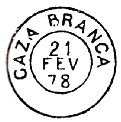
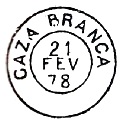
Then came the double circle CSP-0325c, which is illustrated by P. Ayres on p. 121:
CSP-0325c (P.A. p. 121) 1876-1888
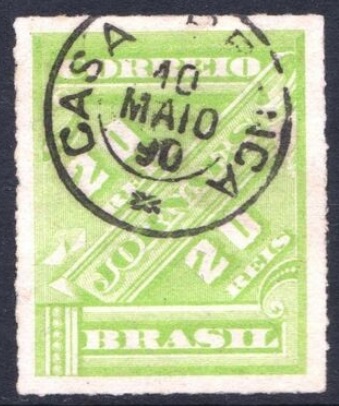
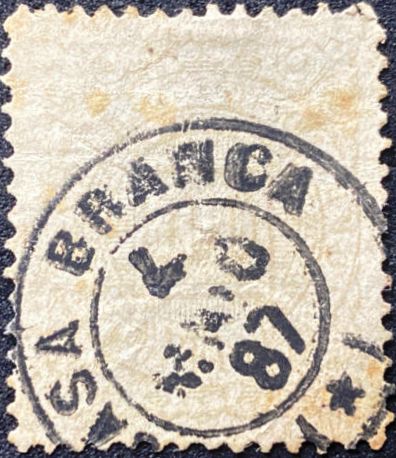
A short time later, the French type CSP-0325d appeared (illustrated by Roberto Assef Jr.):
CSP-0325d (RA) 1884-1896
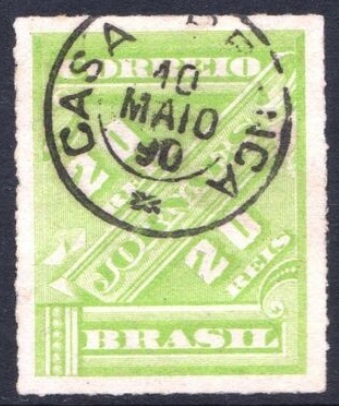
In the late imperial period, the type CSP-0325e (picture from the Internet) was also used:
CSP-0325e (EB) 1889-1898
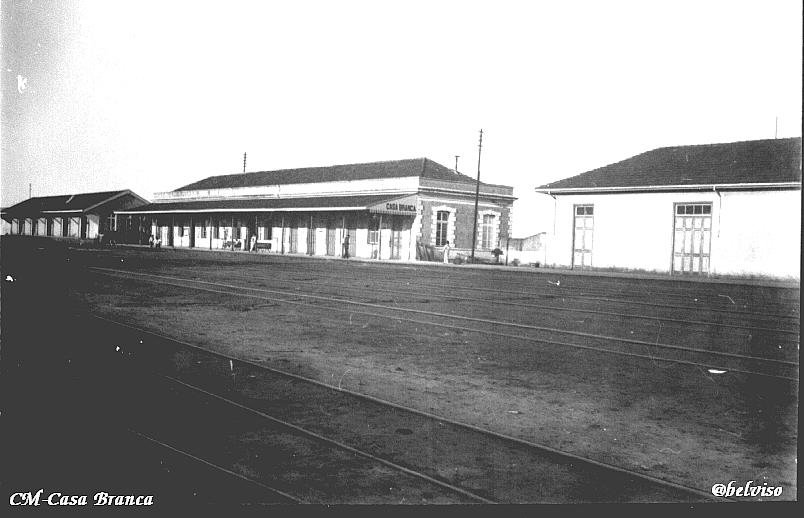
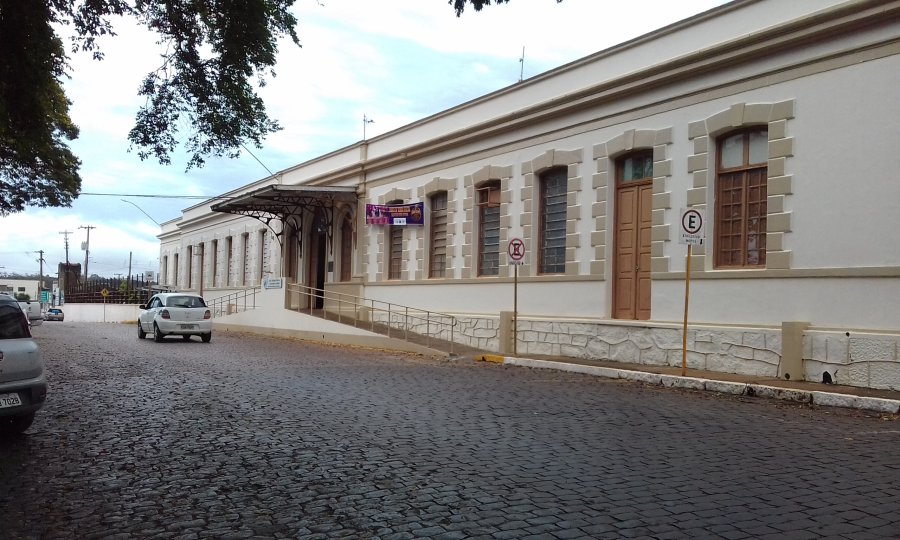
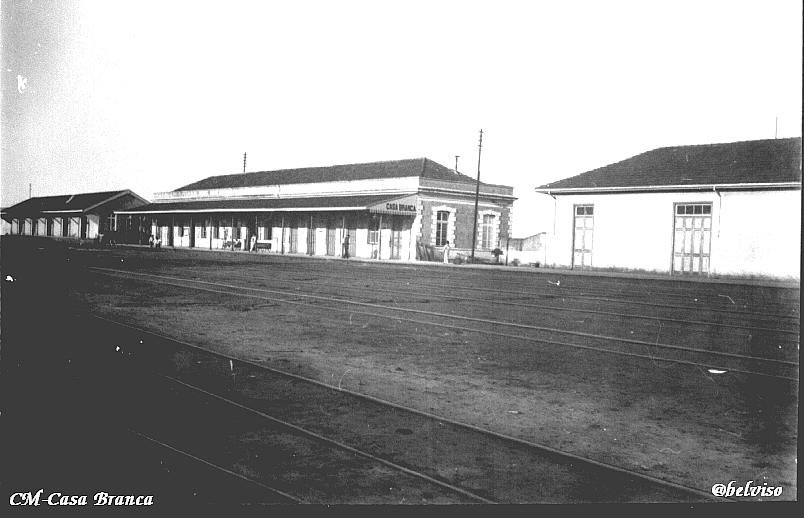
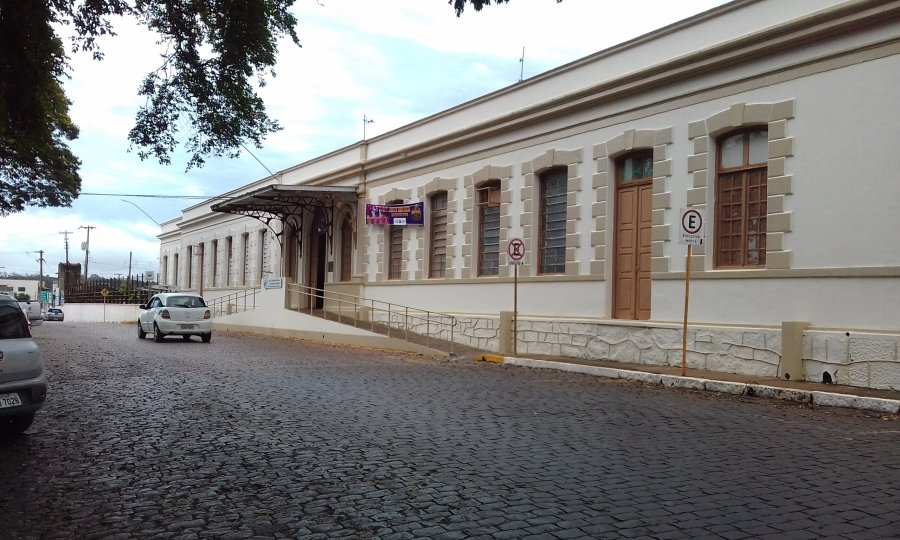
In January 1878, a railway station of the Cia. Mogyana railway company (main line) was opened in Casa Branca. The line was transferred to FEPASA in 1971 and was in operation until 1998. The tracks are still there today and the building serves as the town hall.
ca. 1910 (Photo: Album Mogyana on estacoesferroviarias.com.br)In 2018 (Photo: Silvio Rizzo on estacoesferroviarias.com.br)
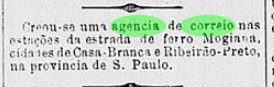
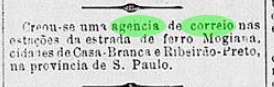
The station post office was opened in April 1884, as reported in the Rio press:
Brazil/RJ, 08.04.1884
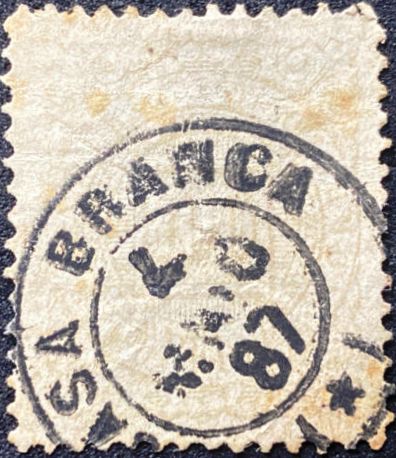
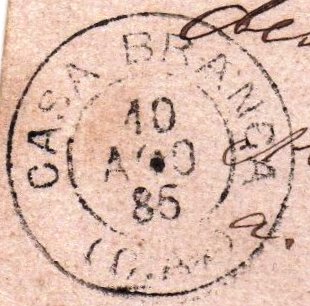
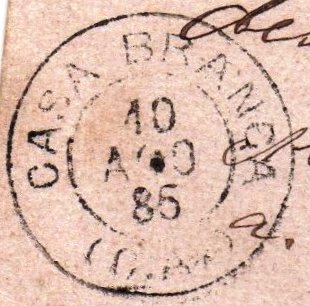
As no station postmark can yet be seen, the wagon postmark (Correio Ambulante) was probably used. First to appear was CSP-0330a (José A. Junges Coll.) with dates from 1885 to 1888:
CSP-0330a (JJ) 1885-1888
Its successor is CSP-0330b, as shown by R. Koester (Carimbologia X):
CSP-0330b (RK) 1888-1889E. F. Central do Brasil, 1890
Die Freguesia de N. Sa. das Dores de Casa Branca wurde im März 1814 gegründet; sie gehörte zur Vila de Mogy Mirim und lag 230 km nördlich der späteren Provinzhauptstadt São Paulo. Im Februar 1841 wurde es zur Vila und im März 1872 zur Stadt erhoben.
Nova Monteiro schreibt in Administrações e Agencias Postaes do Brasil Imperio (Brasil Filatelico/RJ, 1934-5; Reprint SPP 1994-1999), dass es dort seit Februar 1832 ein Postamt gab. Im Verzeichnis der kaiserlichen Postämter (Tabella das Agencias do Correio do Imperio, Rio de Janeiro, 1885) wird die Agentur mit dem Gründungsjahr 1846 aufgeführt.
Der bisher älteste Poststempel ist CSP-0325a, der auch in den Farben Braun, Sepia und Blau vorkommt und bereits von P. Ayres im Catálogo de Carimbos Brasil-Império (S. Paulo, 1937, 1942) unter Nr. 1271 registriert wurde:
CSP-0325a (P.A. 1271) 1843ff-1869ff
Sein Nachfolger ist ihm sehr ähnlich. CSP-0325b kommt ebenfalls in blau vor und hat die Nr. 1272 bei P. Ayres (op.cit.), aber der Punkt zwischen CAZA und BRANCA fehlt hier:
CSP-0325b (P.A. 1272) 1866ff-1878ff
Danach kam der Doppelkreis CSP-0325c, der bei P. Ayres auf S. 121 abgebildet ist:
CSP-0325c (P.A. S. 121) 1876-1888
Kurze Zeit später erschien der französische Typ CSP-0325d (Abb. Roberto Assef Jr.):
CSP-0325d (RA) 1884-1896
In der späten Kaiserzeit wurde auch der Typ CSP-0325e (Bild aus dem Internet) verwendet:
CSP-0325e (EB) 1889-1898
Im Januar 1878 wurde in Casa Branca ein Bahnhof der Eisenbahngesellschaft Cia. Mogyana (Hauptstrecke) eröffnet. Die Strecke ging 1971 an die FEPASA über und war bis 1998 in Betrieb. Heute sind die Gleise noch vorhanden, das Gebäude dient als Rathaus.
ca. 1910 (Foto: Album Mogyana, auf estacoesferroviarias.com.br)2018 (Foto: Silvio Rizzo, auf estacoesferroviarias.com.br)
Das Bahnhofspostamt wurde im April 1884 eröffnet, wie die Presse in Rio berichtete:
Brazil/RJ, 08.04.1884
Da noch kein Bahnhofspoststempel zu sehen ist, wurde vermutlich der Wagenstempel (Correio Ambulante) verwendet. Zuerst erschien CSP-0330a (Samml. José A. Junges) mit Daten von 1885 bis 1888:
CSP-0330a (JJ) 1885-1888
Sein Nachfolger ist CSP-0330b, wie er von R. Koester (Carimbologia X) gezeigt wurde:
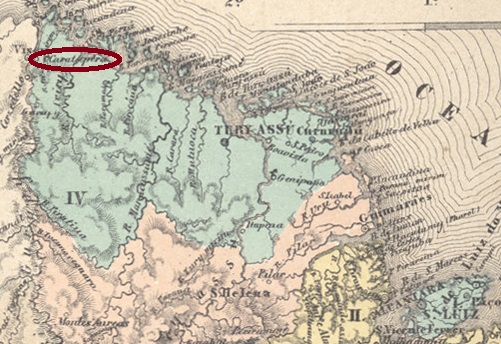
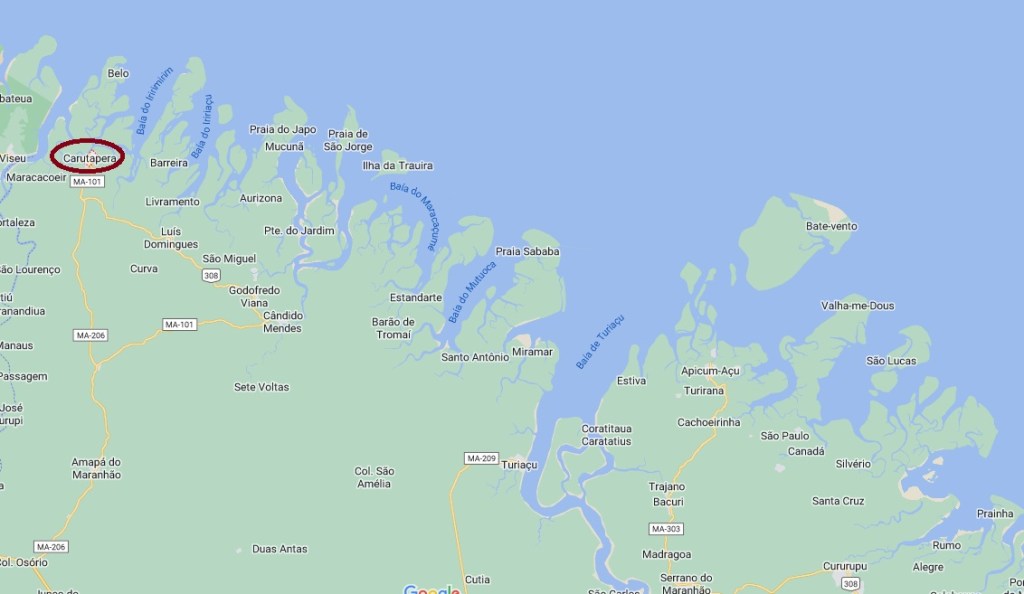
From 1861, Carutapera was a settlement on the south bank of the Arapiranga, which belonged to the Vila de Tury-Assú and was located 350 kilometres northwest of the provincial capital of São Luís. In July 1873 it became the Freguesia de S. Sebastião de Carutapera, in May 1886 a Vila, in April 1931 it was downgraded to a district of Turiaçu, and since June 1935 Carutapera has been an independent Município. The place name is of indigenous origin and means abandoned settlement.
As R. Koester writes in Carimbologia IX, there has been a post office in the village since December 1882. No imperial postmark from Carutapera is known to date.
Google Maps
Carutapera war ab 1861 eine Siedlung am Südufer des Arapiranga, die zur Vila de Tury-Assú gehörte und 350 km nordwestlich der Provinzhauptstadt São Luís lag. Im Juli 1873 wurde es zur Freguesia de S. Sebastião de Carutapera, im Mai 1886 zur Vila, im April 1931 wurde es zum Distrikt von Turiaçu herabgestuft und seit Juni 1935 ist Carutapera ein eigenständiger Município. Der Ortsname ist indigenen Ursprungs und bedeutet verlassene Siedlung.
Wie R. Koester in Carimbologia IX schreibt, gab es seit Dezember 1882 ein Postamt am Ort. Bisher ist kein kaiserlicher Poststempel aus Carutapera bekannt.
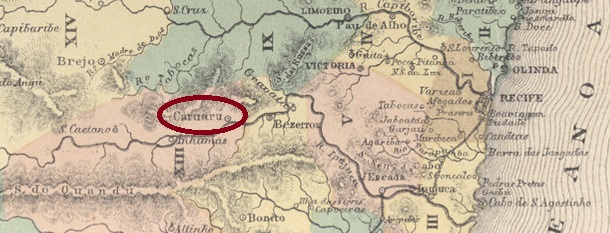
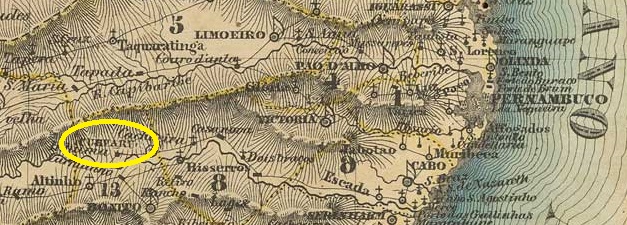
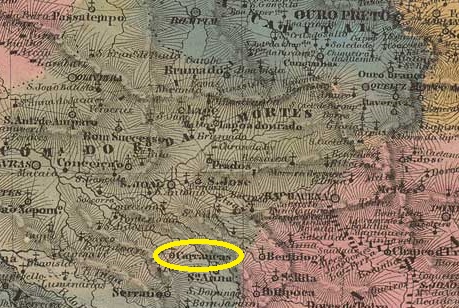
The Freguesia de N. Sra. da Conceição de Caruaru (also spelt Caruru) was founded in 1844, belonged to the Vila de Bonito and was located on the north bank of the Ipojuca, 130 kilometres west of the provincial capital Recife. It became a Vila in August 1848 and a town in May 1878.
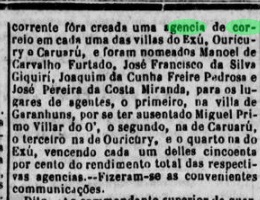
There had been a post office on place since June 1850, as can be seen from the regional press:
Diario de Pernambuco, 11/07/1850
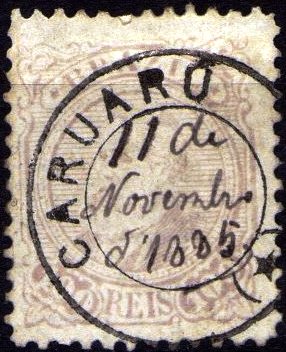
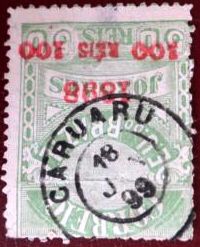
The first imperial postmark has not yet been found. Its successor would be the French type CPE-0175b (fig. Claudio Coelho), which has been seen with dates from 1885 to 1889:
CPE-0175b (CC) 1885-1889
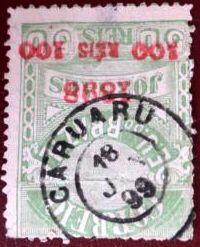
Towards the end of the 19th century, CPE-0175c also appeared (illustration from the Internet):
CPE-0175c (EB) 1893-1899Villiers de l’Ile Adam: Carta (…) das Provincias de Pernambuco, Alagoas e Sergipe, 1848
Die Freguesia de N. Sra. da Conceição de Caruaru (auch Caruru geschrieben) wurde 1844 gegründet, gehörte zur Vila de Bonito und lag am Nordufer des Ipojuca, 130 km westlich der Provinzhauptstadt Recife. Im August 1848 wurde es zur Vila und im Mai 1878 zur Stadt erhoben.
Seit Juni 1850 gab es dort ein Postamt, wie aus der regionalen Presse hervorgeht:
Diario de Pernambuco, 11.07.1850
Der erste kaiserliche Poststempel ist noch nicht gefunden worden. Sein Nachfolger wäre der französische Typ CPE-0175b (Abb. Claudio Coelho), der mit Daten von 1885 bis 1889 gesehen wurde:
CPE-0175b (CC) 1885-1889
Gegen Ende des 19. Jahrhunderts erschien auch CPE-0175c (Abb. aus dem Internet):
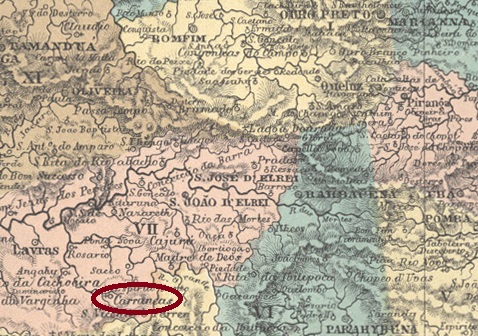
The parish of N. Sra. da Conceição de Carrancas was founded in July 1813 near the north bank of the Capivari River belonging to Vila de Turvo, 240 kilometres southwest of the future provincial capital of Ouro Preto. In 1878 it became a freguesia and in September 1909 a district of the Município de Lavras, which became the Município de S. Francisco de Sales in December 1938. Carrancas has been a separate município since December 1849. The peculiar place name (frown or grimace) is reminiscent of the rock formations in the area.
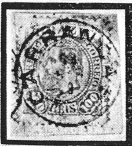
R. Koester (Carimbologia IX) and Paula Sobrinho (História Postal de Minas Gerais, Belo Horizonte, 1997) agree that there has been a post office there since September 1880. The only imperial postmark to date is CMG-0695a, as presented by Koester (op. cit.):
CMG-0695a (RK) 1885Villiers de l’Ile Adam: Carta (..) da Provincia de Minas Geraes, 1849
Die Pfarrei N. Sra. da Conceição de Carrancas wurde im Juli 1813 in der Nähe des Nordufers des Capivari im Gebiet von Vila de Turvo, 240 km südwestlich der späteren Provinzhauptstadt Ouro Preto, gegründet. Im Jahre 1878 wurde es eine Freguesia und im September 1909 ein Distrikt des Município de Lavras, das im Dezember 1938 in das Município de S. Francisco de Sales überging. Seit Dezember 1849 ist Carrancas ein eigenes Município. Der eigentümliche Ortsname (Stirnrunzeln oder Fratze) erinnert an die Felsformationen der Gegend.
R. Koester (Carimbologia IX) und Paula Sobrinho (História Postal de Minas Gerais, Belo Horizonte, 1997) schreiben übereinstimmend, dass es dort seit September 1880 ein Postamt gibt. Der bisher einzige kaiserliche Poststempel ist CMG-0695a, wie er von Koester (op. cit.) vorgestellt wurde:
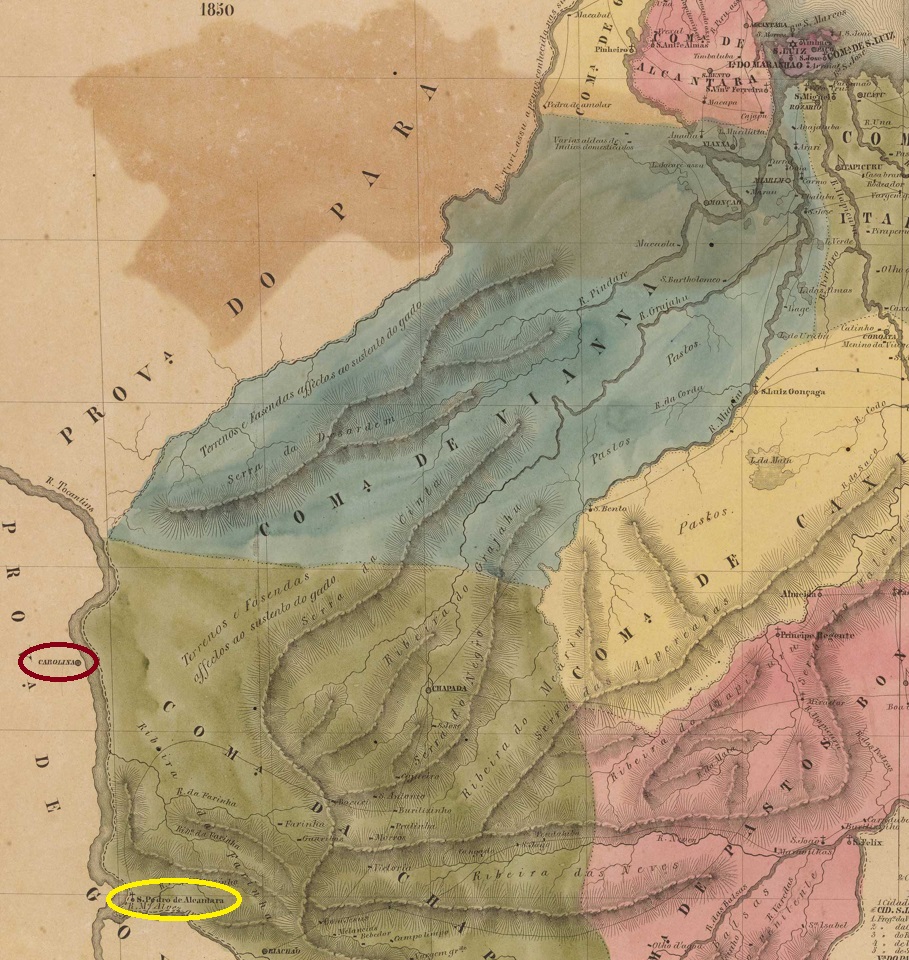
Villiers de l’Ile Adam: Carta (…) da Provincia do Maranhão, 1850
Other names: S. Pedro de Alcantara
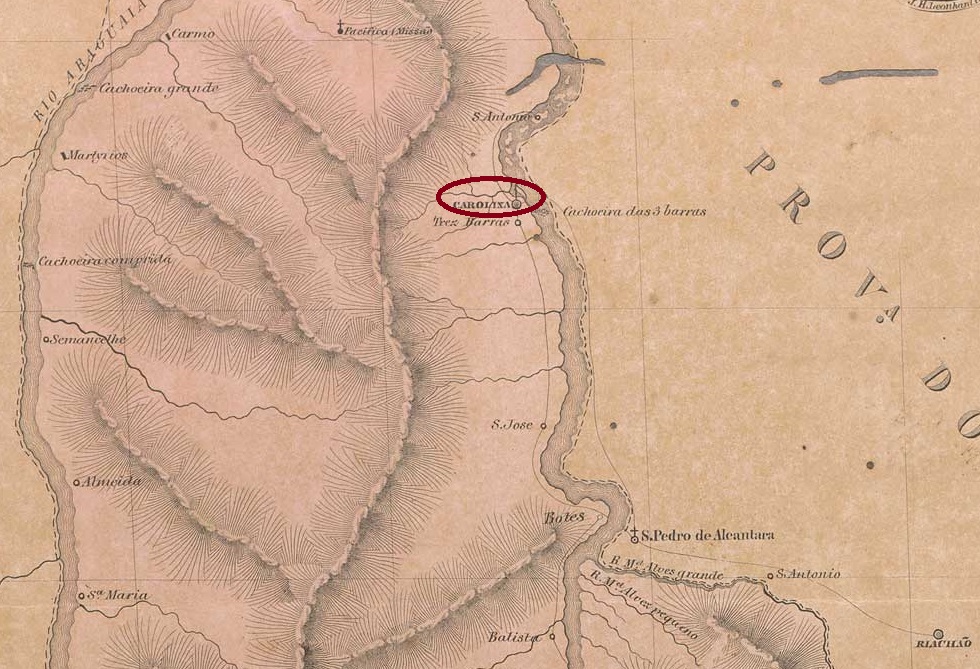
The original settlement was founded at the beginning of the 19th century under the name S. Pedro de Alcantara, located on the west bank of the Tocantins and thus still in the territory of the Capitania (later: province) of Goiás. Due to economic and climatic problems, the entire locality was moved further south to the east bank of the Tocantins around 1830, and then called S. Pedro de Alcantara. It was now located in the imperial province of Maranhão, 840 kilometres southwest of the capital São Luís. As the inhabitants continued to define themselves as Goiás citizens, they tried for decades to re-declare the new Vila as Goiás territory, until an imperial decree of August 1854 ended the dispute in Maranhão’s favour. Carolina has been a town since July 1859.
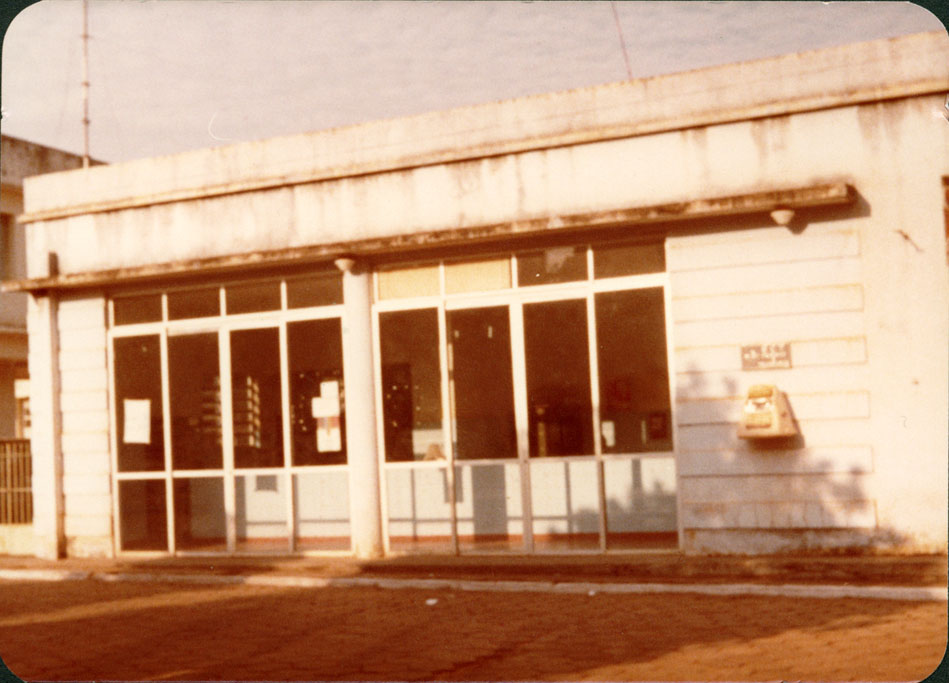
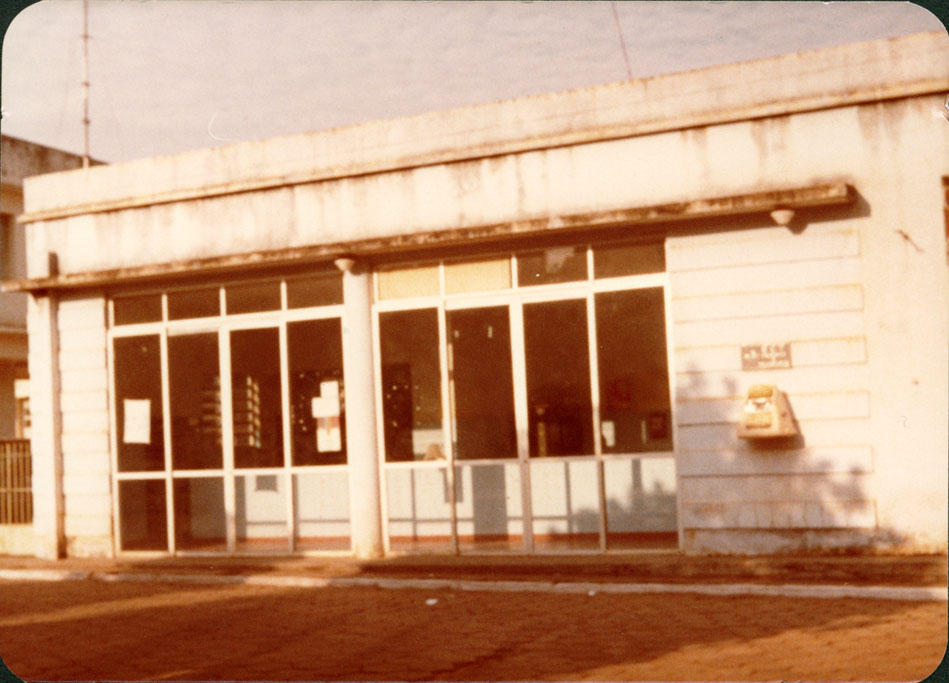
Carolina post ofice, ca. 1975 (Photo: IBGE)
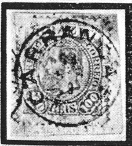
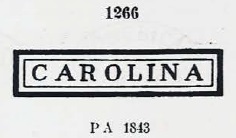
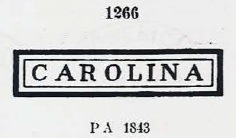
Three dates have been found for the foundation of the local post office. The first was in March 1829, as Nova Monteiro writes in Administrações e Agencias Postaes do Brasil Imperio (Brasil Filatelico/RJ, 1934-5; reprint SPP 1994-1999). The only known imperial postmark of Carolina dates from this Goiás period. CGO-0032a, which appears on Bull’s Eyes issues from 1843 and was assigned No. 1266 by Paulo Ayres (Catálogo de Carimbos Brasil-Império, S. Paulo, 1937, 1942):
CGO-0032a (P.A. 1266) 1843ff
The following dates are both from the Maranhão period. The directory of imperial post offices (Tabella das Agencias do Correio do Imperio, Rio de Janeiro, 1885) mentions the year 1855, while the postal report (Relatorio Postal) of 1886 mentions the Carolina post office from February 1871. No imperial postmarks from Carolina are known from this period.
Villiers de l’Ile Adam: Carta (…) da Provincia de Goyaz, 1849
Andere Namen: S. Pedro de Alcantara
Die ursprüngliche Siedlung entstand zu Beginn des 19. Jahrhunderts unter dem Namen S. Pedro de Alcantara. Pedro de Alcantara und lag am Westufer des Tocantins und damit noch im Gebiet der Capitania (später: Provinz) Goiás. Aufgrund wirtschaftlicher und klimatischer Probleme wurde der gesamte Ort um 1830 weiter südlich an das Ostufer des Tocantins verlegt und hieß dann S. Padro de Alcantara. Sie lag nun in der kaiserlichen Provinz Maranhão, 840 km südwestlich der Hauptstadt São Luís. Da sich die Einwohner weiterhin als Goiás-Bürger definierten, versuchten sie jahrzehntelang, die neue Vila zum Goiás-Territorium umzudeklarieren, bis ein kaiserliches Dekret vom August 1854 den Streit zugunsten Maranhãos beendete. Seit Juli 1859 ist Carolina eine Stadt.
Postamt Carolina (MA), ca. 1975 (Foto: IBGE)
Für die Gründung des örtlichen Postamtes wurden drei Daten gefunden. Die erste im März 1829, wie Nova Monteiro in Administrações e Agencias Postaes do Brasil Imperio (Brasil Filatelico/RJ, 1934-5; Nachdruck SPP 1994-1999) schreibt. Aus dieser Goiás-Zeit stammt der bisher einzige bekannte Poststempel Carolinas aus der Kaiserzeit, CGO-0032a, der auf Ausgaben von 1843 erscheint und von Paulo Ayres (Catálogo de Carimbos Brasil-Império, S. Paulo, 1937, 1942) mit der Nr. 1266 versehen wurde:
CGO-0032a (P.A. 1266) 1843ff
Die folgenden Daten stammen beide aus der Maranhão-Zeit. Im Verzeichnis der kaiserlichen Postämter (Tabella das Agencias do Correio do Imperio, Rio de Janeiro, 1885) findet sich das Jahr 1855, während im Postbericht (Relatorio Postal) von 1886 die Carolina-Postanstalt ab Februar 1871 erwähnt wird. Aus dieser Zeit sind keine kaiserlichen Poststempel von Carolina bekannt.
Other names: N. Sra. do Monte do Carmo, Carmo de Cantagallo
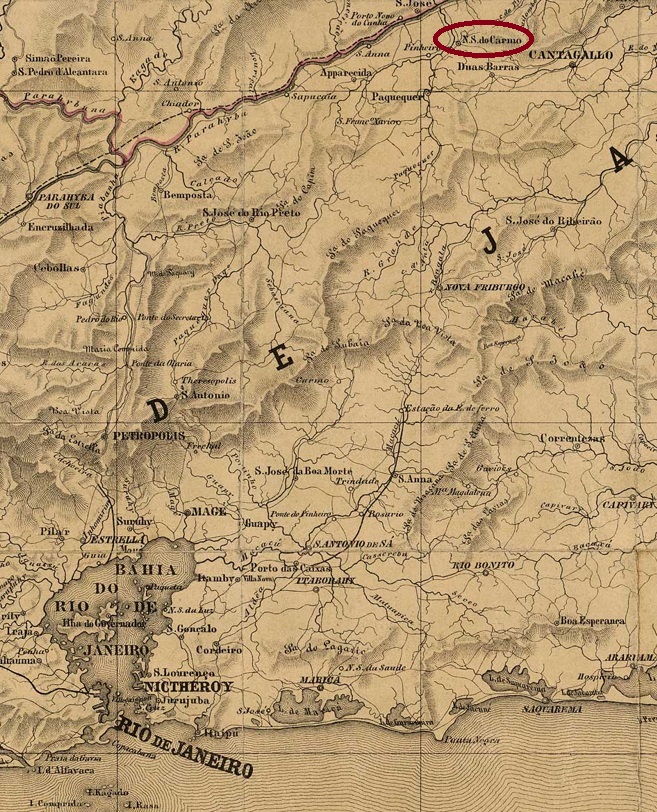
Curato de N. Sra. do Monte do Carmo was founded in January 1843 within the Vila de Cantagalo and was located on the east bank of the Paquequer, 200 kilometres north of the capital Rio de Janeiro. It became a freguesia in April 1846, a vila in October 1881 and a town in December 1889.
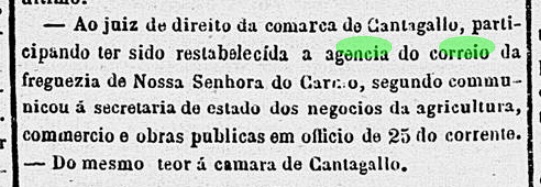
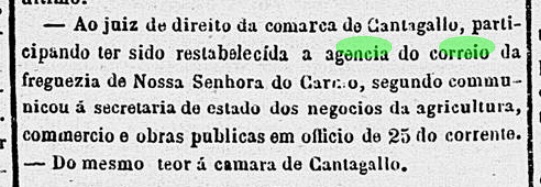
As R. Koester (Carimbologia IX) and Paulo Novaes (agenciaspostais.com.br) write, there had been a post office there since 1853. However, it was closed sometime after 1858, as the Rio press reported its reopening in July 1861:
Correio Mercantil, 18/08/1861
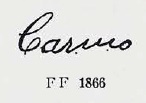
The first postmark is probably CRJ-0310a, which also exists in blue and red from 1853 to at least 1866 and was registered by Paulo Ayres in Catálogo de Carimbos Brasil-Império (S. Paulo, 1937, 1942) under no. 1265:
CRJ-0310a (P. A. 1265)
This postmark broke at some point, so it was cancelled by hand for a long time before the successor postmark was delivered:
(P.A. p.146) 1864-1878
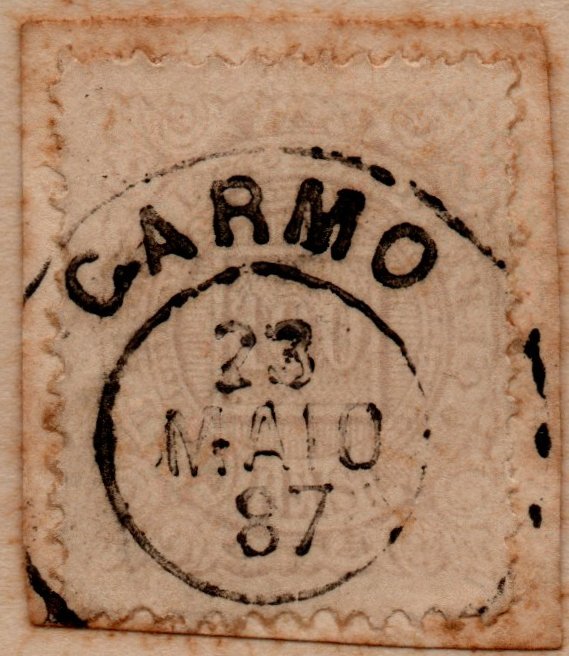
Then the time had come for CRJ-0310b (José A. Junges Collection), which was seen with dates from 1877-1888:
CRJ-0310b (JJ)
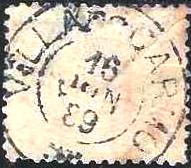
Its successor, the French type cancel CRJ-0310c (fig. Paulo R. Risi) was not in use for long:
CRJ-0310c (PRR) 1883ff
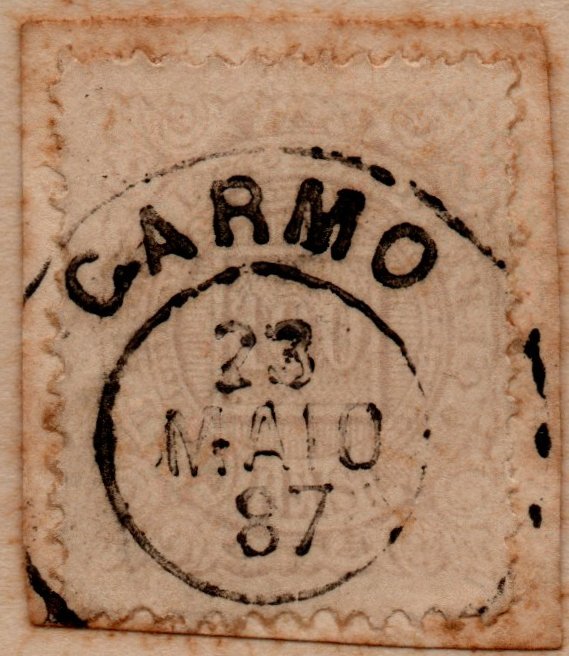
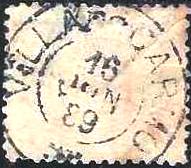
Then came CRJ-0310d (fig. agenciaspostais.com.br), which was found with dates from the end of the Empire:
CRJ-0310d (PN) 1889-1890
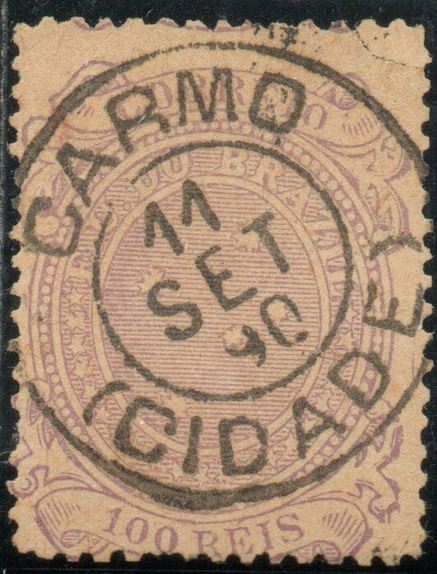
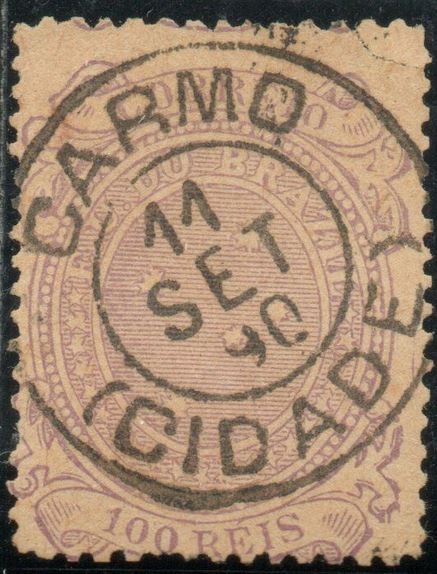
The first republican postmark CRJ-0310e (image from the Internet) proudly displays the designation CIDADE (city):
CRJ-0310e (EB) 1890-1898
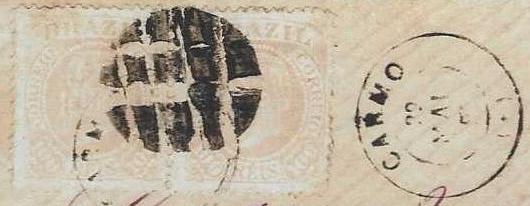
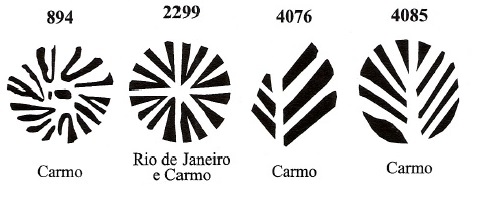
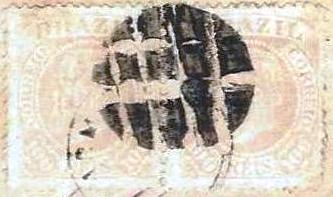
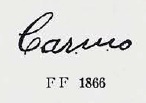
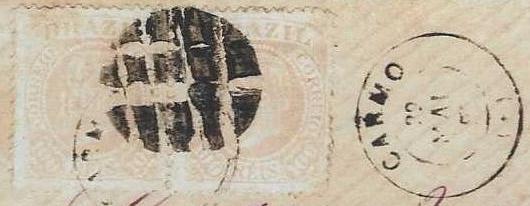
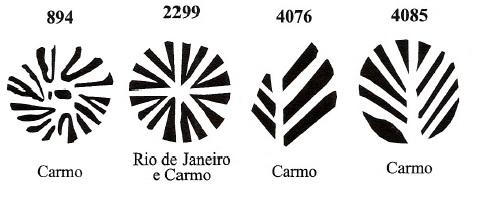
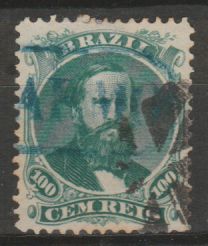
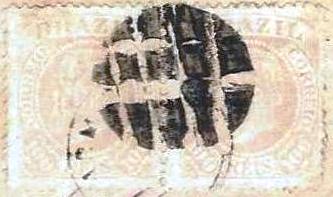
Four mute cancellations from Carmo were registered by James Dingler and Klerman W. Lopes in Mute Cancellations of the Brazil Empire / Carimbos Mudos do Brasil Império (Brazil Philatelic Association, Rio de Janeiro, 2000):
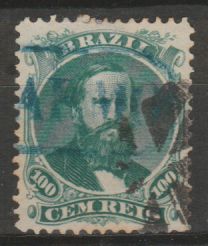
Two other mute cancellations were found in the Empire:
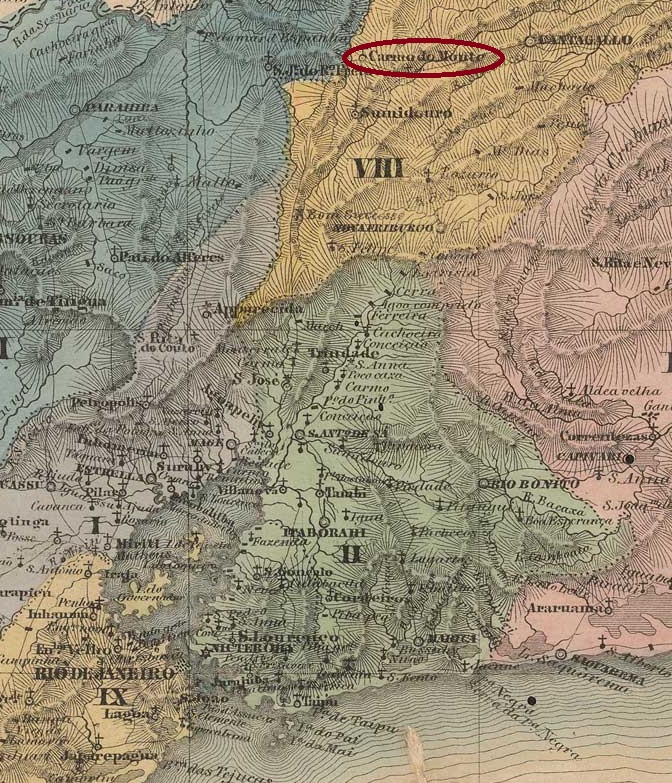
1866ff (from the internet)1883ff (illustration by Paulo R. Risi)Villiers de l’Ile Adam: Carta (…) da Provincia do Rio de Janeiro, 1850
Andere Namen: N. Sra. do Monte do Carmo, Carmo de Cantagallo
Curato de N. Sra. do Monte do Carmo wurde im Januar 1843 als Vila de Cantagalo gegründet und liegt am Ostufer des Paquequer, 200 km nördlich der Hauptstadt Rio de Janeiro. Im April 1846 wurde sie zur Freguesia, im Oktober 1881 zur Vila und im Dezember 1889 zur Stadt.
Wie R. Koester (Carimbologia IX) und Paulo Novaes (agenciaspostais.com.br) schreiben, gab es dort seit 1853 ein Postamt. Dieses wurde jedoch irgendwann nach 1858 geschlossen, denn die Presse von Rio berichtete von seiner Wiedereröffnung im Juli 1861:
Correio Mercantil, 18.08.1861
Der erste Stempel ist wahrscheinlich CRJ-0310a, den es auch in blau und rot von 1853 bis mindestens 1866 gab und der von Paulo Ayres im Catálogo de Carimbos Brasil-Império (S. Paulo, 1937, 1942) unter der Nr. 1265 registriert wurde:
CRJ-0310a (P. A. 1265)
Dieser Stempel ging irgendwann kaputt, so dass lange Zeit per Hand entwertet wurde, bevor der Nachfolgestempel geliefert wurde:
(P.A. S.146) 1864-1878
Dann war es soweit, es kam CRJ-0310b (Samml. José A. Junges), der mit Daten von 1877-1888 gesehen wurde:
CRJ-0310b (JJ)
Sein Nachfolger, der „französische“ Stempel CRJ-0310c (Abb. Paulo R. Risi) war nicht lange in Gebrauch:
CRJ-0310c (PRR) 1883ff
Danach kam CRJ-0310d (Abb. agenciaspostais.com.br), der mit Daten vom Ende des Kaiserreichs gefunden wurde:
CRJ-0310d (PN) 1889-1890
Der erste republikanische Poststempel CRJ-0310e (Abb. aus dem Internet) zeigt stolz die Bezeichnung CIDADE (Stadt):
CRJ-0310e (EB) 1890-1898
Vier stumme Abstempelungen aus Carmo wurden von James Dingler und Klerman W. Lopes in Mute Cancellations of the Brazil Empire / Carimbos Mudos do Brasil Império (Brazil Philatelic Association, Rio de Janeiro, 2000) registriert:











 Carimbologia