Print edition update of January 1st, 2026
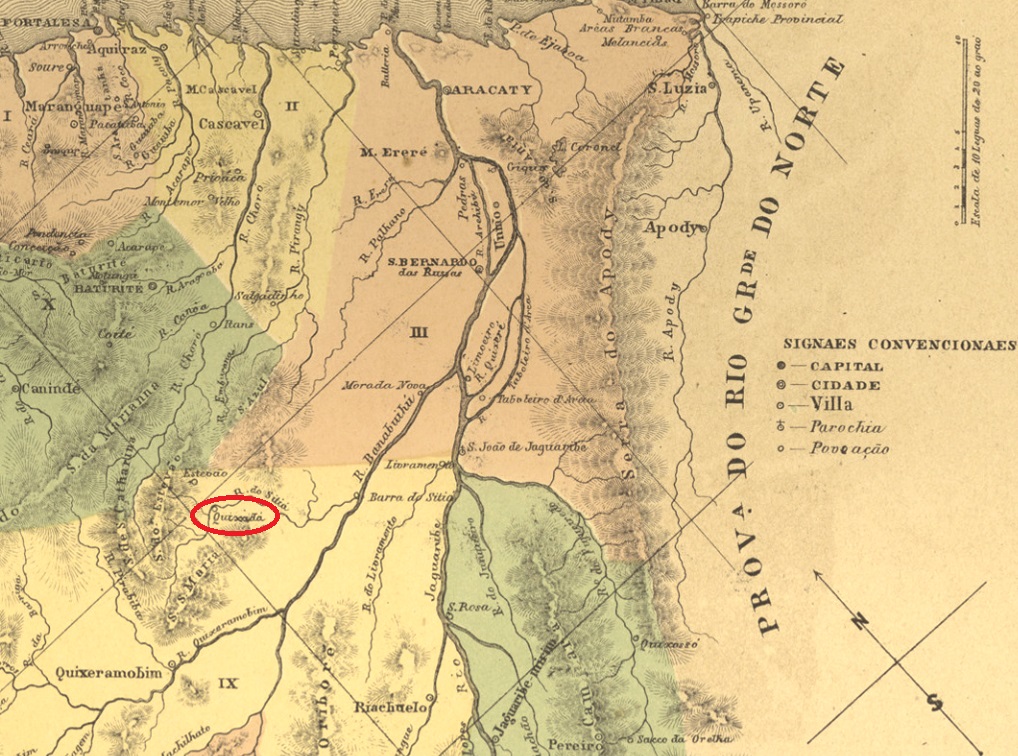
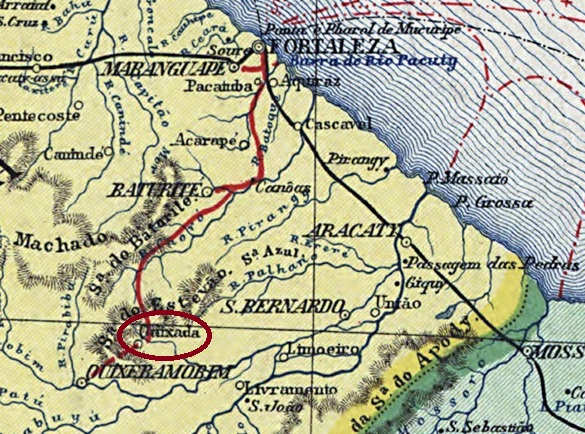
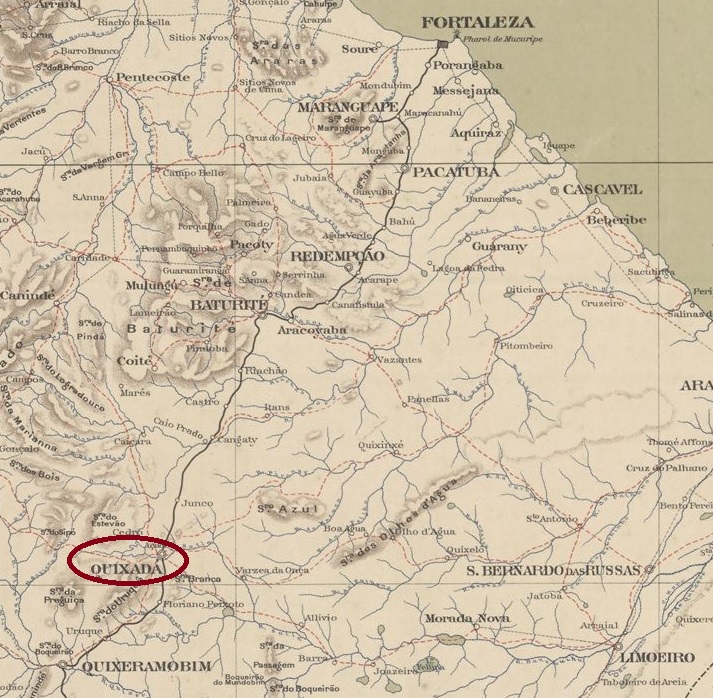
The Freguesia de Jesus, Maria e José de Quixadá existed since November 1869 and belonged to the Vila de Quixeramobim. It was located on the north bank of the Riacho Sitiá, 170 km south of the provincial capital Fortaleza. In October 1870, it became a vila and in August 1889 a city.
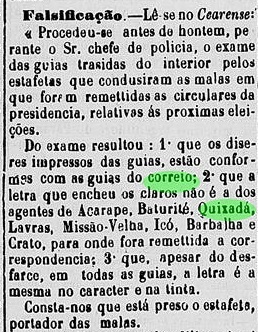
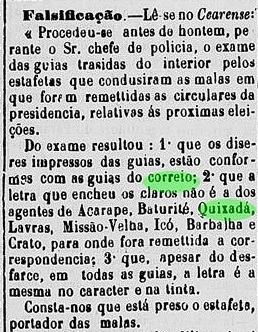
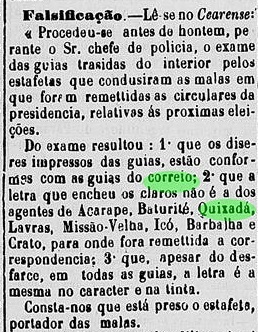
According to the Imperial Mail Register (Tabella das Agencias do Correio do Império) of 1885, the station post office opened in 1871, and was already mentioned in the press in the following year:
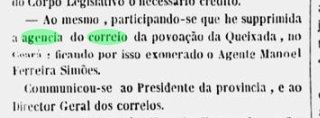
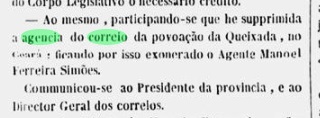
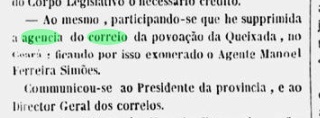
However, there had previously been a post office agency in Quixadá, which was closed in November 1847, as reported in the official press of Rio de Janeiro:
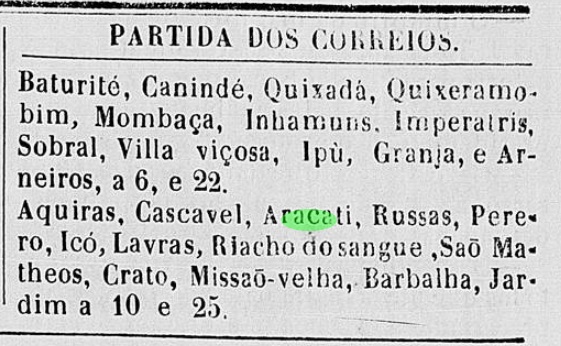
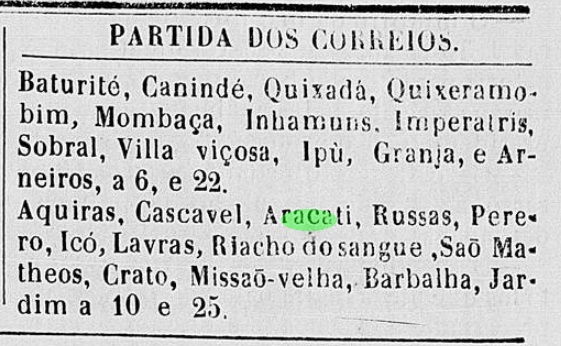
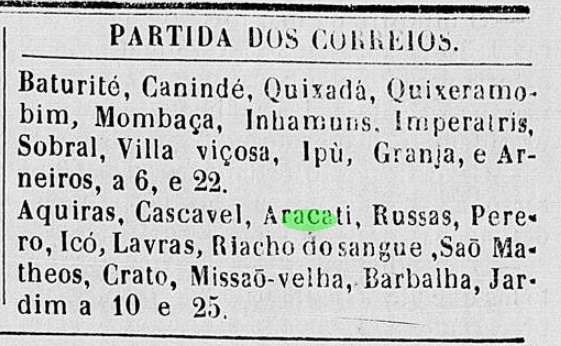
After that, there was postal traffic to and from Quixadá from at least October 1849 onwards. It is not known whether there was a post office on site.
No cancel with imperial date has been found by now, but QCE-0260a (Coll. José A. Junges), used at the beginning of the republican period, might have circulated before 1890: a double circle with the inscription QUIXADA (above) and the date within the inner circle.
Atualização em 1º de janeiro de 2026
A Freguesia de Jesus, Maria e José de Quixadá existia desde novembro de 1869 e pertencia à Vila de Quixeramobim. Situava-se na margem norte do Riacho Sitiá, 170 km ao sul da capital do estado, Fortaleza. Em outubro de 1870, tornou-se vila e, em agosto de 1889, cidade.
Segundo a Tabela de Agências do Correio do Império de 1885, a agência postal de lá foi criada em 1871, e já foi mencionada na imprensa no ano seguinte:
No entanto, já havia anteriormente uma agência postal em Quixadá, que foi fechada em novembro de 1847, conforme noticiado no jornal oficial do Rio de Janeiro:
Depois disso, pelo menos a partir de outubro de 1849, houve tráfego postal de e para Quixadá. Não se sabe se havia uma agência postal local.
Ainda não surgiu um carimbo com data do império de Quixadá, mas supostamente QCE-0260a (Col. José A. Junges) deve ter circulado também antes de 1890: este carimbo mostra um duplo círculo com a inscrição QUIXADÁ (acima) e a data dentro do círculo interno.
Textaktualisierung vom 1. Januar 2026
Die Freguesia de Jesus, Maria e José de Quixadá bestand seit November 1869 und gehörte zur Vila de Quixeramobim. Sie lag am Nordufer des Riacho Sitiá, 170 km südlich der Provinzhauptstadt Fortaleza. Im Oktober 1870 wurde sie zur Vila und im August 1889 zur Stadt.
Das Verzeichnis der kaiserlichen Postämter (Tabella das Agencias do Correio do Império) von 1885 nennt das Jahr 1871 für die Gründung des Postamts, und schon im folgenden Jahr wurde es in der Presse erwähnt:
Allerdings gab es bereits früher eine Postagentur in Quixadá, die im November 1847 geschlossen wurde, wie in der Amtspresse von Rio de Janeiro gemeldet wurde:
Danach gab es zumindest ab Oktober 1849 Postverkehr von und nach Quixadá. Ob es ein Postamt vor Ort gab, ist nicht bekannt.
Bisher wurde kein Stempel aus der brasilianischen Kaiserzeit gefunden, aber vermutlich war QCE-0260a (Samml. José A. Junges), von dem ein Exemplar aus den frühen Jahren der Republik vorhanden ist, auch vor 1890 in Gebrauch: ein Doppelkreis mit der Inschrift QUIXADA (oben) und dem Datum im Innenkreis.

 Carimbologia