Text update of March 14, 2020
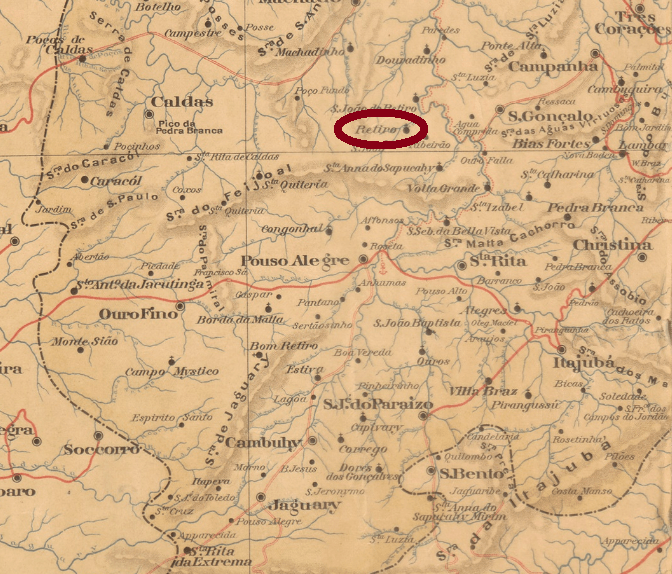
There are at least two Turvo (i.e. Muddy) Rivers in Minas Gerais. The smaller one is a tributary stream to the Sapucaí River near Pouso Alegre in the southern state region, which has named the actual Turvolandia, the former Freguesia de Nossa Senhora da Piedade do Retiro. This town is still today pretty tiny, with some 5 thousand inhabitants, and stays slightly aside off the main road between Ouro Preto and São Paulo. Therefore, one might wonder why it has received an own post office during the Empire. This took place in December 1879 (Paula Sobrinho).
Since it is now clear that the Retiro station post office of the D. Pedro II railway near Juiz de Fora (RMG-3580) is older than this one, both early manuscript cancellations attributed before to RMG-2100 in Carimbologia (Q-R), RMG-2100a and RMG-2100b, will now be found under new numbers there.
A resting Retiro cancel, RMG-2100c (Coll. José A. Junges), shows a double circle, the inscription RETIRO between both circles, and the date inside. One single copy with year 1884 was found.
A later Retiro cancel with inscription N.S. DO RETIRO was already reported by R. Koester (Carimbologia do Brasil Clássico XXVIII, Lohmar, 1986).
Textaktualisierung vom 14.03.2020
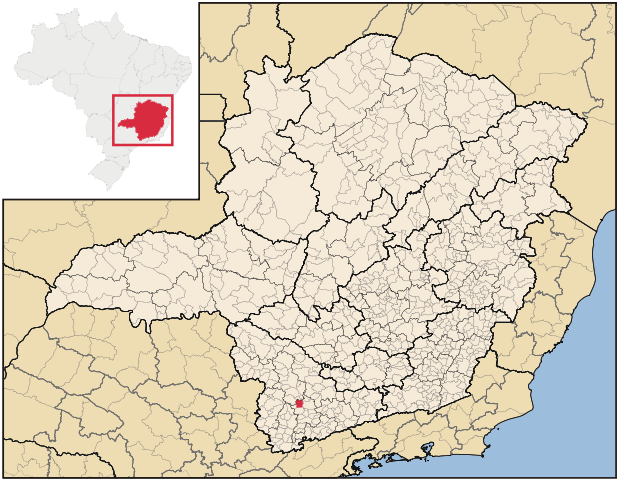
Es gibt mindestens zwei Flüsse in Minas Gerais, die Turvo (=Trüb) heißen. Der kleiner von beiden ist ein Zufluss des Sapucaí bei Pouso Alegre im Süden des Staates und hat seinen Namen dem Städtchen Turvolândia gegeben, der alten Freguesia de Nossa Senhora da Piedade do Retiro. Dieser Ort ist noch heute mit gut fünftausend Einwohnern ziemlich klein und liegt etwas abseits der Hauptstraße zwischen Ouro Preto und São Paulo. Dadurch wundert man sich, wieso ausgerechnet hier ein kaiserliches Postamt errichtet wurde. Dieses fand in Dezember 1879 statt (Paula Sobrinho).
Seitdem festgestellt wurde, dass das Bahnhofspostamt Retiro der Bahnlinie E.F. D. Pedro II bei Juiz de Fora (RMG-3580) noch älter ist, müssen die beiden handschriftlichen Entwertungen, die laut Carimbologia (Q-R) bisher hier aufgelistet waren (RMG-2100a und RMG-2100b), nun dort unter neuer Bezeichnung untergebracht werden.
Die verbliebene Retiro-Entwertung, RMG-2100c (Samml. José A. Junges), hat einen Doppelkreis mit der Inschrift RETIRO oben und dem Datum im Innenkreis. Ein einziges im Jahr 1884 verwendetes Exemplar ist bekannt.
Darüber hinaus hat R. Koester bereits eine spätere Retiro-Abstempelung vorgestellt, diesmal mit der Inschrift N.S. DO RETIRO (Carimbologia do Brasil Clássico XXVIII, Lohmar, 1986).

 Carimbologia