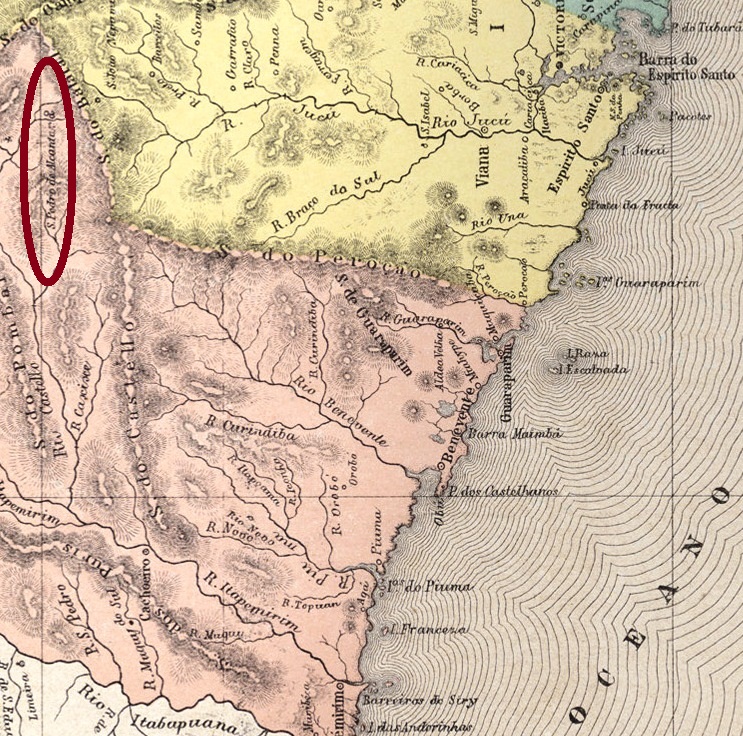
The freguesia of São Pedro de Alcantara do Rio Pardo was founded in July 1859 in the municipality of Cachoeiro do Itapemirim, ca. 150 km west of the capital Vitória. The Rio Pardo (= Gray River) which has given the name to the locality emerges from the hills of eastern Minas Gerais and flows towards south. In the early Brazilian republic the names Pedro and Alcantara were removed, and the new vila of 1890 was called just Rio Pardo. Since December 1943 it is the little town of Iuna, which means Black River in tupi-guarani.
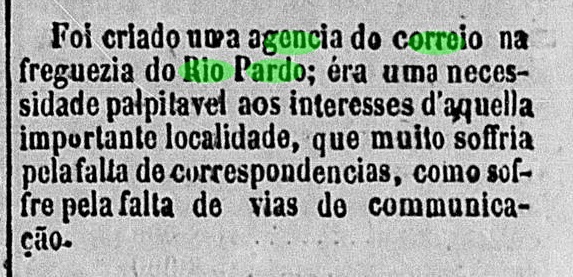
According to the local press, the post office was created by September 1869:
This agency, however, was closed in 1876 and reopened only in April 1882, according to Paulo Novaes (agenciaspostais.com.br). Unfortunately, no cancel from the first period has been found to date. RES-0140a (Coll. José A. Junges) is a later example and could be already republican: a double circle with RIO PARDO above and (ESP.SANTO) below, with the date in the centre. Found just once, dated 1892.
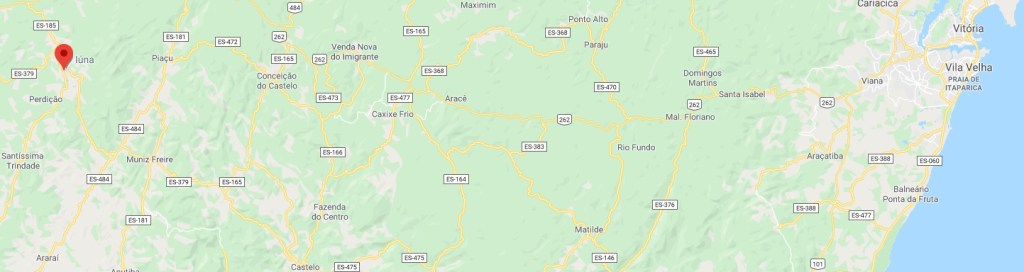
Die Freguesia de São Pedro de Alcantara do Rio Pardo wurde im Juli 1859 im Município von Cachoeiro do Itapemirim gegründet und lag etwa 150 km westlich von der Provinzhauptstadt Vitória. Der Rio Pardo (=grauer Fluss), der dem Ort seinen Namen gab, entspringt dem Gebirge im östlichen Minas Gerais und fließt gen Süden. In der frühen republikanischen Zeit verschwanden die Namen Pedro und Alcantara, und als die Ortschaft in 1890 zur Villa aufstieg, hieß sie lediglich Rio Pardo. Seit 1943 ist es das Städtchen Iuna, was Schwarzer Fluss in der tupi-guarani Indianersprache heißt.
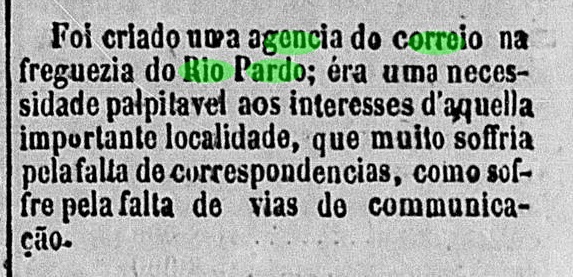
Der Regionalpresse zufolge entstand das Postamt vor Ort bis September 1869:
Die Agentur wurde gleichwohl in 1876 geschlossen und startete wieder erst im April 1882, laut Paulo Novaes (agenciaspostais.com.br). Leider ist bisher kein Stempel aus der ersten Betriebszeit überliefert. RES-0140a (Samml. José A. Junges) ist ein späteres Beispiel und könnte bereits republikanisch sein: hier sehen wir einen Doppelkreis mit RIO PARDO oben und (ESP.SANTO) unten, dazu das Datum in der Mitte. Nur ein Exemplar aus dem Jahr 1892 gefunden.

 Carimbologia