Print edition update of May 12, 2020
Other name: Rio da Prata de Cabuçu
See also Cabuçu (R. Koester: Carimbologia VII)
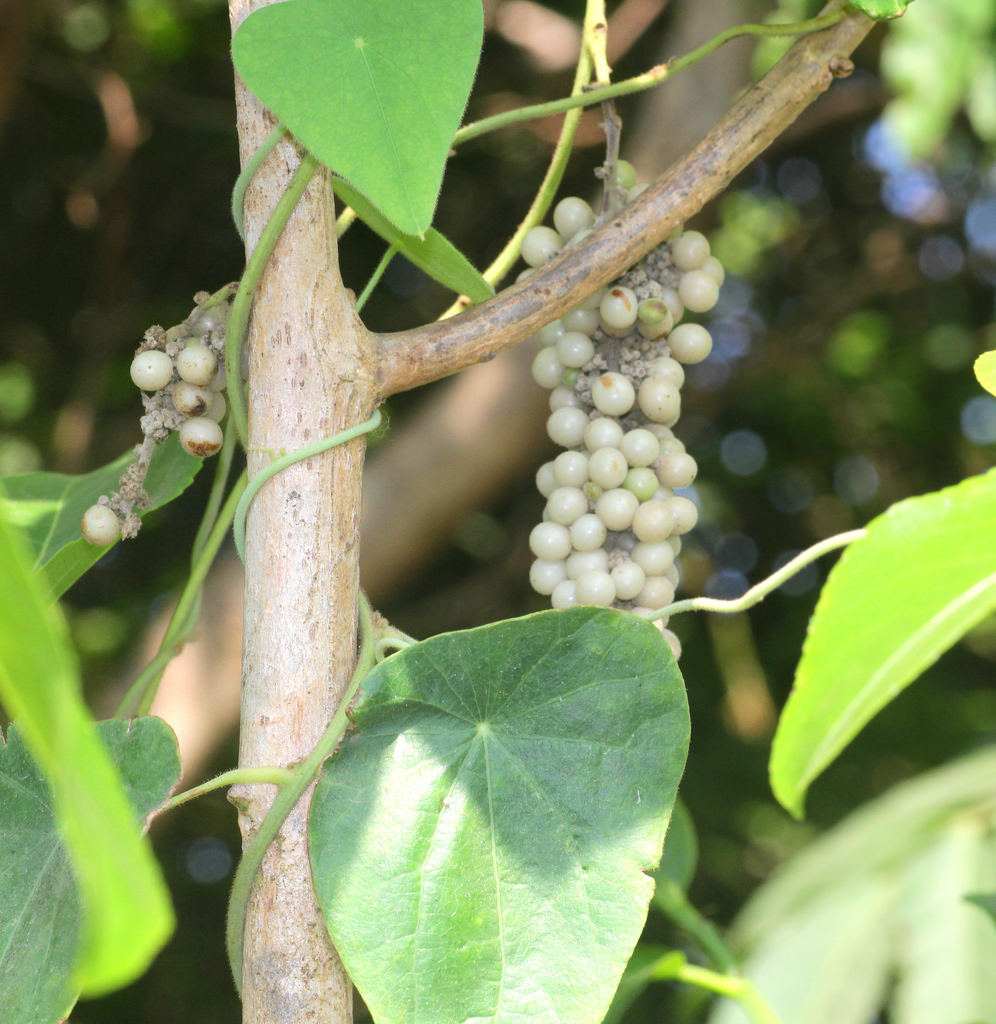
The word Cabuçu with its multiple spelling variants has undoubtedly tupi Indian origin and two main meanings. The botanical one would describe a Brazilian bush plant also called Guajabara (Coccoloba peltata, family Polygonaceae, see below); whereas the zoological interpretation would be the common name for a big wasp.
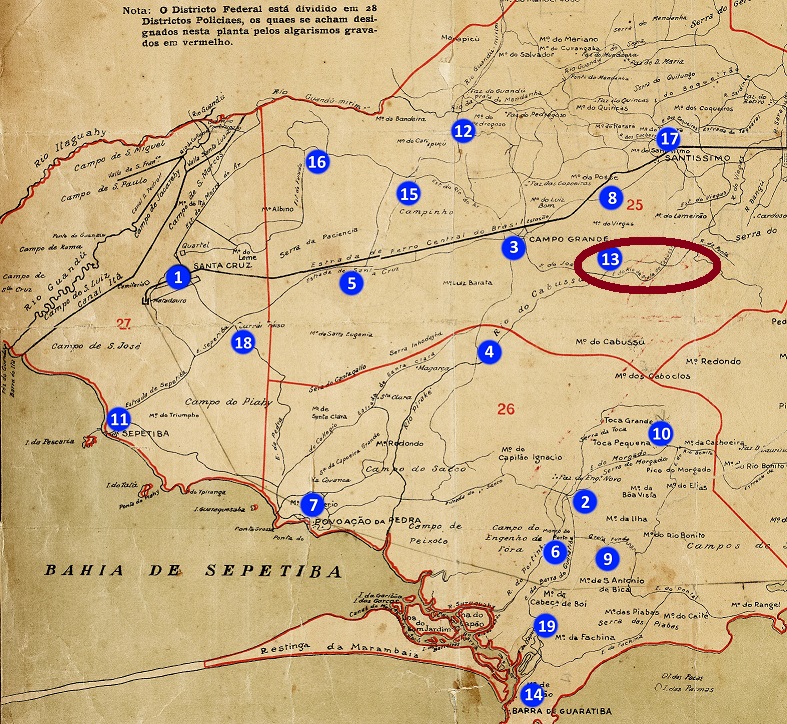
Rio da Prata do Cabuçu (= Silver River of Cabuçu) was a small village in the Campo Grande west outskirts of Rio, which originated from a big coffee and sugar cane farm. According to Paulo Novaes (agenciaspostais.com.br), there were three post offices related to Cabuçu in the Rio province, including the Município Neutro (=neutral municipality), but Rio da Prata do Cabuçu was the only one among them which operated in the Empire. It was given a post office in May 1882, and the first clerk was soon presented by the local press:

Although this agency remained active until ca. 1963, the only cancel, RMN-0065a, was reported by R. Koester in Carimbologia VII, and presents the imperial seal:
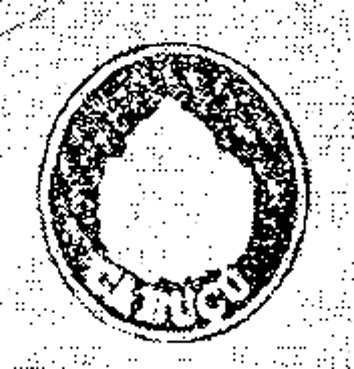
(R. Koester, op.cit.)
Buchausgabe-Aktualisierung vom 12. Mai 2020
Anderer Name: Rio da Prata de Cabuçu
Siehe auch: Cabuçu (R. Koester: Carimbologia VII)
Das Wort Cabuçu in ihren unterschiedlichen Schreibvarianten hat zweifellos indianischen (tupi) Ursprung und zwei Hauptdeutungen. Die botanische davon wäre ein Busch, in Brasilien auch Guajabara genannt (Coccoloba peltata, Familie Polygonaceae, Abb. siehe oben); während die zoologische Deutung eine große Wespe wäre.
Rio da Prata do Cabuçu (= Silberner Fluss von Cabuçu) war eine kleine Siedlung bei Campo Grande am westlichen Rand des Município Neutro (= Neutraler Bezirk) in der Provinz von Rio de Janeiro, die aus einer großen Kaffee- und Zuckerrohrplantage entstanden war. Laut Paulo Novaes (agenciaspostais.com.br) gab es drei Postämter mit Cabuçu in der Provinz Rio, aber Rio da Prata do Cabuçu war das einzige davon, das bereits im Kaiserreich aktiv war. Das Postamt entstand im Mai 1882, und der erste Angestellte wurde gleich in der Presse vorgestellt:
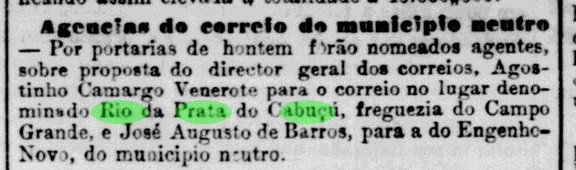
Obwohl die Agentur bis ca. 1963 in Betrieb blieb, wurde der einzige Stempel, RMN-0065a, mit dem kaiserlichen Siegel, von R. Koester in Carimbologia VII gezeigt:
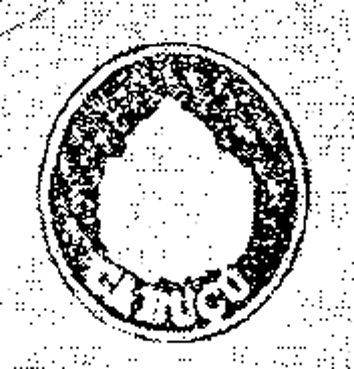
(R. Koester, op.cit.)

 Carimbologia