
Text updated on July 24, 2024
Another name: Aratuhype (1890)
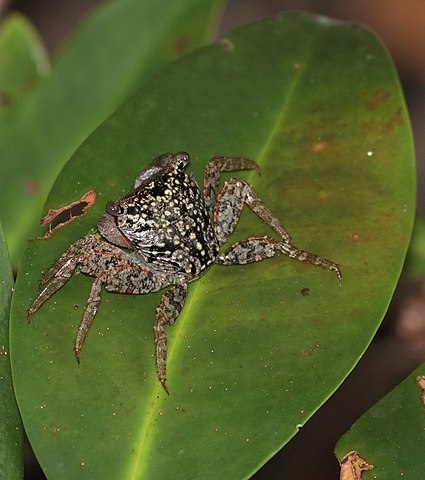
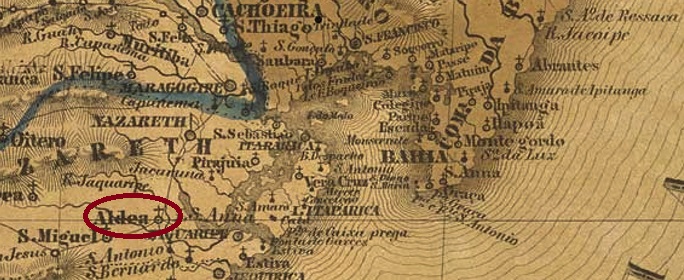
The Freguesia of Sant’Anna da Aldeia was founded in June 1840 in the Municipio of Nazareth, located on the north bank of the river Aratuípe, more than 80 km west of the provincial capital Salvador da Bahia. The place was elevated to the status of Vila of Aratuhype in February 1890 and to a town in June 1891. However, in December 1943, it was downgraded to the district of Nazaré (as it is now written), but immediately in June 1944, it regained the status of a Município, this time written Aratuípe. The term from the Tupi-Guarani language means river of the aratus. Aratu is a general term for various crab species commonly found in the region, such as Aratus pisonii:
There are two dates of origin for the local post office. The first was in July 1882, according to the Rio press:

The same newspaper reported a reopening of the post office in August 1885:

A postmark was found for the Empire: ABA-0045a (image from the internet) is a plain double circle with the inscription ALDEIA at the top, though there might be another ornament at the bottom. The dates in the centre so far come from 1886 to at least 1890.
Text am 24.07.2024 aktualisiert
Anderer Name: Aratuhype (1890)
Die Freguesia von Sant’Anna da Aldeia wurde im Juni 1840 im Municipio von Nazareth gegründet und lag am Nordufer des Flusses Aratuípe, über 80 km westlich der Provinzhauptstadt Salvador da Bahia entfernt. Der Ort wurde im Februar 1890 zur Vila von Aratuhype und im Juni 1891 zur Stadt erhoben. Allerdings kam im Dezember 1943 eine Herabstufung zum Distrikt von Nazaré (wie man inzwischen schreibt), doch gleich im Juni 1944 wurde wieder der Status eines Município erreicht, diesmal Aratuípe geschrieben. Der Begriff aus der Tupi-Guarani-Sprache bedeutet Fluss der Aratus. Aratu ist ein Allgemeinbegriff für diverse Krebssorte, die in der Region häufig zu finden sind, wie z.B. Aratus pisonii:

Es sind zwei Entstehungstermine fürs örtliche Postamt überliefert. Erstmals im Juli 1882, wie aus der Presse von Rio hervorgeht:

Die gleiche Zeitung meldete im August 1885 eine Wiedereröffnung des Postamts:

Ein Poststempel wurde fürs Kaiserreich gefunden: ABA-0045a (Abb. aus dem Internet) ist ein schlichter Doppelkreis mit der Inschrift ALDEIA oben, wobei unten evtl. ein weiters Ornament vorhanden wäre. Die Daten in der Mitte gehen von 1886 bis 1890ff.

 Carimbologia