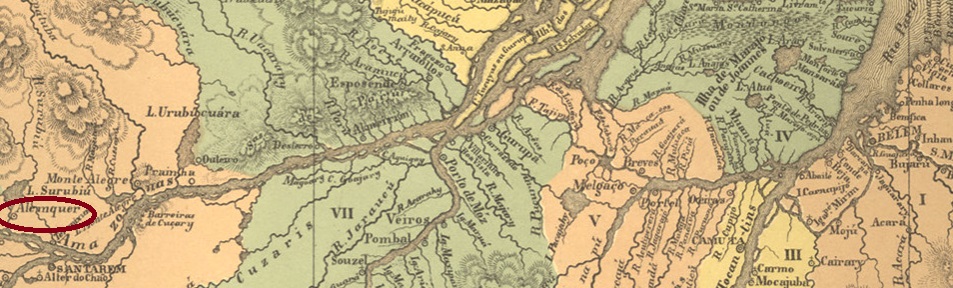
Another name: Surubiú
The former settlement called Surubiú (crocodile’s head, in the Indian language Tupi) was founded in June 1729 on the north bank of the Amazon, 700 km as the crow flies west of the later provincial capital Belém do Pará. The place is said to have been elevated to the status of a vila as early as 1758. In May 1833, it was downgraded as a district of Santarém, only to rise again as a vila in June 1848. Since June 1881, Alenquer (as it is written today) has been a town.
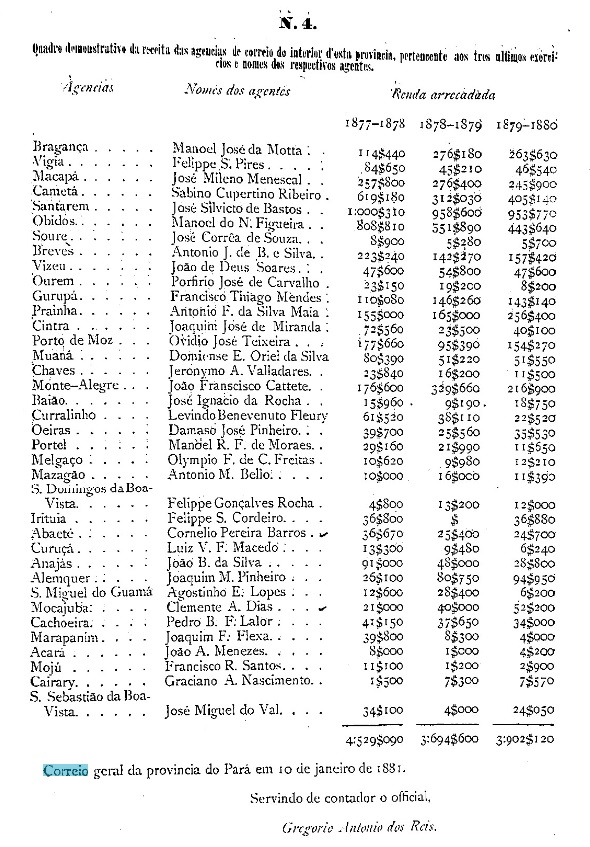
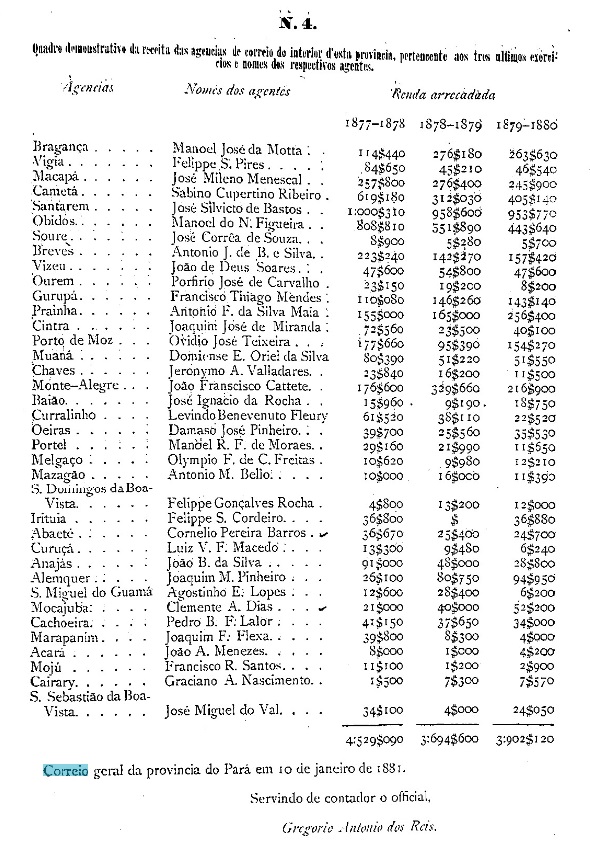
Two dates of origin for the local post office have been found. Firstly in 1877, as stated in the Directory of Imperial Post Offices (Tabella das Agencias do Correio do Imperio, Rio de Janeiro, 1885). Then R. Koester writes in Carimbologia I a date of January 1881. This is probably a mistake, because according to the provincial president’s report, the agency had already been in operation for 3 years at that time:
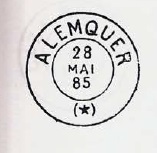
Two 19th century postmarks are also known. APA-0015a will be the oldest of these, according to the illustration it could also be a French type, as shown in Paulo Ayres (Catálogo de Carimbos Brasil-Império, S. Paulo, 1937, 1942) on p. 120:
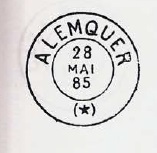
It was followed by APA-0015b (image from the internet): a double circle with the inscriptions ALENQUER above and (PARÁ) below. The only specimen so far bears a date from 1899 in the centre.
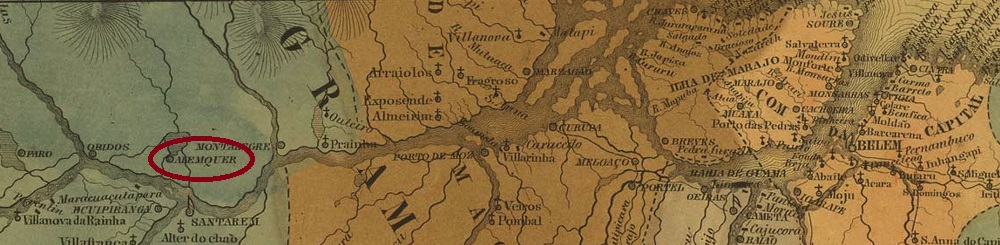
Anderer Name: Surubiú
Die ehemalige Siedlung namens Surubiú (Krokodilkopf, in der Indianersprache Tupi) entstand im Juni 1729 am Nordufer des Amazonas, 700 km Luftlinie westlich der späteren Provinzhauptstadt Belém do Pará entfernt. Der Ort soll bereits 1758 zur Vila erhoben worden sein. Im Mai 1833 wurde er als Distrikt von Santarém herabgestuft, um im Juni 1848 wieder als Vila aufzusteigen. Seit Juni 1881 ist Alenquer (wie es heute geschrieben wird) eine Stadt.
Zwei Entstehungsdaten fürs örtliche Postamt wurden gefunden. Erstmals 1877, wie im Verzeichnis der kaiserlichen Postämter (Tabella das Agencias do Correio do Imperio, Rio de Janeiro, 1885) zu lesen ist. Dann schreibt R. Koester in Carimbologia I ein Datum vom Januar 1881. Das dürfte ein Fehler sein, denn laut Bericht des Provinzpräsidenten war die Agentur zu diesem Zeitpunkt bereits 3 Jahre in Betrieb:
Zwei Poststempel für das 19. Jahrhundert sind auch bekannt. APA-0015a wird der älteste davon sein, nach der Abbildung könnte es auch ein Französischer Typus sein, wie in Paulo Ayres (Catálogo de Carimbos Brasil-Império, S. Paulo, 1937, 1942) auf S. 120 zu sehen ist:
Ihm folgte APA-0015b (Abb. aus dem Internet): ein Doppelkreis mit den Inschriften ALENQUER oben und (PARÁ) unten. Das bisher einzige Exemplar trägt ein Datum aus 1899 in der Mitte.

 Carimbologia