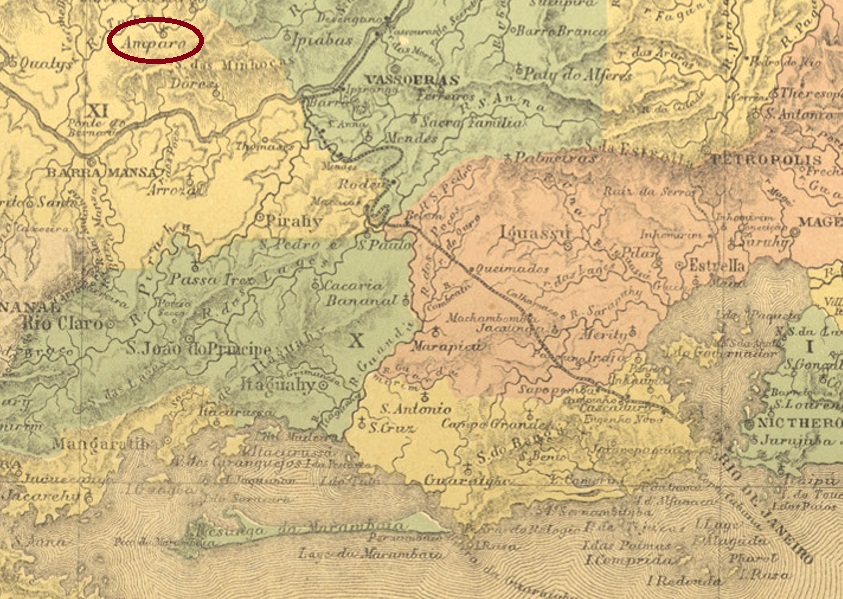
The Freguesia of N. Sra. do Amparo was founded in March 1844 in the Município of Barra Mansa, 150 km northwest of the capital Rio de Janeiro. And so, it has remained to this day, with the freguesia becoming a district in the Republic.
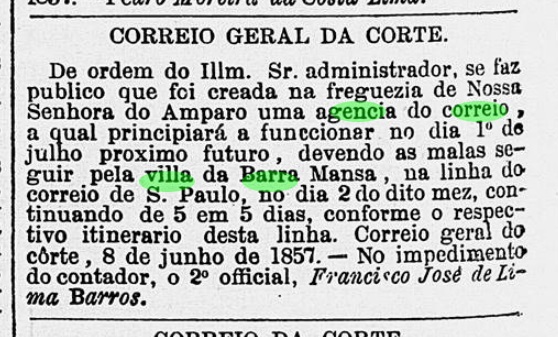
Three periods of operation were found for the local post office in the Empire. For the first time in 1854, as can be read in the Directory of Imperial Post Offices (Tabella das Agencias do Correio do Imperio, Rio de Janeiro, 1885). Then again in June 1857, as shown in the regional press:
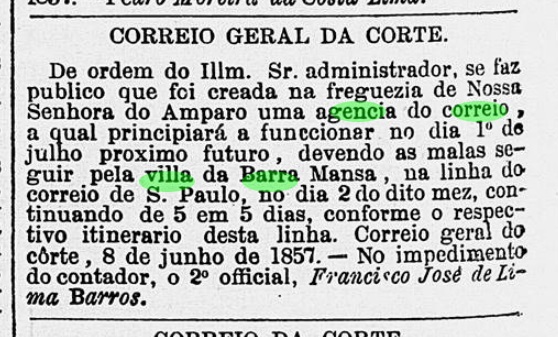
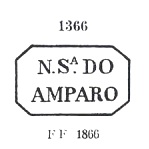
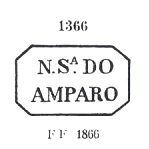
Paulo Novaes writes in agenciaspostais.com.br that the agency was closed in June 1861. It has not yet been possible to determine when the third opening took place, but it must have happened by 1879, because the post office is listed in the Imperial Postal Guide (Guia Postal do Imperio, 1880). The earliest imperial postmark so far is NRJ-1190a, was in circulation between 1857 to at least 1866 and was already presented by Paulo Ayres in Catálogo de Carimbos Brasil-Império (S. Paulo, 1937, 1942) under No. 1366:
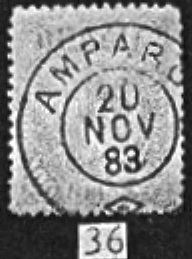
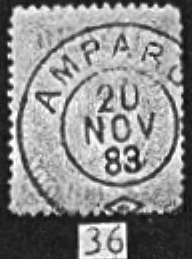
There followed ARJ-0030a, presenting inner dates from 1883 until 1887, as shown by R. Koester in Carimbologia XXVIII:
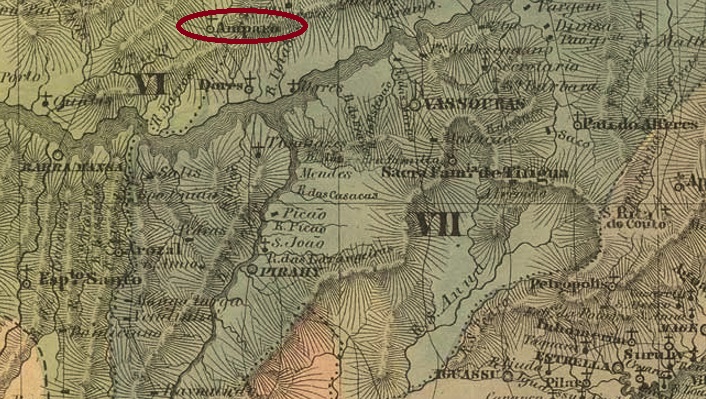
Die Freguesia von N. Sra. do Amparo wurde im März 1844 im Município von Barra Mansa gegründet und lag 150 km nordwestlich der Hauptstadt Rio de Janeiro entfernt. Und so ist es bis heute geblieben, wobei aus der Freguesia in der Republik ein Distrikt wurde.
Drei Betriebsperioden wurden für das örtliche Postamt im Kaiserreich gefunden. Erstmals 1854, wie im Verzeichnis der kaiserlichen Postämter (Tabella das Agencias do Correio do Imperio, Rio de Janeiro, 1885) zu lesen ist. Dann wieder im Juni 1857, wie aus der Regionalpresse hervorgeht:
Paulo Novaes schreibt in agenciaspostais.com.br, dass die Agentur im Juni 1861 geschlossen wurde. Bisher konnte nicht ermittelt werden, wann die dritte Eröffnung stattfand, musste aber bis 1879 passiert sein, denn das Postamt ist im kaiserlichen Postführer (Guia Postal do Imperio, 1880) aufgelistet. Der bisher älteste Poststempel im Kaiserzeit ist NRJ-1190a, war im Umlauf zwischen 1857 bis mindestens 1866 und wurde bereits durch Paulo Ayres in Catálogo de Carimbos Brasil-Império (S. Paulo, 1937, 1942) unter der Nr. 1366 vorgestellt:
Ihm folgte ARJ-0030a, der innere Daten zwischen 1883 und 1887 aufweist und bereits durch R. Koester in Carimbologia XXVIII gezeigt wurde:

 Carimbologia