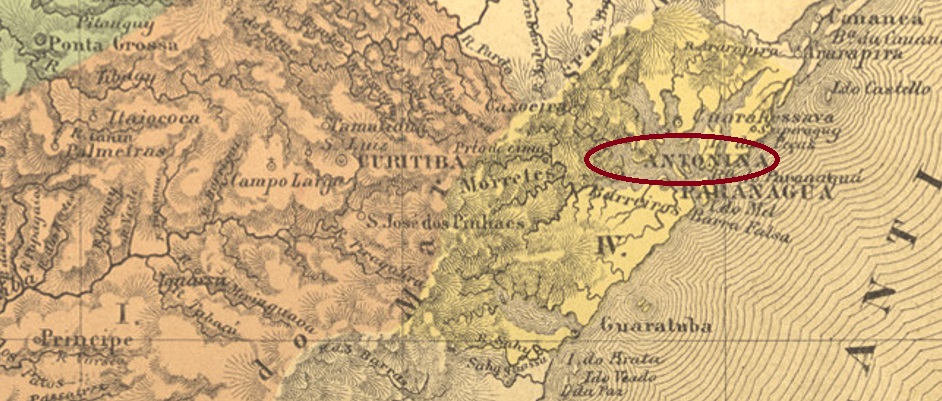
Another name: N. Sra do Pilar da Graciosa
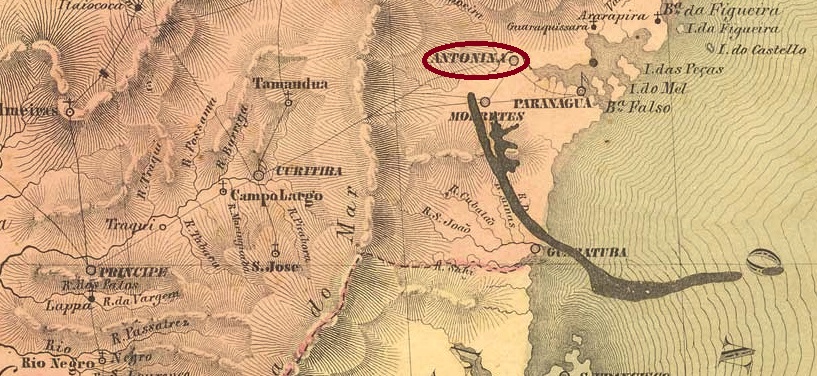
The chapel of N. Sra do Pilar da Graciosa was built in September 1714 and was located in the bay of the Vila of Paranaguá, 80 km east of the future provincial capital Curitiba. The village was elevated to freguesia in February 1761 and to the vila of Antonina in August 1797, before changing from the province of São Paulo to the province of Paraná in 1854. Antonina has been a town since January 1857. The name is said to be a tribute to D. Francisco Antonio (1795-1801), the first-born son of D. João VI, who held the title of Principe da Beira until his untimely death at the age of six.
Three dates for the creation of the local post office are available, the first two being very close to each other. First in July 1832, as philatelist Mario Celso Orsi Jr. writes. Since Nova Monteiro in Administrações e Agencias Postaes do Brasil Imperio (Brasil Filatelico/RJ, 1934-5; Reprint SPP 1994-1999) gives September 1832 for this, the last one could be the date when the agency started operating. Since the post office was listed in the Imperial Postal Guide (Guia Postal do Imperio, Rio de Janeiro, 1880) and another founding date of 1881 is available in the Directory of Imperial Post Offices (Tabella das Agencias do Correio do Imperio, Rio de Janeiro, 1885), it could have been closed around 1879-1880.
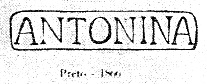
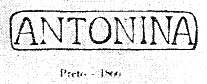
The oldest postmark is APR-0010a, reportedly found between 1843 and at least1866 and already presented by R. Koester in Carimbologia I:
It was followed by APR-0010b (fig. from the internet), which was also found in blue and violet for the period 1877-1896, although Koester (op.cit.) suspects that another postmark was in circulation there in between. It is a simple double circle with the inscription ANTONINA at the top.
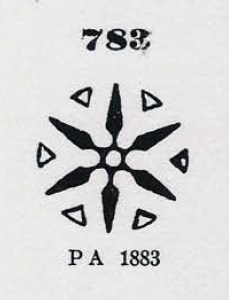
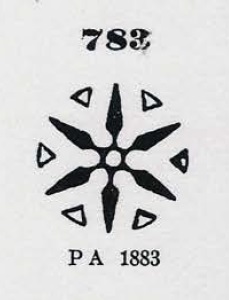
A mute cancel – also found in other towns in the province – was in use there between 1879 and at least 1883. It is known through P. Ayres (Catálogo de Carimbos Brasil-Império, S. Paulo, 1937, 1942) under No. 783 and also occurs in blue and violet:
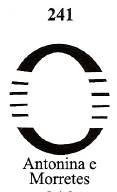
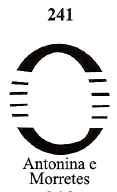
Two other postmarks with letters have been found for Antonina. The first one is No. 241 in Mute Cancellations of the Brazil Empire/ Carimbos Mudos do Brasil Império (Brazil Philatelic Association, Rio de Janeiro, 2000) by J. Dingler and Klerman Lopes :
Then there is an enigmatic PP cancel, possibly abbreviating Provincia do Paraná, as Mario Celso Orsi Jr. shows us :

Anderer Name: N. Sra. do Pilar da Graciosa
Die Kapelle von N. Sra do Pilar da Graciosa wurde im September 1714 errichtet und lag in der Bucht der Vila von Paranaguá, 80 km östlich der späteren Provinzhauptstadt Curitiba enfernt. Der Ort wurde im Februar 1761 zur Freguesia und im August 1797 zur Vila von Antonina erhoben, bevor er 1854 von der Provinz São Paulo zur Provinz Paraná wechselte. Seit Januar 1857 ist Antonina eine Stadt. Der Name soll eine Hommage an D. Francisco Antonio (1795-1801) sein, der als erstgeborener Sohn von D. João VI den Titel Principe da Beira bis zu seinem frühen Tod als Sechsjähriger trug.
Drei Daten für die Entstehung des örtlichen Postamts liegen vor, wobei die ersten beiden verdächtig nahe aneinander liegen. Erstmals im Juli 1832, wie der Philatelist Mario Celso Orsi Jr. schreibt. Da Nova Monteiro in Administrações e Agencias Postaes do Brasil Imperio (Brasil Filatelico/RJ, 1934-5; Reprint SPP 1994-1999) dafür den September 1832 angibt, könnte letztes das Datum der Inbetriebnahme der Agentur sein. Da das Postamt im kaiserichen Postführer (Guia Postal do Imperio, Rio de Janeiro, 1880) aufgelistet wurde und ein weiteres Gründungsdatum aus dem Jahr 1881 im Verzeichnis der kaiserlichen Postämter (Tabella das Agencias do Correio do Imperio, Rio de Janeiro, 1885) vorliegt, könnte es um 1879-1880 geschlossen gewesen sein.
Der älteste Poststempel ist APR-0010a, der zwischen 1843 und mindestens1866 nachgewiesen und bereits durch R. Koester in Carimbologia I vorgestellt wurde:
Ihm folgte APR-0010b (Abb. aus dem Internet), der für den Zeitraum 1877-1896 auch in den Farben Blau und Violett gefunden wurde, wobei Koester (op.cit.) vermutet, dass dort zwischendurch ein weiterer Poststempel im Umlauf war. Er ist ein schlichter Doppelkreis it der Inschrift ANTONINA oben.
Ein stummer Poststempel – der auch in anderen Städter der Provinz anzutreffen war – war dort zwischen 1879 und mindestens 1883 verwendet. Er ist durch P. Ayres (Catálogo de Carimbos Brasil-Império, S. Paulo, 1937, 1942) unter der Nr. 783 bekannt und kommt ebenfalls in Blau und Violett vor:
Zwei weitere Poststempel mit Buchstaben wurden für Antonina gefunden. Erstens die Nr. 241 in Mute Cancellations of the Brazil Empire/ Carimbos Mudos do Brasil Império (Brazil Philatelic Association, Rio de Janeiro, 2000) von J. Dingler und Klerman Lopes :
Dann der rätselhafte PP-Stempel, der möglicherweise Provincia do Paraná abkürzt, wie uns Mario Celso Orsi Jr. zeigt :


 Carimbologia