
Other names: Diamantino da Bagagem, Estrela do Sul (1901)
The freguesia of Diamantino de N. Sra. Mãe dos Homens da Bagagem was founded in April 1854 on the west bank of the Bagagem River in the Município of Patrocínio, 590 km west of the provincial capital Ouro Preto. The place became a vila in May 1856 and a town in September 1861, which was named Estrela do Sul (South Star) exactly 40 years later. This was the name of the famous diamond that was discovered in the Bagagem River in July 1853 with over 250 carats. In the meantime, it has only barely 130 carats, but no less beautiful:

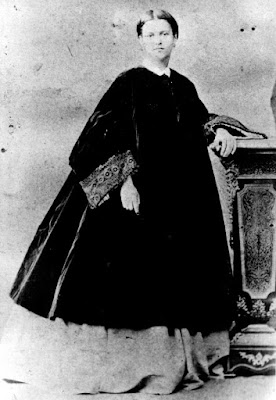
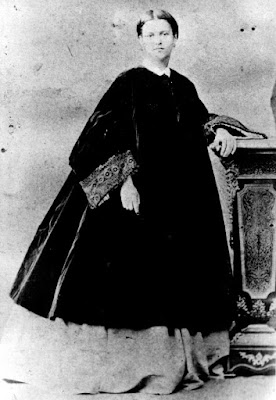
At least as famous and shrouded in mystery as the diamond is the most famous resident of Bagagem, the courtesan Ana Jacinta de São José (1800-1873), called Dona Beja:
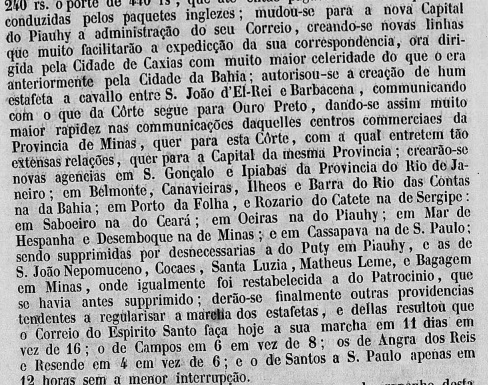
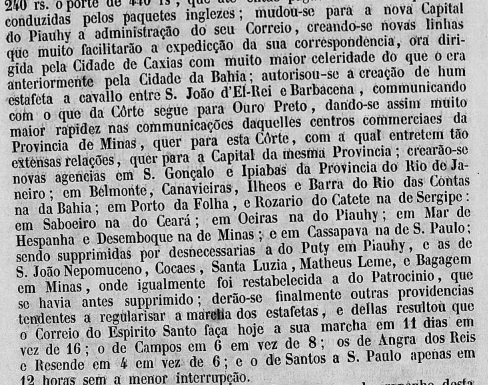
Four periods of operation for the local post office have been found so far, although it is not yet known when the first period began. However, it ended around 1851, when the agency was probably moved to the neighboring Patrocinio, as the official press announced the following year:
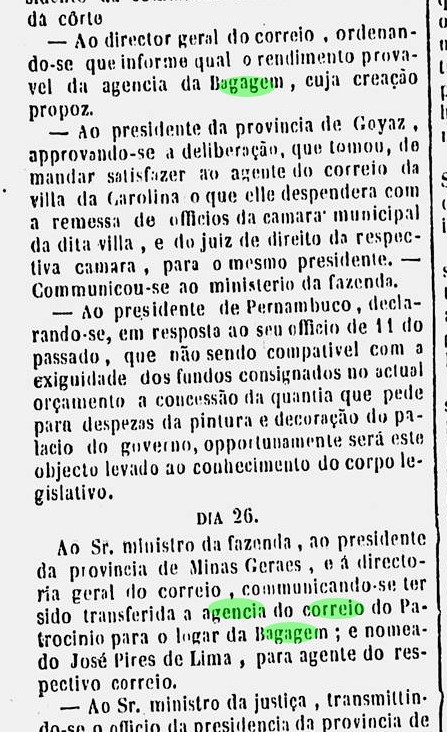
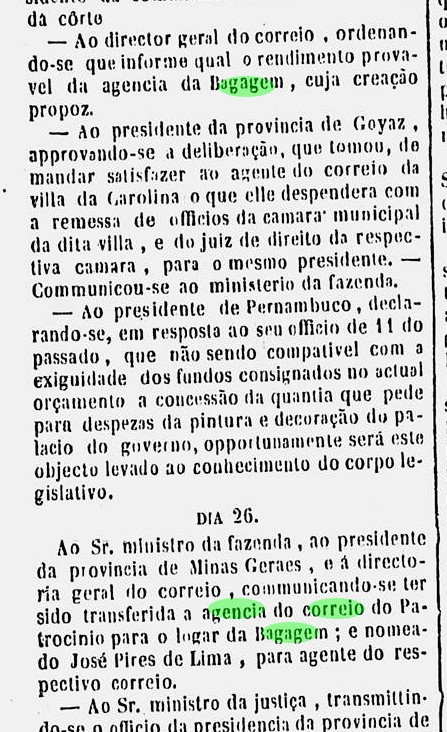
The reopening of the post office in Bagagem, however, was immediately detrmined in January 1852. Diamonds were discovered in the river and the post office moved back from Patrocínio’s villa to Bagagem, which was not even a freguesia at the time:
It is not known exactly when the second postal period ended, but it is likely to be after the discovery of the South Star. However, the third postal opening was decided in August 1855, as Aureo G. Santos writes in Agências de Correio Criadas e Suprimidas 1851, 1855, 1856 e 1857 (Brasil Filatélico 181, Rio de Janeiro, 1977):

Finally, a fourth post opening was arranged in October 1860, as noted in the postal report (Relatorio Postal) for 1887.
The turbulent history of the town is reflected in its postmarks. The first one, for example, has not yet been found; it could even be that people had to make do without a postmark for decades. For Paulo Ayres shows in Catálogo de Carimbos Brasil-Império (S. Paulo, 1937, 1942) on p. 146 a handwritten cancellation that was in use from about 1866 until at least 1879:

In the meantime, this cancellation even appeared on a stamp issue from 1844, but in connection with an unidentifiable postmark.
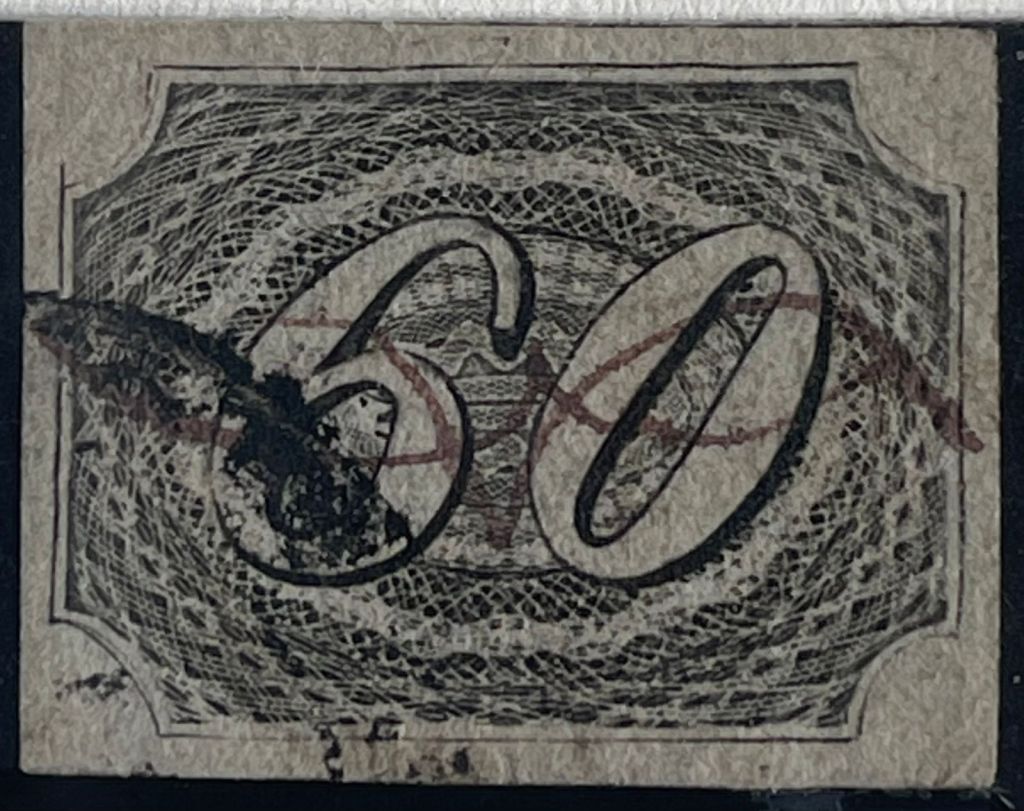
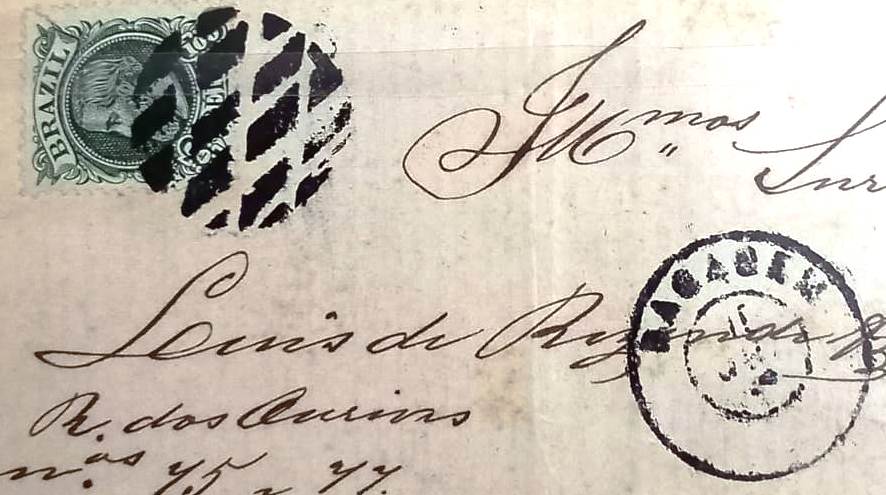
Whether this cancellation is a genuine one from Bagagem has yet to be verified. In any case, BMG-0175b (image from the Internet) is no fake: a double circle with the inscription BAGAGEM at the top, plus dates from 1878 to 1888. It was followed by BMG-0175c (coll. FM); in this double circle the inscription at the top is CID. DA BAGAGEM at the bottom, reading (M.G.), with dates from 1890 to 1893.
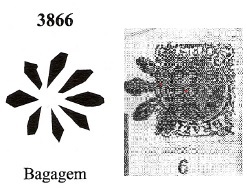
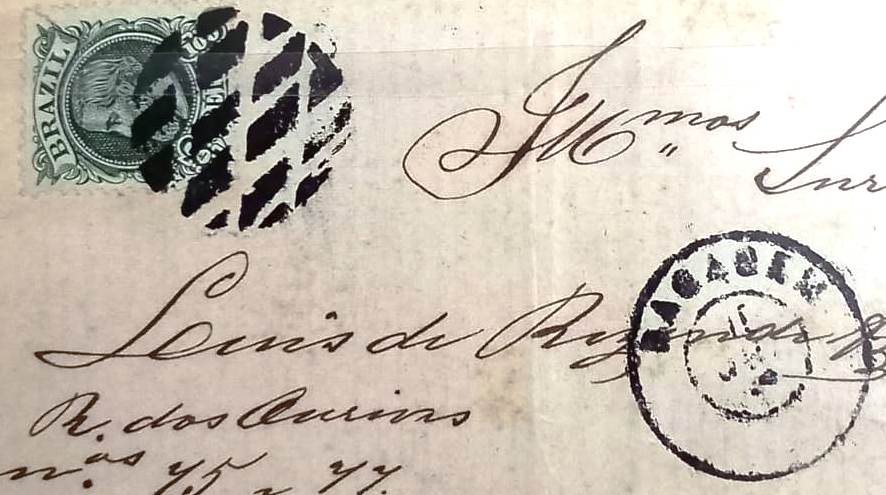
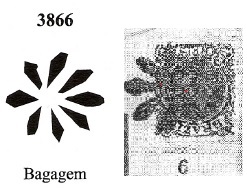
From Mute Cancellations of the Brazil Empire/ Carimbos Mudos do Brasil Império (Brazil Philatelic Association, Rio de Janeiro, 2000) from James Dingler and Klerman W. Lopes come two mute cancellations from Bagagem, with nos. 1793 and 3866:
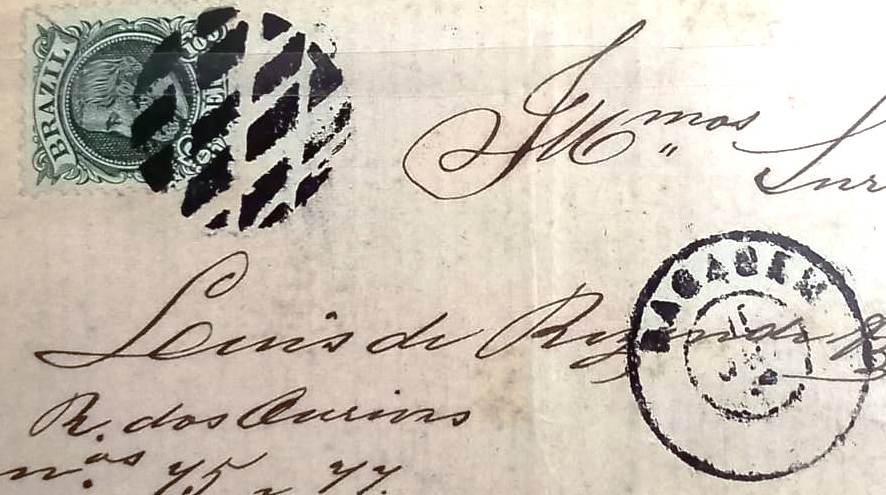
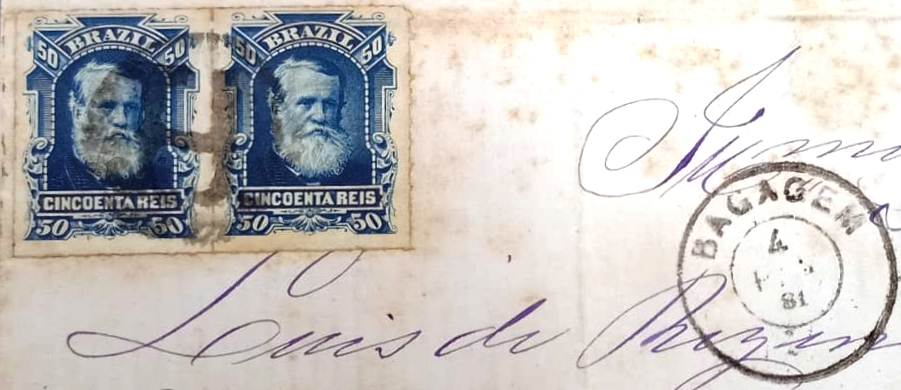
The philatelist Fuad Ferreira Fo. found two more mute cancellations, both from 1881, the first of which had already been made known by R. Koester (Carimbologia III) and could represent the initials of the postal agent:

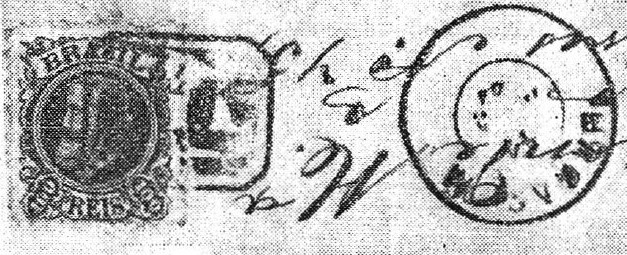
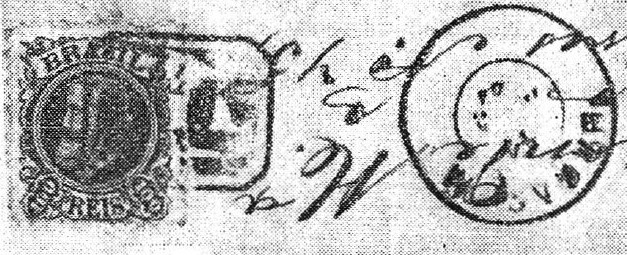
And finally, Koester found another example of initials as mute cancel:

Andere Namen: Diamantino da Bagagem, Estrela do Sul (1901)
Die Freguesia von Diamantino de N. Sra. Mãe dos Homens da Bagagem wurde im April 1854 am Westufer de Flusses Bagagem (Gepäck) im Município von Patrocínio, 590 km westlich der Provinzhauptstadt Ouro Preto entfernt. Der Ort wurde im Mai 1856 eine Vila und im September 1861 eine Stadt, die genau 40 Jahre später Estrela do Sul (Südstern) genannt wurde. So hieß der berühmte Diamant, der im Juli 1853 mit über 250 Karat im Fluss Bagagem entdeckt wurde. Inzwischen ist er nur knapp 130 Karat groß, aber nicht weniger schön:

Mindestens so berühmt und geheimnisumwittert wie der Diamant ist die bekannteste Bewohnerin von Bagagem, die Kurtisane Ana Jacinta de São José (1800-1873), genannt Dona Beja:
Es wurden bisher vier Betriebsperioden fürs örtliche Postamt gefunden, wobei noch nicht bekannt ist, wann die erste Periode begann. Sie endete aber um 1851, als die Agentur wohl zum benachbarten Patrocinio verlegt wurde, wie die Amtspresse im folgenden Jahr bekannt gab:
Die Wiedereröffnung des Postamts in Bagagem wurde aber gleich im Januar 1852 veranlasst. Da wurden Diamanten im Fluss entdeckt, und die Post zog von der Villa von Patrocínio zum Ort Bagagem zurück, der damals nicht einmal eine Freguesia war:
Es ist nicht bekannt, wann genau die zweite Postperiode endete, es dürfte aber erst nach der Entdeckung des Südsterns sein. Über die dritte Posteröffnung wurde aber im August 1855 entschieden, wie Aureo G. Santos in Agências de Correio Criadas e Suprimidas 1851, 1855, 1856 e 1857 (Brasil Filatélico 181, Rio de Janeiro, 1977) schreibt:

Schließlich wurde eine vierte Posteröffnung im Oktober 1860 veranlasst, wie der Postbericht (Relatorio Postal) für 1887 notierte.
Die bewegte Geschichte des Orts spiegelt sich in seinen Poststempeln wider. So wurde der erste darunter bisher noch nicht gefunden; es könnte sogar sein, dass man jahrzehntelang ohne Poststempel auskommen musste. Denn Paulo Ayres zeigt in Catálogo de Carimbos Brasil-Império (S. Paulo, 1937, 1942) auf S. 146 eine handschriftliche Entwertung, die ab ca. 1866 bis mindestens 1879 Verwendung fand:

Und inzwischen tauchte diese Entwertung sogar auf einer Markenausgabe aus 1844 auf, aber in Verbindung mit einem nicht identifizierbaren Stempel.
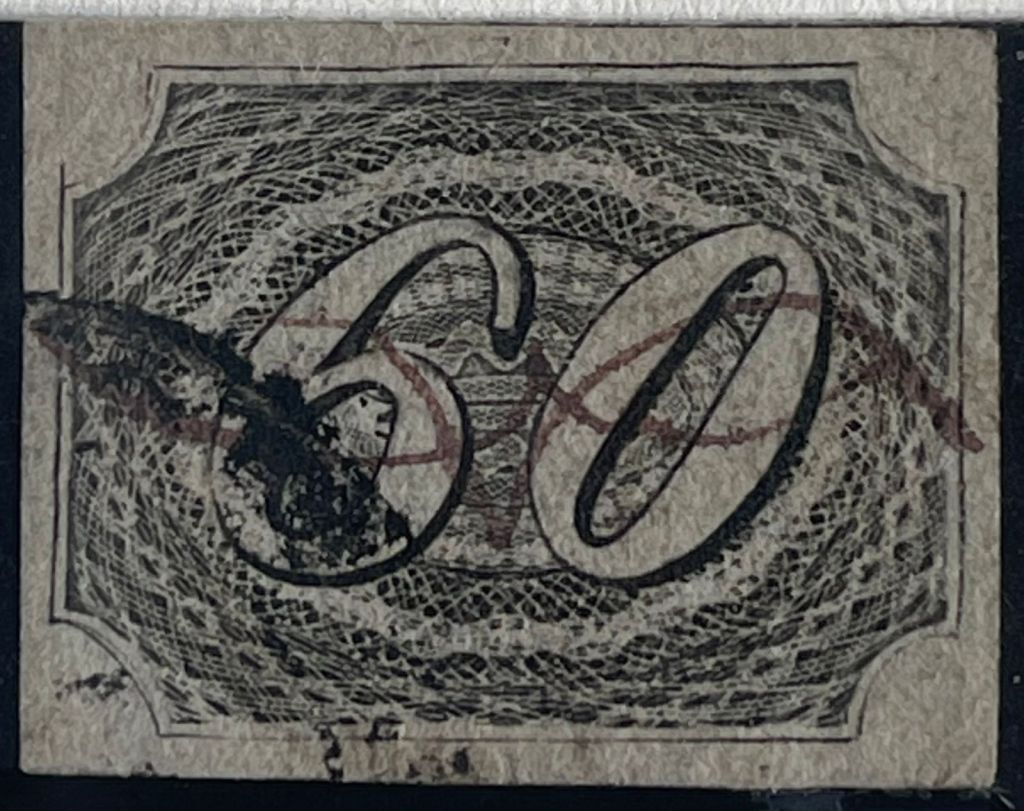
Ob diese Entwertung eine echte aus Bagagem ist, muss noch geprüft werden. Echt ist jedenfalls BMG-0175b (Abb. aus dem Internet): ein Doppelkreis mit der Inschrift BAGAGEM oben, dazu Daten von 1878 bis 1888. Ihm folgte BMG-0175c (Samml. FM); in diesem Doppelkreis lautet die Inschrift oben CID. DA BAGAGEM, unten liest man (M.G.), die bisherigen Daten gehen von 1890 bis 1893.
Aus Mute Cancellations of the Brazil Empire/ Carimbos Mudos do Brasil Império (Brazil Philatelic Association, Rio de Janeiro, 2000) von James Dingler und Klerman W. Lopes kommen zwei stumme Entwertungen aus Bagagem, mit Nr. 1793 und 3866:
Dann fand der Philatelist Fuad Ferreira Fo. zwei weitere stumme Stempel, beide aus 1881. Der erste davon war schon durch R. Koester (Carimbologia III) bekannt gemacht und könnte die Initialen des Postagenten darstellen:

Und schließlich fand Koester ein weiteres Beispiel von Initialen als stummer Stempel:

 Carimbologia