Text update on February 6, 2023
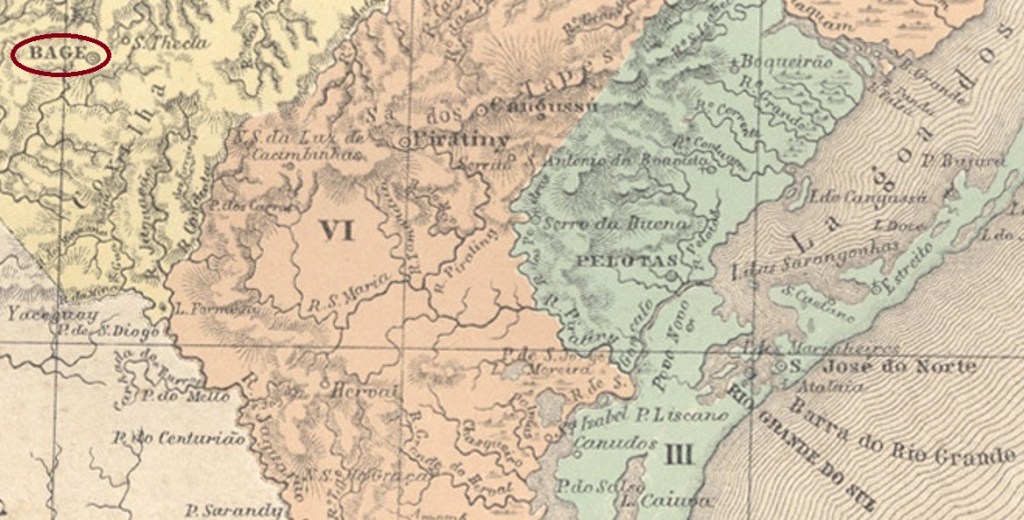
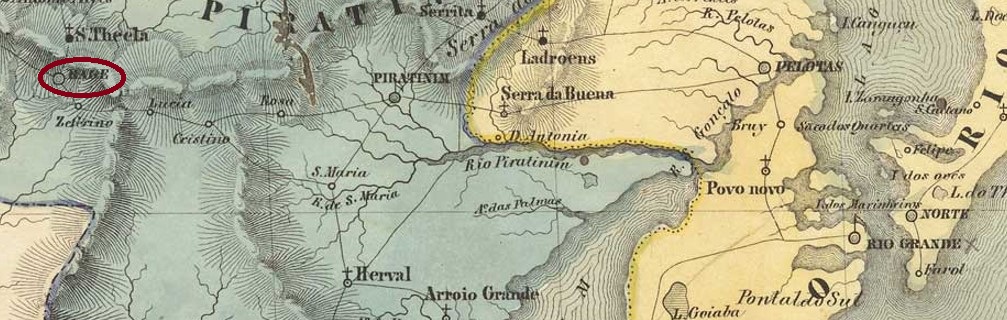
The settlement of Bagé began – as so often in border areas – as a soldiers’ camp, this time in July 1811 on the west bank of the Bagé stream, 380 km southwest of the later provincial capital Porto Alegre. Then, in January 1813, the chapel of S. Sebastião de Bagé was built, and by September 1815, the village had become a district to the Vila of Piratini. In June 1846 it was promoted to the status of Vila, and in December 1859 to the status of town.
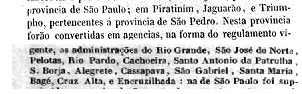
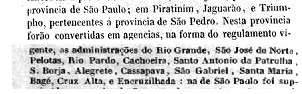
Three dates for the emergence of the local post office have been found. First in October 1831, as Nova Monteiro writes in Administrações e Agencias Postaes do Brasil Imperio (Brasil Filatelico/RJ, 1934-5; reprint SPP 1994-1999). Then in 1833, as one can read in the Directory of Imperial Post Offices (Tabella das Agencias do Correio do Imperio, Rio de Janeiro, 1885). And finally, around 1845 – that is, after the end of the Farroupilha Revolution, as can be seen in the Annuario Politico, Historico e Estatistico (Yearbook of Politics, History and Statistics, 1846):
The first postmarks were therefore from the pre-philatelic period. BRS-0020a was already registered in the RHM catalogue under P-RS-01, unfortunately without giving the exact period of use:

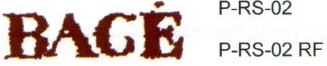
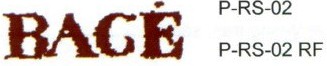
Its successor BRS-0020b (was also registered in the RHM, this time under P-RS-02, and was used from 1841 to at least 1843:
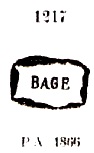
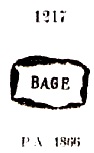
This was followed by a longer period without founded postmarks, and BRS-0020c was not registered until around 1866, then with dates until at least 1883. This postmark can be seen in Paulo Ayres’ Catálogo de Carimbos Brasil-Império, (S. Paulo, 1937, 1942) under no. 1217:
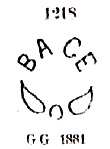
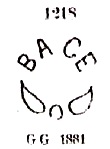
Then came the French type BRS-0020d (Fig. Fuad Ferreira Fo.): a double circle with the inscription BAGÉ above and the star between brackets below. A specimen found on a letter from 1879.From about 1881 also came the enigmatic BRS-0020e, also known through Ayres (op. cit.), this time under no. 1218:
Bagé’s following postmarks were introduced to us by R Koester in Carimbologia III. BRS-0020f also occurs in dark purple and shows dates from 1881 to 1893:

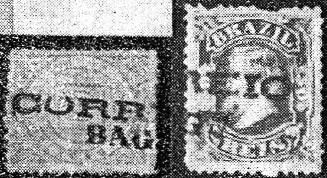
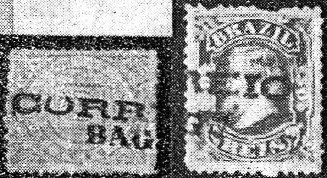
BRS-0020g was used between 1881 and 1885 and consists of two separated stamp lines, as the relative position of these is variable:
BRS-0020h (Collect. FM) is again a double circle with the inscription BAGÉ at the top, but compared to BRS-0020e, here the letters are smaller and there is no ornament at the bottom. Dates in the middle from 1889 to 1891. And BRS-0020i (fig. from the internet) should already be republican, as its inner dates so far are between 1891 and 1894. In this double circle one reads below (S. PEDRO DO SUL).
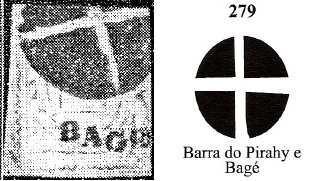
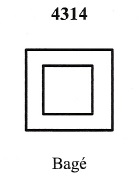
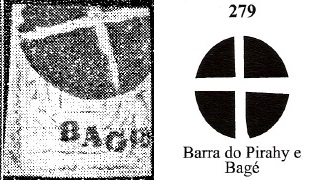
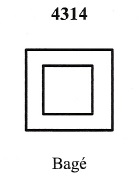
Four mute postmarks from Imperial Bagé were listed in Mute Cancellations of the Brazil Empire / Carimbos Mudos do Brasil Império (Brazil Philatelic Association, Rio de Janeiro, 2000) by James Dingler and Klerman W. Lopes:


Textaktualisierung am 6. Februar 2023
Die Siedlung Bagés begann – wie so oft in Grenzgebieten – als ein Soldatenlager, diesmal im Juli 1811 am Westufer des Bachs Bagé, 380 km südwestlich der späteren Provinzhauptstadt Porto Alegre. Im Januar 1813 wurde dann die Kapelle von S. Sebastião de Bagé errichtet, und schon im September 1815 war die Ortschaft ein Distrikt zur Vila von Piratini geworden. Im Juni 1846 erfolgte der Aufstieg zur Vila, und im Dezember 1859 zur Stadt.
Drei Zeitpunkte zur Entstehung des örtlichen Postamts wurden gefunden. Erstmals im Oktober 1831, wie Nova Monteiro in Administrações e Agencias Postaes do Brasil Imperio (Brasil Filatelico/RJ, 1934-5; Reprint SPP 1994-1999) schreibt. Dann 1833, wie man im Verzeichnis der kaiserlichen Postämter (Tabella das Agencias do Correio do Imperio, Rio de Janeiro, 1885) lesen kann. Und schließlich ca. 1845 – also nach dem Ende der Farroupilha-Revolution, wie aus dem Jahrbuch für Politik, Geschichte und Statistik (Annuario Politico, Historico e Estatistico, 1846) hervorgeht:
Die ersten Poststempel waren demnach aus der Vorphila-Zeit. BRS-0020a wurde bereits im RHM- Katalog unter P-RS-01 registriert, leider ohne den genauen Verwendungszeitpunkt zu nennen:

Sein Nachfolger BRS-0020b (wurde ebenfalls im RHM eingetragen, diesmal unter P-RS-02, und wurde von 1841 bis mindestens 1843 gebraucht:
Es folgte eine längere Zeit noch ohne gefundene Poststempel, und BRS-0020c wurde erst um 1866 registriert, dann mit Daten bis mindestens 1883. Dieser Stempel ist im Paulo Ayres‘ Catálogo de Carimbos Brasil-Império, (S. Paulo, 1937, 1942) unter Nr.1217 zu sehen:
Danach kam der französischer Typ BRS-0020d (Abb. Fuad Ferreira Fo.): ein Dopplkreis mit der Inschrift BAGÉ oben und dem Stern zwischen Klammern unten. Ein Exemplar auf einem Brief aus 1879 gefunden. Ab ca. 1881 kam auch der rätselhafte BRS-0020e, der auch durch Ayres (op. cit.) bekannt ist, diesmal mit Nr. 1218:
Die nächsten Poststempel Bagés wurden uns durch R Koester in Carimbologia III vorgestellt. BRS-0020f kommt auch in dunkellila vor und zeigt Daten von 1881 bis 1893:

BRS-0020g wurde zwischen 1881 und 1885 verwendet und besteht eigentlich aus zwei Stempelzeilen, da die relative Position derselben variabel ist:
BRS-0020h (Samml. FM) ist wieder ein Doppelkreis mit der Inschrift BAGÉ oben, aber im Vergleich zu BRS-0020e sind hier die Buchstaben kleiner, und unten ist kein Ornament zu sehen. Daten in der Mitte von 1889 bis 1891. Und BRS-0020i (Abb. aus dem Internet) dürfte bereits republikanisch sein, da seine inneren Daten bisher zwischen 1891 und 1894 liegen. In diesem Doppelkreis liest man unten (S. PEDRO DO SUL).
Vier stumme Poststempel aus dem kaiserlichen Bagé wurden im Mute Cancellations of the Brazil Empire / Carimbos Mudos do Brasil Império (Brazil Philatelic Association, Rio de Janeiro, 2000) von James Dingler und Klerman W. Lopes aufgelistet:



 Carimbologia