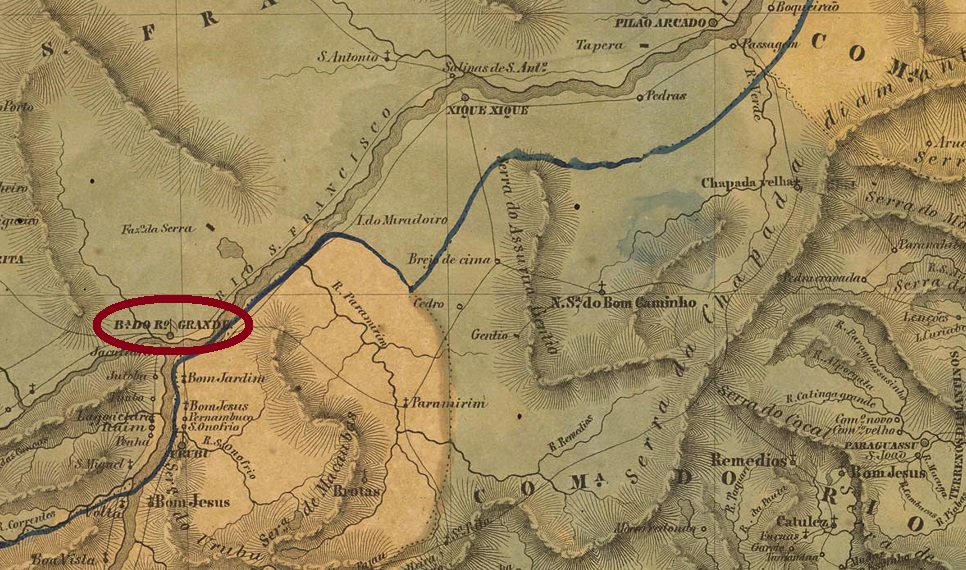
Other names: Villa da Barra do Rio Grande, Barra (1931)
See also Villa da Barra (VBA-0775)
The Portuguese word Barra means, among others, a river mouth. This was the case in December 1752, when the freguesia of São Francisco das Chagas da Barra do Rio Grande do Sul was founded, almost 700 km west of the future provincial capital Salvador. One should remember firstly that the locality was still in Pernambuco at that time because the entire left bank of the São Francisco River up to the border with the Capitania of Minas Gerais still belonged to Pernambuco until the failed revolution in 1817. And secondly, Rio Grande do Sul here has nothing to do with the province of the same name in the extreme south of the country, but refers to the Rio Grande, which rises on the border with Goiás and flows into the São Francisco, precisely at its barra.
As early as August 1753, the town was elevated to the status of Vila, but it was not until June 1873 – 120 years later – that Barra do Rio Grande became a town, and since June 1931 it has simply been called Barra.
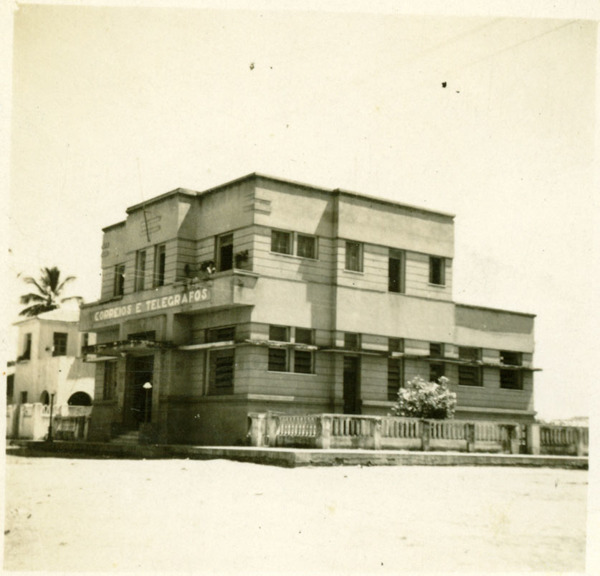
Two creation years for the local post office have also been identified here. First in May 1832, as Nova Monteiro writes in Administrações e Agencias Postaes do Brasil Imperio (Brasil Filatelico/RJ, 1934-5; Reprint SPP 1994-1999). The next creation took place in September 1858, according to Reinhold Koester in Carimbologia III. The only postmark so far found for the 19. Century is BBA-0105b, (Coll. FM): a double circle with the inscriptions BARRA above and (BAHIA) below. Just one specimen was found, dated 1894ff in the centre.
For postmarks under VILLA DA BARRA see VBA-0775.
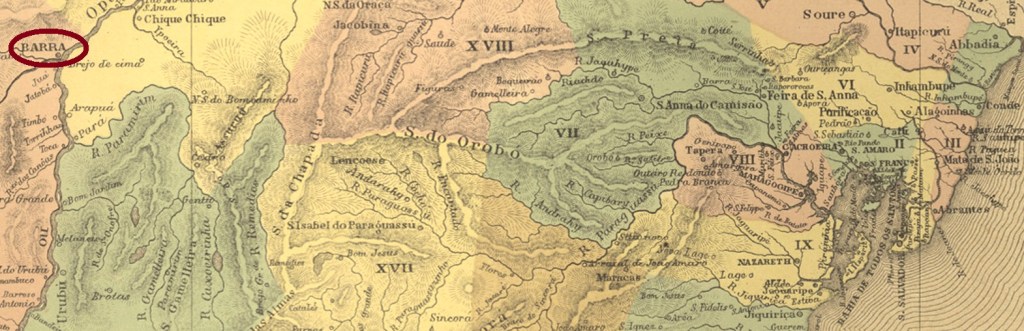
Andere Namen: Villa da Barra do Rio Grande, Barra (1931)
Siehe auch Villa da Barra (VBA-0775)
Das portugiesische Wort Barra bedeutet unter anderen eine Flussmündung. So in diesem Fall, als im Dezember 1752 die Freguesia von São Francisco das Chagas da Barra do Rio Grande do Sul gegründet wurde, fast 700 km westlich der künftigen Provinzhauptstadt Salvador entfernt. Wobei erstens lag der Ort damals noch in Pernambuco, denn das gesamte linke Ufer des Flusses São Francisco bis zur Grenze zur Capitania von Minas Gerais gehörte bis zur missglückten Revolution 1817 noch zu Pernambuco. Und zweitens hat hier Rio Grande do Sul nichts mit der gleichnamigen Provinz in äußersten Süden des Landes zu tun, sondern bezieht sich auf den Rio Grande, der an der Grenze zu Goiás entspringt und in den São Francisco hineinfließt, eben an seiner Barra.
Bereits im August 1753 wurde der Ort zur Vila erhoben, aber erst im Juni 1873 – also 120 Jahre später – wurde Barra do Rio Grande eine Stadt, die seit Juni 1931 lediglich Barra heißt.
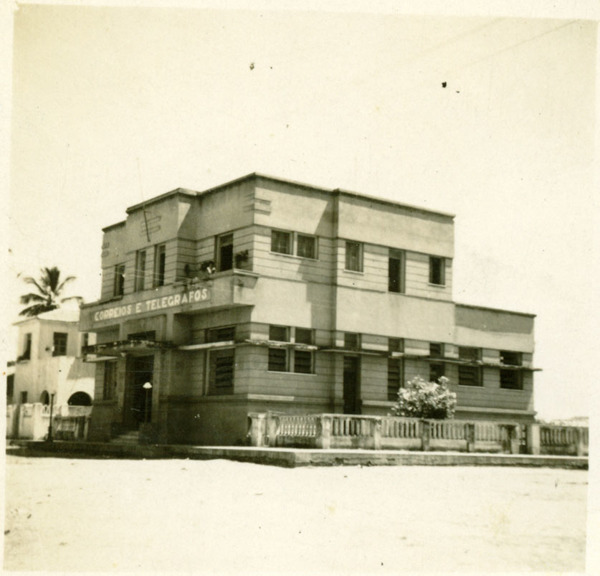
Zwei Gründungsjahre fürs örtliche Postamt wurden auch hier ermittelt. Erstmals im Mai 1832, wie Nova Monteiro in Administrações e Agencias Postaes do Brasil Imperio (Brasil Filatelico/RJ, 1934-5; Reprint SPP 1994-1999) schreibt. Dann wieder im September 1858, laut Reinhold Koester in Carimbologia III. Der bisher einzige Poststempel im 19. Jahrhundert ist BBA-0105b, (Samml. FM): ein Doppelkreis mit den Inschriften BARRA oben und (BAHIA) unten. Ein Exemplar gefunden, datiert 1894ff in der Mitte.
Für Poststempel unter VILLA DA BARRA siehe VBA-0775.

 Carimbologia