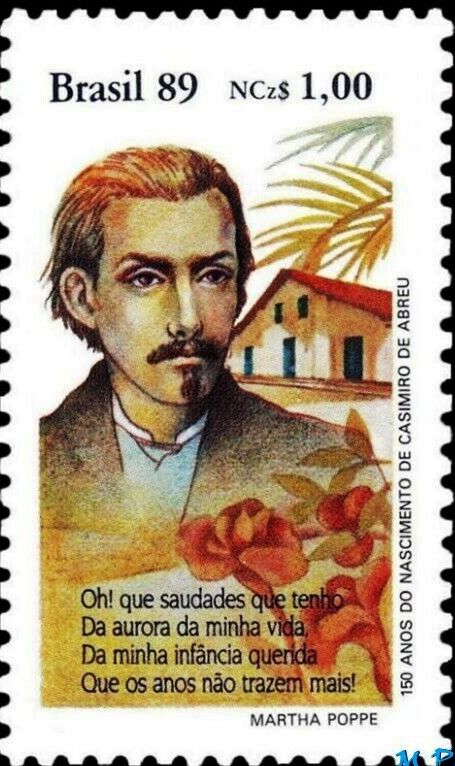
Other names: Indayassú, Casimiro de Abreu (1925)
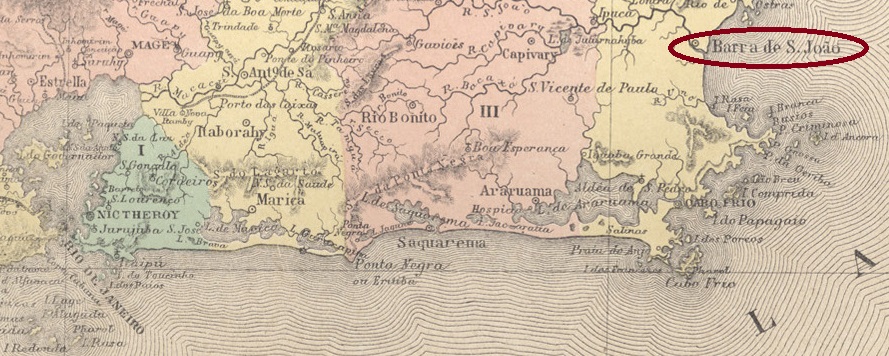
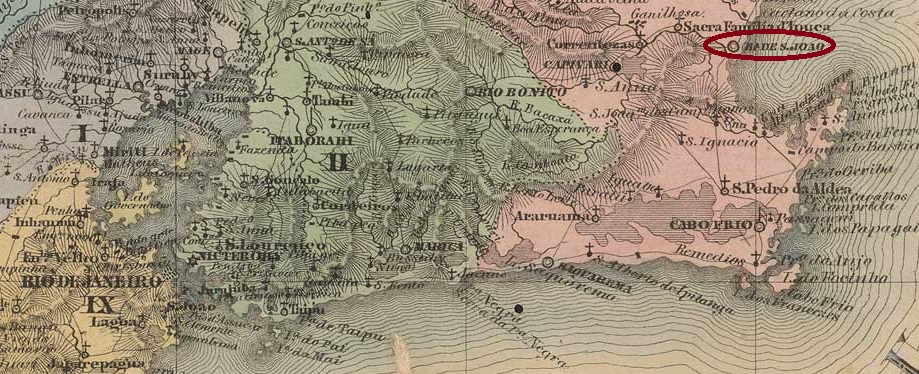
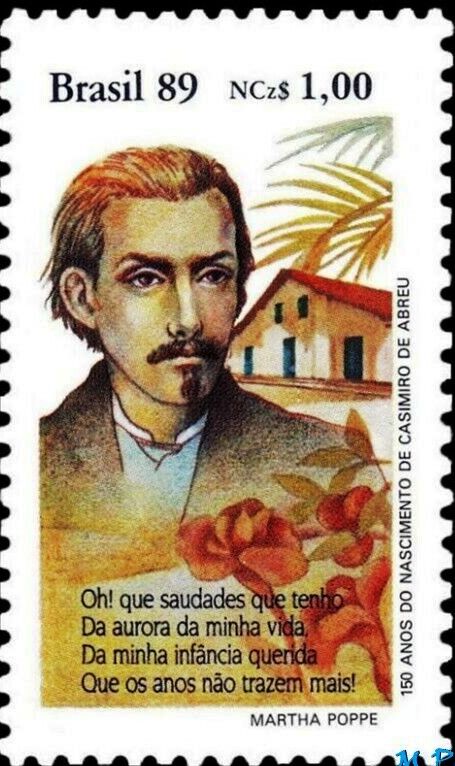
The freguesia of Barra de S. João was founded in 1800 and was located close to the north bank of the São João River in the territory of the Vila of Macaé, 130 km northeast of the capital Rio de Janeiro. In May 1846 it became a vila and in February 1890 a town, which has since changed its name three times: in December 1901 to Indayassú, in September 1904 back to Barra de S. João and in March 1938 to Casimiro de Abreu, which is still current today. The name is to commemorate the poet (1839-1860) who died young and was born in the region.
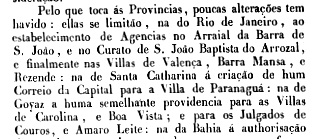
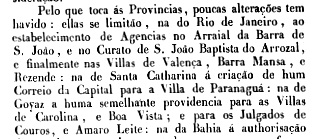
The local post office is dated March 1835, as Nova Monteiro writes in Administrações e Agencias Postaes do Brasil Imperio (Brasil Filatelico/RJ, 1934-5; reprint SPP 1994-1999). However, a local postal agency had already been mentioned a year earlier in the Imperial Ministry’s report:
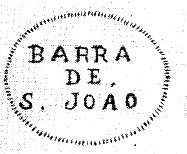
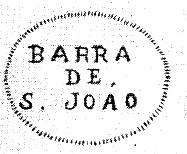
The first postmark is BRJ-0130a, used at least between 1839 and 1844 in the colours orange, blue and red, and known to us through R. Koester (Carimbologia III):
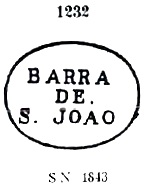
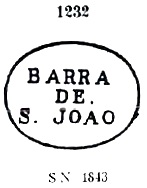
It was followed by the variant BRJ-0130b, with dates from about 1866 to 1871, occurs also in blue and violet, and was already presented by Paulo Ayres (Catálogo de Carimbos Brasil-Império, S. Paulo, 1937, 1942) under no. 1232:
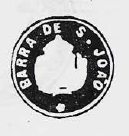
Then came BRJ-0130c, also known through P. Ayres (op.cit.), unfortunately without dates:
The last local cancel within the Empire is BRJ-0130d (fig. from the internet): a double circle with the inscription B. DE S. JOAO above and internal dates of 1888-1911.
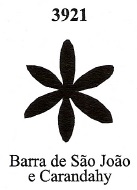
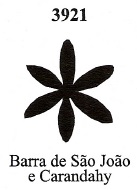
James Dingler and Klerman W. Lopes have also shown in Mute Cancellations of the Brazil Empire / Carimbos Mudos do Brasil Império (Brazil Philatelic Association, Rio de Janeiro, 2000) presented a mute cancellation from Barra de S. João under no. 3921:
Andere Namen: Indayassú, Casimiro de Abreu (1925)
Die Freguesia von Barra de S. João wurde 1800 gegründet und lag nah am Nordufer des Flusses São João im Gebiet der Vila von Macaé, 130 km nordöstlich der Hauptstadt Rio de Janeiro entfernt. Im Mai 1846 wurde daraus eine Vila und im Februar 1890 eine Stadt, die ihren Namen seitdem dreimal gewechselt hat: im Dezember 1901 zu Indayassú, im September 1904 zurück zu Barra de S. João und im März 1938 zum heute noch aktuellen Casimiro de Abreu. Der Name soll an den jung verstorbenen Dichter (1839-1860), der in der Region geboren wurde.
Das örtliche Postamt ist vom März 1835, wie Nova Monteiro in Administrações e Agencias Postaes do Brasil Imperio (Brasil Filatelico/RJ, 1934-5; Reprint SPP 1994-1999) schreibt. Allerdings wurde bereits ein Jahr zuvor eine Postagentur vor Ort im Bericht des Imperialministeriums erwähnt:
Der erste Poststempel ist BRJ-0130a, der zumindest zwischen 1839 und 1844 in den Farben Orange, Blau und Rot verwendet wurde, und uns durch R. Koester (Carimbologia III) bekannt ist:
Ihm folgte die Variante BRJ-0130b, die mit Daten von ca. 1866 bis 1871 einzutreffen ist, auch in Blau und Violett, und bereits durch Paulo Ayres (Catálogo de Carimbos Brasil-Império, S. Paulo, 1937, 1942) unter Nr. 1232 vorgestellt wurde:
Danach kam BRJ-0130c, der ebenfalls durch P. Ayres (op.cit.) bekannt ist, leider ohne Datumsangaben:
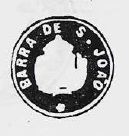
Der letzte Ortsstempel aus dem Kaiserreich ist BRJ-0130d (Abb. aus dem Internet): ein Doppelkreis mit der Inschrift B. DE S. JOAO oben und inneren Daten von 1888-1911.
James Dingler und Klerman W. Lopes haben dazu in Mute Cancellations of the Brazil Empire / Carimbos Mudos do Brasil Império, (Brazil Philatelic Association, Rio de Janeiro, 2000) eine stumme Entwertung aus Barra de S. João unter der Nr. 3921 präsentiert :

 Carimbologia