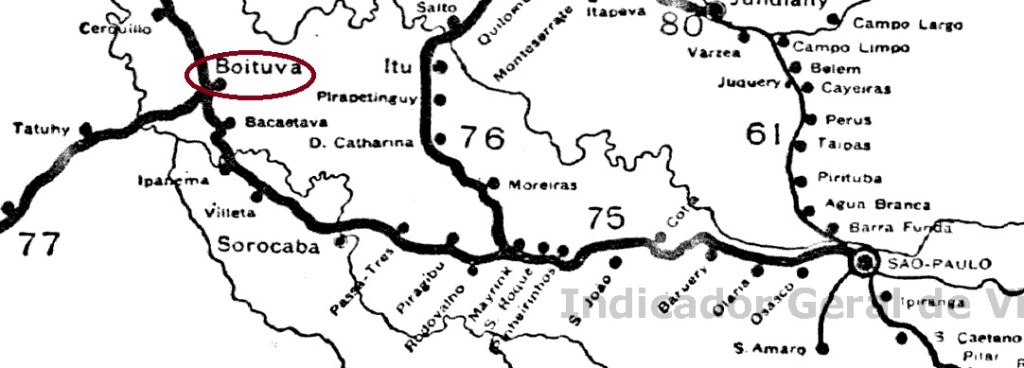
Boituva station was inaugurated in July 1882 by the E.F. Sorocabana railway company (main line) in the Município of Porto Feliz, 120 km west of the provincial capital São Paulo. The railway line changed hands in 1892 to the Cia. União Sorocabana e Ytuana, in 1907 to the Sorocabana Railway, in 1919 back to the E.F. Sorocabana, and from 1971 until its closure in 1998 it belonged to FEPASA (estacoesferroviarias.com.br).
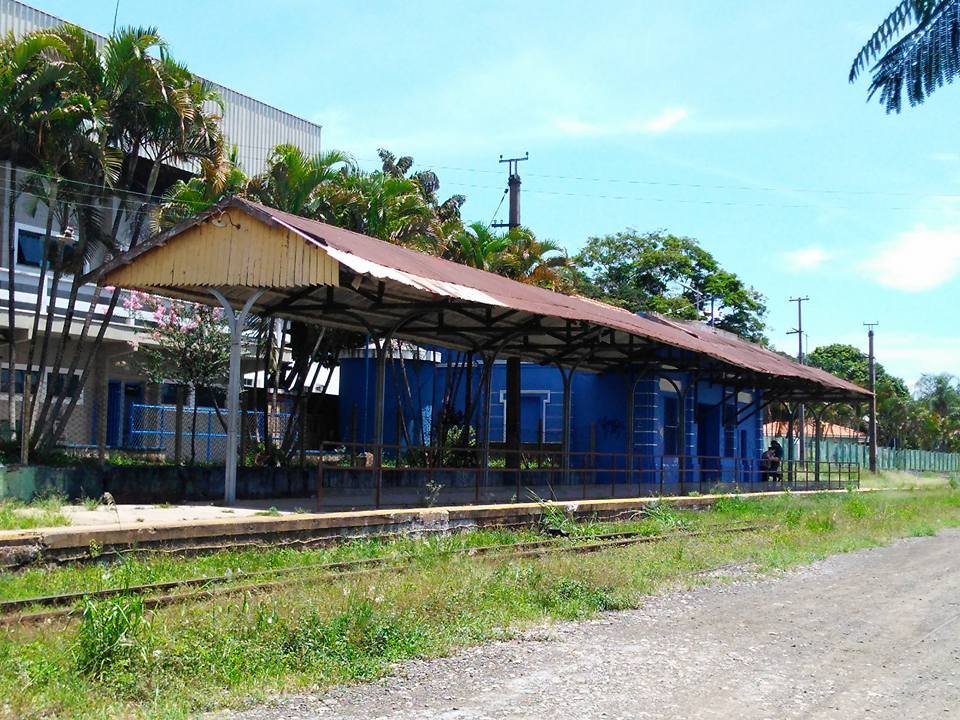
The rails are still there today, the old station building was demolished, and since 1933 there has been a new one, which now houses Alcoholics Anonymous.
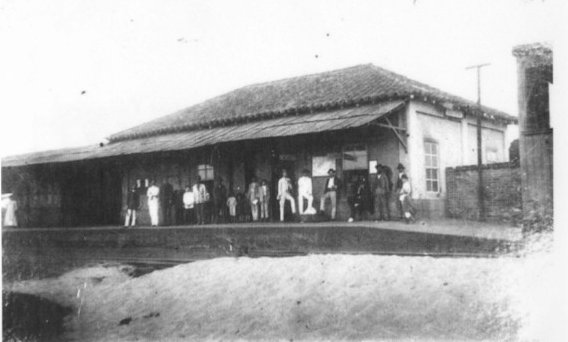
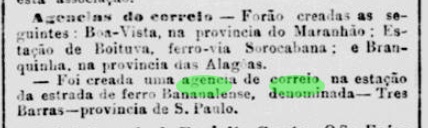
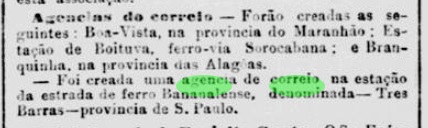
The settlement around the station continued to grow, becoming a district of Porto Feliz in 1906, and Boituva has been an independent município since September 1938. There was a station post office from February 1889, according to the Rio Press:
The first postmark here is BSP-0160a and has already been made known by R., Koester in Carimbologia V:

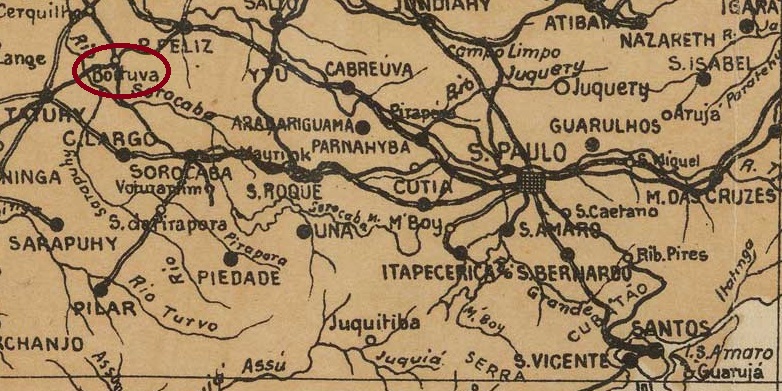
Der Bahnhof Boituva wurde im Juli 1882 durch die Bahngesellschaft E.F. Sorocabana (Hauptlinie) eingeweiht und lag im Município von Porto Feliz, 120 km westlich der Provinzhauptstadt São Paulo entfernt. Die Bahnlinie wechselte 1892 zur Cia. União Sorocabana e Ytuana, 1907 zur Sorocabana Railway, 1919 zurück zur E.F. Sorocabana, und von 1971 bis zur Stilllegung 1998 gehörte sie der FEPASA (estacoesferroviarias.com.br).
Die Schienen sind bis heute noch da, das alte Bahnhofsgebäude wurde abgerissen, seit 1933 gibt es ein neues, das heute die Anonymen Alkoholiker beherbergt.
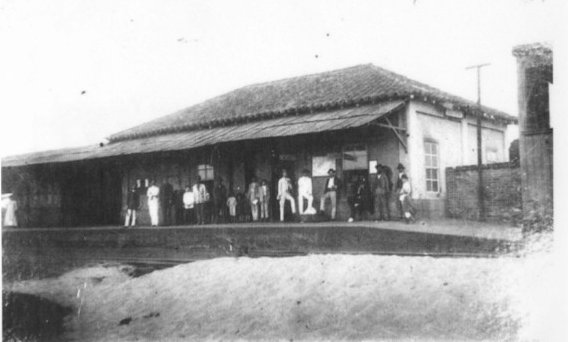
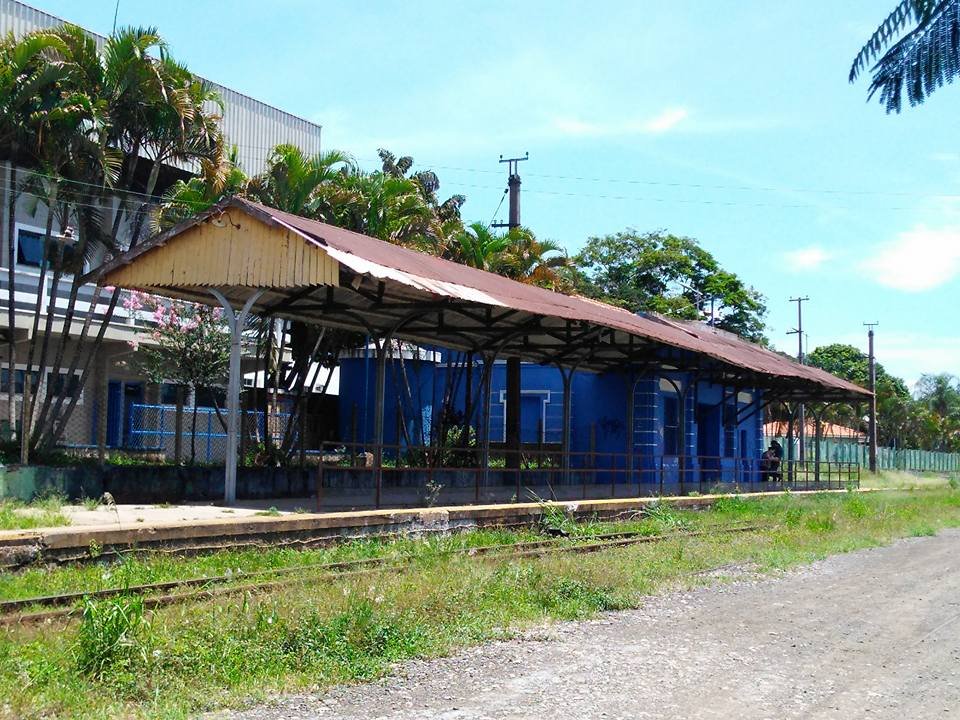
Die Siedlung um den Bahnhof wuchs weiter, sie wurde 1906 zum Distrikt von Porto Feliz, und Boituva ist ein eigenständiger Município seit September 1938. Einen Bahnhofspostamt gab es ab Februar 1889, wie aus der Rio-Presse entnommen wird:
Der erste Poststempel hier ist BSP-0160a und wurde bereits durch R., Koester in Carimbologia V bekannt gemacht:


 Carimbologia