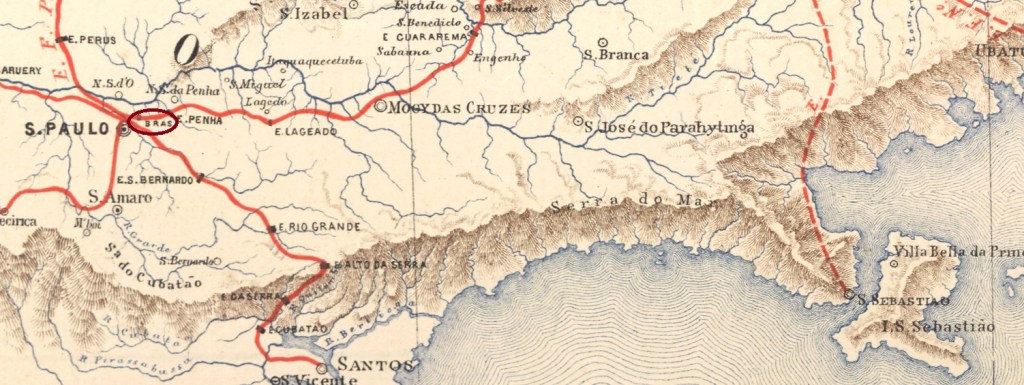
Today’s Brás district is in the middle of the metropolis of São Paulo, but 200 years ago it was a parish in a calm suburb of the then Vila. This quickly changed from February 1867, when Braz station was inaugurated by the São Paulo Railway (Main Line). The railway line changed to E.F. Santos a Jundiaí in 1946, to Rede Ferroviária Federal S.A. in 1975, to Cia. Brasileira de Trens Urbanos in 1983 and has belonged to the Cia. Paulista de Trens metropolitanos (estacoesferroviarias.com.br) since 1992. Today, the Brás (modern writing) district has about 30,000 inhabitants.
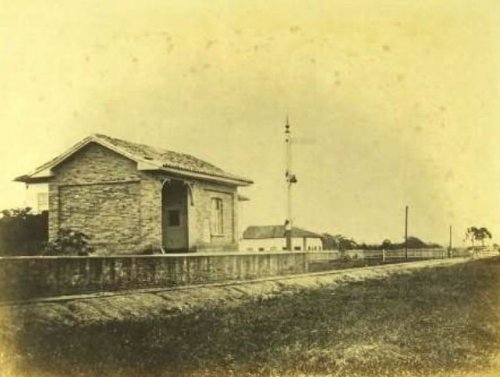
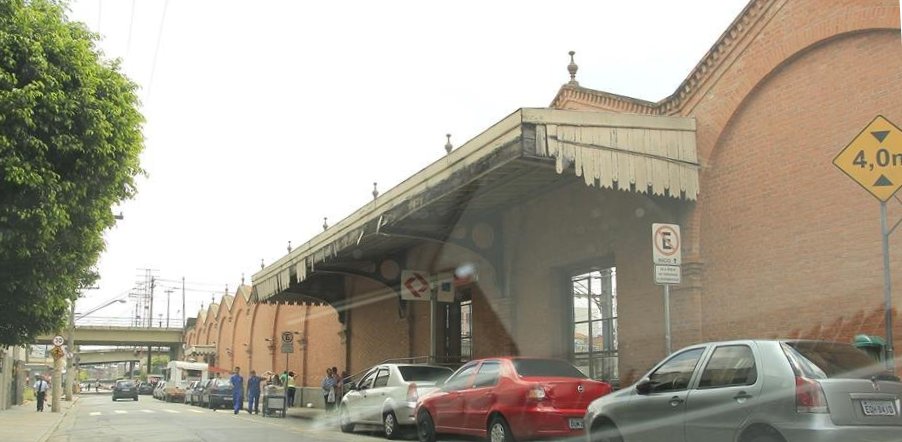
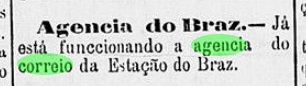
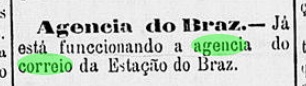
As can be read in the Directory of Imperial Post Offices (Tabella das Agencias do Correio do Imperio, Rio de Janeiro, 1885), the station post office was created in 1879, but apparently only started operating the following year:
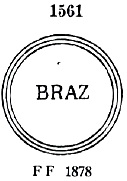
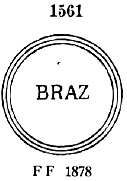
The first postmark here is BSP-0185a, listed in Paulo Ayres’ Catálogo de Carimbos Brasil-Império (S. Paulo, 1937, 1942) under No. 1561:
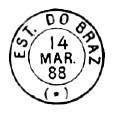
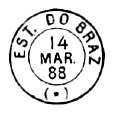
It was followed by BSP-0185b, also made known by P. Ayres (op. cit.):
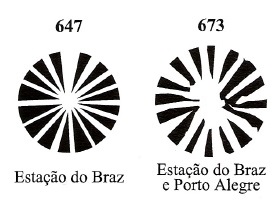
In addition, three mute cancellations from this station have been found, two of them in Mute Cancellations of the Brazil Empire/ Carimbos Mudos do Brasil Império (Brazil Philatelic Association, Rio de Janeiro, 2000), by James Dingler and Klerman W. Lopes:
The third mute postmark was shown to us by philatelist Mário Celso Orsi Jr:

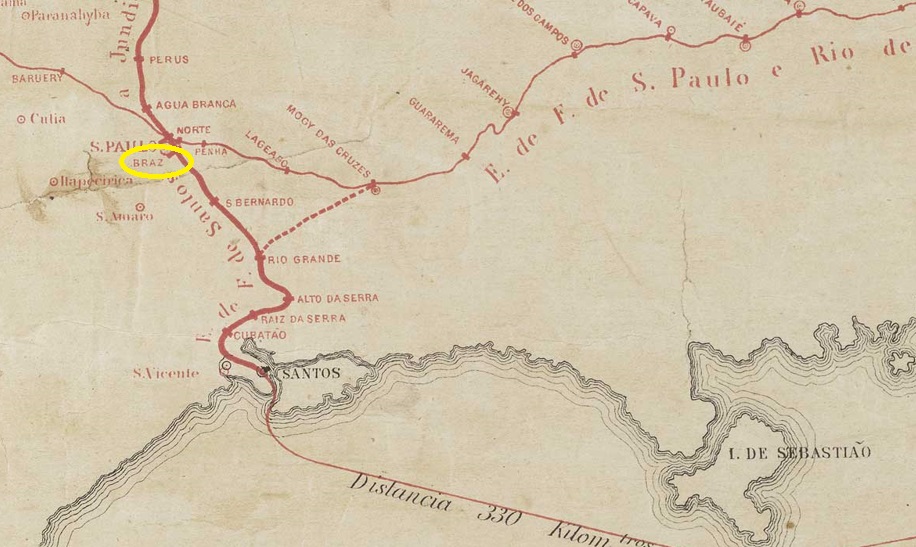
Der heutige Stadtteil Brás liegt mitten in der Metropole São Paulo, aber vor 200 Jahren war er eine Pfarrei in einem ruhigen Vorort der damaligen Vila. Das änderte sich schnell ab Februar 1867, als der Bahnhof Braz durch die São Paulo Railway (Hauptlinie) eingeweiht wurde. Die Bahnlinie wechselte 1946 zur E.F. Santos a Jundiaí, 1975 zur Rede Ferroviária Federal S.A., 1983 zur Cia. Brasileira de Trens Urbanos und gehört seit 1992 der Cia. Paulista de Trens metropolitanos (estacoesferroviarias.com.br). Heute zählt der Distrikt Brás (wie es nun geschrieben wird) ca. 30.000 Einwohner.
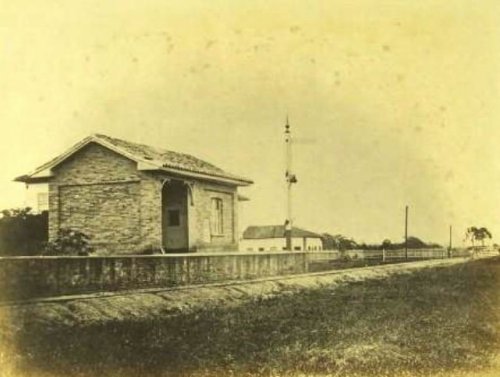
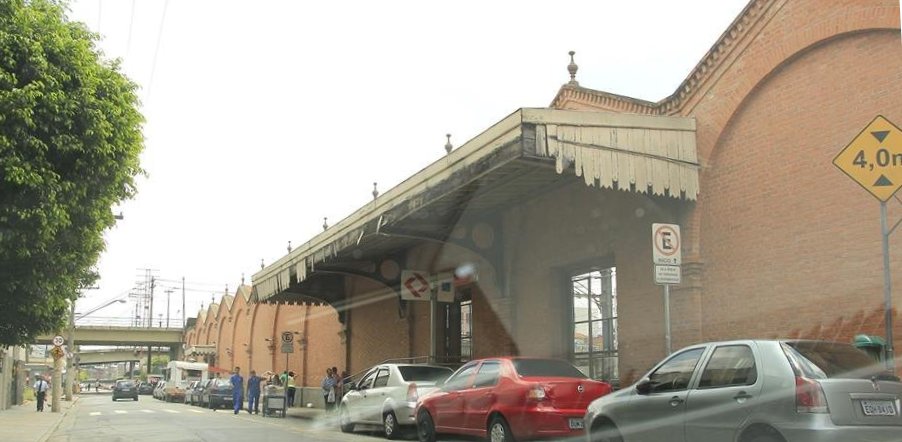
Wie im Verzeichnis der kaiserlichen Postämter (Tabella das Agencias do Correio do Imperio, Rio de Janeiro, 1885) zu lesen ist, wurde das Bahnhofspostamt 1879 ins Leben gerufen, nahm sein Betrieb offenbar erst im Folgejahr auf:
Der erste Poststempel hier ist BSP-0185a, der im Paulo Ayres‘ Catálogo de Carimbos Brasil-Império, (S. Paulo, 1937, 1942) unter der Nr. 1561 aufgelistet wurde:
Ihm folgte BSP-0185b, ebenfalls durch P. Ayres (op. cit.) bekannt gemacht:
Darüber hinaus wurden drei stumme Abstempelungen aus diesem Bahnhof gefunden, zwei davon in Mute Cancellations of the Brazil Empire/ Carimbos Mudos do Brasil Império (Brazil Philatelic Association, Rio de Janeiro, 2000), von James Dingler und Klerman W. Lopes:
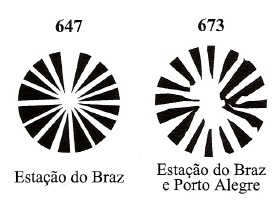
Der dritte stumme Poststempel zeigte uns der Philatelist Mário Celso Orsi Jr.:


 Carimbologia