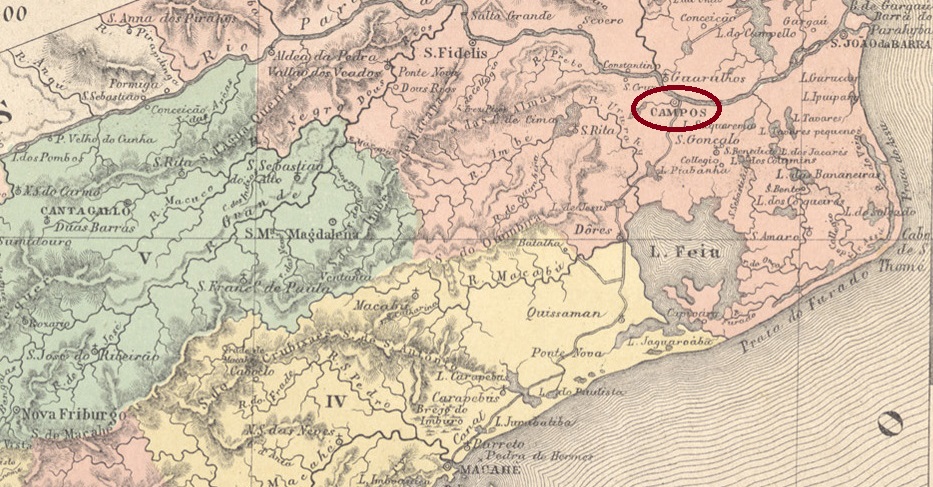
Text update of September 30, 2023
Another Name: Campos dos Goitacazes (1986)
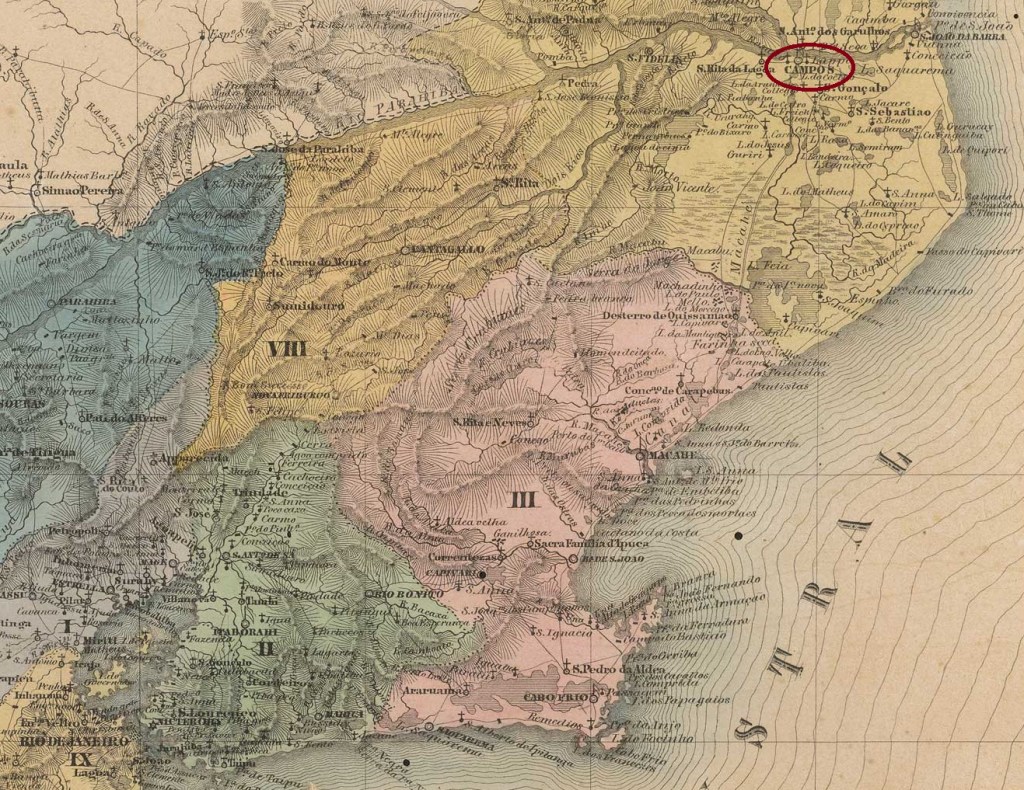
The locality, which first became a vila in 1673 and a freguesia the following year, was called São Salvador dos Campos and was on the south bank of the Paraíba do Sul, 280 km northeast of the capital Rio de Janeiro. In 1753, Campos still belonged to the Capitania do Espirito Santo (very formerly also to the Capitania of S. Thomé), but in August 1832 it changed to the imperial province of Rio de Janeiro. Since March 1835 Campos has been a town, and since October 1986 it has been called Campos dos Goitacazes.
The local post office existed as early as 1798, although Nova Monteiro in Administrações e Agencias Postaes do Brasil Imperio (Brasil Filatelico/RJ, 1934-5; reprinted by SPP 1994-1999) still gives February as the date of creation, while Paulo Novaes on agenciaspostais.com.br writes a more accurate date of June that year.
The first postmark is CRJ-0285a, with No. 1135 by P. Ayres (Catálogo de Carimbos Brasil-Império, S. Paulo, 1937, 1942), but the RHM catalogue shows an altered image under P-RJ-04:

It was followed by CRJ-0285b, also known from Ayres (op. cit.), now under No. 1256:

The enigmatic cancel CRJ-0285c also appeared in red and sepia from around 1843. According to new findings, the letters S.I. mean Serviço Imperial:

From about 1868 onwards, the French type CRJ-0285d appears (Fig. José L. Fevereiro)
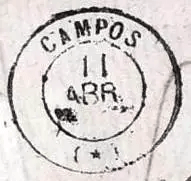
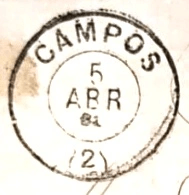
In the early 1980s, two almost identical cancels appeared, differing only by the numbers 1 and 2 at the bottom: CRJ-0285e (illustration from the Internet) and CRJ-0285f (illustration by Luiz C. Fritzen):

Around the same time, the simple CRJ-0285g (image from the internet) was also in service:
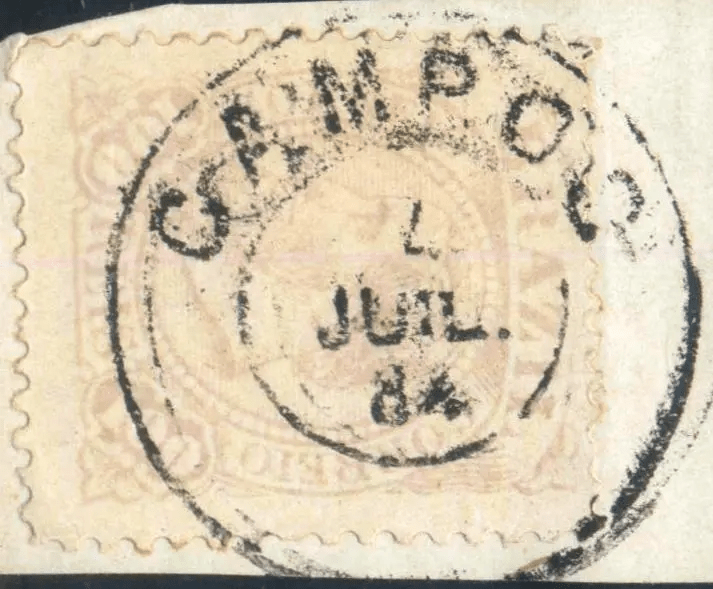
Towards the end of the Empire, two identical postmarks appeared again, this time differing in letter size: CRJ-0285h (ill. R. Koester, in Carimbologia VIII) and CRJ-0285i (ill. from the Internet):
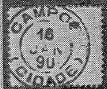
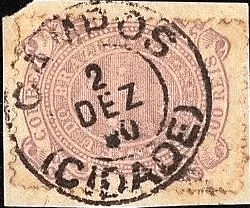
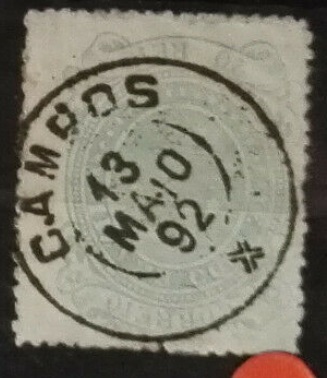
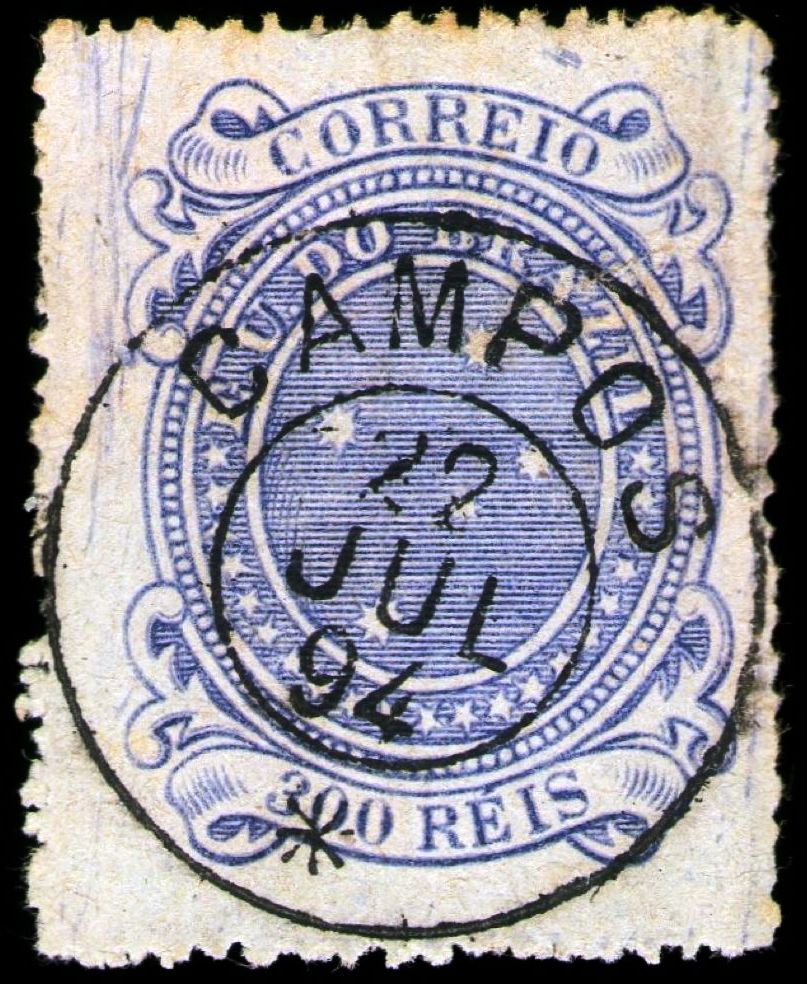
The last two 19th century postmarks may already be Republican, as they are dated after the November 1889 coup d’état:
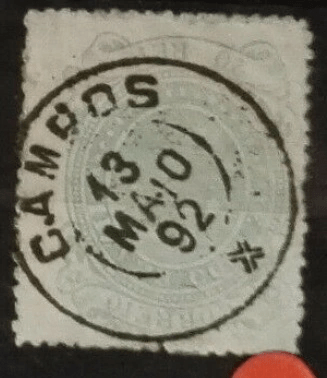
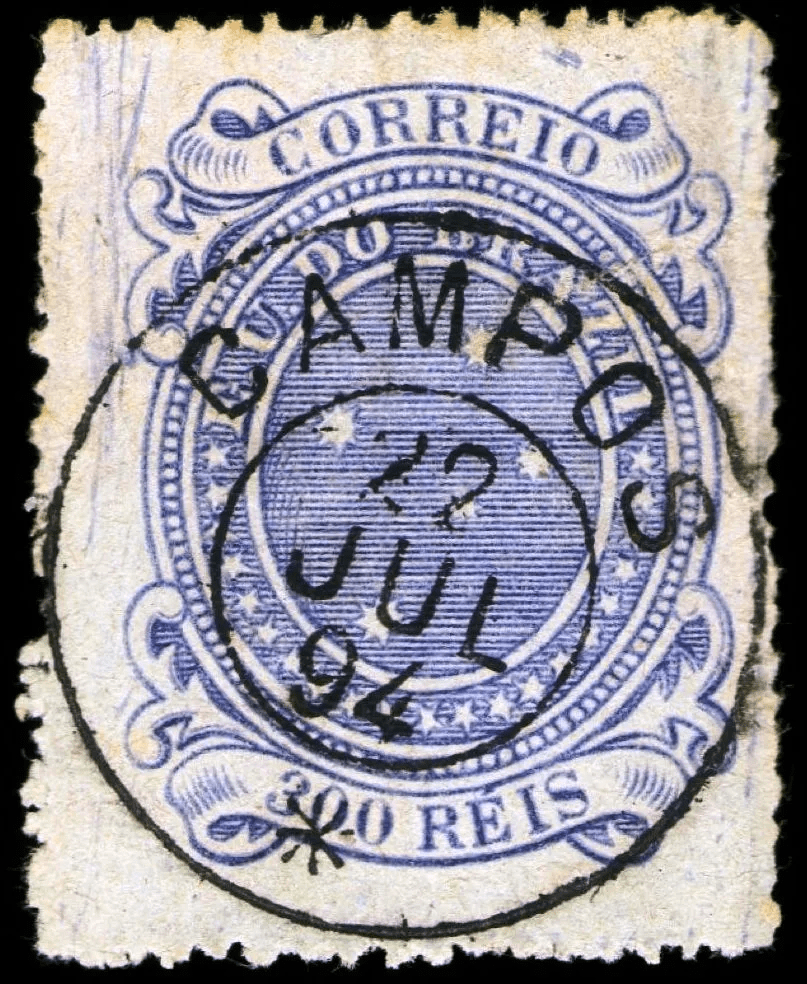
From the Fuad Ferreira Fo. collection there also came three other postmarks from Campos that were formerly in the Koester collection:



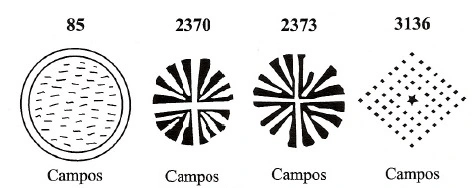
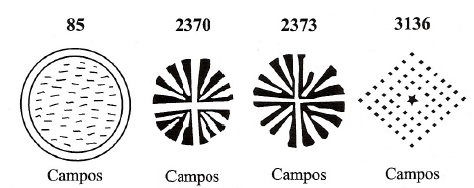
Five mute cancellations from the imperial Campos have been found so far, the first four of them in Mute Cancellations of the Brazil Empire / Carimbos Mudos do Brasil Império (Brazil Philatelic Association, Rio de Janeiro, 2000), by J. Dingler and K. W. Lopes:
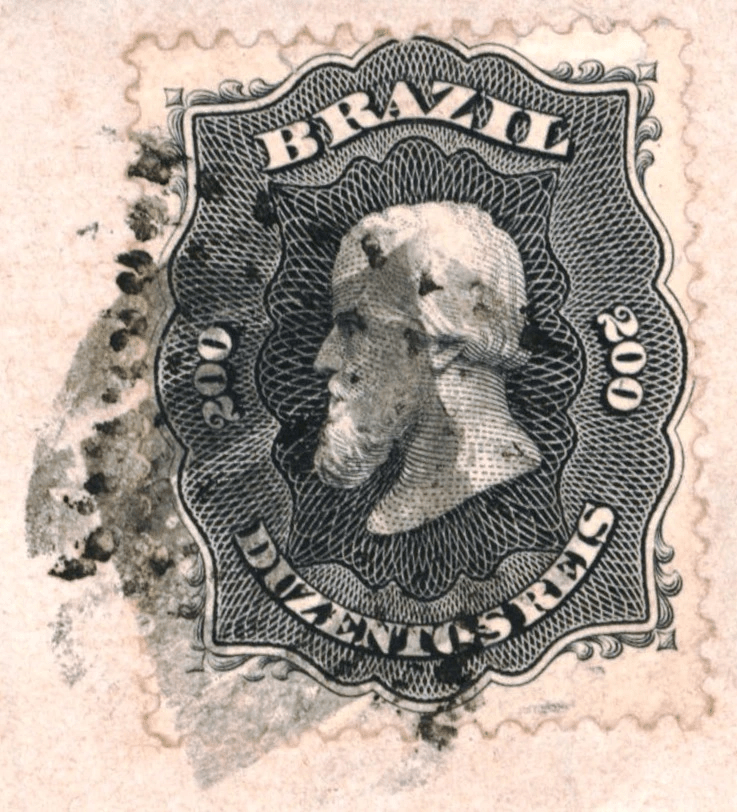
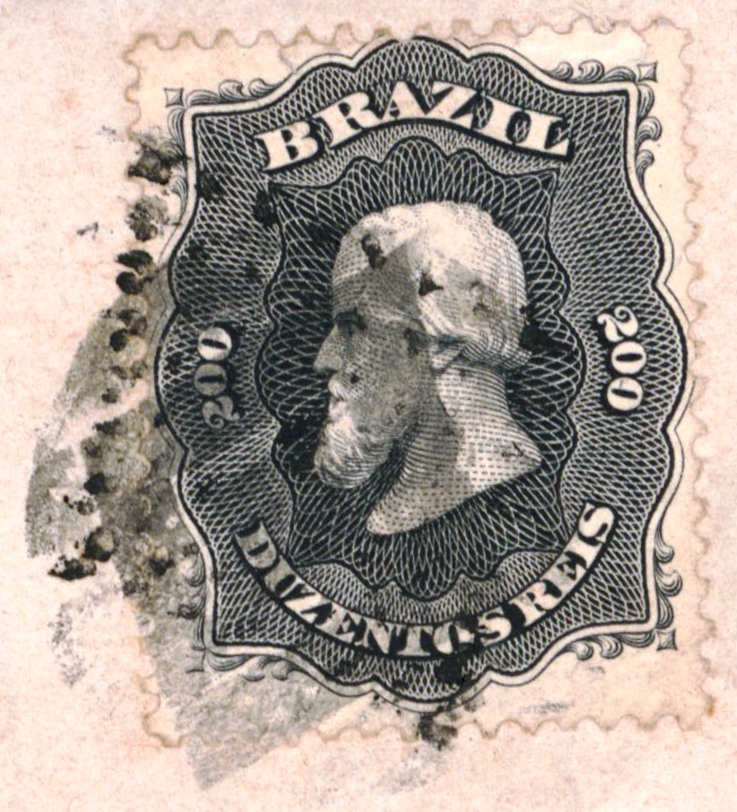
The fifth one was found on a cover, dated 1868:
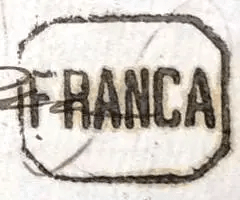
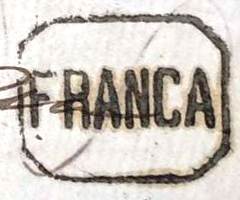
Last we have a FRANCA postmark (= fee paid to consignee) from Campos on a cover of José L. Fevereiro:
Textaktualisierung am 30. September 2023
Anderer Name: Campos dos Goitacazes (1986)
Der Ort, der 1673 zunächst eine Vila und erst im folgenden Jahr eine Freguesia wurde, hieß São Salvador dos Campos und lag am Südufer des Paraíba do Sul, 280 km nordöstlich der Hauptstadt Rio de Janeiro. Im Jahre 1753 gehörte Campos noch zur Capitania do Espirito Santo (ganz früher auch zur Capitania von S. Thomé), wechselte aber im August 1832 zur kaiserlichen Provinz Rio de Janeiro. Seit März 1835 ist Campos eine Stadt, die seit Oktober 1986 Campos dos Goitacazes heißt.
Das örtliche Postamt existierte bereits 1798, wobei Nova Monteiro im Administrações e Agencias Postaes do Brasil Imperio (Brasil Filatelico/RJ, 1934-5; Nachdruck SPP 1994-1999) noch den Februar als Gründungsdatum angibt, während Paulo Novaes auf agenciaspostais.com.br ein genaueres Datum im Juni d.J. schreibt.
Der erste Poststempel ist CRJ-0285a von P. Ayres (Catálogo de Carimbos Brasil-Império, S. Paulo, 1937, 1942) mit der Nr. 1135 versehen. Der RHM-Katalog zeigt jedoch eine veränderte Abbildung unter P-RJ-04:

Gefolgt von CRJ-0285b, ebenfalls bekannt von Ayres (op. cit.), jetzt unter Nr. 1256:

Der rätselhafte Stempel CRJ-0285c erschien um 1843 auch in Rot und Sepia. Die Buchstaben S.I. bedeuten nach neuen Erkenntnissen Serviço Imperial:

Ab ca. 1868 erscheint der französische Typ CRJ-0285d (Abb. José L. Fevereiro)

Anfang der 80er Jahre erschienen zwei fast identische Stempel, die sich nur durch die Ziffern 1 und 2 unten unterscheiden: CRJ-0285e (Abb. aus dem Internet) und CRJ-0285f (Abb. Luiz C. Fritzen):

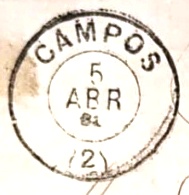
Parallel dazu war auch die einfache CRJ-0285g (Bild aus dem Internet) im Einsatz:
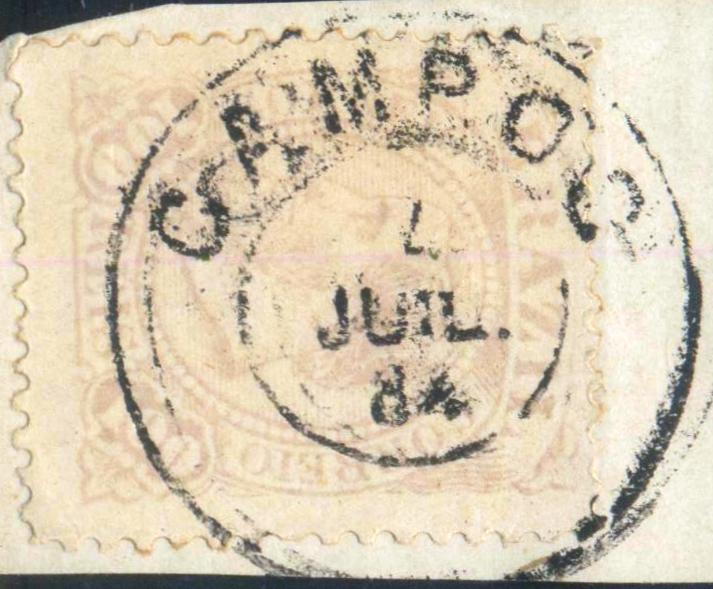
Gegen Ende des Kaiserreichs erschienen wieder zwei gleichlautende Poststempel, die sich diesmal durch die Buchstabengröße unterscheiden: CRJ-0285h (Abb. R. Koester, in Carimbologia VIII) und CRJ-0285i (Abb. aus dem Internet):
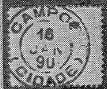
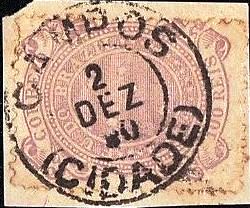
Die beiden letzten Poststempel des 19. Jahrhunderts können bereits republikanisch sein, da sie nach dem Staatsstreich vom November 1889 datiert sind:
Aus der Sammlung Fuad Ferreira Fo. kamen auch drei weitere Poststempel aus Campos, die früher in der Sammlung Koester waren:



Bisher wurden fünf stumme Abstempelungen aus dem kaiserlichen Campos gefunden, die ersten vier davon in Mute Cancellations of the Brazil Empire / Carimbos Mudos do Brasil Império (Brazil Philatelic Association, Rio de Janeiro, 2000), von J. Dingler und K. W. Lopes:
Die fünfte wurde auf einem Beleg von 1868 gefunden:
Zuletzt haben wir einen FRANCA-Stempel (= Gebühr bezahlt bis Empfänger) aus Campos auf einem Beleg von José L. Fevereiro:

 Carimbologia