Text update of October 9, 2024
See also Cruzeiro (CSP-4605)
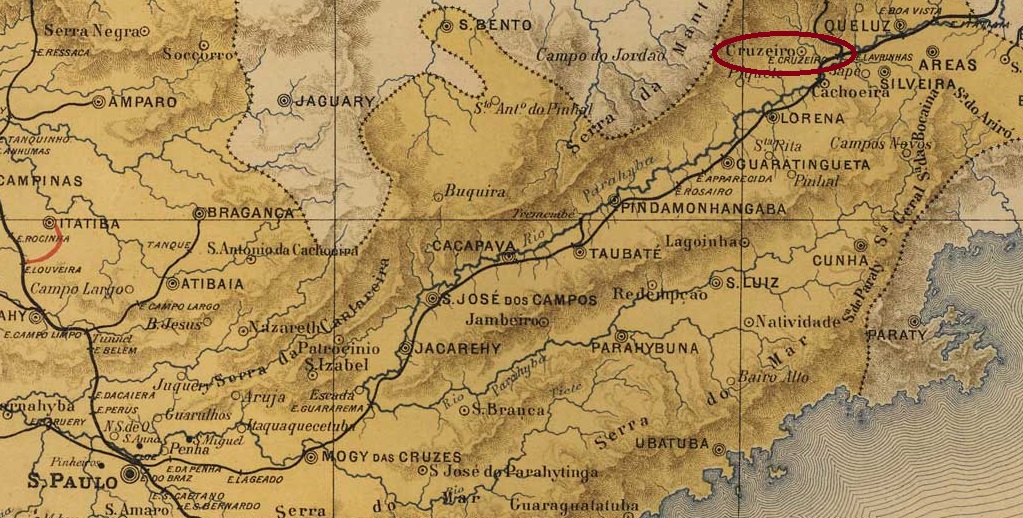
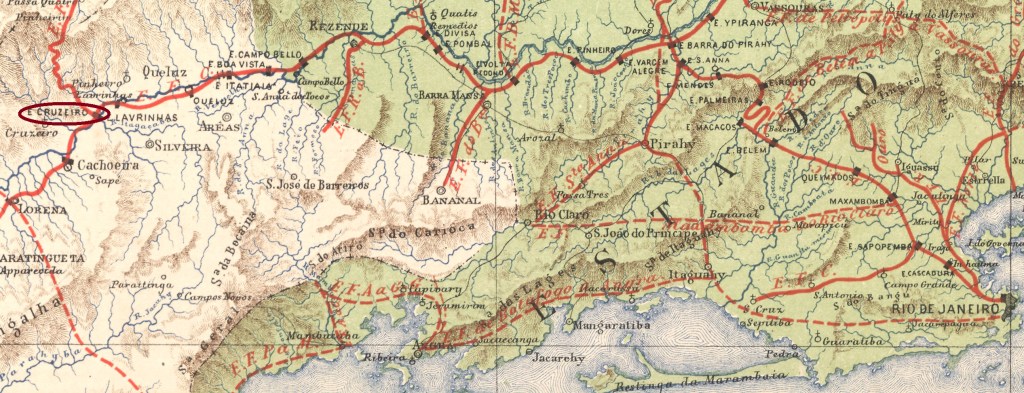
Although the Cruzeiro railway station originally belonged to the Vila de Conceição do Cruzeiro, the two post offices are shown separately as they now belong to two different municípios. The station was opened in September 1878 by the railway company E.F.D. Pedro II, S. Paulo line, and was located on the west bank of the river Paraíba do Sul, 220 km north-east of the provincial capital São Paulo. The line was transferred to E.F. Central do Brasil in 1889 and belonged to Rede Ferroviária Federal S.A. from 1975 until its closure in 1998 (estacoesferroviarias.com.br). The tracks are still there today, but the station building is closed.
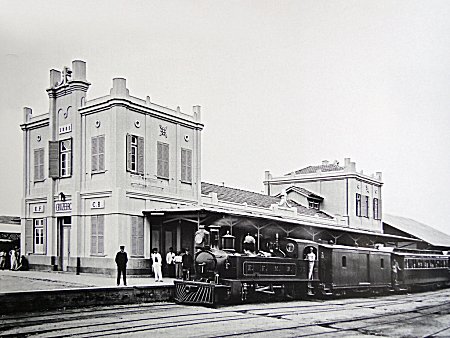
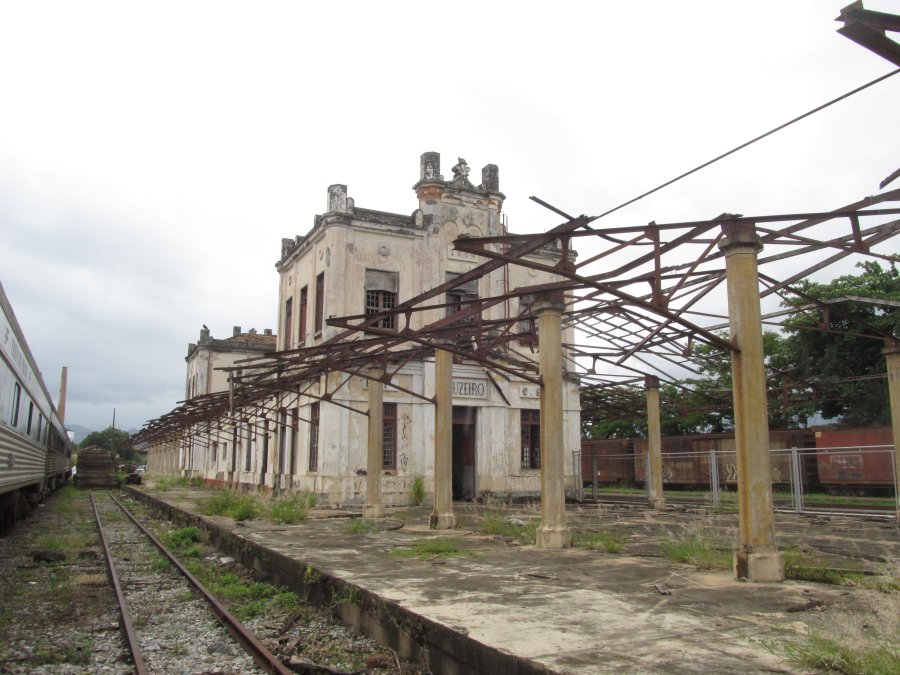
The settlement around the railway station grew very quickly and became the Distrito de Estação do Cruzeiro in March 1891, the Município de Vila Novais three months later and the Município de Cruzeiro in October 1901, which was elevated to the status of a town in December 1906.
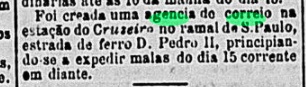
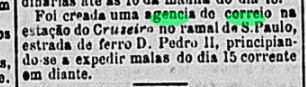
As the Rio press reported, there had been a post office at the railway station since November 1878:
The first postmark is CSP-0406a (coll. FM):
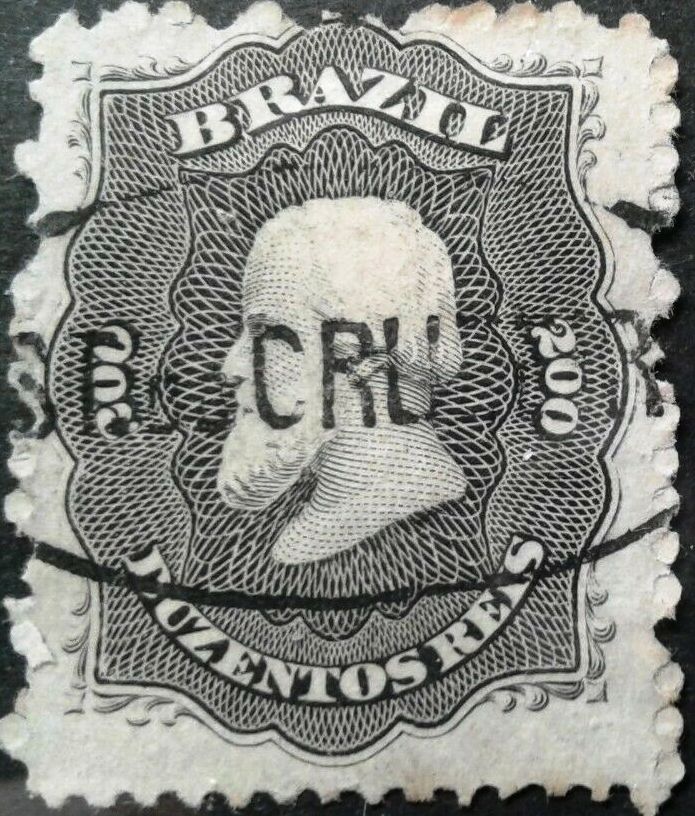
This was followed by the double circle CSP-0406b (fig. R. Koester, in Carimbologia XIV)

CSP-0406c (ill. Luiz C. Fritzen), which also exists in blue, appeared shortly afterwards:

And at the end of the Empire came CSP-0406d (ill. Felipe Piccinini):

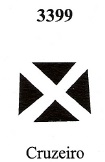
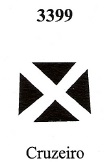
The following mute cancellation has the no. 3399 in Mute Cancellations of the Brazil Empire / Carimbos Mudos do Brasil Império, by James Dingler and Klerman W. Lopes (Brazil Philatelic Association, Rio de Janeiro, 2000). According to R. Koester (op. cit.) it also belongs to the Cruzeiro station:
Textaktualisierung vom 9. Oktober 2024
Siehe auch Cruzeiro (CSP-0405)
Obwohl der Bahnhof Cruzeiro ursprünglich zur Vila de Conceição do Cruzeiro gehörte, werden die beiden Postämter getrennt dargestellt, da sie heute zu zwei verschiedenen Municípios gehören. Der Bahnhof wurde im September 1878 von der Eisenbahngesellschaft E.F. D. Pedro II, S. Paulo-Linie, eröffnet und lag am Westufer des Flusses Paraíba do Sul, 220 km nordöstlich der Provinzhauptstadt São Paulo. Die Strecke ging 1889 an die E.F. Central do Brasil über und gehörte von 1975 bis zu ihrer Stilllegung 1998 der Rede Ferroviária Federal S.A. (estacoesferroviarias.com.br). Heute sind die Gleise noch vorhanden, das Bahnhofsgebäude ist geschlossen.
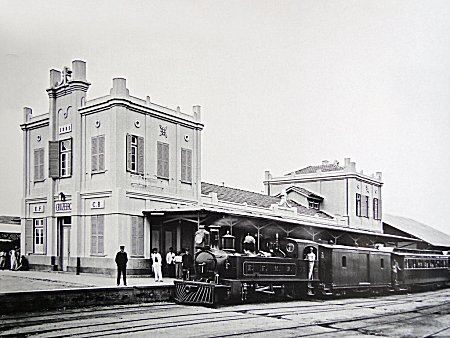
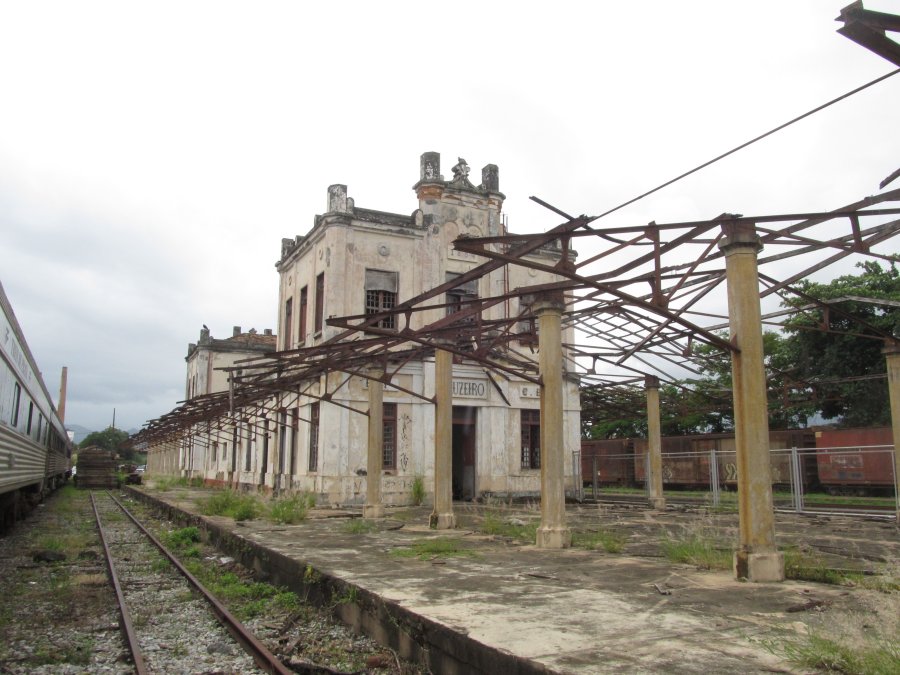
Die Siedlung um den Bahnhof wuchs sehr schnell und wurde im März 1891 zum Distrito de Estação do Cruzeiro, drei Monate später zum Município de Vila Novais und im Oktober 1901 zum Município de Cruzeiro, das im Dezember 1906 zur Stadt erhoben wurde.
Wie die Presse von Rio berichtete, gab es seit November 1878 ein Postamt am Bahnhof:
Der erste Stempel ist CSP-0406a (Samml. FM):
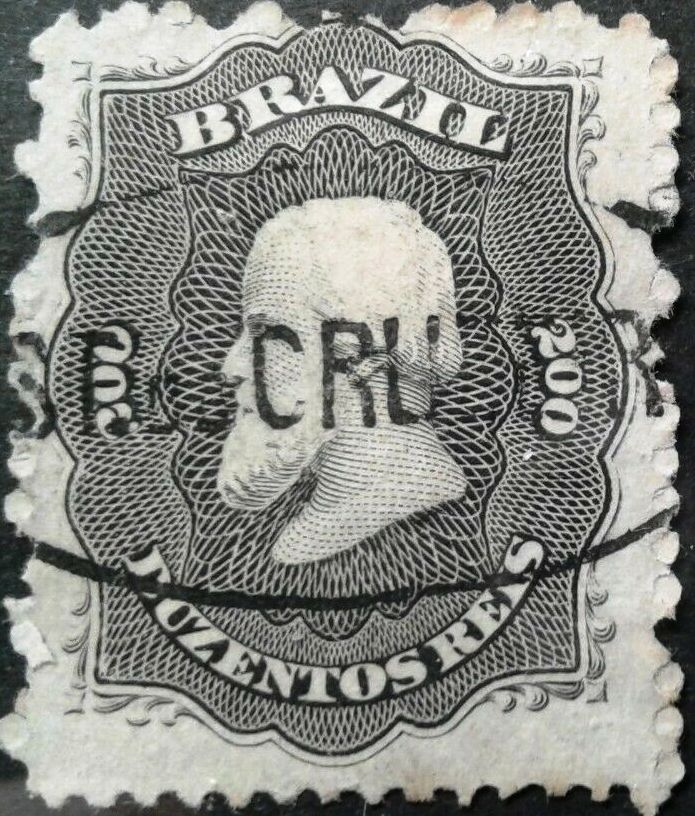
Es folgte der Doppelkreis CSP-0406b (Abb. R. Koester, in Carimbologia XIV):

Kurz darauf erschien auch CSP-0406c (Abb. Luiz C. Fritzen), den es auch in blau gibt:

Und am Ende des Kaiserreichs kam noch CSP-0406d (Abb. Felipe Piccinini):

Der folgende stumme Stempel hat die Nr. 3399 in Mute Cancellations of the Brazil Empire / Carimbos Mudos do Brasil Império, von James Dingler und Klerman W. Lopes (Brazil Philatelic Association, Rio de Janeiro, 2000). Nach R. Koester (op. cit.) gehört er auch zum Bahnhof Cruzeiro: