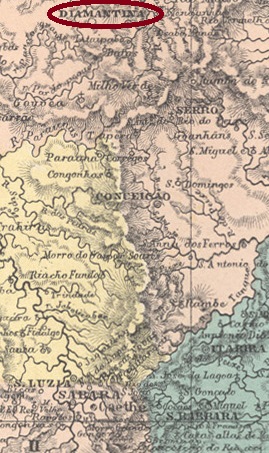
See also Tejuco (TMG-3740)
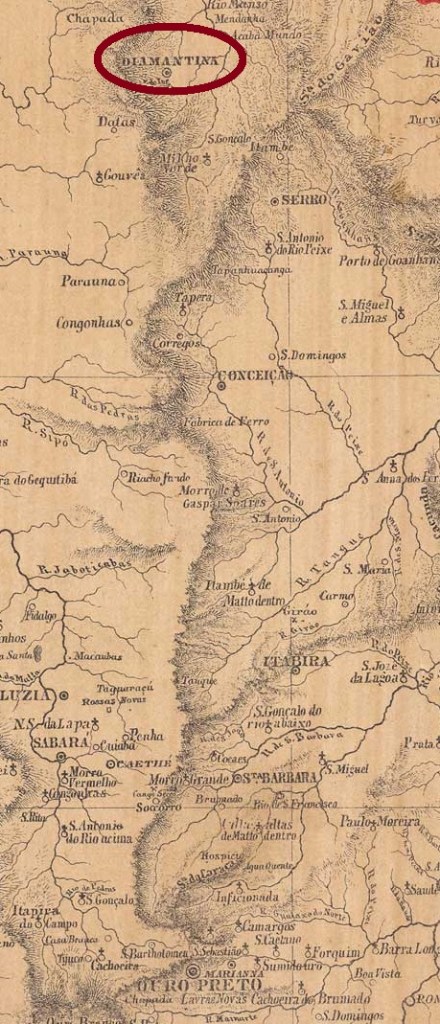
Arraial do Tejuco already existed from about 1729, it was a settlement of gold and diamond seekers located 380 km north of the future provincial capital of Ouro Preto. By royal decree (Alvará Régio), the place was promoted to freguesia in October 1819. In October 1831, already after Brazil’s independence, it became the Vila of Diamantina.
No less than four dates of creation of the local post office have been found, two of them by Paula Sobrinho in História Postal de Minas Gerais (Belo Horizonte, 1997): first in May 1809, then again in October 1833. Nova Monteiro in Administrações e Agencias Postaes do Brasil Imperio (Brasil Filatelico/RJ, 1934-5; reprint SPP 1994-1999) provided a date for the intermediate period, in March 1829. Finally, Reinhold Koester (Carimbologia XVI) writes October 1839, a sure indication of an eventful postal history of this place.
Until about 1836 the postmarks still had the place name Tejuco (see TMG-3740). The first postmark with Diamantina is VMG-3745a which has the no. 1524 under Paulo Ayres (Catálogo de Carimbos Brasil-Império, S. Paulo, 1937, 1942) and is listed in the RHM catalogue under P-MG-26:

Its successor DMG-0995a is so like it that it could be a retouched version (the young city probably no longer wanted the V. of Vila in the stamp). In P. Ayres (op. cit.) it has no. 1290:

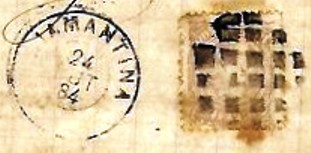
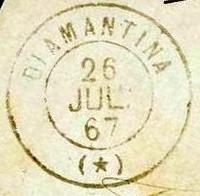
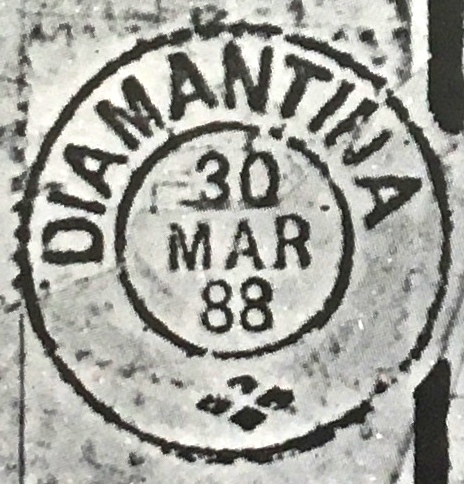
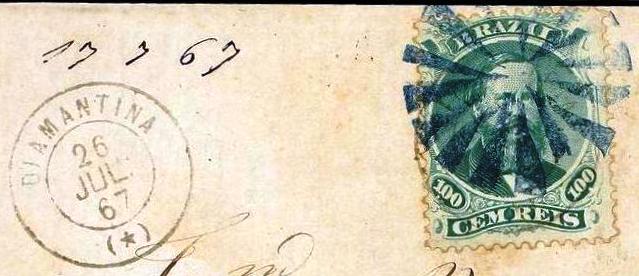
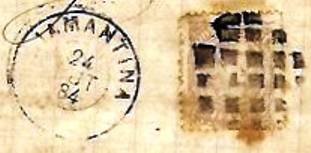
This was followed by the French type DMG-0995b (ill. from the Internet). This postmark was apparently used in two periods:
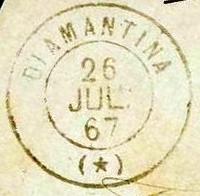
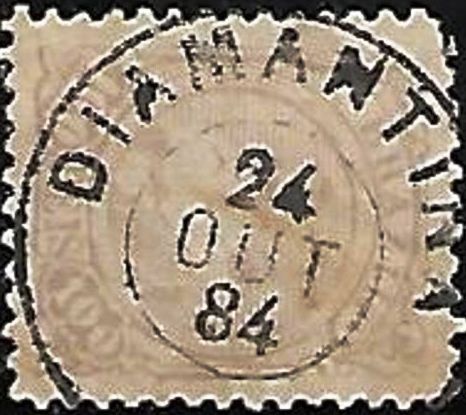
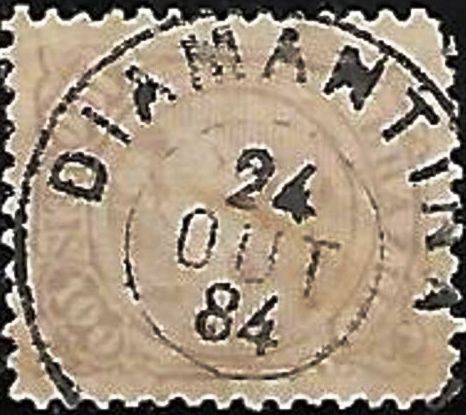
In between, DMG-0995c (ill. from the Internet) came into use:
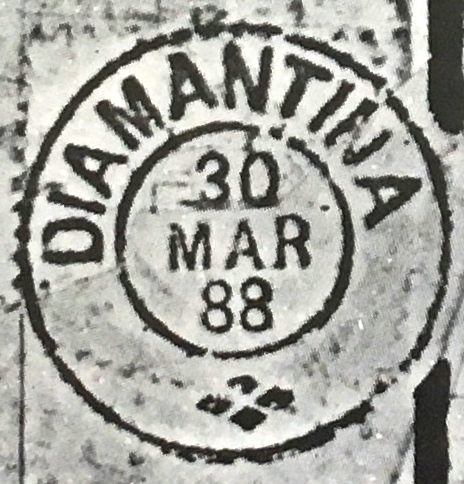
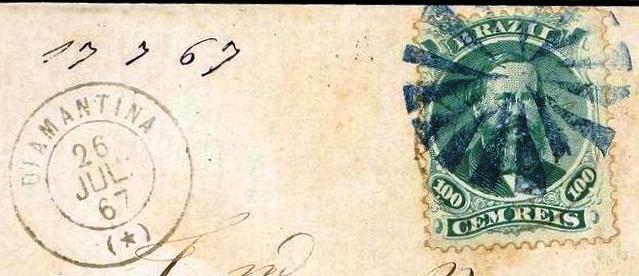
Finally, R. Koester in Diamantina- uma História Filatélica (Rio de Janeiro, 1881) has shown a last imperial cancellation from there: DMG-0995d was in use for a short time and is therefore rare:
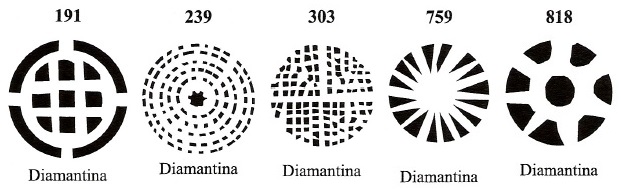
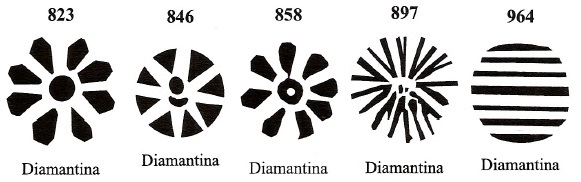
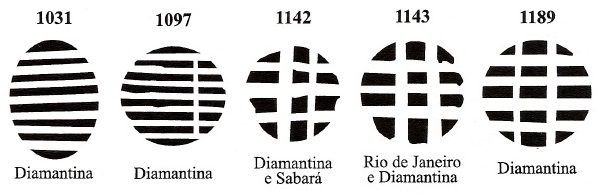
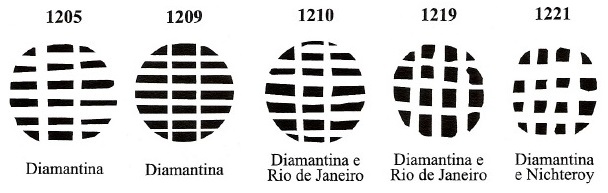
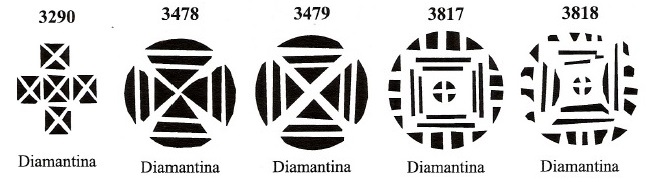
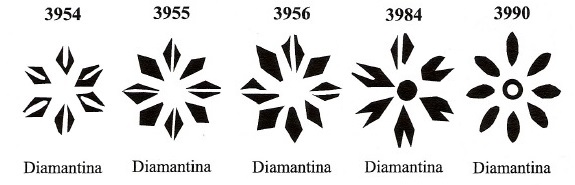
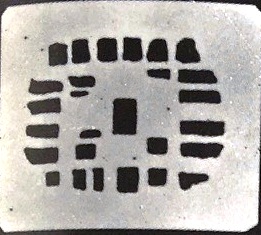
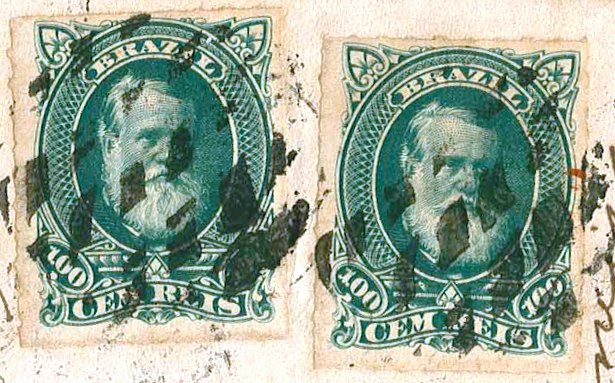
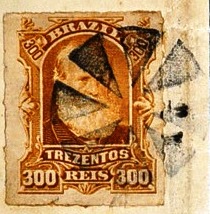
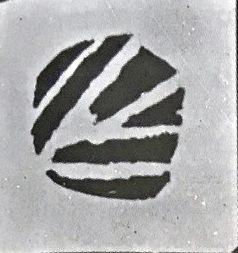
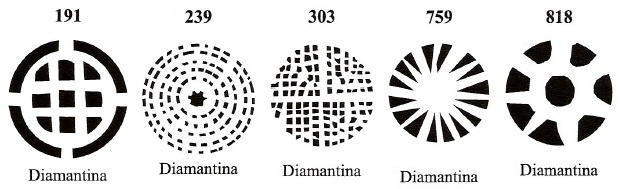
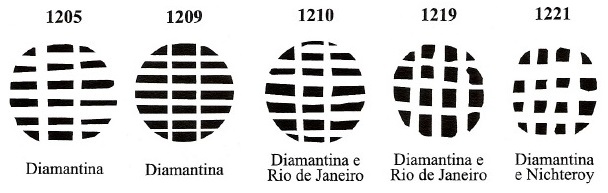
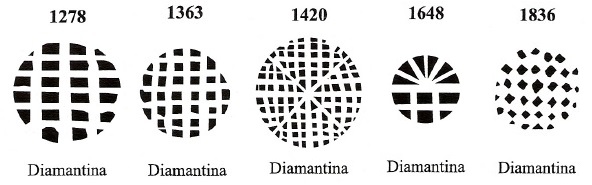
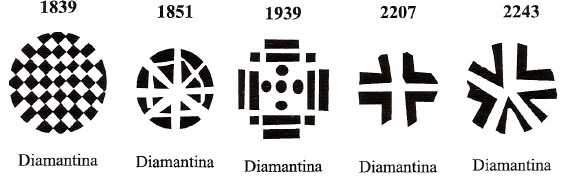
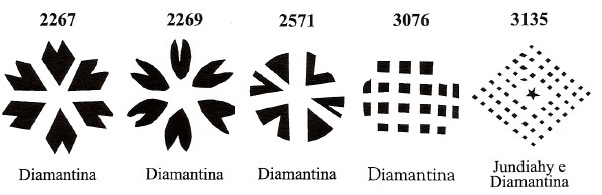
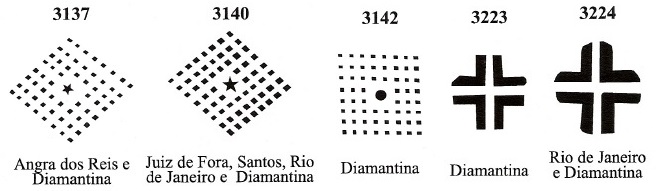
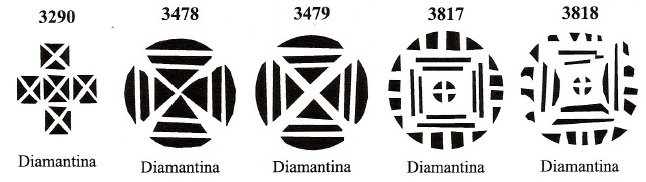
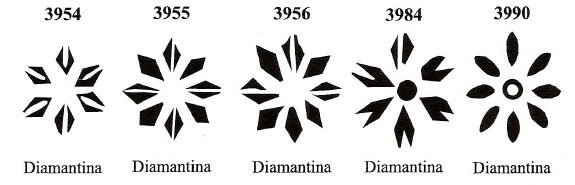
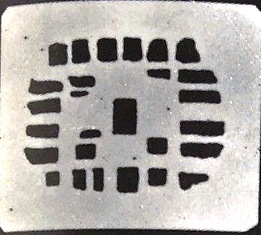
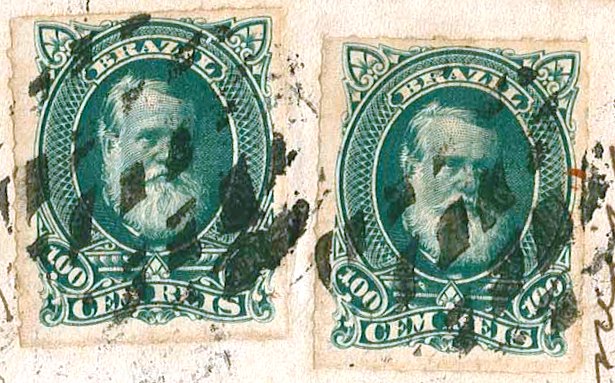
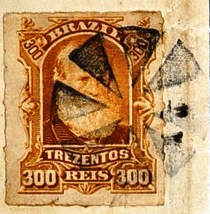
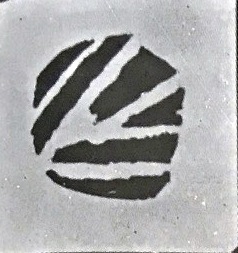
Diamantina produced an astonishing number of mute cancellations in the imperial period. No less than 54 were counted in Mute Cancellations of the Brazil Empire / Carimbos Mudos do Brasil Império (Brazil Philatelic Association, Rio de Janeiro, 2000), by James Dingler and Klerman W. Lopes:
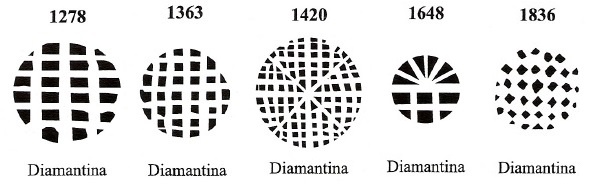
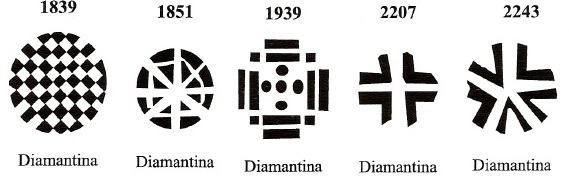
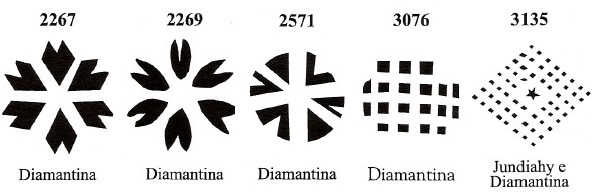
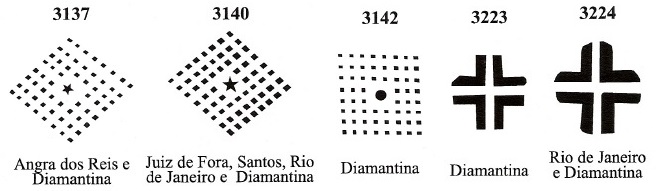
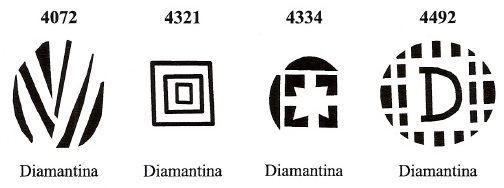
In addition, nine further silent cancellations were found:



Siehe auch Tejuco (TMG-3740)
Den Arraial do Tejuco gab es bereits ab ca. 1729, er war eine Siedlung von Gold- und Diamantensuchern, die 380 km nördlich der künftigen Provinzhauptstadt Ouro Preto entfernt lag. Durch königliche Verfügung (Alvará Régio) stieg der Ort im Oktober 1819 zur Freguesia auf. Im Oktober 1831, also bereits nach Brasiliens Unabhängigkeit, wurde daraus die Vila Diamantina.
Es wurden nicht weniger als vier Gründungsdaten fürs örtliche Postamt gefunden, zwei davon durch Paula Sobrinho in História Postal de Minas Gerais (Belo Horizonte, 1997) überliefert: erstmals im Mai 1809, dann wieder im Oktober 1833. Nova Monteiro lieferte in Administrações e Agencias Postaes do Brasil Imperio (in Brasil Filatelico/RJ, 1934-5; Reprint SPP 1994-1999) ein Datum für die Zwischenzeit, im März 1829. Und schließlich schreibt Reinhold Koester (Carimbologia XVI) noch den Oktober 1839. Ein sicheres Indiz für eine bewegte Postgeschichte dieses Orts.
Bis ca. 1836 hatten die Poststempel noch die Ortsbezeichnung Tejuco (siehe TMG-3740). Der erste Poststempel mit Diamantina ist VMG-3745a der unter Paulo Ayres (Catálogo de Carimbos Brasil-Império, S. Paulo, 1937, 1942) die Nr. 1524 hat und im RHM-Katalog unter P-MG-26 gelistet wird:

Sein Nachfolger DMG-0995a ist ihm so ähnlich, dass er eine retuschierte Fassung (die junge Stadt wollte wohl nicht mehr die V. von Vila im Stempel haben) sein könnte. Im P. Ayres (op. cit.) trägt er Nr. 1290:

Danach kam der französische Typ DMG-0995b (Abb. aus dem Internet). Dieser Poststempel wurde anscheinend in zwei Perioden benutzt:
Zwischendurch kam DMG-0995c (Abb. aus dem Internet) in Gebrauch:
Schließlich hat R. Koester in Diamantina- uma História Filatélica (Rio de Janeiro, 1881) noch einen kaiserlichen Stempel von dort gezeigt: DMG-0995d war kurz in Verwendung und ist daher selten:
Aus Diamantina kommt eine erstaunliche Menge an stummen Stempeln in der Kaiserzeit. Nicht weniger als 54 Stück zählte Mute Cancellations of the Brazil Empire / Carimbos Mudos do Brasil Império (Brazil Philatelic Association, Rio de Janeiro, 2000), von James Dingler und Klerman W. Lopes:
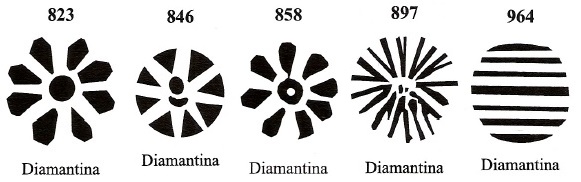
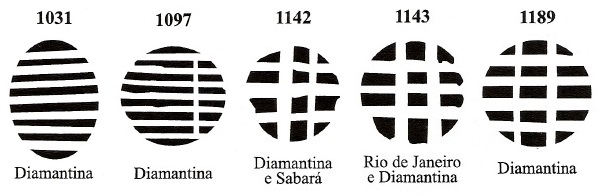
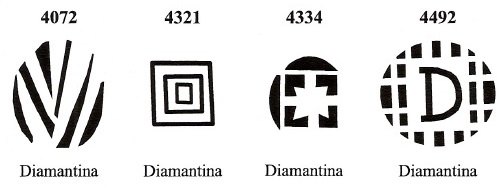
Darüber hinaus fanden sich noch neun weitere stumme Stempel :




 Carimbologia