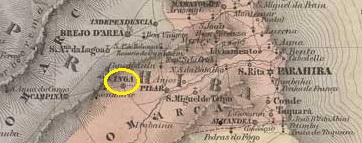
The indigenous word Ingá means ‘plenty of water’, which is vital in the drought-stricken region. A settlement was established around 1776 on the west bank of the Ingá, 100 kilometres west of the later provincial capital of Parahyba (now João Pessoa). The Freguesia de N. Sra. do Rosário de Ingá was established there around 1800 on the territory of the Vila de Pilar, which was elevated to the status of Vila do Imperador in July 1841. The place name Ingá was reintroduced in May 1846, presumably due to the risk of confusion with vilas of the same name in the empire. In May 1900, the town was downgraded to a distrito, but regained the status of a vila in November 1904.
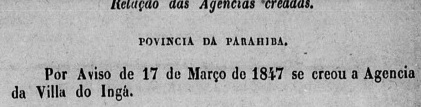
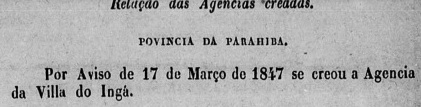
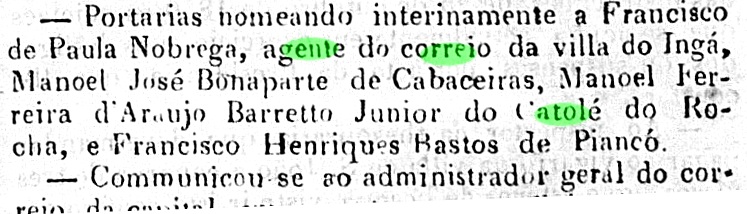
Three periods of operation were found for the local post office. The first was decided in March 1847, as Nova Monteiro writes in Administrações e Agencias Postaes do Brasil Imperio (Brasil Filatelico/RJ, 1934-5; reprint SPP 1994-1999). This is confirmed by the report of the Ministry of the Empire:
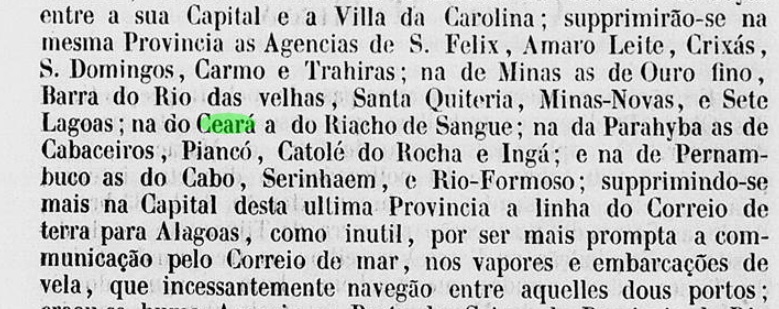
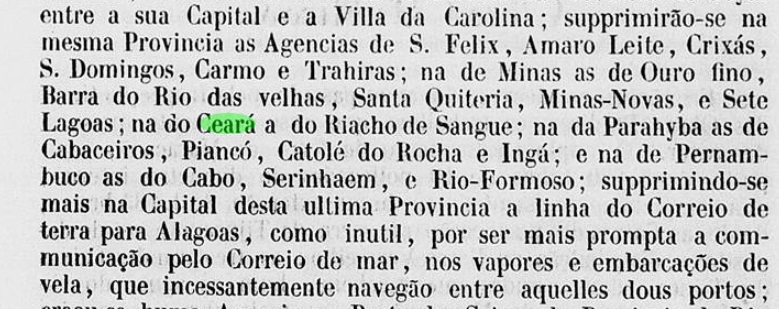
This first period of operation ended around 1850:
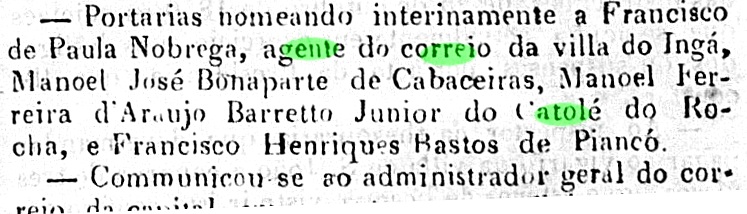
However, the postal agency was back in operation by the following year at the latest:
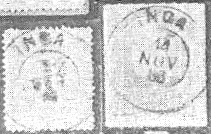
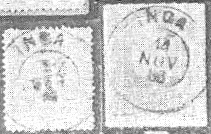
It is not known when this second period ended; the next opening took place in August 1858, as can be seen from the postal report (Relatorio dos Correios) of 1886. R. Koester has provided two illustrations of the only imperial postmark to date, IPB-0140b, in Carimbologia XXII:
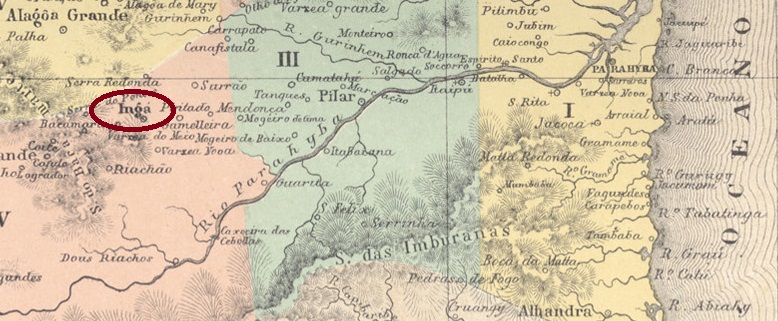
Das indigene Wort Ingá bedeutet “viel Wasser”, was in der von Trockenheit geplagten Region lebenswichtig ist. Eine Siedlung entstand um 1776 am Westufer des Ingá, 100 km westlich der späteren Provinzhauptstadt Parahyba (heute João Pessoa). Dort entstand um 1800 die Freguesia de N. Sra. do Rosário de Ingá auf dem Gebiet der Vila de Pilar, die im Juli 1841 zur Vila do Imperador erhoben wurde. Vermutlich wegen Verwechslungsgefahr mit gleichnamigen Vilas im Kaiserreich wurde der Ortsname Ingá im Mai 1846 wieder eingeführt. Im Mai 1900 wurde der Ort zum Distrito herabgestuft, erhielt aber im November 1904 den Status einer Vila zurück.
Für das örtliche Postamt wurden drei Betriebszeiträume gefunden. Die erste wurde im März 1847 beschlossen, wie Nova Monteiro in Administrações e Agencias Postaes do Brasil Imperio (Brasil Filatelico/RJ, 1934-5; Nachdruck SPP 1994-1999) schreibt. Dies wird durch den Bericht des Ministeriums des Imperiums bestätigt:
Diese erste Betriebsperiode endete um 1850:
Spätestens im folgenden Jahr war die Postagentur jedoch wieder in Betrieb:
Wann diese zweite Periode endete, ist nicht bekannt; die nächste Eröffnung erfolgte im August 1858, wie aus dem Postbericht (Relatorio dos Correios) von 1886 hervorgeht. Von dem bisher einzigen kaiserlichen Poststempel IPB-0140b hat R. Koester in Carimbologia XXII zwei Abbildungen geliefert:

 Carimbologia