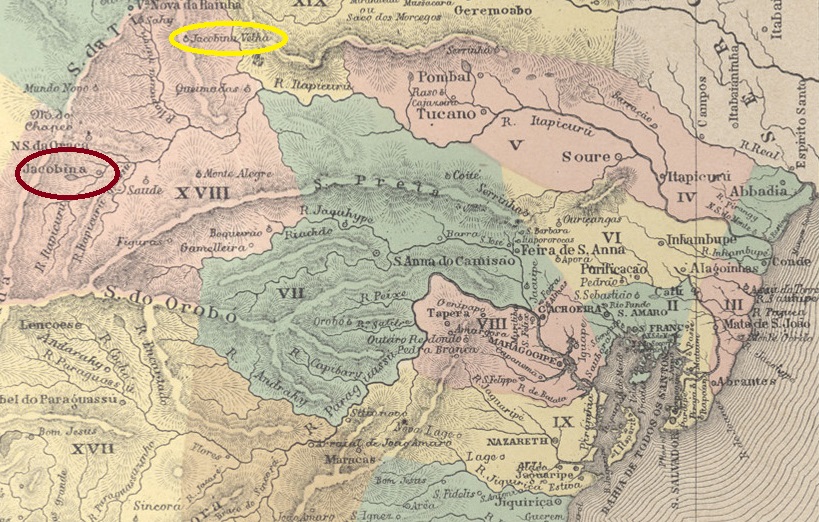
Founded in 1677, the Freguesia de Sto. Antonio da Jacobina was originally located in N. Sra. das Neves do Say, today Município de Senhor do Bonfim, 390 km north-west of the colonial capital Salvador da Bahia (yellow oval in the map above). It was elevated to a Vila in August 1720 and in February 1724 moved approx. 100 km south to the north bank of the Itapicuru-Mirim, where the village of Bom Jesus da Glória was located (red oval in the map above). Jacobina has been a town since July 1880.
Two creation dates were found for the local post office. Firstly in March 1832, as Nova Monteiro writes in Administrações e Agencias Postaes do Brasil Imperio (Brasil Filatelico/RJ, 1934-5; reprint SPP 1994-1999). Then in 1868, as can be seen from the Directory of Imperial Post Offices (Tabella das Agencias do Correio do Imperio, Rio de Janeiro, 1885). As the agency is still listed in the postal guide (Guia do Correio do Brasil) of 1857, it was subsequently closed.
The oldest postmark to date is the pre-philatelic JBA-0420a, which also exists in brown. However, the illustration in P. Ayres’ Catálogo de Carimbos Brasil-Império (S. Paulo, 1937, 1942) should be corrected; as another image shows (D. Feldman Auctions):
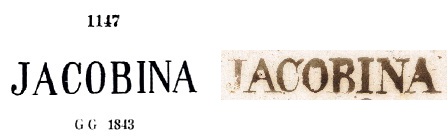
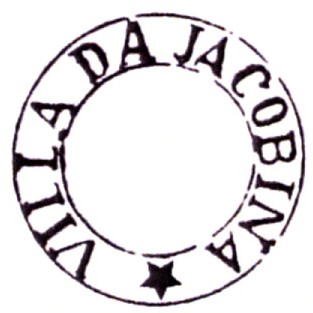
Then came JBA-0420b. This cancel was previously seen without a star at the bottom, which was corrected in the Catálogo ilustrado dos carimbos sobre os olhos-de-boi (Porto Alegre, 2017) by Henrique B. Ferreira:
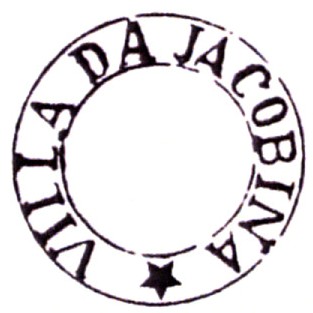
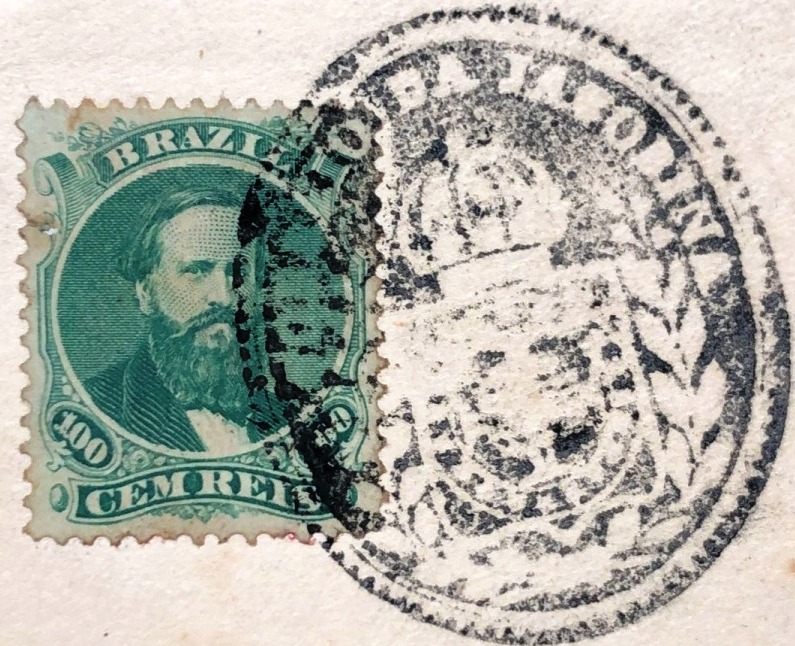
After 1866, a cancel with the imperial seal JBA-0420c (fig. Felipe Piccinini) was used:
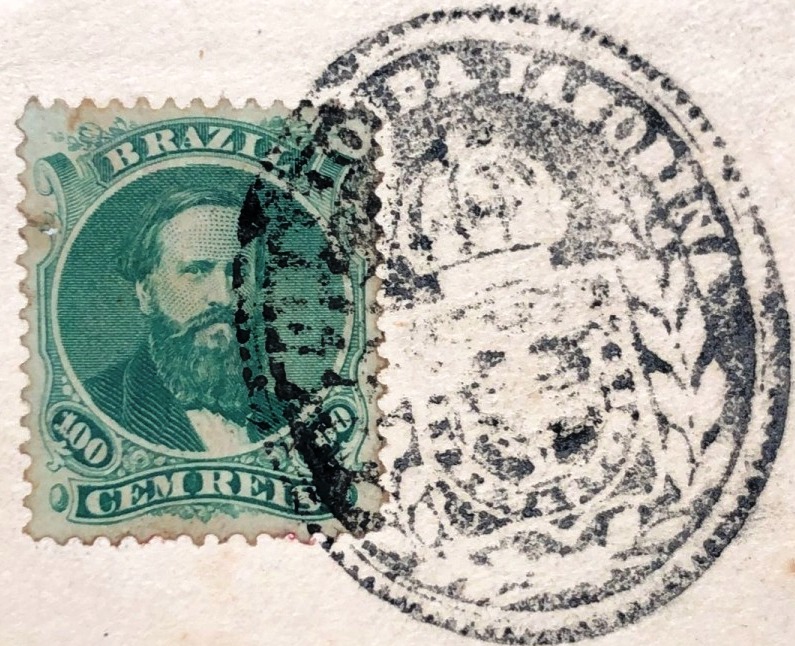
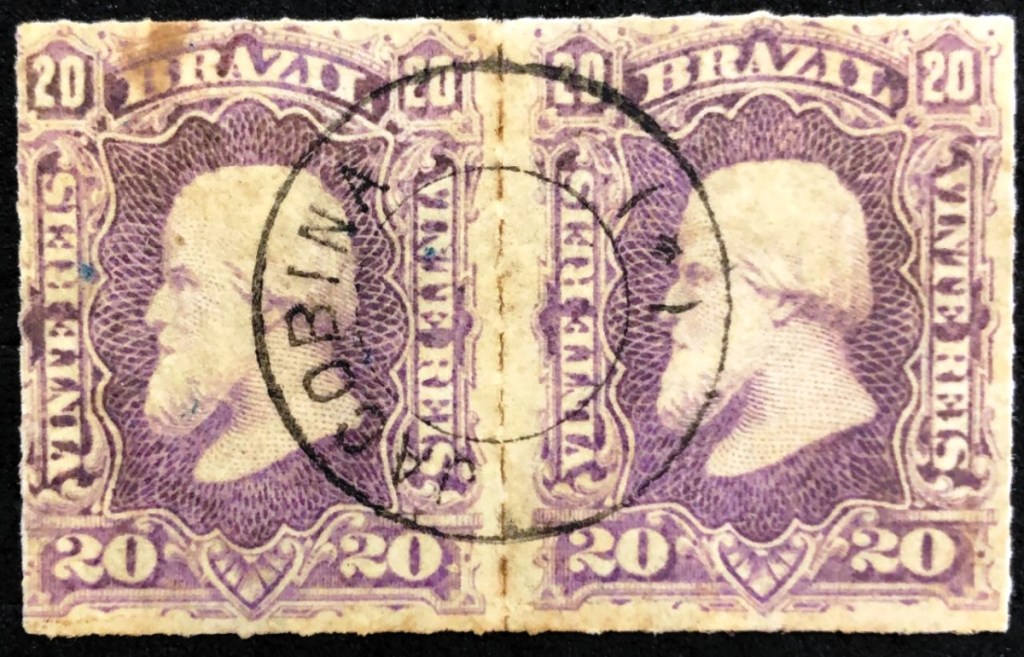
This was followed by the French type JBA-0420d (fig. Roberto Assef Jr.):
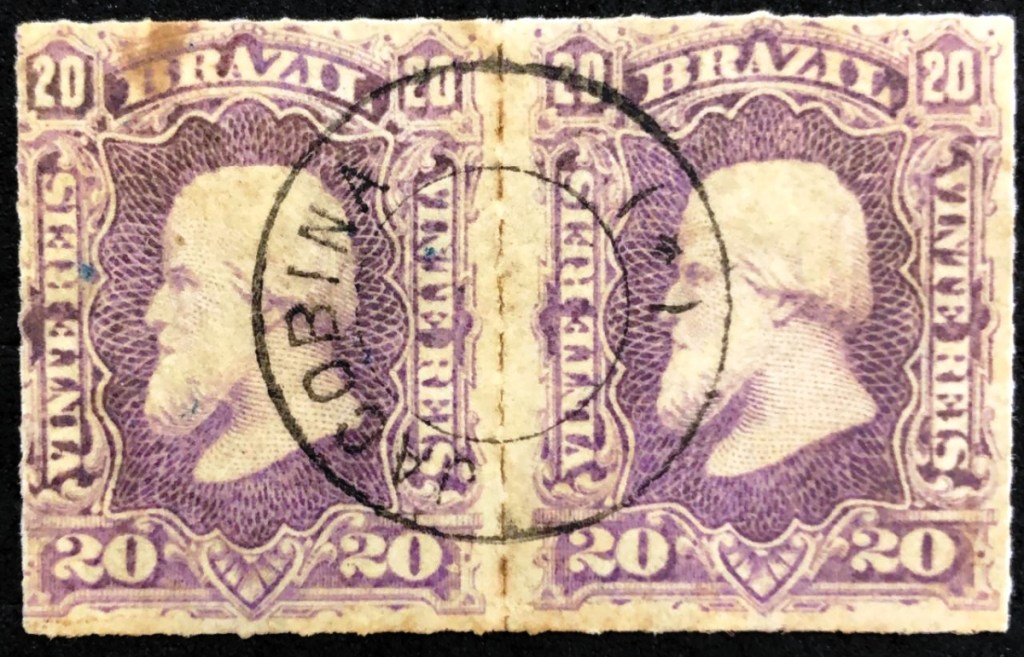
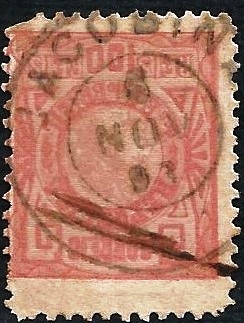
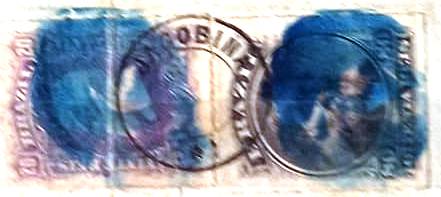
At the end of the Empire, JBA-0420e also appeared (ill. Felipe Piccinini):
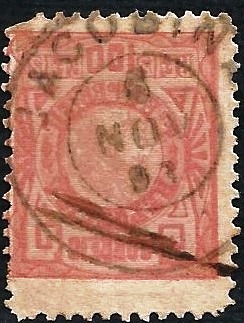
From the Fuad Ferreira Fo. collection comes a mute cancel in blue from the imperial Jacobina:

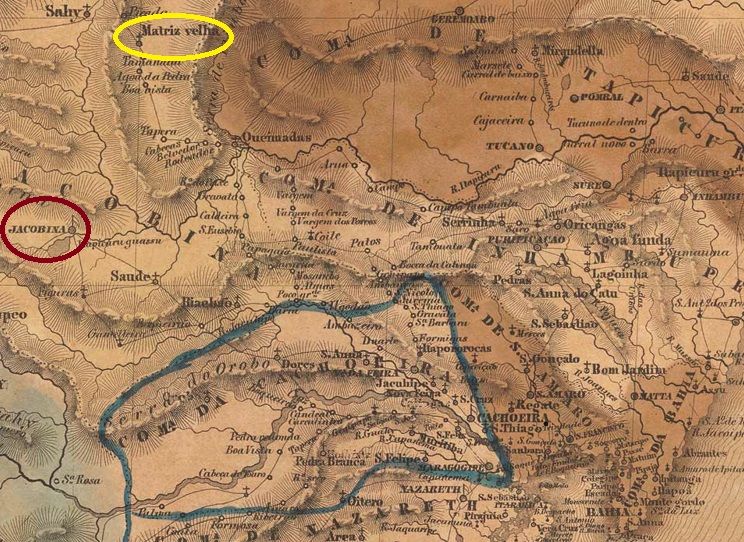
Die 1677 gegründete Freguesia de Sto. Antonio da Jacobina lag ursprünglich in N. Sra. das Neves do Say, im heutigen Município de Senhor do Bonfim, 390 km nordwestlich der Kolonialhauptstadt Salvador da Bahia (gelb auf der Karte oben). Sie wurde im August 1720 zur Vila erhoben und im Februar 1724 ca. 100 km südlich an das Nordufer des Itapicuru-Mirim verlegt, wo sich das Dorf Bom Jesus da Glória befand (rot auf der Karte). Seit Juli 1880 ist Jacobina eine Stadt.
Für das örtliche Postamt wurden zwei Gründungsdaten gefunden. Zuerst im März 1832, wie Nova Monteiro in Administrações e Agencias Postaes do Brasil Imperio (Brasil Filatelico/RJ, 1934-5; Nachdruck SPP 1994-1999) schreibt. Dann 1868, wie aus dem Verzeichnis der kaiserlichen Postämter (Tabella das Agencias do Correio do Imperio, Rio de Janeiro, 1885) hervorgeht. Da die Agentur noch im Postführer (Guia do Correio do Brasil) von 1857 aufgeführt ist, wurde sie danach geschlossen.
Der bisher älteste Poststempel ist der vorphilatelistische JBA-0420a, der auch in Braun existiert. Die Abbildung in P. Ayres‘ Catálogo de Carimbos Brasil-Império (S. Paulo, 1937, 1942) muss jedoch korrigiert werden; wie das andere Bild zeigt (D. Feldman Auctions):
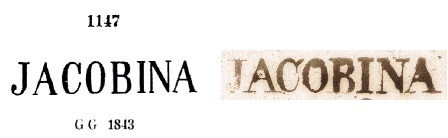
Dann kam JBA-0420b. Dieser Stempel wurde bisher ohne den Stern unten gesehen, was durch den Catálogo ilustrado dos carimbos sobre os olhos-de-boi (Porto Alegre, 2017) von Henrique B. Ferreira korrigiert werden konnte:
Nach 1866 wurde der Stempel mit dem kaiserlichen Siegel JBA-0420c (Abb. Felipe Piccinini) verwendet:
Es folgte der französische Typ JBA-0420d (Abb. Roberto Assef Jr.):
Am Ende des Kaiserreichs erschien auch JBA-0420e (Abb. Felipe Piccinini):
Aus der Sammlung Fuad Ferreira Fo. kennen wir auch einen stummen Stempel in Blau aus der kaiserlichen Jacobina:

 Carimbologia