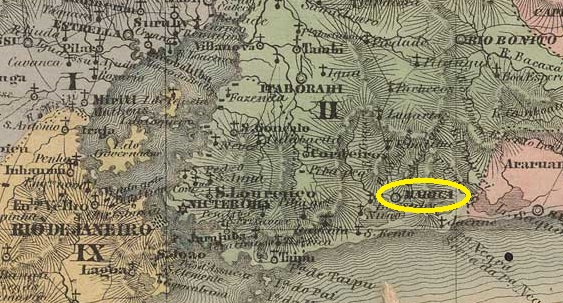
The Freguesia de Santa Maria de Maricá existed since January 1755 and was located on the northern shore of Lake Maricá, 60 kilometres east of the colonial capital Rio de Janeiro. In May 1814, it was elevated to the status of a vila and in December 1889, it finally became the city of Nossa Senhora do Amparo de Maricá.
As Nova Monteiro writes in Administrações e Agencias Postaes do Brasil Imperio (Brasil Filatelico/RJ, 1934–1935; reprinted by SPP 1994–1999), there had been a post office there since June 1829.
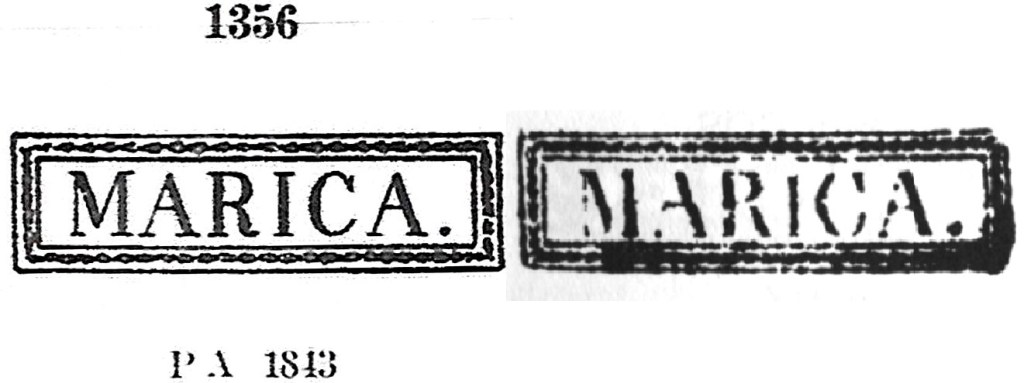
The oldest postmark to date is MRJ-0720a, which also appears in brown, red and green. It was registered by P. Ayres under number 1356 in Catálogo de Carimbos Brasil-Império (São Paulo, 1937, 1942) and by Cicero A. Almeida under MPT 381 in Carimbos Postais – Século XIX (Rio de Janeiro, 1989).
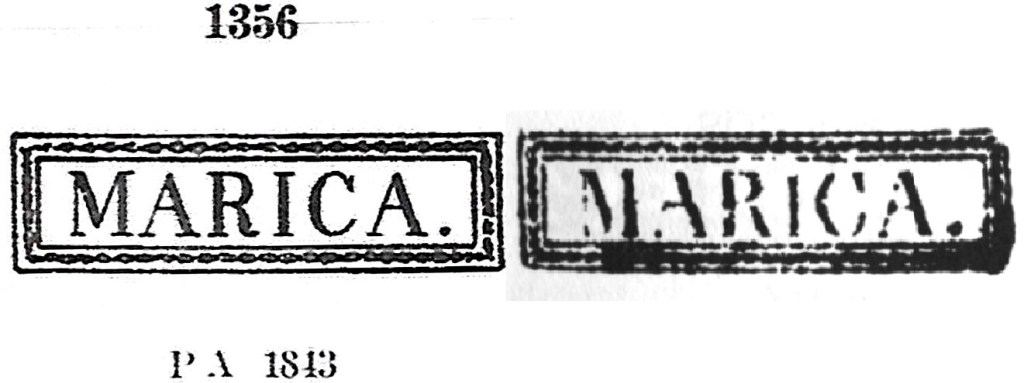
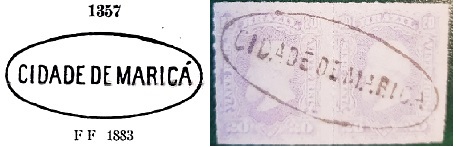
This was followed by MRJ-0720b, also recorded by P. Ayres (op. cit.), here also in an illustration by José A. Junges:
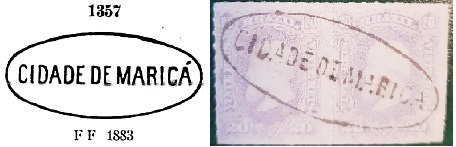
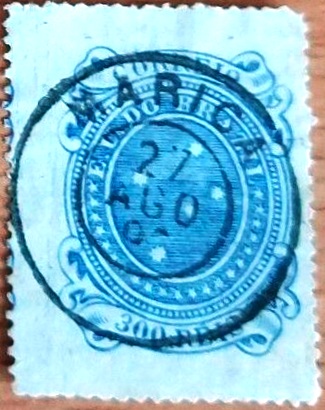
Shortly afterwards, the double circle MRJ-0720c (illustration from the Internet) also appeared:
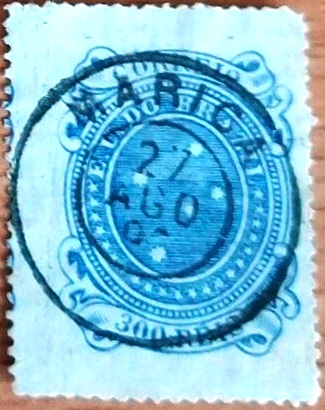
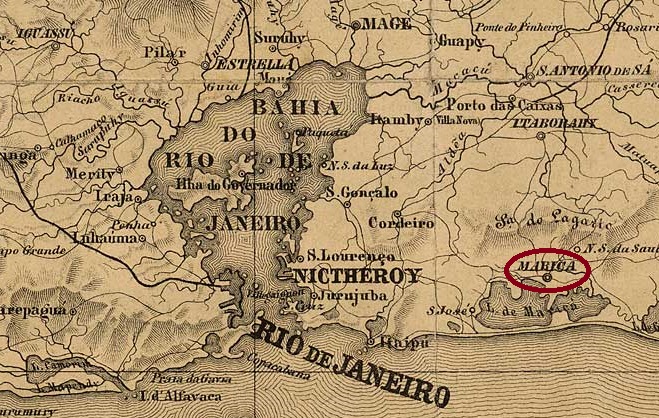
Die Freguesia de Santa Maria de Maricá bestand seit Januar 1755 und lag am Nordufer des Maricá-Sees, 60 Kilometer östlich der Kolonialhauptstadt Rio de Janeiro. Im Mai 1814 wurde sie zur Vila und im Dezember 1889 schließlich zur Stadt Nossa Senhora do Amparo de Maricá erhoben.
Wie Nova Monteiro in Administrações e Agencias Postaes do Brasil Imperio (Brasil Filatelico/RJ, 1934–1935; Nachdruck SPP 1994–1999) schreibt, gab es dort seit Juni 1829 ein Postamt.
Der bisher älteste Poststempel ist MRJ-0720a, der auch in den Farben Braun, Rot und Grün vorkommt. Er wurde sowohl von P. Ayres unter der Nummer 1356 im Catálogo de Carimbos Brasil-Império (São Paulo, 1937, 1942) als auch von Cicero A. Almeida unter MPT 381 in Carimbos Postais – Século XIX (Rio de Janeiro, 1989) registriert wurde.
Es folgte MRJ-0720b, ebenfalls durch P. Ayres (op. cit.) erfasst, hier auch in einer Abbildung von José A. Junges:
Kurze Zeit später kam auch der Doppelkreis MRJ-0720c (Abb. aus dem Internet):

 Carimbologia