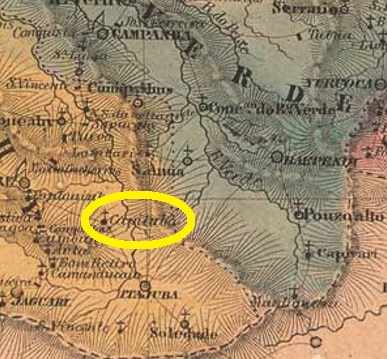
Other names: Pedralva (1943)
See also Capituba (CMG-0590), São Sebastião da Pedra Branca (SMG-2595), São Sebastião do Capituba (SMG-3465)
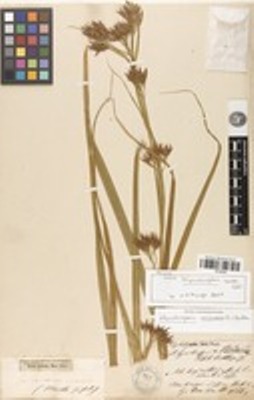
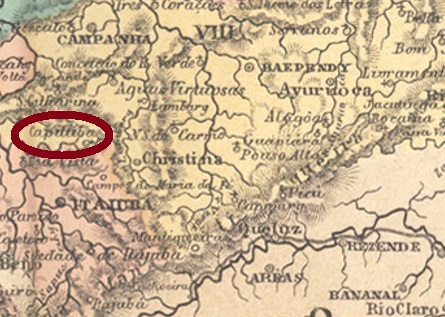
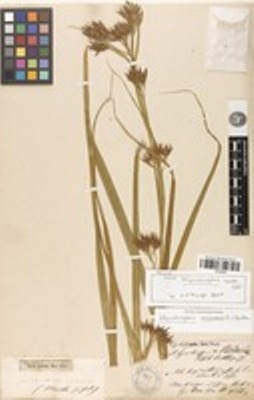
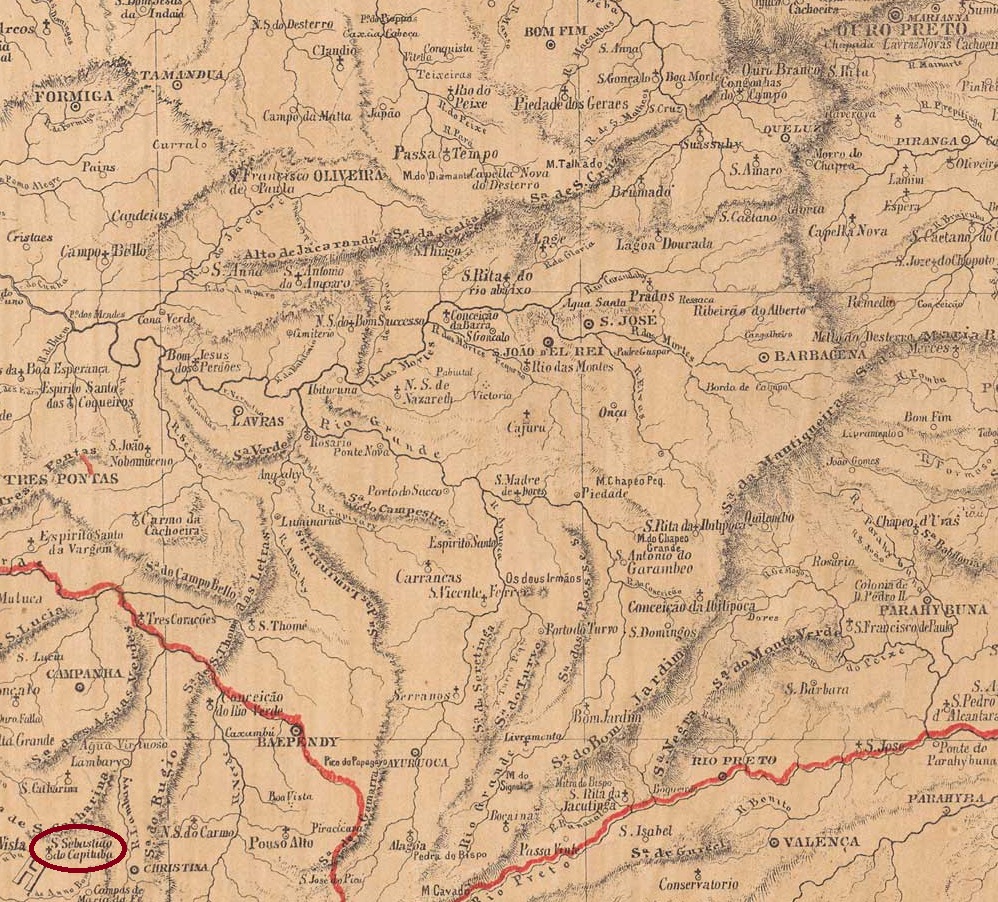
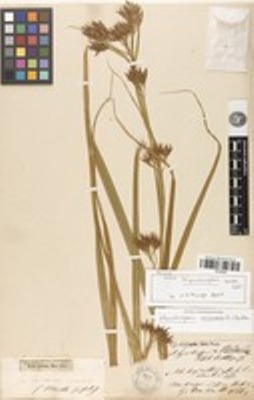
São Sebastião do Capituba was a freguesia of Christina from July 1832, situated 400 km southwest of the provincial capital Ouro Preto. Capituba is the name given in Brazil to an aquatic plant (Rynchospora aurea) of the Cyperaceae family:
In November 1880, the place rose to the status of a district under the name of São Sebastião da Pedra Branca (= of the white stone), which was elevated to the status of a villa in October 1884. After that, the place name changed twice: in September 1891 to Pedra Branca and in December 1943 to Pedralva.
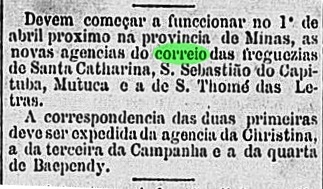
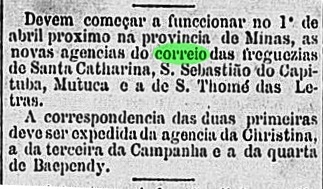
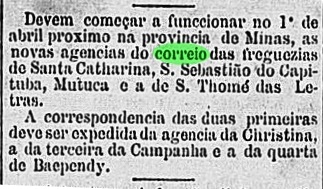
Paula Sobrinho writes in História Postal de Minas Gerais (Belo Horizonte, 1997) that the local post office was created in October 1877. However, it did not start operating until April of the following year, as noticed by the Rio press:
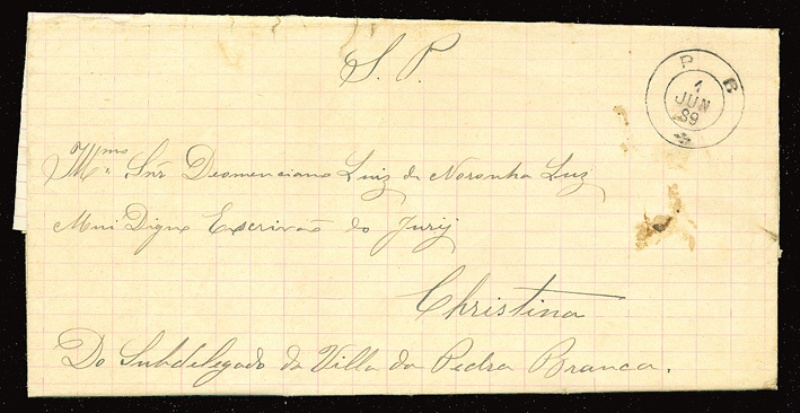
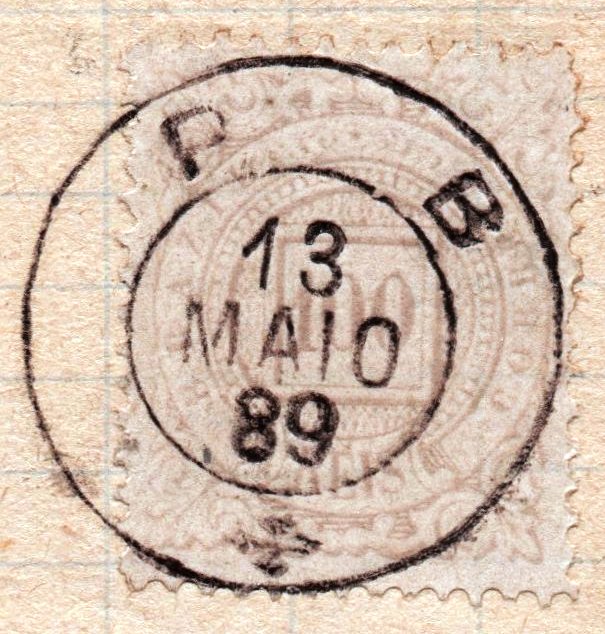
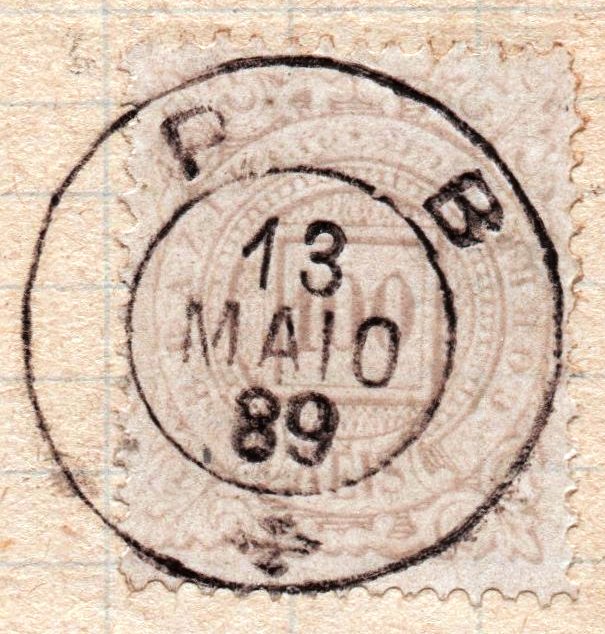
To date, no postmark bearing the name S. Sebastião do Capituba has been found. The oldest postmark bears the name ‘CAPITUBA’ (see CMG-0590). At the end of the Empire, PMG-2595a (fig. José A. Junges) followed with a mysterious abbreviation:
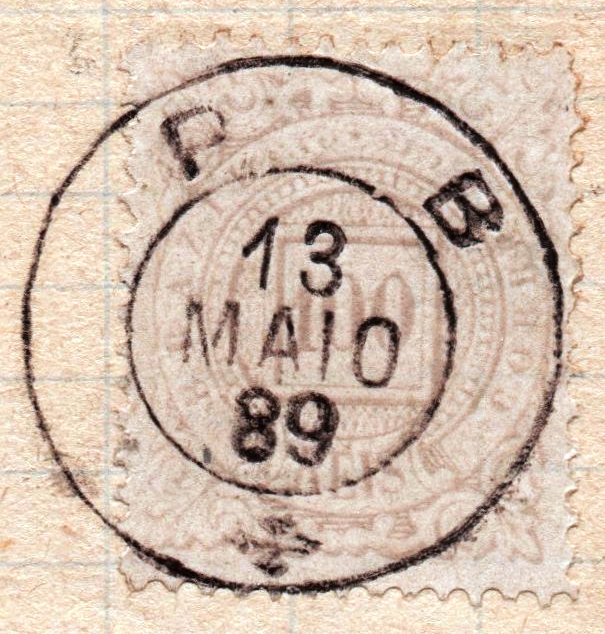
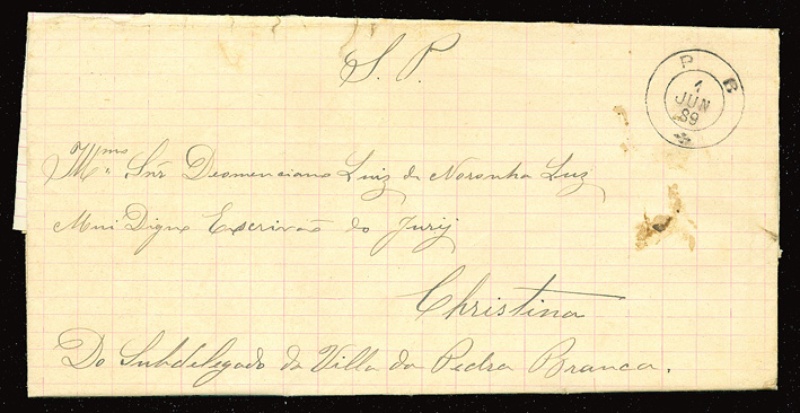
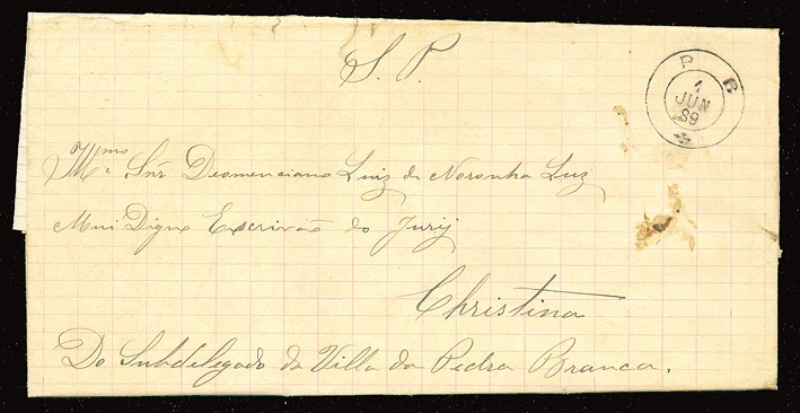
With the help of a letter (Fig. RHM), this could be linked to Pedra Branca in Minas Gerais:
At the beginning of the republic, the postmarks bore the place name ‘S. Sebast. da Pedra Branca’ (see SMG-2595).
Outros nomes: Pedralva (1943)
Ver também Capituba (CMG-0590), São Sebastião da Pedra Branca (SMG-2595), São Sebastião do Capituba (SMG-3465)
São Sebastião do Capituba foi uma freguesia de Christina desde julho de 1832, localizada 400 km a sudoeste da capital da província, Ouro Preto. Capituba é o nome brasileiro de uma planta aquática (Rynchospora aurea) da família Cyperaceae:
Em novembro de 1880, o local ascendeu a distrito sob o nome de São Sebastião da Pedra Branca, e foi elevado a vila em outubro de 1884. Depois disso, o nome do lugar mudou duas vezes: em setembro de 1891 para Pedra Branca e em dezembro de 1943 para Pedralva.
Paula Sobrinho escreve em História Postal de Minas Gerais (Belo Horizonte, 1997) que a agência postal local foi criada em outubro de 1877. Entretanto, ela só começou a operar em abril do ano seguinte, como nos informa a imprensa carioca:
Até então, não se encontrou nenhum carimbo postal com a denominação S. Sebastião do Capituba. O carimbo mais antigo traz a denominação “CAPITUBA” (ver CMG-0590). No final do Império, surgiu então o PMG-2595a (fig. José A. Junges) com uma abreviação enigmática:
Com a ajuda de uma carta (fig. RHM), foi possível associá-la a Pedra Branca, em Minas Gerais:
No início da República, os carimbos postais traziam o nome do local “S. Sebast. da Pedra Branca” (ver SMG-2595).
Andere Namen: Pedralva (1943)
Siehe auch Capituba (CMG-0590), São Sebastião da Pedra Branca (SMG-2595), São Sebastião do Capituba (SMG-3465)
São Sebastião do Capituba war ab Juli 1832 eine Freguesia von Christina, die 400 km südwestlich der Provinzhauptstadt Ouro Preto entfernt lag. Capituba nennt man in Brasilien eine Wasserpflanze (Rynchospora aurea) der Familie Cyperaceae:
Im November 1880 stieg der Ort zum Distrikt unter dem Namen São Sebastião da Pedra Branca (= vom weißen Stein), der im Oktober 1884 zur Villa erhoben wurde. Danach wechselte der Ortsname zweimal: im September 1891 zu Pedra Branca und im Dezember 1943 zu Pedralva.
Paula Sobrinho schreibt in História Postal de Minas Gerais (Belo Horizonte, 1997), dass das örtliche Postamt im Oktober 1877 entstanden ist. Allerdings wurde der Betrieb erst im April des folgenden Jahres aufgenommen, wie die Presse aus Rio informiert:
Bisher war kein Poststempel mit der Bezeichnung S. Sebastião do Capituba zu sehen. Der älteste Stempel trägt die Bezeichnung „CAPITUBA” (siehe CMG-0590). Am Ende des Kaiserreichs folgte dann PMG-2595a (Abb. José A. Junges) mit einer rätselhaften Abkürzung:
Mithilfe eines Briefes (Abb. RHM) konnte diese mit Pedra Branca in Minas Gerais in Verbindung gebracht werden:
Am Anfang der Republik trugen die Poststempel den Ortsnamen „S. Sebast. da Pedra Branca“ (siehe SMG-2595).

 Carimbologia