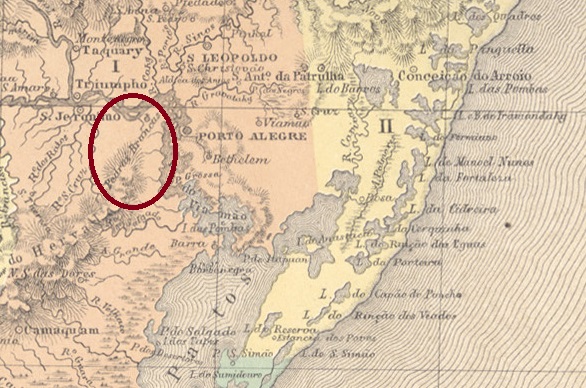
Other names: Guaíba (1926)
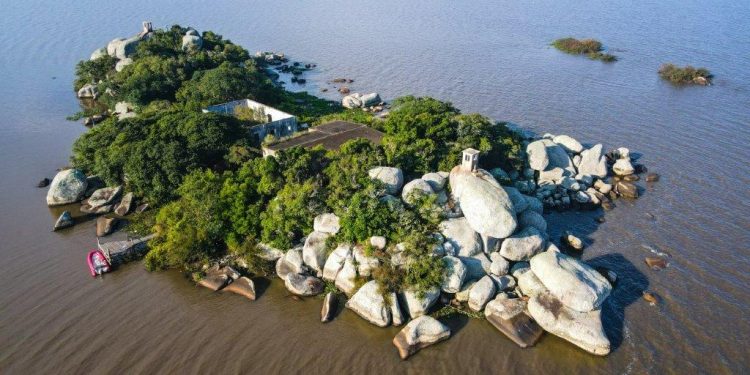
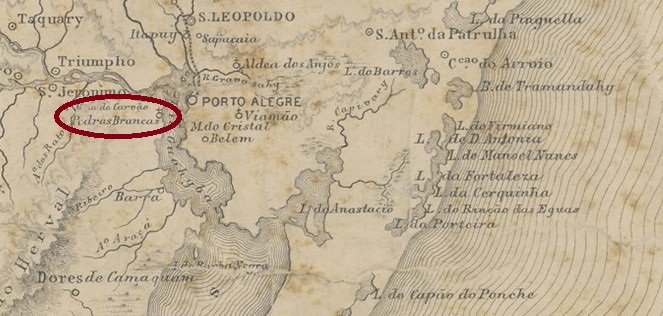
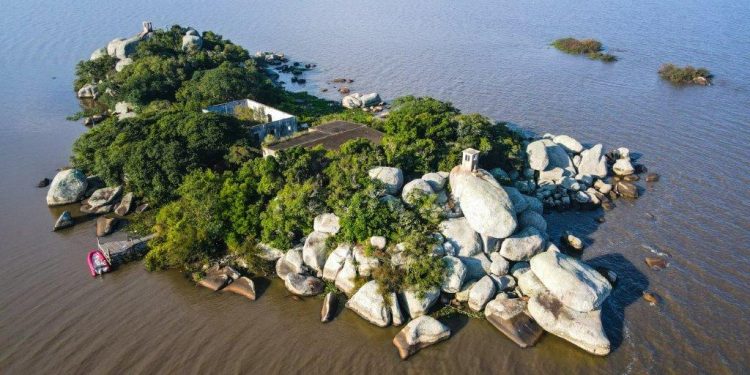
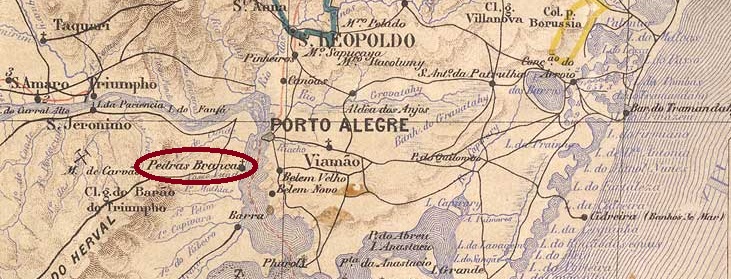
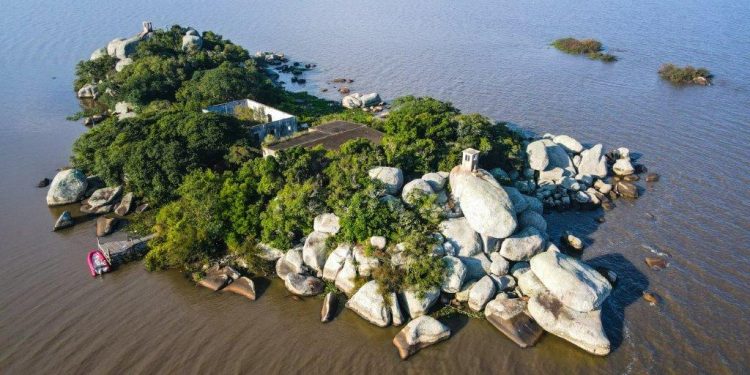
The settlement around the Chapel of Nossa Senhora do Livramento das Pedras Brancas was established in the early 19th century. It was situated on the western shore of the Guaíba, a lake still regarded by locals as a river, 30 kilometres south-west of the provincial capital, Porto Alegre. It was not until December 1892 that it was elevated to the status of a district. Since October 1926, it has borne the name Município de Guaíba. Pedras Brancas (White Stones) refers to the beautiful, weathered granite stones on a lake island that was formerly used as a powder magazine and prison.
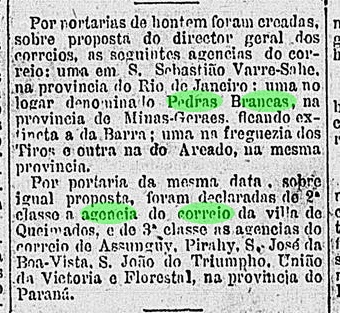
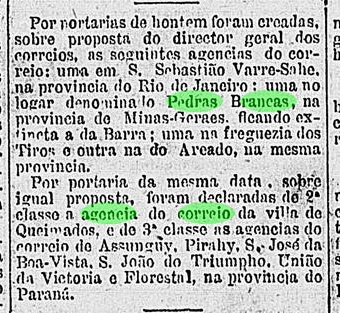
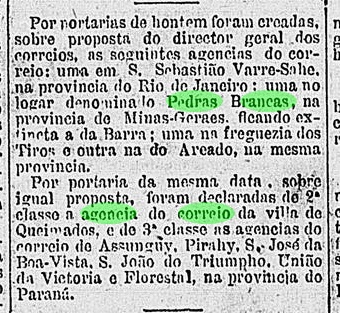
As reported by the press in Rio de Janeiro, the decision to establish a local post office was taken in April 1881. However, the report mistakenly places the town in the province of Minas Gerais.
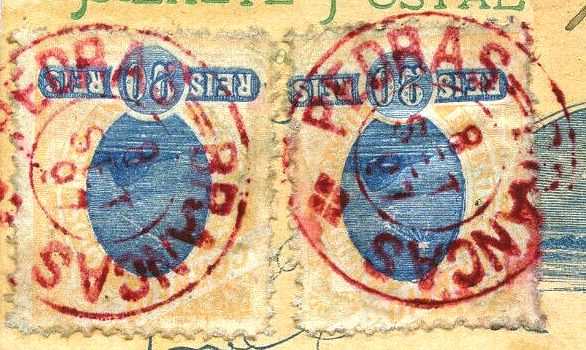
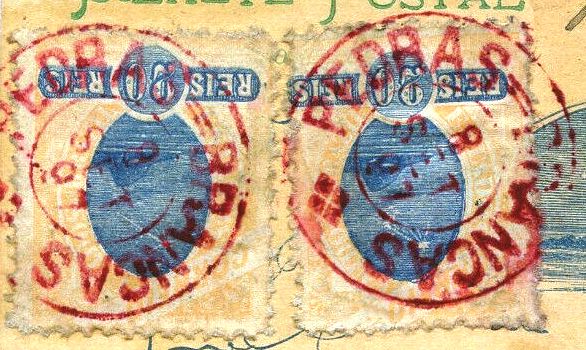
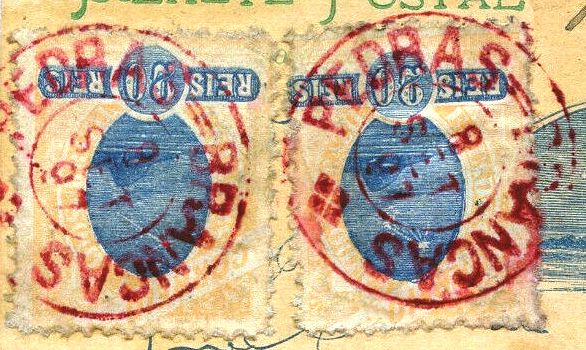
The imperial postmark is PRS-0255a (image from the internet), which also appears in carmine red:
Outros nomes: Guaíba (1926)
O povoado em torno da capela de Nossa Senhora do Livramento das Pedras Brancas surgiu no início do século XIX. Ele ficava na margem oeste do Guaíba, um lago que os gaúchos ainda chamam de rio, a 30 quilômetros a sudoeste da capital provincial Porto Alegre. Somente em dezembro de 1892 foi elevada à categoria de distrito. Desde outubro de 1926 é o Município de Guaíba. O nome Pedras Brancas refere-se às belas rochas de granito clareadas pelo clima em uma ilha do lago, que antigamente era usada como paiol de pólvora e prisão.
Conforme noticiado pela imprensa do Rio de Janeiro, em abril de 1881 foi decidida a criação de uma agência postal local. Na notícia, porém, o local é erroneamente atribuído à província de Minas Gerais.
O carimbo postal imperial é o PRS-0255a (imagem da internet), que também existe na cor vermelho carmim:
Andere Namen: Guaíba (1926)
Die Siedlung um die Kapelle Nossa Senhora do Livramento das Pedras Brancas entstand im frühen 19. Jahrhundert. Sie lag am Westufer des Guaíba, eines Sees, der von den Einheimischen immer noch als Fluss angesehen wird, 30 Kilometer südwestlich der Provinzhauptstadt Porto Alegre. Erst im Dezember 1892 wurde sie zum Distrito erhoben. Seit Oktober 1926 trägt sie den Namen Município de Guaíba. Pedras Brancas (Weiße Steine) bezieht sich auf die schönen, verwitterten Granitsteine auf einer Seeinsel, die früher als Pulvermagazin und Gefängnis genutzt wurde.
Wie die Presse aus Rio de Janeiro mitteilte, wurde im April 1881 die Einrichtung eines örtlichen Postamts beschlossen. In der Nachricht wird der Ort jedoch irrtümlicherweise der Provinz Minas Gerais zugeordnet.
Der kaiserliche Poststempel ist PRS-0255a (Abb. aus dem Internet), der auch in Karminrot vorkommt:

 Carimbologia