Alternative spelling: Pedreiras
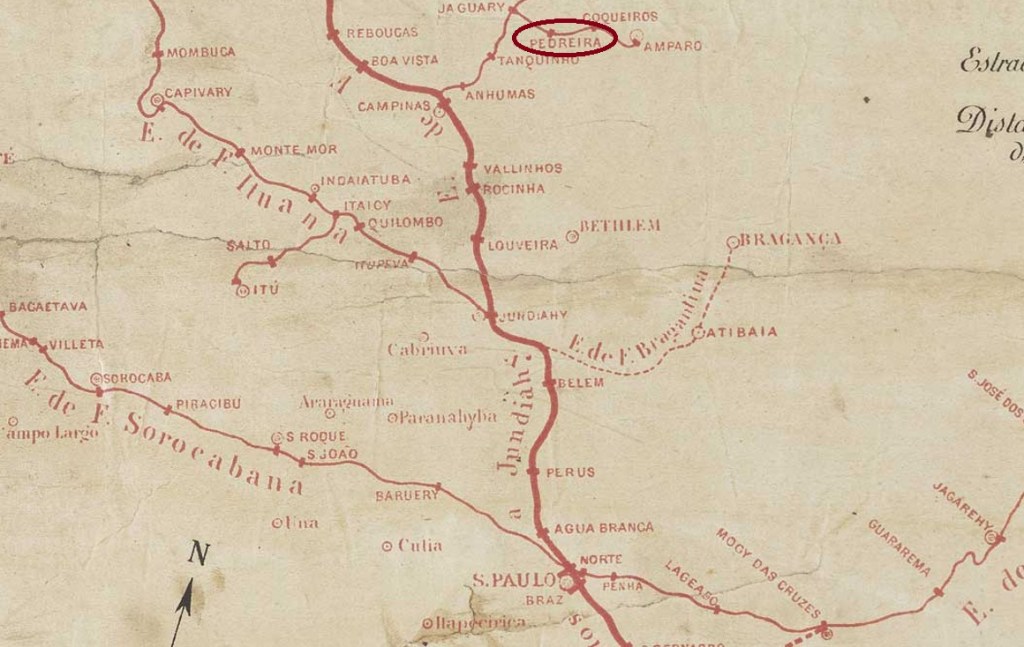
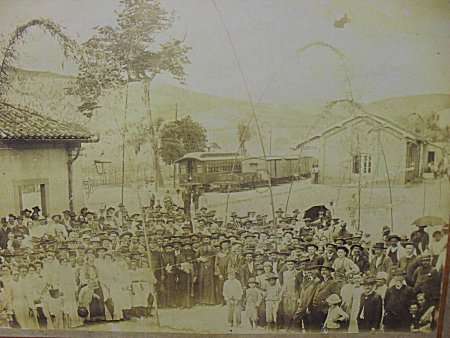
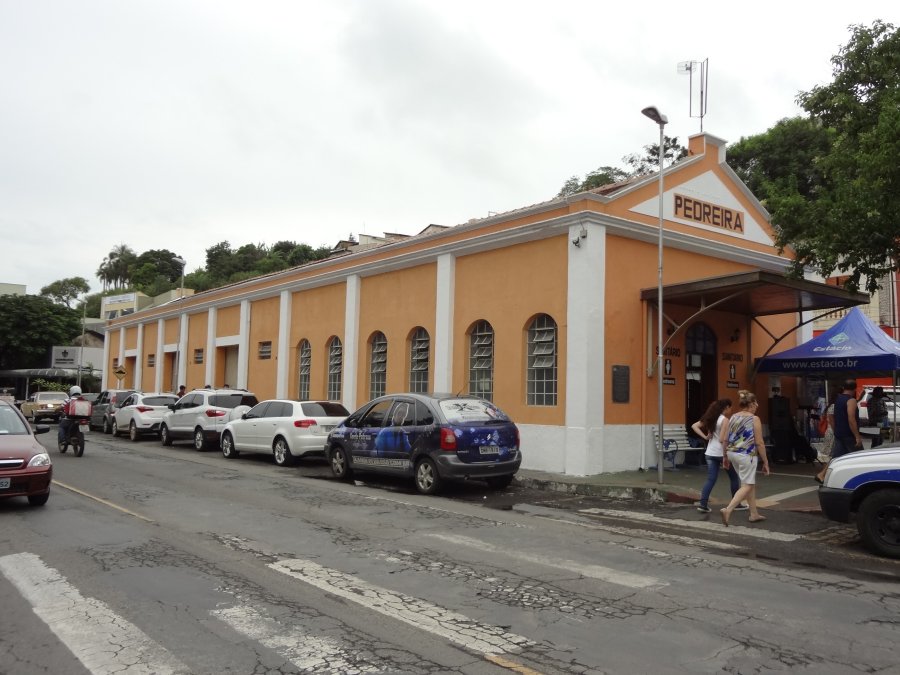
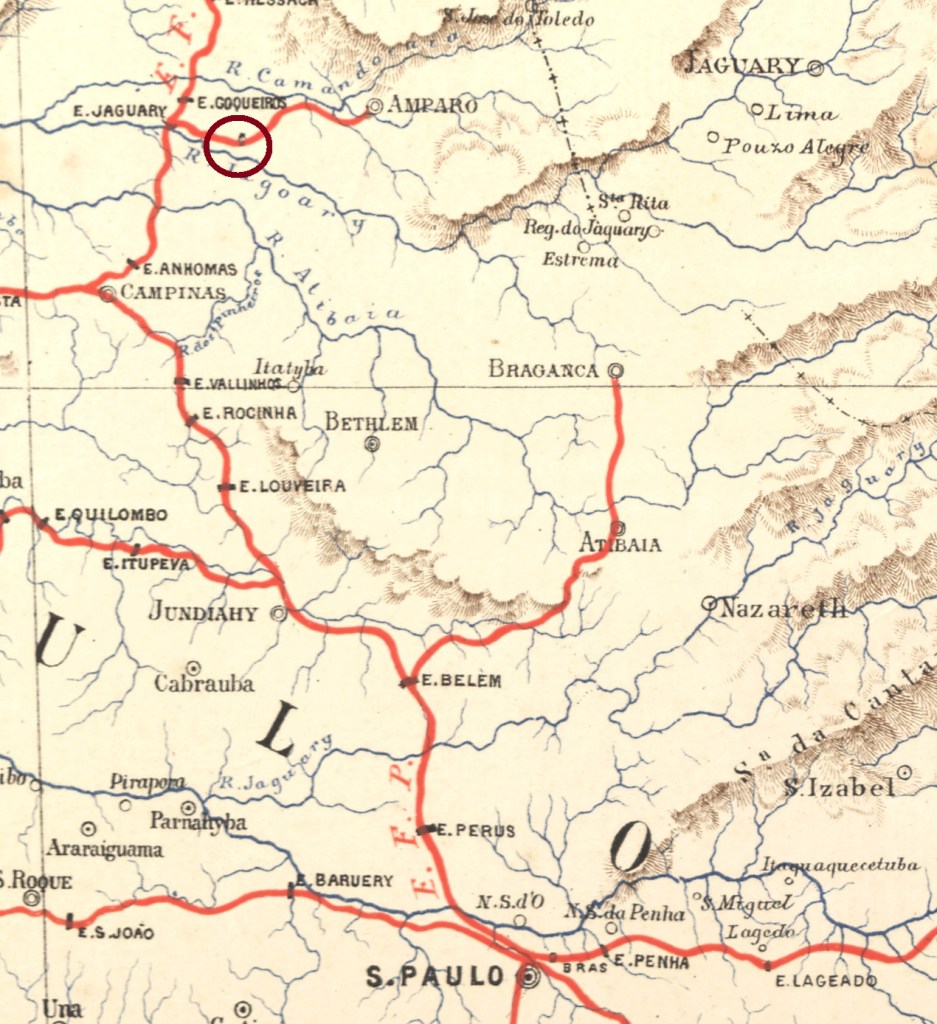
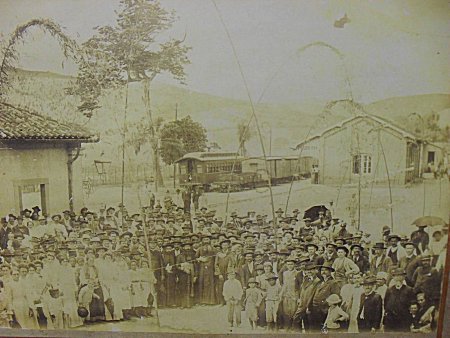
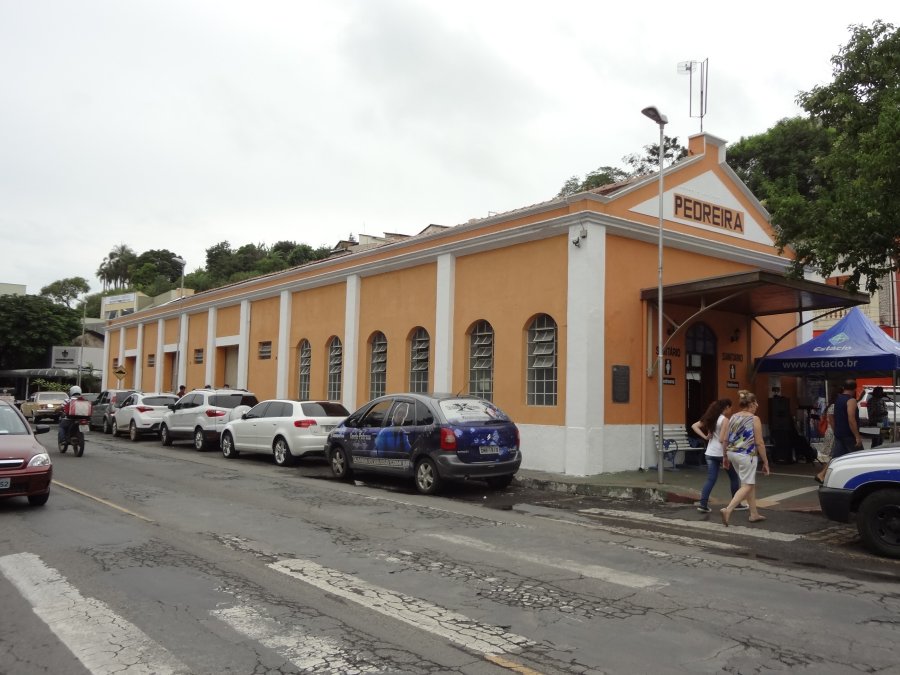
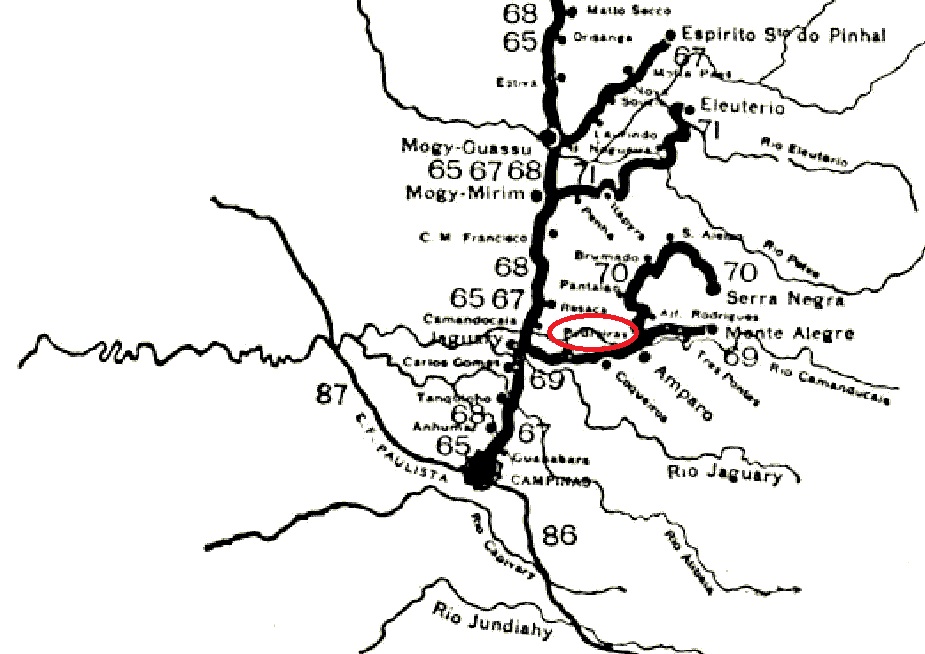
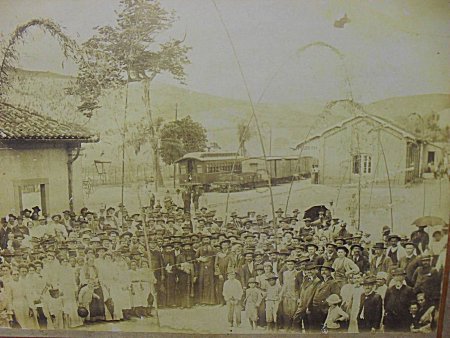
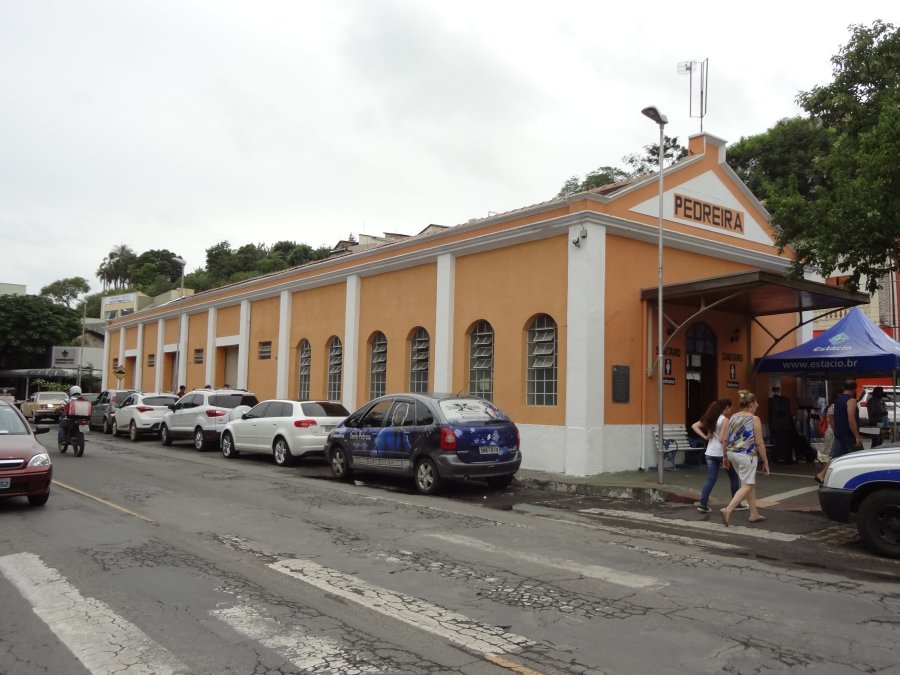
Pedreira station (meaning ‘quarry’) was opened in November 1875 by the Cia. Mogyana railway company (Amparo branch) on the north bank of the Jaguari River in the municipality of Amparo. It was located 130 km north of the provincial capital, São Paulo. The railway line was closed in 1967 (estacoesferroviarias.com.br). From December 1890, the area around the station belonged to the parish of Sant’Anna de Pedreira, which became a town in October 1896 and a city in December 1906. Today, the railway tracks have disappeared and the station building is used as a shop selling regional handicrafts.
As shown in the directory of imperial post offices (Tabela das Agências do Correio do Império, Rio de Janeiro, 1885), there had been a post office at the station since 1881. The imperial postmark is the French type PSP-0900a (fig. Rodrigo Baldassare):

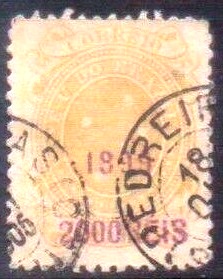
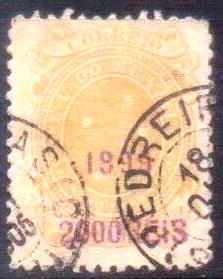
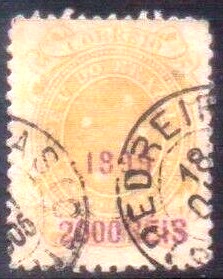
In the early Republic, PSP-0900b (image from the internet) also appeared, with the altered spelling PEDREIRAS:
Outra grafia: Pedreiras
A estação ferroviária de Pedreira (Pedreira) foi inaugurada em novembro de 1875 pela Companhia Ferroviária Cia. Mogyana (ramal de Amparo), na margem norte do rio Jaguari, no município de Amparo. Ficava a 130 km ao norte da capital do estado, São Paulo. A linha ferroviária foi desativada em 1967 (estacoesferroviarias.com.br). A área ao redor da estação pertencia, desde dezembro de 1890, à Freguesia de Sant’Anna de Pedreira, que se tornou vila em outubro de 1896 e município em dezembro de 1906. Hoje, os trilhos desapareceram e o prédio da estação é usado como espaço de venda de artesanato regional.
Conforme consta na Tabella das Agências do Correio do Império (Rio de Janeiro, 1885), havia uma agência dos Correios na estação desde 1881. O carimbo postal imperial é do tipo francês PSP-0900a (fig. Rodrigo Baldassare):

No início da República, surgiu também o PSP-0900b (fig. da Internet), com a grafia alterada para PEDREIRAS:
Andere Schreibweise: Pedreiras
Der Bahnhof Pedreira (Steinbruch) wurde im November 1875 durch die Eisenbahngesellschaft Cia. Mogyana (Amparo-Zweig) am Nordufer des Jaguari im Município de Amparo eröffnet. Er lag 130 km nördlich der Provinzhauptstadt São Paulo. Die Bahnlinie wurde 1967 stillgelegt (estacoesferroviarias.com.br). Das Gebiet um den Bahnhof gehörte ab Dezember 1890 zur Freguesia de Sant’Anna de Pedreira, die im Oktober 1896 zur Vila und im Dezember 1906 zur Stadt wurde. Heute sind die Bahngleise verschwunden und das Bahnhofsgebäude wird als Verkaufsgebäude für regionales Kunsthandwerk genutzt.
Wie aus dem Verzeichnis der kaiserlichen Postämter (Tabela das Agências do Correio do Império, Rio de Janeiro, 1885) hervorhgeht, gab es am Bahnhof ein Postamt seit 1881. Der kaiserliche Poststempel ist der französische Typ PSP-0900a (Abb. Rodrigo Baldassare):

In der frühen Republik erschein auch PSP-0900b (Abb. aus dem Internet), mit der geänderten Schreibweise PEDREIRAS:

 Carimbologia