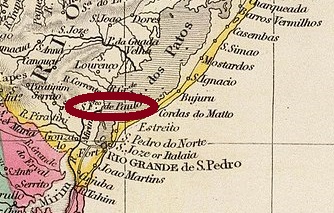
See also São Francisco de Paula (SRS-0311)
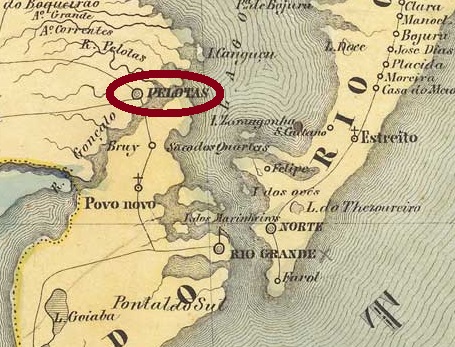
Founded in July 1812 as the freguesia of São Francisco de Paula de Pelotas, the locality became a villa in December 1832 and a town in June 1835.
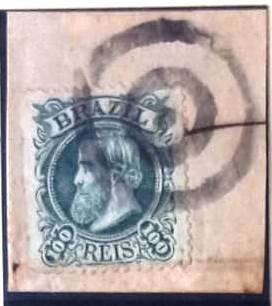
Two creation dates for the local post office were found. Nova Monteiro (Administrações e Agencias Postaes do Brasil Imperio, in Brasil Filatelico/RJ, 1934-5; Reprint SPP 1994-1999) writes 12 October 1831, while Reinhold Koester (Carimbologia XXX) gives the year 1847. Both are probably correct, as one can assume an agency closure during the Farroupilha–Revolution (1835-1845). However, there would have to be a third, earlier date, for there is the cancel SRS-0311a. This was found in documents between 1824 and 1828 in sepia and red and was already shown in the RHM catalogue under P-RS-24:

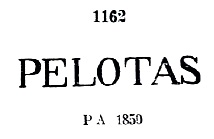
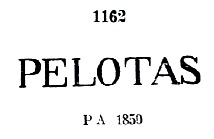
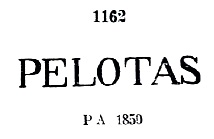
The oldest postmark bearing the place name Pelotas is PRS-0260a. It also appears in red, was assigned the number 1162 by P. Ayres in Catálogo de Carimbos Brasil-Império (São Paulo, 1937, 1942) and is listed in the RHM catalogue under P-RS-07:
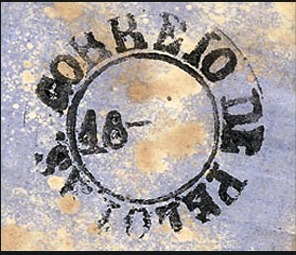
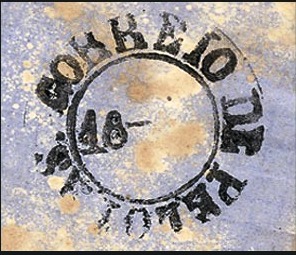
This was followed by two archaic-looking circular stamps: PRS-0260b (fig. Felipe Piccinini), which also appears in brown-orange, and PRS-0260c (fig. R. Koester, in Carimbologia XXX), with the typical form of the province of São Pedro do Rio Grande:

This was followed by the rare linear postmark PRS-0260d (fig. Koester, op. cit.):
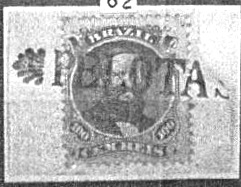
In the 1870s, the stagecoach postmark PRS-0260e (fig. Claudio Coelho) appears, which was long believed to be a mute cancellation:
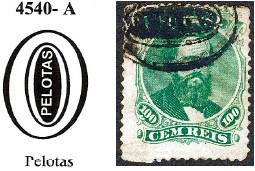
Around the same time, the French type PRS-0260f (fig. Felipe Piccinini) also appeared:

R. Koester (op. cit.) has recorded the following circular postmarks as distinct types. However, they only exhibit minimal differences, which are to be described in greater detail. These are PRS-0260g (fig. Marcio Duarte), which also exists in red and blue, and PRS-0260h (fig. Koester):


In the 1880s, the rare postmark PRS-0260i (fig. Koester) can also be found:
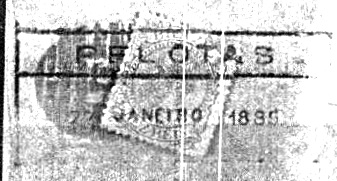
Towards the end of the Empire, two circular postmarks with different ornaments at the bottom appeared, PRS-0260j and PRS-0260k (images from the internet)


Koester also showed two postmarks from Pelotas bearing the imperial seal, PRS-0260l and PRS-0260m:

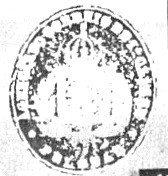
He also presented two handwritten cancellations from there:
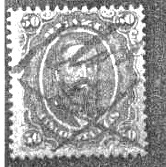

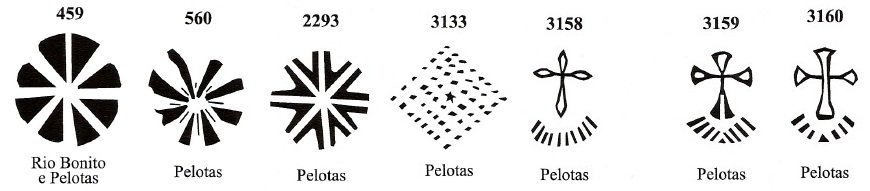
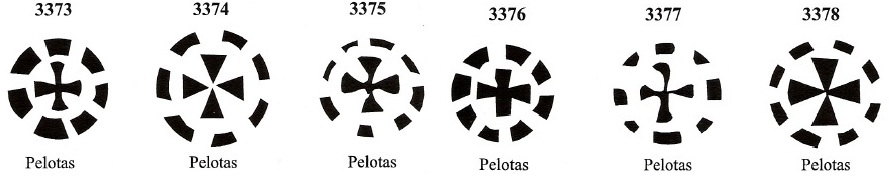
James Dingler and Klerman W. Lopes have listed no fewer than 22 mute postmarks from Pelotas in Mute Cancellations of the Brazil Empire / Carimbos Mudos do Brasil Império (Brazil Philatelic Association, Rio de Janeiro, 2000):
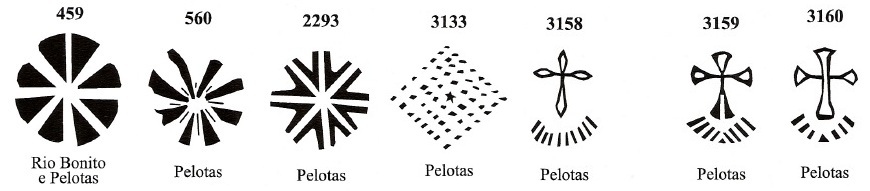
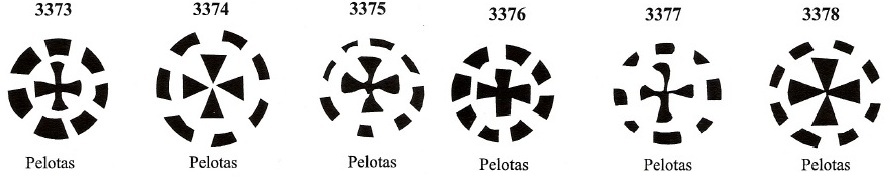
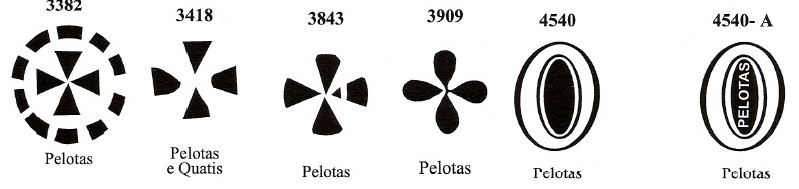
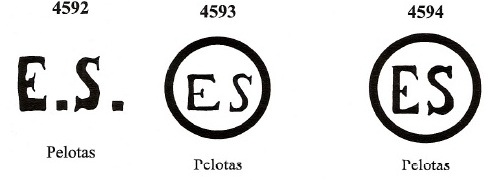
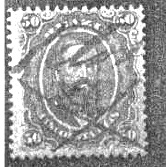
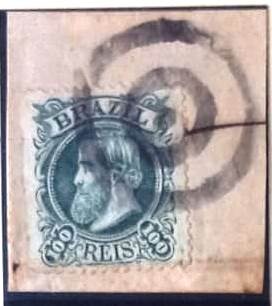
The philatelist Fuad Ferreira Fo. showed us another mute postmark:
Veja também São Francisco de Paula (SRS-0311)
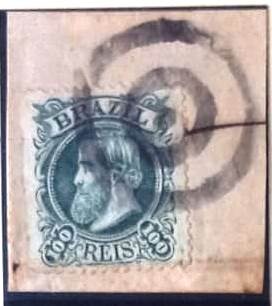
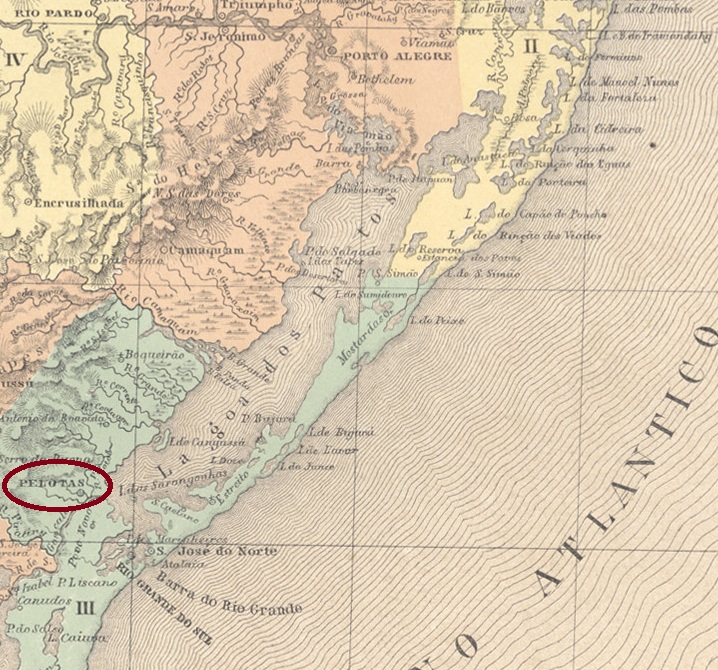
Fundada em julho de 1812 como freguesia de São Francisco de Paula de Pelotas, a localidade tornou-se uma vila em dezembro de 1832 e uma cidade em junho de 1835.
Foram encontradas duas datas de criação para os correios locais. Nova Monteiro (Administrações e Agencias Postaes do Brasil Imperio, emBrasil Filatelico/RJ, 1934-5; reimpressão SPP 1994-1999) escreve 12 de outubro de 1831, enquanto Reinhold Koester (Carimbologia XXX) indica o ano de 1847. Ambos provavelmente estão corretos, pois pode-se supor um fechamento da agência durante a Revolução Farroupilha (1835-1845). No entanto, teria que haver uma terceira data, anterior, pois temos o carimbo SRS-0311a. Este foi encontrado em documentos entre 1824 e 1828 em sépia e vermelho e já foi mostrado no catálogo RHM sob código P-RS-24:

O carimbo postal mais antigo com o topônimo Pelotas é o PRS-0260a. Ele também existe em vermelho, recebeu de P. Ayres, no Catálogo de Carimbos Brasil-Império (S. Paulo, 1937, 1942), o n.º 1162 e foi registrado no Catálogo RHM sob o código P-RS-07:
Seguiram-se dois carimbos circulares de aparência arcaica: o PRS-0260b (ilustração de Felipe Piccinini), que também ocorre em marrom-alaranjado, e o PRS-0260c (ilustração de R. Koester, em Carimbologia XXX), com a forma típica da província de São Pedro do Rio Grande, ca. 1864-1865

Em seguida, surgiu o raro carimbo linear PRS-0260d (fig. Koester, op. cit.):
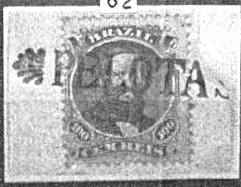
Na década de 1870, encontra-se o carimbo postal de diligência PRS-0260e (Fig. Claudio Coelho), do qual se acreditou por muito tempo que não indicaria o nome da localidade:
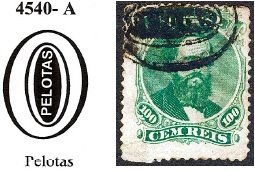
Por volta da mesma época, surgiu também o tipo francês PRS-0260f (fig. Felipe Piccinini):

Os seguintes carimbos circulares foram registrados por R. Koester (op. cit.) como distintos. No entanto, eles apresentam apenas diferenças mínimas, que ainda devem ser descritas com mais detalhes. São eles o PRS-0260g (Fig. Marcio Duarte), que também existe em vermelho e azul, e o PRS-0260h (Fig. Koester):


Na década de 1880, encontra-se também o raro carimbo postal PRS-0260i (fig. Koester):
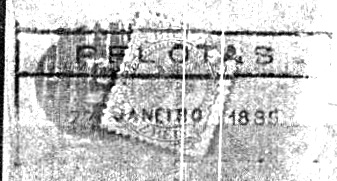
No final do Império, surgiram dois carimbos distritais com diferentes ornamentos na parte inferior, PRS-0260j e PRS-0260k (fig. da Internet)


Koester também apresentou dois carimbos postais de Pelotas com o sinete imperial, PRS-0260l e PRS-0260m:

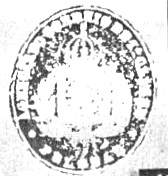
Ele também apresentou duas obliterações manuscritas de lá:

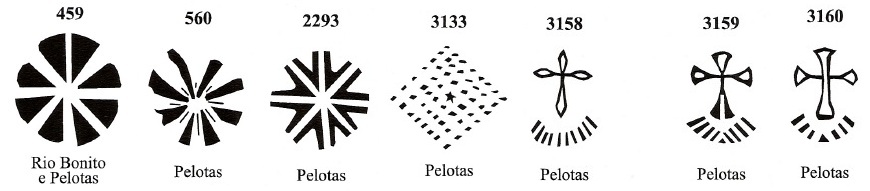
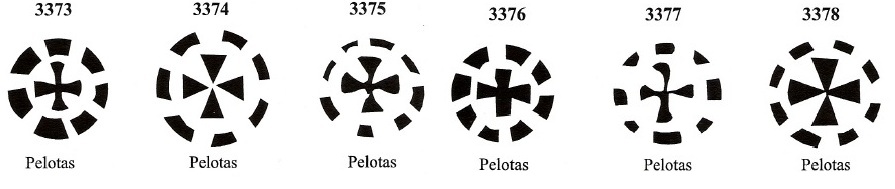
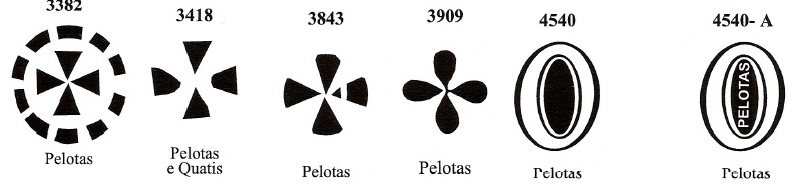
James Dingler e Klerman W. Lopes listaram nada menos que 22 carimbos postais mudos de Pelotas em Mute Cancellations of the Brazil Empire / Carimbos Mudos do Brasil Império (Clube Filatélico do Brasil, Rio de Janeiro, 2000):
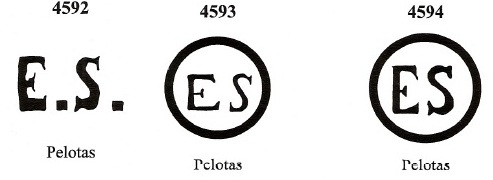
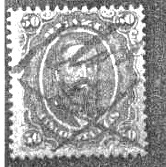
O filatelista Fuad Ferreira Fo. nos mostrou outro carimbo mudo:
Siehe auch São Francisco de Paula (SRS-0311)
Gegründet im Juli 1812 als die Freguesia von São Francisco de Paula de Pelotas, wurde die Ortschaft im Dezember 1832 zur Villa und im Juni 1835 zur Stadt.
Zwei Gründungsdaten fürs örtliche Postamt wurden ermittelt. Nova Monteiro (Administrações e Agencias Postaes do Brasil Imperio, in Brasil Filatelico/RJ, 1934-5; Reprint SPP 1994-1999) schreibt dafür den 12. Oktober 1831, während Reinhold Koester (Carimbologia XXX) das Jahr 1847 angibt. Beide werden wohl stimmen, da man von einer Agenturschließung während der Farroupilha-Revolution (1835-1845) ausgehen kann. Allerdings müsste es noch ein drittes, früheres Datum geben, weil es den Stempel SRS-0311a gibt. Dieser wurde in Belegen zwischen 1824 und 1828 in den Farben Sepia und Rot gefunden und war bereits im RHM Katalog unter P-RS-24 zu sehen:

Der älteste Poststempel mit Ortsnamen Pelotas ist PRS-0260a. Der kommt auch in Rot vor, erhielt von P. Ayres in Catálogo de Carimbos Brasil-Império (S. Paulo, 1937, 1942) die Nr. 1162 und wurde im RHM-Katalog unter P-RS-07 erfasst:
Es folgten zwei archaisch anmutende Kreisstempel: PRS-0260b (Abb. Felipe Piccinini), der auch in braunorange vorkommt, und der für die Provinz São Pedro do Rio Grande typische PRS-0260c (Abb. R. Koester, in Carimbologia XXX) ca. 1864-1865
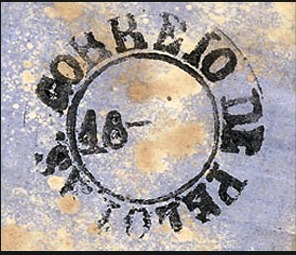

Danach kam der seltene Linearstempel PRS-0260d (Abb. Koester, op. cit.):
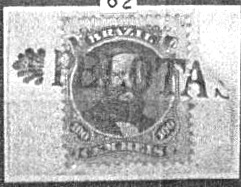
In den 1870er Jahren findet man den Postkutschenstempel PRS-0260e (Abb. Claudio Coelho), von dem man lange glaubte, er würde den Ortsnamen nicht tragen:
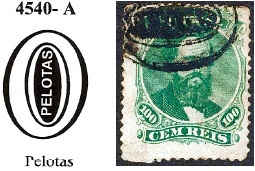
Etwa zur gleichen Zeit erschien auch der französische Typ PRS-0260f (Abb. Felipe Piccinini):

Die folgenden Kreisstempel hat R. Koester (op. cit.) als unterschiedlich erfasst. Sie können jedoch nur minimale Unterschiede aufweisen, die noch genauer beschrieben werden. Es sind PRS-0260g (Abb. Marcio Duarte), der auch in Rot und Blau existiert, und PRS-0260h (Abb. Koester):


In den 1880er Jahren findet man auch der seltene Poststempel PRS-0260i (Abb. Koester):
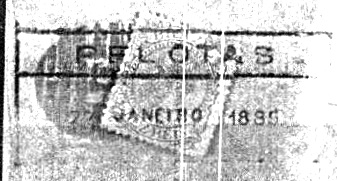
Am Ende des Kaiserreichs erschienen zwei Kreisstempel mit verschiedenen Ornamenten unten, PRS-0260j und PRS-0260k (Abb. aus dem Internet)


Koester zeigte auch zwei Poststempel aus Pelotas mit dem kaiserlichen Siegel, PRS-0260l und PRS-0260m:

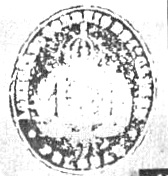
Er hatte auch zwei handschriftliche Entwertungen von dort vorgezeigt:

James Dingler und Klerman W. Lopes haben in Mute Cancellations of the Brazil Empire / Carimbos Mudos do Brasil Império (Brazil Philatelic Association, Rio de Janeiro, 2000) nicht weniger als 22 stumme Poststempel aus Pelotas aufgeführt :
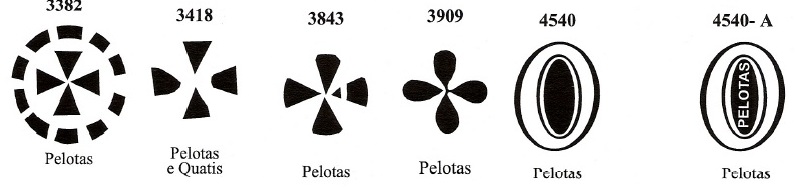
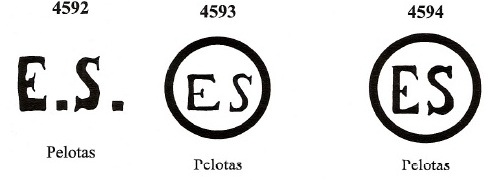
Einen weiteren stummen Stempel zeigte uns der Philatelist Fuad Ferreira Fo.:

 Carimbologia