Categories
Carimbologia C-D

Camaragibe, Alagoas (CAL-0045)

Villiers de l’Ile Adam: Carta (…) das Provincias de Pernambuco, Alagoas e Sergipe, 1848

Another name: Passo do Camaragibe

A passo is a passable point of a river. The Freguesia de N. Sra. da Conceição do Passo de Camaragibe was founded in 1815, belonged to the Vila de Porto de Pedras and was situated on the west bank of the Camaragibe, about 80 km north of the later provincial capital Maceió. Three leguas – about 15 km – upstream was the village of Matriz de Camaragibe, where the main church was built, but where the Camaragibe River was unfortunately too deep for the trade route.

In June 1852 Passo de Camaragibe was declared a vila and in June 1880 a town. The place name changed to the short form Camaragibe in September 1912, but in March 1938 the old place name finally returned.

Three foundation years were found for the local post office. First in July 1839, as Aldo Cardoso writes in Contribuição para a História dos Correios de Alagoas (Maceió, 1969). Then in 1845, as indicated in the Directory of Imperial Post Offices (Tabella das Agencias do Correio do Imperio, Rio de Janeiro, 1885). And finally in January 1858, as stated in Administrações e Agencias Postaes do Brasil Imperio (Brasil Filatelico/RJ, 1934-5; Reprint SPP 1994-1999) by Nova Monteiro.

Reinhold Koester was unable to show an imperial postmark of Camaragibe in Carimbologia VII, instead, he had two Passo-cancels in Carimbologia XXX. Thanks to philatelist Claudio Coelho, here we have the first two Camaragibe cancels found for the 19th century:

CAL-0045b (CC) 1881ff-1891, also in blue.
CAL-0045c (CC) 1891
Atlas do Imperio do Brasil, 1868

Anderer Name: Passo do Camaragibe

Ein Passo ist eine passierbare Stelle eines Flusses. Die Freguesia de N. Sra. da Conceição do Passo de Camaragibe wurde 1815 gegründet, gehörte zur Vila de Porto de Pedras und lag am Westufer des Cmaragibe, knapp 80 km nördlich der späteren Provinzhauptstadt Maceió. Drei Léguas – also ca. 15 km – flussaufwärts lag der Ort Matriz de Camaragibe, wo zwar die Hauptkirche gebaut wurde, aber der Fluss Camaragibe leider zu tief für den Handelsweg war.

Im Juni 1852 wurde Passo de Camaragibe zur Vila und im Juni 1880 zur Stadt erklärt. Der Ortsname änderte sich im September 1912 in die Kurzform Camaragibe, aber im März 1938 kehrte der alte Ortsname endgültig zurück.

Für das örtliche Postamt wurden drei Gründungsjahre gefunden. Zuerst im Juli 1839, wie Aldo Cardoso in Contribuição para a História dos Correios de Alagoas (Maceió, 1969) schreibt. Dann 1845, wie im Verzeichnis der kaiserlichen Postämter (Tabella das Agencias do Correio do Imperio, Rio de Janeiro, 1885) angegeben. Und schließlich im Januar 1858, wie in Administrações e Agencias Postaes do Brasil Imperio (Brasil Filatelico/RJ, 1934-5; Reprint SPP 1994-1999) von Nova Monteiro nachzulesen ist.

Reinhold Koester konnte in Carimbologia VII keinen kaiserlichen Poststempel von Camaragibe zeigen, dafür hatte er zwei Passo-Stempel in Carimbologia XXX. Dank des Philatelisten Claudio Coelho haben wir hier die ersten beiden Camaragibe-Stempel, die für das 19. Jahrhundert gefunden wurden:
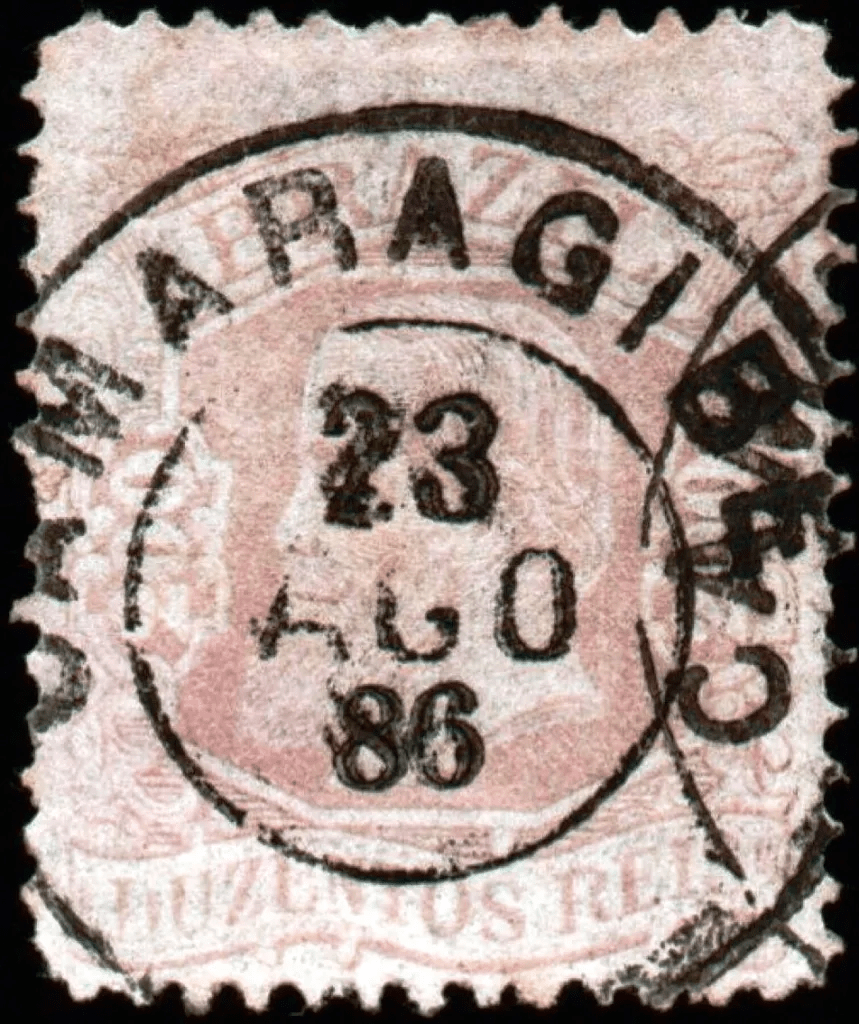
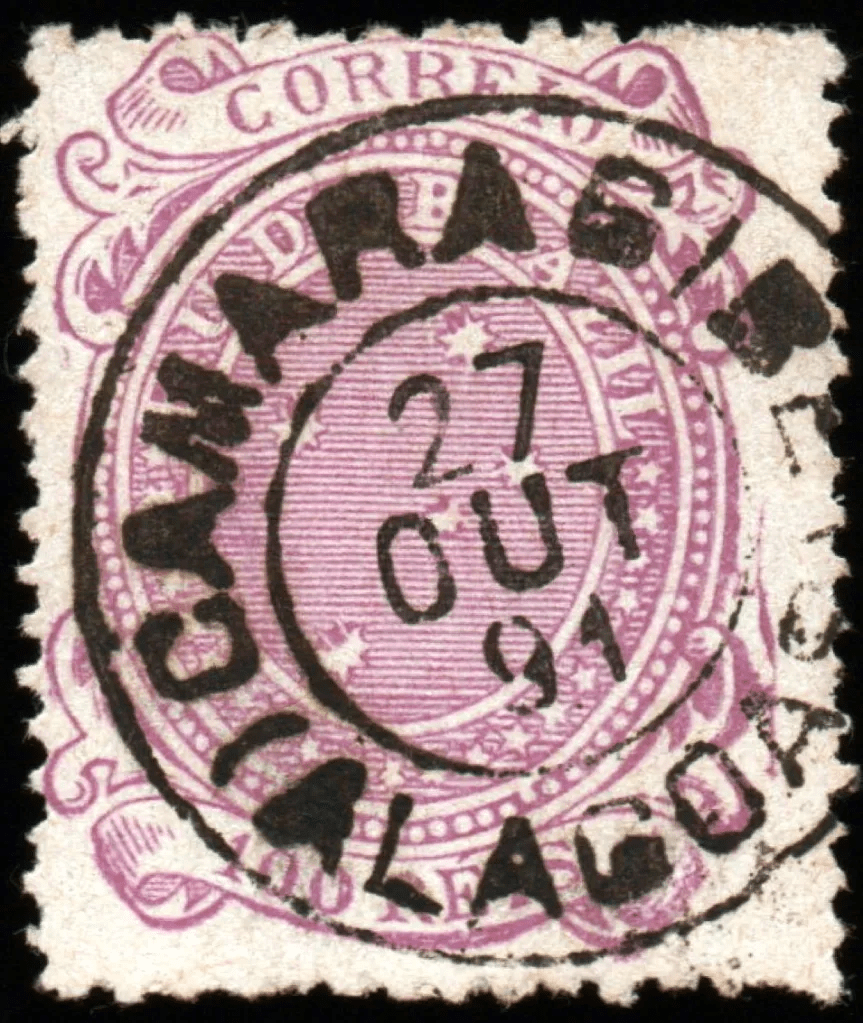
CAL-0045b (CC) 1881ff-1891, ebenfalls in blau
CAL-0045c (CC) 1891
Categories
Carimbologia C-D

Camamú, Bahia (CBA-0210)

Atlas do Imperio do Brasil, 1868

Another name: Macamamú

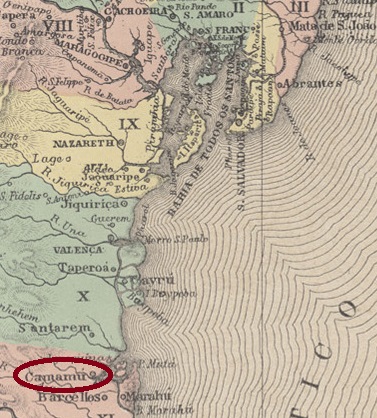
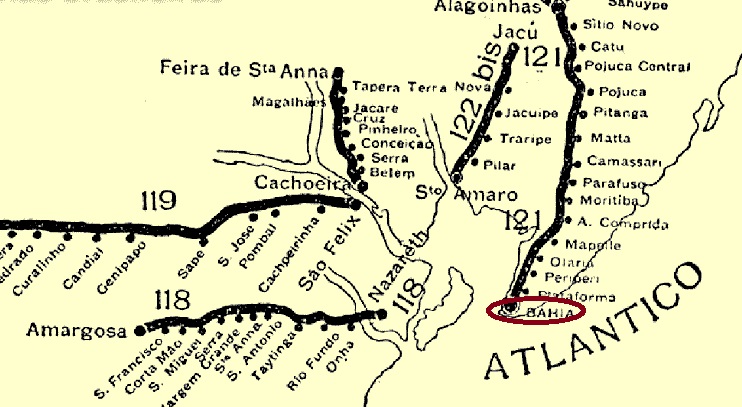
The aldeia (settlement) of N. Sra. de Assunção de Macamamú was founded as early as November 1561 on the north bank of the Orojó, 200 km south of the former colonial capital Salvador da Bahia. The place became a vila with the simplified name Camamú in May 1693 and was declared a town in June 1891.

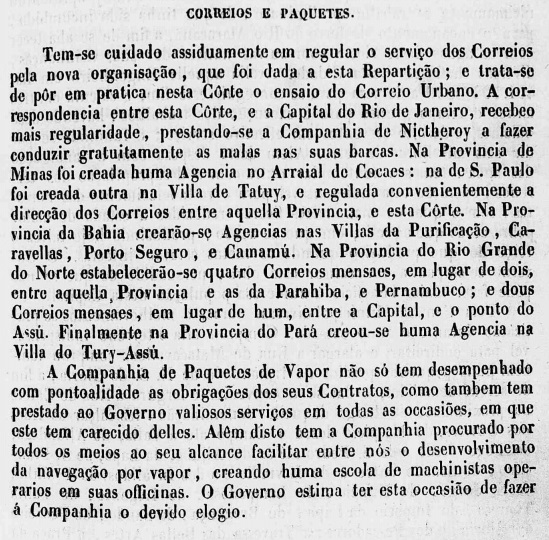
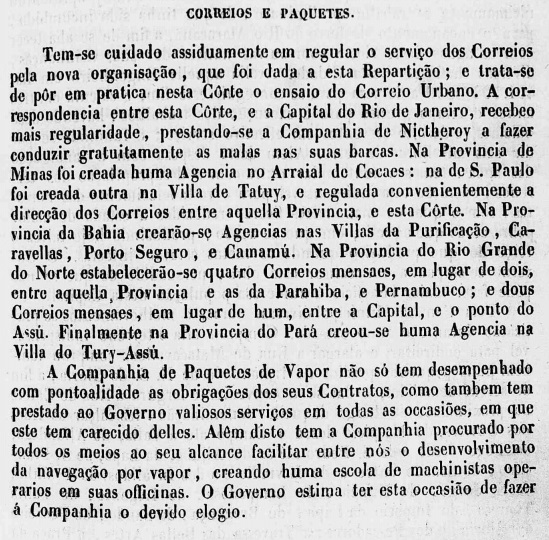
The report of the Imperial Ministry of May 1845 shows that there had been a post office in Camamú since April 1845:

Relatorio do Ministerio do Imperio, 05/1845

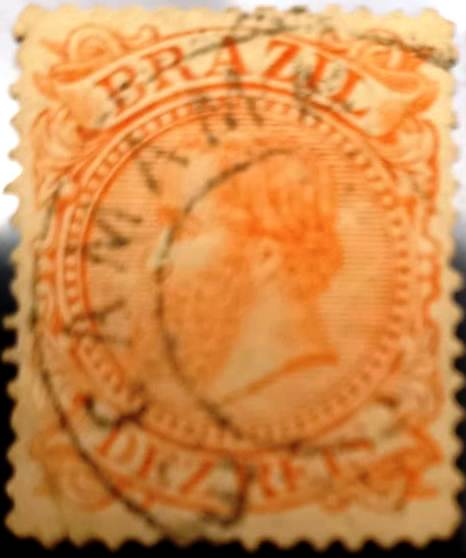
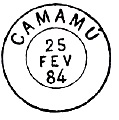
Two imperial postmarks were found, but unfortunately not the oldest one. On CBA-0210b (Coll. Fuad Ferreira Fo.) it says ..E CAMAMÚ. The letter E was often used at that time as an abbreviation for Estação (railway station). But since there was no railway line there, this E is probably the last letter of another word, e.g. for VILLA DE (CAMAMÚ):

CBA-0210b (FF) 1885ff

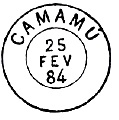
CBA-0210c is already known through Paulo Ayres in Catálogo de Carimbos Brasil-Império, (S. Paulo, 1937, 1942):

CBA-0210c (P.A. p.120) 1884-1885
Villiers de l’Ile Adam: Carta (…) da Provincia da Bahia, 1848

Anderer Name: Macamamú

Die Aldeia (Siedlung) N. Sra. de Assunção de Macamamú wurde bereits im November 1561 am Nordufer des Orojó gegründet, 200 km südlich der ehemaligen Kolonialhauptstadt Salvador da Bahia. Der Ort wurde im Mai 1693 zur Vila mit dem vereinfachten Namen Camamú und im Juni 1891 zur Stadt erklärt.

Aus dem Bericht des Reichsministeriums vom Mai 1845 geht hervor, dass es in Camamú seit April 1845 ein Postamt gab:

Relatorio do Ministerio do Imperio, Mai 1845

Zwei kaiserliche Poststempel wurden gefunden, aber leider nicht der älteste. Auf CBA-0210b (Samml. Fuad Ferreira Fo.) steht ..E CAMAMÚ. Der Buchstabe E wurde damals oft als Abkürzung für Estação (Bahnhof) verwendet. Da dort aber keine Eisenbahnlinie verlief, ist dieses E wohl der letzte Buchstabe eines anderen Wortes, z.B. für VILLA DE (CAMAMÚ):

CBA-0210b (FF) 1885ff

CBA-0210c ist bereits bekannt durch Paulo Ayres in Catálogo de Carimbos Brasil-Império, (S. Paulo, 1937, 1942):

CBA-0210c (P.A. S.120) 1884-1885
Categories
Carimbologia C-D

California (train station/ Bahnhof), Rio de Janeiro (CRJ-0250)

Almanak Laemmert, 1892

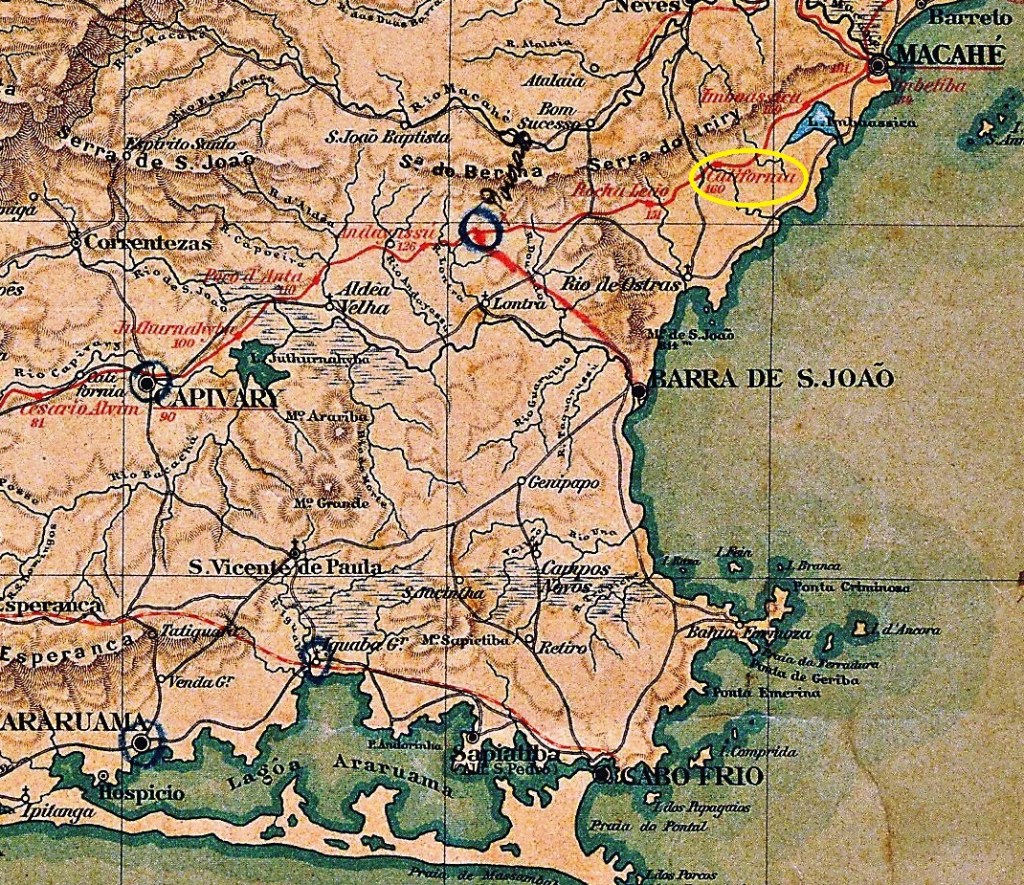
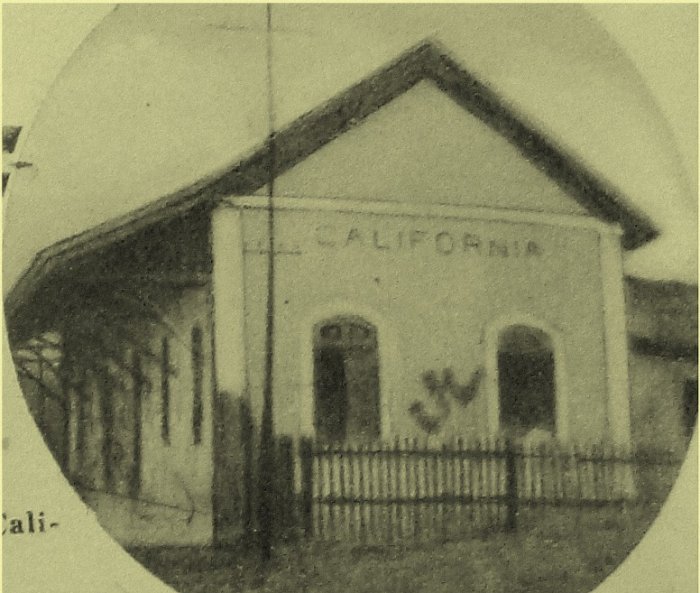
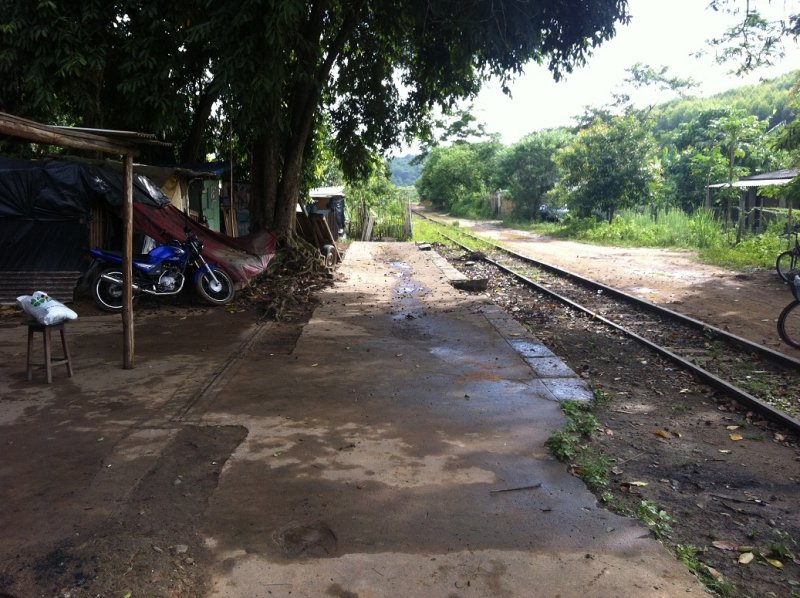
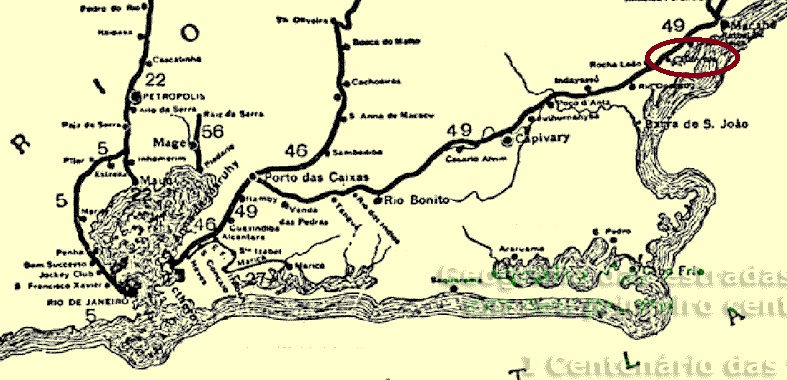
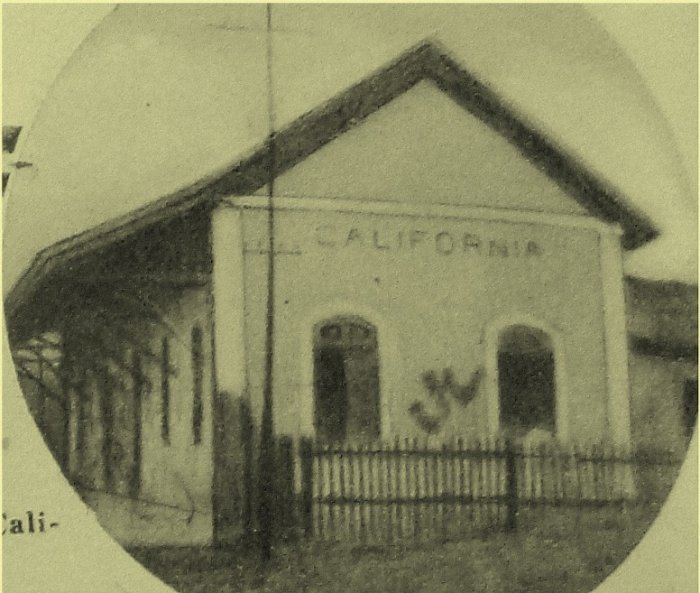
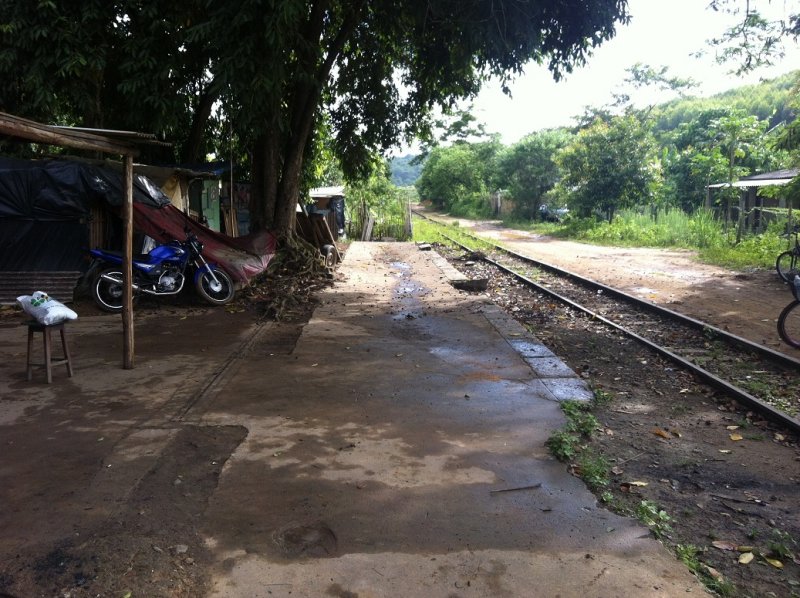
The California railway station was opened in November 1888 by the E.F. Leopoldina railway company and was located on the south bank of the Imboassica River in the Município Barra de S. João, 170 km northeast of the capital Rio de Janeiro. The area around the station belonged to the newly founded Município Casimiro de Abreu from March 1938 and has been in the Município Rio das Ostras since April 1992. The line belonged to Rede Ferroviária Federal S.A. (estacoesferroviarias.com.br) from 1975 until its closure the following year. Today the tracks are still there, the station building has already been demolished.

In 1923: Noite Ilustrada (in estacoesferroviarias.com.br)
In 2012 (Foto: Bernardo Oberg in estacoesferroviarias.com.br)

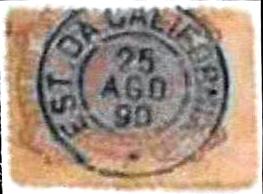
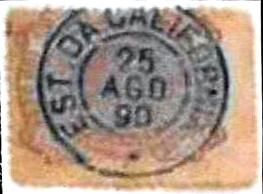
As Reinhold Koester writes in Carimbologia VIII, there was a post office at the station from January 1889. The oldest postmark is CRJ-0250a (Coll. Fuad Ferreira Fo.):

CRJ-0250a (FF) 1890

Koester (op. cit.) also shows us the seal cancel CRJ-0250b, without further details:

CRJ-0250b (RK)
E. F. Leopoldina, 1898 (IBGE)

Der Bahnhof California wurde im November 1888 von der Eisenbahngesellschaft E.F. Leopoldina eröffnet und lag am Südufer des Flusses Imboassica im Município Barra de S. João, 170 km nordöstlich der Hauptstadt Rio de Janeiro. Das Gebiet um den Bahnhof gehörte ab März 1938 zum neu gegründeten Município Casimiro de Abreu und liegt seit April 1992 im Município Rio das Ostras. Die Strecke gehörte von 1975 bis zu ihrer Stilllegung im folgenden Jahr der Rede Ferroviária Federal S.A. (estacoesferroviarias.com.br). Heute sind die Gleise noch vorhanden, das Bahnhofsgebäude wurde bereits abgerissen.

1923: Noite Ilustrada (in estacoesferroviarias.com.br)
2012 (Foto: Bernardo Oberg in estacoesferroviarias.com.br)

Wie Reinhold Koester in Carimbologia VIII schreibt, gab es ab Januar 1889 ein Postamt auf dem Bahnhof. Der älteste Poststempel ist CRJ-0250a (Samml. Fuad Ferreira Fo.):

CRJ-0250a (FF) 1890

Koester (op. cit.) zeigt uns auch den Siegelstempel CRJ-0250b, ohne weitere Details:

CRJ-0250b (RK)
Categories
Carimbologia C-D

Caldas, Minas Gerais (CMG-0475)

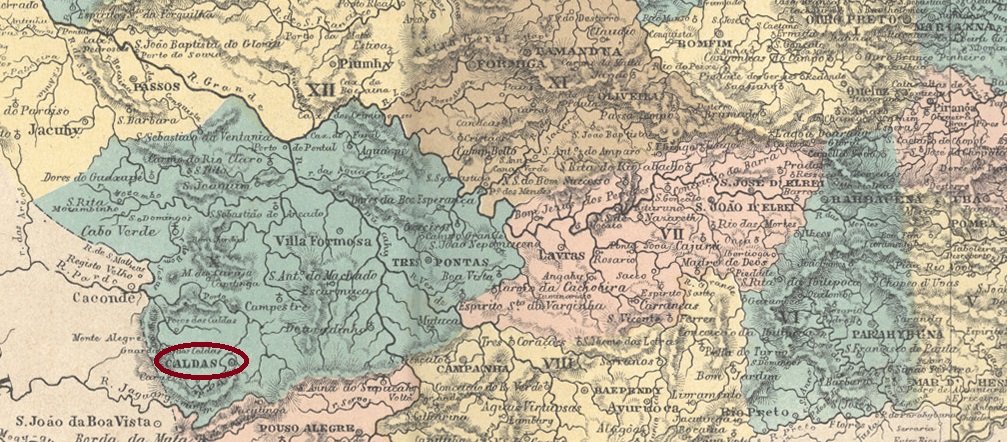
Atlas do Imperio do Brasil, 1868

Another name: Parreiras (1938-1948)

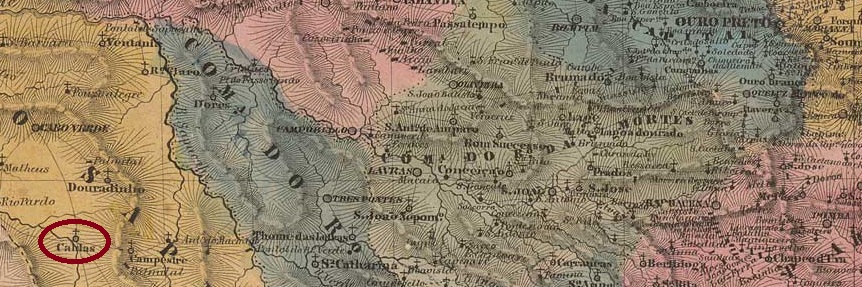
The freguesia of N. Sra. do Patrocínio do Rio Verde das Caldas was founded in March 1813, belonged to the Vila of Ouro Fino and was located on the east bank of the Rio Verde, 500 km southwest of the provincial capital of Ouro Preto. It was elevated to the status of vila in March 1839, belonged to the Município of Cabo Verde as a freguesia from March 1846 to October 1849, and became a town in June 1859. In December 1938, Caldas was renamed Parreiras (Vines), after the successful wine growing in the region. The new place name was probably not popular, because ten years later the old one returned.

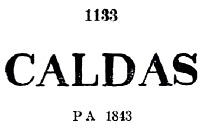
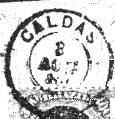
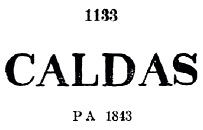
Reinhold Koester (Carimbologia VII) writes that there was a post office there from February 1845, but he had a copy of the June 1844 postmark CMG-0475a, which also appears in Paulo Ayres’ Catálogo de Carimbos Brasil-Império (S. Paulo, 1937, 1942) under no. 1133:

CMG-0475a (P.A. 1133) 1844-1857

The successor postmark is still unknown, as another postmark did not appear until 1880, as reported by R. Koester (op. cit.):

CMG-0475c (RK) 1880

Koester also mentions a similar cancel, CMG-0475d, which showed slightly larger letters than its predecessor.

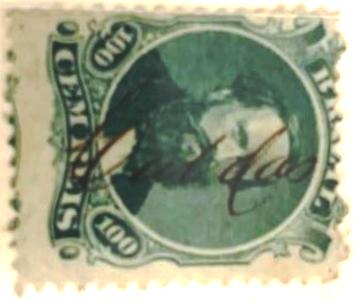
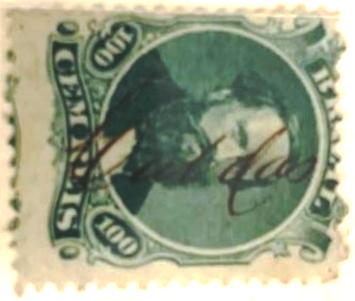
Possibly there was no postmark in Caldas from about 1857 onwards, as handwritten cancellations are found until after 1866:

1866ff (Coll. Paulo Corchaki)

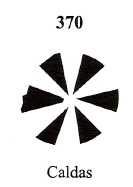
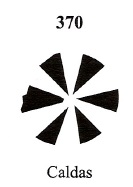
James Dingler and Klerman W. Lopes also show a mute cancellation from Caldas in Mute Cancellations of the Brazil Empire / Carimbos Mudos do Brasil Império (Brazil Philatelic Association, Rio de Janeiro, 2000), under no. 370:

BPA 370, 1866ff-1880
Villiers de l’Ile Adam: Carta (…) da Provincia de Minas Geraes, 1849

Anderer Name: Parreiras (1938-1948)

Die Freguesia von N. Sra. do Patrocínio do Rio Verde das Caldas wurde im März 1813 gegründet, gehörte zur Vila von Ouro Fino und lag am Ostufer des Rio Verde, 500 km südwestlich der Provinzhauptstadt Ouro Preto. Der Ort wurde im März 1839 zur Vila erhoben, gehörte von März 1846 bis Oktober 1849 als Freguesia zum Município von Cabo Verde und wurde im Juni 1859 eine Stadt. Im Dezember 1938 wurde Caldas in Parreiras (Reben) umbenannt, nach dem erfolgreichen Weinanbau in der Region. Der neue Ortsname war wohl nicht unumstritten, denn zehn Jahre später kehrte der alte wieder zurück.

Reinhold Koester (Carimbologia VII) schreibt, dass es dort seit Februar 1845 ein Postamt gab, aber er besaß ein Exemplar des Poststempels CMG-0475a vom Juni 1844, der auch in Paulo Ayres’ Catálogo de Carimbos Brasil-Império, (S. Paulo, 1937, 1942) unter Nr. 1133 erscheint:

CMG-0475a (P.A. 1133) 1844-1857

Der Nachfolgestempel ist noch unbekannt, da erst 1880 ein weiterer Poststempel erschien, wie R. Koester (op. cit.) berichtet:

CMG-0475c (RK) 1880

Koester erwähnt auch einen ähnlichen Stempel, CMG-0475d, der etwas größere Buchstaben als sein Vorgänger zeigte.

Möglicherweise gab es in Caldas ab etwa 1857 keinen Poststempel mehr, da handschriftliche Entwertungen bis nach 1866 zu finden sind:

1866ff (Samml. Paulo Corchaki)

Aus Caldas zeigen auch James Dingler und Klerman W. Lopes in Mute Cancellations of the Brazil Empire / Carimbos Mudos do Brasil Império (Brazil Philatelic Association, Rio de Janeiro, 2000) eine stumme Entwertung unter Nr. 370:

BPA 370, 1866ff-1880
Categories
Carimbologia C-D

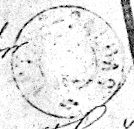
Caldas (train station/Bahnhof), São Paulo (CSP-0450)

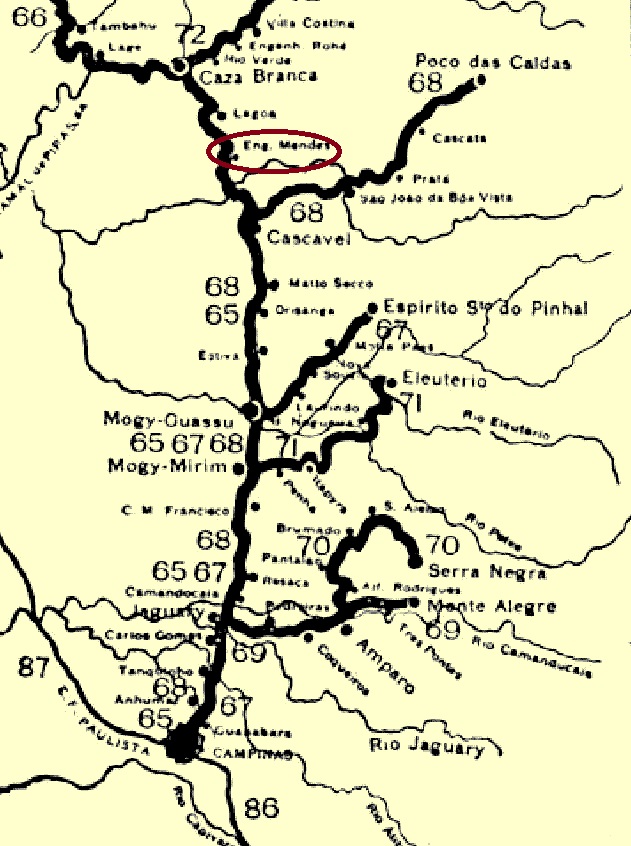
Mappa da Provincia de São Paulo, 1886

Another name: Engenheiro Mendes (1886)

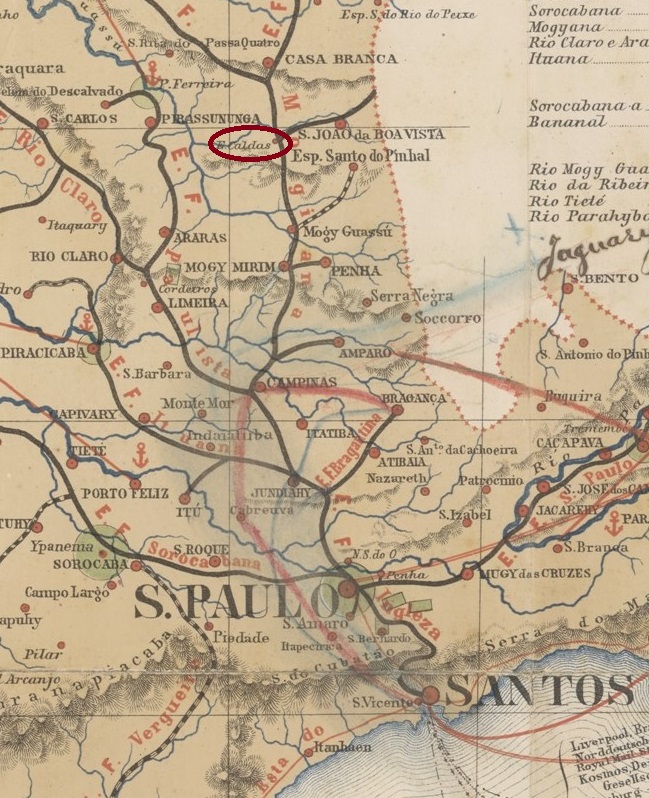
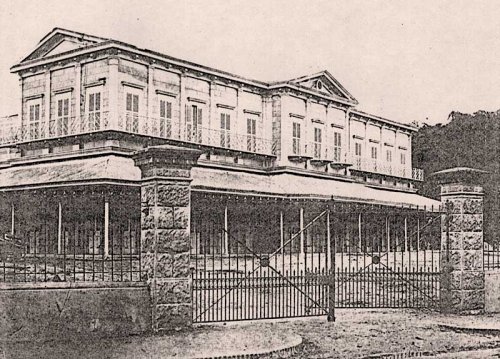
The Caldas (Thermes) railway station was opened in January 1878 by the Cia. Mogyana railway company (main line) and was in the Município S. João da Boa Vista, 200 km north of the provincial capital São Paulo. In 1886, the station was renamed after the Mogyana engineer Manoel da Silva Mendes, who died in June 1884. The area around the station belonged to the Cascavel district from August 1898 and has been in the Município Aguaí since November 1944. The railway line belonged to the FEPASA company from 1971 until its closure. Today, the tracks are still there, but the station building no longer exists.

According to the Directory of Imperial Post Offices (Tabella das Agencias do Correio do Imperio, Rio de Janeiro, 1885), there had been a post office at the station since 1882, and the regional press reported a postal agent in September of the same year:

Correio Paulistano, 27.09.1882

The first postmark, CSP-0450a, was already presented in R. Koester’s Carimbologia VII:

CSP-0450a (RK) 1884-1885

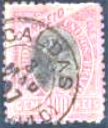
Its successor, CSP-0450b (Fig. Mário Celso Orsi Jr.), should already be Republican, as the only specimen so far is dated 1897:

CSP-0450b (MO) 1897

The presence of an imperial postmark Engenheiro Mendes is unlikely based on the dates found.

Cia. Mogyana, 1898 (IBGE)

Anderer Name: Engenheiro Mendes (1886)

Der Bahnhof Caldas (Thermen) wurde im Januar 1878 von der Eisenbahngesellschaft Cia. Mogyana (Hauptlinie) eröffnet und lag im Município S. João da Boa Vista, 200 km nördlich der Provinzhauptstadt São Paulo. 1886 wurde der Bahnhof nach dem im Juni 1884 verstorbenen Mogyana-Ingenieur Manoel da Silva Mendes umbenannt. Das Gebiet um den Bahnhof gehörte ab August 1898 zum Distrikt Cascavel und liegt seit November 1944 im Município Aguaí. Die Bahnlinie gehörte von 1971 bis zu ihrer Stilllegung der Gesellschaft FEPASA. Heute sind die Gleise noch vorhanden, das Bahnhofsgebäude existiert nicht mehr.

Wie aus dem Verzeichnis der kaiserlichen Postämter (Tabella das Agencias do Correio do Imperio, Rio de Janeiro, 1885) hervorgeht, gab es am Bahnhof seit 1882 ein Postamt, und die regionale Presse berichtete im September desselben Jahres von einem Postagenten:
Correio Paulistano, 27.09.1882

Der erste Poststempel, CSP-0450a, wurde bereits in R. Koesters Carimbologia VII vorgestellt:

CSP-0450a (RK) 1884-1885

Sein Nachfolger CSP-0450b (Abb. Mário Celso Orsi Jr.) dürfte bereits republikanisch sein, da das bisher einzige Exemplar 1897 datiert ist:

CSP-0450b (MO) 1897

Das Vorhandensein eines kaiserlichen Poststempels Engenheiro Mendes ist aufgrund der gefundenen Daten unwahrscheinlich.

Categories
Carimbologia C-D

Calçada (train station/Bahnhof), Bahia (CBA-0205)

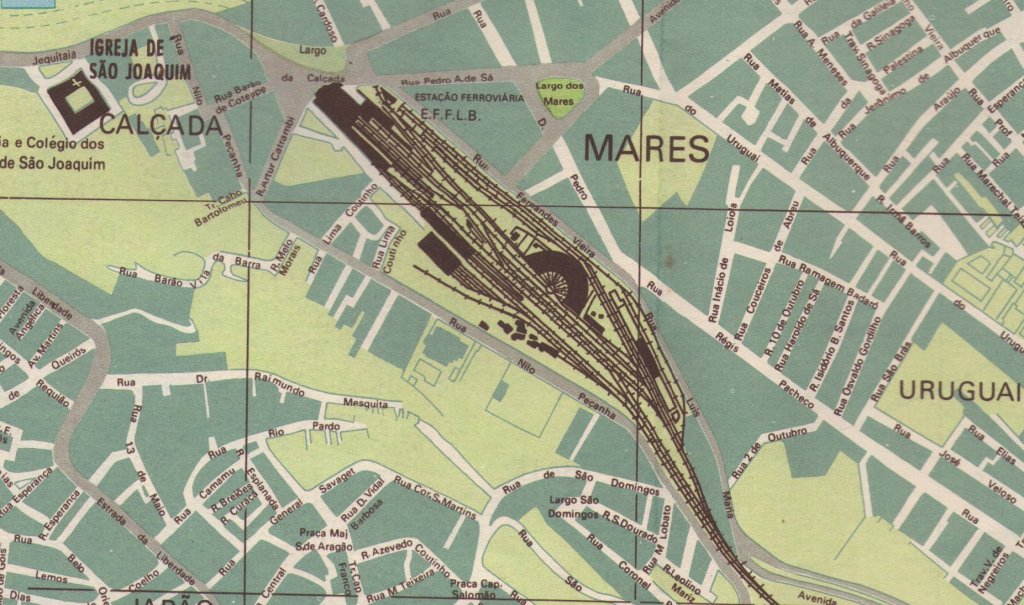
Instituto Brasileiro de Geografia e Estatística, 1898

Another name: Calçada do Bomfim

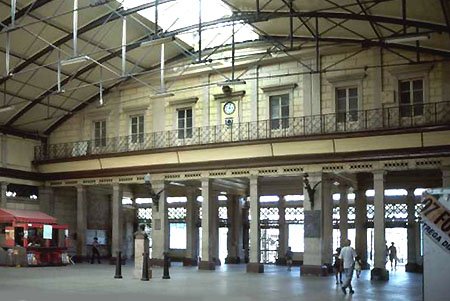
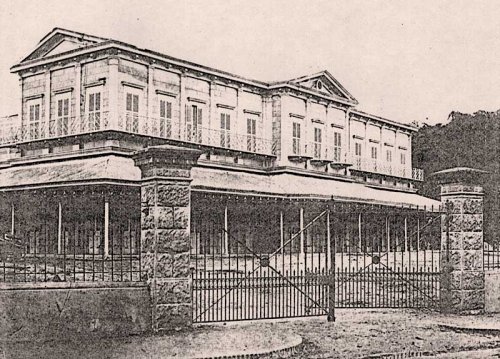
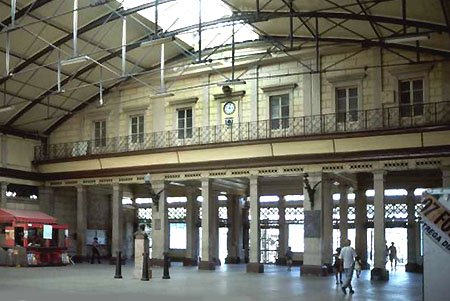
Calçada station was opened in June 1860 as the terminus of the E.F. Bahia ao S. Francisco railway company and was in the Bomfim district of Salvador da Bahia. The railway line passed to the Cie. Chemins de Fer Fédéraux de l’Est Brésilien in 1911, to the Viação Férrea F. Leste Brasileiro in 1935, to the Rede Ferroviária Federal S.A. in 1975 and has been operated since 1996 by the Cia. Brasileira de Transportes Urbanos (estacoesferroviarias.com.br). The station building was rebuilt in 1936.

1861 (Photo: Flavio Cavalcanti, on estacoesferroviarias.com.br)
2002 (Photo: Alexandre Santurion, on estacoesferroviarias.com.br)

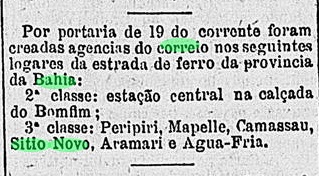
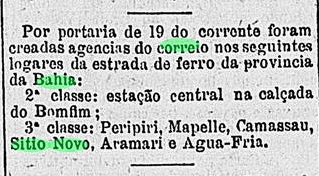
As the Rio press wrote, there had been a post office there since April 1881:

Gazeta de Noticias/RJ, 21.04.1881

Reinhold Koester gives August 1881 for this in Carimbologia VII, which could be the date this agency was put into operation.

The only 19th century postmark so far is CBA-0205a (image from the internet): a double circle with the inscriptions CALÇADA above and (BAHIA) below. One copy was seen, dated 1893 in the centre.

Guia Quatro Rodas (in estacoesferroviarias.com.br)

Anderer Name: Calçada do Bomfim

Der Bahnhof Calçada wurde im Juni 1860 als Endstation der Eisenbahngesellschaft E.F. Bahia ao S. Francisco eröffnet und lag im Stadtteil Bomfim von Salvador da Bahia. Die Bahnlinie ging 1911 an die Cie. Chemins de Fer Fédéraux de l’Est Brésilien, 1935 an die Viação Férrea F. Leste Brasileiro, 1975 an die Rede Ferroviária Federal S.A. über und wird seit 1996 von der Cia. Brasileira de Transportes Urbanos (estacoesferroviarias.com.br) betrieben. Das Bahnhofsgebäude wurde 1936 umgebaut.

1861 (Foto: Flavio Cavalcanti, auf estacoesferroviarias.com.br)
2002 (Foto: Alexandre Santurion, auf estacoesferroviarias.com.br)

Wie die Presse von Rio schrieb, gab es dort seit April 1881 ein Postamt:

Gazeta de Noticias/RJ, 21.04.1881

Reinhold Koester gibt in Carimbologia VII dafür den August 1881 an, was das Datum der Inbetriebnahme dieser Agentur sein könnte.

Der bisher einzige Poststempel aus dem 19. Jahrhundert ist CBA-0205a (Abbildung aus dem Internet): ein Doppelkreis mit den Inschriften CALÇADA oben und (BAHIA) unten. Ein Exemplar gesehen, datiert 1893 in der Mitte.

Categories
Carimbologia C-D

Calambao, Minas Gerais (CMG-0470)

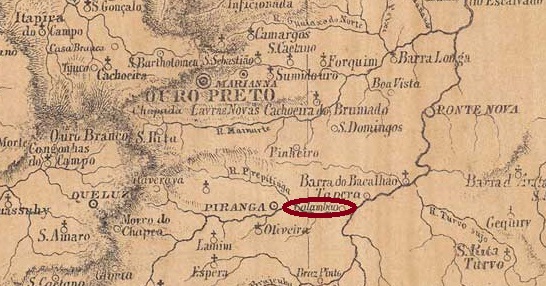
Atlas do Imperio do Brasil, 1868

Text update of August 14, 2023

Another name: Presidente Bernardes (1953)

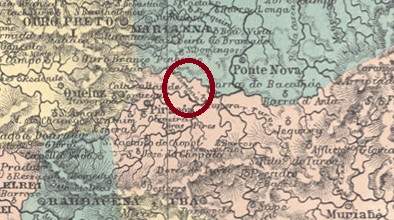
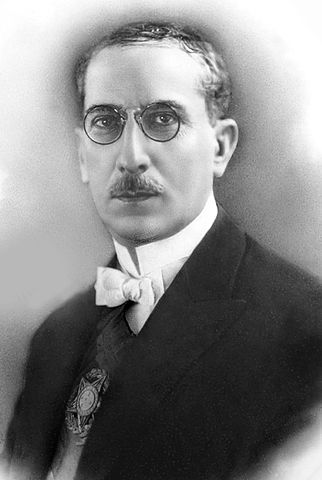
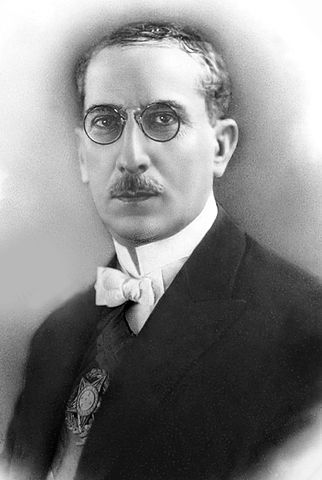
The chapel of Sto. Antonio do Calambao was built in August 1755 on the north bank of the Piranga River, 90 km southeast of the future provincial capital of Ouro Preto. In July 1868, it became a parish of the Vila de Mariana and in December 1874, it went to the Município Piranga as a freguesia. Its elevation to an independent município was accompanied by its renaming as Presidente Bernardes in December 1953. The Indian word Calambao means clearing in the woods. Arthur Bernardes (1875-1955), a Mineiro, was President of Brazil from 1922 to 1926.

Arthur Bernardes (Wikipedia)

Two creation dates have been found for the local post office. The first in 1880, as given in the Directory of Imperial Post Offices (Tabella das Agencias do Correio do Imperio, Rio de Janeiro, 1885). Then again in September 1883, as Paula Sobrinho writes in História Postal de Minas Gerais (Belo Horizonte, 1997). The oldest postmark so far is CMG-0470a (image from the Internet): a double circle with the inscription CALAMBAO above and a leaf ornament below. Two copies were seen, dated between 1894 and 1903 in the centre.

Provincia de Minas Geraes, 1873

Textaktualisierung vom 14. August 2023

Anderer Name: Presidente Bernardes (1953)

Die Kapelle von Sto. Antonio do Calambao wurde im August 1755 am Nordufer des Flusses Piranga, 90 km südöstlich der späteren Provinzhauptstadt Ouro Preto, errichtet. Im Juli 1868 wurde sie zur Pfarrei der Vila von Mariana und ging im Dezember 1874 als Freguesia zum Município Piranga. Mit der Erhebung zum eigenständigen Município ging im Dezember 1953 die Umbenennung in Presidente Bernardes einher. Das indianische Wort Calambao bedeutet Waldlichtung. Arthur Bernardes (1875-1955), ein gebürtiger Mineiro, war von 1922 bis 1926 Präsident Brasiliens.

Arthur Bernardes (Wikipedia)

Für das örtliche Postamt wurden zwei Gründungsdaten gefunden. Das erste im Jahr 1880, wie im Verzeichnis der kaiserlichen Postämter (Tabella das Agencias do Correio do Imperio, Rio de Janeiro, 1885) angegeben. Dann wieder im September 1883, wie Paula Sobrinho in História Postal de Minas Gerais (Belo Horizonte, 1997) schreibt. Der bisher älteste Poststempel ist CMG-0470a (Abbildung aus dem Internet): ein Doppelkreis mit der Inschrift CALAMBAO oben und einem Blattornament unten. Ein Exemplar gesehen, datiert 1903 in der Mitte.

Categories
Carimbologia C-D

Cajuru, São Paulo (CSP-0230)

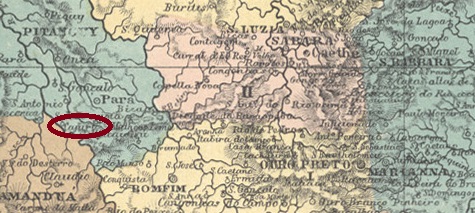
Villiers de l’Ile Adam: Carta (…) da Provincia de São Paulo, 1847

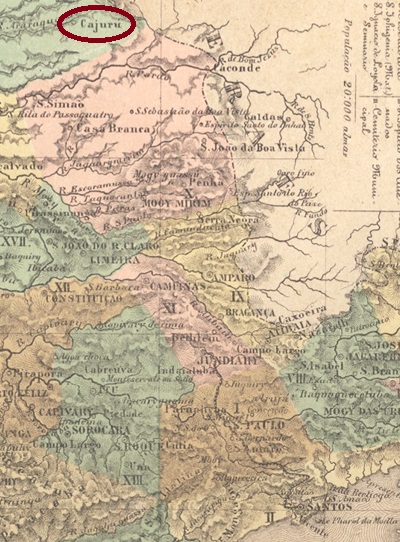
The Chapel S. Bento do Cajuru was built in March 1835 in the Município Batatais, 300 km north of the provincial capital São Paulo. In February 1846, it became a freguesia of the municipality of Casa Branca, but returned to Batatais in June 1850. Since March 1865, Cajuru has been a vila in its own município, which became a town in December 1906.

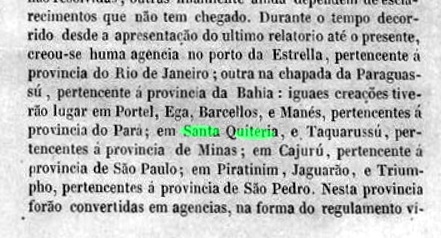
The local post office existed from about 1845, as shown in the yearbook of the following year:

Annuario Politico, Historico e Estatistico do Brazil, 1846

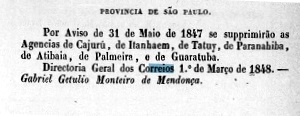
However, the office was closed in May 1847, as shown in the report of the Imperial Ministry:

Relatorio do Ministerio do Imperio, 1847

A reopening of the post office was ordered in February 1849, as Nova Monteiro writes in Administrações e Agencias Postaes do Brasil Imperio (Brasil Filatelico/RJ, 1934-5; reprinted by SPP 1994-1999).

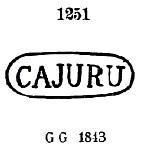
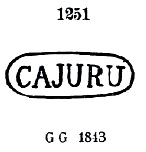
Three place cancels and one mute one were found for the imperial period. CSP-0230a is certainly the oldest, as it was used on Bull’s-Eye issues and until 1876. It also exists in red, it was already presented by Paulo Ayres in the Catálogo de Carimbos Brasil-Império (S. Paulo, 1937, 1942) with No. 1251:

CSP-0230a (P.A. 1251)

Two double circle cancels followed: CSP-0230b (ill. Jorge L. Pedreira) is quite plain and bears the dates 1881-1882 in the centre. The French type CSP-0230c (ill. from the Internet) bears the broad inscription CAJURU above and the star between brackets below, dated 1886-1894.

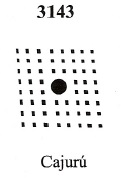
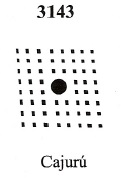
There is also a mute cancel from Cajuru which was given No. 3143 in Mute Cancellations of the Brazil Empire / Carimbos Mudos do Brasil Império (Brazil Philatelic Association, Rio de Janeiro, 2000) by James Dingler and Klerman W. Lopes:

BPA 3143
Atlas do Imperio do Brasil, 1868

Die Capela de S. Bento do Cajuru wurde im März 1835 errichtet und befand sich im Município Batatais, 300 km nördlich der Provinzhauptstadt São Paulo. Im Februar 1846 wurde es zur Freguesia der Gemeinde Casa Branca, die jedoch im Juni 1850 wieder zu Batatais zurückkehrte. Seit März 1865 ist Cajuru eine Vila in einem eigenen Município, das im Dezember 1906 zur Stadt erklärt wurde.

Das örtliche Postamt bestand seit etwa 1845, wie aus dem Jahrbuch des folgenden Jahres hervorgeht:

Annuario Politico, Historico e Estatistico do Brazil, 1846

Das Amt wurde jedoch im Mai 1847 geschlossen, wie man im Bericht des kaiserlichen Ministeriums lesen kann:
Relatorio do Ministerio do Imperio, 1847

Über eine Wiedereröffnung des Postamts wurde im Februar 1849 verfügt, wie Nova Monteiro in Administrações e Agencias Postaes do Brasil Imperio (Brasil Filatelico/RJ, 1934-5; Nachdruck SPP 1994-1999) schreibt.

Für die Kaiserzeit wurden drei Ortsstempel und ein stummer Stempel gefunden. CSP-0230a ist sicherlich der älteste, da er auf Ochsenaugen-Ausgaben und bis 1876 verwendet wurde. Es gibt ihn auch in rot, er wurde bereits von Paulo Ayres im Catálogo de Carimbos Brasil-Império (S. Paulo, 1937, 1942) mit der Nr. 1251 vorgestellt:
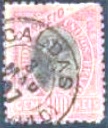
CSP-0230a (P.A. 1251)

Zwei Doppelkreis-Stempel folgten: CSP-0230b (Abb. Jorge L. Pedreira) ist recht schlicht und trägt in der Mitte die Jahreszahlen 1881-1882. Der französische Typ CSP-0230c (Abb. aus dem Internet) trägt oben die breite Inschrift CAJURU und unten den Stern zwischen Klammern, datiert 1886-1894.

Aus Cajuru stammt auch ein stummer Stempel, der in den Mute Cancellations of the Brazil Empire / Carimbos Mudos do Brasil Império (Brazil Philatelic Association, Rio de Janeiro, 2000) von James Dingler und Klerrman W. Lopes die Nr. 3143 erhielt:

BPA 3143
Categories
Carimbologia C-D

Cajuru, Minas Gerais (CMG-0460)

Atlas do Imperio do Brasil, 1868

Another name: Carmo do Cajuru

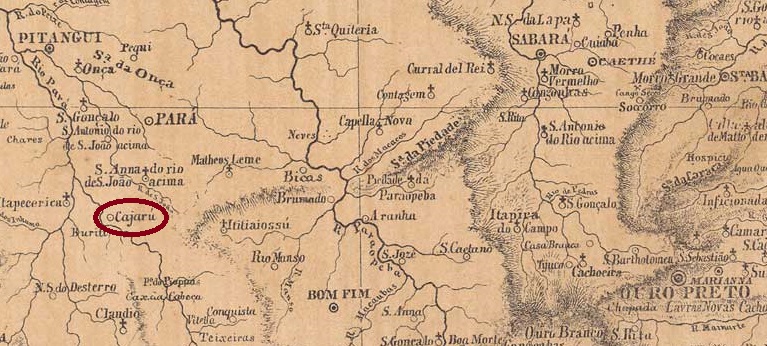
The chapel of N. Sra. do Carmo do Cajuru was built in March 1840, belonged to the Vila de Pará and was located on the eastern bank of the Pará, 200 km west of the provincial capital Ouro Preto. In August 1864, it became a freguesia and, in September 1901, a district of the Município Itaúna. The name of the district was simplified to Cajuru in April 1926 and has been Município Carmo do Cajuru since December 1948. The Indian term means forest estuary.

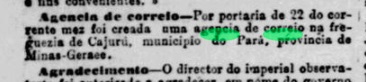
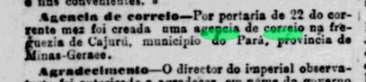
As reported by the Rio press, there had been a post office there since October 1887:

Jornal do Commercio/RJ, 27.10.1887

An imperial postmark from Cajuru in Minas Gerais is not yet known.

Provincia de Minas Geraes, 1873

Anderer Name: Carmo do Cajuru

Die Kapelle N. Sra. do Carmo do Cajuru wurde im März 1840 erbaut, gehörte zur Vila de Pará und lag am Ostufer des Pará, 200 km westlich der Provinzhauptstadt Ouro Preto. Im August 1864 wurde der Ort zur Freguesia und im September 1901 als Distrikt zum Município Itaúna. Der Name des Distrikts wurde im April 1926 in Cajuru vereinfacht und ist seit Dezember 1948 Município Carmo do Cajuru. Der indianische Begriff bedeutet Waldmündung.

Wie die Presse von Rio berichtet, gab es dort seit Oktober 1887 ein Postamt:

Jornal do Commercio/RJ, 27.10.1887

Ein kaiserlicher Poststempel aus Cajuru in Minas Gerais ist bisher nicht bekannt.

Categories
Carimbologia C-D

Cajá, Espírito Santo (CES-0043)

Provincia do Espirito Santo, 1873

Other names: Petrópolis, S. João de Petrópolis (1906)

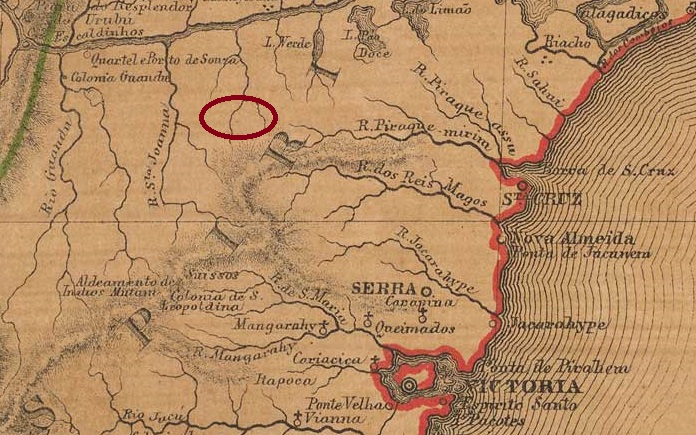
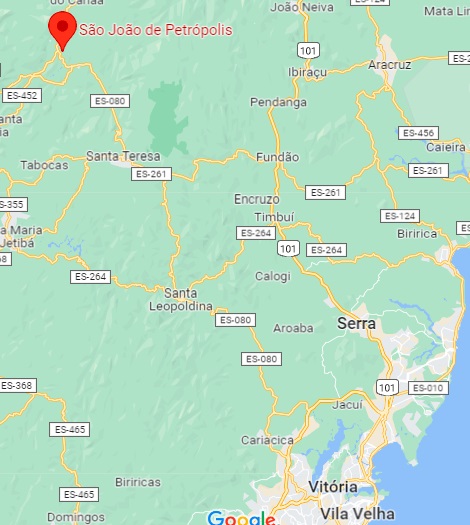
This is another village with a convoluted history. As early as 1874, there is said to have been a Barracão de S. João Baptista de Petrópolis on the eastern bank of the Santa Maria do Doce, 100 km northwest of the provincial capital of Vitória, which belonged to the Vila de Cachoeiro de Sta. Leopoldina. However, the arraial was called simply Barracão or also Cajá and passed into the administration of the Freguesia of Santa Teresa in August 1888. Santa Teresa became a vila in November 1890 and Cajá became its district in December 1895, called also de facto S. João de Petrópolis since then.

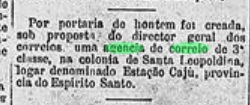
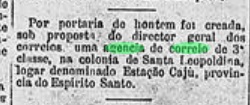
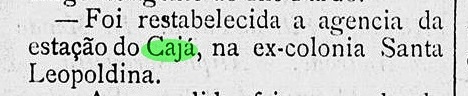
As the place became an important port of call for many colonist families from Italy, it was also called Estação (station) Cajá, although there was no railway station there. In April 1881, the decision was made to establish a post office, as the Rio press reported, despite the wrong place name:

Gazeta de Notícias/RJ, 14.04.1881

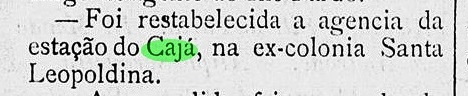
However, since no Cajá post office is listed in the Directory of Imperial Post Offices (Tabella das Agencias do Correio do Imperio, Rio de Janeiro, 1885), it is assumed that it was not put into operation until later. It was closed in April 1890 and reopened in February the following year, as reported in the regional press:

O Estado do Espirito Santo, 26.02.1891

No imperial postmarks are known from Cajá so far.

Google Maps

Andere Namen: Petrópolis, S. João de Petrópolis (1906)

Dies ist eine weitere Ortschaft mit verworrener Geschichte. Bereits 1874 soll ein Barracão de S. João Baptista de Petrópolis am Ostufer des Santa Maria do Doce, 100 km nordwestlich der Provinzhauptstadt Vitória, bestanden haben, der zur Vila de Cachoeiro de Sta. Leopoldina gehörte. Der Arraial wurde jedoch nur Barracão oder auch Cajá genannt und ging im August 1888 in die Verwaltung der Freguesia von Santa Teresa über. Santa Teresa wurde im November 1890 zur Vila und Cajá im Dezember 1895 zu ihrem Distrikt, der seitdem auch de facto S. João de Petrópolis heißt.

Da der Ort für viele Kolonistenfamilien aus Italien ein wichtiger Anlaufpunkt wurde, nannte man ihn auch Estação (Station) Cajá, obwohl es dort keinen Bahnhof gab. Im April 1881 fiel die Entscheidung für ein eigenes Postamt, wie die Presse in Rio berichtete, allerdings mit dem falschen Ortsnamen:

Gazeta de Notícias/RJ, 14.04.1881

Da aber im Verzeichnis der kaiserlichen Postämter (Tabella das Agencias do Correio do Imperio, Rio de Janeiro, 1885) kein Postamt Cajá verzeichnet ist, wird vermutet, dass es erst später in Betrieb genommen wurde. Es wurde im April 1890 geschlossen und im Februar des folgenden Jahres wiedereröffnet, wie die regionale Presse berichtete:

O Estado do Espirito Santo, 26.02.1891

Aus Cajá sind bisher keine kaiserlichen Poststempel bekannt.