Categories
Carimbologia T-Z

Trez Ilhas, Minas Gerais (TMG-3510)

agenciaspostais.com.br

Another name: Ponte das Três Ilhas

See also São José do Rio Preto (SMG-2480)

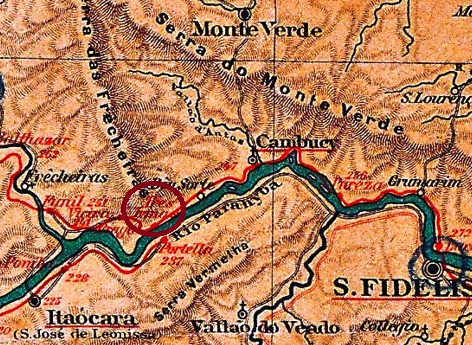
This postal agency is sometimes called Ponte (bridge), sometimes Ponto (place) in the press of the time. Here we have opted for the first name, because every bridge is also a place, but not vice versa. Besides, there was (and still is) a bridge on the Rio Preto at the provincial border between Minas Gerais and Rio de Janeiro, called Três Ilhas (Three Islands). Actually, the three islands are not located directly at the bridge, but a little further downstream, about 270 km south of the provincial capital Ouro Preto.

The place belonged to the freguesia of Vargem Grande near Juiz de Fora and had a tax post (Recebedoria), which was probably built close to the bridge. Today, the district is called Três Ilhas and is located in the Município of Belmiro Braga.

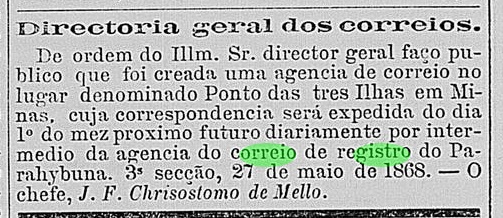
A post office was built there in 1868. Paula Sobrinho (História Postal de Minas Gerais, Belo Horizonte, 1997) writes March for it, but the postal service did not start until June of that year, as the Rio press reports:
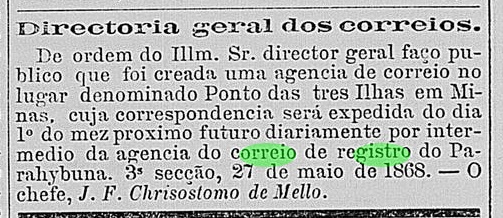
Correio Mercantil/RJ. 28.05.1868

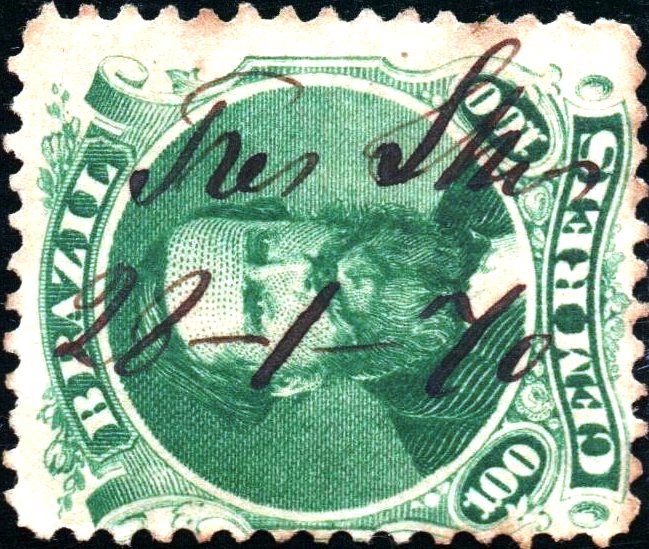
Apparently the local postmark was not ready in time for the opening of the agency, as revealed by a handwritten cancellation (Coll. José A. Junges) from 1870:
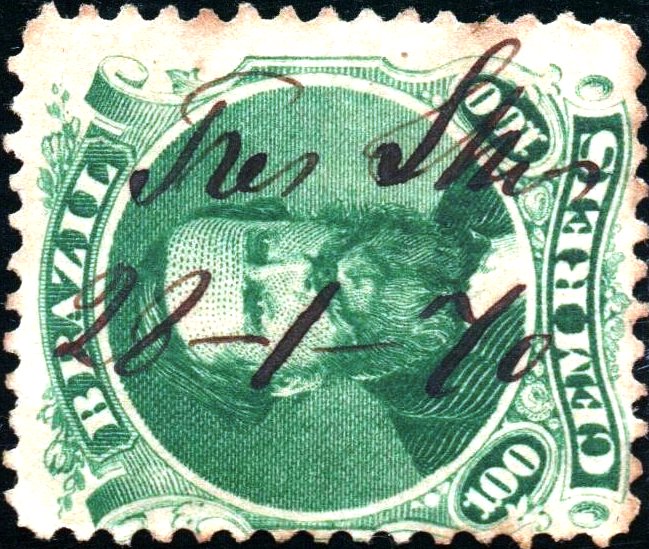
1870 (JJ)

The postmark was nevertheless eventually delivered: TMG-3510a (Coll. José A. Junges) is a double circle with the inscription TREZ ILHAS at the top and dates in the middle between 1878 and 1879.

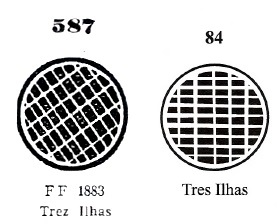
A mute cancellation is also known from there, which was in use from about 1876 to 1878 and was already presented by Paulo Ayres in the Catálogo de Carimbos Brasil-Império (S. Paulo, 1937, 1942) under no. 587. This cancellation bears no. 84 in J. Dingler and K. W. Lopes in Mute Cancellations of the Brazil Empire / Carimbos Mudos do Brasil Império (Brazil Philatelic Association, Rio de Janeiro, 2000):
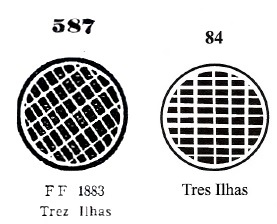
P.A. 587 (BPA 84) 1876ff-1878

The bridge was in a very bad condition at the end of the 1870s, as reported in the regional press:
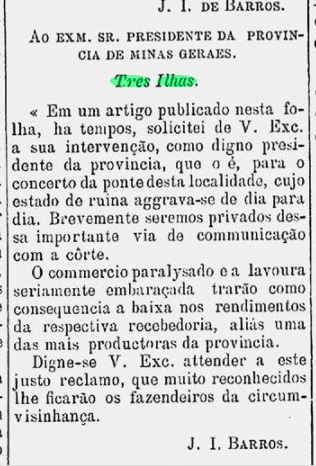
A Actualidade, 07.03.1879

Since the repair was delayed, it can be assumed that trade through the bridge came to a standstill – as was prophesied in the press report – and the post office was also soon closed. For it was no longer listed in the Directory of Imperial Post Offices (Tabella das Agencias do Correio do Imperio, Rio de Janeiro, 1885). On the other side of the river – that is, in the province of Rio de Janeiro – a post office also called Tres Ilhas opened in 1881 (TRJ-2268). And then there is also the town of São José das Três Ilhas in the area, formerly São José do Rio Preto (SMG-2480).
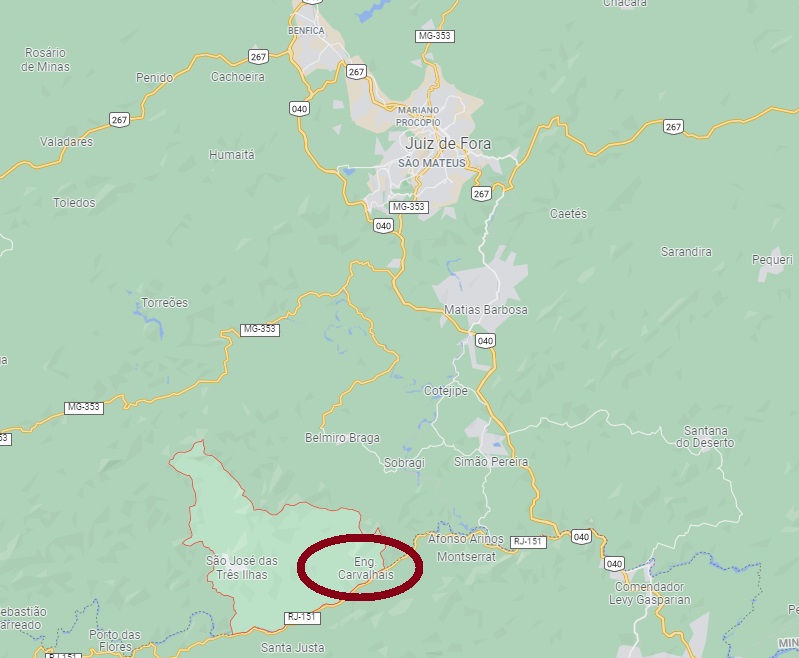
Google Maps

Anderer Name: Ponte das Três Ilhas

Siehe auch São José do Rio Preto (SMG-2480)

Diese Postagentur wird in der damaligen Presse mal als Ponte (Brücke), mal als Ponto (Stelle) genannt. Hier haben wir uns für die erste Bezeichnung entschieden, denn jede Brücke ist auch eine Stelle, aber umgekehrt nicht. Außerdem gab es (und gibt es noch) an der Provinzgrenze zwischen Minas Gerais und Rio de Janeiro tatsächlich eine Brücke am Rio Preto, die Três Ilhas (Drei Insel) heißt. Nun liegen die drei Insel nicht direkt an der Brücke, sondern etwas weiter flussabwärts, ca. 270 km südlich der Provinzhauptstadt Ouro Preto entfernt.

Der Ort gehörte der Freguesia von Vargem Grande bei Juiz de Fora und hatte eine Steuerstelle (Recebedoria), die wohl nah an der Brücke errichtet wurde. Heute heiß der Distrikt Três Ilhas und liegt im Município von Belmiro Braga.

Dort entstand 1868 ein Postamt. Paula Sobrinho (História Postal de Minas Gerais, Belo Horizonte, 1997) schreibt dafür den März, allerdings startete der Postbetrieb erst im Juni des Jahres, wie die Presse aus Rio berichtet:
Correio Mercantil/RJ. 28.05.1868

Offenbar wurde der örtliche Poststempel nicht rechtzeitig zur Agentureröffnung fertig, wie die handschriftliche Entwertung (Samml. José A. Junges) aus 1870 verrät:
1870 (JJ)

Der Ortsstempel wurde dennoch irgendwann nachgeliefert: TMG-3510a (Samml. José A. Junges) ist ein Doppelkreis mit der Inschrift TREZ ILHAS oben und Daten in der Mitte zwischen 1878 und 1879.

Von dort ist auch eine stumme Entwertung bekannt, die ca. 1876 bis 1878 im Gebrauch war und bereits durch Paulo Ayres im Catálogo de Carimbos Brasil-Império, (S. Paulo, 1937, 1942) unter Nr. 587 vorgestellt wurde. Diese Abstempelung trägt bei J. Dingler und K. W. Lopes in Mute Cancellations of the Brazil Empire / Carimbos Mudos do Brasil Império, (Brazil Philatelic Association, Rio de Janeiro, 2000) die Nr. 84:
P.A. 587 (BPA 84) 1876ff-1878

Die Brücke war am Ende der 1870er Jahre in einem sehr schlechten Zustand, wie aus der Regionalpresse zu erfahren ist:
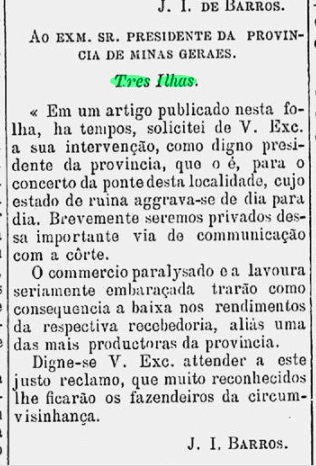
A Actualidade, 07.03.1879

Da die Reparatur auf sich warten ließ, ist es anzunehmen, dass der Handel durch die Brücke –wie in der Pressenachricht prophezeit wurde – zum Erliegen kam, und auch die Poststelle bald geschlossen wurde. Denn sie war nicht mehr im Verzeichnis der kaiserlichen Postämter (Tabella das Agencias do Correio do Imperio, Rio de Janeiro, 1885) aufgelistet. Auf der anderer Flussseite – also in der Provinz Rio de Janeiro – eröffnete 1881 außerdem ein Postamt, der auch Tres Ilhas hieß (TRJ-2268). Und dann gibt es auch in der Gegend den Ort São José das Três Ilhas, den früheren São José do Rio Preto (SMG-2480).
Categories
Carimbologia T-Z

Trez Forquilhas, Rio Grande do Sul (TRS-0460)

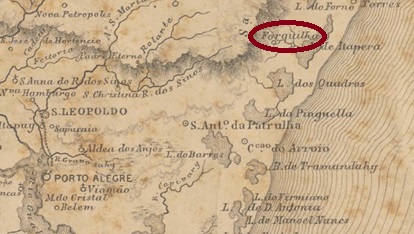
Provincia de São Pedro do Sul, 1877

Other names: Três Irmãos, Guananazes

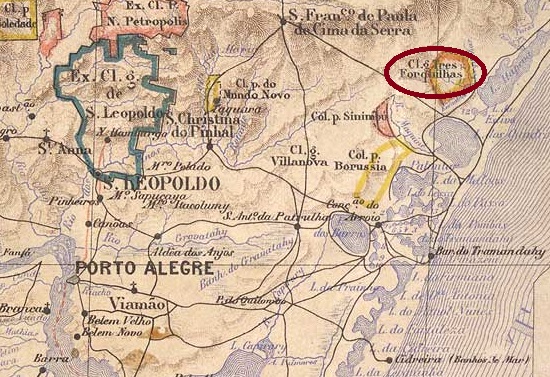
Trez Forquilhas (Three Forks) was the name of the settlement that emerged in the mid-19th century near Torres, 150 km northeast of the provincial capital Porto Alegre. It was not until September 1892 that the place was elevated to the status of a district, which subsequently changed its name twice: in March 1938 to Tres Irmãos and in December 1944 to Guananazes. Then, in July 1958, the original place name returned. Três Forquilhas has been an independent município since March 1992.

There had been a post office there since 1883, as can be read in the Directory of Imperial Post Offices (Tabella das Agencias do Correio do Imperio, Rio de Janeiro, 1885). The imperial postmark is TRS-0460a (image from the Internet): a double circle with the inscription TREZ FORQUILHAS at the top. The dates in the middle originate from the period 1883-1907.

Estado do Rio Grande do Sul, 1891

Andere Namen: Três Irmãos, Guananazes

Trez Forquilhas (Drei Forken) hieß die Siedlung, die in der Mitte des 19. Jahrhunderts bei Torres entstand, 150 km nordöstlich der Provinzhauptstadt Porto Alegre entfernt. Erst im September 1892 wurde der Ort zum Distrikt erhoben, der danach den Namen zweimal wechselte: im März 1938 zu Tres Irmãos und im Dezember 1944 zu Guananazes. Im Juli 1958 kehrte dann der ursprüngliche Ortsname zurück. Três Forquilhas ist seit März 1992 ein eigenständiger Município.

Es gab dort ein Postamt seit 1883, wie im Verzeichnis der kaiserlichen Postämter (Tabella das Agencias do Correio do Imperio, Rio de Janeiro, 1885) zu lesen ist. Der kaiserliche Poststempel ist TRS-0460a (Abb. aus dem Internet): ein Doppelkreis mit der Inschrift TREZ FORQUILHAS oben. Die Daten in der Mitte entstammen dem Zeitraum 1883-1907.

Categories
Carimbologia T-Z

Tres Pontas, Minas Gerais (TMG-3225)

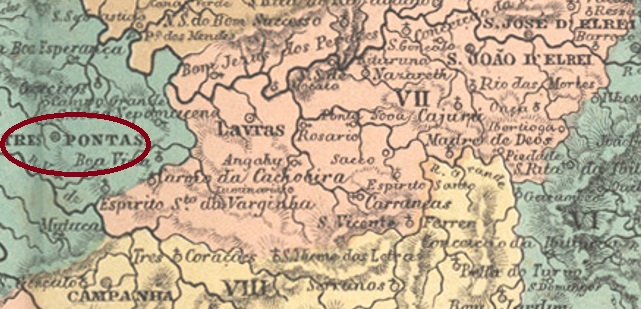
Atlas do Imperio do Brasil, 1868

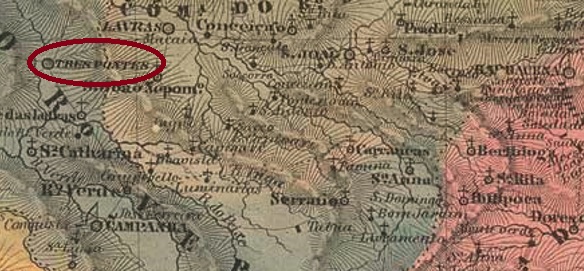
The chapel of Nossa Senhora da Ajuda de Tres Pontas (Our Lady of Help at the Three Peaks) was built in October 1768, 330 km southwest of the provincial capital of Ouro Preto. In July 1832, it was elevated as a freguesia in the Município of Lavras and rose to Villa in April 1841. Tres Pontas has been a town since July 1857.

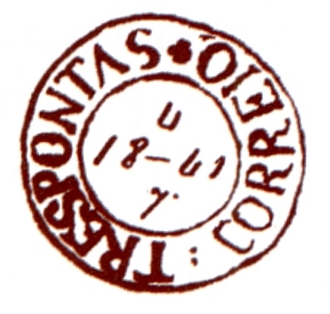
Both Nova Monteiro in Administrações e Agencias Postaes do Brasil Imperio (in Brasil Filatelico/RJ, 1934-5; reprint SPP 1994-1999) and Paula Sobrinho in História Postal de Minas Gerais (Belo Horizonte, 1997) agree that there was a post office there since 1843. Nova Monteiro gives a date in the month of January, while Paula Sobrinho writes February as the month of origin. However, this would have to be a reopening because there is a local postmark known that shows earlier dates. TMG-3225a has already been presented in the RHM catalogue under P-MG-65:

TMG-3225a (RHM P-MG-65) 1841-1843ff

It was followed by two town cancels in double circle with inscription TRES PONTAS above. TMG-3225b (Coll. José A. Junges) is unfortunately not fully visible on a single copy dated 1877, but it could be a French type. TMG-3225c (Coll. José A. Junges) also exists in violet. Besides the place name at the top, there is an ornament at the bottom that looks like an H with a side leaf on each side. Dates in the middle from 1887 to 1892.

Villiers de l’Ile Adam: Carta (…) da Provincia de Minas Geraes, 1849

Die Kapelle von Nossa Senhora da Ajuda de Tres Pontas (Unsere Liebe Frau der Hilfe an den Drei Spitzen) wurde im Oktober 1768 errichtet und lag 330 km südwestlich der Provinzhauptstadt Ouro Preto entfernt. Im Juli 1832 wurde der Ort als Freguesia im Município von Lavras erhoben und stieg im April 1841 zu Villa. Seit Juli 1857 ist Tres Pontas eine Stadt.

Sowohl Nova Monteiro in Administrações e Agencias Postaes do Brasil Imperio (in Brasil Filatelico/RJ, 1934-5; Reprint SPP 1994-1999) als auch Paula Sobrinho in História Postal de Minas Gerais (Belo Horizonte, 1997) sind sich darüber einig, dass es dort seit 1843 ein Postamt gab. Wobei Nova Monteiro dafür ein Datum im Monat Januar angibt, während Paula Sobrinho den Februar als Entstehungsmonat schreibt. Allerdings müsste es sich dabei um eine Wiedereröffnung handeln, denn es ist ein lokaler Poststempel bekannt, der frühere Daten aufweist. TMG-3225a wurde bereits im RHM-Katalog unter P-MG-65 vorgestellt:

TMG-3225a (RHM P-MG-65) 1841-1843ff

Ihm folgten zwei Ortsstempel im Doppelkreis mit Inschrift TRES PONTAS oben. TMG-3225b (Samml. José A. Junges) ist leider bei einem mit 1877 datierten Einzelexemplar nicht vollständig zu sehen, er könnte aber ein französischer Typ sein. TMG-3225c (Samml. José A. Junges) gibt es auch in violett. Außer dem Ortsnamen oben ist ein Ornament unten, das wie eine H mit seitlich je einem Blatt aussieht. Daten in der Mitte von 1887 bis 1892.

Categories
Carimbologia T-Z

Tres Irmãos (train station/Bahnhof), Rio de Janeiro (TRJ-2270)

Almanak Laemmert, 1892

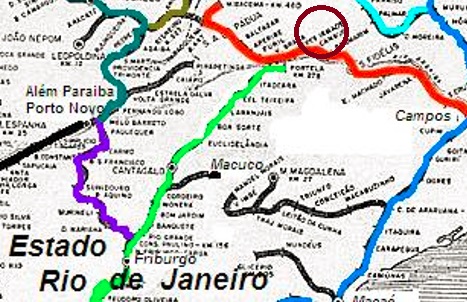
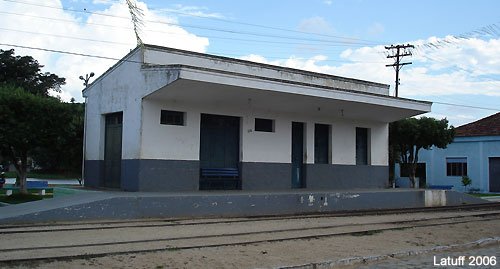
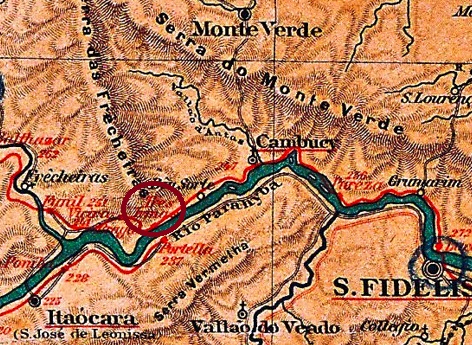
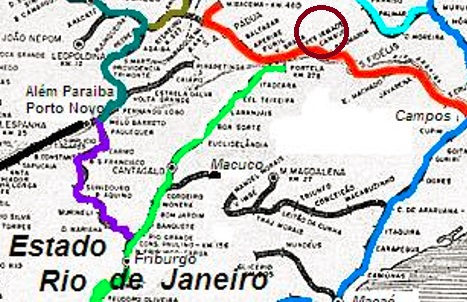
The Tres Irmãos (Three Brothers) station was inaugurated in 1883 by the E.F. Santo Antonio de Padua a S. Fidellis railway company in the municipality of São Fidellis on the north bank of the Parahyba do Sul River, under 270 km northeast of the capital Rio de Janeiro. The railway line had a turbulent history: in 1884 it passed to the E.F. Macahé a Campos, in 1887 to the E.F. Leopoldina, in 1975 to the Rede Ferroviária Federal S.A. and in 1996 to the Ferrovia Centro Atlântica until its closure in 2006. Today, the station building serves as accommodation for railway employees (estacoesferroviarias.com.br).

2006 (Photo: Carlos Latuff, in estacoesferroviarias.com.br)

The settlement around the station continued to grow and became a district in the Município of Itaocara in November 1924. Since December 1943, Três Irmãos has been a district of Cambuci.

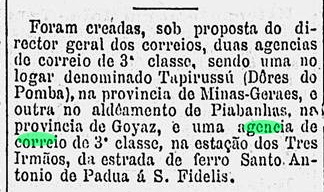
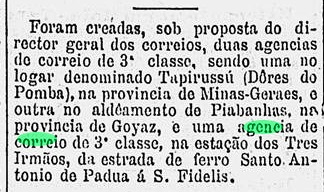
A railway station post office was established in September 1881, as seen in the capital’s press:

Gazeta de Noticias, 04.09.1881

Two postmarks in double circle were found for the 19th century. TRJ-2270a (Coll. José A. Junges) has the inscription TRES=IRMÃOS at the top, with internal dates from 1884 to 1887. Its successor TRJ-2270b (Filatélica Minas Gerais) has the slightly different spelling TRES-IRMÃOS at the top, with tilde suspended between A and O, and the abbreviation (EST.) at the bottom. Dates inside between 1892 and 1896.

E. F. Leopoldina

Der Bahnhof Tres Irmãos (Drei Brüder) wurde 1883 durch die E.F. Santo Antonio de Padua a S. Fidellis Bahngesellschaft eingeweiht und lag in der Gemeinde São Fidellis am Nordufer des Flusses Parahyba do Sul, knapp 270 km nordöstlich der Hauptstadt Rio de Janeiro entfernt. Die Bahnlinie hatte eine bewegte Geschichte: 1884 ging sie an die E.F. Macahé a Campos über, 1887 zur E.F. Leopoldina, 1975 zur Rede Ferroviária Federal S.A. und 1996 bis zur Stilllegung 2006 zur Ferrovia Centro Atlântica. Heute dient das Bahnhofsgebäude als Unterkunft für Bahnmitarbeiter (estacoesferroviarias.com.br).

2006 (Foto: Carlos Latuff, in estacoesferroviarias.com.br)

Die Siedlung um den Bahnhof wuchs weiter und wurde im November 1924 zum Distrikt im Município von Itaocara. Seit Dezember 1943 ist Três Irmãos ein Distrikt von Cambuci.

Ein Bahnhofspostamt wurde im September 1881 ins Leben gerufen, wie aus der Hauptstadtpresse entnommen wird:

Gazeta de Noticias, 04.09.1881

Zwei Poststempel im Doppelkreis wurden für den 19. Jahrhundert gefunden. TRJ-2270a (Samml. José A. Junges) trägt oben die Inschrift TRES=IRMÃOS, mit inneren Daten von 1884 bis 1887. Sein Nachfolger TRJ-2270b (Filatélica Minas Gerais) hat oben die leicht veränderte Schreibweise TRES—IRMÃOS, mit Tilde zwischen A und O schwebend, und unten die Abkürzung (EST.). Daten im Inneren zwischen 1892 und 1896.

Categories
Carimbologia T-Z

Tres Ilhas, Rio de Janeiro (TRJ-2268)

Almanak Laemmert, 1892

Três Ilhas (Three Islands) was already a small settlement on the Rio Preto from the middle of the 19th century, located directly on the provincial border with Minas Gerais, barely 170 km north of the capital Rio de Janeiro. The village initially belonged to Valença, but in March 1890 it became part of the newly created município of Santa Teresa and in December 1943 it became part of the municipality of Rio das Flores.

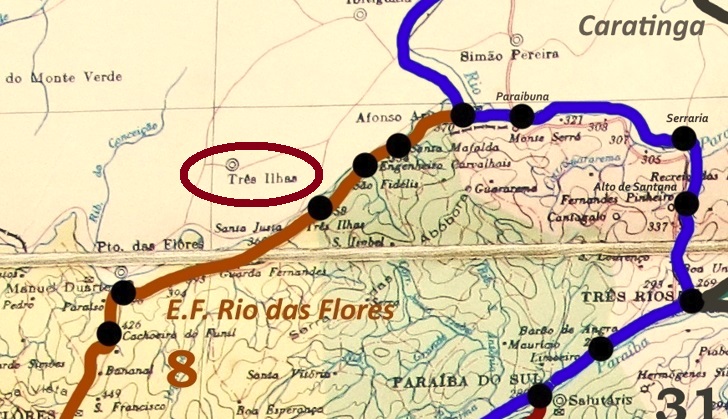
The postal history of this locality brings confusion with the locality of the same name on the opposite bank of the river, in the province of Minas Gerais (TMG-3510). The agency in Rio province came into being later, in October 1881, as Paulo Novaes writes in agenciaspostais.com.br, and experienced its heyday when the station of the E.F. Rio das Flores railway company was inaugurated there around 1889. Before that, the provincial bridge (today: Ponte das Três Ilhas) was in such a bad condition that the trade route practically came to a standstill. The railway line belonged to E.F. Central do Brasil from 1910 until its closure in 1965.
An imperial postmark could be found for this place: TRJ-2268a (Coll. José A. Junges) is a double circle with the inscription TRES=ILHAS above and an ornament in lozenge below formed by four small lozenges. The cancel also exists in blue and dark green and shows dates from 1886 to 1899 in its centre.

Estrada de Ferro Leopoldina

Três Ilhas (Drei Insel) war bereits ab Mitte des 19. Jahrhunderts eine kleine Siedlung am Rio Preto, die direkt an der Provinzgrenze zu Minas Gerais lag, knapp 170 km nördlich der Hauptstadt Rio de Janeiro entfernt. Der Ort gehörte zunächst zu Valença, ging aber im März 1890 zum neu gegründeten Município von Santa Teresa und im Dezember 1943 zur Gemeinde Rio das Flores.

Die Postgeschichte dieser Ortschaft bringt Verwechslungsgefahr mit dem gleichnamigen Ort am gegenüberliegenden Flussufer, in der Provinz Minas Gerais (TMG-3510). Die Agentur in der Provinz Rio entstand später, im Oktober 1881, wie Paulo Novaes in agenciaspostais.com.br schreibt, und erlebte ihre Blüte, als dort um 1889 der Bahnhof der E.F. Rio das Flores Bahngesellschaft eingeweiht wurde. Davor war die Landesbrücke (heute: Ponte das Três Ilhas) ein einem derart schlechten Zustand, dass der Handelsweg praktisch zum Erliegen kam. Die Bahnlinie gehörte von 1910 bis zur Stilllegung 1965 der E.F. Central do Brasil.
Ein kaiserlicher Poststempel war für diesen Ort zu finden: TRJ-2268a (Samml. José A. Junges) ist ein Doppelkreis mit der Inschrift TRES=ILHAS oben und einem Ornament in Raute unten, das aus vier kleinen rauten gebildet wird. Der Stempel existiert auch in blau und dunkelgrün und zeigt in seiner Mitte Daten von 1886 bis 1899.

Categories
Carimbologia T-Z

Tres Corações do Rio Verde, Minas Gerais (TMG-3505)

Atlas do Imperio do Brasil, 1868

Other names: Santíssimo Coração de Jesus, Três Corações (1923)

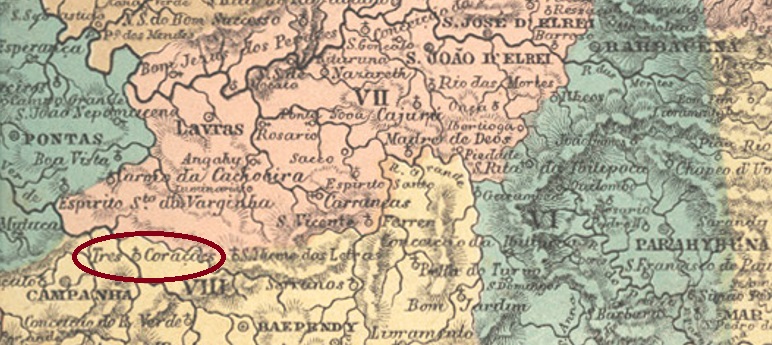
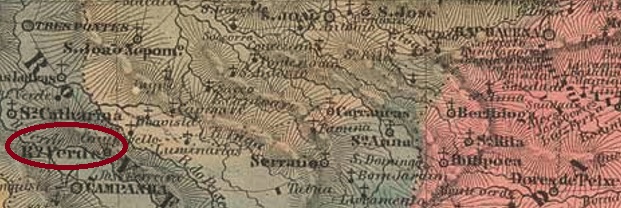
This locality was the freguesia of Santíssimo Coração de Jesus from July 1832, located on the north bank of the Rio Verde in the Município of Campanha, 340 km southwest of the provincial capital of Ouro Preto. In September 1884, the village rose to the status of a vila in its own município, and in July 1886, it became a town, which since September 1923 has simply been called Três Corações.

As Paula Sobrinho writes in História Postal de Minas Gerais (Belo Horizonte, 1997), there had been a post office there since June 1872. Only one postal cancel in the 19th century was to be found, probably not the oldest. TMG-3505b (Coll. José A. Junges) is a double circle with the inscription TRES CORAÇÕES DO RIO VERDE above and a circular ornament below, crossed in its centre. Dates inside from 1885 to 1908.

Villiers de l’Ile Adam: Carta (…)da Provincia de Minas Geraes, 1849

Andere Namen: Santíssimo Coração de Jesus, Três Corações (1923)

Diese Ortschaft war ab Juli 1832 die Freguesia von Santíssimo Coração de Jesus, die am Nordufer des Rio Verde im Município von Campanha lag, 340 km südwestlich der Provinzhauptstadt Ouro Preto entfernt. Im September 1884 stieg der Ort zur Vila im eigenen Município auf und wurde im Juli 1886 zu einer Stadt ernannt, die seit September 1923 lediglich Três Corações heißt.

Wie Paula Sobrinho in História Postal de Minas Gerais (Belo Horizonte, 1997) schreibt, gab es dort seit Juni 1872 ein Postamt. Lediglich ein Poststempel im 19. Jahrhundert war zu finden, wohl nicht der älteste. TMG-3505b (Samml. José A. Junges) ist ein Doppelkreis mit der Inschrift TRES CORAÇÕES DO RIO VERDE oben und einem kreisförmigen Ornament unten, das in dessen Mitte durchkreuzt wird. Daten im Inneren von 1885 bis 1908.

Categories
Carimbologia T-Z

Tres Barras (TSP-1440) – Tres Barras (train station/Bahnhof), São Paulo (TSP-1441)

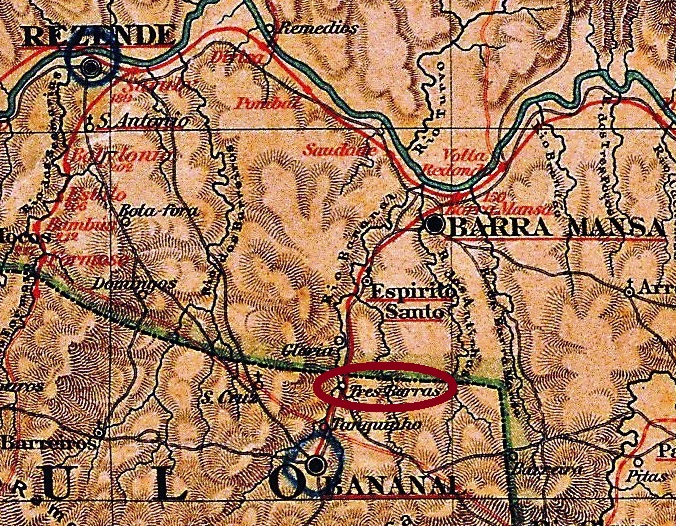
Almanak Laemmert, 1892

See also Barreira das Tres Barras (R. Koester: Carimbologia III)

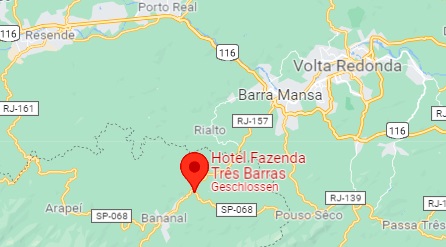
A barreira was a barrier on trunk roads where tax or toll was collected. The Barreira das Tres Barras, as R. Koester tells us in Carimbologia III, was located at the confluence of three streams (Turvo, Agua Comprida and Pirapetinga) with the Bananal River. Tres Barras was also the name of the fazenda 500 metres away, which today is a hotel. Bananal was also the name of the municipality responsible for this place, located 320 km northeast of the provincial capital São Paulo, quite before the provincial border to Rio de Janeiro.

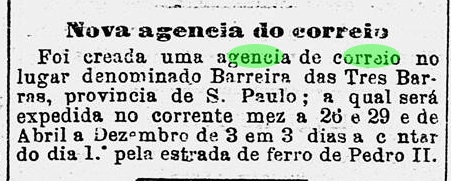
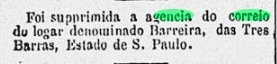
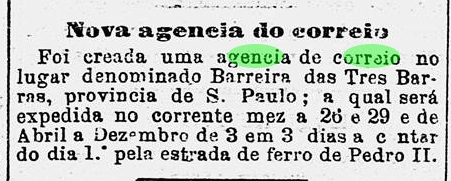
A post office at this barreira was created in March 1876, as reported by the Rio press:

O Globo/RJ, 25/03/1876

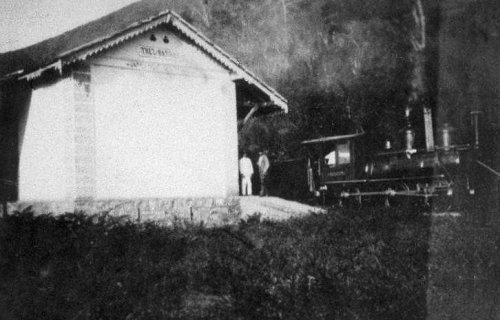
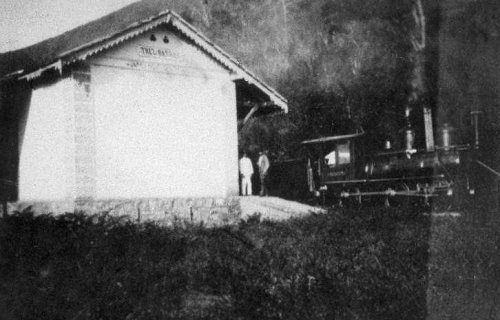
In October 1888, a station of the E.F. do Bananal railway company was inaugurated there. The railway line passed to the E.F. Central do Brasil in 1918 and remained in their possession (apart from a few months in 1931 with the E.F. Oeste de Minas) until it was closed in 1964. The station has long since been demolished (estacoesferroviarias.com.br).

ca. 1900 Photo Moitinho family (estacoesferroviarias.com.br)

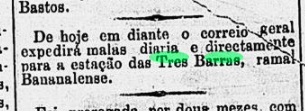
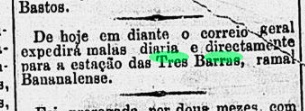
From May 1889, the Tres Barras station also received the mail bags for the locality:

Diario de Noticias/RJ, 24.05.1889

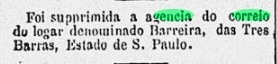
This made the old post office redundant and it closed in December of that year:

Gazeta de Noticias/RJ, 03.12.1889

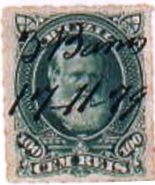
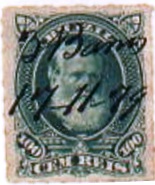
The first postmark was obviously not made in time, as a handwritten cancellation from 1879 indicates:

1879 (Col. P. Comelli)

Only later came TSP-1440a (Col. Fuad Ferreira Fo.): a French type, with the inscription B. DAS TRES BARRAS at the top and the star between brackets at the bottom. Dates in the middle of 1884 and 1885. TSP-1441a (Coll. José A. Junges) is obviously a station stamp, as it is dated 1898. This double circle reads TRES-BARRAS at the top and (S. PAULO) at the bottom.

Google Maps

Siehe auch Barreira das Tres Barras (R. Koester: Carimbologia III)

Eine Barreira war eine Schrankstelle auf Fernstraßen, wo Steuer oder Maut eingetrieben wurde. Die Barreira das Tres Barras lag, wie uns R. Koester in Carimbologia III erzählt, an der Mündung von drei Bächen (Turvo, Agua Comprida und Pirapetinga) in den Bananal-Fluss. Tres Barras hieß auch die 500 Meter entfernte Fazenda, die heute als Hotel fungiert. Bananal hieß auch die zuständige Gemeinde für diesen Ort, 320 km nordöstlich von der Provinzhauptstadt São Paulo gelegen.

Ein Postamt an dieser Barreira entstand im März 1876, wie die Presse aus Rio berichtet:

O Globo/RJ, 25.03.1876

Im Oktober 1888 wurde dort ein Bahnhof der E.F. do Bananal Bahngesellschaft eingeweiht. Die Bahnlinie ging 1918 zur E.F. Central do Brasil über und blieb in deren Besitz (abgesehen von ein paar Monaten 1931 bei der E.F. Oeste de Minas) bis zur Stilllegung 1964. Der Bahnhof ist längst abgerissen worden (estacoesferroviarias.com.br).

ca. 1900 Foto Familie Moitinho (estacoesferroviarias.com.br)

Ab Mai 1889 erhielt der Bahnhof Tres Barras auch die Postsäcke für den Ort:

Diario de Noticias/RJ, 24.05.1889

Dadurch wurde das alte Postamt überflüssig und schloss im Dezember d. Js. zu:

Gazeta de Noticias/RJ, 03.12.1889

Der erste Poststempel war offenbar nicht rechtzeitig angefertigt, wie eine handschriftliche Entwertung aus 1879 uns andeutet:

1879 (Samml. P. Comelli)

Erst später kam TSP-1440a (Samml. Fuad Ferreira Fo.): ein Französischer Typus, mit der Inschrift B. DAS TRES BARRAS oben und dem Stern zwischen Klammern unten. Daten in der Mitte von 1884 und 1885. Bei TSP-1441a (Samml. José A. Junges) handelt es sich offenbar um einen Bahnhofsstempel, da er 1898 datiert ist. In diesem Doppelkreis liest man oben TRES-BARRAS, und unten (S. PAULO).

Categories
Carimbologia T-Z

Tremembé, São Paulo (TSP-1435)

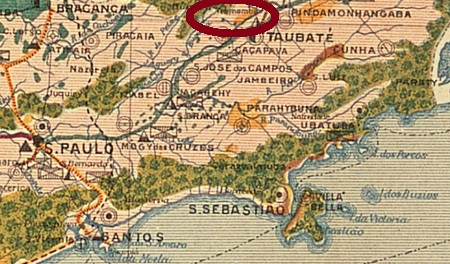
Estado de São Paulo, 1910

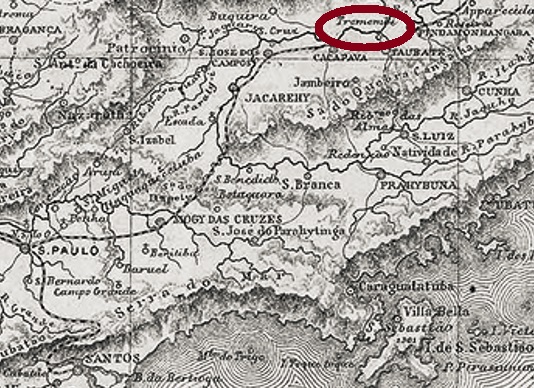
The settlement of Senhor Bom Jesus do Tremembé was already mentioned in documents in April 1672, but the freguesia was only founded in February 1866. It was located in the Taubaté municipality on the south bank of the Paraíba do Sul River, 150 km northeast of the provincial capital São Paulo. In November 1896, Tremembé rose to the status of a vila and has been an independent município ever since. The place name has Tupi-Guarani origins and is said to mean swamp area. An Indian tribe was also named so.

The local post office was established in October 1875, as we learn from the regional press:

Correio Paulistano, 28.10.1875

The imperial postmark is the French type TSP-1435a (Coll. José A. Junges): a small double circle with the inscription TREMEMEBÉ above and the typical star between brackets below. The dates in the middle are from the period 1880-1896.

Provincia de São Paulo, 1879

Die Siedlung von Senhor Bom Jesus do Tremembé wurde bereits im April 1672 urkundlich erwähnt, aber die Freguesia wurde erst im Februar 1866 gegründet. Sie lag in der Gemarkung Taubaté am Südufer des Flusses Paraíba do Sul, 150 km nordöstlich der Provinzhauptstadt São Paulo. Im November 1896 stieg Tremembé zur Vila und ist seitdem auch eigenständiger Município. Der Ortname hat Tupi-Guarani-Ursprung und soll Sumpfgebiet bedeuten. Auch ein Indianerstamm wurde so benannt.

Das örtliche Postamt wurde im Oktober 1875 ins Leben gerufen, wie man aus der Regionalpresse erfährt:

Correio Paulistano, 28.10.1875

Der kaiserliche Poststempel ist der französischer Typus TSP-1435a (Samml. José A. Junges): ein kleiner Doppelkreis mit der Inschrift TREMEMEBÉ oben und dem typischen Stern zwischen Klammern unten. Die Daten in der Mitte entstammen dem Zeitraum 1880-1896.

Categories
Carimbologia T-Z

Tremedal, Minas Gerais (TMG-3215)

Atlas do Imperio do Brasil, 1868

Other names: Boa Vista do Tremedal, Monte Azul (1938)

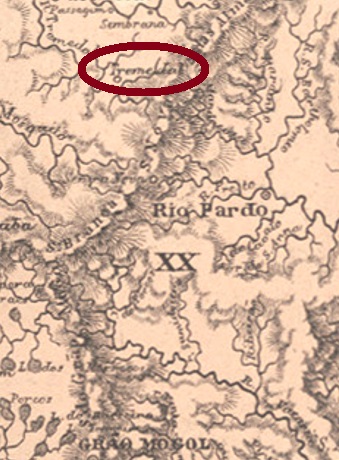
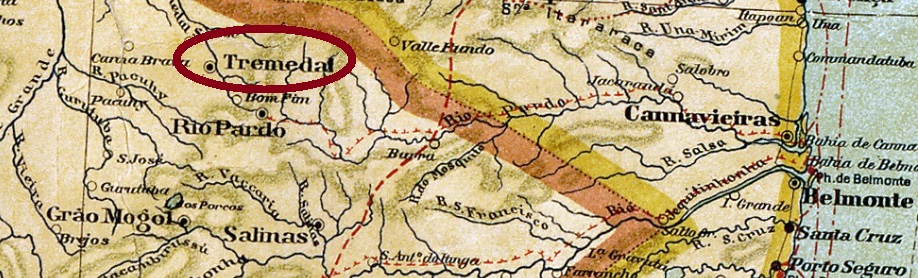
The parish of Nossa Senhora da Graça de Tremedal was established in July 1868 in the Município of Rio Pardo and was located on the east bank of the Tabuleiro River, 750 km north of the provincial capital of Ouro Preto. In November 1878, it became the villa of Boa Vista de Tremedal, which rose to become a town in October 1887. In September 1923, the municipality name was simplified to Tremedal, and the Município has been called Monte Azul (Blue Mountain) since December 1938.

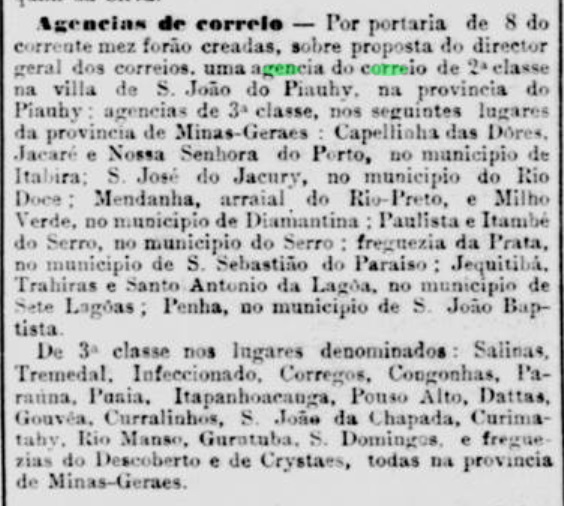
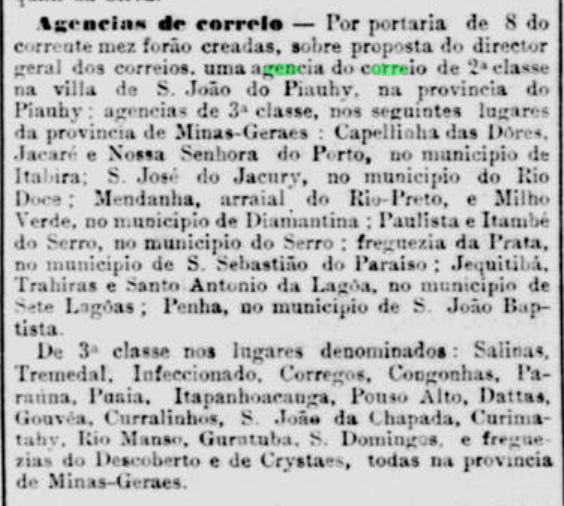
The local post office came into being in November 1881, as can be read in the Rio press:

Jornal do Commercio/RJ, 12.11.1881

Unfortunately, no imperial postmark from this locality has been seen so far.

Mapa Geraldp Brasil, 1911

Andere Namen: Boa Vista do Tremedal, Monte Azul (1938)

Die Pfarrei von Nossa Senhora da Graça de Tremedal wurde im Juli 1868 im Município von Rio Pardo errichtet und lag am Ostufer des Flusses Tabuleiro, 750 km nördlich der Provinzhauptstadt Ouro Preto entfernt. Im November 1878 wurde daraus die Villa von Boa Vista de Tremedal, die im Oktober 1887 zur Stadt aufstieg. Im September 1923 wurde der Gemeindename zu Tremedal vereinfacht, der Município heißt seit Dezember 1938 Monte Azul (Blauer Berg).

Das örtliche Postamt entstand im November 1881, wie man in der Rio-Presse lesen kann:

Jornal do Commercio/RJ, 12.11.1881

Bisher war leider kein kaiserlicher Poststempel aus dieser Ortschaft zu sehen.

Categories
Carimbologia T-Z

Travessão (TRJ-1615) – Travessão (train station/Bahnhof), Rio de Janeiro (TRJ-1616)

Atlas do Imperio do Brasil, 1868

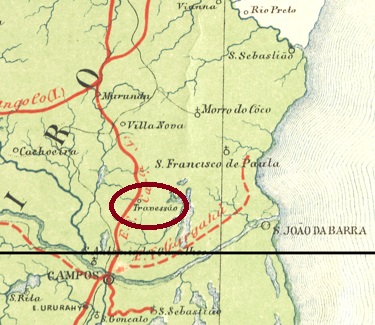
The place originated in 1836 as the Freguesia de Nossa Senhora da Conceição do Travessão, which was located in the Município of Campos (today: Campos dos Goytacazes), 290 km northeast of the capital Rio de Janeiro. In November 1873, it was elevated to the status of a district, and this status is still valid today.

As Paulo Novaes writes in agenciaspostais.com.br, there was a post office there since November 1866. A postmark was found for the 19th: century, apparently not the oldest. TRJ-1615b (Coll. A. Junges) is a double circle with the inscription TRAVESSÃO on top. Previous dates inside 1888 to 1889.

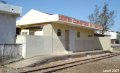
In November 1877, the station on the coast line (Linha do Litoral) of the E.F. Carangola railway company was inaugurated there. The railway line passed to the E.F. Leopoldina in 1887 and from 1975 until its closure in 1996, it belonged to Rede Ferroviária Federal S.A. (estacoesferroviarias.com.br). Today the building serves as a primary school and community centre:

ca. 2007 (Photo: Carlos Latuff, estacoesferroviarias.com.br)

One may assume that in the 1880s the local post office and its stamps moved to the railway station. There were nevertheless separate station postmarks, such as TRJ-1616a (Coll. Paulo Novaes): a double circle with the inscriptions TRAVESSÃO above and (EST.) below. An example seen, dated 1892 in the middle.

E.F. Central do Brasil, 1890

Der Ort entstand 1836 als die Freguesia de Nossa Senhora da Conceição do Travessão, die im Município von Campos (heute: Campos dos Goytacazes) lag, 290 km nordöstlich der Hauptstadt Rio de Janeiro entfernt. Im November 1873 wurde er zum Distrikt erhoben, und dieser Status gilt bis heute.

Wie Paulo Novaes in agenciaspostais.com.br schreibt, gab es dort ein Postamt seit November 1866. Ein Poststempel wurde für den 19: Jahrhundert gefunden, offenbar nicht der älteste. TRJ-1615b (Samml. José A. Junges) ist ein Doppelkreis mit der Inschrift TRAVESSÃO oben. Bisherige Daten im Inneren 1888 bis 1889.

Im November 1877 wurde der Bahnhof an der Küstenlinie (Linha do Litoral) der E.F. Carangola Bahngesellschaft dort eingeweiht. Die Bahnlinie ging 1887 an die E.F. Leopoldina und von 1975 bis zur Stilllegung 1996, gehörte sie der Rede Ferroviária Federal S.A. (estacoesferroviarias.com.br). Heute dient das Gebäude als Grundschule und Gemeindezentrum:

ca. 2007 (Foto: Carlos Latuff, estacoesferroviarias.com.br)

Man darf annehmen, dass in den 80er Jahren das örtliche Postamt mit seinen Stempeln zum Bahnhof umgezogen ist. Es gab dennoch eigene Bahnhofs-Poststempel, wie TRJ-1616a (Samml. Paulo Novaes): ein Doppelkreis mit den Inschriften TRAVESSÃO oben und (EST.) unten. Ein Exemplar gesehen, datiert 1892 in der Mitte.