Categories
Carimbologia S

Santo Antonio da Olaria, Minas Gerais (SMG-2975)

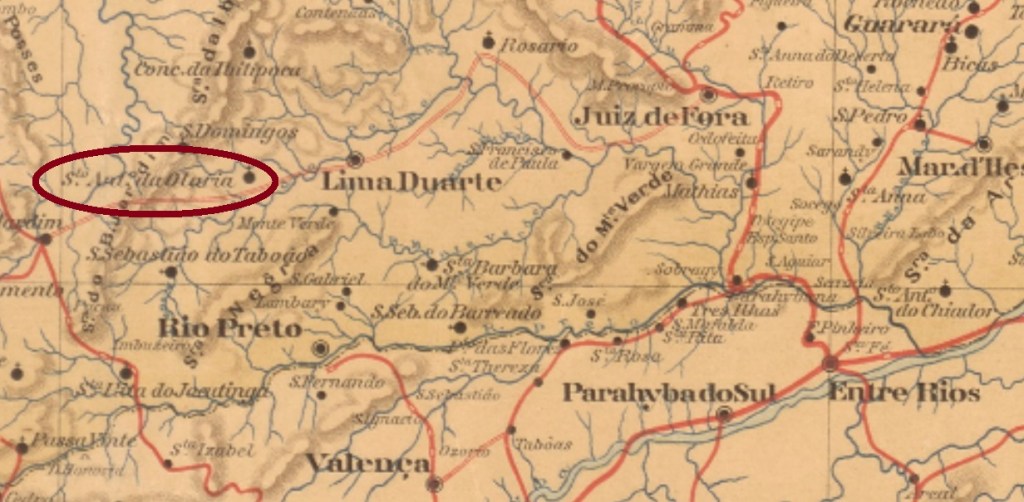
Mappa de Minas Geraes, 1910

Another name: Olaria (1938)

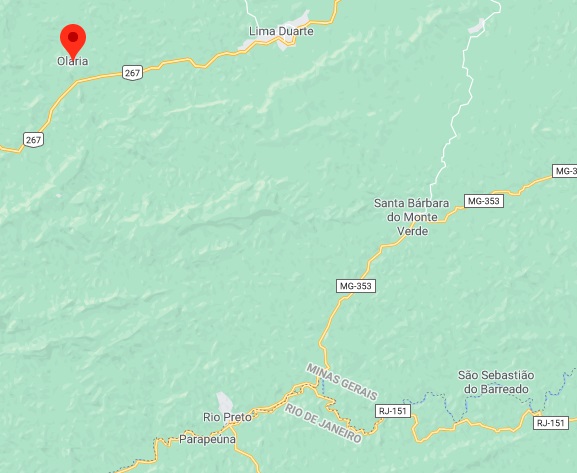
Santo Antonio da Olaria (= St. Anthony of the Brickworks) was since July 1872 a district in the municipality of Rio Preto, situated ca. 230 km south of the provincial capital Ouro Preto. In September 1923 it switched to the newly created municipality of Lima Duarte and had the name simplified to Olaria in December 1938. Since December 1962 has Olaria an own municipality.

According to Paula Sobrinho (História Postal de Minas Gerais, Belo Horizonte, 1997), the local post office was created in March 1885. One imperial cancel was found. SMG-2975a (Coll. Karlheinz Wittig) occurs in black and blue and has a double circle with the inscriptions S. ANTo. DA OLARIA above and (MINAS) below. Dates at the centre between 1889 and 1895.
GoogleMaps

Anderer Name: Olaria (1938)

Santo Antonio da Olaria (= Hl. Antonius der Ziegelei) war ab Juli 1872 ein Distrikt im Município von Rio Preto, der ca. 230 km südlich der Provinzhauptstadt Ouro Preto lag. Im September 1923 wechselte der Ort zum frisch gegründeten Município von Lima Duarte und bekam im Dezember 1938 den Namen zu Olaria vereinfacht. Seit Dezember 1962 ist Olaria eine eigenständige Gemeinde.

Wie Paula Sobrinho (História Postal de Minas Gerais, Belo Horizonte, 1997) schreibt, gibt es dort ein Postamt seit März 1885. Ein Stempel des Kaiserreichs wurde gefunden. SMG-2975a (Samml. Karlheinz Wittig) kommt in schwarz und blau vor und hat einen Doppelkreis mit den Inschriften S. ANTo. DA OLARIA oben sowie (MINAS) unten. Die Daten in der Mitte entstammen dem Zeitraum 1889-1895.
Categories
Carimbologia S

Santo Antonio do Muriahé, Minas Gerais (SMG-3005)

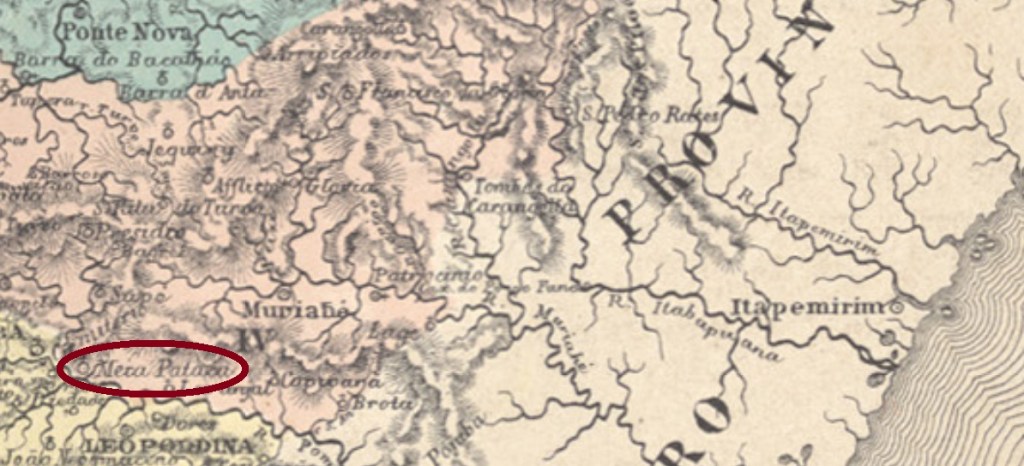
Atlas do Imperio do Brasil, 1868

Text update of July 27, 2023

Other names: Meia Pataca (1859), Mirahy (1903)

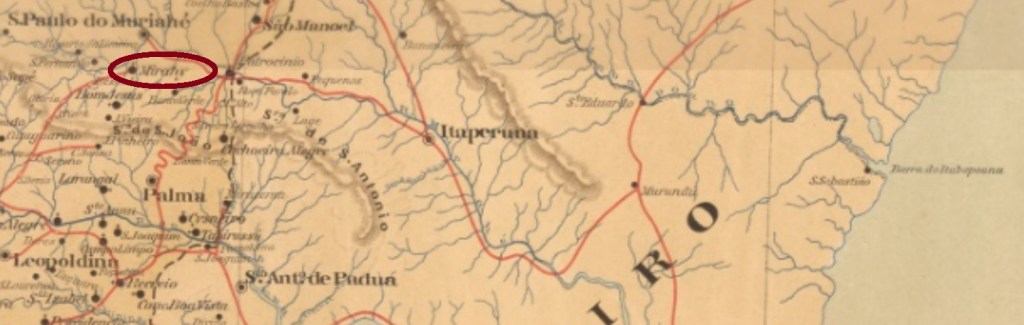
A pataca was an old Brazilian silver coin, about 320 réis worth. So had a Meia Pataca (half pataca) the approximate value of 160 réis. The freguesia of Meia Pataca was founded in June 1859 near the west bank of the Muriaé River in the municipality of Cataguazes, round 180 km southeast of the province capital Ouro Preto. The locality was given in October 1883 the name of Santo Antonio do Muriahé, but barely 20 years later it was renamed Mirahy and became an own municipality in September 1923. This tupi word shall mean swamp.

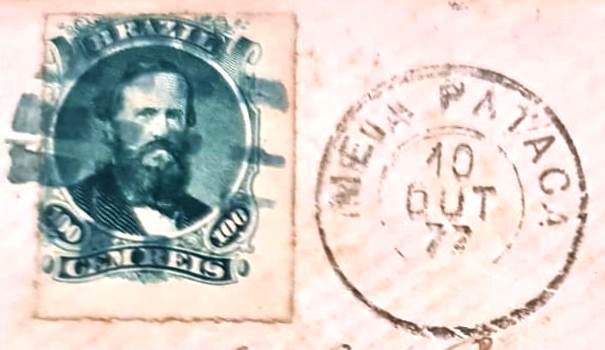
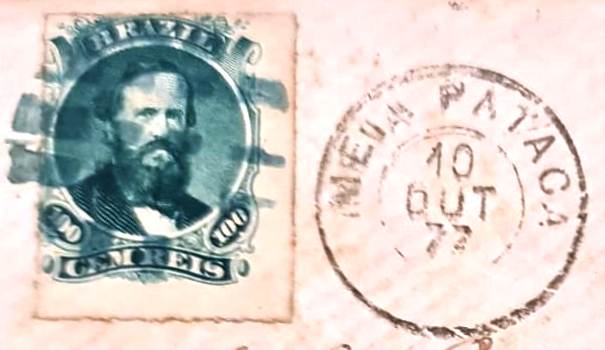
According to Paula Sobrinho (História Postal de Minas Gerais, Belo Horizonte, 1997), the local post office was created in October 1881. In the meantime, however, a letter dated October 1877 has turned up with the philatelist Constantino Papazoglu, bearing both a postmark with MEIA PATACA and a mute postmark:

1877 (Papazoglu)

This post office therefore had an earlier period of operation, the dates of which have yet to be discovered. Two later postmarks are already known: SMG-3005a (Coll. José A. Junges) has a double circle with the inscription S. ANTONIO DO MURIAHÉ above and a diamond ornament below, formed by four small diamonds. Dates at the centre from 1885-1886. SMG-3005b (Coll. José A. Junges) has between both circles the inscriptions S. ANTo. DE MURIAHÉ above and (MINAS) below. Dates at the centre between 1891 and 1894.

Mappa de Minas Geraes, 1910

Textaktualisierung am 27. Juli 2023

Andere Namen: Meia Pataca (1859), Mirahy (1903)

Eine Pataca war eine alte brasilianische Silbermünze, etwa 320 Réis wert. Dadurch schlug eine Meia Pataca (halbe Pataca) mit ca. 160 Réis zu Buche. Die Freguesia von Meia Pataca wurde im Juni 1859 nah am Westufer des Flusses Muriaé im Município von Cataguazes gegründet und lag knapp 180 km südöstlich der Provinzhauptstadt Ouro Preto entfernt. Die Ortschaft bekam im Oktober 1883 den zivilisierten Namen Santo Antonio do Muriahé. Dieser durfte aber nicht sehr beliebt gewesen sein, da der Ort knapp 20 Jahre später zu Mirahy umbenannt wurde. Das Tupi-Wort bedeutet Sumpf, und Mirahy ist seit September 1923 ein selbständiger Município.

Laut Paula Sobrinho (História Postal de Minas Gerais, Belo Horizonte, 1997) gibt es dort ein Postamt seit Oktober 1881. Inzwischen ist jedoch ein Brief vom Oktober 1877 bei dem Philatelisten Constantino Papazoglu aufgetaucht, der sowohl einen Poststempel mit MEIA PATACA als auch einen stummen Stempel trägt:

1877 (Papazoglu)

Dieses Postamt hatte also eine frühere Betriebsperiode, deren Daten noch zu entdecken sind. Zwei spätere Poststempel sind bereits bekannt:

SMG-3005a (Samml. José A. Junges) hat einen Doppelkreis mit der Inschrift S. ANTONIO DO MURIAHÉ oben und einem Ornament in Rautenform unten, das aus vier kleinen Rauten besteht. Daten in der Mitte aus dem Zeitraum 1885-1886. SMG-3005b (Samml. José A. Junges) hat zwischen den Kreisen die Inschriften S. ANTo. DE MURIAHÉ oben und (MINAS) unten. Die inneren Daten stammen von 1891 bis 1894.

Categories
Carimbologia S

Santo Antonio do Monte, Minas Gerais (SMG-3490)

Photo: Christoph2007

See also Inhaúma I (R. Koester: Carimbologia XXII)

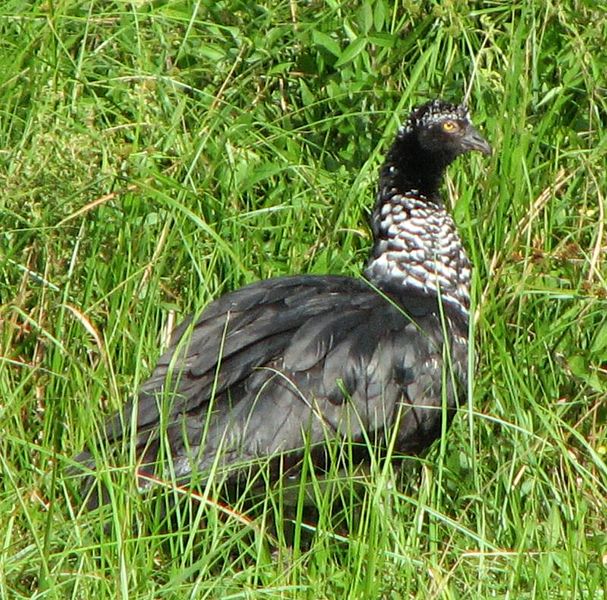
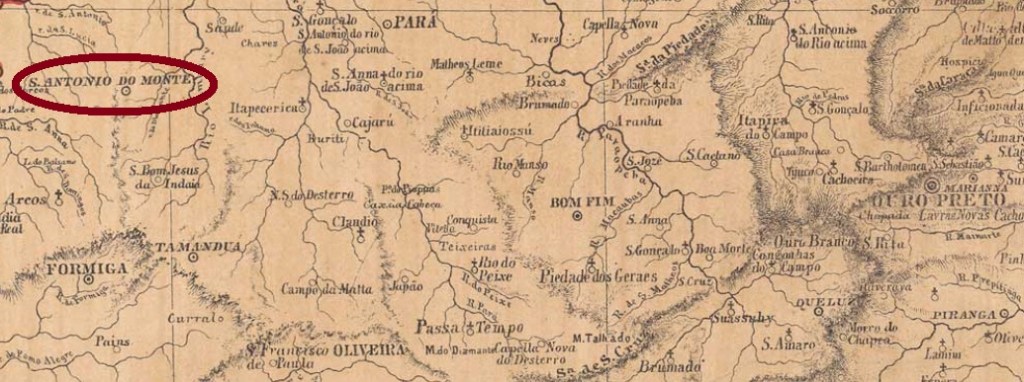
Santo Antonio do Monte in the Minas province was since May 1854 a district in the municipality of Formiga, situated ca. 250 km west of the capital Ouro Preto. It ascended five years later to a villa in own municipality, but lost this status in November 1865, returning to the district condition. In September 1870 the villa was restored and in November 1875 it was made a town, which between October 1885 and April 1899 was called Inhaúma. The common meaning for this tupi word would be a variant to anhuma, a South American bird (Anhima cornuta, Linnaeus, 1766) also called horned screamer.

Nova Monteiro (Administrações e Agencias Postaes do Brasil Imperio, in Brasil Filatelico/RJ, 1934-5; Reprint SPP 1994-1999) asserts the local post office was created in December 1863, but R. Koester, Paula Sobrinho (História Postal de Minas Gerais, Belo Horizonte, 1997) and the Imperial Mail Register (Tabella das Agencias do Correio do Imperio) of 1885 report the March of 1864. One imperial cancel was found, probably not the earliest one. SMG-3490b (Coll. José A. Junges) has a double circle with the inscription S. A. DO MONTE. The dates inside are from the period 1879-1889. This means the cancel was still used after the toponymal change.

Provincia de Minas Geraes, 1873

Siehe auch Inhaúma I (R. Koester: Carimbologia XXII)

Santo Antonio do Monte in der Provinz Minas war ab Mai 1854 ein Distrikt des Município von Formiga, der ca. 250 km westlich der Hauptstadt Ouro Preto entfernt lag. Fünf Jahre später stieg er zur Villa im eigenen Município auf, verlor aber diesen Status im November 1865 und kehrte unter der Zuständigkeit von Formiga zurück. Bereits im September 1870 wurde der Ort wieder zur Villa ernannt und im November 1875 zur Stadt. Zwischen Oktober 1885 und April 1899 hieß diese Stadt Inhaúma. Die übliche Bedeutung dieses Worts aus der Tupi-Sprache wäre eine Variante zu anhuma: der südamerikanische Hornwehrvogel (Anhima cornuta, Linnaeus, 1766).

Nova Monteiro (Administrações e Agencias Postaes do Brasil Imperio, in Brasil Filatelico/RJ, 1934-5; Reprint SPP 1994-1999) behauptet, das örtliche Postamt entstand im Dezember 1863, dennoch sowohl R. Koester als auch Paula Sobrinho (História Postal de Minas Gerais, Belo Horizonte, 1997) und das Verzeichnis der kaiserlichen Postämter (Tabella das Agencias do Correio do Imperio) von 1885 schreiben dafür den März 1864. Ein Stempel der Kaiserzeit wurde gesehen, wohl nicht der früheste. SMG-3490b (Samml. José A. Junges) hat einen Doppelkreis mit der Inschrift S. A. DO MONTE. Da die Daten in der Mitte aus dem Zeitraum 1879-1889 stammen, wurde der Stempel auch nach dem Wechsel des Ortsnamens weiter verwendet.

Categories
Carimbologia S

Santo Antonio do Matipoó, Minas Gerais (SMG-2970)

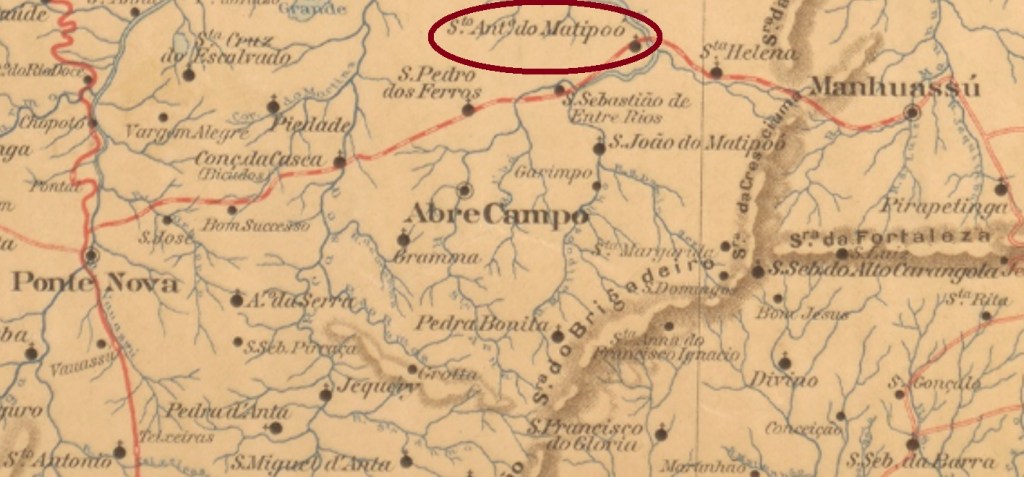
Mappa do Estado de Minas Geraes, 1910

Another name: Granada (1943)

See also Matipóo (RK: Carimbologia XXVII)

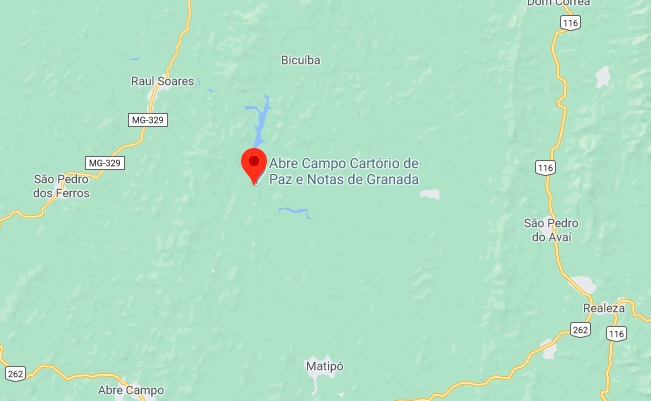
The name Matipoó derives from the tupi-guarani and supposedly means bursting maize. The small river Matipó (barely 150 km long) is an affluent to the Rio Doce, which in January 1880 gave the name to the parish of Santo Antonio on its the south bank, situated over 150 km east of the provincial capital Ouro Preto. It has belonged from then on to the municipality of Abre Campo (“Open the Field”) and since December 1943 the district is called Granada.

According to Paula Sobrinho (História Postal de Minas Gerais, Belo Horizonte, 1997), the local post office was created in July 1882. One imperial cancel was found: SMG-2970a (Coll. José A. Junges) has a double circle with the inscriptions S. ANT. DO MATIPOÓ above and (MINAS) below. Dates at the centre from 1889 until 1894.

GoogleMaps

Anderer Name: Granada (1943)

Siehe also Matipóo (RK: Carimbologia XXVII)

Der Name Matipoó hat einen Tupi-guarani-Ursprung und bedeutet angeblich platzender Mais. Vielleicht krachte der kleiner Fluss Matipó (knapp 150 km lang) Matipó wie platzende Maiskörner, bevor er in den Rio Doce mündete. Nach dem Matipó wurde die Pfarrei in Ehren von Santo Antonio im Januar 1880 gegründet. Diese lag am Südufer, über 150 km östlich der Provinzhauptstadt Ouro Preto entfernt. Die Pfarrei gehörte dem Município von Abre Campo (“Öffne das Feld”), und seit Dezember 1943 trägt der Distrikt den Namen Granada.

Laut Paula Sobrinho (História Postal de Minas Gerais, Belo Horizonte, 1997) gibt es dort ein Postamt seit Juli 1882. Ein Stempel der Kaiserzeit ist bekannt: SMG-2970a (Samml. José A. Junges) hat einen Doppelkreis mit den Inschriften S. ANT. DO MATIPOÓ oben und (MINAS) unten. Daten in der Mitte von 1889 bis 1894.

Categories
Carimbologia S

Santo Antonio do Machado, Minas Gerais (SMG-3035)

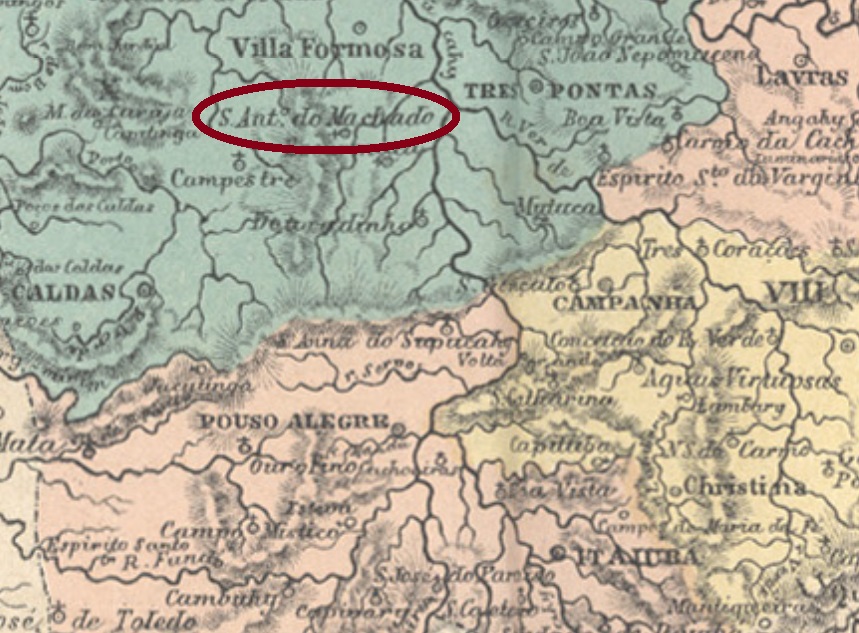
Atlas do Imperio do Brasil, 1868

Another name: Machado (1923)

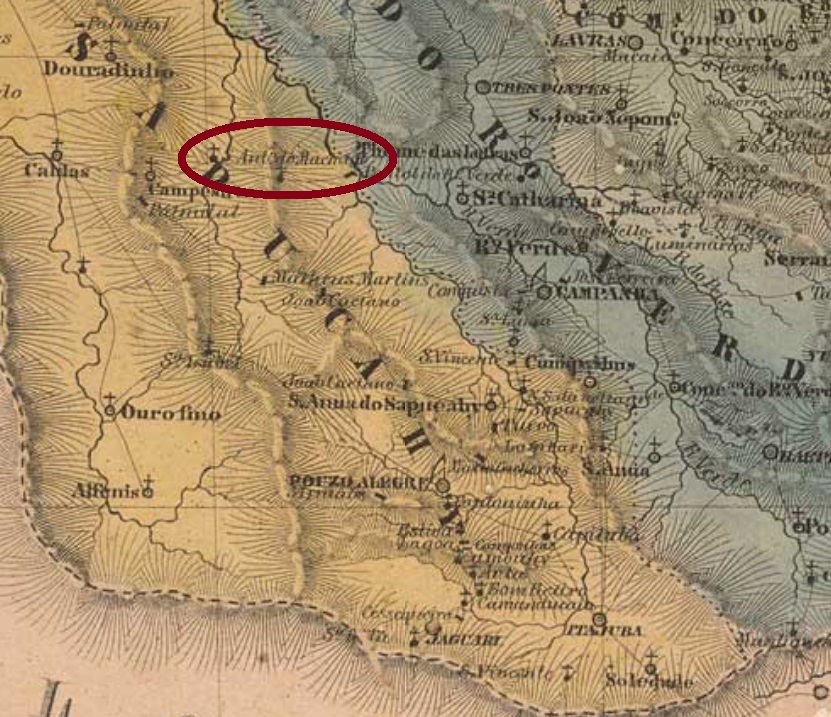
The district of Santo Antonio do Machado was created in July 1857 in the municipality of Alfenas, situated on the west bank of the Machado River, over 400 km southwest of the provincial capital Ouro Preto. The name derivates supposedly from an old farmer family of the region. The locality obtained the political autonomy as a villa in November 1880 and was elevated to a town in September 1923, under the simplified name of Machado.

Both Nova Monteiro (Administrações e Agencias Postaes do Brasil Imperio, in Brasil Filatelico/RJ, 1934-5; Reprint SPP 1994-1999) and Paul Sobrinho (História Postal de Minas Gerais, Belo Horizonte, 1997) state that the local post office was created in July 1864. Two imperial cancels have been found, which are most probably not the oldest ones. SMG-3035b (Coll. José A. Junges) has a double circle with the inscription S.A. DO MACHADO. The sole example is dated 1886 at the centre. SMG-3035c (Coll. José A. Junges) bears within the double circle the inscriptions S. ANTo. DO MACHADO above and (MINAS) below. The dates at the centre come from the period 1889-1906.

Villiers de l’Ile Adam: Carta (…) da Provincia de Minas Geraes, 1849

Anderer Name: Machado (1923)

Der Distrikt von Santo Antonio do Machado wurde im Juli 1857 im Município von Alfenas gegründet und lag am Westufer des Flusses Machado, über 400 km südwestlich der Provinzhauptstadt Ouro Preto. Der Name stammt vermutlich aus einem alten Stammesgeschlecht von Großgrundbesitzern der Region. Die Ortschaft erhielt die politische Selbständigkeit als eine Villa im November 1880 und stieg – unter dem vereinfachten Namen Machado – zu einer Stadt im September 1923 auf.

Sowohl Nova Monteiro (Administrações e Agencias Postaes do Brasil Imperio, in Brasil Filatelico/RJ, 1934-5; Reprint SPP 1994-1999) als auch Paul Sobrinho (História Postal de Minas Gerais, Belo Horizonte, 1997) sind sich darüber einig, dass das örtliche Postamt im Juli 1864 entstanden ist. Zwei Stempel aus der Kaiserzeit waren zu finden, die allerdings wohl nicht die ältesten sind. SMG-3035b (Samml. José A. Junges) hat einen Doppelkreis mit der Inschrift S.A. DO MACHADO. Das einzig vorhandene Exemplar ist mit 1886 in der Mitte datiert. SMG-3035c (Samml. José A. Junges) trägt zwischen den Kreisen die Inschriften S. ANTo. DO MACHADO oben und (MINAS) unten. Die Daten in der Mitte entstammen dem Zeitraum 1889-1906.

Categories
Carimbologia S

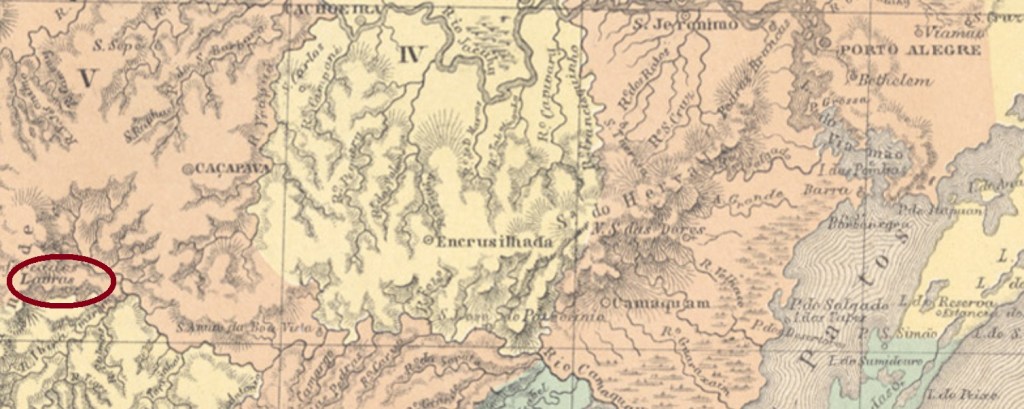
Santo Antonio de Lavras, Rio Grande do Sul (SRS-0545)

Atlas do Imperio do Brasil, 1868

Another name: Lavras do Sul (1944)

See also Lavras/RS (Koester: Carimbologia XXVI)

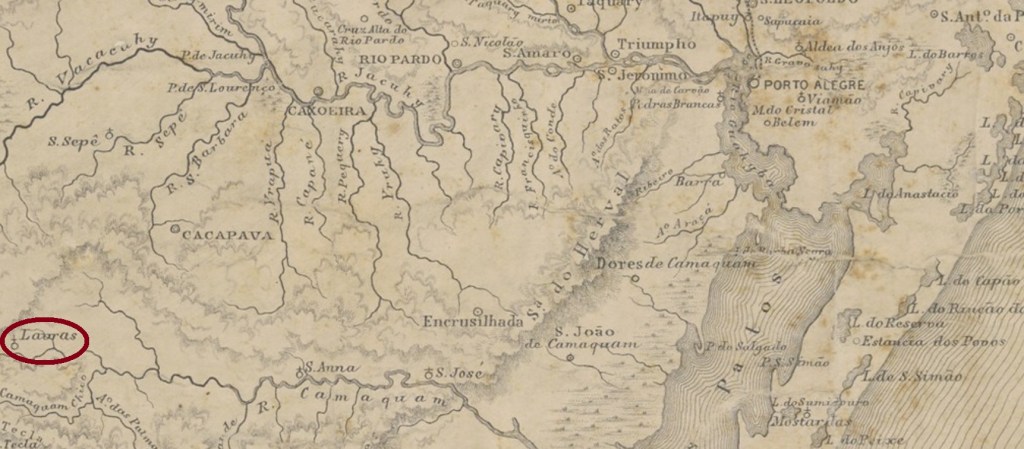
Santo Antonio de Lavras was since November 1847 a district in the municipality of Cassapava, situated over 300 km southwest of the provincial capital Porto Alegre. In May 1882 it ascended to a villa in own municipality, which since December 1944 is called Lavras do Sul.

The date of creation of the local post office is unknown until now, but it must have taken place between 1868 and 1878, for the earliest available cancels are dated May and June 1878. SRS-0545a (Coll. José A. Junges) has a double circle with the inscription S.A. DE LAVRAS and dates inside.

Provincia de São Pedro do Rio Grande, 1877

Anderer Name: Lavras do Sul (1944)

Siehe auch Lavras/RS (Koester: Carimbologia XXVI)

Santo Antonio de Lavras war ab November 1847 ein Distrikt im Município von Cassapava, der über 300 km südwestlich der Provinzhauptstadt Porto Alegre entfernt lag. Im Mai 1882 steig er zur Villa im eigenen Município auf. Dieser heißt seit Dezember 1944 Lavras do Sul.

Bisher ist uns nicht gelungen, das Entstehungsjahr des dortigen Postamts zu ermitteln. Das muss aber zwischen 1868 und 1878 stattgefunden haben, denn die früheste Stempel sind mit Mai und Juni 1878 datiert. SRS-0545a (Samml. José A. Junges) hat einen Doppelkreis mit der Inschrift S.A. DE LAVRAS und Datum in der Mitte.

Categories
Carimbologia S

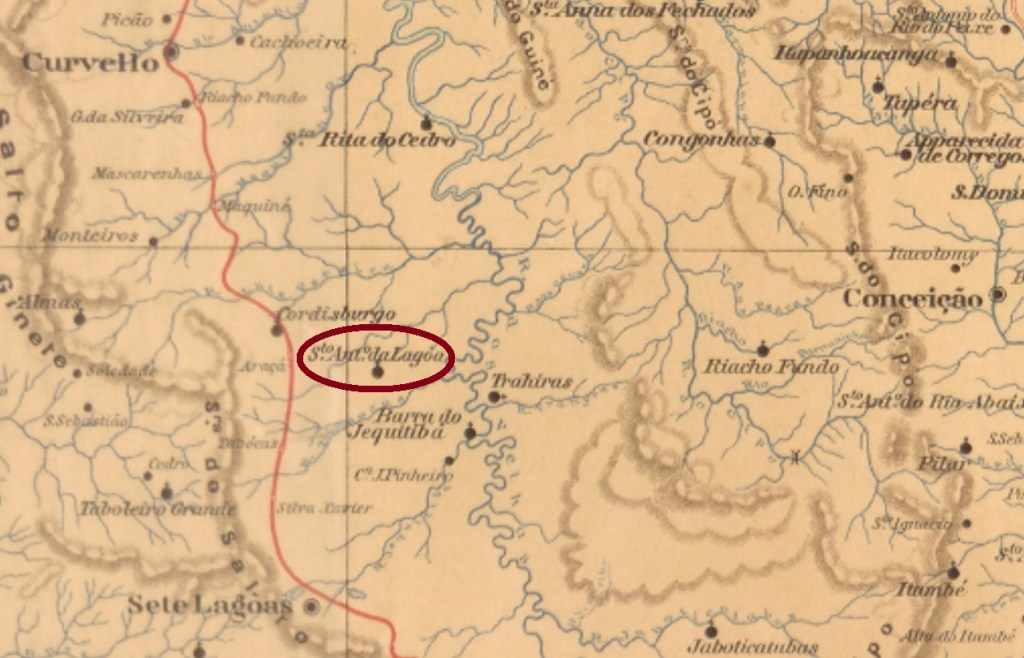
Santo Antonio da Lagoa, Minas Gerais (SMG-2965)

Mappa de Minas Geraes, 1910

Other names: Retiro da Lagoa, Santo Antonio da Lagoa Fria, Lagoa, Lagoa Bonita (1943)

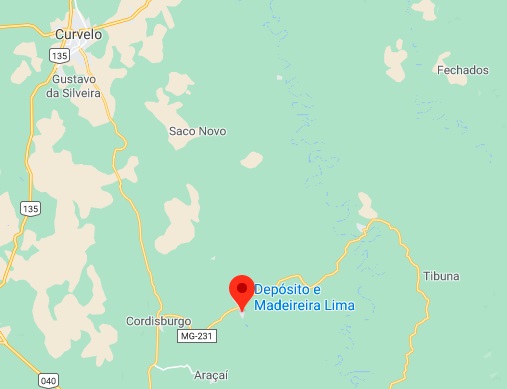
Santo Antonio da Lagoa was from November 1880 on a freguesia in the municipality of Curvello, situated over 200 km northwest of the provincial capital Ouro Preto. It originated from the ancient district of Monteiros and had the headquarters in the locality Retiro da Lagoa. In December 1938 it had the name altered to Lagoa as a district of Cordisburgo, and five years later it was given the actual district name of Lagoa Bonita.

According to Paula Sobrinho (História Postal de Minas Gerais, Belo Horizonte, 1997), the local post office originated in November 1881. One early cancel was found: SMG-2965a (Coll. José A. Junges) has a double circle with the inscription S. ANTONIO DA LAGOA. Both known examples have dates of 1890 inside.

Google Maps

Andere Namen: Retiro da Lagoa, Santo Antonio da Lagoa Fria, Lagoa, Lagoa Bonita (1943)

Santo Antonio da Lagoa war ab November 1880 eine Freguesia im Município von Curvello, die über 200 km nordwestlich der Provinzhauptstadt Ouro Preto lag und dessen Hauptsitz die Freguesia von Retiro da Lagoa war. Ursprünglich hieß der Distrikt Monteiros. Im Dezember 1938 wurde der Ortsname zu Lagoa als ein Distrikt von Cordisburgo umbenannt, und schon fünf Jahre später bekam die Ortschaft den aktuellen Namen Lagoa Bonita.

Laut Paula Sobrinho (História Postal de Minas Gerais, Belo Horizonte, 1997) gibt es dort ein Postamt seit November 1881. Ein früher Stempel wurde gefunden: SMG-2965a (Samml. José A. Junges) hat einen Doppelkreis mit der Inschrift S. ANTONIO DA LAGOA. Beide bisher gesichteten Exemplare haben Daten von 1890 in der Mitte.

Categories
Carimbologia S

Santo Antonio do Juquiá, São Paulo (SSP-1997)

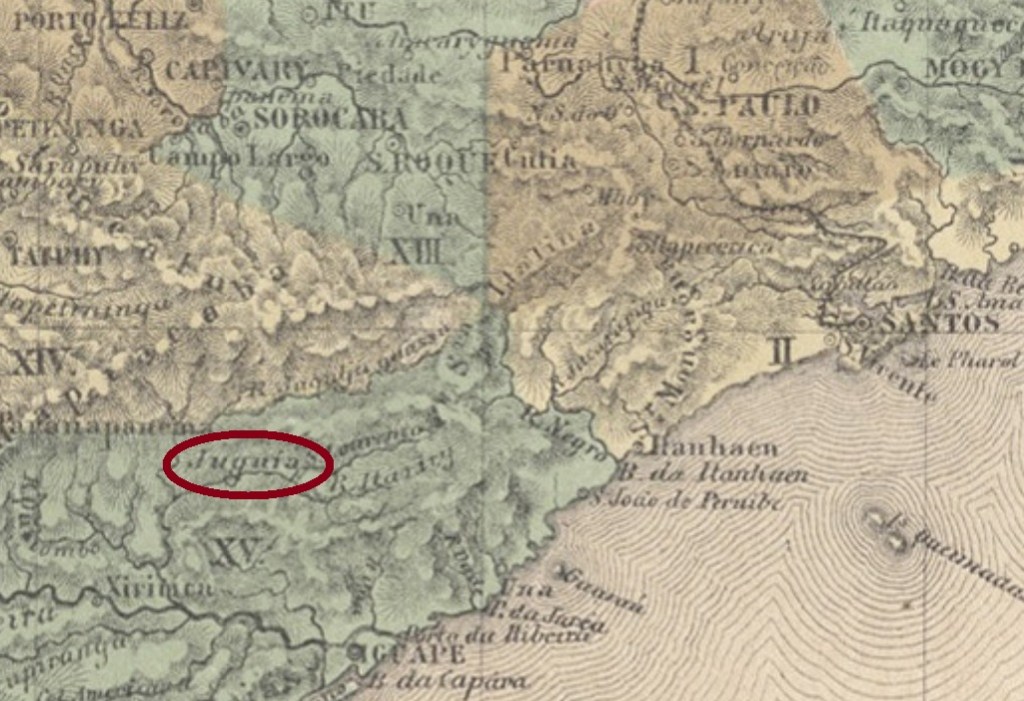
Atlas do Imperio do Brasil, 1868

See also Juquiá (R. Koester: Carimbologia XXV)

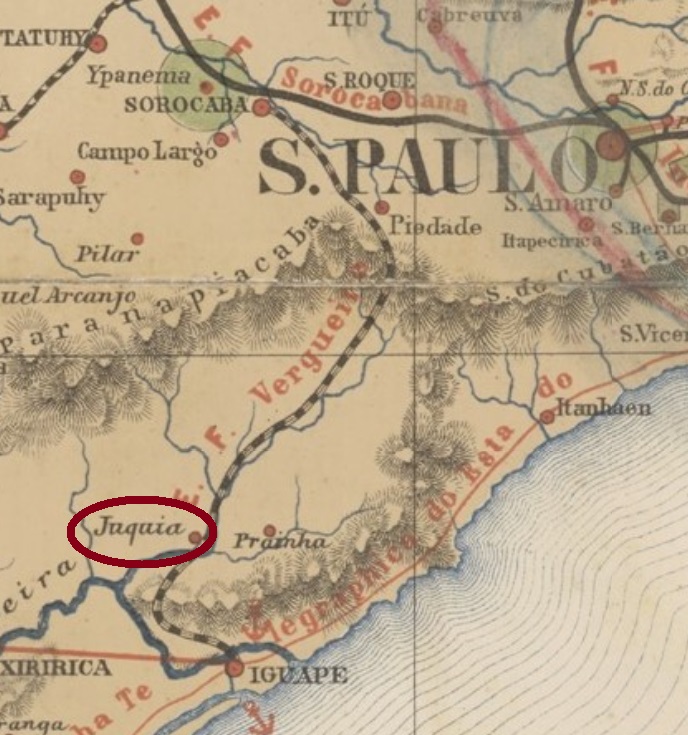
Santo Antonio do Juquiá was since April 1853 a freguesia in the municipality of Iguape, situated on the Juquiá River, over 150 km southwest of the province capital São Paulo. In November 1938 it switched to the municipality of Prainha and six years later, to Miracatu. Since December 1948 it is the municipality of Juquiá. This tupi-guarani word means allegedly dirty water.

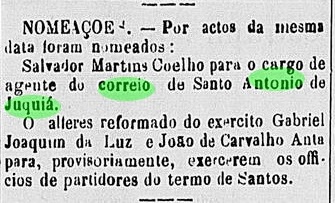
According to the Imperial Mail Register (Tabella das Agencias do Correio do Imperio) of 1885, the local post office was installed in 1881. By October a postal officer was already cited in the regional press:

Correio Paulistano, October 5, 1881

No imperial cancel under the complete toponym has been found until now. For cancels featuring Juquiá see Koester’s Carimbologia XXV.

Provincia de São Paulo, 1886

Siehe auch Juquiá (R. Koester: Carimbologia XXV)

Santo Antonio do Juquiá war ab April 1853 eine freguesia im Município von Iguape, die am Fluss Juquiá lag, über 150 km südwestlich der Provinzhauptstadt São Paulo entfernt. Im November 1938 wechselte die Zuständigkeit zu Prainha, und sechs Jahre später, zu Miracatu. Seit Dezember 1948 ist es der Município von Juquiá. Das Wort der Tupi-guarani-Sprache soll angeblich schmutziges Gewässer bedeuten.

Laut Verzeichnis der kaiserlichen Postämter (Tabella das Agencias do Correio do Imperio) von 1885 stammt das örtliche Postamt aus dem Jahr 1881. Im Oktober des Jahres wurde bereits ein Postangestellter durch die Regionalpresse vorgestellt:

Correio Paulistano, 5. Oktober 1881

Kein Poststempel der Kaiserzeit wurde unter dem vollständigen Ortsnamen bisher gefunden. Für Stempel mit der Legende Juquiá siehe Koesters Carimbologia XXV.

Categories
Carimbologia S

Santo Antonio de Jesus, Bahia (SBA-0700)

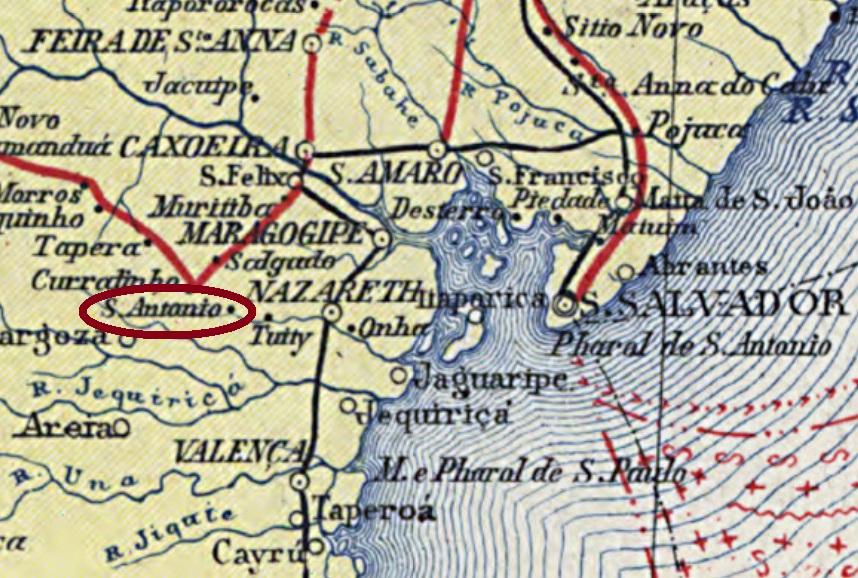
Carta da Republica dos Estados Unidos do Brazil, 1892

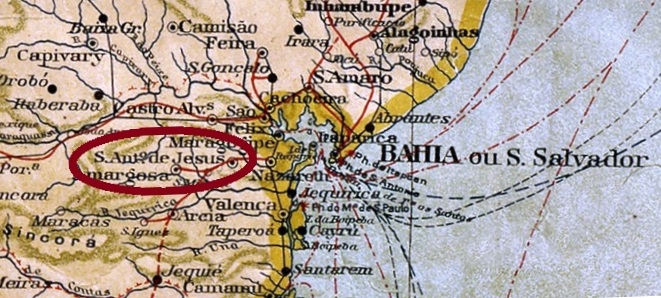
Santo Antonio de Jesus was since June 1852 a district in the municipality of Nazareth, situated over 100 km west of the provincial capital Salvador da Bahia. In April 1883 it was elevated to a villa, and in June 1891, to a town.

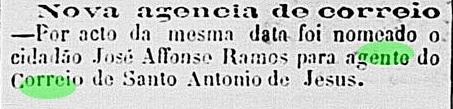
The local post office was created in 1880, as reported by the regional press:

O Monitor, October 10, 1880

One imperial cancel was found: SBA-0700a (Coll. Dieter Kerkhoff) has a double circle with the inscription S. ANTONIO DE JESUS. The dates inside were registered fort he period 1888-1896.

Mappa Geral do Brasil, 1911

Santo Antonio de Jesus war ab Juni 1852 ein Distrikt im Município von Nazareth, der über 100 km westlich der Provinzhauptstadt Salvador da Bahia entfernt lag. Im April 1883 stieg er zur Villa auf, im Juni 1891 zur Stadt.

Das Postamt dort wurde 1880 in Betrieb genommen, wie die Regionalpresse berichtet:

O Monitor, 10. Oktober 1880

Ein Stempel der Kaiserzeit war zu finden: SBA-0700a (Samml. Dieter Kerkhoff) hat einen Doppelkreis mit der Inschrift S. ANTONIO DE JESUS. Die Daten in der Mitte wurden für den Zeitraum 1888-1896 ermittelt.

Categories
Carimbologia S

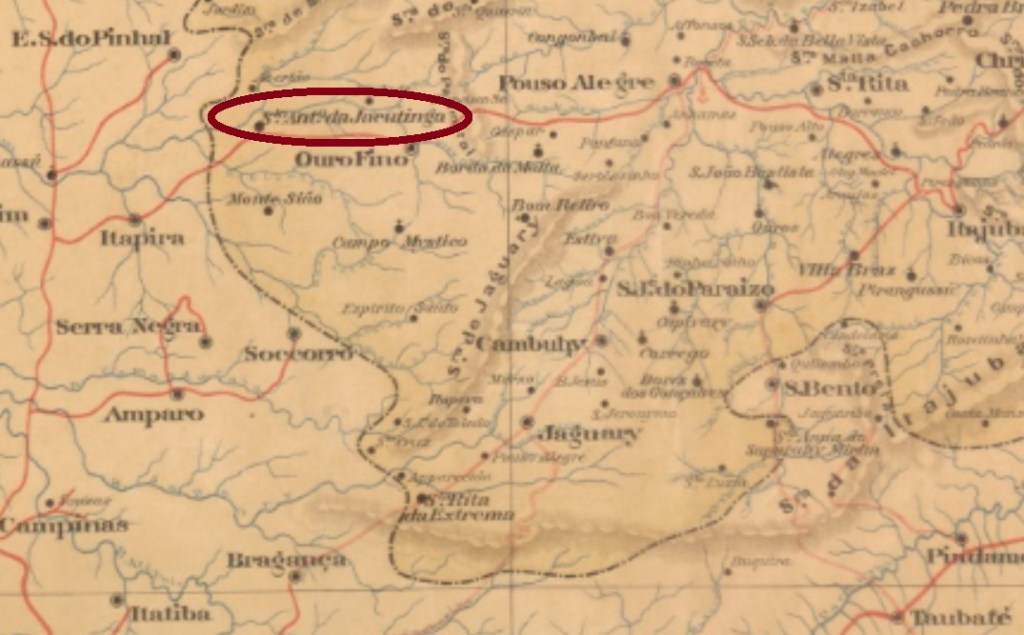
Santo Antonio da Jacotinga, Minas Gerais (SMG-3000)

Atlas do Imperio do Brasil, 1868

Other names: Santo Antonio de Jacutinga, Jacutinga (1923)

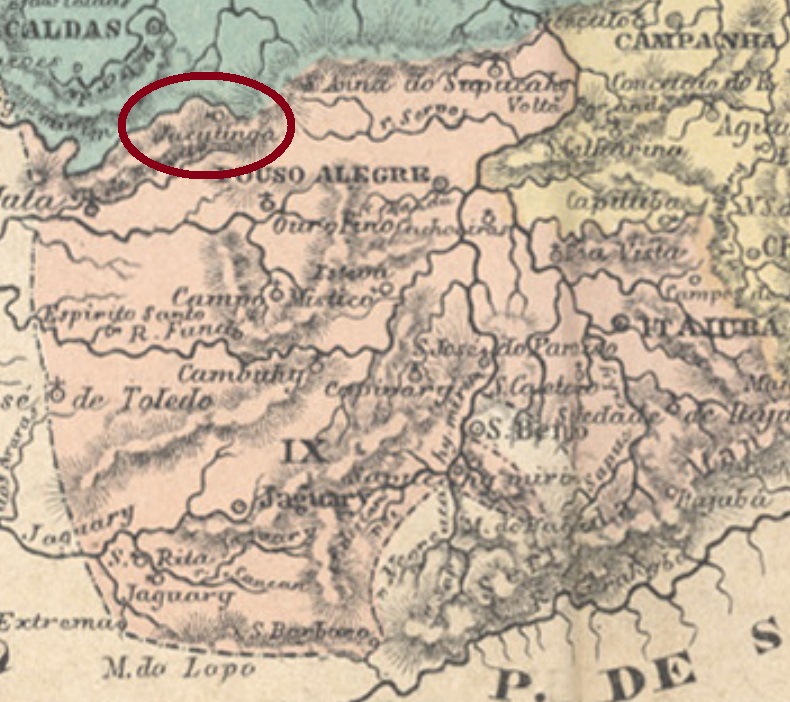
The jacotinga (or jacutinga) bird was already presented on dealing about Santa Rita do Jacotinga (SMG-2915). The locality of Santo Antonio da Jacotinga was also located in southern Minas Gerais province, but approximately 350 km west of Santa Rita and almost 500 km southwest of the early province capital Ouro Preto. After the foundation as a freguesia in September 1871 in the municipality of Ouro Fino near the provincial border to São Paulo, it ascended to a villa in own municipality in September 1901 and was declared a town fourteen years later. Since September 1923 the municipality has the simplified toponym of Jacutinga.  

According to Paula Sobrinho (História Postal de Minas Gerais, Belo Horizonte, 1997) the local post office was created in July 1881. Two early cancels have been found. SMG-3000a (Coll. José A. Junges) has a double circle with the imprint S. ANTONIO DA JACOTINGA  above and a diamond ornament below, formed by four small diamonds. Dates in the centre were found for 1889-1897. It was followed by SMG-3000b (image from the internet), which is probably republican, for the dates at the centre are so far between 1903 and 1907. Here the double circle has the inscriptions S. ANTo DE JACOTINGA above and (MINAS) below.

Mappa do Estado de Minas Geraes, 1910

Andere Namen: Santo Antonio de Jacutinga, Jacutinga (1923)

Der jacotinga (oder jacutinga)-Vogel wurde bereits vorgestellt, als von Santa Rita do Jacotinga (SMG-2915) die Rede war. Die Ortschaft Santo Antonio da Jacotinga lag ebenfalls im Süden der Provinz Minas Gerais, aber diesmal ca. 350 km westlich von Santa Rita do Jacotinga und beinahe 500 km südwestlich der ehemaligen Provinzhauptstadt Ouro Preto entfernt, ziemlich nah an der Grenze zu São Paulo. Nach der Gründung im September 1871 als eine Freguesia im Município von Ouro Fino, stieg der Ort zur autonomen Villa im September 1901 und zur Stadt vierzehn Jahre später. Seit September 1923 hat dieser Município den vereinfachten Namen Jacutinga.  

Laut Paula Sobrinho (História Postal de Minas Gerais, Belo Horizonte, 1997) entstand das örtliche Postamt im Juli 1881. Zwei frühe Stempel wurden gefunden. SMG-3000a (Samml. José A. Junges) hat einen Doppelkreis mit der Inschrift S. ANTONIO DA JACOTINGA  oben und einem Ornament  etwa in Rautenform unten, das aus vier kleinen Teilen besteht. Die Daten in der Mitte wurden für den Zeitraum 1889-1897 gefunden. Ihm folgte SMG-3000b (Abb. aus dem Internet), der wohl republikanisch ist, da die Daten in der Mitte zwischen 1903 und 1907 liegen. Hier hat der Doppelkreis die Inschriften S. ANTo DE JACOTINGA oben und (MINAS) unten.