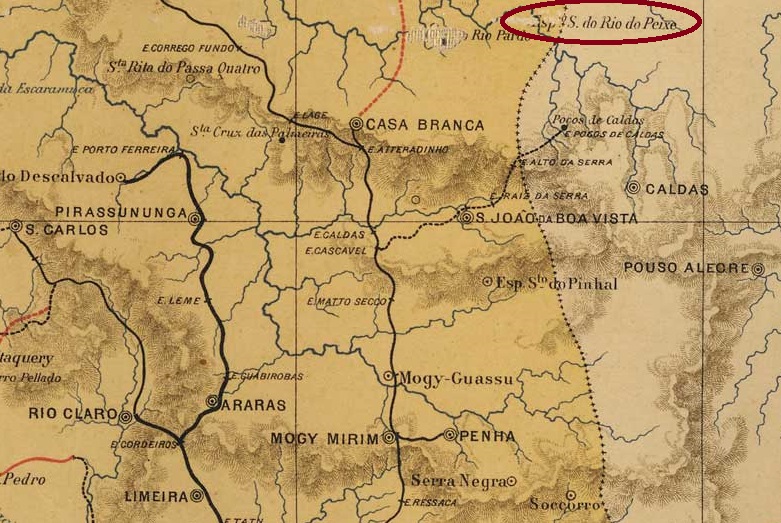
Other names: N. Sra. da Natividade do Rio do Peixe, Sapecado, Divinolândia (1953)
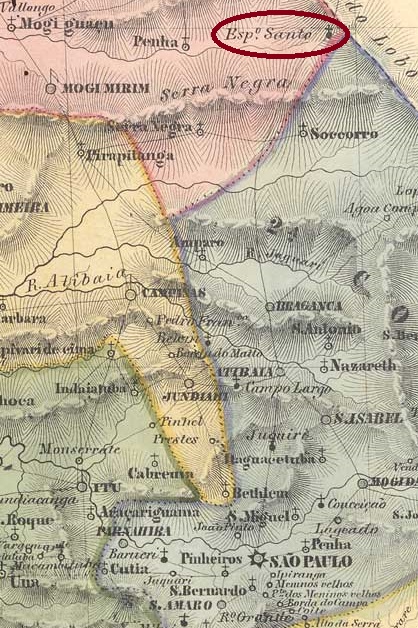
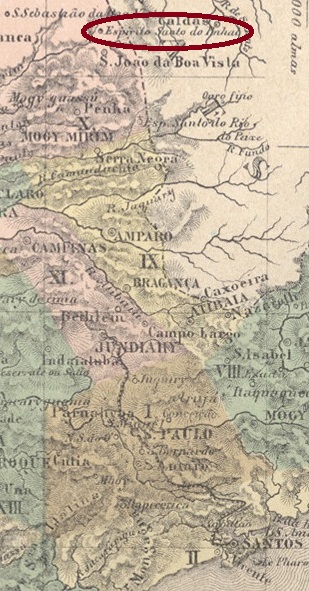
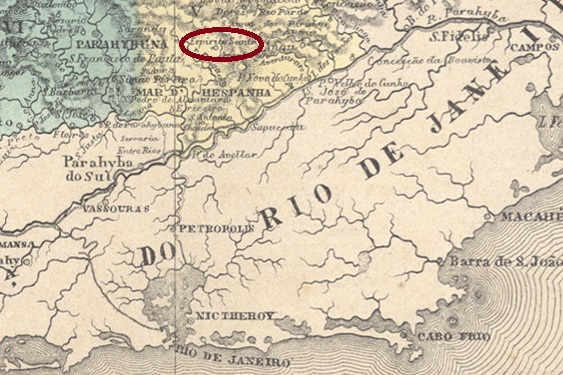
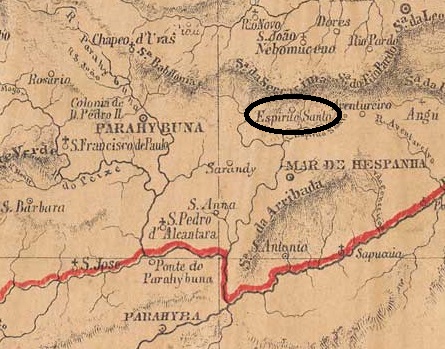
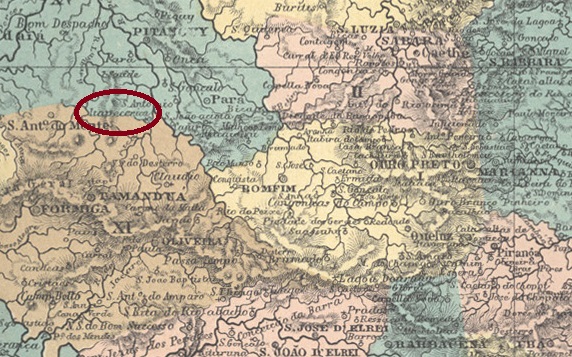
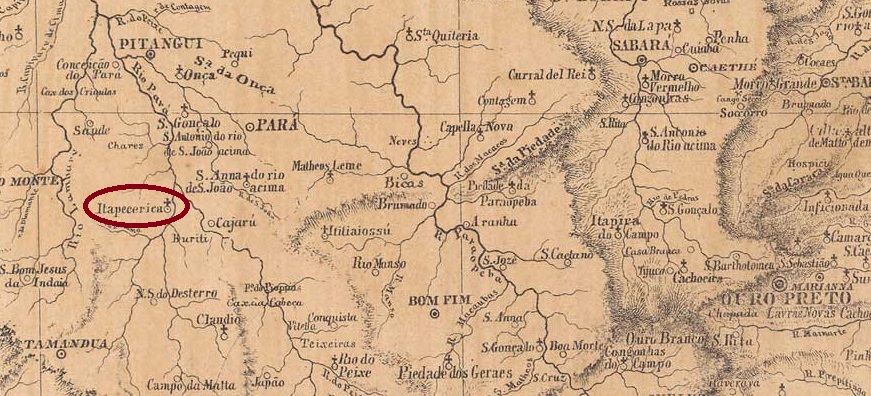
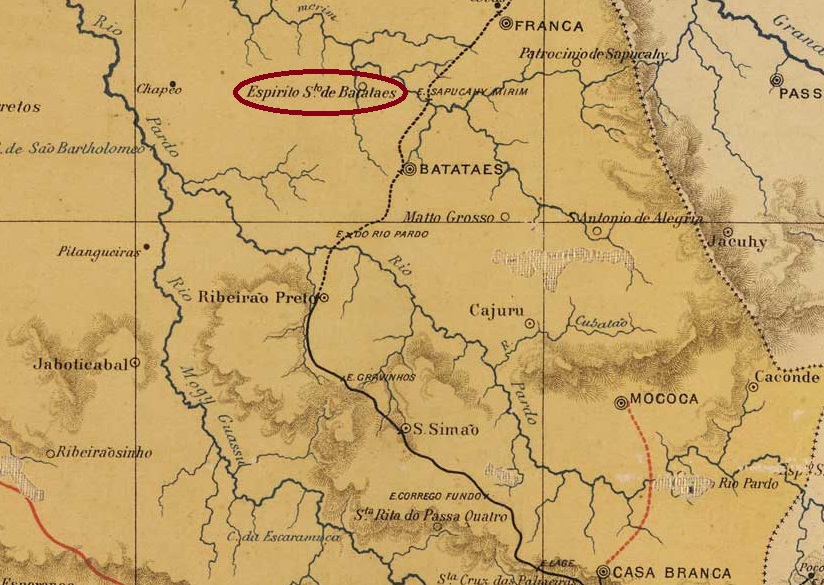
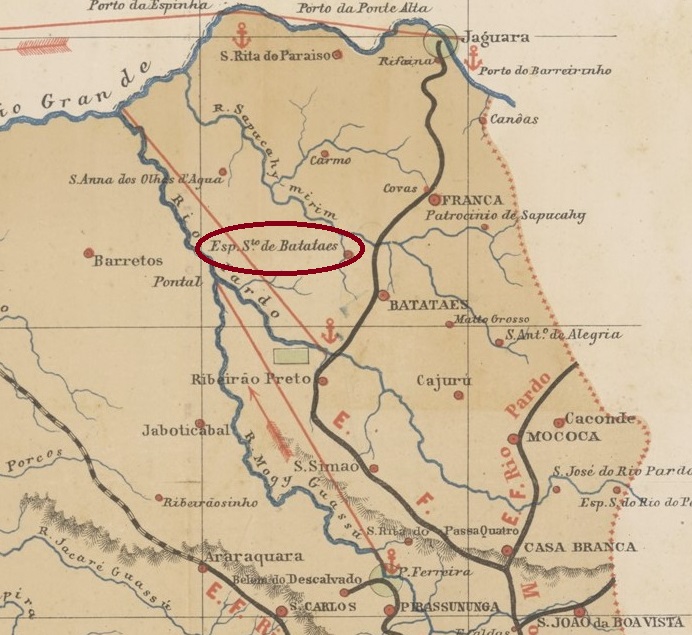
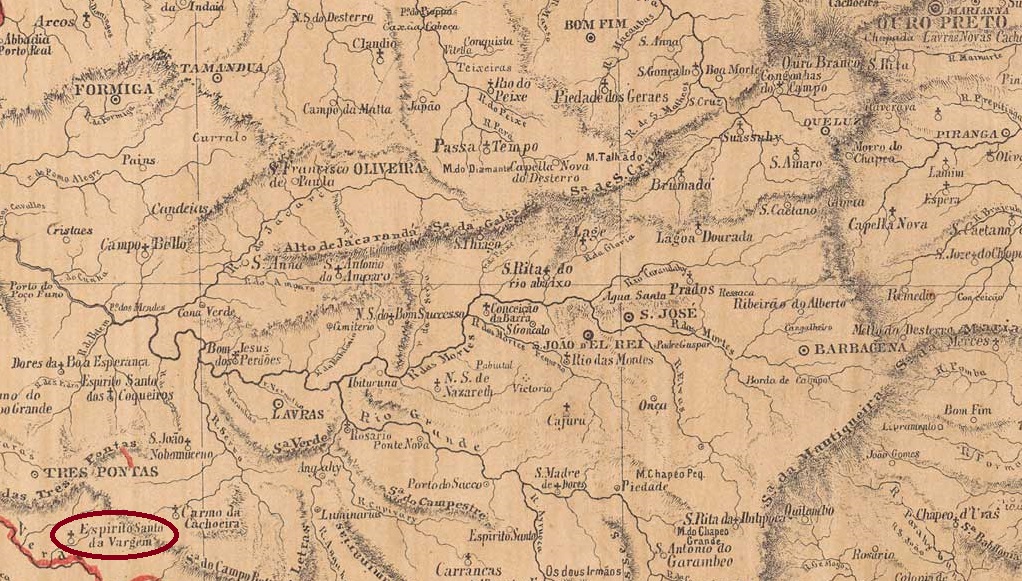
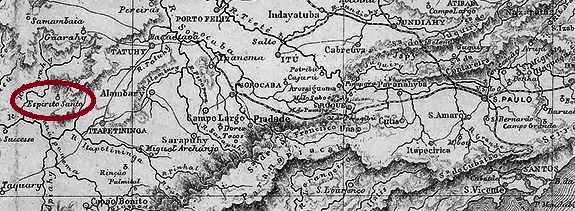
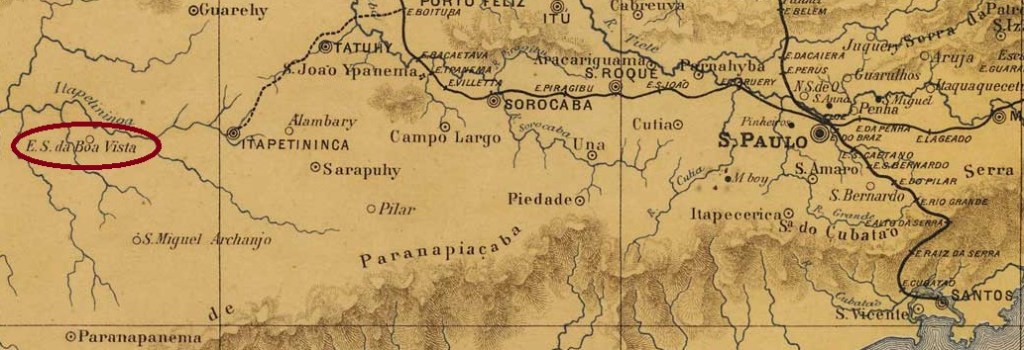
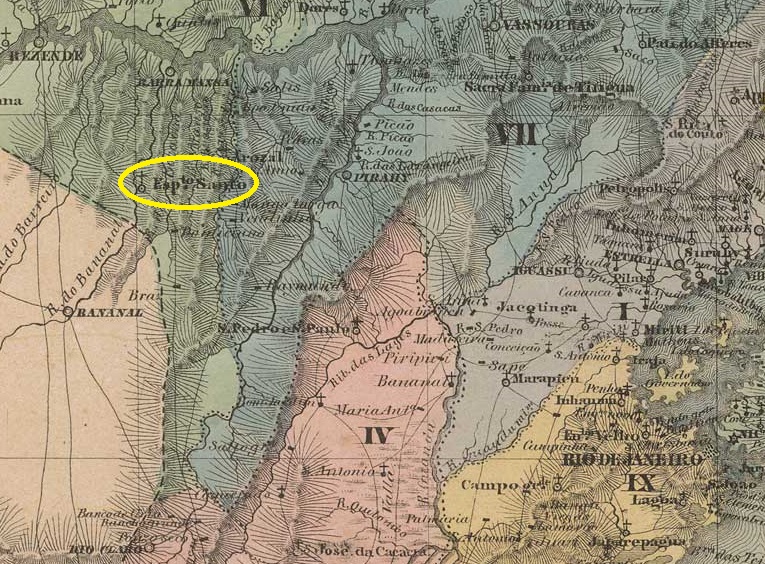
The Divino Espírito Santo chapel, built in January 1858, belonged to the Vila de Caconde and was located on the south bank of the Rio de Peixe (a tributary of the Pardo) near the provincial border with Minas Gerais, 260 kilometres north of the capital São Paulo. In March 1865, it was elevated to a freguesia, which from August 1898 belonged to the Município de S. José do Rio Pardo. Two name changes followed: in November 1938 as Distrito de Sapecado and in December 1953 as Município de Divinolândia.
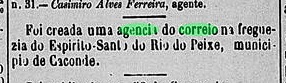
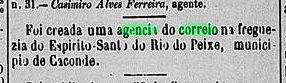
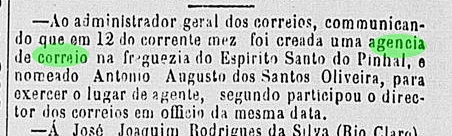
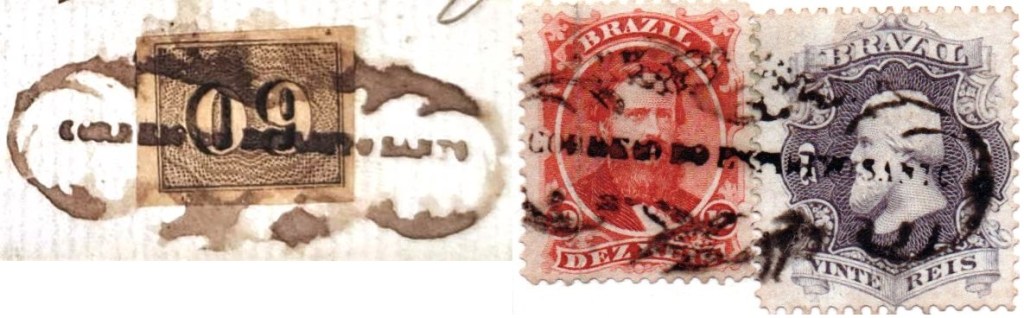
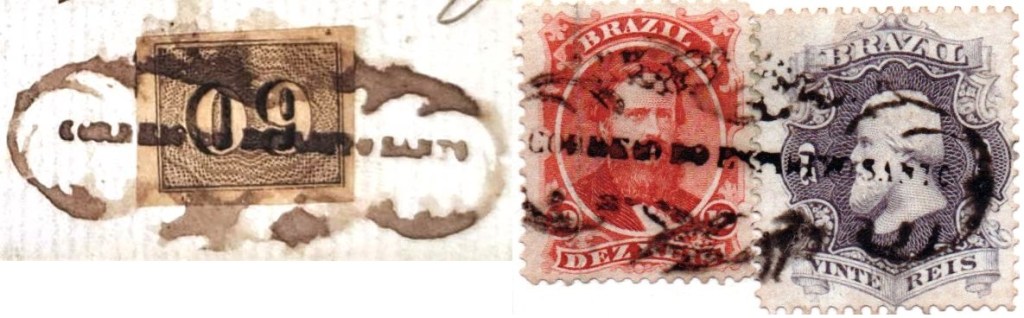
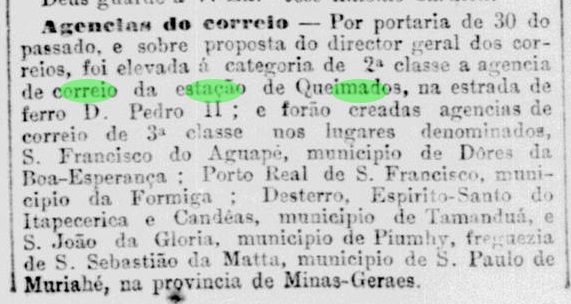
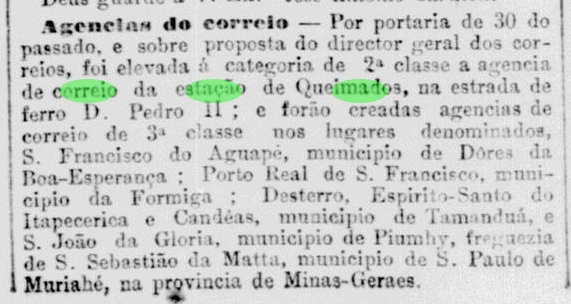
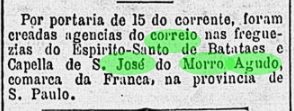
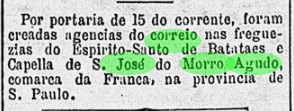
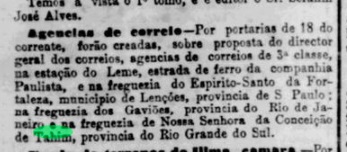
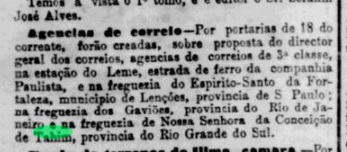
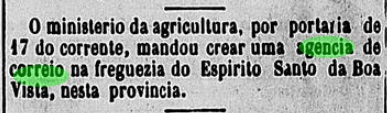
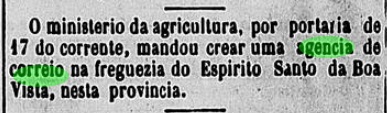
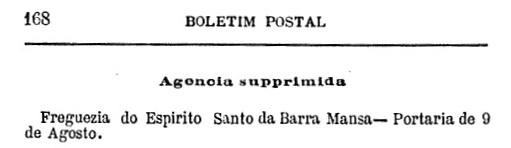
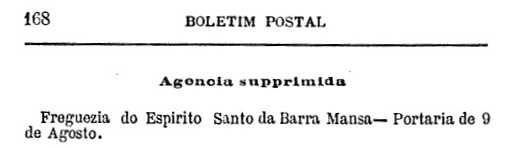
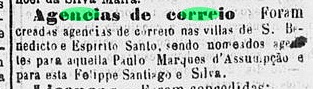
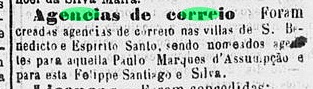
R. Koester writes in Carimbologia XVIII that there had been a post office there since 1880, which is confirmed by the regional press:
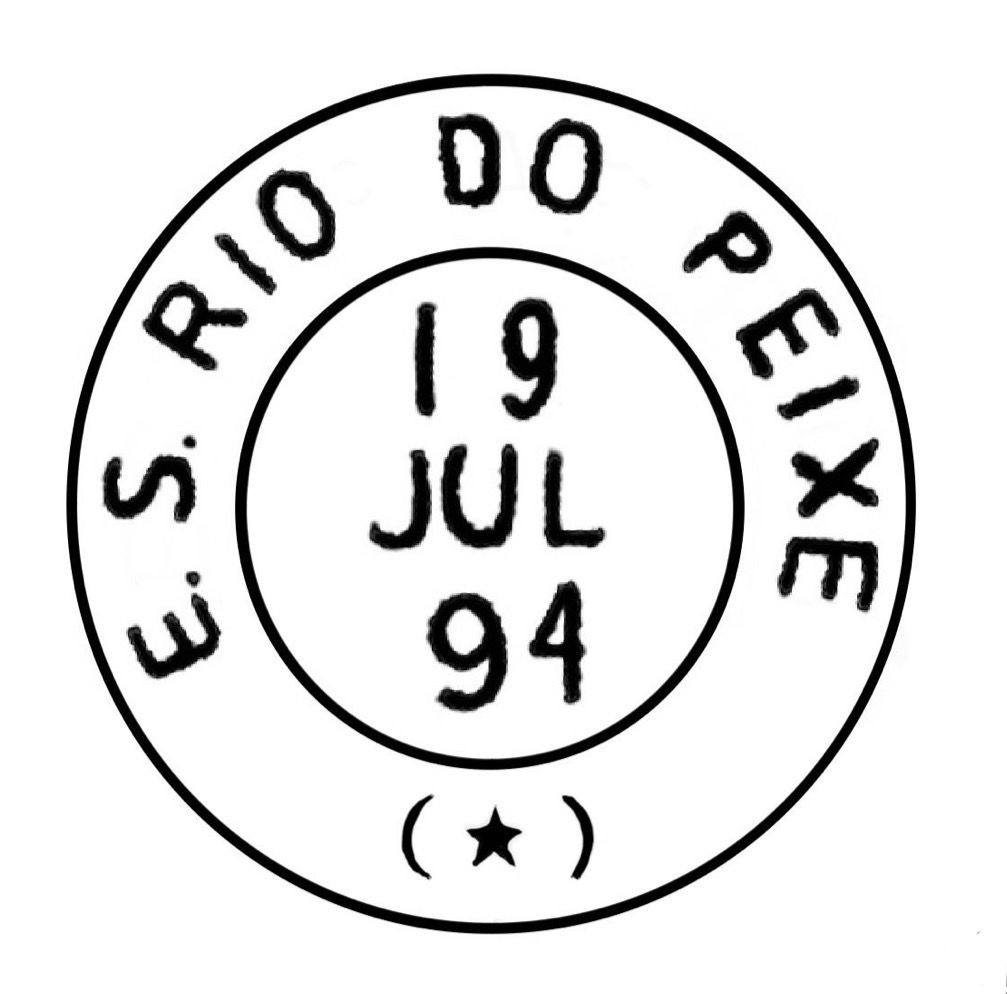
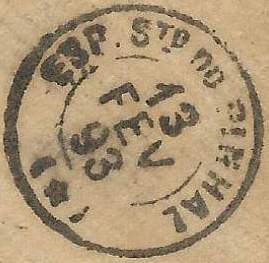
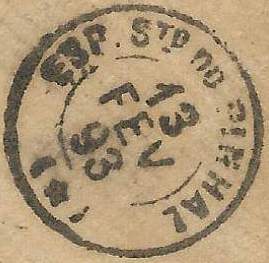
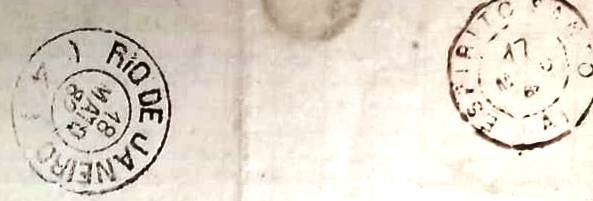
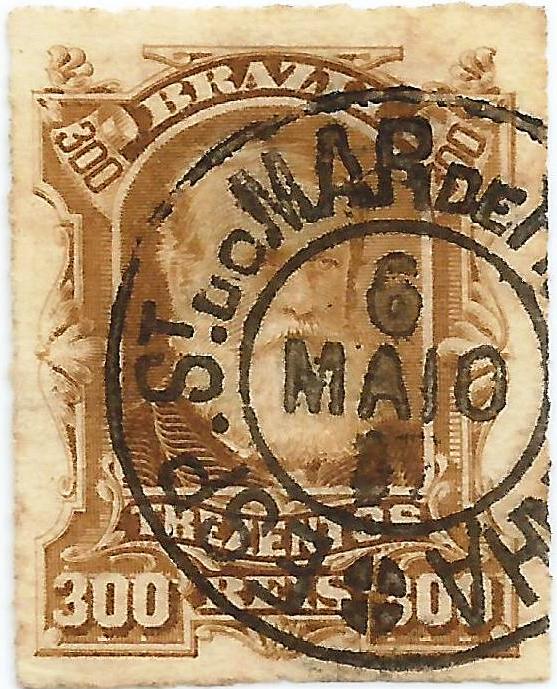
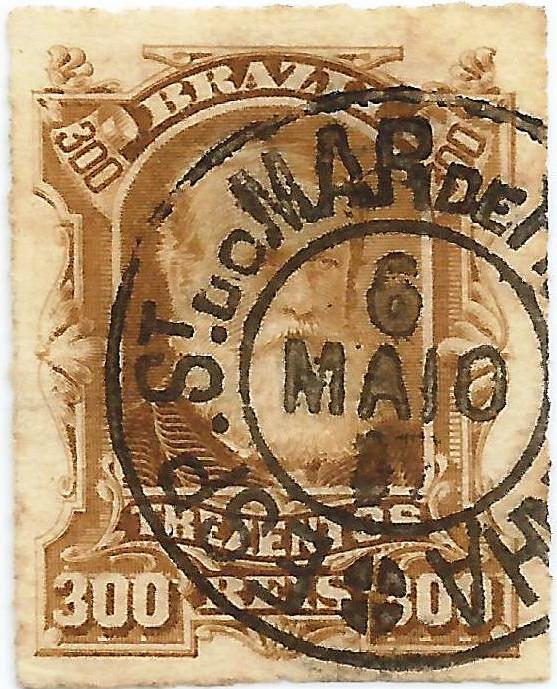
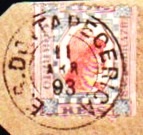
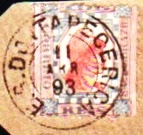
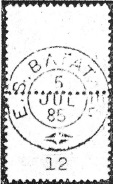
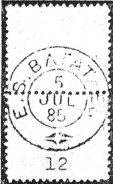
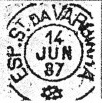
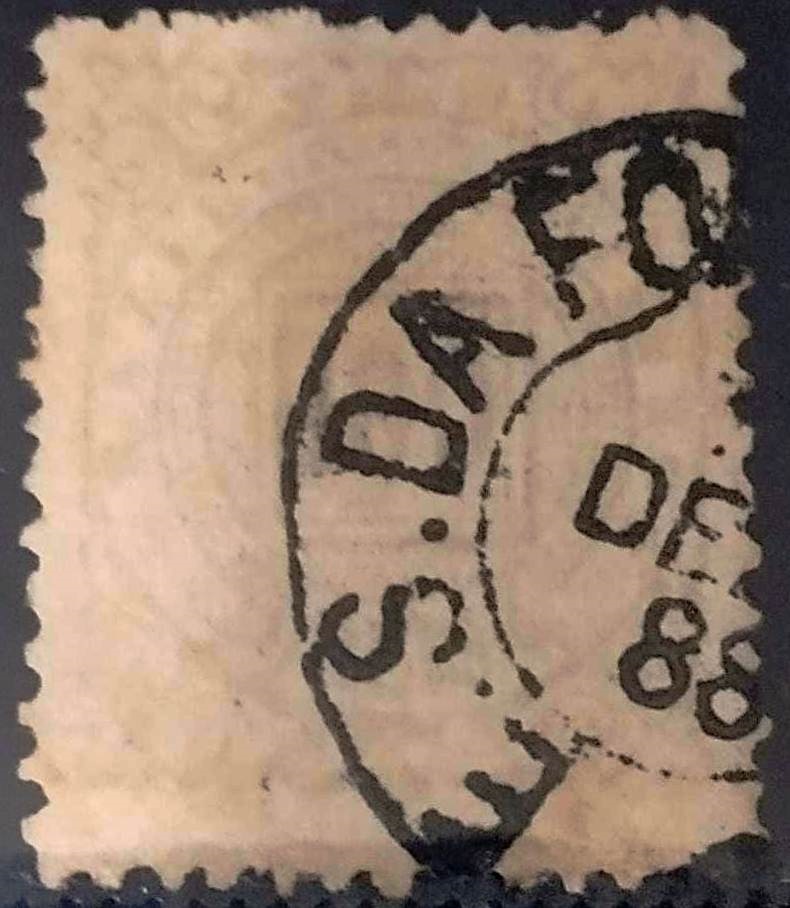
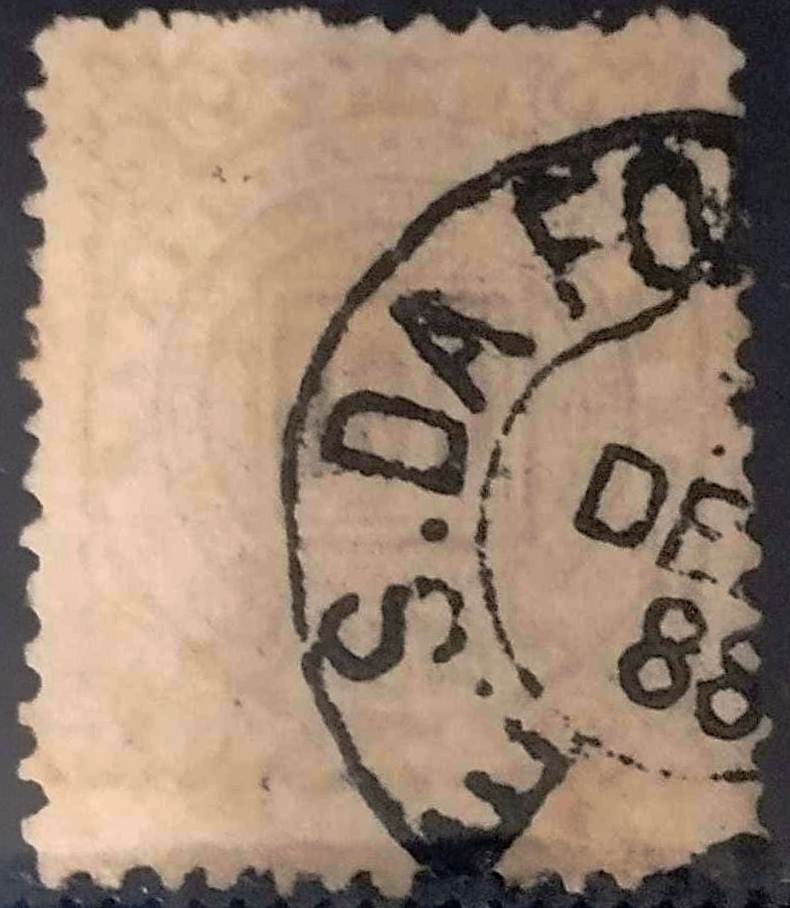
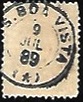
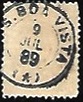
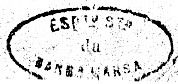
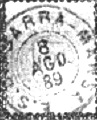
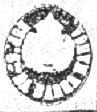
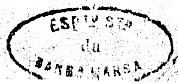
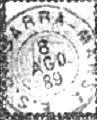
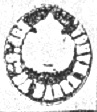
The imperial postmark is the French type ESP-0490a (fig. Claudio Coelho), which was found with dates up to 1925 (!):
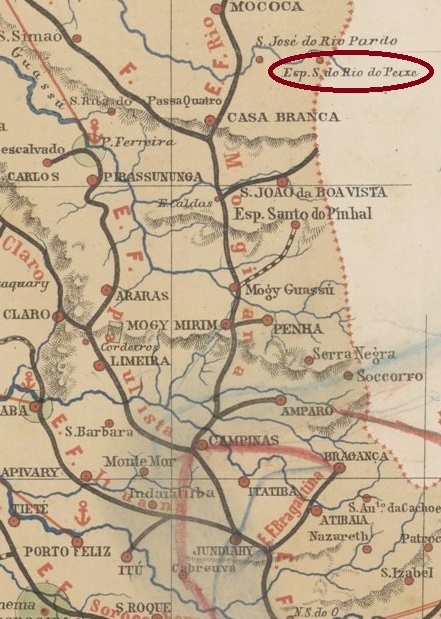
Andere Namen: N. Sra. da Natividade do Rio do Peixe, Sapecado, Divinolândia (1953)
Die im Januar 1858 errichtete Kapelle Divino Espírito Santo gehörte zur Vila de Caconde und lag am Südufer des Rio de Peixe (einem Nebenfluss des Pardo) nahe der Provinzgrenze zu Minas Gerais, 260 km nördlich der Hauptstadt São Paulo. Im März 1865 wurde es zur Freguesia erhoben, die ab August 1898 zum Município de S. José do Rio Pardo gehörte. Zwei Namensänderungen folgten: Im November 1938 als Distrito de Sapecado und im Dezember 1953 als Município de Divinolândia.
R. Koester schreibt in Carimbologia XVIII, dass es dort seit 1880 ein Postamt gab, was von der regionalen Presse bestätigt wird:
Der kaiserliche Poststempel ist der französische Typ ESP-0490a (Abb. Claudio Coelho), der mit Daten bis 1925 (!) gefunden wurde:










 Carimbologia