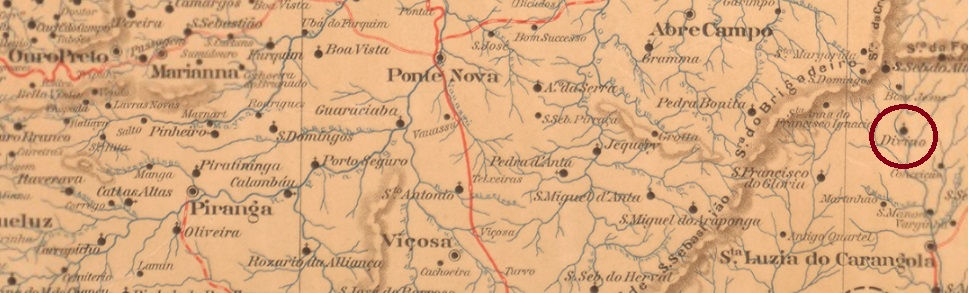
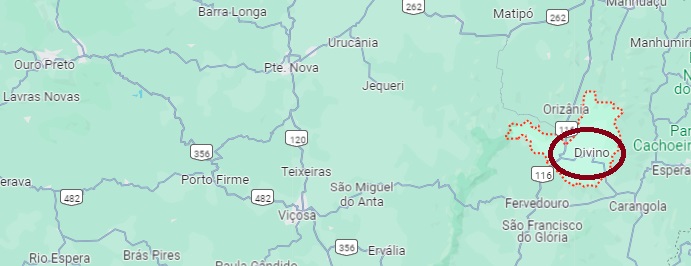
The Curato de Divino Espírto Santo was founded in October 1871, belonged to the Freguesia de Sta. Luzia do Carangola, which in turn belonged to the Vila de S. Paulo de Muriaé, and was situated on the north bank of the Carangola, 230 kilometres east of the provincial capital Ouro Preto. The village was declared a freguesia in September 1889, now the Município of Carangola, and has been Município de Divino since December 1938.
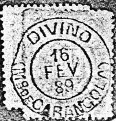
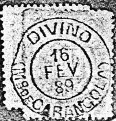
According to consistent sources, the local post office was created in November 1882; the oldest postmark to date is DMG-1015a (fig. R. Koester, in Carimbologia XVI):
DMG-1015a (RK) 1886-1895Google Maps
Andere Namen: Divino Espírito Santo
Der Curato de Divino Espírto Santo wurde im Oktober 1871 gegründet, gehörte zur Freguesia de Sta. Luzia do Carangola, die wiederum zur Vila de S. Paulo de Muriaé gehörte, und lag am Nordufer des Carangola, 230 km östlich der Provinzhauptstadt Ouro Preto. Der Ort wurde im September 1889 zur Freguesia erklärt, nun zum Município Carangola gehörend, und ist seit Dezember 1938 der Município de Divino (Decreto-Lei Est./MG 148).
Das örtliche Postamt wurde nach übereinstimmenden Quellen im November 1882 eingerichtet, der bisher älteste Poststempel ist DMG-1015a (Abb. R. Koester, in Carimbologia XVI):
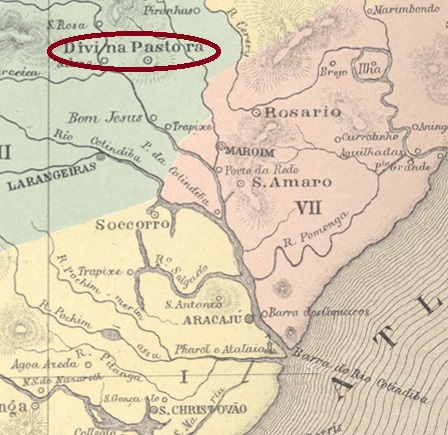
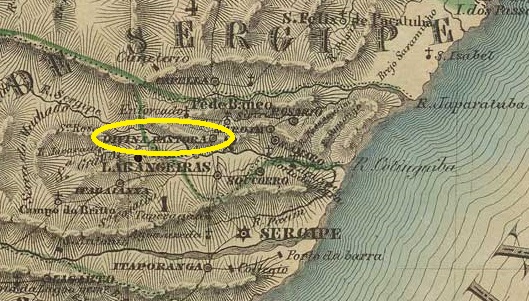
This place was the Freguesia de Ladeira from May 1833, belonged to the Vila de Maroim and was located 40 kilometres north of the later provincial capital Aracaju. The elevation to Vila de N. Sra. da Divina Pastora took place in March 1836.
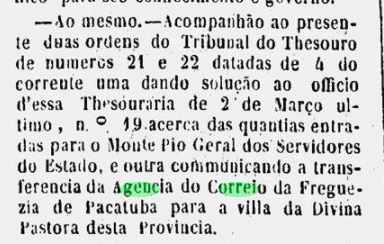
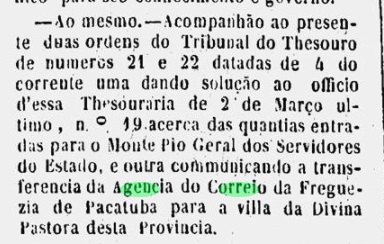
Nova Monteiro writes in Administrações e Agencias Postaes do Brasil Imperio (Brasil Filatelico/RJ, 1934-5; reprint SPP 1994-1999) that there had been a post office there since April 1853. This is confirmed by the regional press, with the addition that this involves the relocation of the agency from the Freguesia Pacatuba:
Correio Sergipense, 25/05/1853
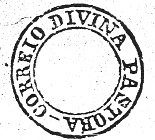
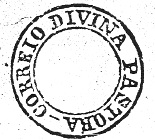
The oldest postmark here to date is DSE-0060a (fig. R. Koester, in Carimbologia XVI)
DSE-0060a (RK)
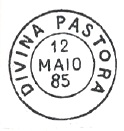
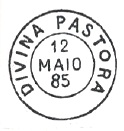
It was later followed by DSE-0060b, illustrated on p. 121 in P. Ayres’ Catálogo de Carimbos Brasil-Império (S. Paulo, 1937, 1942):
DSE-0060b (P.A. p. 121) 1885-1887Villiers de l’Ile Adam: Carta (…) das Provincias de Pernambuco, Alagoas e Sergipe, 1848
Andere Namen: Ladeira
Dieser Ort war ab Mai 1833 die Freguesia de Ladeira, gehörte zur Vila de Maroim und lag 40 km nördlich der späteren Provinzhauptstadt Aracaju. Die Erhebung zur Vila de N. Sra. da Divina Pastora erfolgte im März 1836.
Nova Monteiro schreibt in Administrações e Agencias Postaes do Brasil Imperio (Brasil Filatelico/RJ, 1934-5; Reprint SPP 1994-1999), dass es dort seit April 1853 ein Postamt gab. Dies wird von der regionalen Presse bestätigt, mit dem Zusatz, dass es sich um die Verlegung der Agentur aus der Freguesia Pacatuba handelt:
Correio Sergipense, 25.05.1853
Der bisher älteste Poststempel hier ist DSE-0060a (Abb. R. Koester, in Carimbologia XVI)
DSE-0060a (RK)
Ihm folgte später DSE-0060b, abgebildet auf S. 121 in P. Ayres‘ Catálogo de Carimbos Brasil-Império (S. Paulo, 1937, 1942):
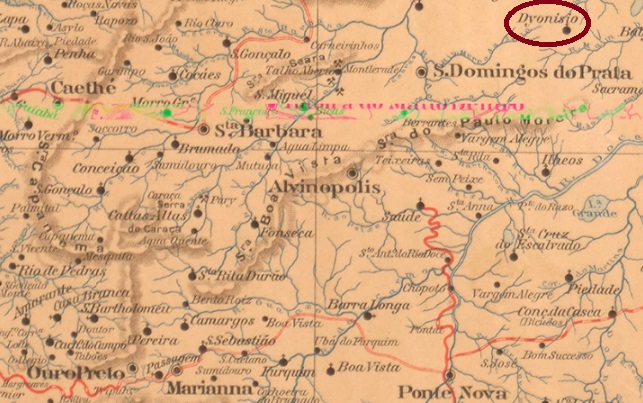
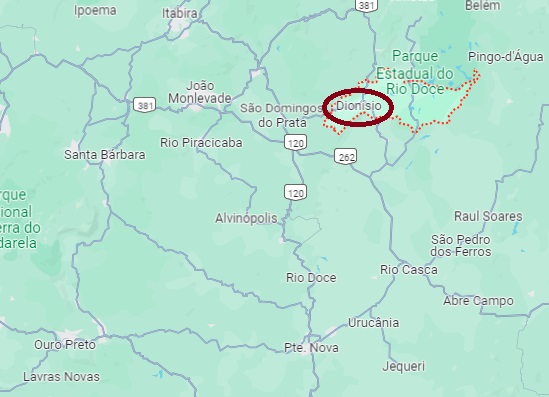
Dionysio was originally an arraial of the Freguesia de Sant’Anna do Alfié, which belonged to the Vila de Itabira and was situated on the south bank of the river Mendonça, 170 km north-east of the provincial capital Ouro Preto. In September 1882, the village was elevated to the Freguesia do Santissimo Sacramento do Dionysio, but in March 1890 it was downgraded to a district of the Município de S. Domingos do Prata. In the meantime, the district was called S. Sebastião do Dionísio, and since December 1948 it has been Município de Dionísio. There is a legend surrounding the eponym, according to which a certain Dionísio is said to have been a multiple murderer and abductor of women. Si non è vero…
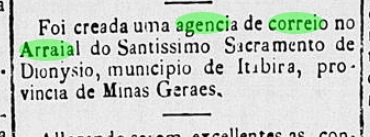
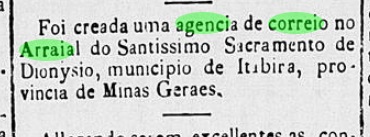
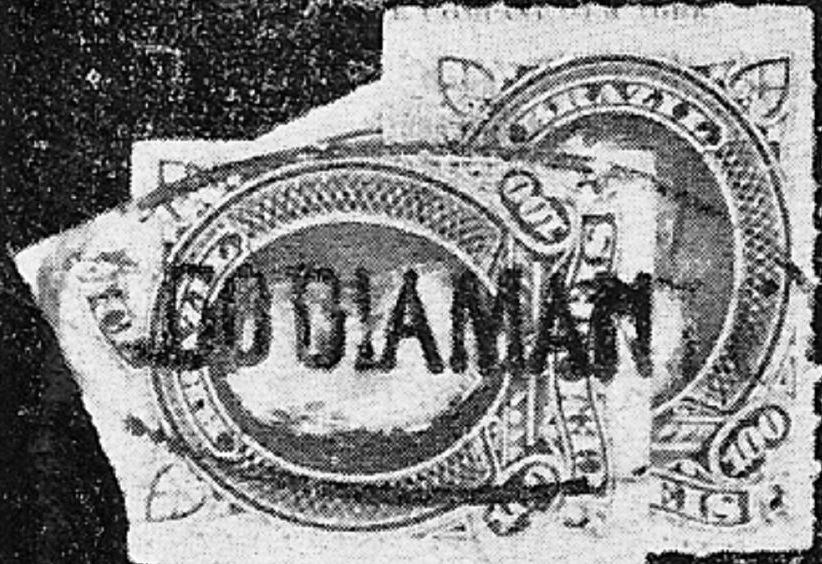
Paula Sobrinho (História Postal de Minas Gerais, Belo Horizonte, 1997) and R. Koester (Carimbologia XVI) agree that there has been a post office there since November 1884. This is confirmed by the press in Rio:
Diario do Brazil/RJ, 29 Nov. 1884
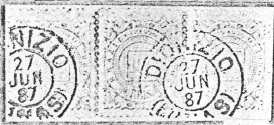
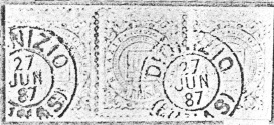
The imperial postmark is DMG-1005a (fig. R. Koester, op. cit.):
DMG-1005a (RK) 1887Google Maps
Andere Namen: São Sebastião do Dionísio
Dionysio war ursprünglich ein Arraial der Freguesia de Sant’Anna do Alfié, die zur Vila de Itabira gehörte und am Südufer des Flusses Mendonça, 170 km nordöstlich der Provinzhauptstadt Ouro Preto lag. Im September 1882 wurde der Ort zur Freguesia do Santissimo Sacramento do Dionysio erhoben, aber im März 1890 wurde er zu einem Distrikt des Município de S. Domingos do Prata herabgestuft. Zwischenzeitlich hieß der Distrikt S. Sebastião do Dionísio, seit Dezember 1948 ist er Município de Dionísio. Um den Namensgeber rankt sich eine Legende, nach der ein gewisser Dionísio ein mehrfacher Mörder und Frauenentführer gewesen sein soll. Si non è vero…
Paula Sobrinho (História Postal de Minas Gerais, Belo Horizonte, 1997) und R. Koester (Carimbologia XVI) sind sich einig, dass es dort seit November 1884 ein Postamt gab. Dies wird von der Presse in Rio bestätigt:
Diario do Brazil/RJ, 29.11.1884
Der kaiserliche Poststempel ist DMG-1005a (Abb. R. Koester, op. cit.):
Other names: Arraial do Ouro, Félix, Alto Paraguai Diamantino
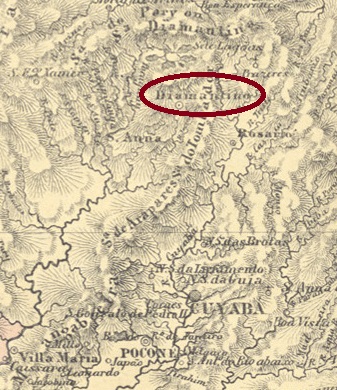
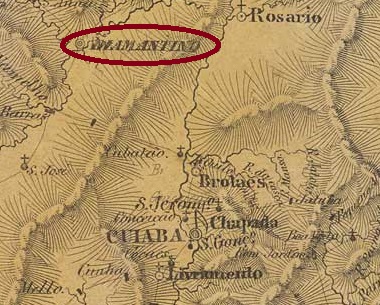
This town on the river of the same name had been since November 1811 a freguesia of the Vila de Cuiabá, which was 180 kilometres to the south. In November 1820, it was elevated to a Vila with the pompous name N. Sra. da Conceição do Alto Paraguai Diamantino. In April 1901 it was demoted to a district of Cuiabá, but Diamantino became a município again in August 1906 and a town in July 1918.
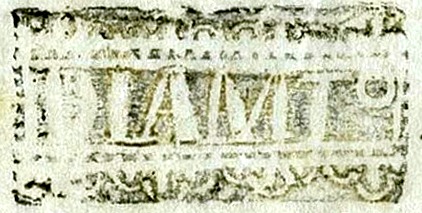
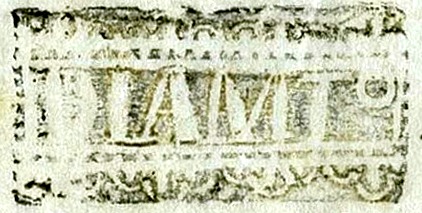
As Nova Monteiro writes in Administrações e Agencias Postaes do Brasil Imperio (Brasil Filatelico/RJ, 1934-5; reprint SPP 1994-1999), there had been a post office there since March 1829. The oldest postmark to date is the archaic-looking DMT-0020a (collect. Pablo Reim), which is also known in red and magenta on Bull’s-Eyes issues from 1843.
DMT-0020a (Pablo Reim) 1843ff-1848
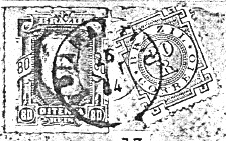
Since the following postmark DMT-0020b (fig. R. Koester, in Carimbologia XVI) is only known with dates from the 1880s, there may have been another postmark in between.
DMT-0020b (RK) 1880-1884
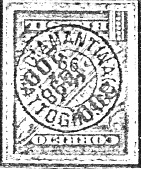
DMT-0020c was also found towards the end of the century (fig. R. Koester, op. cit.):
DMT-0020c (RK) 1899Villiers de l’Ile Adam: Carta (…) da Provincia do Matto Grosso, 1850
Andere Namen: Arraial do Ouro, Félix, Alto Paraguai Diamantino
Dieser Ort am gleichnamigen Fluss war seit November 1811 eine Freguesia der 180 km südlich gelegenen Vila de Cuiabá. Im November 1820 wurde sie zur Vila mit dem pompösen Namen N. Sra. da Conceição do Alto Paraguai Diamantino erhoben. Im April 1901 wurde sie zu einem Distrikt von Cuiabá degradiert, aber schon im August 1906 wurde Diamantino wieder ein Município und im Juli 1918 eine Stadt.
Wie Nova Monteiro in Administrações e Agencias Postaes do Brasil Imperio (Brasil Filatelico/RJ, 1934-5; Reprint SPP 1994-1999) schreibt, gab es dort ein Postamt seit März 1829. Der bisher älteste Poststempel ist der archaisch anmutende DMT-0020a (Samml. Pablo Reim), der auch in rot und magenta auf Ochsenauge von 1843 bekannt ist.
DMT-0020a (Pablo Reim) 1843ff-1848
Da der folgende Stempel DMT-0020b (Abb. R. Koester, in Carimbologia XVI) nur mit Daten aus den 80er Jahren bekannt ist, könnte es dazwischen noch einen weiteren Poststempel gegeben haben.
DMT-0020b (RK) 1880-1884
Gegen Ende des Jahrhunderts wurde auch DMT-0020c gefunden (Abb. R. Koester, op. cit.):
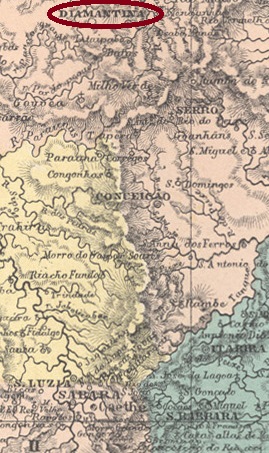
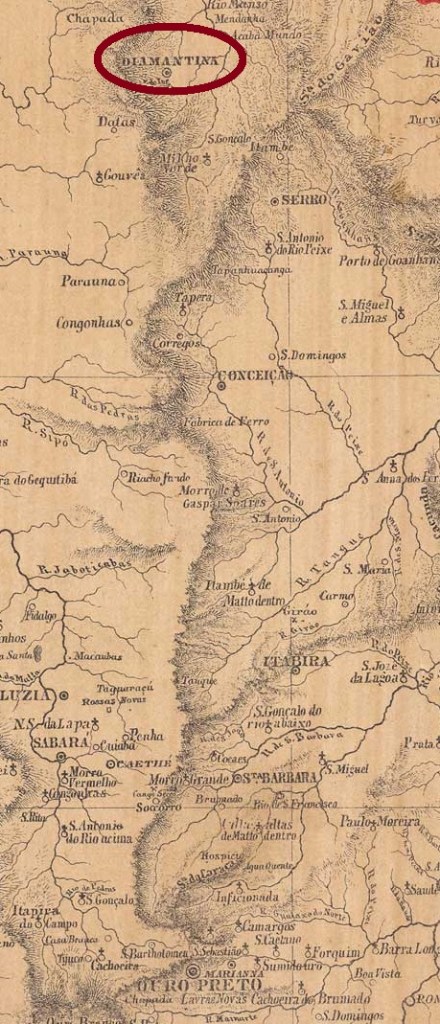
Arraial do Tejuco already existed from about 1729, it was a settlement of gold and diamond seekers located 380 km north of the future provincial capital of Ouro Preto. By royal decree (Alvará Régio), the place was promoted to freguesia in October 1819. In October 1831, already after Brazil’s independence, it became the Vila of Diamantina.
No less than four dates of creation of the local post office have been found, two of them by Paula Sobrinho in História Postal de Minas Gerais (Belo Horizonte, 1997): first in May 1809, then again in October 1833. Nova Monteiro in Administrações e Agencias Postaes do Brasil Imperio (Brasil Filatelico/RJ, 1934-5; reprint SPP 1994-1999) provided a date for the intermediate period, in March 1829. Finally, Reinhold Koester (Carimbologia XVI) writes October 1839, a sure indication of an eventful postal history of this place.
Until about 1836 the postmarks still had the place name Tejuco (see TMG-3740). The first postmark with Diamantina is VMG-3745a which has the no. 1524 under Paulo Ayres (Catálogo de Carimbos Brasil-Império, S. Paulo, 1937, 1942) and is listed in the RHM catalogue under P-MG-26:
VMG-3745a (P.A. 1524, RHM P-MG-26) 1836-1850ff
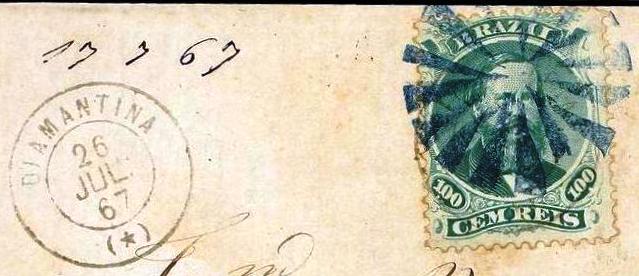
Its successor DMG-0995a is so like it that it could be a retouched version (the young city probably no longer wanted the V. of Vila in the stamp). In P. Ayres (op. cit.) it has no. 1290:
DMG-0995a (P.A. 1290) 1844ff-1877
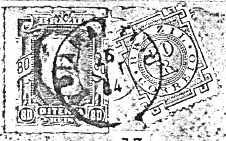
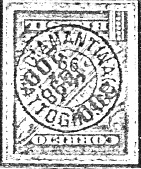
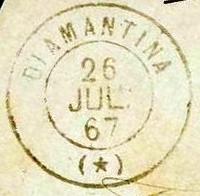
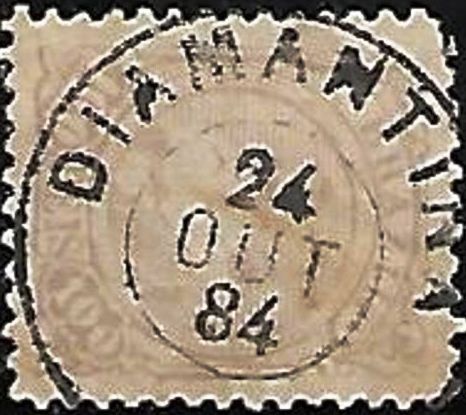
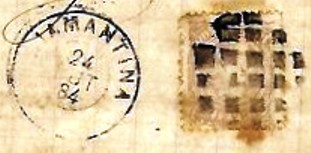
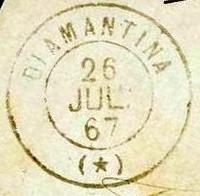
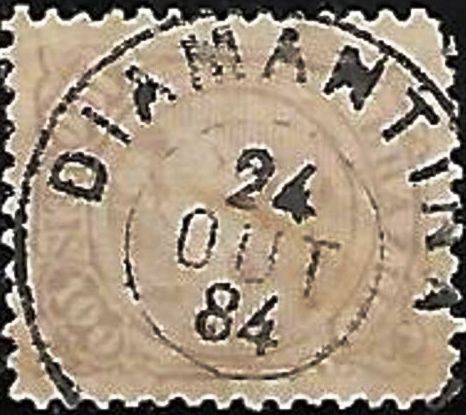
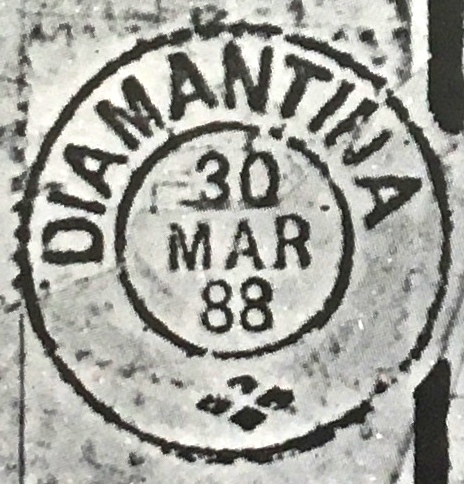
This was followed by the French type DMG-0995b (ill. from the Internet). This postmark was apparently used in two periods:
DMG-0995b (EB) 1867-1884, 1888ff-1892ff
In between, DMG-0995c (ill. from the Internet) came into use:
DMG-0995c (EB) 1877-1886
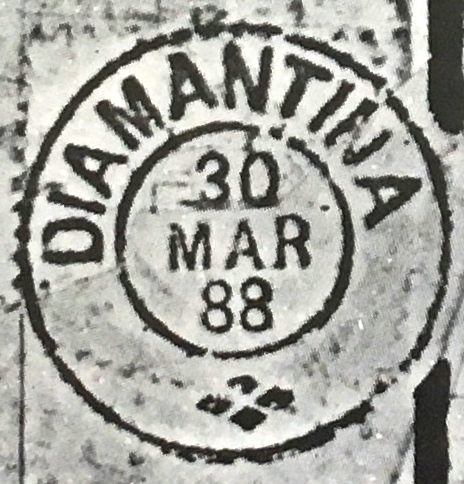
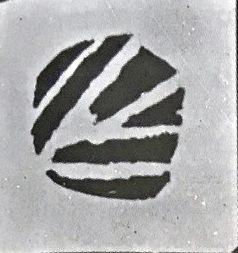
Finally, R. Koester in Diamantina- uma História Filatélica (Rio de Janeiro, 1881) has shown a last imperial cancellation from there: DMG-0995d was in use for a short time and is therefore rare:
DMG-0995d (RKD) 1887-1888
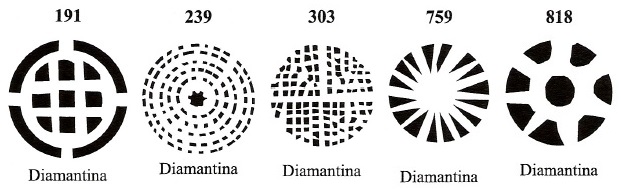
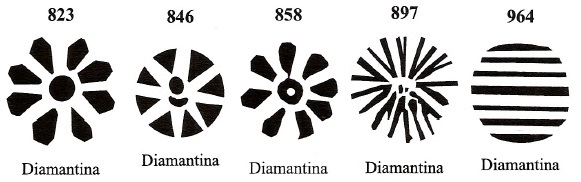
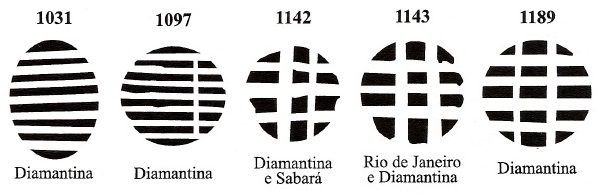
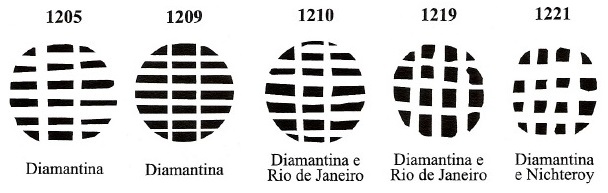
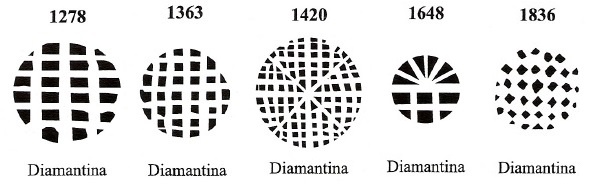
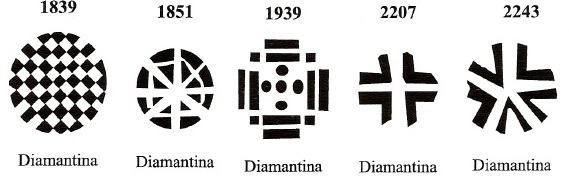
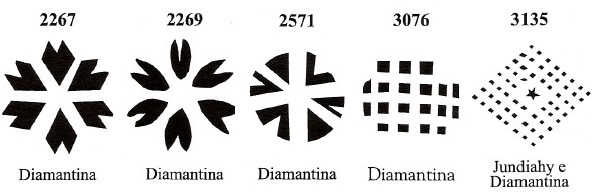
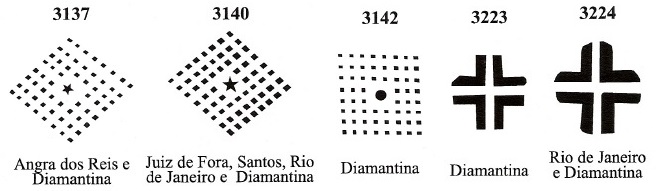
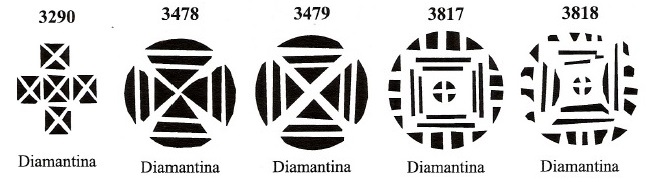
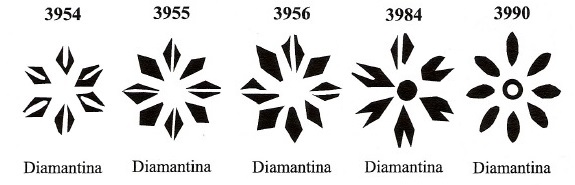
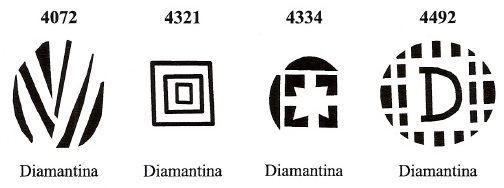
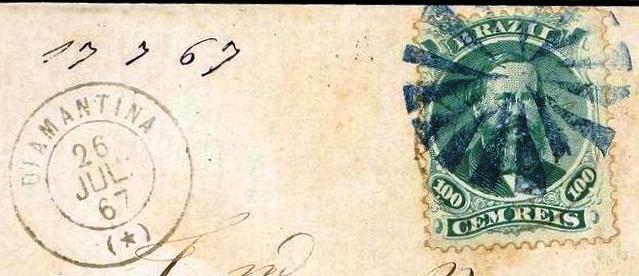
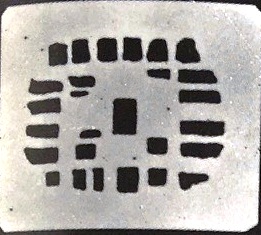
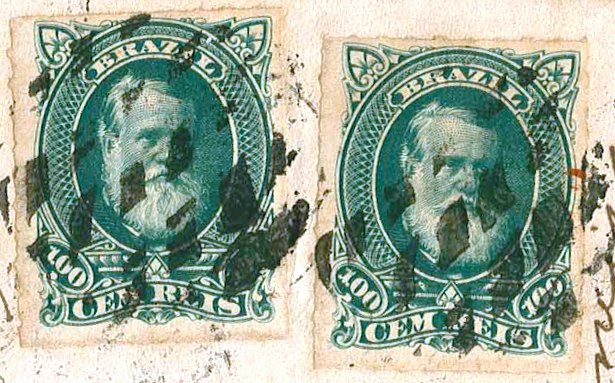
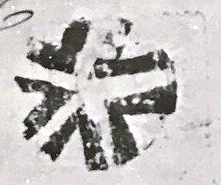
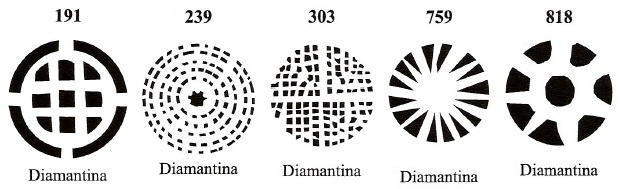
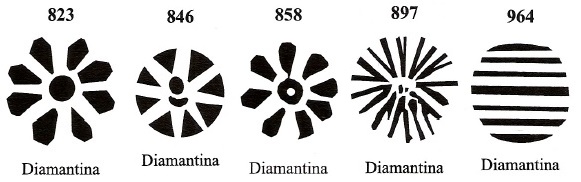
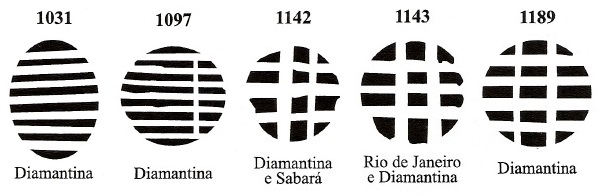
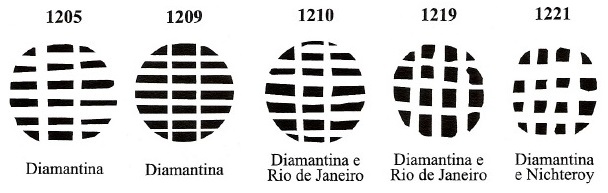
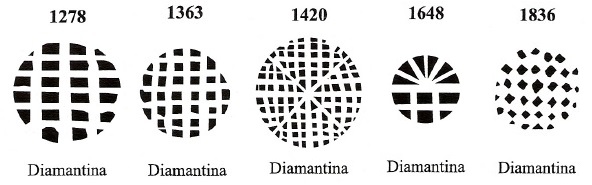
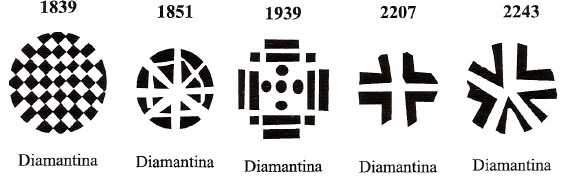
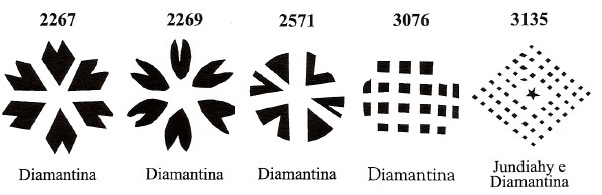
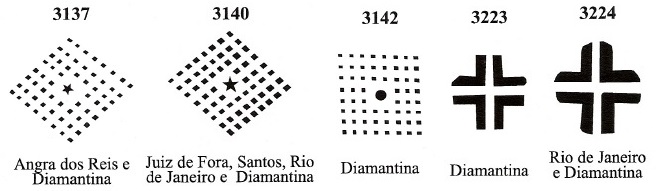
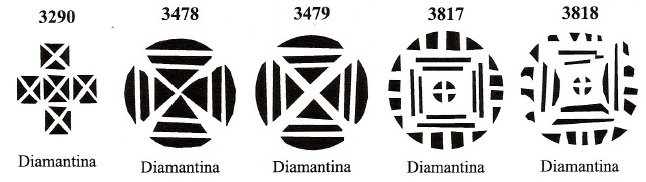
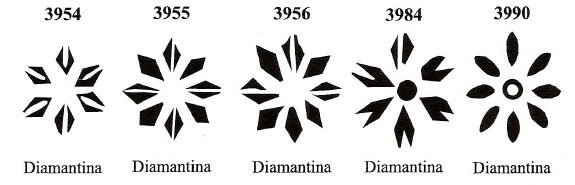
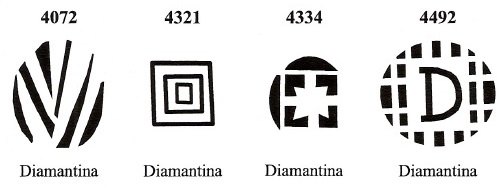
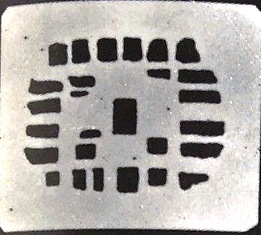
Diamantina produced an astonishing number of mute cancellations in the imperial period. No less than 54 were counted in Mute Cancellations of the Brazil Empire / Carimbos Mudos do Brasil Império (Brazil Philatelic Association, Rio de Janeiro, 2000), by James Dingler and Klerman W. Lopes:
In addition, nine further silent cancellations were found:
(EB) 1867-1877 (similar to BPA 897)(RKD) 1877ff(RKD) 1877ff(RKD) 1877ff(CO) 1879(CO) 1881(RKD) 1881(RKD) 1883(JLF) 1884-1886 (similar to BPA 1363)Provincia de Minas Geraes, 1873
Siehe auch Tejuco (TMG-3740)
Den Arraial do Tejuco gab es bereits ab ca. 1729, er war eine Siedlung von Gold- und Diamantensuchern, die 380 km nördlich der künftigen Provinzhauptstadt Ouro Preto entfernt lag. Durch königliche Verfügung (Alvará Régio) stieg der Ort im Oktober 1819 zur Freguesia auf. Im Oktober 1831, also bereits nach Brasiliens Unabhängigkeit, wurde daraus die Vila Diamantina.
Es wurden nicht weniger als vier Gründungsdaten fürs örtliche Postamt gefunden, zwei davon durch Paula Sobrinho in História Postal de Minas Gerais (Belo Horizonte, 1997) überliefert: erstmals im Mai 1809, dann wieder im Oktober 1833. Nova Monteiro lieferte in Administrações e Agencias Postaes do Brasil Imperio (in Brasil Filatelico/RJ, 1934-5; Reprint SPP 1994-1999) ein Datum für die Zwischenzeit, im März 1829. Und schließlich schreibt Reinhold Koester (Carimbologia XVI) noch den Oktober 1839. Ein sicheres Indiz für eine bewegte Postgeschichte dieses Orts.
Bis ca. 1836 hatten die Poststempel noch die Ortsbezeichnung Tejuco (siehe TMG-3740). Der erste Poststempel mit Diamantina ist VMG-3745a der unter Paulo Ayres (Catálogo de Carimbos Brasil-Império, S. Paulo, 1937, 1942) die Nr. 1524 hat und im RHM-Katalog unter P-MG-26 gelistet wird:
VMG-3745a (P.A. 1524, RHM P-MG-26) 1836-1850ff
Sein Nachfolger DMG-0995a ist ihm so ähnlich, dass er eine retuschierte Fassung (die junge Stadt wollte wohl nicht mehr die V. von Vila im Stempel haben) sein könnte. Im P. Ayres (op. cit.) trägt er Nr. 1290:
DMG-0995a (P.A. 1290) 1844ff-1877
Danach kam der französische Typ DMG-0995b (Abb. aus dem Internet). Dieser Poststempel wurde anscheinend in zwei Perioden benutzt:
DMG-0995b (EB) 1867-1884, 1888ff-1892ff
Zwischendurch kam DMG-0995c (Abb. aus dem Internet) in Gebrauch:
DMG-0995c (EB) 1877-1886
Schließlich hat R. Koester in Diamantina- uma História Filatélica (Rio de Janeiro, 1881) noch einen kaiserlichen Stempel von dort gezeigt: DMG-0995d war kurz in Verwendung und ist daher selten:
DMG-0995d (RKD) 1887-1888
Aus Diamantina kommt eine erstaunliche Menge an stummen Stempeln in der Kaiserzeit. Nicht weniger als 54 Stück zählte Mute Cancellations of the Brazil Empire / Carimbos Mudos do Brasil Império (Brazil Philatelic Association, Rio de Janeiro, 2000), von James Dingler und Klerman W. Lopes:
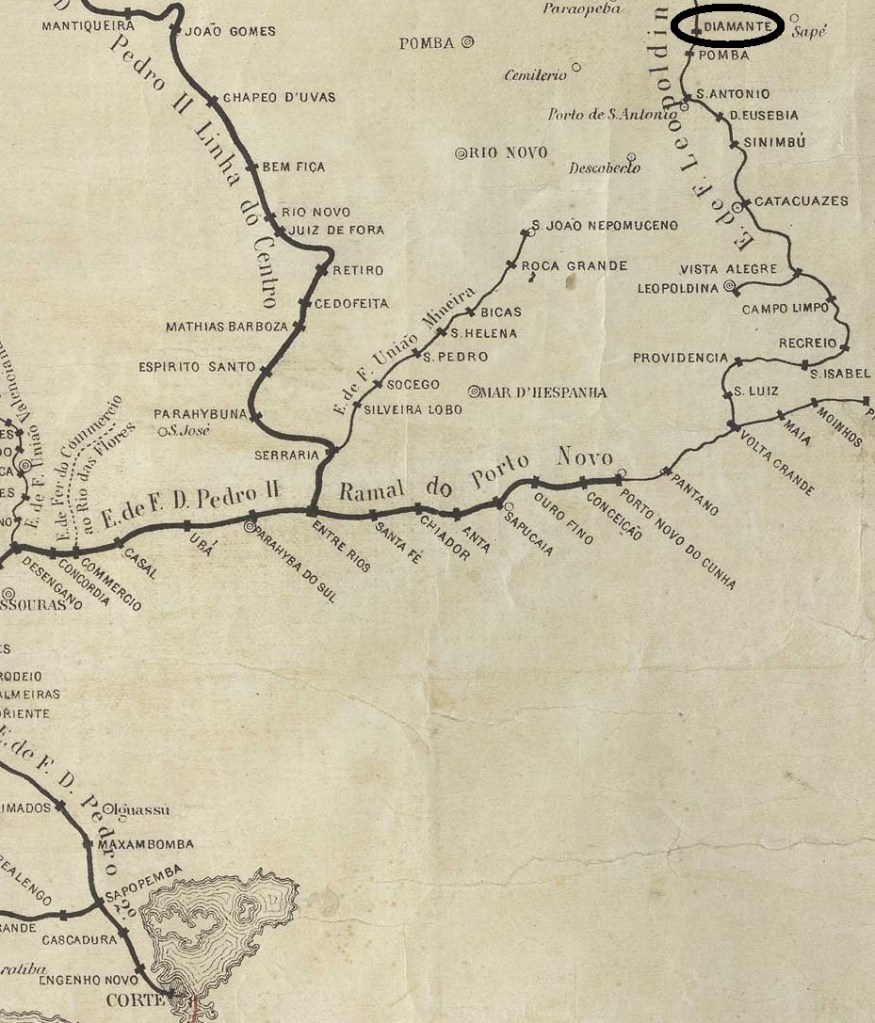
Estaçoes Ferroviarias (…) do Rio de Janeiro, São Paulo e Minas Geraes, 1880
Other names: Diamante de Ubá (1953)
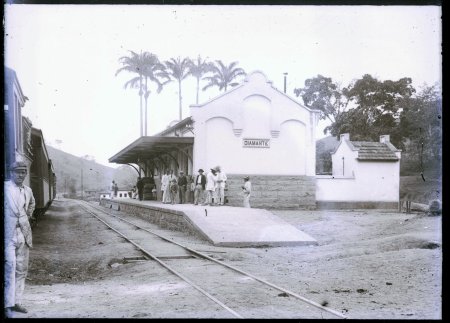
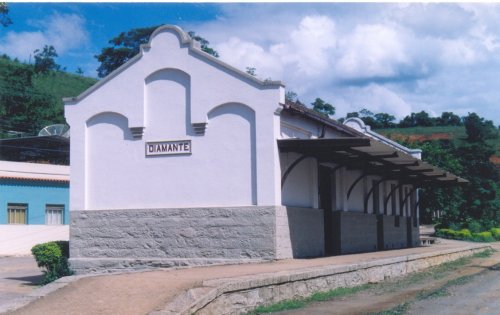
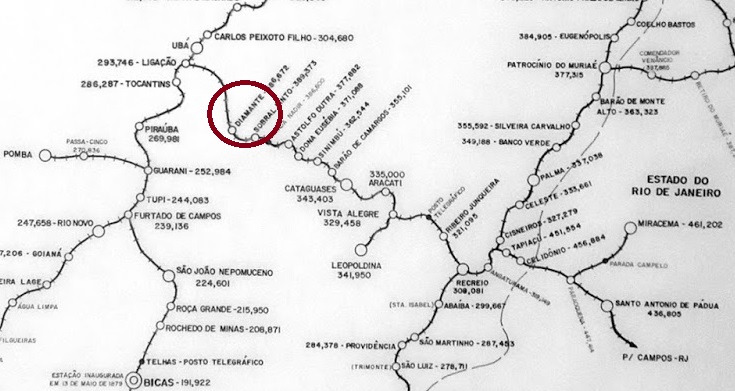
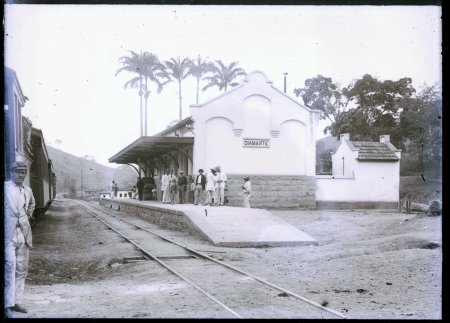
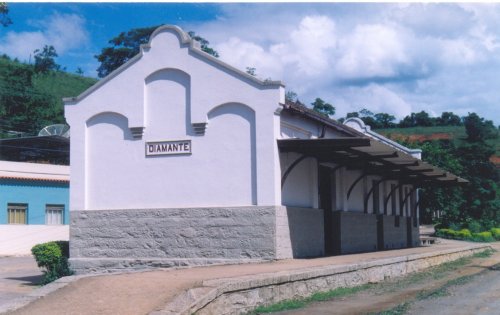
Diamante station was opened in August 1879 by the railway company E.F. Leopoldina (Central Line) and was located near Vila de Ubá, 170 km south-east of the provincial capital Ouro Preto. Diamante was the name of a small river along the railway line, which belonged to Rede Ferroviária Federal (estacoesferroviarias.com.br) from 1975 until its closure in 1996. Today, the tracks and the station building – apparently empty – still exist.
Around 1950 (on estacoesferroviarias.com.br)In December 2004 (photo: Gutierrez Coelho, on estacoesferroviarias.com.br)
The settlement around the railway station became the Distrito de Diamante de Ubá in December 1953.
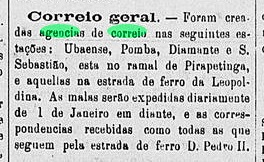
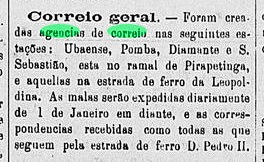
Two foundation dates have been found for the station post office. The first was in December 1879, as reported in the regional press:
O Apóstolo, 31/12/1879
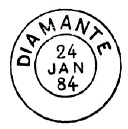
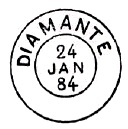
Then again in July 1881, according to Paula Sobrinho’s História Postal de Minas Gerais (Belo Horizonte, 1997). The oldest postmark is DMG-0990a (fig. R. Koester, in Carimbologia XVI):
DMG-0990a (RK) 1879ff
This was followed by the double circle DMG-0990b, illustrated on p. 121 in P. Ayres (Catálogo de Carimbos Brasil-Império, S. Paulo, 1937, 1942):
DMG-0990b (P.A. p. 121) 1882-1885
Koester (op. cit.) also shows a mute cancellation from this station post office:
1882 (RK)Estrada de Ferro Leopoldina
Andere Namen: Diamante de Ubá (1953)
Der Bahnhof Diamante wurde im August 1879 von der Eisenbahngesellschaft E.F. Leopoldina (Hauptstrecke) eröffnet und lag in der Nähe von Vila de Ubá, 170 km südöstlich der Provinzhauptstadt Ouro Preto. Diamante war der Name eines kleinen Flusses entlang der Bahnlinie, die von 1975 bis zu ihrer Stilllegung 1996 der Rede Ferroviária Federal (estacoesferroviarias.com.br) gehörte. Heute sind noch die Gleise und das Bahnhofsgebäude – scheinbar leer – vorhanden.
Um 1950 (auf estacoesferroviarias.com.br)Im Dezember 2004 (Foto: Gutierrez Coelho, auf estacoesferroviarias.com.br)
Die Siedlung um den Bahnhof wurde im Dezember 1953 zum Distrito de Diamante de Ubá.
Für das Bahnhofspostamt wurden zwei Gründungsdaten gefunden. Das erste im Dezember 1879, wie die regionale Presse berichtete:
O Apóstolo, 31.12.1879
Dann wieder im Juli 1881, wie aus Paula Sobrinhos História Postal de Minas Gerais (Belo Horizonte, 1997) hervorgeht. Der älteste Poststempel ist DMG-0990a (Abb. R. Koester, in Carimbologia XVI):
DMG-0990a (RK) 1879ff
Es folgte der Doppelkreis DMG-0990b, abgebildet auf S. 121 in P. Ayres (Catálogo de Carimbos Brasil-Império, S. Paulo, 1937, 1942):
DMG-0990b (P.A. S. 121) 1882-1885
Koester (op. cit.) zeigt auch einen stummen Stempel von diesem Bahnhofspostamt:
Other names: Parada do Barão, Est. Boa Vista, Avellar, Vieira Cortez (1924)
See also Avellar (train station, ARJ-0095)
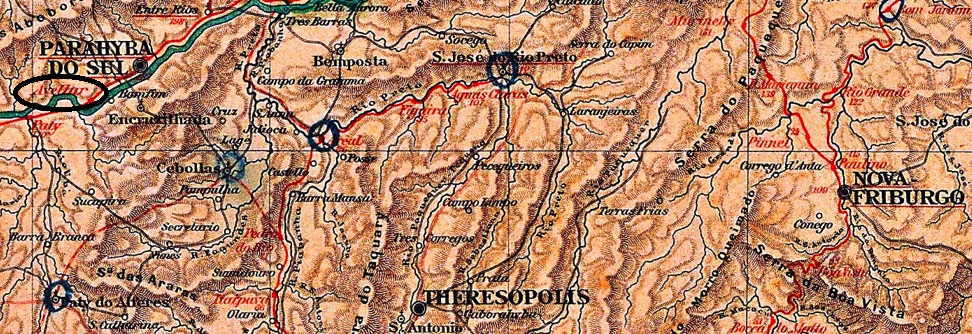
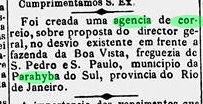
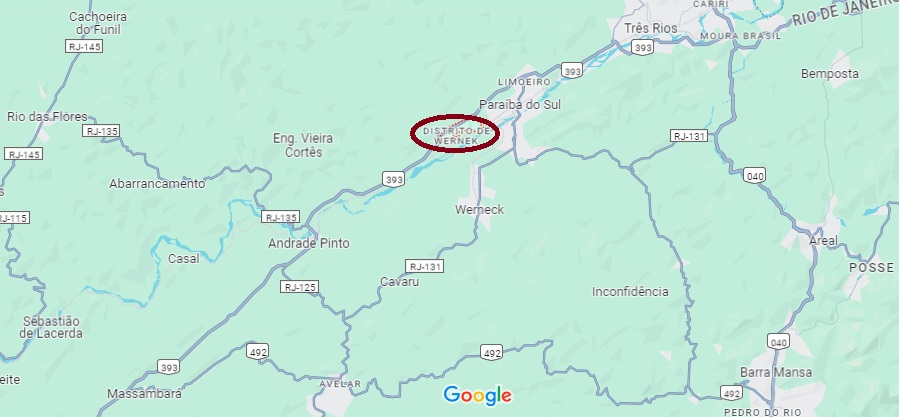
A desvio can be a diversion, or simply a bend. This desvio was located directly at the Fazenda da Boa Vista, Freguesia of S. Pedro and S. Paulo in the Município of Parahyba do Sul on the north bank of the river of the same name, 140 kilometres north of the capital Rio de Janeiro. In 1924 the town was renamed Vieira Cortez, and since December 1951 Vieira Cortez has belonged to the Distrito de Werneck.
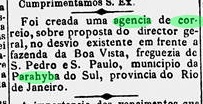
The post office was established in September 1884, according to the Rio press:
Gazeta da Tarde, 13/09/1884
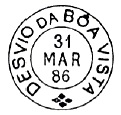
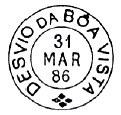
The imperial postmark is DRJ-0430a, which was already shown in P. Ayres’ (Catálogo de Carimbos Brasil-Império, S. Paulo, 1937, 1942):
DRJ-0430a (P.A. p. 121) 1885-1888
After the Avellar railway station opened in 1885, the old postmarks continued to be used. For postmarks with Avellar (from 1889) see ARJ-0095.
Google Maps
Andere Namen: Parada do Barão, Est. Boa Vista, Avellar, Vieira Cortez (1924)
Siehe auch Avellar (Bahnhof, ARJ-0095)
Ein Desvio kann ein Umweg, eine Umleitung oder auch einfach eine Kurve sein. Dieser Desvio lag direkt an der Fazenda da Boa Vista, Freguesia von S. Pedro und S. Paulo im Município von Parahyba do Sul am Nordufer des gleichnamigen Flusses, 140 km nördlich der Hauptstadt Rio de Janeiro. 1924 wurde der Ort zu Vieira Cortez umbenannt, seit Dezember 1951 gehört Vieira Cortez dem Distrito de Werneck.
Das Postamt wurde im September 1884 ins Leben gerufen, wie die Presse aus Rio mitteilte:
Gazeta da Tarde, 13.09.1884
Der kaiserliche Poststempel ist DRJ-0430a, der bereits in P. Ayres‘ (Catálogo de Carimbos Brasil-Império, S. Paulo, 1937, 1942) zu sehen war:
DRJ-0430a (P.A. S. 121) 1885-1888
Nach Inbetriebnahme der Bahnhofs Avellar 1885 wurden die alten Poststempel zunächst weiterverwendet. Für Poststempel mit Avellar (ab 1889) siehe ARJ-0095.
See also Vila Nova de Itambi (VRJ-1000); Itambi (R. Koester: Carimbologia XXIII); São Bernabé (SRJ-0913); São José d’El Rei (SRJ-1427)
In November 1759 the freguesia of Nossa Senhora do Desterro de Itamby was founded in the now extinct municipality of Santo Antonio de Sá, located under 50 km northeast of the imperial capital. In 1772 it became a villa called São José del Rei, that after a short decadence went in 1833 as the freguesia of São Bernabé to the municipality of São João de Itaborahy. This status remained until 1840, when São Bernabé merged with other localities into the Villa Nova de Itamby, which is now Itambi, in the outskirts of the town of Itaboraí. We don’t know the causes of such a turbulent history, whether they are political, economic, or ecological nature, or even a combination among them.
After the closure of the post offices of São José d’El Rei (1835) and São Bernabé (around 1842), the town remained without a postal agency for around 20 years. Nova Monteiro writes in Administrações e Agencias Postaes do Brasil Imperio (Brasil Filatelico/RJ, 1934-5; reprint SPP 1994-1999) that a postal agency was created in Desterro de “Ibambi” in October 1862.
R. Koester shows in Carimbologia XXIII a postmark and a handwritten cancellation, both bearing only the place name Itamby:
IRJ-1070a (RK) 1866ff1885 (RK)
The railway station of Villa Nova do Itamby was opened in November 1866 by the Estrada de Ferro do Cantagallo railway company. The station post office was established in 1873 or 1874, and it can be assumed that the old Itamby postmarks were still in use there until the end of the Empire.
For postmarks with Vila Nova de Itambi see VRJ-1000.
Almanak Laemmert, 1892
Andere Namen: Vila Nova de Itambi, Itambi
Siehe auch Vila Nova de Itambi (VRJ-1000); Itambi (R. Koester: Carimbologia XXIII); São Bernabé (SRJ-0913); São José d’El Rei (SRJ-1427)
Die Geschichte dieser Ortschaft begann im November 1759 mit der Gründung der Freguesia von Nossa Senhora do Desterro de Itamby im inzwischen ausgelöschten Município von Santo Antonio de Sá, knapp 50 km nordöstlich der kaiserlichen Hauptstadt Rio de Janeiro gelegen. 1772 wurde daraus die Villa von São José del Rei, die nach einem raschen Verfall im Jahr 1833 zur Freguesia von São Bernabé im Município von São João de Itaborahy abstieg. Dieser Status hielt bis 1840, als São Bernabé mit anderen Ortschaften zur Villa Nova de Itamby (heute Itambi) wurde, heute ein Vorort der Stadt Itaboraí. Wir wissen nicht die Gründe für eine solch turbulente Geschichte, ob sie politischer, wirtschaftlicher oder ökologischer Natur sind, oder auch eine Mischung davon.
Nach der Schließung der Postämter von São José d’El Rei (1835) und São Bernabé (ca. 1842) blieb der Ort etwa 20 Jahre ohne Postagentur. Nova Monteiro schreibt in Administrações e Agencias Postaes do Brasil Imperio (Brasil Filatelico/RJ, 1934-5; Reprint SPP 1994-1999), dass im Oktober 1862 eine Postagentur in Desterro de „Ibambi“ gegründet wurde.
R. Koester zeigt in Carimbologia XXIII einen Poststempel und eine handschriftliche Entwertung, die beide nur den Ortsnamen Itamby tragen:
IRJ-1070a (RK) 1866ff1885 (RK)
Der Bahnhof von Villa Nova do Itamby wurde im November 1866 von der Eisenbahngesellschaft Estrada de Ferro do Cantagallo eröffnet. Das Bahnhofspostamt wurde 1873 oder 1874 eingerichtet, und es ist anzunehmen, dass die alten Itamby-Poststempel noch bis zum Ende des Kaiserreichs dort weiterverwendet wurden.
Für Poststempel mit Vila Nova de Itambi siehe VRJ-1000.
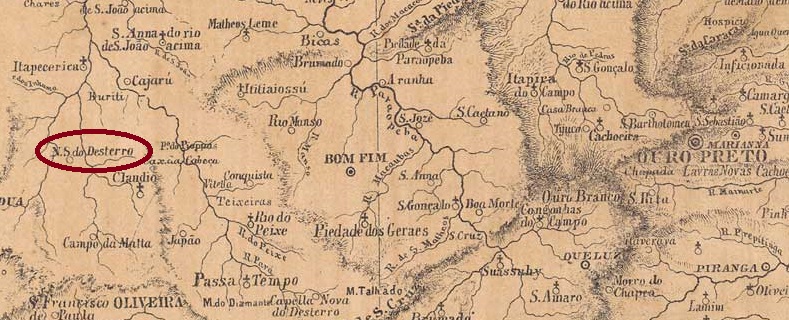
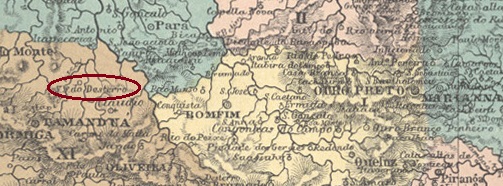
The Freguesia de N. Sra. do Desterro was founded in September 1870, it belonged to the Vila de S. Bento de Tamanduá and was located on the west bank of the Ribeirão Boa Vista, 230 km west of the provincial capital Ouro Preto. In October 1882, the freguesia became part of the Vila de Itapecerica and has been the Distrito de Marilândia since February 1935.
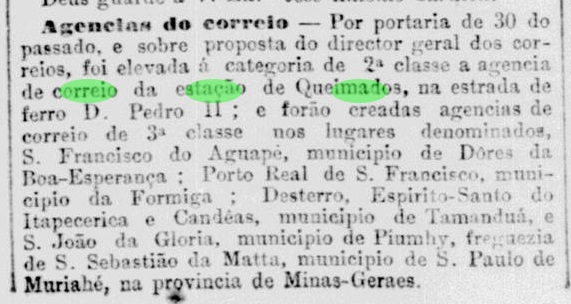
As Paula Sobrinho writes in História Postal de Minas Gerais (Belo Horizonte, 1997), there has been a post office there since November 1881. This is confirmed by the press in Rio:
Jornal do Commercio/RJ, 02/12/1881
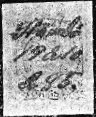
No imperial postmark from N. Sra. do Desterro has yet been found.
Atlas do Imperio do Brasil, 1868
Andere Namen: Marilândia (1935)
Die Freguesia de N. Sra. do Desterro wurde im September 1870 gegründet, sie gehörte zur Vila de S. Bento de Tamanduá und lag am Westufer des Ribeirão Boa Vista, 230 km westlich der Provinzhauptstadt Ouro Preto. Im Oktober 1882 ging die Freguesia in die Vila de Itapecerica über und ist seit Februar 1935 der Distrito de Marilândia.
Wie Paula Sobrinho in História Postal de Minas Gerais (Belo Horizonte, 1997) schreibt, gab es dort seit November 1881 ein Postamt. Dies wird von der Presse in Rio bestätigt:
Jornal do Commercio/RJ, 02.12.1881
Bisher wurde noch kein kaiserlicher Poststempel aus N. Sra. do Desterro gefunden.
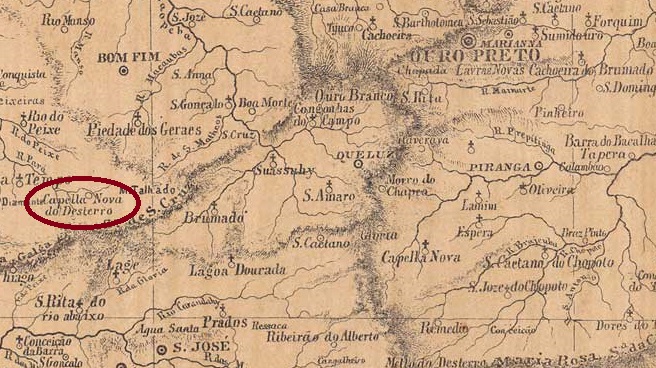
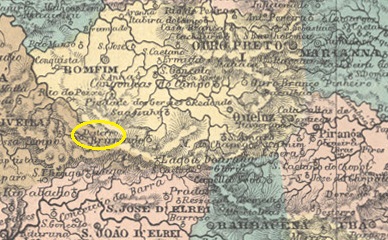
In the imperial province of Minas Gerais there were three places with a post office called Desterro (exile): The Freguesias N. Sra. do Desterro near Itapecerica (today Marilândia) and Mello de Desterro near Barbacena are discussed under DMG-0985 and MMG-1595 respectively. The third place discussed here is only 100 km away from Desterro de Itapecerica and is therefore often confused with it. Capella Nova do Desterro was a district of the Vila de Entre Rios, near the east bank of the Pará River, 120 km south-west of the provincial capital Ouro Preto. It became the Freguesia de N. Sra. do Desterro de Entre Rios in October 1882 and the Município de Desterro de Entre Rios in December 1953.
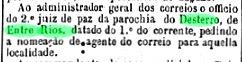
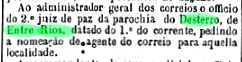
Paula Sobrinho writes in História Postal de Minas Gerais (Belo Horizonte, 1997) that there had been a post office since August 1891. This was a reopening, as a postal worker was already being sought for the local agency in July 1886, as reported in the regional press:
A União, 11/09/1886
No imperial postmark from Desterro de Entre Rios has yet been found.
Atlas do Imperio do Brasil, 1868
Andere Namen: Capella Nova do Desterro, Desterro
In der kaiserlichen Provinz Minas Gerais gab es drei Orte mit einem Postamt namens Desterro (Verbannung): Die Freguesias N. Sra. do Desterro bei Itapecerica (heute Marilândia) und Mello de Desterro bei Barbacena werden unter DMG-0985 bzw. MMG-1595 besprochen. Der dritte Ort, um den es hier geht, liegt nur 100 km von Desterro de Itapecerica entfernt und wird daher oft mit diesem verwechselt. Capella Nova do Desterro war ein Bezirk der Vila de Entre Rios, nahe dem Ostufer des Flusses Pará, 120 km südwestlich der Provinzhauptstadt Ouro Preto. Es wurde im Oktober 1882 zur Freguesia de N. Sra. do Desterro de Entre Rios und im Dezember 1953 zum Município de Desterro de Entre Rios.
Paula Sobrinho schreibt in História Postal de Minas Gerais (Belo Horizonte, 1997), dass es seit August 1891 ein Postamt gab. Es handelt sich um eine Wiedereröffnung, da bereits im Juli 1886 ein Postangestellter für die örtliche Agentur gesucht wurde, wie die regionale Presse berichtet:
A União, 11.09.1886
Bisher wurde kein kaiserlicher Poststempel aus Desterro de Entre Rios gefunden.















 Carimbologia